Banagher Bold
That orange rind has had a brush with local craft beer.
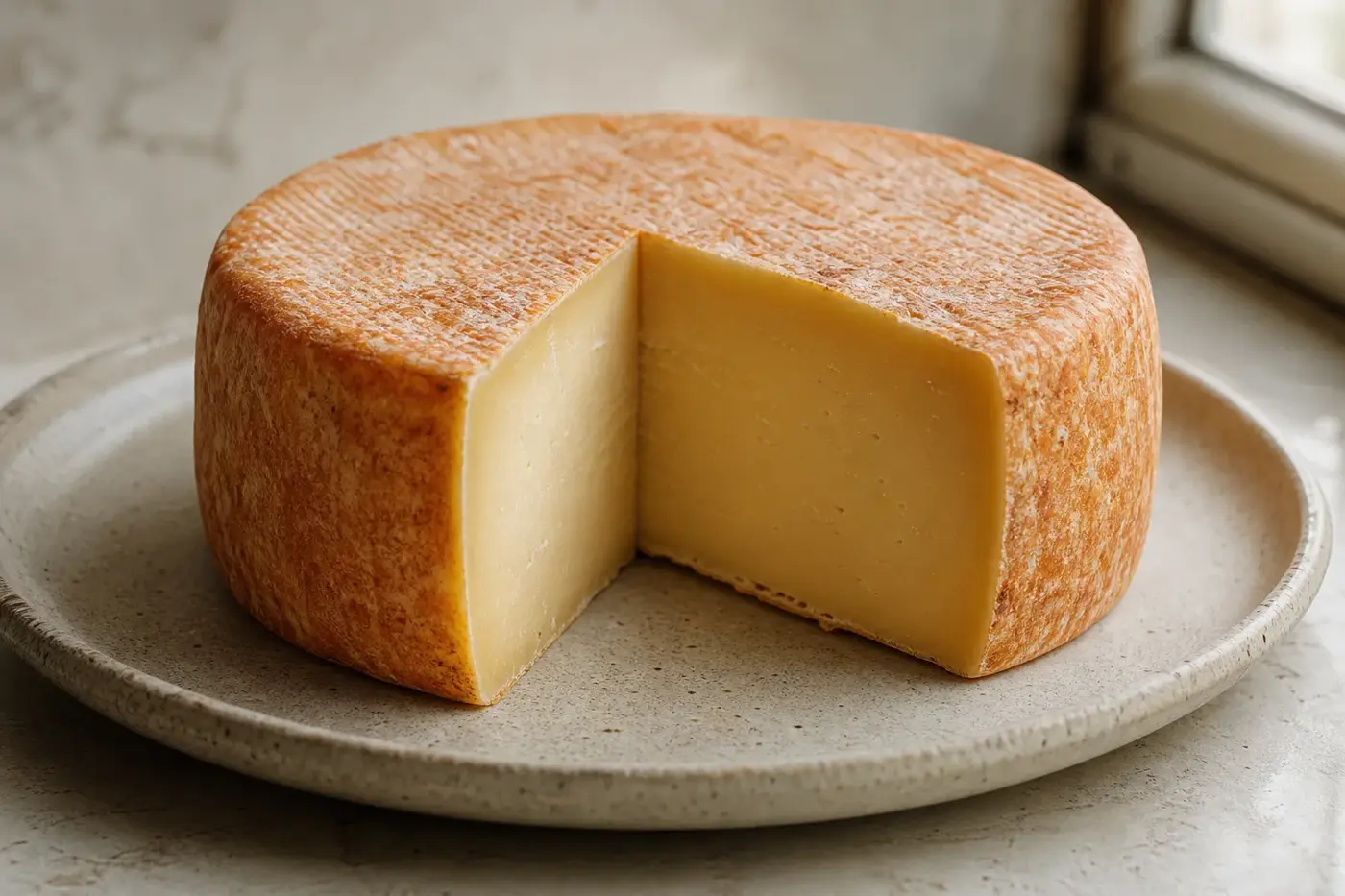
That orange rind has had a brush with local craft beer. Several, in fact. Dart Mountain Cheese washes Banagher Bold as the farmhouse cow’s milk wheels develop, then matures them for at least three months. The maker describes the result as malty, rich and mellow: here, beer has a job to do before you ever reach for a glass. [1]
| Field | Your cheese at a glance |
|---|---|
| Name | Banagher Bold. [1] |
| Protection status and registration details | Unconfirmed for the EU, Northern Ireland or Great Britain. |
| Maker | Dart Mountain Cheese. [1] |
| Made at | 26 Tamnagh Road, Park, County Derry, Northern Ireland. [3] |
| Milk | Pasteurised cow’s milk. [2,6] |
| Milk source | Unconfirmed for Banagher Bold. The maker generally sources milk from local family farms in the Sperrin Mountains. [4] |
| Rennet | Vegetarian, declared by the maker; exact type unconfirmed. [2] |
| Style | Semi-hard, beer-washed natural rind. [6] |
| Maturation | At least three months, according to the maker. [1] |
Start with that beer-washed rind
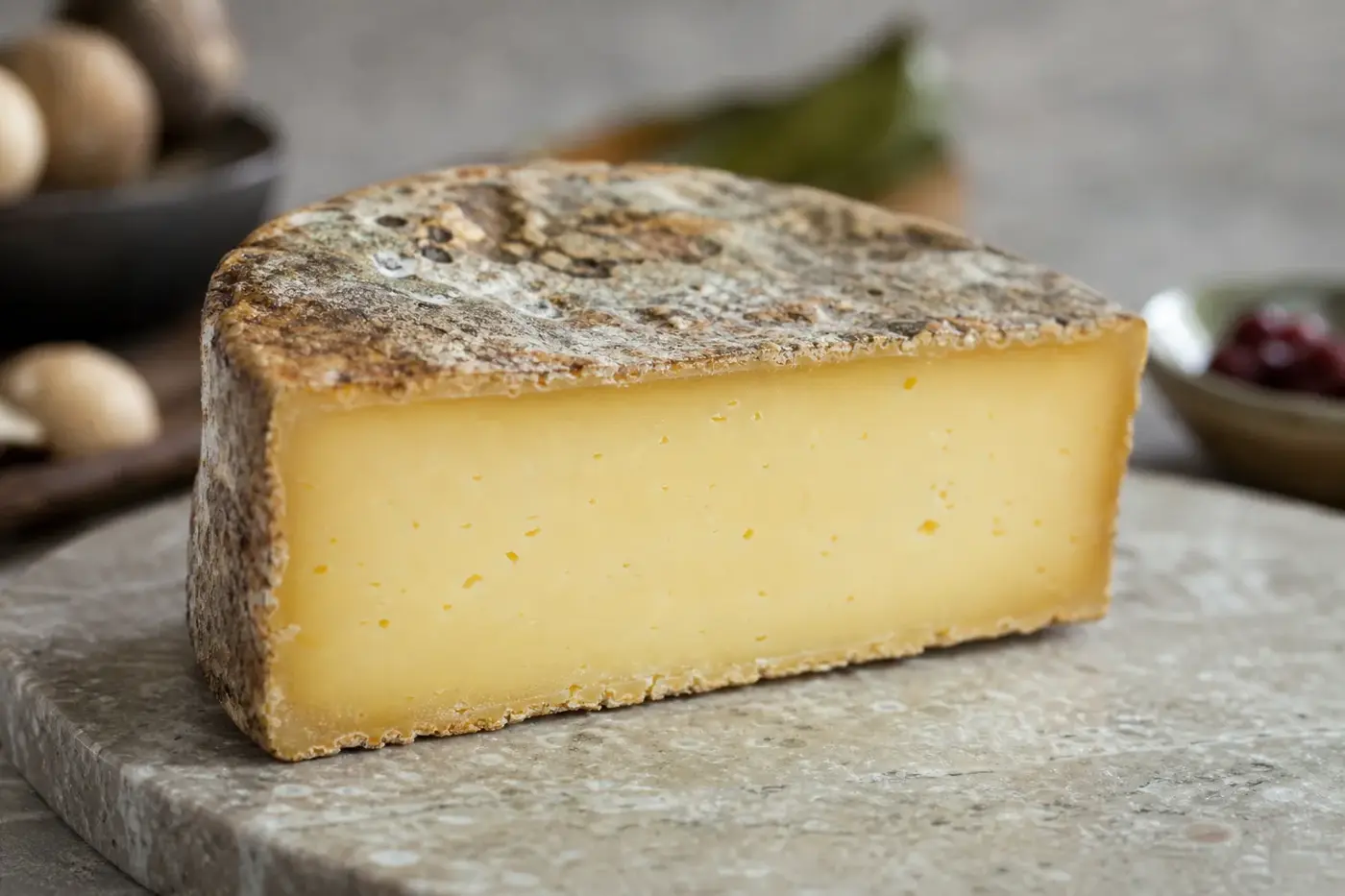
With Banagher Bold, the surface tells you plenty. Dart Mountain describes a natural rind washed when the wheels are newly made, then again during maturation. “Natural” means the rind develops on the cheese itself, with deliberate care from the cheesemaker. The washing helps shape its character, rather than adding a finishing touch. [1,2]
You’ll find Banagher Bold among Dart Mountain’s cow’s milk cheeses, alongside a separate selection made with goat’s milk. The maker says its range is pasteurised and made with vegetarian rennet. Keep three features in mind: semi-hard texture, a washed natural rind and extended maturation. The site’s guide to cheese styles helps you place those features in the wider cheese picture. [2,6]
Below Dart Mountain, a barn finds a new calling
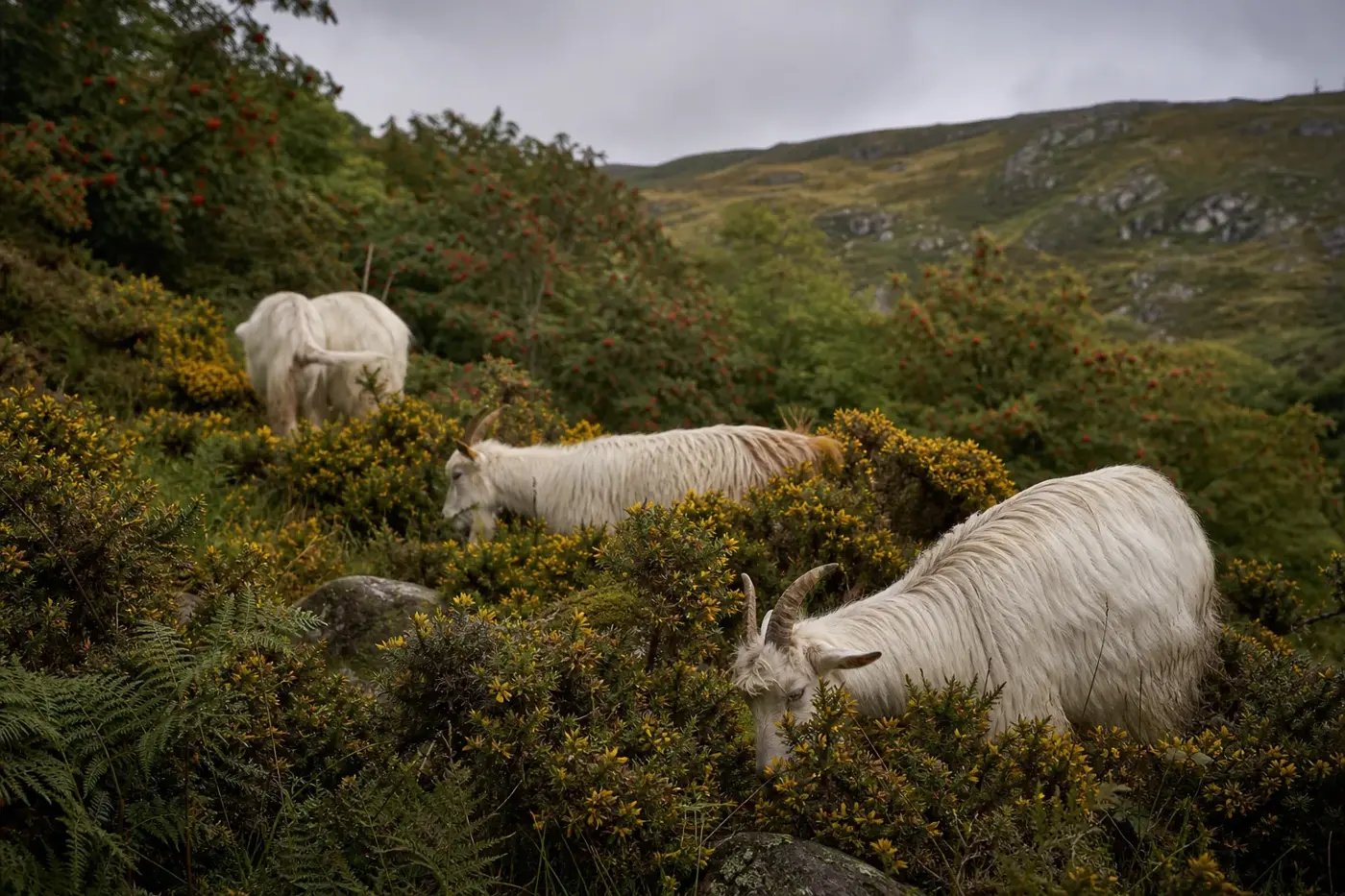
Before it became a dairy, Dart Mountain’s cheesemaking home was an agricultural barn. The family-run business stands on Tamnagh Road at Park, in County Derry, also known as Londonderry. Its maker places the dairy just below Dart Mountain, which gave the business its name. You’re in a particular corner of Northern Ireland’s north west, with a landscape behind the label. [3]
The maker’s story follows the barn’s conversion and the experience gained in making and ageing cheese. Those are distinct jobs: shaping a wheel is only part of the work. For Banagher Bold, repeated washing and the wait before release help create the finished cheese. The care continues long after the curd has become a wheel. [1,3]
The name takes you further into that landscape. Dart Mountain’s product description places Banagher Dam in its parish and says the reservoir supplies drinking water to local people and brewers. On Banagher Bold’s rind, dairying and brewing meet directly, with local beer becoming a cheesemaking ingredient. You can trace the connection from place to process. [1,11]
From local milk to the first curd
Dart Mountain says it sources milk from local family farms in the Sperrin Mountains. For Banagher Bold specifically, the milk source remains uncertain. [4]
The maker declares pasteurised cow’s milk and vegetable rennet for this cheese; its range page describes the rennet as vegetarian. Rennet is the coagulant that helps milk become curd, the solid material from which cheese is made. These declarations tell you about the milk treatment and how that first transformation happens. For more, turn to rennet explained and raw milk, thermised and pasteurised cheese. [1,2]
Beer, patience and at least three months
The making begins with pasteurised cow’s milk and vegetarian rennet. Dart Mountain’s account follows the forming of the wheels, washing with local craft beer and maturation for at least three months. Notice the repetition: beer goes onto newly made cheese, then returns as it ages. This is continuing care, not a quick splash before departure. [1,2]
The Academy of Cheese names the beer as Northbound Brewery’s No. 26 Pale Ale. Its published pairing account calls Banagher Bold Alpine-style and describes malty, savoury flavours. That gives you a useful first impression of a matured cheese shaped partly by careful rind tending. The brewery supplies an ingredient, not merely something to pour alongside it. [5]
Three months is the maker’s minimum, not the precise age of every piece you might buy. If you’re choosing a cut portion, ask how old it is: that gives the tasting descriptions a little more context. Keep the washing in mind, too. Time and attention to the surface both play their part before the cheese reaches your table. [1,6]
Beneath the orange, find malt and gentle nuttiness
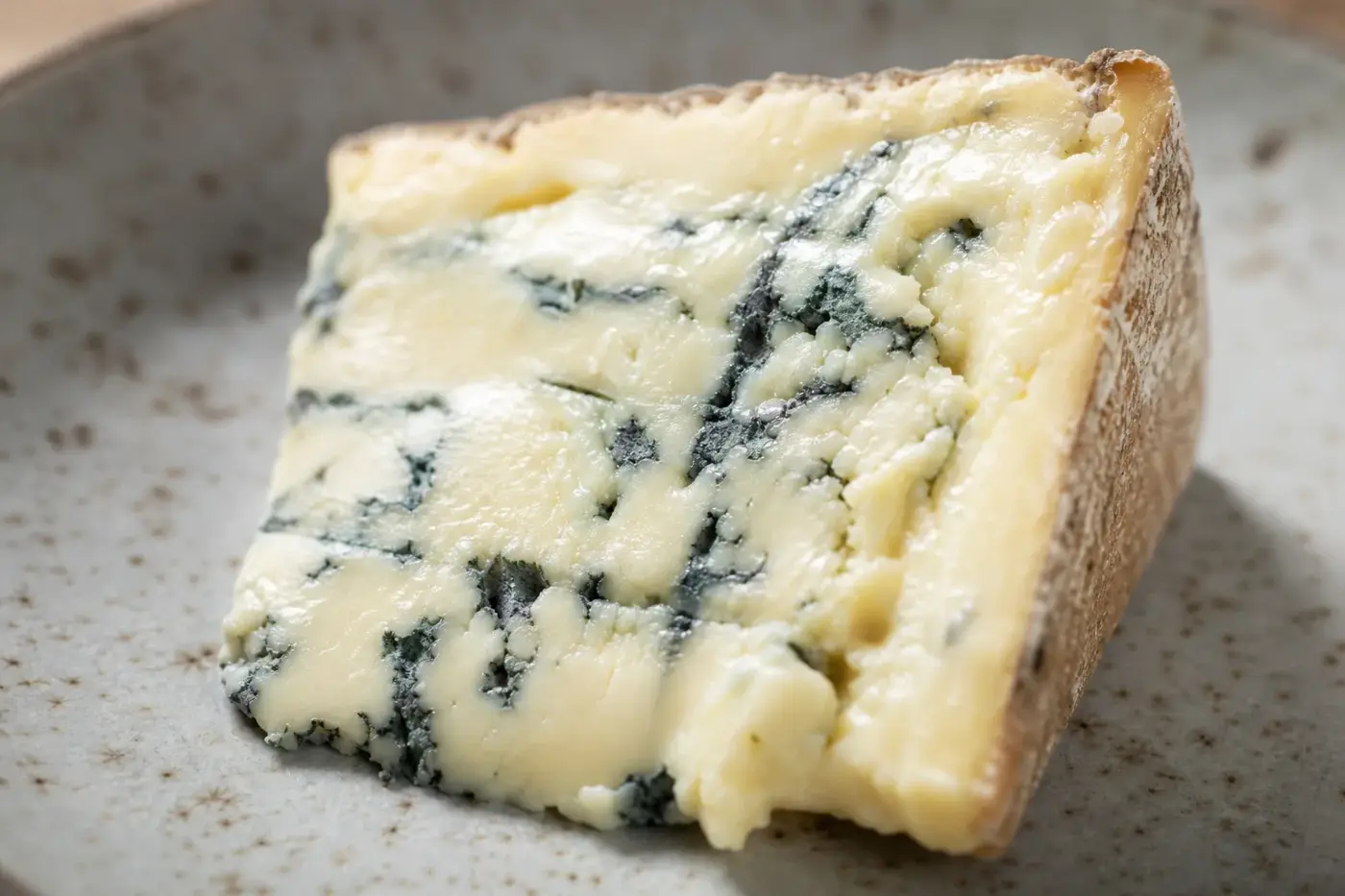
The orange rind is likely to catch your eye first. Dart Mountain links that colour to beer washing during ageing. Retailer Cheese.ie describes a smooth interior and creamy texture, with buttery notes, gentle nuttiness and a savoury finish alongside the malt. There’s plenty to look for once you move beyond the surface. [1,6]
The Academy of Cheese also finds savoury and malty flavours, with nutty notes. Try looking for malt first, then the savouriness behind it. Don’t let “Bold” talk you into clearing everything else off the board: mellow, smooth and gently nutty belong to the published descriptions too. Those quieter qualities matter when you choose its company. [5,6]
Give appearance, texture, aroma and flavour a moment each. Look at the rind and cut face, then smell your piece before taking a bite. Note what you actually notice, rather than trying to make your nose agree with somebody else’s description.
Next, consider how the cheese feels: firm, yielding or smooth? Then ask yourself whether malt, savouriness or nuttiness best captures the flavour. Your own observations are the useful ones here.
Give Banagher Bold room on the board
Try a small piece by itself before you bring in the accompaniments. The Academy of Cheese recommends a fig and thyme fruit accompaniment with the pale ale used in the wash. That points you towards fruit and herbs beside the cheese, while you explore the malty pairing separately. Keep several strong accompaniments from all demanding your attention at once. [5]
Put the fruit accompaniment on the table separately, rather than adding it to every portion. That way, you and your fellow tasters can each find the balance you enjoy.
For an alcohol-free option, Cheese.ie suggests cloudy apple juice alongside its published Banagher Bold squash gratin. The retailer highlights the juice’s sweetness and acidity as a balance to the dish’s richness. You can take that approach as a starting point with a plain piece of cheese, too. Choose juice with some tartness, and offer water as well. [7]
Beer pairing is for adults of legal drinking age, in a small serving. The Academy’s Northbound No. 26 Pale Ale choice brings you back to the ingredient used on the cheese. Its account describes the ale’s hop character meeting the savoury rind. Choose apple juice whenever you prefer an alcohol-free drink. [5,7]
If you want to taste the cheese less fridge-cold, follow cheesemonger Wisconsin Cheese Masters’ advice: take out only what you intend to serve and return unused cheese promptly. Food Standards Agency household guidance for England, Northern Ireland and Wales says chilled food should stay out for the shortest possible time, with a maximum of four hours during preparation. In hotter than usual weather, its heatwave advice is to discard perishables left out for more than two hours. [8,9,10]
Into the kitchen with squash, toasties and fondue
In Cheese.ie’s gratin, sweet roasted squash meets Banagher Bold’s savoury character, with thyme and mustard also in the dish. That contrast is the useful idea to carry into your kitchen. Let the vegetables supply sweetness and the cheese bring the stronger savoury note. A cheeseboard needn’t have a monopoly on the good stuff. [7]
Dart Mountain also suggests toasted sandwiches, burgers and fondue, putting Banagher Bold into a hot dish rather than a separate cheese course. A toasted sandwich gives you a straightforward place to start. Keep the other fillings restrained so you can taste the cheese clearly, rather than making it compete with everything else. [1]
Keep it chilled, and take care with the rind
Keep dairy products refrigerated, with your fridge set between 0 and 5 °C. That is the Food Standards Agency’s household advice for England, Northern Ireland and Wales. Follow the packaging’s storage instructions and date marking. If you have a cut piece, keep its label so you have those directions when you next need them. [9]
Dart Mountain describes a natural rind washed with beer; whether it is intended to be eaten remains uncertain. [1] For wrapping opened cheese and finding its place in the fridge, use the site’s home storage guide. If unexpected surface growth appears, consult mould on cheese, rather than assuming every change belongs to normal maturation. [1,9]
A few more paths to explore
- How to Tell Cheese Styles Apart: Milk, Rind, Texture and Method: find where washed-rind cheeses sit in the wider cheese world.
- Rennet Explained: Animal, Microbial and Fermentation Produced: get to know what a maker’s rennet declaration tells you.
- How to Store Cheese at Home: give your cut piece the right care between servings.
General information only, not medical advice: follow the official guidance where you live.
Questions people ask
What does Banagher Bold taste like?
Dart Mountain describes it as malty, rich and mellow. Other published descriptions mention savoury flavours, gentle nuttiness and a creamy texture.
Is Banagher Bold suitable for vegetarians?
The maker declares that Banagher Bold is made with vegetarian rennet. Its exact type has not been verified.
How long is Banagher Bold aged?
The maker matures it for at least three months. The beer wash is applied to the natural rind both when the wheels are newly made and during maturation.
Can you eat the rind of Banagher Bold?
The cheese has a natural rind washed with beer. Whether the rind is intended to be eaten has not been verified.
How should Banagher Bold be stored?
The Food Standards Agency advises keeping dairy products refrigerated at between 0 and 5 °C and following the storage instructions and date marking on the packaging. See its household guidance for England, Northern Ireland and Wales.
Sources
- Dart Mountain Cheese, Banagher Bold Cheese, undated product information, retrieved November 2026. Maker’s declarations on milk, rennet, rind washing, minimum maturation, flavour and cooking uses.
- Dart Mountain Cheese, Our Cheese Range, undated, retrieved November 2026. Range-wide declarations on pasteurisation, vegetarian rennet and natural rind development.
- Dart Mountain Cheese, [About us](../about-us/), undated, retrieved November 2026. Maker’s account of its family-run business, dairy development, address and setting below Dart Mountain.
- Dart Mountain Cheese, Sustainability, undated, retrieved November 2026. The “Local Sourcing” section records the maker’s statement about milk from family-owned farms in the Sperrin Mountains.
- Academy of Cheese, Perfect Cheese Pairings: Five of the Best from Northern Ireland, undated page, retrieved November 2026. Section 4 provides its tasting description and pale ale, fig and thyme pairing.
- Cheese.ie, Dart Mountain Banagher Bold Ale Washed | Cow’s Milk | Vegetarian Rennet | Co. Derry, undated retail description, retrieved November 2026. Commercial source, cited for its own texture and flavour descriptions and corroborating product information.
- Cheese.ie, The Irish Halloween Table: 12 Seasonal Recipes Worth Gathering For, 2026, retrieved November 2026. Recipe 6 supplies the squash, thyme and mustard combination and its cloudy apple juice pairing. Commercial cookery source; the recipe has not been independently tested by fromage.co.uk.
- Wisconsin Cheese Masters, Cheese Care & Storage, undated, retrieved November 2026. Cheesemonger’s guidance on taking out a serving portion and promptly returning unused cheese to refrigeration.
- Food Standards Agency, How to chill, freeze and defrost food safely, published 18 December 2017, current page retrieved November 2026. Household guidance applying to England, Northern Ireland and Wales.
- Food Standards Agency, Food safety in a heatwave: advice for consumers, current online guidance retrieved November 2026. Hot-weather refrigeration and time-out-of-refrigeration advice.
- Food NI, World Cheese Gold for Dungiven’s Dart Mountain, 22 November 2016. Historical industry-body account containing the maker’s explanation of the local brewing collaboration. Award claims have been withheld pending verification with the organiser.
Researched through the maker’s published information, attributed cheese and pairing accounts, and official household food-storage guidance, with editorial serving suggestions identified in the text.
Last checked: November 2026
Last checked November 2026.
The editors suggest you read next