Kilcreen
Look up from Dart Mountain Cheese’s dairy to the mountainside opposite.
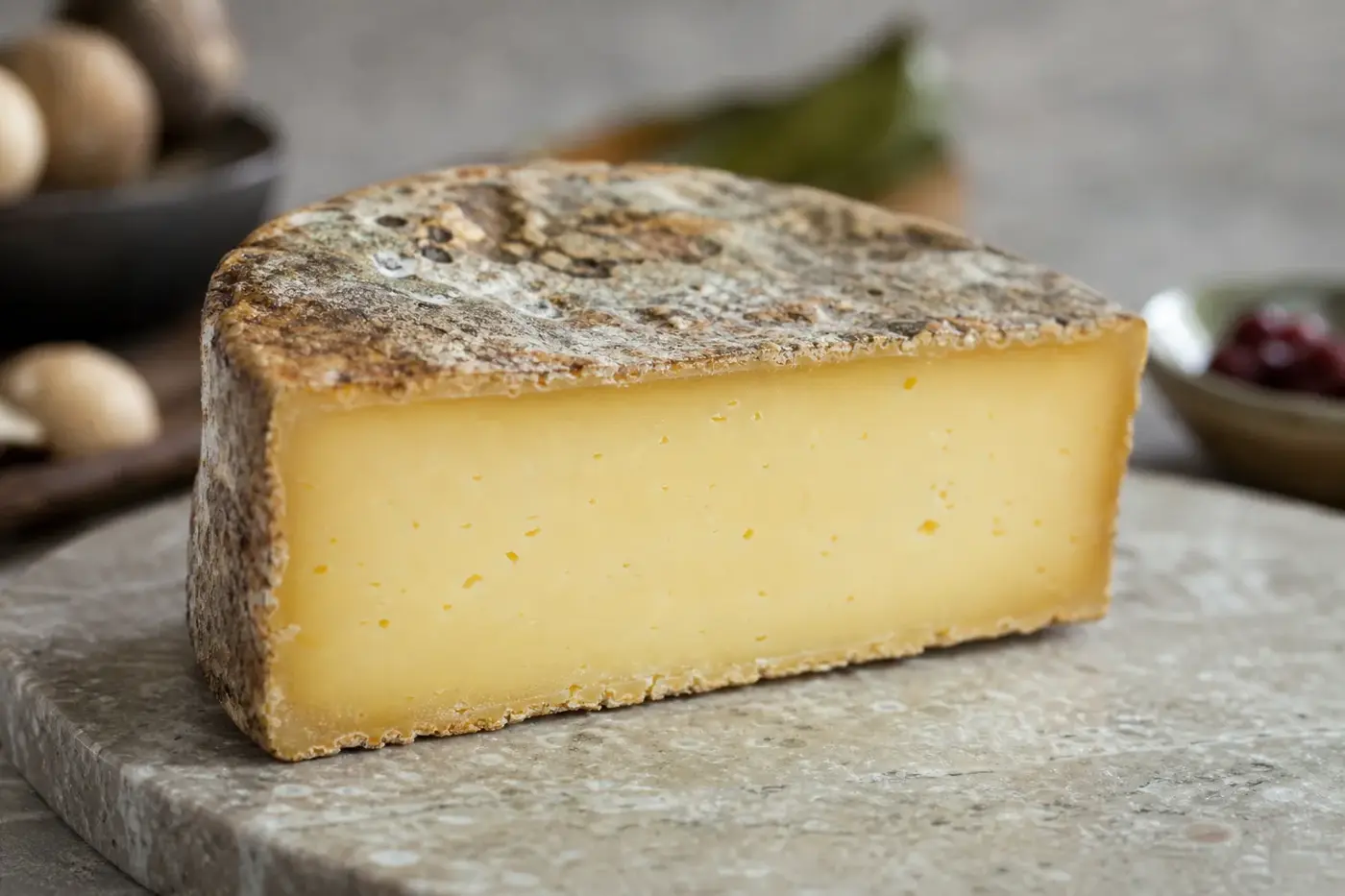
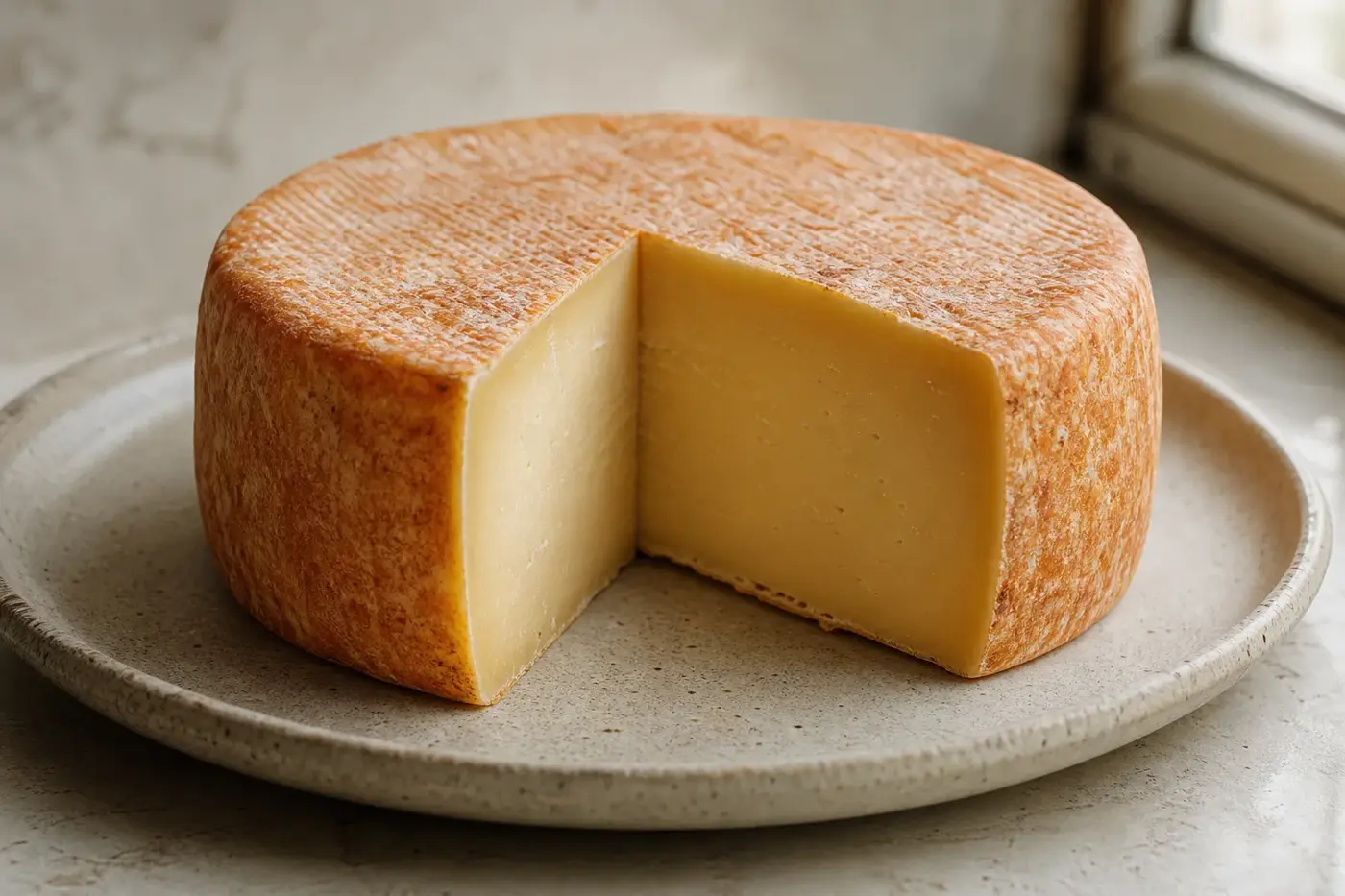
Look up from Dart Mountain Cheese’s dairy to the mountainside opposite. There sits the townland that gave Kilcreen its name. You are in County Londonderry, Northern Ireland, but this cheese has an eye on the Alps: a semi-hard, pasteurised cow’s milk cheese with mild, buttery flavour and a nutty aftertaste. Its maker suggests a cheeseboard, toasted sandwich or fondue as suitable destinations. [1][2]
Your first questions at the cheese counter
| What you might ask | What to know |
|---|---|
| What is it called? | Kilcreen Cheese. [1] |
| Who makes it? | Dart Mountain Cheese. [1] |
| Where does it come from? | Park, County Londonderry, Northern Ireland. [3] |
| What milk does it use? | Pasteurised cow’s milk. [1] |
| What style is it? | Semi-hard, Alpine-style. [2] |
| Which rennet? | Vegetable rennet, according to the maker; its range page specifies vegetarian rennet. [1][4] |
| What about the rind? | Natural. [1] |
A local name with an Alpine outlook
Kilcreen’s name brings you straight back to the mountainside opposite the dairy. It belongs to the townland there, while the cheese’s Alpine-style description looks towards a broader cheesemaking tradition. Both connections come from the maker’s own account. [1][2]
Look along Dart Mountain’s cow’s milk range and you will find a blue cheese, an ale-washed cheese and a long-aged hard cheese alongside Kilcreen. The selection is deliberately varied. Kilcreen has a role of its own, rather than following one house style shared by every cheese. [4][5]
At the counter, “semi-hard” gives you a useful first clue. Think cutting, not spooning or spreading. “Alpine-style” offers another reference point, but the maker’s description of Kilcreen itself is your best guide to its particular character. [2][6]
Milk, rind, texture and style each tell you something different. They are clues, not interchangeable labels. To get comfortable with those distinctions, explore how to tell cheese styles apart.
From an old barn to a family dairy
Before the dairy, there was a disused agricultural barn. Dart Mountain Cheese’s account of its family-run business begins with that barn’s conversion in 2009. A period devoted to learning about cheesemaking and ageing followed. [3]
You will find the dairy’s published address on Tamnagh Road, Park, in County Londonderry, which the maker writes as County Derry. Its account places the business below Dart Mountain in the Sperrins. The mountain gave the company its name. [3]
Those names point you towards two nearby landmarks: Dart Mountain for the maker, the neighbouring townland for Kilcreen. It is a precise connection between cheese and landscape. That connection rests in the dairy’s naming choices, rather than a claim that the scenery itself determines the flavour. [1][3]
In November 2026, Kilcreen remained listed in Dart Mountain’s cheese range. The website also describes tasting experiences featuring its cow’s and goat’s milk cheeses, with accompaniments made on site. Before you plan a visit, contact the maker about current arrangements, booking requirements and accessibility. [4][7]
The journey from milk to a slice
Kilcreen begins with pasteurised cow’s milk. Dart Mountain names vegetable rennet as its coagulant, while the information for the wider range specifies vegetarian rennet. Those are the maker’s stated details for this part of the process. [1][4]
Rennet is an enzyme preparation that helps milk proteins form a gel, beginning the formation of curd. In general semi-hard cheesemaking, starter bacteria develop acidity. The gel is then cut into curd grains, releasing liquid whey, as described in Tetra Pak’s technical handbook. [6]
That takes you from liquid milk towards something you can slice. Cutting and handling the curd influence how much whey remains inside; forming and pressing gather the curds into a coherent cheese. Cultures, curd treatment, salting and ripening conditions all help shape what reaches your palate. [6]
Think of this as a guide to the style, not a published recipe for Kilcreen. For this cheese, the maker declares the milk treatment, coagulant and natural rind. Those details are more useful than borrowing the recipe of another Alpine-style cheese and assuming it applies here. [1]
Curious about that transformation? Explore how cheese is made. For a closer look at the different sources of coagulants, turn to rennet explained.
Get to know the rind and the cut
Kilcreen has a natural rind. Dart Mountain also describes its cheeses more broadly as ageing naturally and developing rinds of their own. That gives you a starting point when you look at a piece. [1][4]
At the counter, ask the cheesemonger whether they know the age of the particular cheese you are buying. You have the cheese, its identifying information and someone to ask all within reach. It is a good moment for a conversation, rather than guesswork.
Ask to see the whole cheese, if available, as well as the cut face. Together, they help you connect the rind with what lies inside. You can also see the shape from which your portion has been cut.
At home, keep the wrapper or label carrying the product identification and storage instructions. Those details belong to your actual purchase. Once a cheese has been divided into portions, they are more useful than a photograph of somebody else’s wheel.
Butteriness first, a nutty finish after
Mild, buttery and nutty are the central notes in Dart Mountain’s description of Kilcreen. The maker calls it the mildest cheese in its range. That comparison belongs within the dairy’s own selection, not across every cheese you might meet. [1]
Try separating your first impression from the finish. Taste a small piece alone, then pause after swallowing to notice what lingers. Keep the maker’s words in mind, but use language that makes sense to you. There is no entrance exam for enjoying a slice.
Give the texture a little attention, too. Under your knife, does the slice bend or break? Notice how it changes as you chew, rather than asking it to impersonate another cheese you already know.
Before your first taste, smell the cut surface. Leave strongly scented accompaniments to one side for now. The cheese’s aroma is easier to notice when the rest of the board is not competing for your attention.
Recognition for the dairy behind Kilcreen
Dart Mountain Cheese appears among the dairy producers recognised in the Georgina Campbell Guides’ 2024 Natural Food Awards. The awarding organisation’s published entry discusses the producer’s range. It explicitly names Kilcreen among the dairy’s Alpine-style offerings. [8]
That recognition places Kilcreen within the dairy’s work across several cheeses. When you look at an individual competition result, keep four details together: cheese name, competition, year and award. Recognition for a particular product tells you most when those details remain attached.
Make a little room on your cheeseboard
A cheeseboard is one of Dart Mountain’s recommended homes for Kilcreen. [1] Start with a plain slice and give it a moment to itself. Bread, fruit and chutney can wait their turn, however impatiently you have arranged them.
If you are preparing and displaying chilled food in England, Northern Ireland or Wales, consult the Food Standards Agency’s current guidance before serving. [9] Keep the practical side straightforward:
- Put out only what you plan to serve. Keep the rest of the cheese refrigerated.
- Bring your serving portion out shortly before eating. Compare a small freshly refrigerated piece with one that has warmed slightly. Notice any changes in aroma, firmness and flavour.
- Cut manageable slices. If you have a wedge-shaped piece, follow its shape so guests get a reasonably even share of interior and rind.
- Try the cheese on its own first. Then turn to the accompaniments below.
- Return the remaining portion promptly. Follow the label’s instructions and the applicable official refrigeration guidance. [9]
Keep your board away from the oven and out of direct sunlight. A small board, replenished as needed, is easier to manage than putting out your entire purchase at once.
Bread, fruit and a toasted sandwich
Let Kilcreen’s mildness guide you when choosing accompaniments. These suggestions follow the maker’s buttery, nutty description, rather than recorded tasting results. [1] Add one thing at a time, and ask yourself whether it supports the cheese or takes over.
Begin with plain bread or an unseasoned cracker. Put fresh apple or pear in a separate dish for contrast. Offer a small spoonful of chutney afterwards, so everyone can choose their own amount rather than finding each slice already covered.
For an alcohol-free drink, try water, sparkling water or lightly brewed, unsweetened tea. Serve it separately, then come back to another bite of cheese. You can decide for yourself whether the combination deserves another mouthful.
The maker’s cooking suggestions are toasted sandwiches and fondue. [1] A straightforward toasted sandwich makes a useful first experiment because it keeps the cheese central. Add other ingredients gradually, tasting before you introduce a strongly flavoured pickle, mustard or sauce.
For a shared meal, another serving idea is melted Kilcreen with bread and cooked vegetables. Choose an established recipe for the dish and follow its handling instructions. This is a starting point for your meal, rather than a complete recipe.
Look after the piece you bring home
For households in Northern Ireland, England and Wales, the Food Standards Agency advises refrigerating dairy products, with the fridge set between 0 and 5 °C (32 to 41 °F). Follow the cheese’s packaging instructions and date marking. [9]
Keep your cut piece covered, retain its identifying label and return it promptly after serving. Use clean utensils when taking another portion, and keep ready-to-eat cheese separate from raw foods during preparation and storage. The FSA’s community food guidance explains covered storage and why avoiding cross-contamination matters. [10]
For more on wrapping, arranging your refrigerator and handling different styles, read how to store cheese at home. Buying Kilcreen already cut? Ask the seller for the instructions that apply to that particular piece and its packaging.
General information only, not medical advice: follow the official guidance where you live.
Questions people ask
Where is Kilcreen cheese made?
Kilcreen is made by Dart Mountain Cheese in Park, County Londonderry, Northern Ireland. The dairy is below Dart Mountain in the Sperrins.
What does Kilcreen taste like?
The maker describes Kilcreen as mild and buttery, with a nutty aftertaste. It calls Kilcreen the mildest cheese in its own range.
Is Kilcreen suitable for vegetarians?
Dart Mountain identifies Kilcreen’s coagulant as vegetable rennet. Its wider range page specifies vegetarian rennet.
How can I serve Kilcreen?
The maker recommends Kilcreen for a cheeseboard, a toasted sandwich or fondue. You could also try it with plain bread, apple or pear.
How should I store Kilcreen?
For households in Northern Ireland, England and Wales, the Food Standards Agency advises keeping dairy products refrigerated, with the fridge set between 0 and 5 °C. Follow the packaging instructions and date marking, and consult the Food Standards Agency’s current guidance.
Sources
- Dart Mountain Cheese, Kilcreen Cheese, undated product information, retrieved November 2026. Product page.
- Buy NI Food, Dart Mountain Cheese Company, undated supplier profile, retrieved November 2026. Used for the semi-hard classification, not its differing maturation figure. Supplier profile.
- Dart Mountain Cheese, About us, undated company account, retrieved November 2026. Maker’s account.
- Dart Mountain Cheese, Our Cheese Range, undated range information, retrieved November 2026. Cheese range.
- Food NI, Dart Mountain Cheese, undated producer profile, retrieved November 2026. Producer profile.
- Tetra Pak, Dairy Processing Handbook, chapter 16, “Cheese”, online edition, retrieved November 2026. Technical chapter.
- Dart Mountain Cheese, Tours & Experiences, undated visitor information, retrieved November 2026. Visitor information.
- Georgina Campbell Guides, 2024 Award Winners ‘NATURAL FOOD’ AWARDS 2024 (PRODUCERS), DAIRY, 2024. Awarding organisation’s entry.
- Food Standards Agency, How to chill, freeze and defrost food safely, published 18 December 2017, current online text retrieved November 2026; applies to England, Northern Ireland and Wales. Official guidance.
- Food Standards Agency, Food safety for community cooking and food banks, updated 28 August 2026; applies to England, Northern Ireland and Wales. Official guidance.
Researched from the maker’s published information, a regional supplier profile, technical reference material, the awarding organisation’s record and official food-handling guidance.
Last checked: November 2026
Last checked November 2026.
The editors suggest you read next