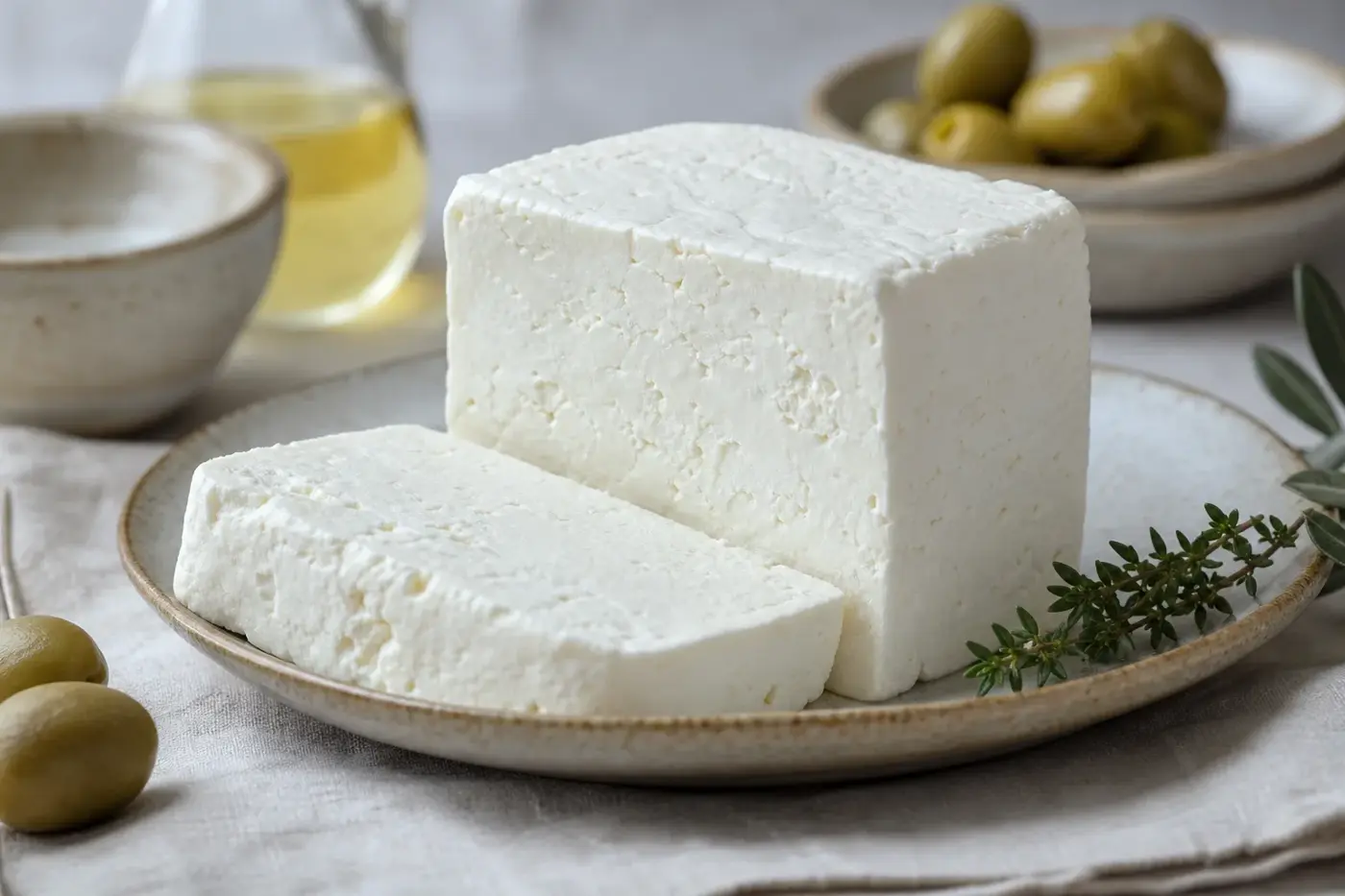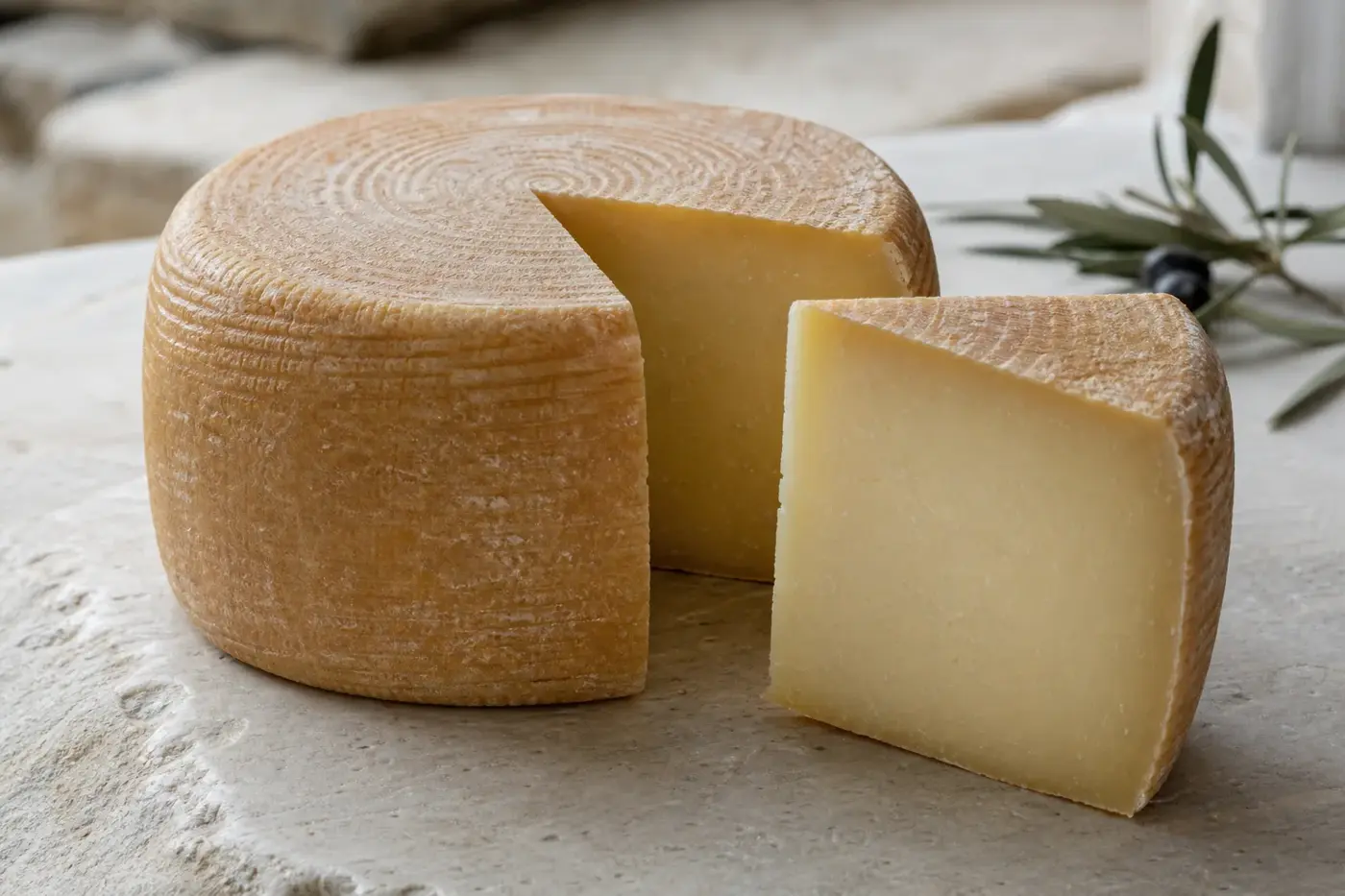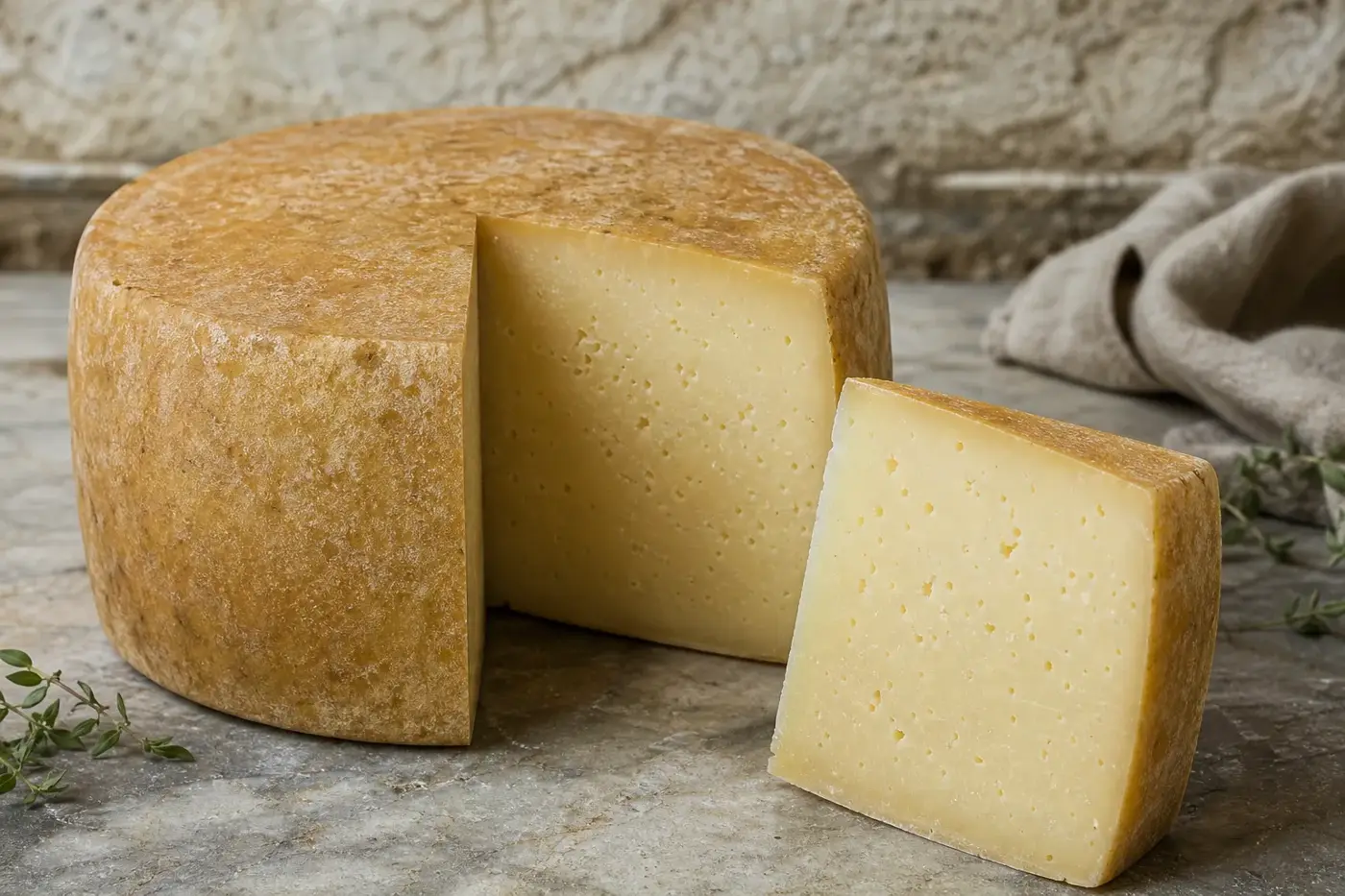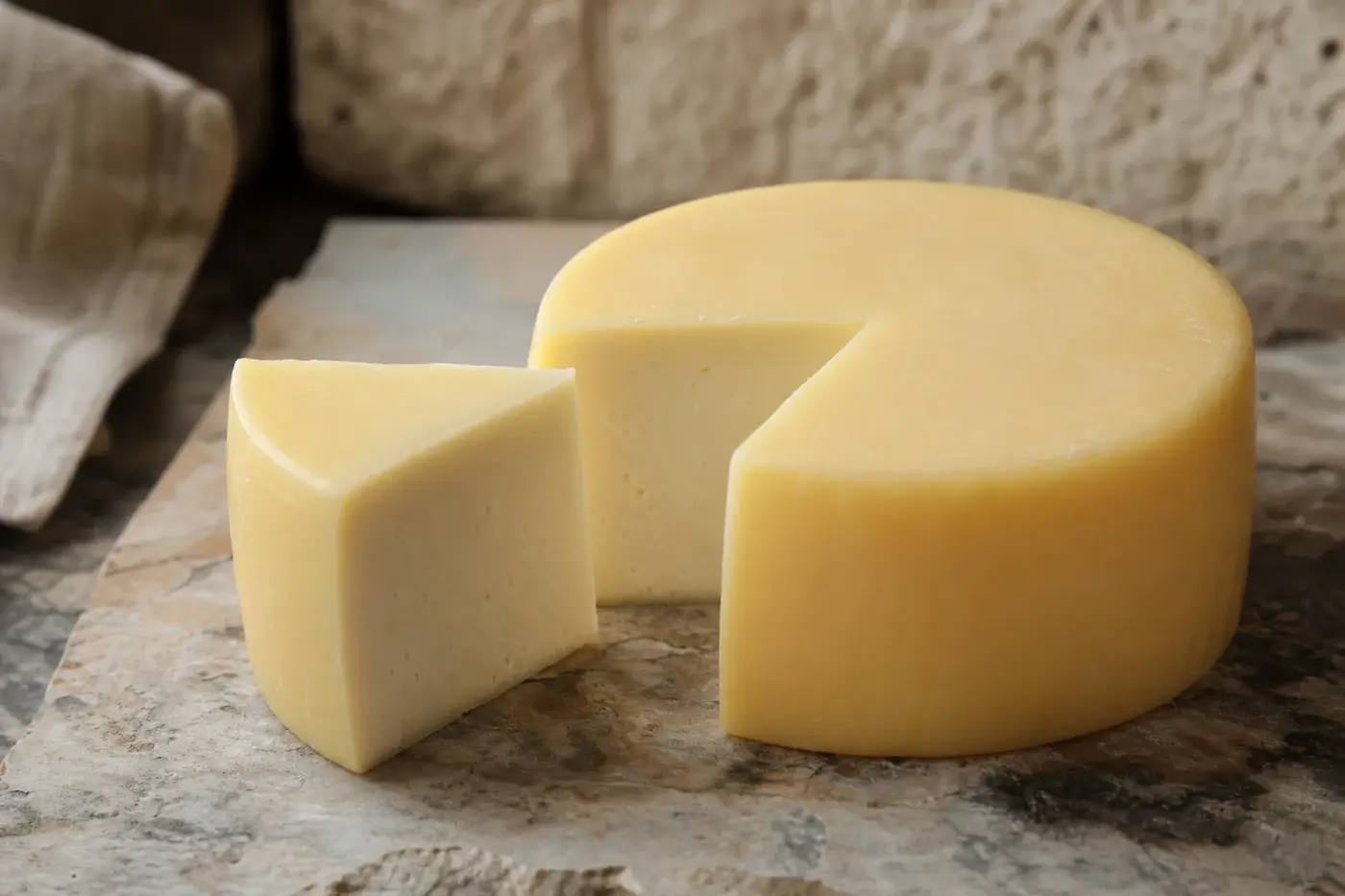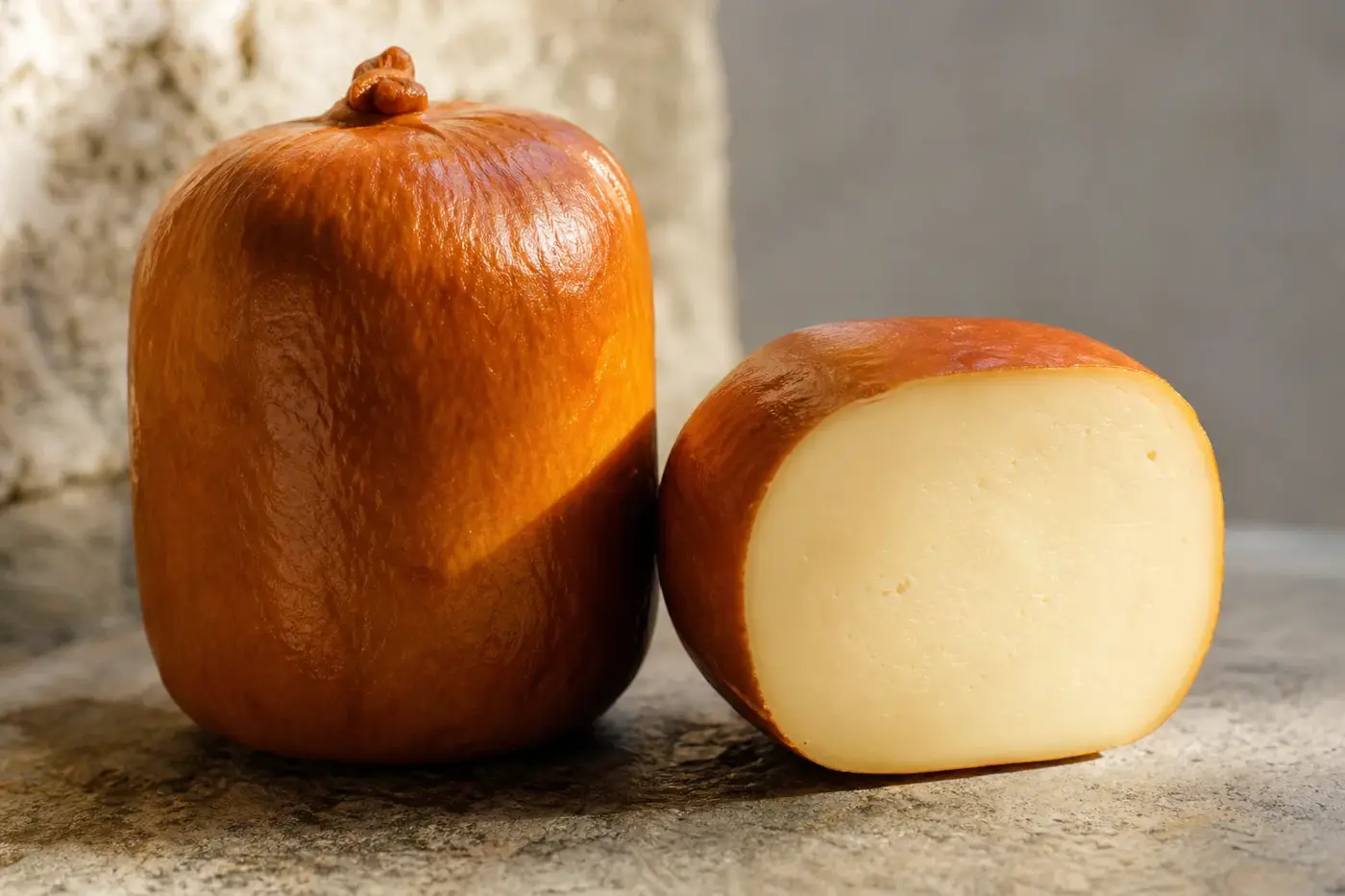
Vine branches, aromatic leaves and grasses feed the smoke. Waiting inside is Metsovone, a firm Greek cheese from Metsovo, high in the Pindus mountains of Epirus. Its elastic, stretched curd paste matures before smoking: mountain cheesemaking and an Italian technique meeting in one distinctive cylinder. [1,3,4]
| At a glance | The detail |
|---|---|
| Familiar name | Metsovone. [2] |
| Registered name | Μετσοβόνε / Metsovone. [2] |
| Registration authority | Great Britain: Defra. [2] |
| GB status | Registered PDO; 31 December 2020, 23:00. [2] |
| EU registration date | 21 June 1996, as recorded by Defra. [2] |
| Binding production text | Greek Ministerial Decision 313070, Articles 1 to 4 (1994). [1] |
| Where it is made | Former Metsovo district, Ioannina, Greece. [1] |
| Milk | Cow's milk, optionally with sheep's and goat's milk. [1] |
| Permitted milk treatment | Raw or pasteurised. [1] |
| Minimum maturation | Three months before smoking. [1] |
| Maximum moisture | 38% in the whole cheese. [1] |
| Minimum fat | 40% fat in dry matter. [1] |
| Specified shapes and sizes | Cylinders of approximately 1.5, 2.5 or 4.5 kg. [1] |
How Italy found a home in Metsovo
Below the Katara pass, in a wooded part of the Pindus massif, sits Metsovo. The Greek National Tourism Organisation places its cheeses alongside pies and roasted meats in the town's mountain food traditions. [4] This is where an Italian cheesemaking technique found a lasting home in Epirus.
The local foundation's dairy began operating in 1958. Its institutional history follows young people from livestock-farming families to Italian dairies, where they learnt cheesemaking before bringing those skills home. Conceived as a practical school, the dairy helped local cheesemakers develop their work and provided employment. [5]
Metsovone grew from that exchange. The stretched curd tradition associated with Italian provolone became part of Metsovo's own cheesemaking culture, a connection the foundation makes explicitly. [3] You are tasting the result of people learning, experimenting and returning with something worth sharing, rather than an ancient recipe standing still.
Read the label, then look a little closer
Metsovone's origin begins with the milk. The Greek recognition decision requires it to come from the designated Metsovo area, with cheesemaking and maturation taking place there too. [1] On the label, distinguish that production origin from the place where your cheese was later packed or sold.
Defra records Metsovone as a registered protected designation of origin in Great Britain, dated 31 December 2020 at 23:00. It also gives the original EU registration date as 21 June 1996. [2] These are distinct jurisdictions, so keep their statuses separate; protected names explained helps you navigate the terminology.
Get to know the milk in your piece
Cow's milk is at Metsovone's heart. Under the Greek decision, sheep's and goat's milk may together contribute up to 20% of the total milk weight. Raw and pasteurised milk are both permitted, so the name alone cannot tell you which treatment your piece received. [1]
When you compare pieces, ask about the blend and the age. The blend tells you what went into the vat; maturation tells you how the cheese developed afterwards. That maximum permitted proportion is a limit, not a recipe every maker must follow.
Let the label and the maker's account guide you through the piece in front of you. Look for its actual ingredients and maturation history. A particular blend is not, by itself, a promise of a particular flavour or texture.
Watch the curd find its stretch
Before the long cylinder comes a stretch test. First, rennet sets the milk into curd, the solid material separated from liquid whey. The Greek decision permits traditional rennet or enzymes with a similar action, followed by cutting, reheating, draining and acidification before stretching. [1]
The foundation's booklet brings you closer to the handwork. Drained curd rests in a wooden tub while the cheesemaker tests a piece in warm water: will it stretch without breaking? Once ready, the mass is worked with a wooden paddle and kneaded into elongated pieces. Metal moulds give it the cylindrical shape; cold water helps it hold that form. [3]
This is pasta filata, literally stretched curd. Instead of simply pressing curd into a wheel, the cheesemaker works it while pliable. Picture that cohesive mass being drawn and shaped, and you can begin to connect the long form with the producer's description of a supple texture. [3]
Give it time, then bring on the smoke
Smoke has to wait its turn. After brining, the cheeses are dried and tied with string. The Greek decision requires at least three months of maturation before natural smoking with plants from the production area. Smoking lasts one to two days, followed by paraffin coating. [1]
The foundation names vine branches, aromatic leaves and grasses among its smoking materials. [3] That sequence matters when you taste: smoke finishes a cheese that has already matured. It adds a layer, rather than accounting for everything in your mouthful.
Try a cut piece with that in mind. Notice the aroma first, then turn your attention to the flavour of the paste itself. Separating those impressions tells you more than simply deciding whether the smoke is strong or faint.
Meet the cheese beneath the golden rind
A thin, dry rind, yellow to brown, encloses a straw-coloured paste. That is the Greek decision's description: a golden brown outside and pale yellow within. Its specified texture ranges from semi-hard to hard. [1]
The producer describes Metsovone as compact and elastic. [3] Keep those qualities in mind as you cut and serve it. You are looking for neither a crumbly cheese nor a fresh, wet one.
Remove the paraffin coating before serving: wax is not food. Set out the cylinder with its cut face visible, so you and your guests can take manageable slices. Supper should not require a wrestling technique.
Follow the flavour beyond the smoke
Smoke leads, followed by gentle saltiness and a piquant edge in the Greek decision's account. [1] The foundation's tasting notes describe a milder, sweeter character moving towards something stronger and more savoury with time. [3] Stay with your mouthful a little longer than that first smoky impression.
On your first taste, ask yourself three simple questions. Does smoke dominate the aroma or sit further back? How clearly do you notice the salt, and does the finish feel mild or more insistent?
Take those impressions one at a time. They give you useful words for comparing ages, choosing another piece and deciding what to put beside it. You do not need grand tasting language, just a description that helps you recognise the balance you enjoy.
Make a little room on your board
Begin with plain bread, one fresh accompaniment and some space between Metsovone and the other cheeses. Taste a small piece on its own before adding anything. Then try pear or apple, or tomato and bread, and see which combination suits you.
Fresh fruit offers sweetness against the documented smoke and saltiness. Plain bread gives you a quieter mouthful between tastes. These pairings are ways into the cheese, rather than ways to cover it up.
Save the several smoked accompaniments for another occasion. They repeat the very flavour you are trying to notice in Metsovone, and it hardly needs a backing choir. For a drink, try water or an unsweetened alcohol-free sparkling drink, keeping things simple enough for your attention to return to the cheese.
Cut only what you expect to serve and refrigerate the rest. In England, Northern Ireland and Wales, consult the Food Standards Agency's guidance on chilling food and follow the packet's storage instructions. [6]
Let one grilled slice show you the way
Start with a thin slice on bread under the grill, and watch closely. A small trial lets you get to know your particular piece before making it the main ingredient. Notice how readily it yields, how much stretch develops and how prominent the smoke remains.
Next, consider a little over baked vegetables or potatoes, or in a filled sandwich. Use Metsovone as an accent first, taste, then adjust the amount. You can also compare its contribution with a milder melting cheese, without expecting the two to behave alike.
Let that first slice be your practical guide. See how your cheese responds to heat before committing a whole dish, then use the result to shape your next step. What happens under your grill is more useful than a blanket promise about melting.
Keep the useful details with your cheese
Follow the packet's storage instructions. For England, Northern Ireland and Wales, consult the Food Standards Agency's chilling guidance, with November 2026 as this page's reference point. [6]
Keep the product information alongside the cheese, where you can easily find its date and handling instructions. If you throw away the outer packaging, retain those details and note when you opened it. Once a cut piece is wrapped, the original label can be easy to lose sight of.
For wrapping and everyday organisation, see how to store cheese at home. Keep those practical details handy. Use them rather than relying on the cheese's appearance or your memory of the packet.
Meet Metsovone's relatives, one label at a time
Provolone is your closest historical comparison: the foundation identifies that Italian influence directly. [3] Closer to home, its product list distinguishes Metsovone from Metsovella, made mainly with sheep's milk, and Geladisio, made wholly with cow's milk. [5] Shared surroundings do not make them the same cheese.
Start with the full name on the label, then look at the milk and the maker's description. Those details tell you more than similar names or a shared place of origin. Take the same approach when you explore related cheeses in the hub.
For a Greek selection, give each cheese a different job. Metsovone can bring the smoke, while another offers a contrasting texture or flavour. Two or three clearly different pieces make a more revealing tasting than several chosen simply because they share a place name.
General information only, not medical advice: follow the official guidance where you live.
Questions people ask
Where does Metsovone come from?
Metsovone comes from the former Metsovo district in Ioannina, Greece. The milk must come from the designated area, and cheesemaking and maturation must also take place there.
What milk is Metsovone made from?
Cow’s milk is its foundation, but sheep’s and goat’s milk may together make up to 20% of the total milk weight. Both raw and pasteurised milk are permitted.
What does Metsovone taste like?
The Greek recognition decision describes smoke, gentle saltiness and a piquant edge. The foundation says its character moves from milder and sweeter towards stronger and more savoury with time.
Is Metsovone related to provolone?
The local foundation connects Metsovone with the stretched curd tradition associated with Italian provolone. Young local cheesemakers learned in Italian dairies and returned to Metsovo with their skills.
How should I serve Metsovone?
Remove the paraffin coating before serving, as wax is not food. Try the cheese with plain bread, pear or apple, or tomato and bread.
Sources
- Greek Ministry of Agriculture. Ministerial Decision No. 313070, Recognition of Protected Designation of Origin (P.D.O.) for the Cheese 'METSOVONE'. Government Gazette, Series B, No. 23, 18 January 1994, Articles 1 to 4. Legislative text retrieved through WIPO Lex, record GR059.
- Department for Environment, Food & Rural Affairs. Μετσοβόνε / Metsovone. Great Britain protected food names register, published 4 January 2021, live entry retrieved November 2026. Register entry.
- Baron Tossizza Foundation. Milk, Cheese & Our Cheeses. English edition, 2022, particularly pages 22 to 24 and 31 to 42. Producer-authored account, with a commercial interest in the cheeses described. Retrieved edition.
- Greek National Tourism Organisation. Metsovo. Undated destination account, retrieved November 2026. Official destination page.
- Baron Tossizza Foundation. Cheese Factory. Undated institutional account and product list, retrieved November 2026. Foundation page.
- Food Standards Agency. How to chill, freeze and defrost food safely. Published 18 December 2017, live guidance retrieved November 2026, sections “Chilling food” and introductory recommendations; stated geographical scope: England, Northern Ireland and Wales. Official guidance.
This desk-researched article brings together the Greek recognition decision, the Great Britain register, institutional history, attributed producer descriptions and official household refrigeration guidance.
Last checked: November 2026
Last checked November 2026.
The editors suggest you read next