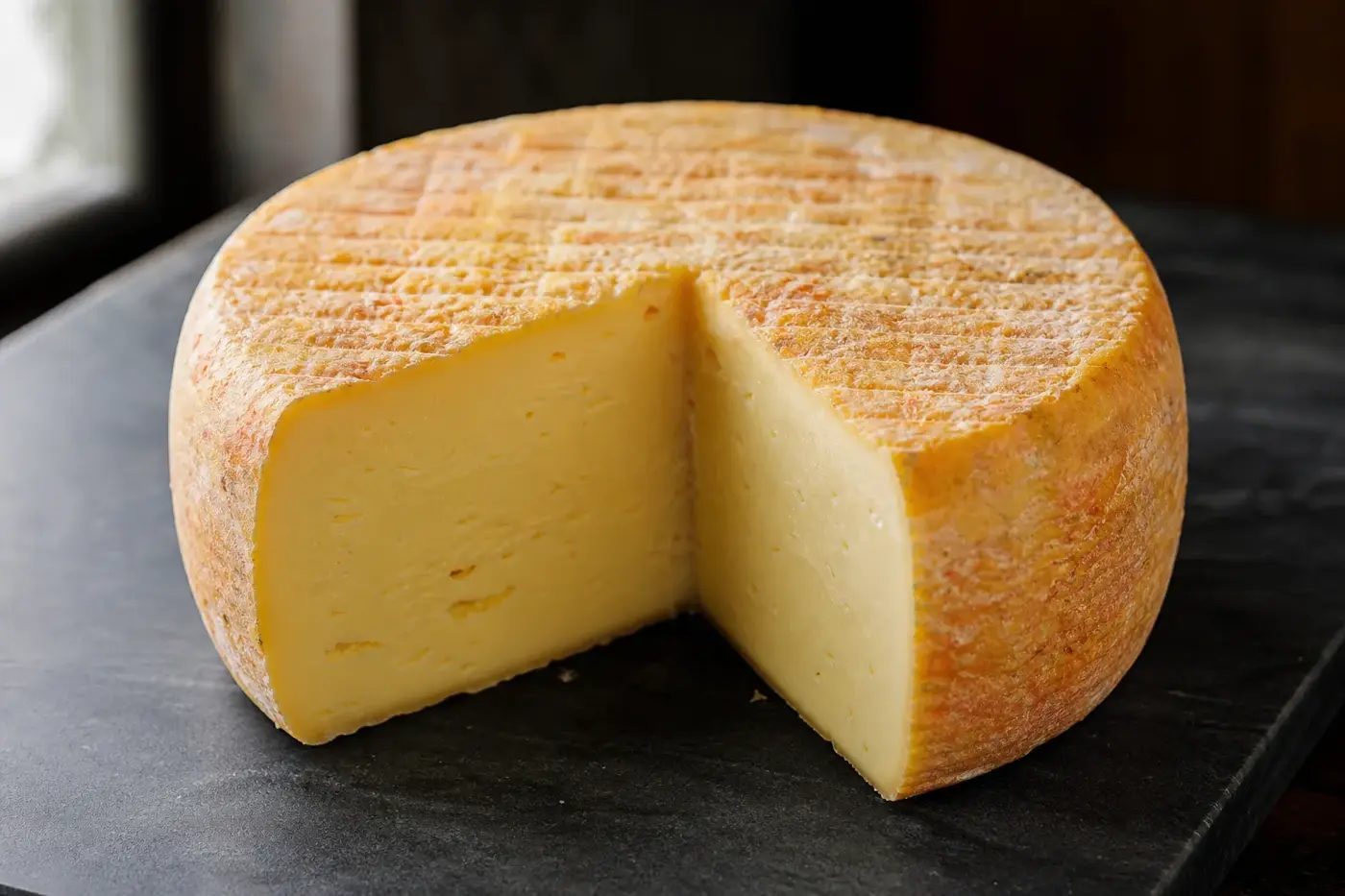
A mottled peach and orange rind catches your eye. Then comes the aroma, followed by the promise of a yielding centre. Milleens is not a cheese that waits quietly to be introduced. [1][2][3]
Follow it home and you reach the Beara Peninsula in County Cork. Here, Veronica and Norman Steele began making cheese in 1976. Their soft to semi-soft cow’s milk cheese, washed in brine as it matures, helped set the Irish farmhouse cheese revival in motion. Quite a journey from a family experiment. [1][2][3]
| Your introduction to Milleens | What to know |
|---|---|
| Name | Milleens. [1] |
| Where it is made | Milleens, near Eyeries, Beara Peninsula, County Cork, Ireland. [1] |
| Who makes it | The Steele family’s Milleens cheesemaking operation; producer’s website, November 2026. [1] |
| Milk | Cow’s milk, from Friesian cows grazing on Beara, according to the producer. [1] |
| Milk treatment | Pasteurised cow’s milk in Bord Bia’s published guide; current producer confirmation: Not established here. [3] |
| Style and rind | Soft to semi-soft; brine-washed rind. [1] |
| Published maturation range | 4 to 12 weeks, according to Bord Bia; current producer confirmation: Not established here. [2] |
| Registered name, authority and register ID | Not established here |
| Protection status in the EU | Not established here |
| Protection status in Great Britain | Not established here |
| Protection status in Northern Ireland | Not established here |
| Protection status in Switzerland | Not established here |
| Protection status in the United States | Not established here |
| Current coagulant | Not established here |
This page summarises published guidance from the official sources it cites. It is not medical advice. Guidance differs between countries and changes over time, so check the current source for where you live, and ask your doctor, midwife, pharmacist or dietitian about your own circumstances.
Come to Beara, and meet Brisket
This story starts with household experiments, rather than an anonymous recipe passed down through centuries. The family’s account records the Steeles arriving at Milleens in 1975 and first making cheese in 1976. Bord Bia also credits Veronica with starting Milleens in 1976. [1][2]
Norman belongs in the picture too. Bord Bia’s Your Guide to Irish Farmhouse Cheeses names Veronica and Norman as the people who began making cheese on their land at Milleens. It also remembers their cow, Brisket, and their later decision to stop keeping their own herd and buy milk from a neighbouring farm. [3]
You can see the beginnings of the cheese in that close relationship between a household, its animals and their milk. As cheesemaking developed, the milk supply changed. The farm remained its reference point, even as the family found a different way forward. [3]
A modest start, a lasting place in Irish cheese
Bord Bia places Milleens at the beginning of modern Irish farmhouse cheesemaking. Its published guide describes Veronica as a pioneer who played down her own importance. That modesty makes a striking contrast with the cheese’s lasting place in accounts of the revival. [2][3]
The flavour gives you another way into that history. Milleens brought the emerging farmhouse movement something soft, aromatic and closely tied to its makers and its place. Bord Bia describes herbs, earthiness and a spicy tang, which tells you rather more than “strong” ever could. [2]
Give it room to show you its balance of rind, texture and flavour. If you are finding your way around the category, how to tell cheese styles apart introduces washed, bloomy and other rinds. It is a useful place to begin before you start comparing.
The family farm is still at the heart of it
According to the producer’s website, cheesemaking continues on the same family farm. Small batches and traditional brine washing remain part of the work. The milk comes from Friesian cows grazing on the Beara Peninsula, and the production address remains Milleens, Eyeries, County Cork. [1]
Bord Bia’s older guide introduces you to the next generation. Veronica and Norman’s son, Quinlan Steele, became responsible for day-to-day operations. The producer’s present website describes a continuing family operation without assigning individual responsibilities. [1][3]
For milk treatment, Bord Bia’s guide identifies pasteurised cow’s milk. Its online profile also records that Milleens is not made with raw milk. Look at the label on the cheese you are buying, especially when comparing accounts published at different times. [2][3] For more on the distinctions, visit raw milk, thermised and pasteurised cheese.
Find your shape: rounds, Dote and Milleens O
Milleens has more than one silhouette. Bord Bia’s older guide features traditional rounds, the smaller Dote and the ring shaped Milleens O. Quinlan introduced the O by removing a central disc, increasing the exposed surface of the cheese left behind. [3]
Those shapes give you different proportions of rind to interior. Ask the producer which formats are currently available. Treat the older guide as an introduction to the family of shapes, rather than a current ordering list. [3]
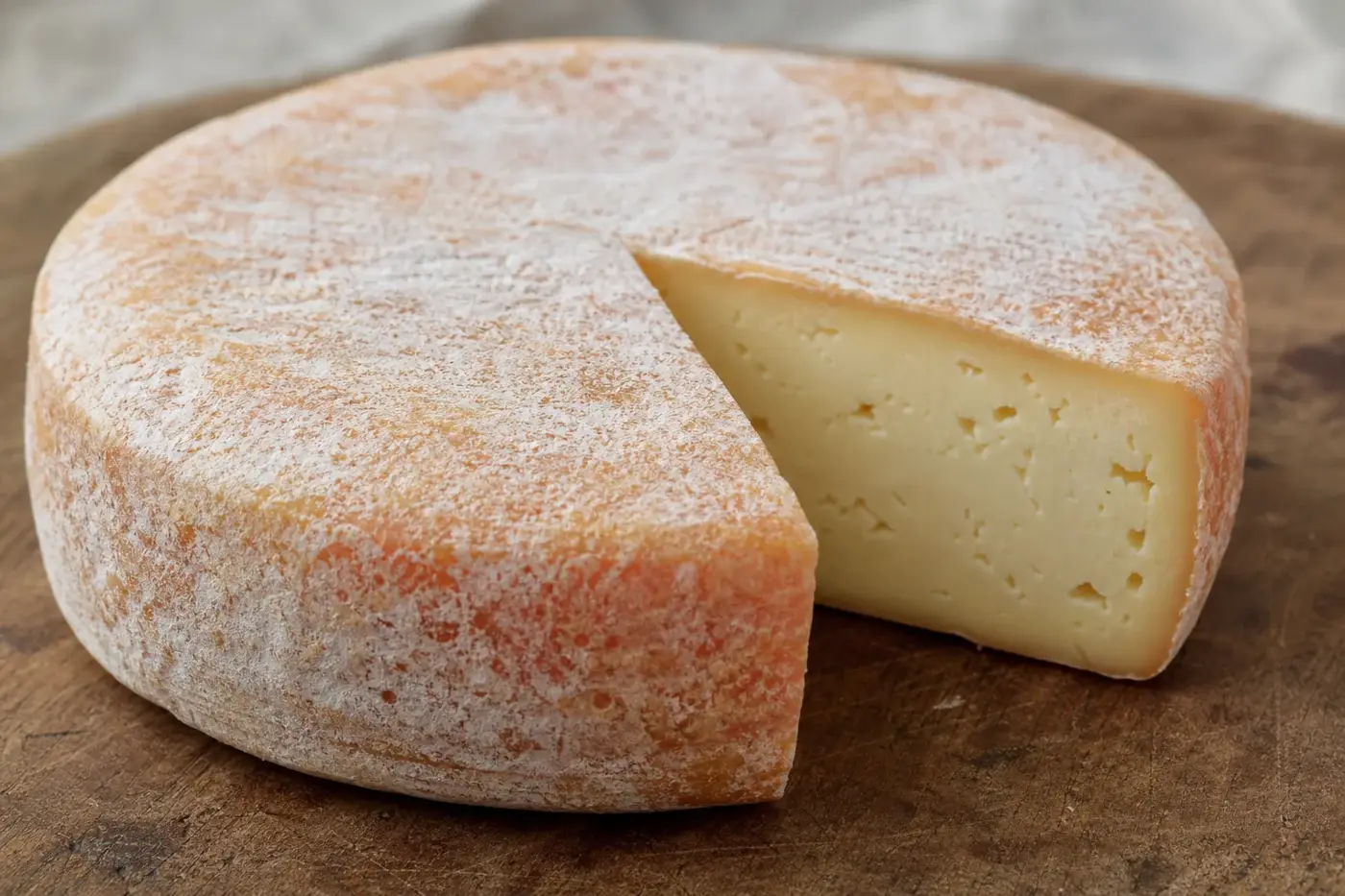
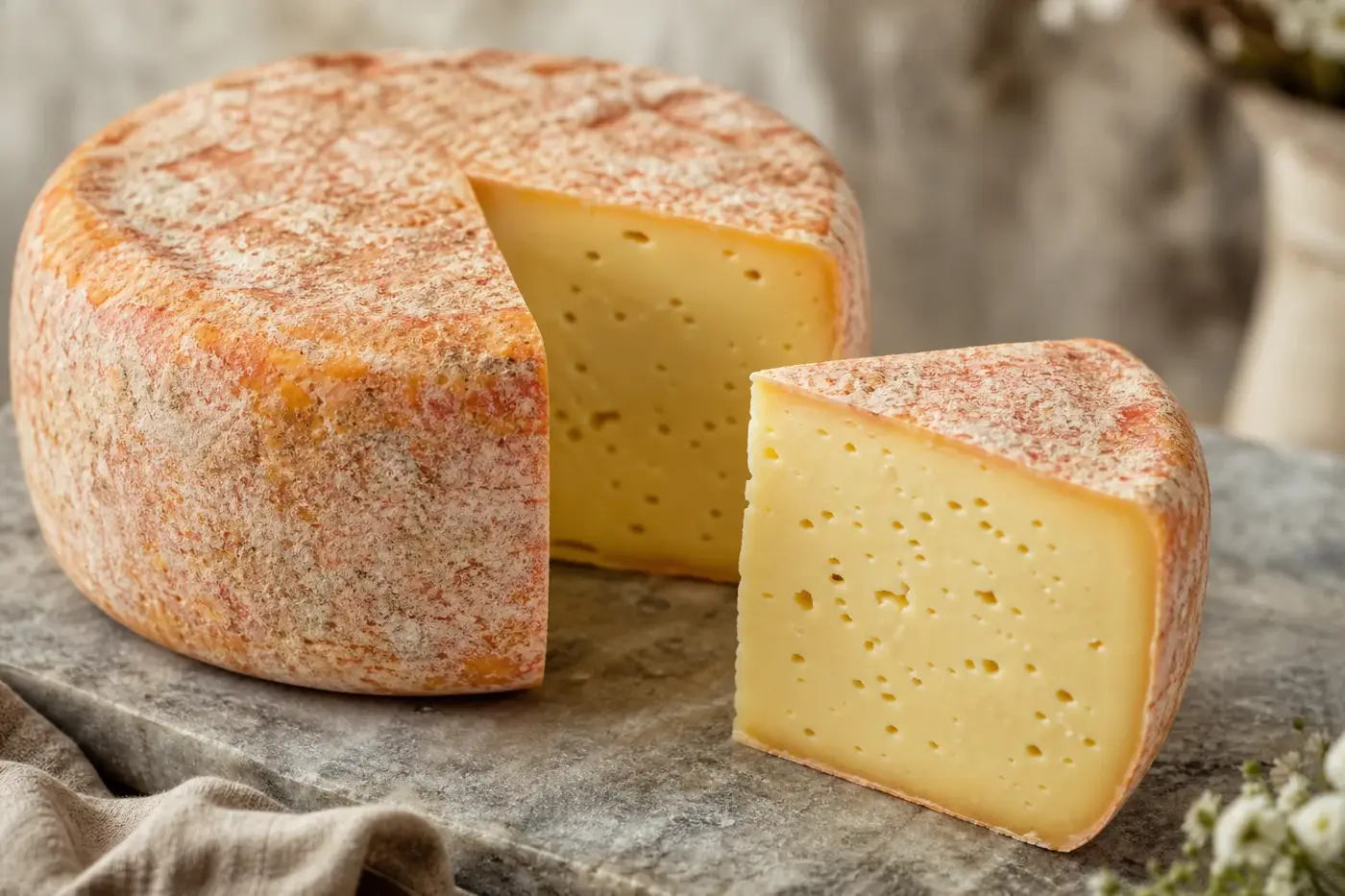
The producer describes a rind mottled from peach through to orange. Beneath it, Bord Bia describes a smooth, semi-soft paste that can become soft enough to spill at maturity. Its guide also notes a little chalkiness at the centre of the O. [1][2][3]
Ask to see the cut face before choosing. Tell the cheesemonger whether you want a sliceable piece or a yielding centre, and when you plan to serve it. The oldest piece is not automatically your best piece: texture and serving date tell you more.
What the salt-water wash brings to the rind
The wash is part of making the cheese, not tidying it up. The producer confirms that Milleens is washed with brine, or salt water, during maturation. Repeated washing helps create the surface conditions in which a characteristic community of microorganisms develops. [1][4]
Research by Wolfe and colleagues explored 137 cheese-rind communities from ten countries through microbial sequencing. Rind type and surface conditions helped explain differences between those communities. By reconstructing communities experimentally, the researchers also showed that changing the rind environment could alter their composition. [4]
The same study found flavour-related metabolic pathways enriched in washed-rind communities. These included pathways associated with volatile sulphur compounds, helping to explain the style’s pronounced aromas. It is a good reason to pay attention to the surface throughout ripening. [4]
Inside, the changes need not keep pace with the rind. An observational study of three batches of a high-moisture washed-rind cheese found different acidity changes at the rind, beneath it and in the centre. When you choose your piece, give the cut face as much attention as the outside. [5]
Taste your way from fresh milk to earthy notes
Young Milleens is mild and lactic; maturity brings more developed floral, herbal and earthy notes, according to the producer. If “lactic” feels like tasting vocabulary getting in your way, think of the fresh, milk-derived acidity you know from cultured dairy foods. These descriptions come from the maker, rather than a tasting for this article. [1]
Bord Bia draws a useful distinction between pronounced farmyard aromas and a smooth paste, delicate herbs and spicy tang. Your nose and palate have different things to discover. “Strong” is doing rather too much work if it is your only tasting word. [2]
Try three stages. Notice the aroma first, then consider whether the paste feels firm, supple or flowing. Finally, pay attention to the finish after swallowing.
For your second mouthful, add bread and compare. There is no need to reach for specialist vocabulary. You are simply finding out whether you prefer Milleens alone or with an accompaniment.
Choose your piece, and get to know its rind
Start with the documented appearance: a mottled peach or orange rind and an interior that suits the maturity you want. Published descriptions cover both firmer and very soft paste. Ask how the cheese has been kept, when it was cut and whether it will suit your serving date. [1][2]
For the rind, turn to the maker’s label and ask the cheesemonger about that particular cheese. Bord Bia’s glossary describes the rinds of some externally ripened cheeses as generally edible. It gives no current rind instructions specific to Milleens. [3]
Keep quality and food safety as separate questions. Ireland’s Food Safety Authority advises following storage instructions and not eating food after its use-by date. A stronger aroma or softer paste is no reason to set those instructions aside. [6][7]
Keep it cold, with a plan for leftovers
Keep cold food below 5 °C, separate raw foods from ready-to-eat foods, and use clean surfaces and utensils. These recommendations come from the Food Safety Authority of Ireland’s Irish official guidance, November 2026. Keep Milleens covered in the fridge and follow the label’s storage and opening instructions. [6][7]
Set aside the portion you want to serve and leave the rest refrigerated. Use a clean knife and board, away from equipment used for raw meat. Separating the serving portion also helps you keep track of cheese put out for guests. [7]
Cheese still in its packaging and a cooked dish containing cheese need different treatment. For packaged cheese, follow its own instructions. For cooked leftovers, FSAI’s home guidance says to cool quickly, within two hours, then cover and refrigerate. [6]
Use those cooked leftovers within two days or discard them. [6] For help with the wider routine, see how to store cheese at home.
Make a little room on the plate
Begin with a modest piece, plain bread and one fruit accompaniment. Fresh pear or apple is a suggested starting point. Keep the fruit separate so you can compare a mouthful with it against one without.
For serving temperature and any applicable consumer time limit, follow the product label and consult current official guidance for where you live. The cited sources establish neither for Milleens. Let those instructions guide your serving routine.
Cut a round into wedges so every portion gets both rind and centre. If you have bought a wedge, cut across it rather than claiming only the softest edge. Cheese lovers do notice these things.
Keep bread and fruit on separate parts of the plate, leaving guests to choose how much to combine. For a simple meal, try Milleens with crusty bread, sliced pear and a plain green salad. Put strongly flavoured dressings to one side at first, so you can get to know the cheese before adding other flavours.
Pour something that gives Milleens room
Try still water as an alcohol free accompaniment while you taste the cheese alone. With bread and fruit, sparkling apple juice is another suggestion. These are serving ideas, rather than the results of a site tasting.
Questions people ask
Where is Milleens made?
Milleens is made near Eyeries on the Beara Peninsula in County Cork, Ireland. Veronica and Norman Steele first made the cheese there in 1976.
What does Milleens taste like?
Young Milleens is mild and lactic, while maturity brings floral, herbal and earthy notes, according to the producer. Bord Bia describes delicate herbs and a spicy tang, alongside pronounced farmyard aromas.
Is Milleens made with pasteurised milk?
Bord Bia’s guide identifies pasteurised cow’s milk, and its online profile says Milleens is not made with raw milk. Current confirmation from the producer has not been verified, so check the label on the cheese you are buying.
Can you eat the rind of Milleens?
Bord Bia says the rinds of some externally ripened cheeses are generally edible, but gives no current rind instructions specific to Milleens. Check the maker’s label and ask the cheesemonger about the particular cheese.
How should Milleens be stored?
The Food Safety Authority of Ireland advises keeping cold food below 5 °C and following storage instructions. See its guidance and do not eat food after its use by date.
Sources
- Milleens Cheese, Milleens Cheese, undated producer website, retrieved November 2026. Producer statements about location, family history, milk, washing, sensory character and pairings. Producer website.
- Bord Bia, Milleens Cheese, undated online producer profile, retrieved November 2026. Historical attribution, cheese character, published maturation range and product information. Bord Bia profile.
- Bord Bia, Your Guide to Irish Farmhouse Cheeses, publication year not verified, printed page 81 and glossary. Historical publication hosted by the Irish farmhouse cheesemakers’ association. Published guide.
- Wolfe, B. E., Button, J. E., Santarelli, M. and Dutton, R. J., Cheese rind communities provide tractable systems for in situ and in vitro studies of microbial diversity, Cell, volume 158, issue 2, 2014. Research article.
- Journal of Dairy Science, Crystallization and demineralization phenomena in washed-rind cheese, volume 100, issue 11, 2017. Retrieved abstract describes the three-batch observational study and regional acidity changes. Research article.
- Food Safety Authority of Ireland, Healthy eating, food safety and food legislation: A guide supporting the Healthy Ireland Food Pyramid, retrieved edition, publication year not verified, printed page 79. Official guidance.
- Food Safety Authority of Ireland, Safe Food to Go, retrieved edition, publication year not verified, sections on temperature control, cross-contamination and food handling. This is workplace guidance; the room-temperature limit is attributed to that source. Official guidance.
This article combines desk research from producer statements, Bord Bia publications, primary cheese-rind research and Irish official food-handling guidance.
Last checked: November 2026
Last checked November 2026.
The editors suggest you read next