Gubbeen
The Atlantic lies along one boundary, Mount Gabriel rises behind you, and in the dairy a cheese is quietly finding its character.
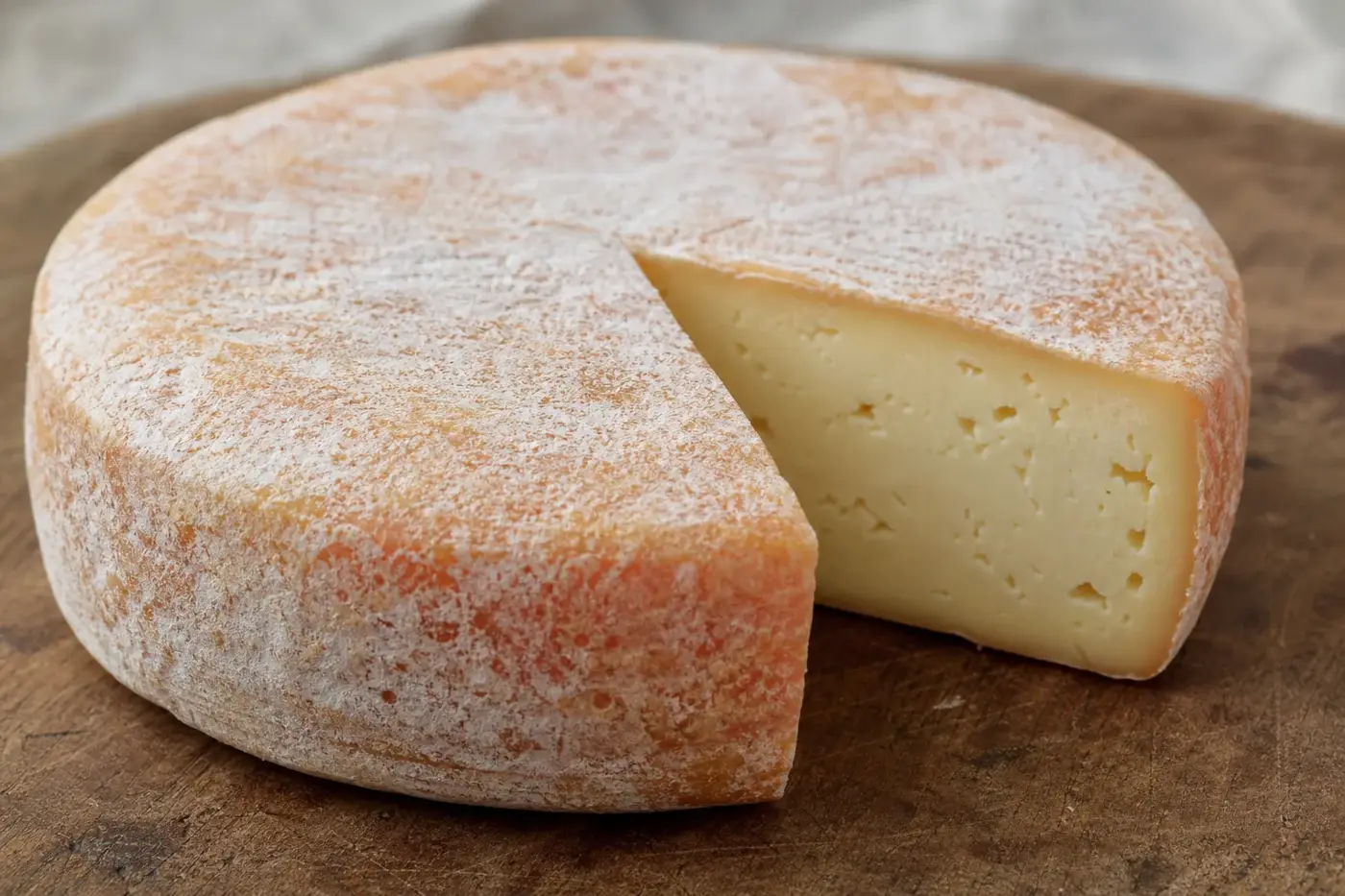
The Atlantic lies along one boundary, Mount Gabriel rises behind you, and in the dairy a cheese is quietly finding its character. You are at Gubbeen Farm, near Schull on the West Cork coast, where the Ferguson family turns its own herd’s milk into cheese. Salt and water washes, with white wine used during rind care, shape the living surface. Inside, Bord Bia describes a yielding cheese that grows earthier as it matures. [2][4][7]
| Gubbeen at a glance | Your quick guide |
|---|---|
| Origin | Gubbeen Farm, near Schull, County Cork, Ireland. [1][3] |
| Style | Semi-soft, washed-rind cow’s milk cheese. [4] |
| Milk source | The producer’s own herd. [2] |
| Milk treatment | Pasteurised in Murray’s Cheese’s published ingredient declaration; current producer confirmation: Not verified. [6] |
| Rennet | Animal rennet; the producer states it is not vegetarian. [5] |
| Original formats | Approximately 400 g, 1.4 kg and 3.5 kg, according to the producer. [2] |
| Typical maturation | About four weeks; about eight weeks for the larger Extra Mature cheese, according to the producer. [2] |
| Allergen | Milk. [5] |
| Protection status | EU: Not verified; Great Britain: Not verified; Northern Ireland: Not verified; Switzerland: Not verified; United States: Not verified. |
Come closer to the West Cork farm
Gubbeen is the name of both the cheese and its townland. The family describes six generations of dairy farming here, with the coastal position encouraging early grass growth and an early start to grazing. The milk becomes cheese on the very farm that produces it, keeping pasture, herd and dairy in the same story. [1][2]
The family’s older published account places the farm just outside Schull. Cheesemaking, livestock, gardens and the smokehouse developed alongside one another, each finding a role. Whey, the liquid separated from cheese curd, fed the pigs; garden herbs made their way into the smokehouse’s foods. [7]
You can see why “Irish washed-rind cheese” only gets you so far. Gubbeen belongs to a particular household and coastal landscape. Its character also reflects the family’s decisions about what that land could produce.
Thinking of visiting? The producer currently says there is no farm shop and no farm tours are offered. Check its own contact information before you travel. [3]
Inside the small dairy where it began
Cheesemaking began at Gubbeen in the 1970s, according to the producer. The family account takes you into a small dairy beside the house. There, two generations worked together to develop the cheese. [1][7]
Bord Bia, Ireland’s food promotion body, traces the experiences that fed those experiments. Goat’s milk cheesemaking in Spain and encounters with French cheeses came first. Cottage cheese and other fresh cheeses followed after the family settled into farming in Ireland. Recognisable Gubbeen emerged through practical experimentation, rather than an ancient recipe kept unchanged. [4]
Here was an established dairy farm discovering a comparatively recent cheesemaking tradition. Experience and contact with other makers helped give it shape. Those relationships reached beyond the farm: Bord Bia records that they helped develop into the Irish Farmhouse Cheesemakers Association, CAIS. [4]
What goes into the round you bring home?
Original and smoked Gubbeen both begin with cow’s milk from the farm’s own herd. The producer lists lactic cultures, salt and traditional rennet alongside it. Its separate allergen statement specifies animal rennet. [2][5]
Rennet sets milk into curd. If you are choosing for someone whose diet excludes animal rennet, ask about the actual cheese rather than judging by appearance or country of origin. The guide to rennet and its different sources explains the terminology.
The rounds run from small cheeses to substantially larger wheels. Buying a cut piece? Ask which format it came from and how mature it is. Those answers tell you more than the dimensions of your wedge.
Murray’s Cheese publishes an ingredient declaration specifying pasteurised cow’s milk. The producer’s current cheese page gives the herd as the milk source without specifying milk treatment. [2][6] For the wider distinction, see raw, thermised and pasteurised milk.
Take a good look at that living rind
Gubbeen’s surface receives deliberate attention as it ripens. The producer describes washing with salt and water, with white wine also used, and a succession of yeasts, bacteria and a white surface bloom. These organisms help change the cheese’s appearance, aroma and texture. [2]
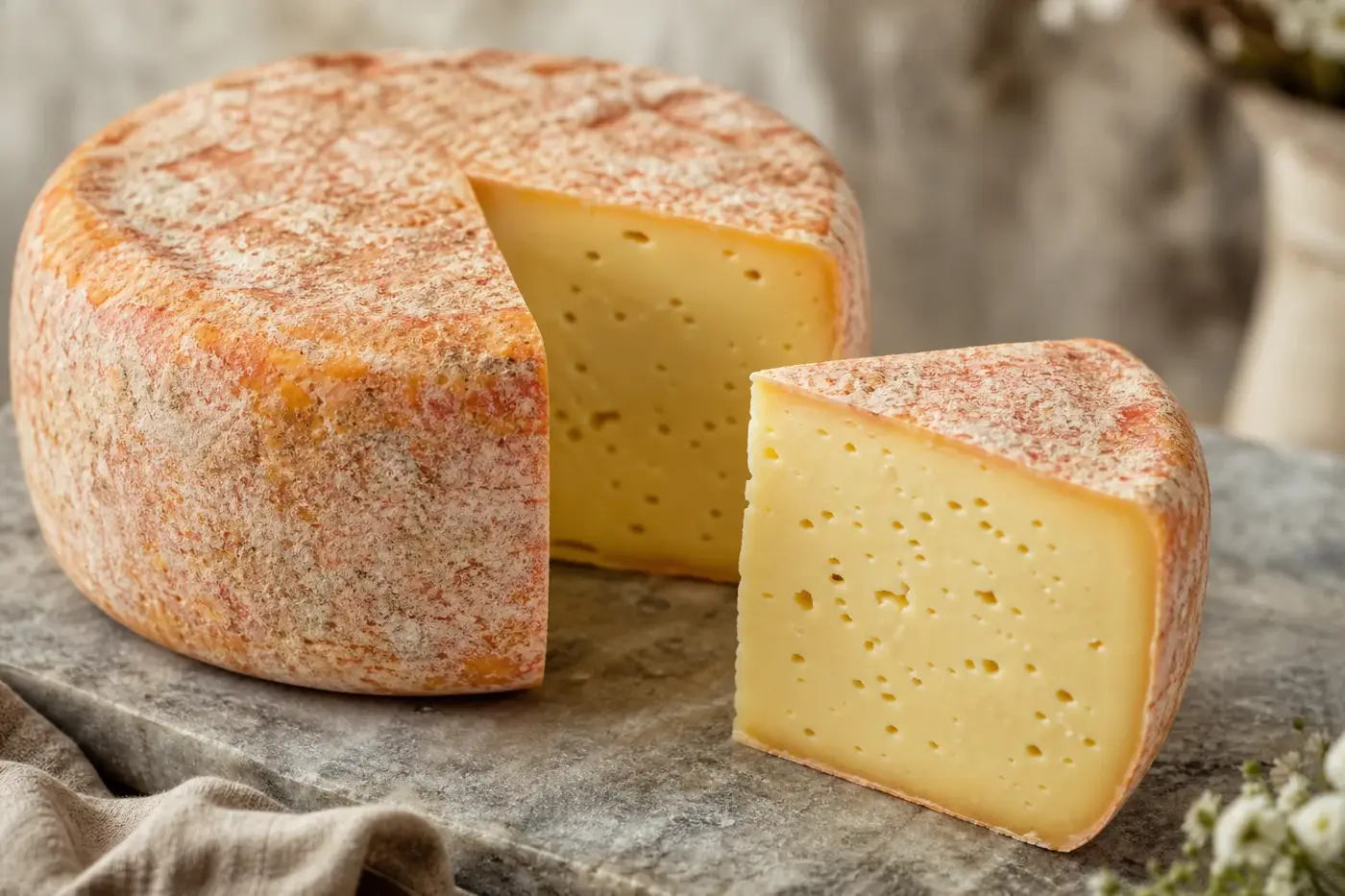
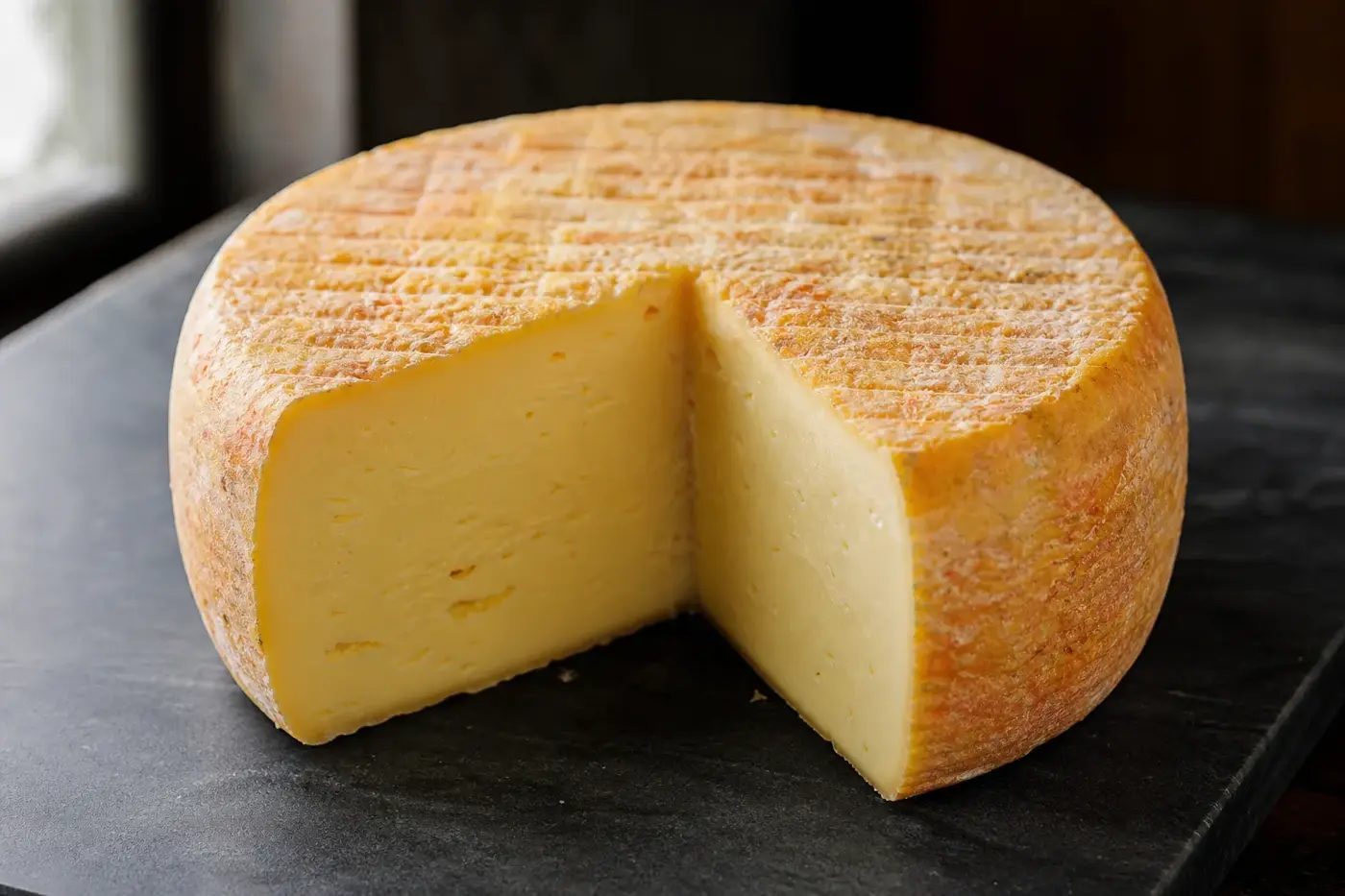
Look closely and there is more to see than an orange coat. Bord Bia describes faded orange, pinkish and beige tones beneath a powdery white bloom. [4] This is a rind with character, not a cheese obliged to dress exactly like its neighbours.
Underneath sits the paste, the cheesemaker’s word for the body of the cheese. Murray’s calls it supple; Bord Bia describes a semi-soft body with small openings. [4][6] Notice that yielding interior against the developed surface as you get to know Gubbeen.
For your first encounter, choose the original washed-rind cheese. Without smoke adding another element, you can focus on the relationship between the rind’s aroma and the flavour inside.
Follow the flavour from meadow to woodland
Butter, hazelnut and meadow flowers are Bord Bia’s descriptions of younger Gubbeen. As it matures, the notes move towards earth, mushrooms and hay. Murray’s also describes a mild, supple younger cheese, with mature wheels developing a more pronounced earthy mushroom character, particularly near the rind. [4][6]
Try a little paste from the centre, then a piece closer to the surface. Give texture a moment of its own, separate from aroma. Does your piece bend or break? Does that woodland character become clearer towards the outside?
Use these questions as a route through your own tasting. You do not need a grand verdict, just a sense of what you enjoy. They also give you something more useful to say at the cheese counter than “something strong”, that wonderfully elastic shopping instruction.
If the floral, milky description appeals, ask for a younger example. If earthier flavours tempt you, ask about a mature wheel. Age changes the character; it is not a quality ranking.
Original and smoked deserve separate introductions
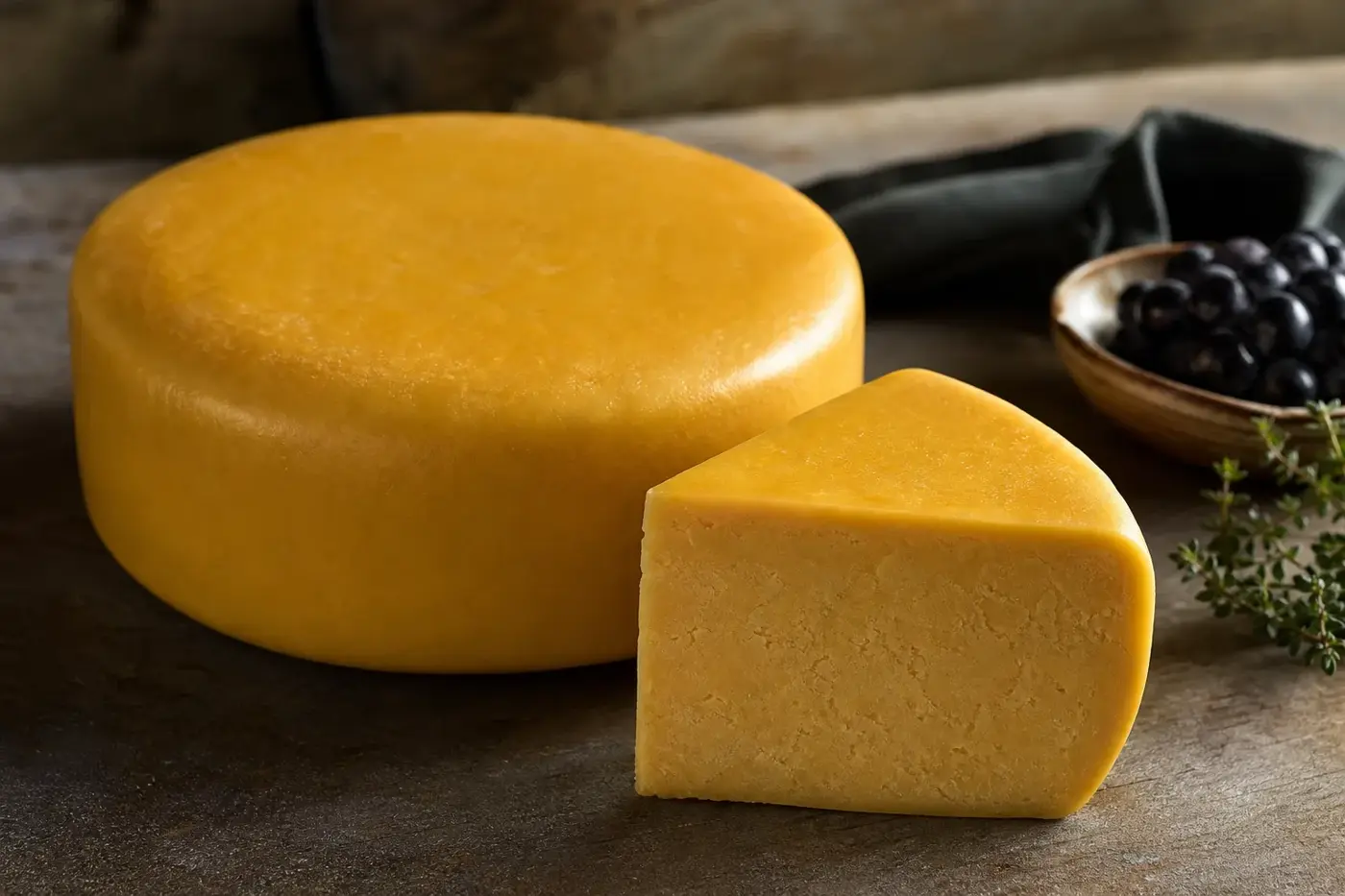
The producer makes traditional washed-rind Gubbeen and a smoked version. The latter is smoked at the dairy, then covered with black wax. The stated aim is gentle smoke that leaves the cheese recognisable. [2]
Bord Bia’s guide names oak and beech as the smoking woods. It describes a semi-hard smoked cheese with a yellow body and mild flavour, finished by subtle smoke. [8] That gives you a distinct choice from the original, whose surface bloom remains central to its presentation.
Let the label’s name and description guide you, rather than colour alone. To compare them, ask for pieces of similar maturity and serve them separately. Taste the original first, then the smoked version, with plain bread between them.
Make the cheese counter work for you
Ask whether you are buying original or smoked Gubbeen, when the wheel was cut, and which maturity suits your taste. If a whole small round catches your eye, ask how its character compares with the larger wheel being cut. A few questions make choosing more rewarding.
Remove the smoked cheese’s black wax: it is not food. [2] For the original’s ripened rind, ask the producer whether it is intended to be eaten with your particular piece. Do not assume either way.
Follow the label and your seller’s storage directions for a cut piece. The Food Standards Agency’s November 2026 guidance advises keeping a home fridge at 5 °C or below. That guidance applies to England, Wales and Northern Ireland. [9]
Put out only what you intend to serve, rather than leaving your whole supply on the table. For wrapping and refrigerator organisation, turn to storing cheese at home.
Cut a small round into wedges so everyone gets both centre and edge. Aim for that same balance when dividing a larger wedge. For an introductory tasting, keep the accompaniments simple and let the cheese have your attention.
Set the table with bread, fruit and a glass
Start with plain sourdough or brown soda bread and slices of apple or pear. These suggestions give you a simple base and a fresh contrast. Sweeter or more assertive accompaniments can have their turn later.
Put chutney or fruit paste alongside the cheese, rather than over it. That leaves each person free to choose how much to add. Comparing original and smoked Gubbeen? Keep the bread and fruit the same for both.
Bord Bia suggests aromatic white wine or beer with the original, and cider or Syrah with smoked Gubbeen. [4] For an alcohol-free option, try sparkling apple juice or an alcohol-free cider. Begin with a less sweet example.
Alcoholic suggestions are for adults of legal drinking age who choose to drink. Offer small servings and an alcohol free option alongside. People who are pregnant, driving, taking medicines that interact with alcohol, or recovering from alcohol dependence should not drink; the NHS advises avoiding alcohol during pregnancy. [10]
Keep things simple in the kitchen
Try slices in a toasted sandwich, pieces over a baked potato, or a little added to cooked mushrooms. These are uncomplicated ways to use Gubbeen without crowding it with other flavours. Choose the original for its own character, or the smoked version when smoke belongs in your intended seasoning.
Start with a familiar dish before changing several ingredients at once. You can judge how much cheese you enjoy and whether the rind’s texture suits what you are making. Use these ideas as starting points for your cooking, adjusting to your taste.
Find the guidance that fits your diet
Gubbeen contains cow’s milk, and the producer specifies animal rennet for both versions. That makes it unsuitable for vegetarians whose diet excludes animal rennet. Read the actual pack for complete ingredient and allergen information. [2][5]
During pregnancy, consult the advice for your country. The UK NHS guidance for November 2026 explains which cheeses to avoid and when cooking changes its advice. [10]
Ask your midwife or another appropriate health professional how that guidance applies to the particular product you are considering. For the separate dietary questions, see cheese allergy and lactose intolerance.
General information only, not medical advice: follow the official guidance where you live.
Questions people ask
Where is Gubbeen cheese made?
Gubbeen is made at Gubbeen Farm near Schull in County Cork, Ireland. The milk comes from the farm’s own herd.
What does Gubbeen taste like?
Bord Bia describes younger Gubbeen as having notes of butter, hazelnut and meadow flowers. As it matures, the flavour moves towards earth, mushrooms and hay.
Is Gubbeen vegetarian?
No. The producer says both original and smoked Gubbeen contain animal rennet.
Is Gubbeen made with pasteurised milk?
Murray’s Cheese lists pasteurised cow’s milk in its published ingredient declaration. The producer’s current cheese page confirms the herd source but does not state the milk treatment.
Can you eat Gubbeen during pregnancy?
The UK NHS guidance explains which cheeses to avoid during pregnancy and when cooking changes its advice. Consult the current NHS guidance and ask your midwife or another appropriate health professional how it applies to the particular product.
Sources
[1] Gubbeen. Gubbeen, producer’s homepage, undated current web edition, accessed November 2026. Read at gubbeen.com
[2] Gubbeen. Gubbeen Cheese; Smoked Cheese, producer’s cheese page, undated current web edition, accessed November 2026. Read at gubbeen.com
[3] Gubbeen. Get in touch, undated current web edition, accessed November 2026. Read at gubbeen.com
[4] Bord Bia. Gubbeen Farmhouse Products, undated current web edition, accessed November 2026. Read at bordbia.ie
[5] Gubbeen. Allergens, undated current web edition, accessed November 2026. Read at gubbeen.com
[6] Murray’s Cheese. Gubbeen, product description and published ingredient declaration, undated current web edition, accessed November 2026. A retailer’s own product information and tasting description. Read at murrayscheese.com
[7] Gubbeen. Gubbeen Cheese: Home Page, undated legacy producer account, retrieved November 2026. Read at hampers.gubbeen.com
[8] Bord Bia. Your Guide to Irish Farmhouse Cheeses, first edition, 2010, Gubbeen entries. Read at bordbia.ie
[9] Food Standards Agency. How to chill, freeze and defrost food safely, published 18 December 2017, current retrieved edition, applies to England, Northern Ireland and Wales. Read at gov.uk
[10] NHS. Foods to avoid in pregnancy, current retrieved web edition, accessed November 2026. Read at nhs.uk
This desk-researched article compares the producer’s accounts with Bord Bia’s cheese descriptions, a retailer’s ingredient declaration and official UK consumer guidance.
Last checked: November 2026
Last checked November 2026.
The editors suggest you read next