Cheese of the Republic of Ireland
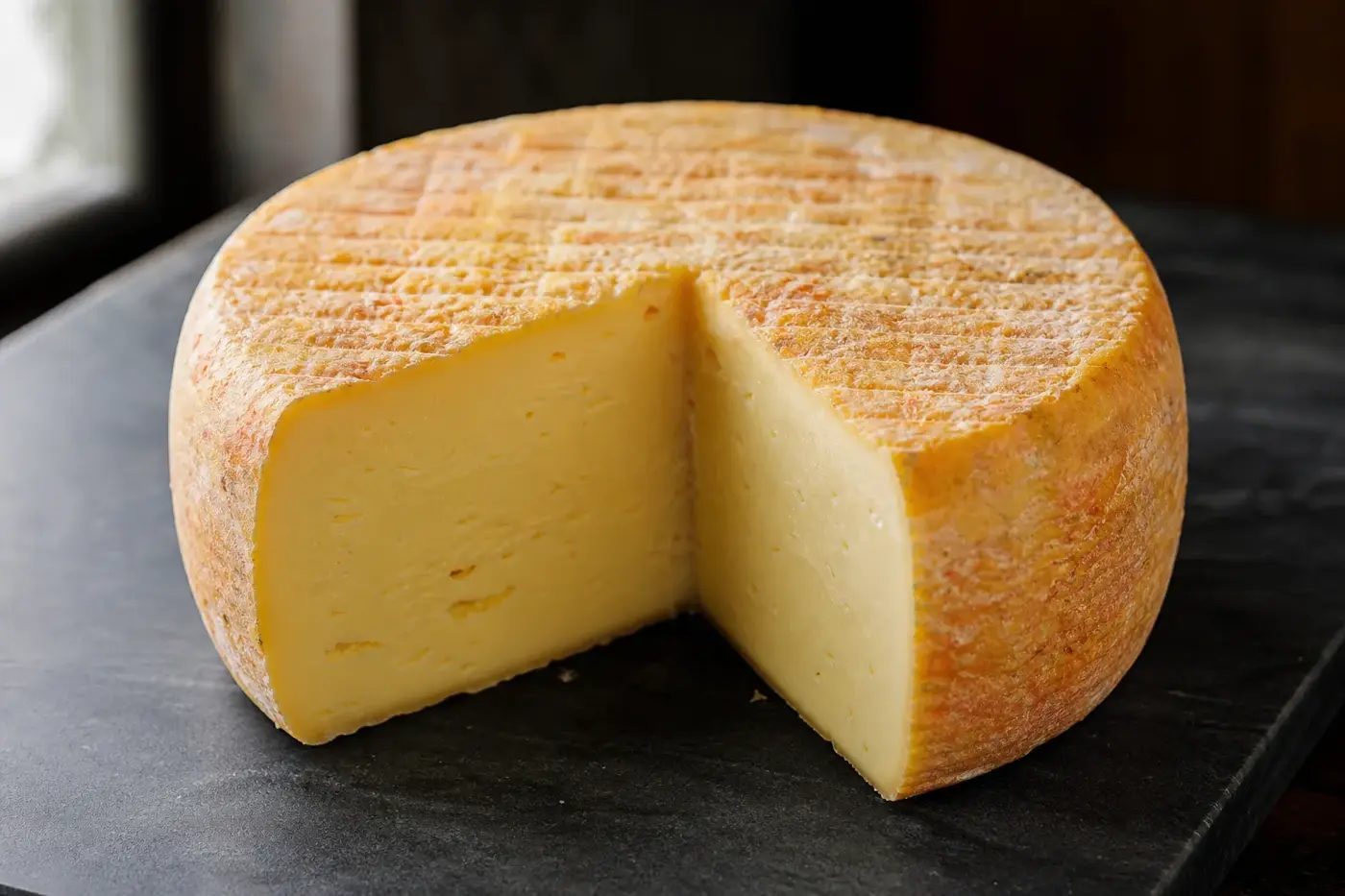
On the Beara Peninsula in West Cork, brine washes over Milleens as its rind turns peach and orange.
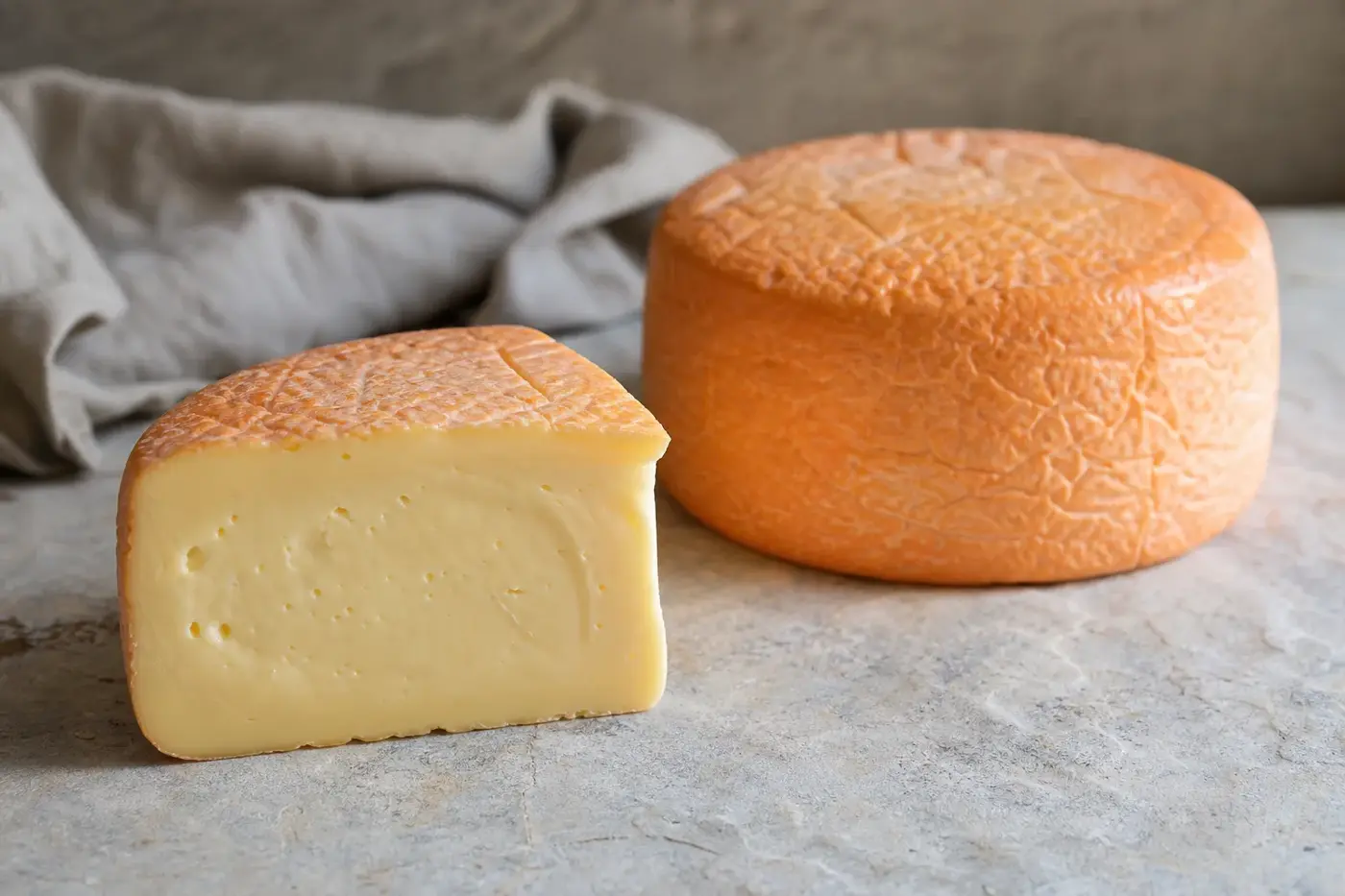
On the Beara Peninsula in West Cork, brine washes over Milleens as its rind turns peach and orange. Taste it young and you find mild, lactic flavours. Give it time, and its maker describes floral, herbal and earthy notes coming forward. This is a cheese worth getting to know at more than one age.[4]
Alongside Durrus and Gubbeen, Milleens helped establish Ireland's modern farmhouse cheese revival. Small dairies turned local milk into cheeses with personalities of their own. Today, you can explore Cheddar and Gouda-style wheels, blues and fresh goat cheeses. Your cheeseboard need not suffer from a lack of candidates.[3][4][5][7][8]
Get your cheese bearings
| What to know | The essentials |
|---|---|
| Country covered | Republic of Ireland, excluding Northern Ireland.[2] |
| Milk you'll encounter | Cow, goat and sheep.[5][8] |
| Industry association | CÁIS, the Irish Farmhouse Cheesemakers Association, an industry body.[3] |
| Official guidance | Food Safety Authority of Ireland and Health Service Executive.[13][14] |
Which Ireland is on your cheeseboard?
This guide takes you through cheese made in the Republic of Ireland. Northern Ireland has its own makers and a separate place in this reference, Northern Irish Cheese. That distinction matters when you're choosing by origin.[2][5]
Look for the dairy's production location. An Irish-sounding name, a distributor's address or membership of an island-wide association cannot tell you where a cheese was made. The name may catch your eye; the dairy's location gives you the answer.[2][5]
Follow the grass to the cheese vat
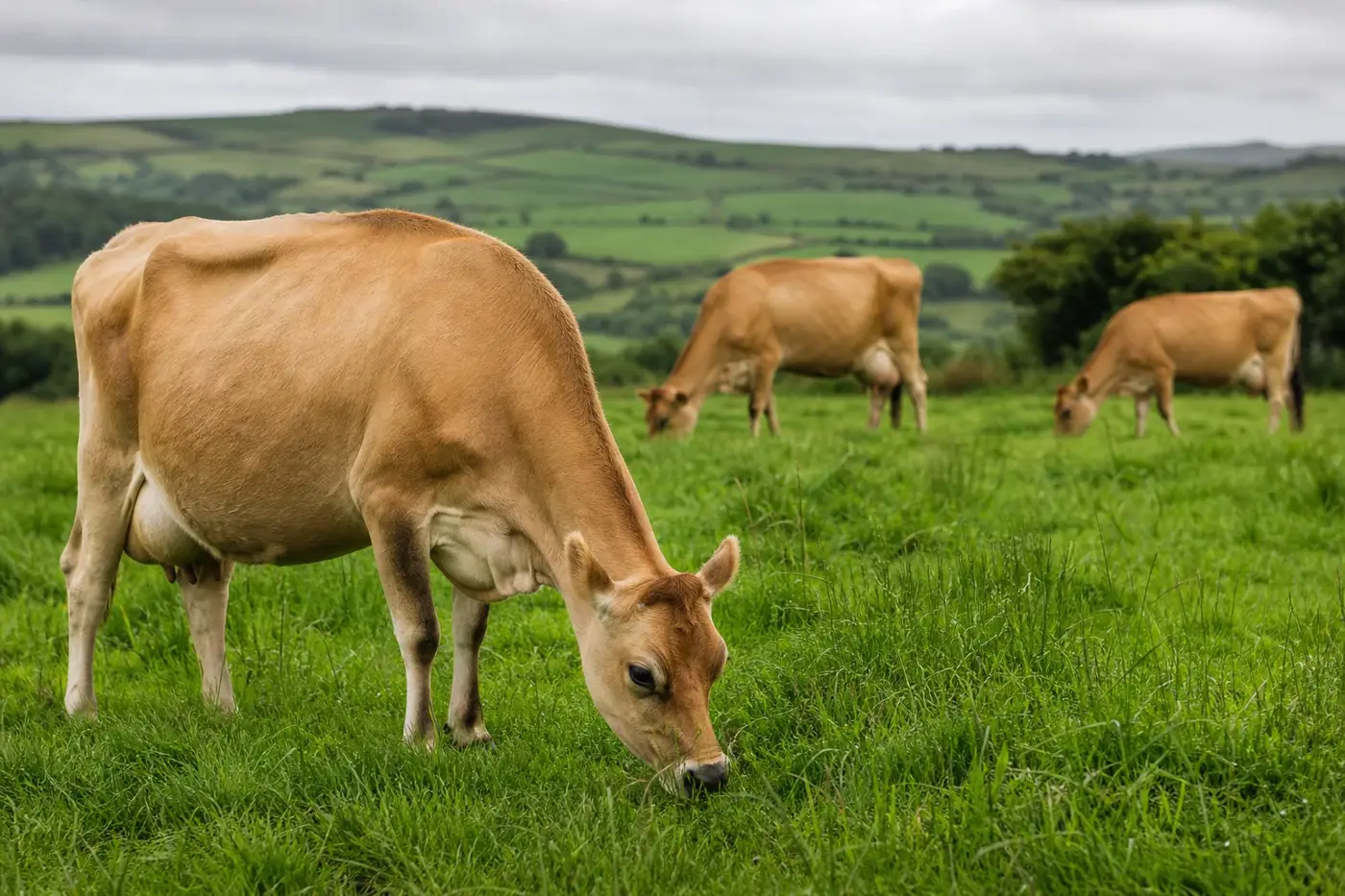
That green landscape does more than look good on a label. Teagasc, Ireland's agriculture and food development authority, describes a dairy system built around turning grazed pasture into milk. A temperate maritime climate supports grass growth and grazing, feeding the milk supply that reaches the vat.[1]
Look closer, and the landscape changes from farm to farm. Gubbeen says its coastal position in West Cork allows early grazing, while Coolea describes a mountain farm in County Cork. At Inagh, County Clare, St Tola identifies its land as peaty pasture south of the Burren. These are distinct farming places within western and southern Ireland's relatively compact geography.[5][6][7][8]
Can you taste the pasture? A peer-reviewed review says pasture feeding can affect milk composition and dairy colour, texture and aroma, although some sensory differences are subtle for ordinary consumers. Feed is only part of the picture. Coolea's firm paste and Milleens' soft washed rind also reflect very different cheesemaking methods.[4][7][15]
From busy creameries to kitchen experiments
Ireland's commercial dairying story was well under way before the farmhouse revival. A historical study published in 1997 traces the first co-operative creamery to 1889, followed by a substantial network of private and co-operative creameries. Later consolidation centralised processing. Plants chiefly making butter branched into cheese and other dairy products.[2]
The farmhouse movement took a smaller, more personal route. Think batches, experiments and direct connections between farms, kitchens and customers. Milleens places its beginnings in the 1970s; Coolea began in 1979 as a small-farm hobby that grew into an enterprise. CÁIS records Durrus making cheese from 1979 too.[3][4][5][7]
In 1983, the National Dairy Council helped establish CÁIS, the Irish Farmhouse Cheesemakers Association. Its account brings together education, hygiene work, suitable premises and collaboration with University College Cork and the Agricultural Institute at Moorepark. Individual invention mattered. Shared knowledge and practical support helped keep the revival going.[3]
Nobody settled on a single farmhouse recipe. West Cork's washed-rind makers developed distinctive soft cheeses, while Coolea followed a Dutch Gouda recipe. Cashel Farmhouse Cheesemakers established a blue-cheese business in Tipperary in 1984. St Tola's goat cheesemaking offered another route, with a different animal, milk supply and range of formats.[4][5][7][8]
Five cow's milk cheeses to make room for
Start with Milleens, from Eyeries on the Beara Peninsula in West Cork. Its maker describes a soft to semi-soft cow's milk cheese, washed with brine to develop that peach and orange rind. Young, it tastes mild and lactic; with maturity, the notes become floral, herbal and earthy. Choose your piece by ripeness as well as name.[4]
Durrus is made near Durrus in West Cork, using cow's milk from neighbouring farms. CÁIS describes a semi-soft cheese beneath a mottled pink-orange washed rind. Nearby in West Cork, Gubbeen uses milk from its own herd for its washed-rind cheese and a smoked version. Here you have two different milk arrangements within farmhouse production.[5][6]
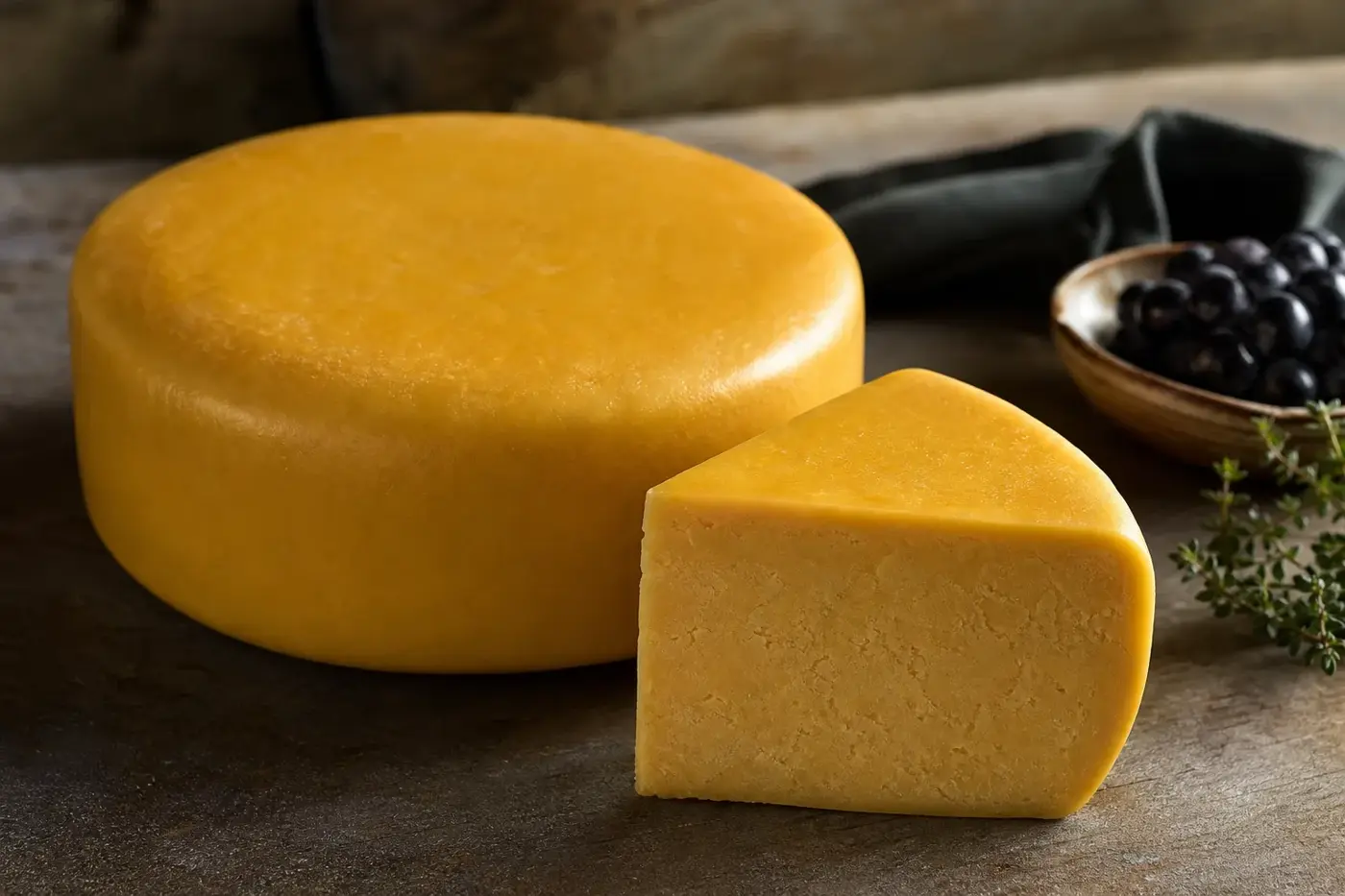
Try Coolea for a firm counterpoint. Made in County Cork from pasteurised cow's milk, it follows a Dutch Gouda recipe, with curds washed, moulded, pressed and brined. Extended maturation brings a harder cheese and what its maker describes as an almost toffee-like sweetness. You can explore the broader family in how cheese styles differ.[7]
Cashel Blue takes you inland to Beechmount Farm in County Tipperary. CÁIS identifies it as Cashel Farmhouse Cheesemakers' cow's milk blue, made alongside the sheep's milk Crozier Blue. Bord Bia's 2010 guide describes how it changes with age. A chalkier, mildly blue paste softens, developing more rounded blue flavours.[5][9]
Meet the goats and sheep behind your next slice
At Inagh, County Clare, St Tola makes goat cheeses with milk from its own herd. You can move from fresh cheeses to natural-rind logs, ash-coated cheeses and brined Greek Style. Ask for the particular product rather than simply “St Tola”. The maker describes the Log as citrusy, with hay and herb notes, while fresh Divine is light, whipped and lemony.[8]
Crozier Blue is the sheep's milk counterpart from the Tipperary blue-cheese dairy. Bord Bia's guide records pasteurised sheep's milk and a pale paste threaded with greenish mould. Put it beside Cashel Blue and you can explore two milk species while keeping the maker and broad cheese style in common.[5][9]
Leave a space for the firm cheeses
Cheddar belongs here too, alongside Ireland's soft farmhouse specialities. The creamery system helps explain larger-scale cheesemaking, but CÁIS also documents farmhouse Cheddar producers. Its account of Coolattin describes raw cow's milk cheese made from summer milk. The curds are cheddared, milled and salted by hand.[2][5]
If you're curious about that curd-working method, the Cheddar guide explains the style. Firm Irish cheese also reaches beyond Cheddar, with Coolea offering the Gouda-style example.[7]
At Mogeely in County Cork, Dairygold makes Imokilly Regato. Dairygold describes it as dry and firm, with a piquant finish, and suggests pasta, savoury bakes and other cooking. Firmness gives you a useful starting point when you shop. It tells you surprisingly little, though, about the recipe behind the cheese.[10]
When a place name carries legal weight
Imokilly Regato is the exact registered name in the Great Britain register. That register records PDO, or Protected Designation of Origin, status and an original EU registration date of 5 October 1999. A 1999 application summary described cow's milk cheese made at Mogeely. The milk came from pasture-fed animals within a defined area in south-east County Cork.[12]
| Jurisdiction | Register status: November 2026 | Dated registration record |
|---|---|---|
| Great Britain | Registered PDO | 31 December 2020, 23:00.[11] |
Register identifier: Not established.
The application summary defines a milk-sourcing area of about 3,000 square kilometres, not the whole of County Cork. That legal geography is different from a regional reputation. West Cork's association with washed-rind cheeses describes a concentration of makers, a different kind of claim. The guide to protected cheese names explains the legal distinctions.[4][5][6][12]
Find your first favourite
| Style to explore | Irish example | What you can expect | Where to start |
|---|---|---|---|
| Fresh | St Tola Divine | The maker describes a whipped texture and lemony flavour.[8] | Spread it on plain bread. |
| Bloomy rind | Cooleeney | Bord Bia's 2010 guide describes a white rind, mushroom notes and occasional chalkiness.[9] | Ask how ripe it is. |
| Washed rind | Milleens | The maker describes smooth paste and floral, herbal flavours with maturity.[4] | Compare the rind and centre. |
| Blue | Cashel Blue | Bord Bia describes chalkier young paste that softens with maturity.[9] | Ask for the ripeness you enjoy. |
| Firm | Coolea | The maker describes semi-hard to hard texture and toffee-like sweetness when mature.[7] | Choose by age and texture. |
Ask at the counter, then keep it chilled
Four questions will serve you well at the counter. Where was it made, which animal supplied the milk, was the milk pasteurised, and how ripe is this particular piece? The name cannot answer everything. St Tola says its range includes both pasteurised and raw milk products, so the precise product and label matter.[8]
The guide to cheese labels helps you read the details. Then tell the cheesemonger when and how you'll eat your cheese: tonight's board, sandwiches or cooking. Buying for the moment is more useful than simply asking for the strongest Irish cheese. Strength is not the only qualification for a place in your fridge.
For soft cheeses, ask about the condition of the cut centre. For firm cheeses, ask about age and how the texture has developed. Those answers bring you closer to the piece you actually want.
If you live in the Republic of Ireland, the FSAI identifies soft and semi-soft cheese among chilled ready-to-eat foods relevant to listeriosis risk. Its vulnerable groups include pregnant women, older adults over 65, newly delivered infants, people with diabetes, cancer patients and people undergoing immunosuppressive treatment. Consult its current advice when buying or serving for someone in these groups.[13]
Ireland's HSE gives pregnancy guidance on unpasteurised dairy products, mould-ripened cheeses and blue cheeses. Consult its current advice for the full categories, conditions and exceptions. If you live elsewhere, follow your own country's authority. The milk treatment guide explains the production terms.[14]
Keep chilled ready-to-eat food at 5 °C or below, says the FSAI's listeriosis guidance. Serve it within its use-by date, minimise time outside the cold chain and remove uneaten food promptly after serving. Put out a small selection and replenish it rather than displaying everything at once.[13]
Follow the pack's storage instructions. For more practical help, turn to storing cheese at home.
Build a board with something to discover
Start with four cheeses: a St Tola goat cheese, one West Cork washed rind, Coolea or an Irish Cheddar, and Cashel Blue or Crozier Blue. You get deliberate contrasts of milk, rind and texture. If white-rinded cheeses are your particular pleasure, swap a bloomy-rind cheese for the washed rind rather than adding another similar-sized portion.
Plain bread, oatcakes, sliced apple or pear, and a little dried fruit are enough alongside. Taste each cheese with bread first, then try the fruit, so sweetness remains your choice rather than covering every mouthful. Variety makes a board generous. You don't need a crowd of cheeses or elaborate accompaniments.
For cider, begin with Milleens, whose maker specifically suggests farmhouse cider. For stout, try Gubbeen: Bord Bia's guide recommends it with darker beers. Treat these as starting points, offer an alcohol-free cider or sparkling apple juice alongside, and keep plain water on the table.[4][9]
Mature Coolea is a suggested whiskey pairing, taking the maker's toffee-like description as the starting point. Try a small serving beside the cheese and decide whether you'd prefer water. Alcoholic suggestions are only for adults of legal drinking age who choose to drink.[7]
People who are pregnant, driving, taking medicines that interact with alcohol, or recovering from alcohol dependence should not drink. The HSE advises that there is no safe time to drink alcohol during pregnancy.[14]
Next time, change one cheese rather than replacing the whole board. Compare Durrus with Milleens, younger Coolea with a mature piece, or Cashel Blue with Crozier Blue. You'll have a clear comparison to enjoy: two makers working within a style, one cheese at different ages, or two milk species from the same dairy.[4][5][7]
General information only, not medical advice: follow the official guidance where you live.
Questions people ask
How can I tell whether a cheese comes from the Republic of Ireland?
Check the dairy's production location. An Irish sounding name, a distributor's address or membership of an association covering the whole island does not establish where it was made.
What is the difference between Cashel Blue and Crozier Blue?
Both come from Cashel Farmhouse Cheesemakers in County Tipperary. Cashel Blue is made from cow's milk, while Crozier Blue is made from sheep's milk.
Are Irish farmhouse cheeses made with raw milk?
Some are. St Tola says its range includes both pasteurised and raw milk products, so check the particular product and its label.
What does Ireland's health service say about cheese during pregnancy?
The HSE gives pregnancy guidance on unpasteurised dairy products, mould ripened cheeses and blue cheeses. Consult its current advice for the full categories, conditions and exceptions.
How should chilled cheese be stored and served?
The Food Safety Authority of Ireland advises keeping chilled ready to eat food at 5 °C or below and serving it within its use by date. It also advises minimising time outside the cold chain and removing uneaten food promptly after serving; consult its current listeriosis guidance and follow the pack's storage instructions.
Sources
- Teagasc. Grassland management and clover. Undated web edition, accessed November 2026. Describes Ireland's pasture-based dairy system and its climatic basis.
- Maynooth University research repository. The Irish Dairy Industry. 1997 paper, repository edition. Historical creamery development, co-operative organisation, consolidation and processing diversification.
- CÁIS, Irish Farmhouse Cheesemakers Association. About CAIS. Undated web edition, accessed November 2026. Association formation and early educational and technical support.
- Milleens Cheese. Milleens Cheese. Producer website, undated edition, accessed November 2026. Place, cow's milk, brine-washed rind, producer history, tasting descriptions and cider suggestion.
- CÁIS, Irish Farmhouse Cheesemakers Association. CÁIS Members. Undated directory edition, accessed November 2026. Entries for Durrus, Cashel Farmhouse Cheesemakers, Coolattin, Gubbeen and other members.
- Gubbeen. Cheese. Producer website, undated edition, accessed November 2026. Own-herd cow's milk, washed-rind and smoked cheeses, and the producer's account of coastal grazing conditions.
- Coolea Farmhouse Cheese. Who We Are and Making the Cheese. Undated producer web editions, accessed November 2026. Farm history, pasteurised cow's milk, Gouda recipe, curd washing, pressing, brining and maturation descriptions.
- St Tola. St Tola Irish Goat Cheese. Producer website, November 2026 web edition. Inagh location, own herd, product range, tasting descriptions and raw milk and pasteurised product distinctions.
- Bord Bia. Your Guide to Irish Farmhouse Cheese. First edition, 2010. Entries for Cooleeney, Gubbeen and Cashel Farmhouse Cheesemakers, including Cashel Blue and Crozier Blue. Historical descriptions are identified by date in the article.
- Dairygold. Regato. Undated producer web edition, accessed November 2026. Mogeely production location, producer tasting description and cooking applications.
- Department for Environment, Food & Rural Affairs. Imokilly Regato. Great Britain protected food names register, published 4 January 2021, accessed November 2026. Registered status, PDO classification and registration dates.
- French Ministry of Economy, DGCCRF. Avis de mise en consultation d'une demande d'enregistrement d'une appellation d'origine protégée concernant l'Imokilly Regato (fromage). BOCCRF No. 2, 29 January 1999, reproducing application summary 98/C 343/04. This is an application-era document.
- Food Safety Authority of Ireland. Reducing the risk of listeriosis to vulnerable groups. Undated official infographic, accessed November 2026. Relevant food categories, vulnerable groups and chilled food handling controls. URL: Not verified.
- Health Service Executive, Ireland. Foods to avoid in pregnancy. Page reviewed 3 December 2025, accessed November 2026. Cheese avoidance guidance, label checks and alcohol guidance.
- Foods, with a copy held in the Teagasc research repository. The “Grass-Fed” Milk Story: Understanding the Impact of Pasture Feeding on the Composition and Quality of Bovine Milk. Volume 8, article 350, 2019. Peer-reviewed review, particularly section 9 on sensory characteristics.
This desk-researched article brings together producer accounts, industry records, historical research, official food safety guidance and the protected-name records identified above.
Last checked: November 2026
Last checked November 2026.
The cheeses of Ireland
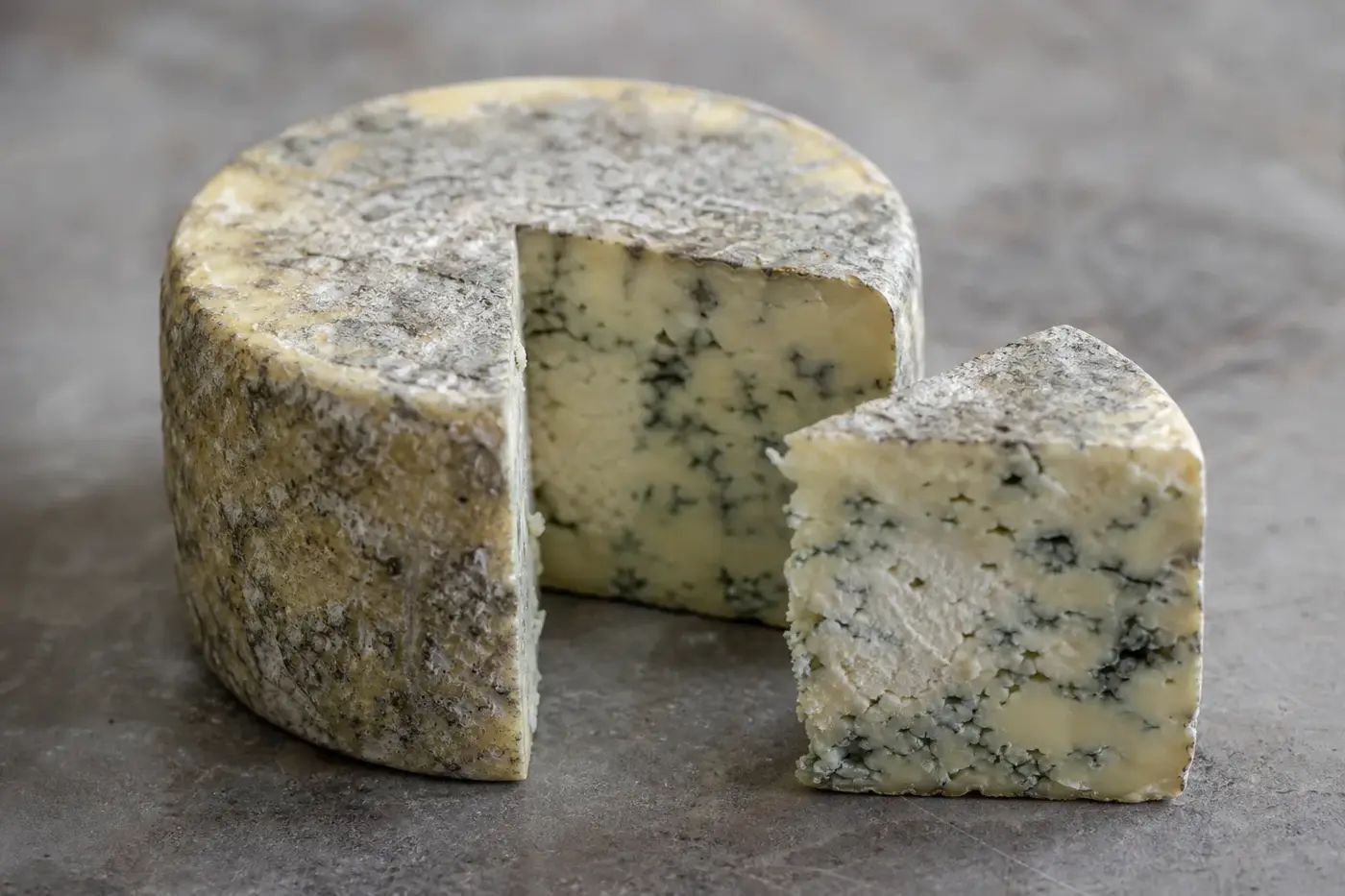
Cashel Blue
Take a look at your wedge before the first bite.
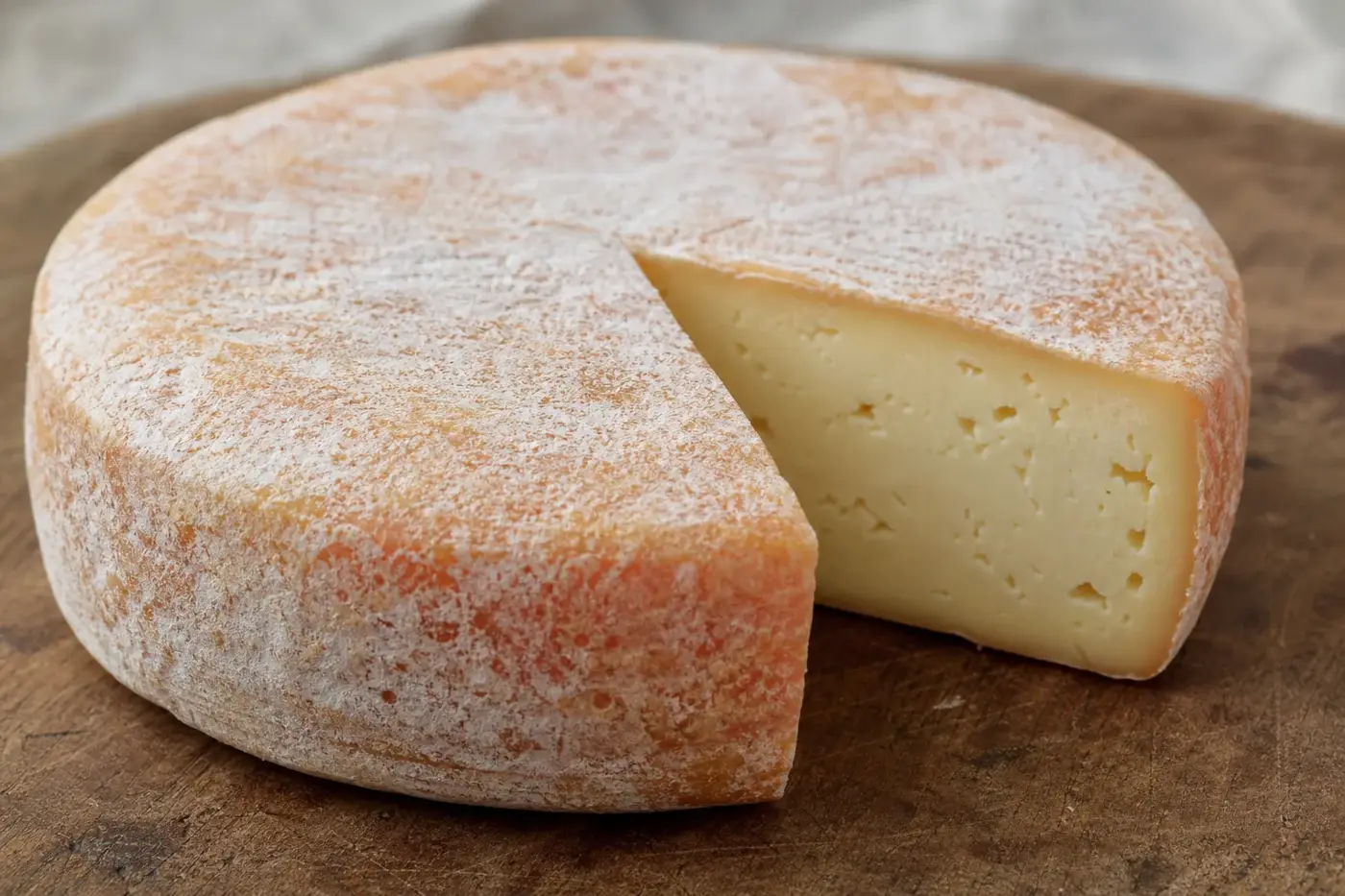
Gubbeen
The Atlantic lies along one boundary, Mount Gabriel rises behind you, and in the dairy a cheese is quietly finding its character.
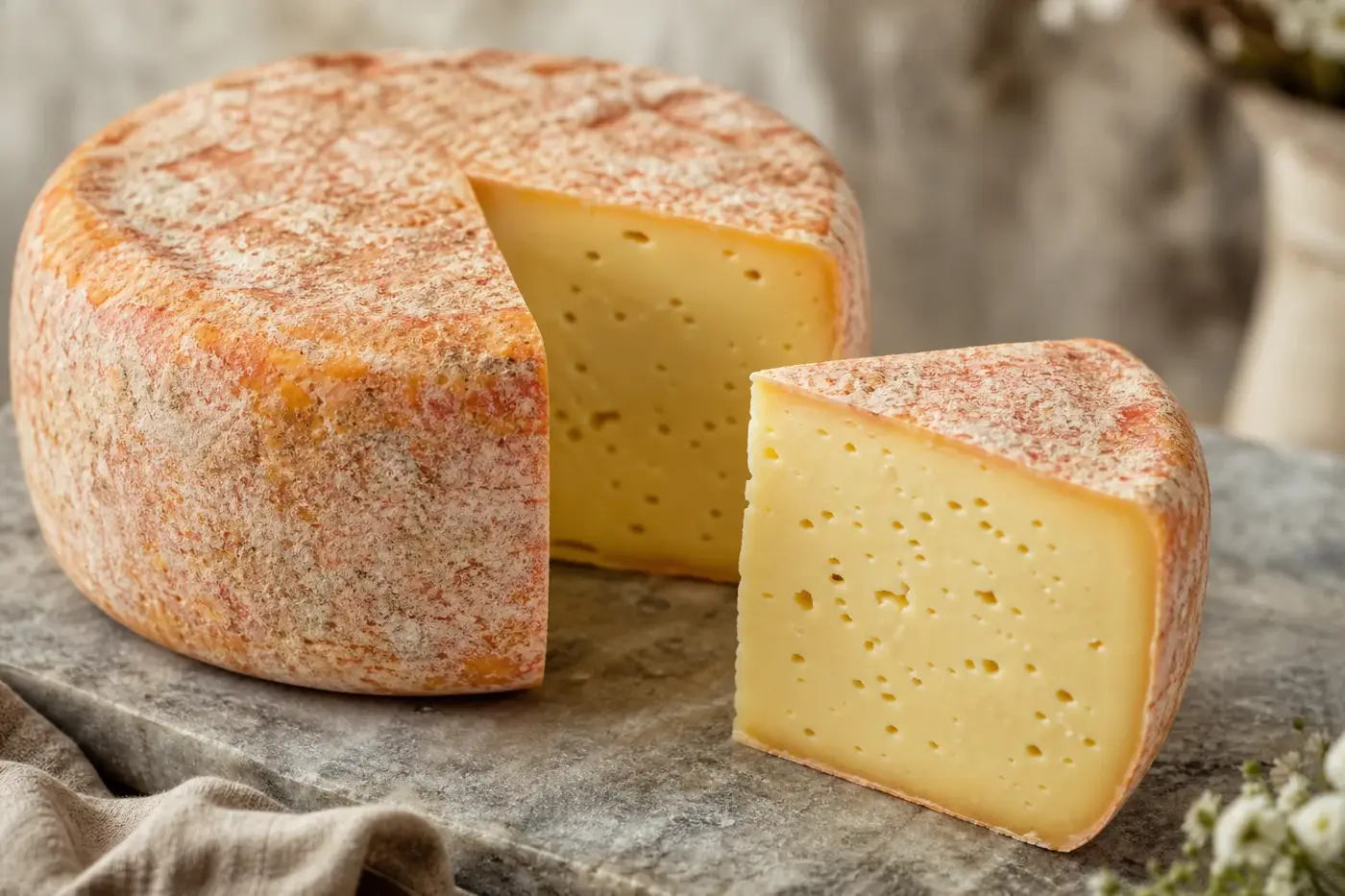
Durrus
Cut into Durrus and the cream-coloured centre may bulge slightly beneath its mottled rind.
Milleens
A mottled peach and orange rind catches your eye.
Coolea
Take a bite of Coolea and the buttery mildness arrives first.
Ardrahan
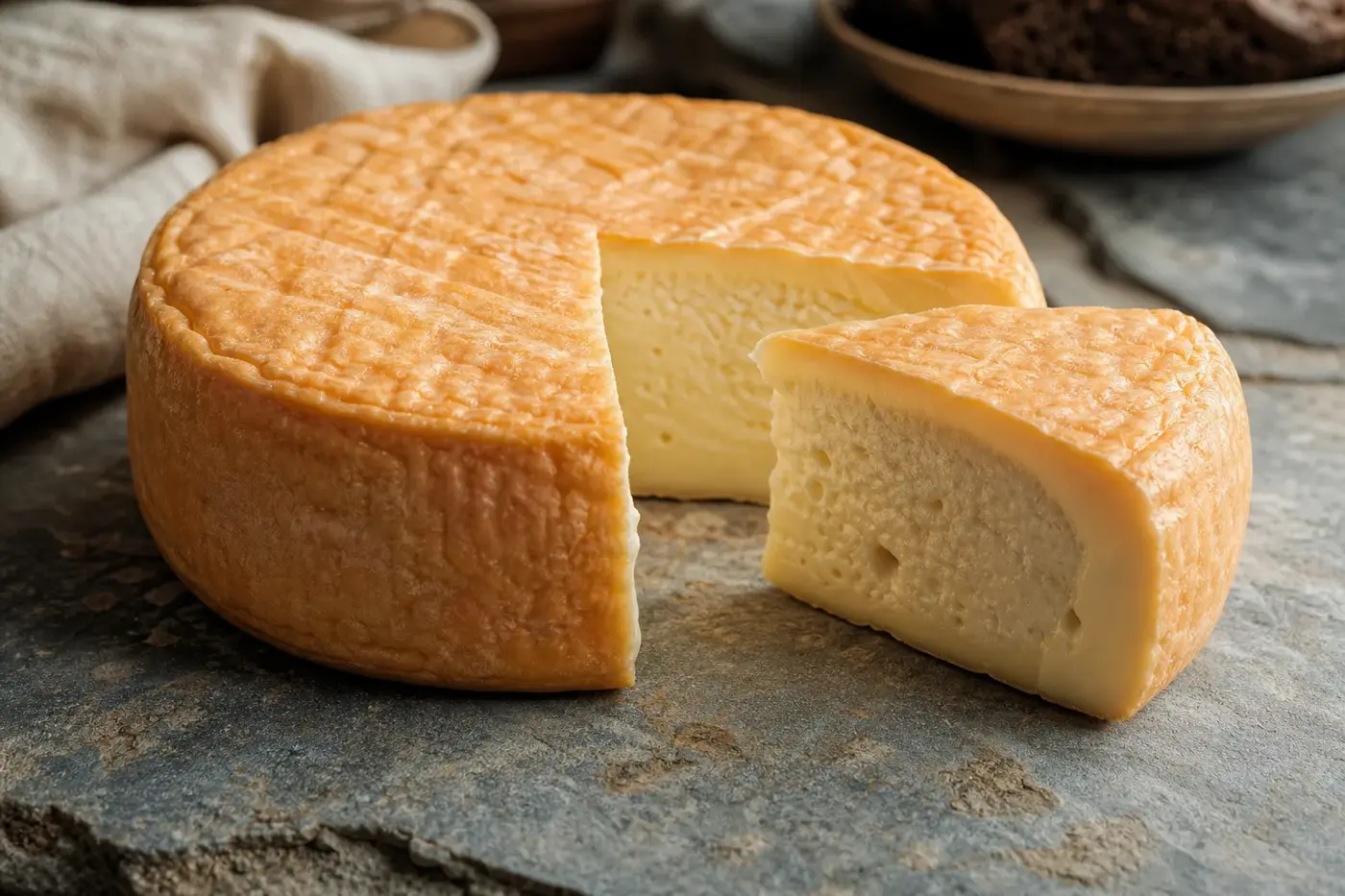
The smell reaches you first.
Ballinrostig
A family garage in east Cork became a dairy.
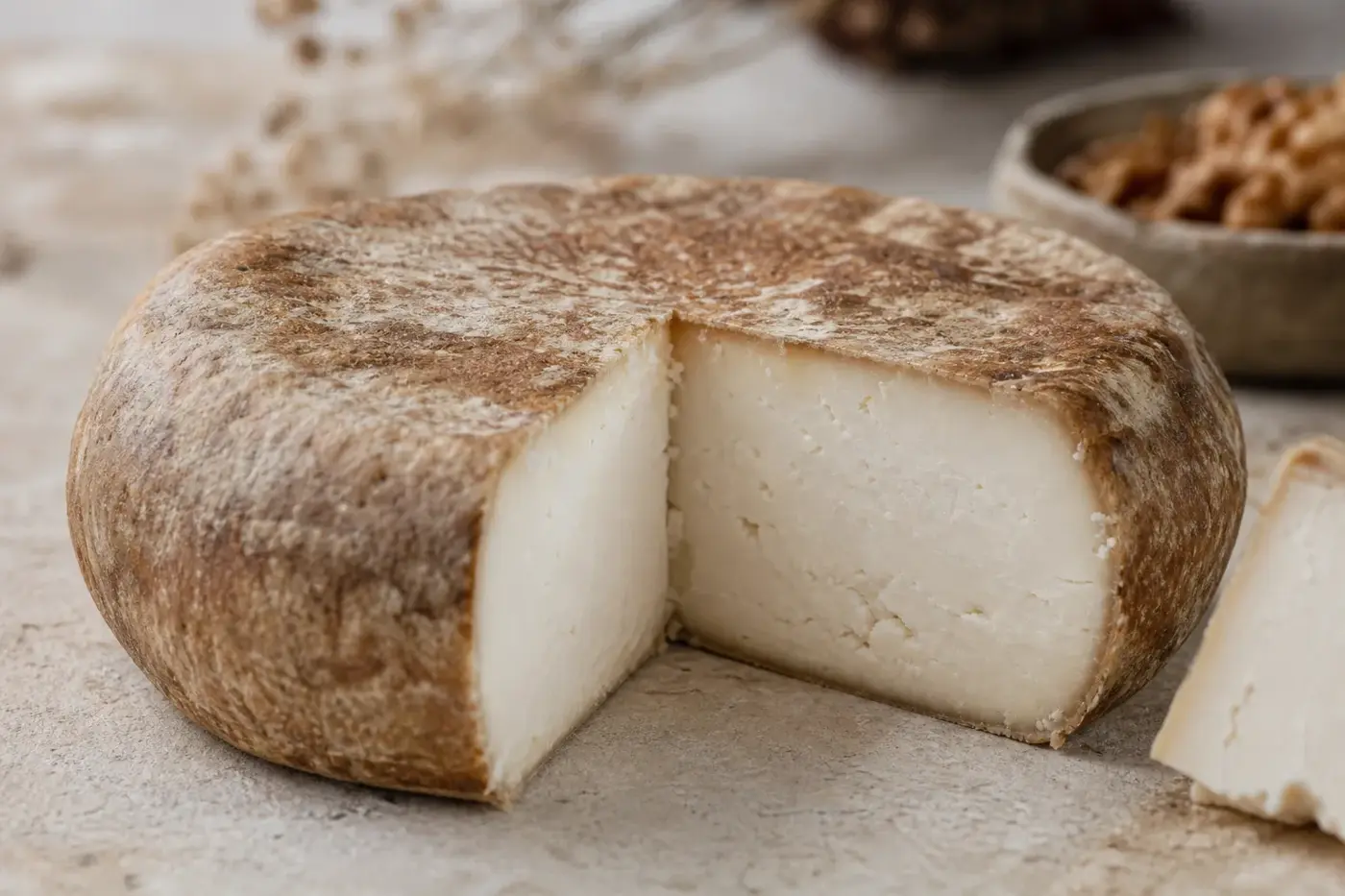
Boyne Valley Bán
Your knife passes through the natural rind into a white, firm centre, leaving a few crumbs behind.
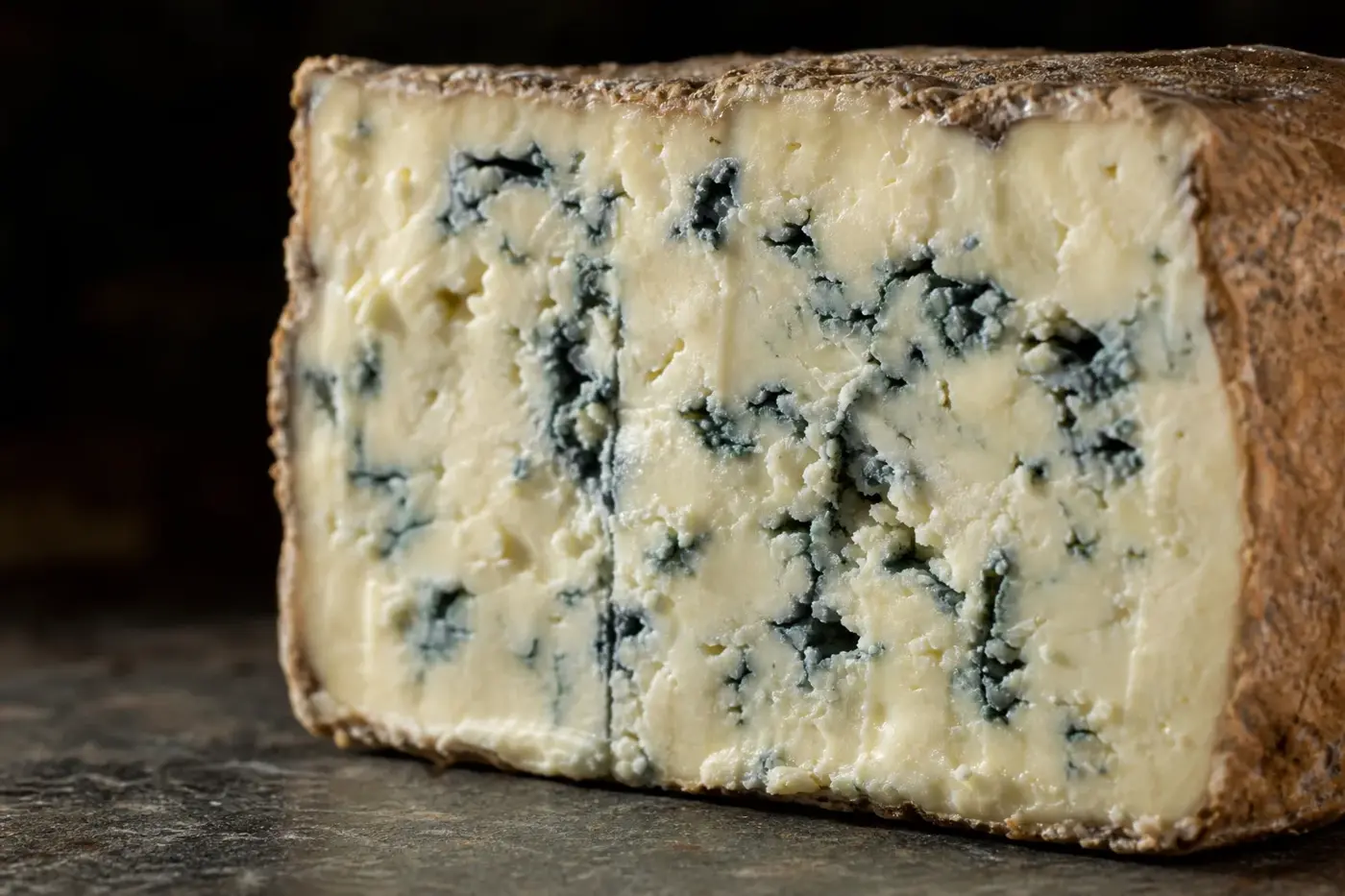
Boyne Valley Blue
Cut through the brown natural rind and there it is: creamy-white cheese, threaded with blue, ready to crumble beneath your knife.
The editors suggest you read next

French Cheese: The Complete Guide
Picture Normandy’s pastures, then follow the milk towards the Loire’s goat dairies, the Jura’s shared cheesemaking traditions and the sheep country of the Pyrenees.


