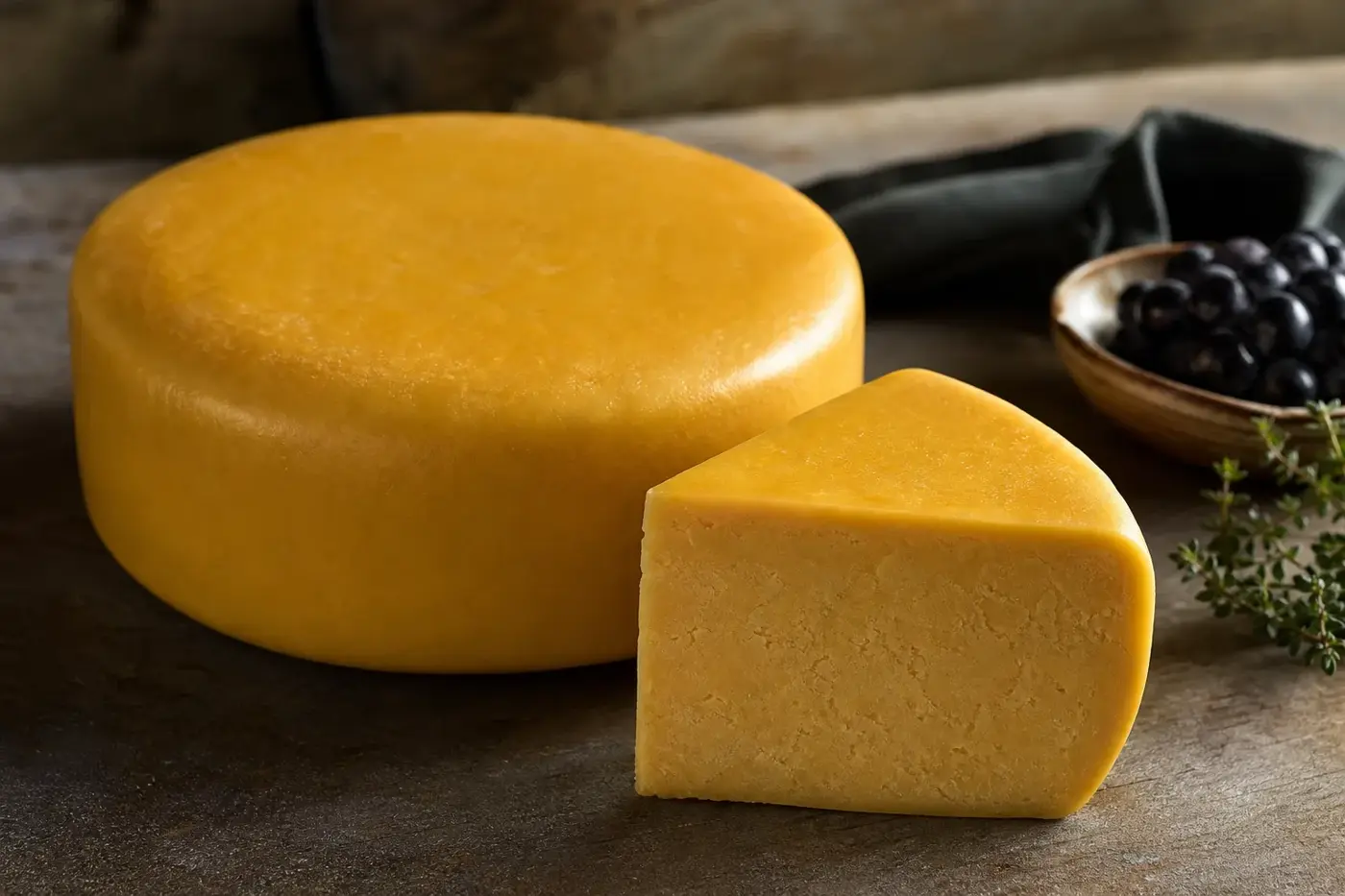
Take a bite of Coolea and the buttery mildness arrives first. With an older piece, you might find toffee sweetness, caramelised milk and toasted nuts following close behind. This cows’ milk cheese moves from youthful, semi-firm suppleness towards richer flavours as it matures. [1][5][6]
Follow those flavours back and you reach the hills of County Cork. Near the village of Coolea, the Willems family makes cheese from a recipe rooted in Dutch Gouda. It is a Dutch cheesemaking tradition with an unmistakably Irish home. [1][5][6]
Get acquainted before your first bite
| What you might ask | What to know |
|---|---|
| What is it called? | Coolea. [1] |
| Who makes it, and where? | The Willems family, near Coolea, County Cork, Ireland. [1][5] |
| What style should you expect? | Gouda-inspired, washed-curd cheese; semi-hard to hard as it matures. [1][7] |
| What milk goes into it? | Full-cream, pasteurised cows’ milk. [1][2] |
| Where does the milk come from? | Bought-in milk from a local Holstein-Friesian herd, according to the supplying cheesemonger. [5] |
| Which coagulant is used? | Animal rennet; the producer specifies calf rennet. [1] |
| What ingredients are declared? | Pasteurised cows’ milk, cheese cultures, animal rennet, salt and sodium nitrate, listed by Neal’s Yard Dairy. [7] |
| Declared allergen | Milk. [5] |
| How long does the producer mature it? | At least two months; longer-matured cheese can reach two years. [1] |
| Legal minimum ageing | Not specified here |
| Registered name, authority and register ID | Not specified here |
| GI status in the EU | Not specified here |
| GI status in Great Britain | Not specified here |
| GI status in Northern Ireland | Not specified here |
A Dutch recipe finds a home in Cork
In 1979, Coolea began as a hobby. The Willems family made cheese with milk from their small farm, following what their account describes as an old Dutch Gouda recipe. The hobby grew into an enterprise: the next generation joined the cheesemaking in 1991 and became the main cheesemaker in 1993. [1]
You will find the farm in the Derrynasaggart Mountains, near the village of Coolea. Neal’s Yard Dairy, which buys and selects the cheese, records the family’s move from the Netherlands to southern Ireland in the late 1970s. Dutch experience met an Irish farm, local milk and the family’s own decisions about making and maturation. [5][7]
That history helps explain why Coolea feels both familiar and distinctive. Its relationship with Gouda accounts for the washed-curd method and rounded sweetness. Its identity belongs to the Willems family and their cheesemaking in Cork.
Follow the milk home to the farm
The family started with milk from their own farm. Today, Coolea uses bought-in local milk, which the supplying cheesemonger traces to a nearby Holstein-Friesian herd. The producer’s preparation photographs follow the journey: collection, return to the farm, then pasteurisation before the milk reaches the cheesemaking vat. [2][7]
Bord Bia’s farmhouse cheese profile also describes bought-in milk from one herd of Holsteins and Friesians. “Local milk” has a particular meaning here. You are looking at a nearby supply feeding the family’s cheesemaking, rather than milk from an unspecified Irish source. [6]
The producer describes the milk as full cream and confirms that it is pasteurised. Heat treatment does one job; cultures and maturation do different work later. If you would like to untangle those distinctions, turn to raw, thermised and pasteurised cheese. [1][2]
Into the vat for the Dutch connection
The crucial move is washing the curds. Once the milk has set, the curds are cut, drained, washed and heated before pressing. You are still inside the vat at this point, not washing the rind of a ripening cheese: those are quite different things. [1][7]
| Step | What happens |
|---|---|
| Getting the milk ready | Collected milk is pasteurised, then transferred to the vat. [2] |
| Setting and cutting | Starter culture and calf rennet set the milk; the curd is cut into small pieces. [1] |
| Washing and heating | Whey, the liquid separated from the curd, is drained; the curds are washed and heated. [1] |
| Shaping and salting | Curds are moulded, pressed and salted in brine. [3] |
| Coating and maturing | Wheels receive a protective coating, then go into storage to mature. [4] |
That washing helps explain the family resemblance to Gouda. Neal’s Yard Dairy describes washing and scalding as reducing lactose and acidity during the make. A technical reference on Gouda likewise places washed curd, pressing and brining at the heart of this cheese family. [7][8]
Two ingredients deserve a closer look. Starter cultures are selected bacteria that help acidify the milk; rennet supplies the enzymes that set it into curd. Coolea’s producer specifies calf rennet, not a microbial alternative, so visit rennet explained if the coagulant matters to your choice. [1]
Read the wheel before choosing your wedge
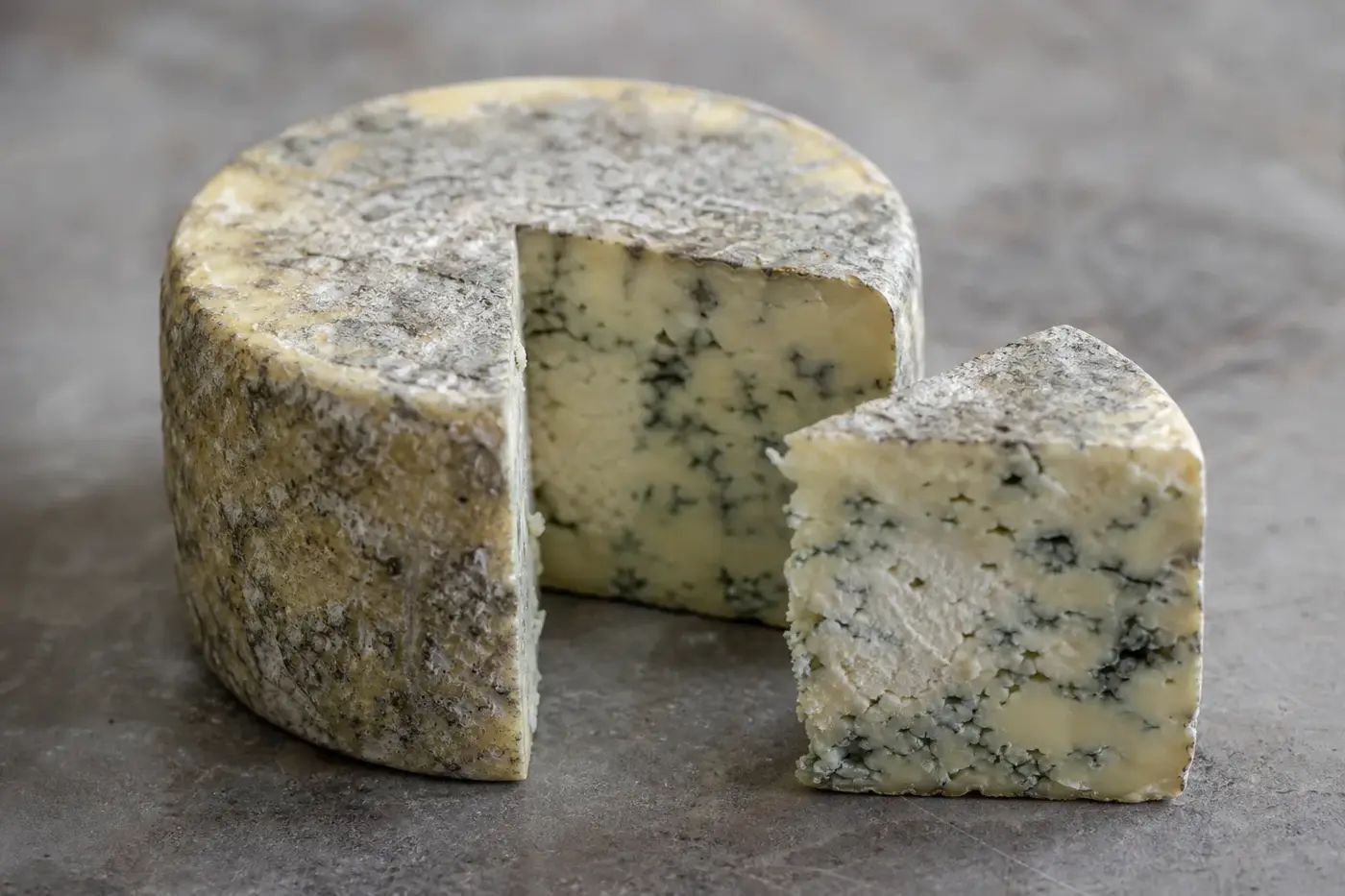
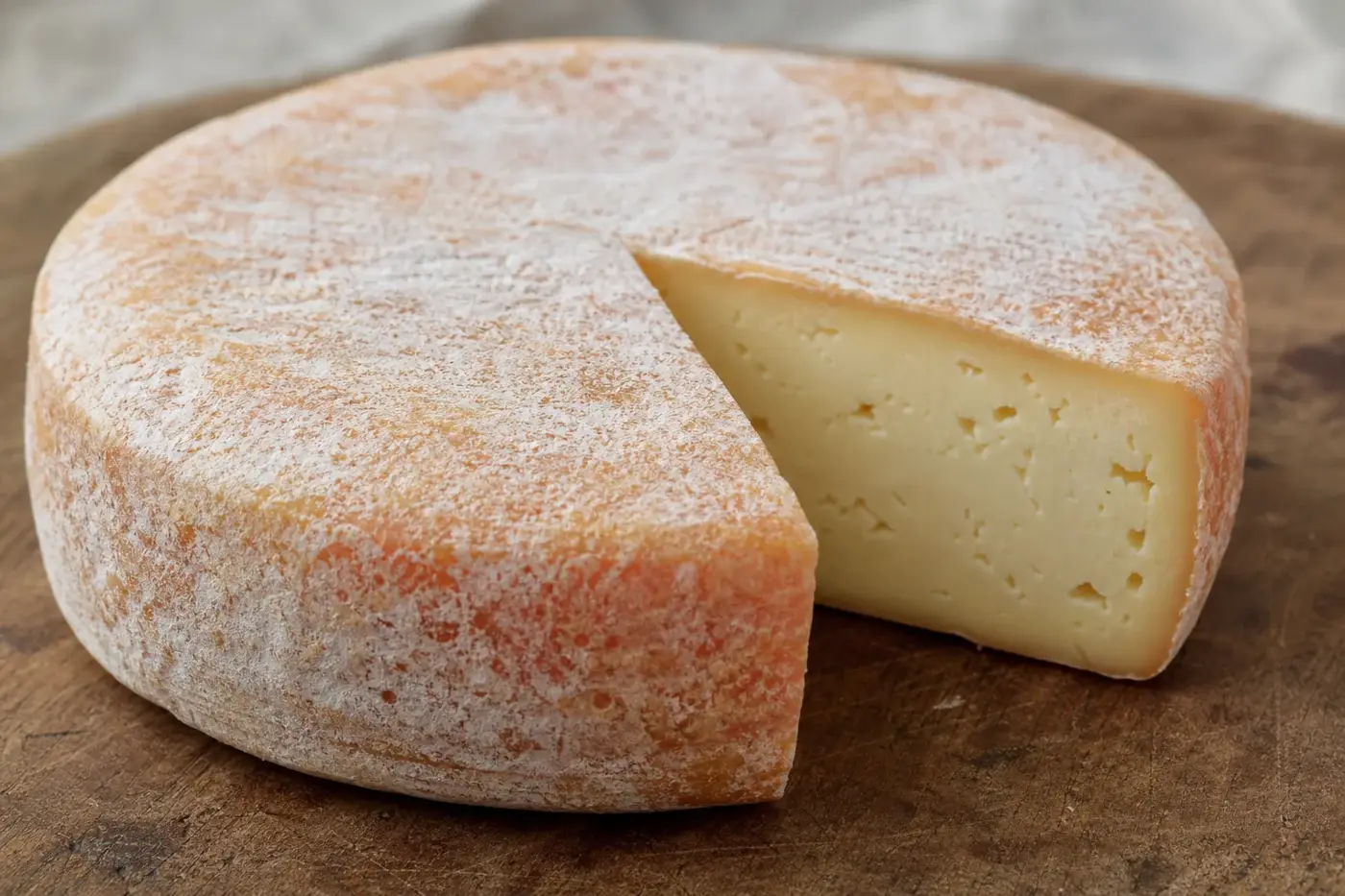
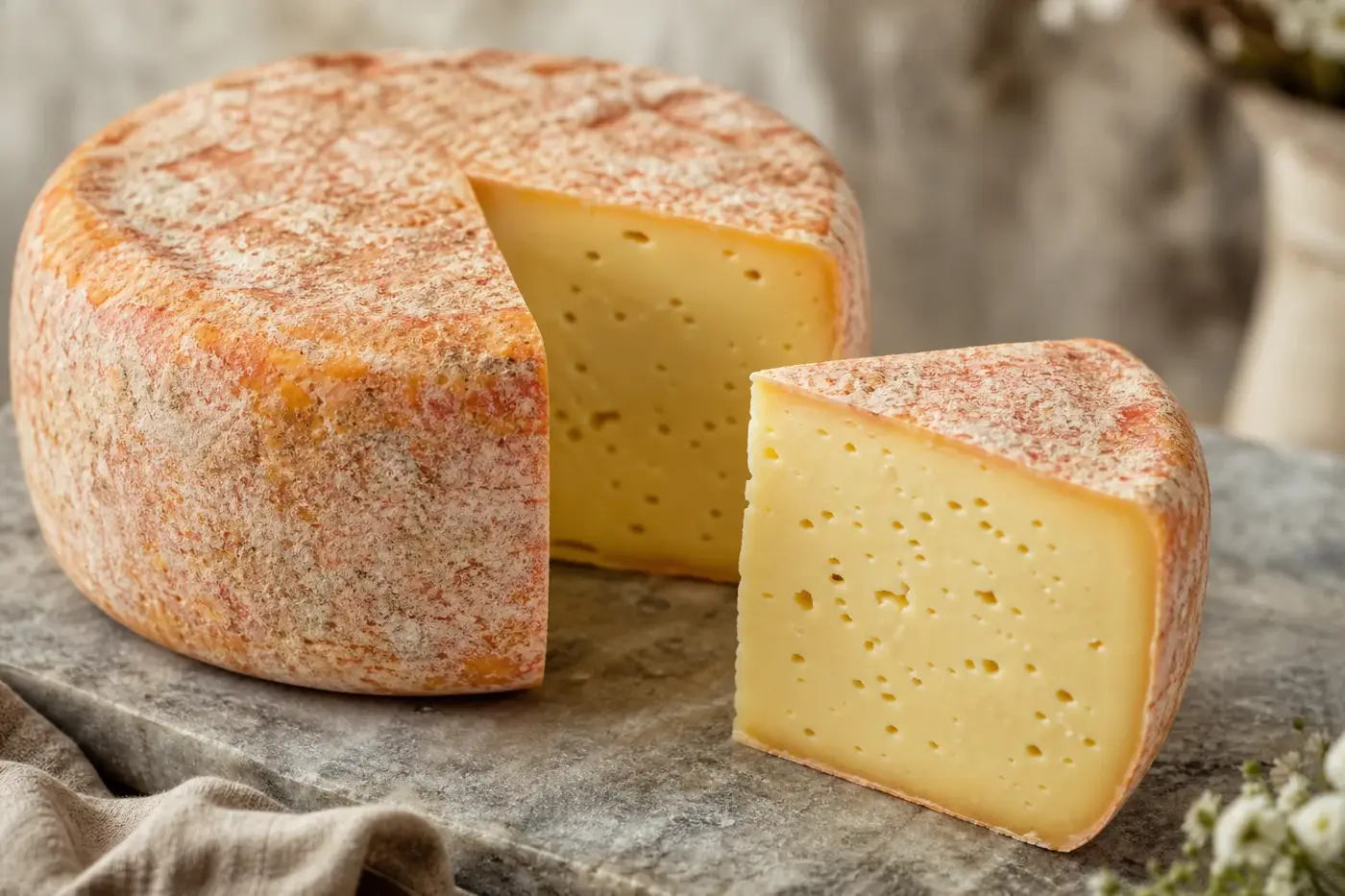
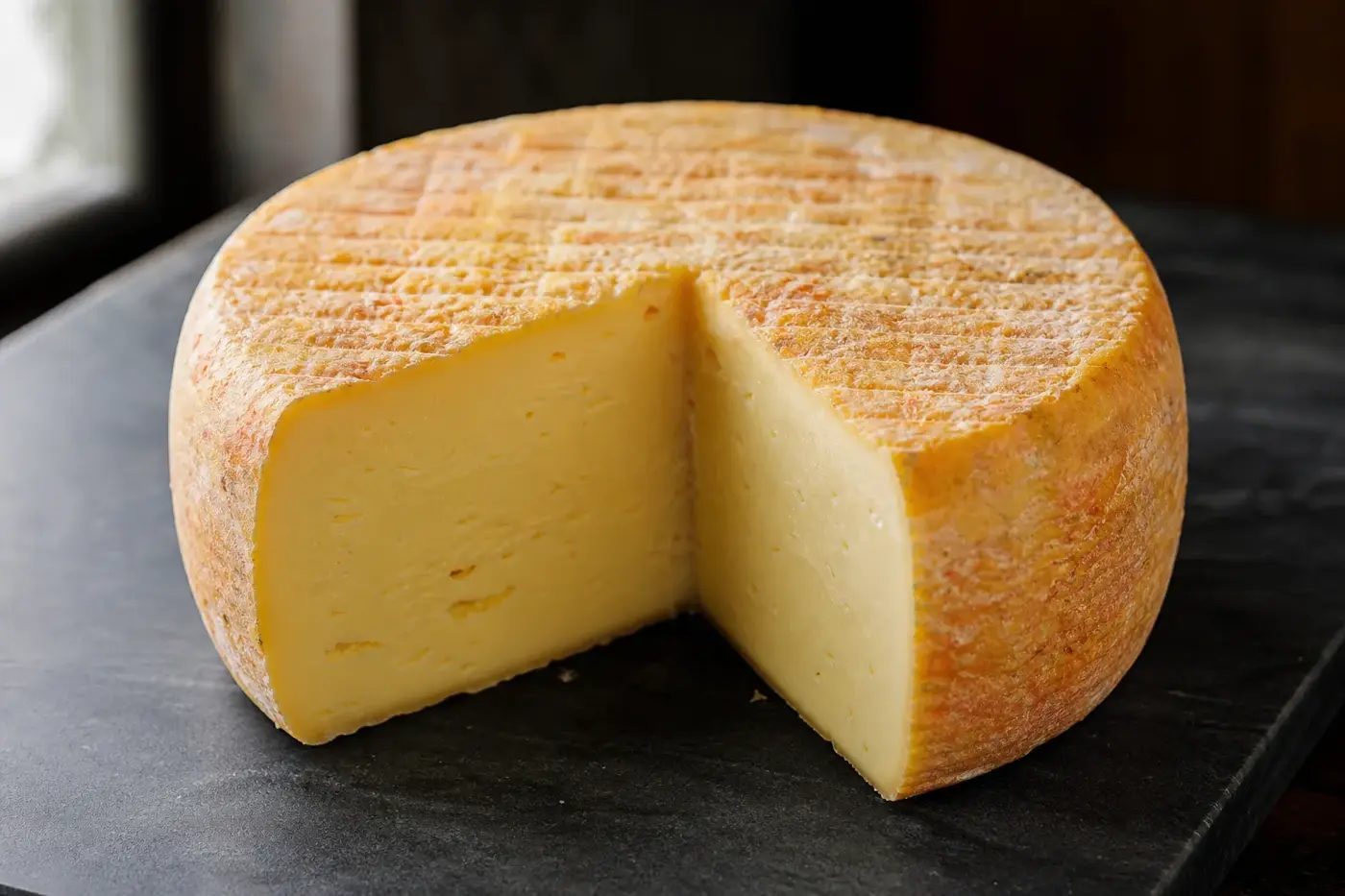
Rounded sides, a yellow exterior and a compact yellow interior give you the first visual clues. The 2026 supplier sheet shows whole wheels and cut sections. Neal’s Yard Dairy describes the cheese it sells as smooth and close textured. [5][7]
Look closely at the outside of your wedge, too. The producer documents coating the cheese, while the supplier describes a protective coating brushed onto each wheel. Ask your monger to identify that outer layer, then trim it away before serving. [4][5]
Age offers another clue to what you will find inside. Bord Bia describes young Coolea as semi-firm; the producer places it on a spectrum from semi-hard to hard. The supplier’s extra-matured selection is one particular maturation choice within that range. [1][5][6]
For your first purchase, study the cut face as well as the exterior. Ask whether the piece will give you flexible slices, firm wedges or smaller broken pieces. You are choosing a texture, not merely a flavour.
Butter now, toffee with time
Young Coolea is mild, buttery and semi-firm, according to Bord Bia. With maturation, the description grows deeper and meatier, bringing toffee, caramel and a long finish. Think of these as different pleasures, not a competition in which the strongest cheese takes the trophy. [6]
The maker particularly associates longer maturation with a toffee-like sweetness. Neal’s Yard Dairy’s 2026 tasting sheet goes further for its selected cheese: caramelised milk, toasted nuts, honeyed sweetness and a gentle savoury quality. Give yourself time to notice what arrives in each bite. [1][5]
Texture changes along the way. Ripening in Gouda-type cheese includes proteolysis, the breakdown of proteins, alongside other reactions that develop flavour. Technical literature describes a harder, shorter texture during prolonged natural ripening: “short” means the cheese breaks more readily instead of stretching. [8]
You may also come across discussion of crystals in aged Gouda. A 2015 study identified tyrosine crystals in commercially purchased cheese aged for two years. Those findings concern Gouda; they do not establish whether crystals occur in Coolea. [9]
Give Coolea and Gouda a side-by-side tasting
Gouda offers you a useful starting point for understanding Coolea. Both share the washed-curd approach, pressing and brining, and Coolea’s producer explicitly acknowledges the Dutch recipe. That connection also gives you clues about what to expect as the cheese matures. [1][3][8]
But Gouda is a broad family, not a single fixed flavour or texture. Technical literature records considerable variation in its textures and ripening periods. One unnamed supermarket Gouda gives you only part of the picture, so choose cheeses of similar age for a comparison. [8]
With Coolea, notice the combination of local milk, the family’s make and the selection of wheels for longer maturation. Try a younger piece beside an older one. You will get a clearer sense of its range than if you appoint either piece the definitive version. [1][5][7]
At the counter, ask its age
“How old is this piece?” is your best opening question. The producer gives a minimum maturation of two months, while Neal’s Yard Dairy’s product page lists an average age of 18 to 24 months for its selection. Those figures describe different points in Coolea’s range. [1][7]
Next, tell the monger how you would like to eat it. Ask for something milder to slice, or a deeper-flavoured piece for small bites, and taste where offered. Give texture as much attention as flavour: younger cheese has pleasures of its own, without needing a five-year career plan. [6]
Read the current ingredient information as well. Neal’s Yard Dairy lists sodium nitrate alongside milk, salt, cultures and animal rennet. If you choose a flavoured version, request its complete ingredients; always use the information attached to the particular piece being sold. [7]
For help making sense of the pack, visit reading a cheese label. It explains how to distinguish ingredient information, origin and the business details printed there.
Keep it carefully, serve it simply
Follow the storage instructions supplied with your cheese. If you need advice applicable in Ireland, consult current Food Safety Authority of Ireland guidance.
When you serve it, put out a few slices alongside a larger piece so your guests can explore the texture themselves. Taste it plain before reaching for accompaniments. Give that published contrast between gentle sweetness and deeper savoury flavour a chance to emerge without competition. [5][6]
Let bread and fruit play their part
Start with plain sourdough or an oatcake, then add fresh apple or pear alongside. Keep chutney in a separate dish. You and your guests can decide how much extra sweetness or acidity suits each bite.
For a mature piece, try walnut bread or a little dried fruit instead. These suggestions give you a way to explore the supplier’s toasted-nut and caramelised-milk notes. Begin with one accompaniment before combining several, and let the cheese lead. [5]
To drink, try sparkling water or unsweetened black tea. Another option is a modest glass of apple juice diluted with sparkling water.
Make room for a Coolea toastie
Coolea and kimchi in a toasted sandwich is Neal’s Yard Dairy’s suggestion. If you enjoy a sharp accompaniment with a sweet, savoury cheese, there is a contrast worth exploring. [5]
You could also tuck thin slices into a potato sandwich. Try a little grated over cooked vegetables, or small shavings on a finished mushroom dish. Give the cheese a clear role rather than surrounding it with equally forceful flavours.
Taste an unfamiliar piece before cooking with it, then decide which qualities you want to bring forward. A younger selection invites slicing; an older one brings the deeper flavours its selectors describe. Save some to serve beside the finished dish, so you can enjoy both the heated cheese and the original piece. [6]
General information only, not medical advice: follow the official guidance where you live.
Questions people ask
What does Coolea taste like?
Young Coolea is mild and buttery, with a supple texture. As it matures, it develops deeper flavours of toffee and caramel.
How long is Coolea matured?
The producer states that Coolea is matured for at least two months and can reach two years. Neal’s Yard Dairy gives an average age of 18 to 24 months for its selection.
Is Coolea suitable for vegetarians?
Coolea is made with animal rennet. The producer specifies calf rennet.
Is Coolea made with pasteurised milk?
Yes, Coolea is made with pasteurised cows’ milk. The milk is bought from a local herd.
Can you eat the outside of Coolea?
Coolea wheels have a protective coating. Ask the cheesemonger to identify the outer layer, then trim it away before serving.
Sources
- Coolea Farmhouse Cheese, Who We Are, undated producer account, retrieved November 2026. Family history, recipe, milk, rennet and maturation. Producer account.
- Coolea Farmhouse Cheese, The lead up to Production, undated photographic production account, retrieved November 2026. Milk collection and pasteurisation. Production preparation.
- Coolea Farmhouse Cheese, Making the Cheese, undated photographic production account, retrieved November 2026. Moulding, pressing and brining. Making account.
- Coolea Farmhouse Cheese, Storage and Distribution, undated photographic production account, retrieved November 2026. Coating and maturation. Storage account.
- Neal’s Yard Dairy, Coolea crib sheet, 2026 edition. Supplier information, photographs, ingredients, tasting notes and pairing suggestions; a commercial source describing its own selection. Supplier sheet.
- Bord Bia, Coolea, undated farmhouse cheese profile, retrieved November 2026. Milk supply and attributed descriptions of younger and mature cheese. Bord Bia is Ireland’s food promotion body. Cheese profile.
- Neal’s Yard Dairy, Coolea, product information retrieved November 2026. Ingredients, selected age, milk source and make; a commercial source describing cheese it sells. Product information.
- Wageningen University & Research repository, Gouda and Related Cheeses, in Cheese: Chemistry, Physics and Microbiology, fifth edition, chapter 33, 2025. Washed-curd production, maturation and texture. Technical chapter.
- Dairy Science & Technology, Crystal fingerprinting: elucidating the crystals of Cheddar, Parmigiano-Reggiano, Gouda, and soft washed-rind cheeses using powder x-ray diffractometry, volume 95, pages 651 to 664, 2015. Original analytical research. Research paper.
- Food Safety Authority of Ireland, Storing food safely, undated consumer guidance, retrieved November 2026 through indexed source text. Domestic refrigeration and label instructions. Irish storage guidance.
- Food Safety Authority of Ireland, Safe Food to Go, edition date not stated in the retrieved document, retrieved November 2026. Manufacturer instructions and the two-hour counter limit. Official guidance.
Researched from the producer’s published accounts, supplier documentation, an Irish cheese profile, dairy science references and official Irish food-handling guidance; pairing and cooking suggestions are identified as editorial suggestions.
Last checked: November 2026
Last checked November 2026.
The editors suggest you read next