Durrus
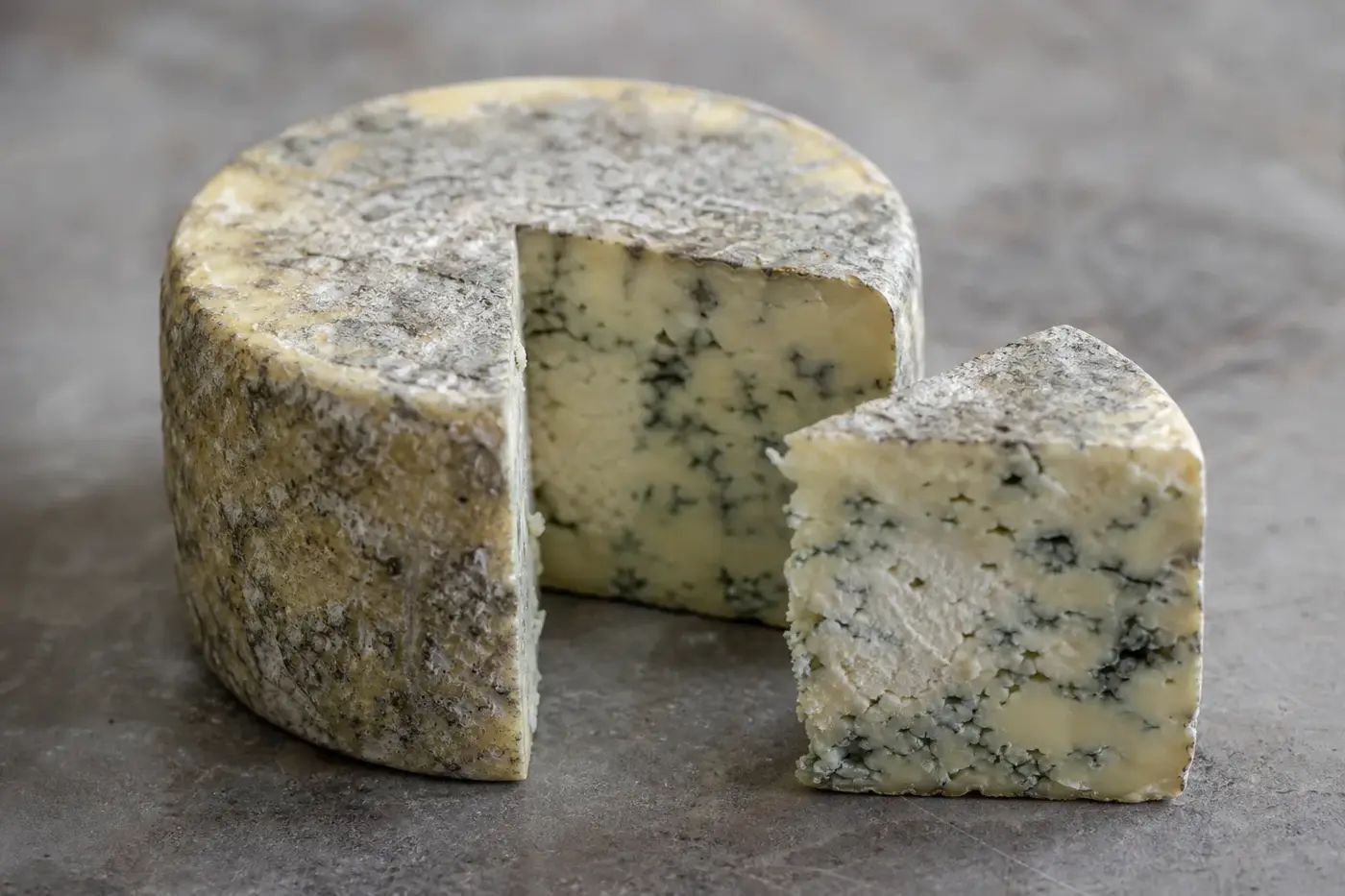
Cut into Durrus and the cream-coloured centre may bulge slightly beneath its mottled rind.
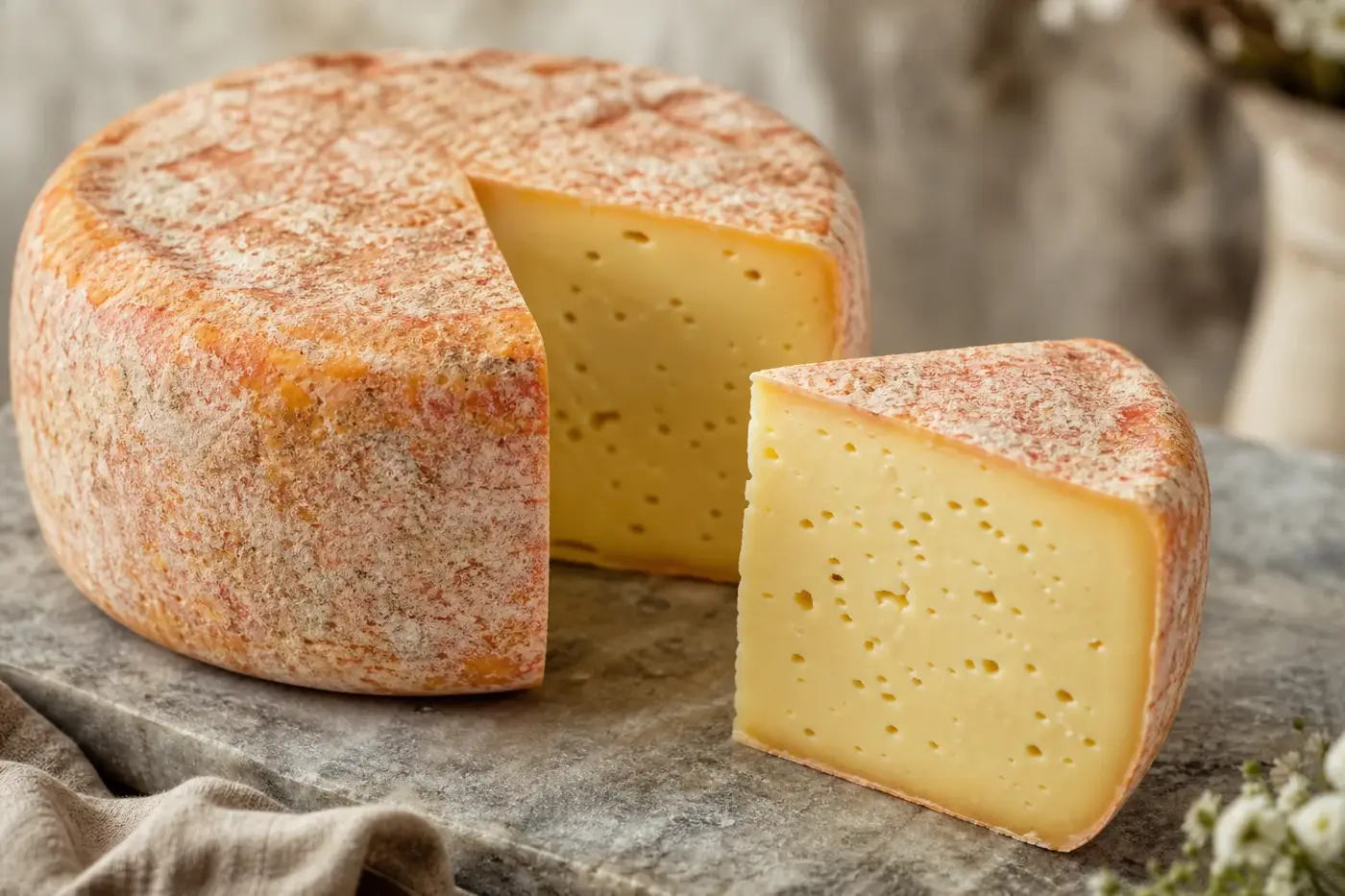
Cut into Durrus and the cream-coloured centre may bulge slightly beneath its mottled rind. Here is a cheese that has had plenty of attention: washing, turning and patient tending in the ripening room. Follow that savoury, yielding centre back to its beginnings and you reach the Coomkeen valley, just outside Durrus village in County Cork, in the heart of West Cork’s farmhouse cheesemaking tradition.[1][3][4]
| Your quick guide to Durrus | What to know |
|---|---|
| Home | Coomkeen, near Durrus, County Cork, Ireland.[1] |
| Founder and first cheese | Jeffa Gill, 1979.[1] |
| Style | Semi-soft, washed-rind cow’s milk cheese.[4] |
| Current milk treatment | The producer describes the range as pasteurised; current treatment for Dunmanus is uncertain.[3][4] |
| Original sizes | 1.3 kg and 360 g rounds.[3] |
| Producer’s suggested eating ages | Small: four weeks; large: six to ten weeks.[3] |
| Pregnancy guidance | UK NHS and Ireland’s HSE, November 2026.[8][9] |
Come into Jeffa Gill’s farmhouse kitchen
Before the cheese came a hillside holding in need of care. The producer’s history records that Jeffa Gill bought her place at Coomkeen in the early 1970s. She restored the farmhouse, grew vegetables and milked cows. In 1979, she began making cheese.[1][2]
Gill was among the women exploring farmhouse cheesemaking in West Cork, encouraged by Veronica Steele of Milleens. The producer describes a craft shaped by practical work and shared experience on small farms. In Gill’s kitchen, the cheese vat and maturing shelves sat alongside family life. Cheese was making itself thoroughly at home.[2]
Eventually, it needed more space. Production spread into farm outbuildings before moving entirely out of the family house in 1991. According to the business, the cheese is still handmade on the farm where it began.[1][2]
The published account names Gill, her daughter Sarah Hennessy and a small dairy team behind today’s cheeses.[1][2] When you taste Durrus, that continuity is part of its story. Its character comes from this dairy’s recipe and ripening practice, especially the repeated attention paid to each cheese’s surface.
Meet the farms behind the milk
The producer names two local suppliers: the Buckley family’s Friesian herd and Noel Dukelow’s herd beside Dunmanus Bay. These are supplying farms, rather than the cheesemaker’s own cows providing all the milk. You are buying a cheese made with local milk, but not milk drawn entirely from one herd.[2]
There is another distinction worth keeping in mind at the counter. The producer describes its range as made with locally sourced, pasteurised cow’s milk, while Bord Bia describes Dunmanus as a raw milk cheese. For Dunmanus’s current milk treatment, read the label and ask the producer.[3][4]
Choose by variety as well as producer, particularly if milk treatment affects your decision. Buying a cut portion? Ask the cheesemonger to keep the relevant product information with it. The name “Durrus” alone does not give you everything you need.
You can explore the differences in raw, thermised and pasteurised cheese. For the actual piece going into your bag, use the producer’s current declaration and the information accompanying your purchase.
From copper vat to ripening room
At the dairy, a Swiss cheese harp meets curd in a copper-lined vat. The curd is cut by hand, then drained in moulds and turned by hand. If you are picturing the process, curd is the coagulated milk solids that become cheese. Whey is the liquid that drains away.[3]
Each stage helps shape what you eventually eat. Cutting and draining establish the cheese’s body, while moulding gives it its round form. Next comes a saltwater bath, followed by washing, wiping and turning in the ripening rooms.[3]
By the time washing begins, the wheel has taken shape, but the attention continues. The cheesemaker tends its surface throughout maturation. For the fuller journey through coagulation, drainage and ripening, take a look at how cheese is made.
Look closely at that mottled rind
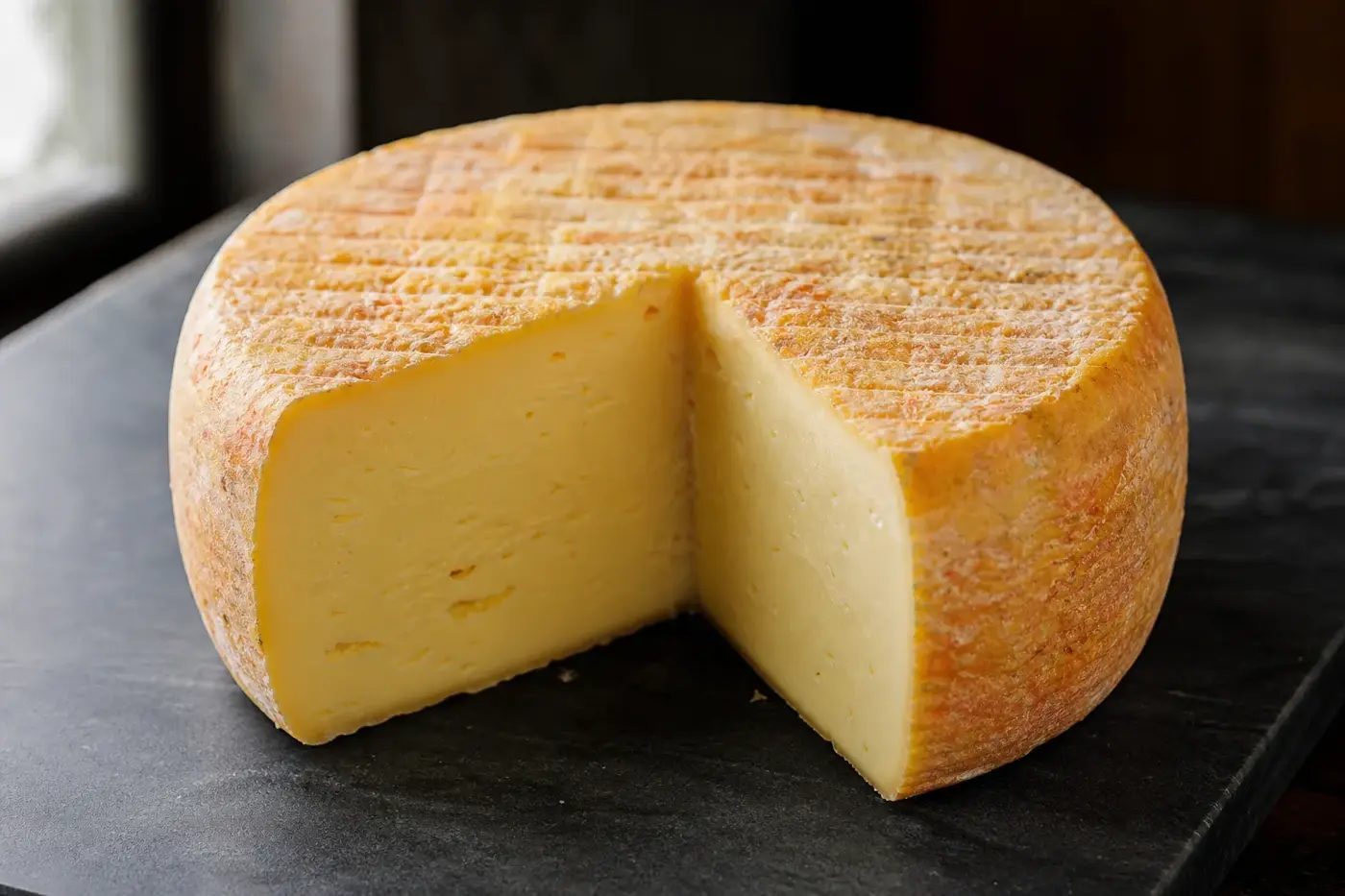
Durrus does not acquire its rind and then get left to its own devices. Washing and turning help it develop. The producer describes cultures specific to its dairy creating a mottled pinkish skin during maturation. You can see the continuing handwork in that surface.[3]
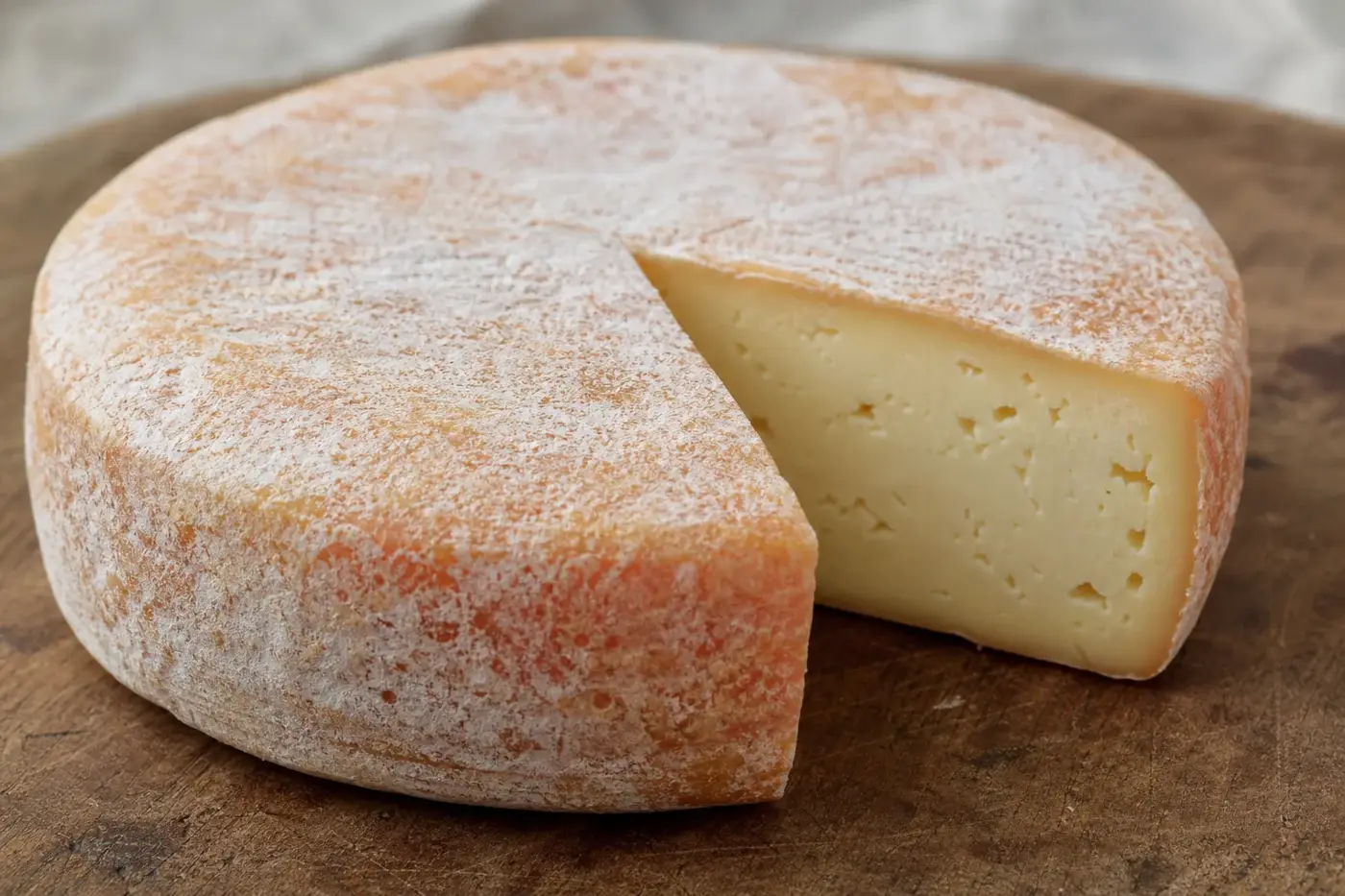
Bord Bia describes a powdery orange rind that may also show white, pink and beige, depending on condition. There is no need to expect every wheel to wear a perfectly uniform orange coat. Variation is part of the published picture of Durrus.[4]
At the counter, look at the rind and cut face together, then ask about maturity. The surface belongs to the cheese’s development, rather than serving simply as wrapping. Taken together, these details tell you more about the likely eating experience than a photograph of a whole wheel.
“Washed” describes an approach to making and ripening cheese. The maker’s handling gives each cheese its particular character. If you would like to put that description in context, explore how to tell cheese styles apart.
Follow the flavour from butter to woodland
Inside, Durrus is cream-coloured, semi-soft and dotted with small holes. Bord Bia describes a delicately pungent flavour, with buttery, floral and mildly lactic notes when young. With maturity, that description moves towards hay, moss and dry undergrowth.[4]
You have a useful starting point for your next conversation at the cheese counter. Ask for a younger piece if the gentler character appeals, or a more mature wheel if you fancy those earthy notes. Tell the cheesemonger which textures and levels of intensity you enjoy. The oldest cheese is not automatically your ideal cheese.
When you taste, give three things their own moment: the aroma at the rind, the texture of the centre and the flavour after swallowing. Notice each for yourself rather than trying to match a prescribed verdict. “Strong” soon starts to feel like a rather small word for the job.
Try a little plain before adding bread or fruit. Then taste it with an accompaniment and decide which you prefer. A few notes will do: gentle or forceful aroma, resilient or yielding texture, short or lingering finish.
You need not turn supper into an examination. Nobody is marking your crackers. The point is to discover what draws you back for another piece, and those small observations make your next visit to the cheese counter more rewarding.
Find the Durrus that suits you
The producer identifies four cheeses in its range. Original Durrus is your reference point, while the others offer different ages, treatments or textures. Start with the original if you want to get a feel for the family resemblance.[3]
| Cheese | What you can expect |
|---|---|
| Original Durrus | Semi-soft; large and small rounds.[3] |
| Durrus Óg | The dairy’s youngest soft to semi-soft cheese.[3] |
| Durrus Smoked | Oak-smoked, 225 g; ready from ten days.[3] |
| Dunmanus | Seasonal, 3 kg; matured for six to fourteen months.[3] |
Give the individual pack a little attention, too. Dunnes Stores, for example, lists a 220 g Durrus Óg made with pasteurised Irish cow’s milk, salt, animal rennet and starter culture. Its description promises earthy flavour and a silky-soft texture.[5]
Ask whether you are choosing original Durrus, Óg, the smoked variety or Dunmanus. To explore what washing contributes, taste the original before comparing it with the smoked cheese. Changing one feature at a time makes the differences easier to follow than asking a single mouthful to explain the whole range.
Bring good bread and keep it simple
Start with plain sourdough or an oat biscuit, plus a few slices of apple or pear. You can then discover how much sweetness or acidity you enjoy alongside the cheese. Give that first taste room before deciding what else the plate needs.
For another combination, try brown soda bread with a small spoonful of apple chutney on the side. Add the chutney gradually, rather than covering the cheese at the outset. Fresh and preserved fruit give you different contrasts, but there is no obligation to serve both.
To drink, try sparkling apple juice diluted with sparkling water. Choose still water if you want the cheese to remain the main flavour. Simple company can be quite enough when you are getting to know a cheese.
Keep it cool and serve a little at a time
Follow the instructions for your particular cheese. The Dunnes Stores listing for 220 g Óg specifies refrigeration at 0 °C to 4 °C, eating within three days of opening and before its use-by date. It also suggests taking that cheese out of the fridge 30 minutes before eating.[5]
For England, Northern Ireland and Wales, the Food Standards Agency recommends a fridge temperature between 0 °C and 5 °C. Its listeria guidance says to eat ready-to-eat foods shortly after refrigeration, within four hours, or two hours on a very warm day. Keep them out of direct sunlight.[6][7]
Take out only the portion you intend to serve, and follow any stricter instructions on the pack. For broader handling advice, see how to store cheese at home. Keep the pack’s instructions with your cheese so you can refer to them after opening.
Ask the seller about the rind on the specific product, too. Keep packaging separate from the cheese and follow any instruction to remove it. Once rind consumption is confirmed as suitable, eating it is a matter of taste. In pregnancy or another higher-risk circumstance, ask before deciding.
This page summarises published guidance from the official sources it cites. It is not medical advice. Guidance differs between countries and changes over time, so check the current source for where you live, and ask your doctor, midwife, pharmacist or dietitian about your own circumstances.
Choosing with milk allergy or pregnancy in mind
Durrus contains cow’s milk. The UK NHS describes food allergy as an immune-system reaction and advises avoiding foods containing an ingredient to which you are allergic. It distinguishes allergy from food intolerance and recommends careful label checking.[10]
If you need help understanding that distinction, see cheese allergy versus lactose intolerance. Follow the relevant allergy advice when choosing your cheese. Do not assume that allergy and intolerance mean the same thing.
For pregnancy guidance, consult the NHS in the United Kingdom or the HSE in Ireland. Match the advice to the milk treatment and rind description on the pack. Ask your midwife for help applying it if needed.[8][9]
These official pages describe cheese categories rather than naming Durrus. If you need individual guidance, take the current pack information, including the washed-rind description, to your midwife or another clinician. Use the linked national source for the country where you live.
Questions people ask
Where did Durrus cheese originate?
Durrus began at Coomkeen, near Durrus village in County Cork, Ireland. Jeffa Gill started making the cheese there in 1979.
What does Durrus taste like?
Young Durrus has buttery, floral and mildly lactic notes. As it matures, its flavour moves towards hay, moss and dry undergrowth.
Is Durrus made with pasteurised milk?
The producer describes its range as made with locally sourced, pasteurised cow’s milk. Bord Bia describes Dunmanus as a raw milk cheese, but its current milk treatment is not verified, so check the label and ask the producer.
Can you eat Durrus during pregnancy?
The NHS in the United Kingdom and the HSE in Ireland offer pregnancy guidance by cheese category rather than naming Durrus. Consult the current guidance for your country and ask your midwife for help applying it to the milk treatment and rind description on the pack.
How should Durrus be stored and served?
Follow the instructions for the particular cheese. For 220 g Durrus Óg, Dunnes Stores specifies refrigeration at 0 °C to 4 °C, eating within three days of opening and before the use-by date, and taking it out of the fridge 30 minutes before eating.
Sources
- Durrus Cheese, Durrus Cheese: Handmade in West Cork since 1979, undated homepage, retrieved November 2026. Producer’s account of location, founding and team.
- Durrus Cheese, Our Story, undated, retrieved November 2026. Producer’s account of the farm, development of production and milk suppliers.
- Durrus Cheese, Our Cheese, undated, retrieved November 2026. Producer’s descriptions of milk treatment, manufacture, varieties, formats and eating ages.
- Bord Bia, Durrus Farmhouse Cheese, undated, retrieved November 2026. Industry profile used for attributed sensory descriptions and pairing suggestions.
- Dunnes Stores, Simply Better Irish Farmhouse Durrus Óg 220g, current product listing retrieved November 2026. Product-specific ingredients, storage and serving information.
- Food Standards Agency, How to chill, freeze and defrost food safely, published 2017, current retrieved version November 2026; applies to England, Northern Ireland and Wales.
- Food Standards Agency, Listeria, published 2018, current retrieved version November 2026; applies to England, Northern Ireland and Wales.
- NHS, Foods to avoid in pregnancy, reviewed 15 June 2026, retrieved November 2026. URL: Not verified.
- Health Service Executive, Ireland, Foods to avoid in pregnancy, current retrieved version November 2026.
- NHS, Food allergy, reviewed 20 August 2026, retrieved November 2026.
Researched through the producer’s published accounts, an attributed Bord Bia profile, product-specific retail information and official Irish and UK health and food safety guidance.
Last checked: November 2026
Last checked November 2026.
The editors suggest you read next