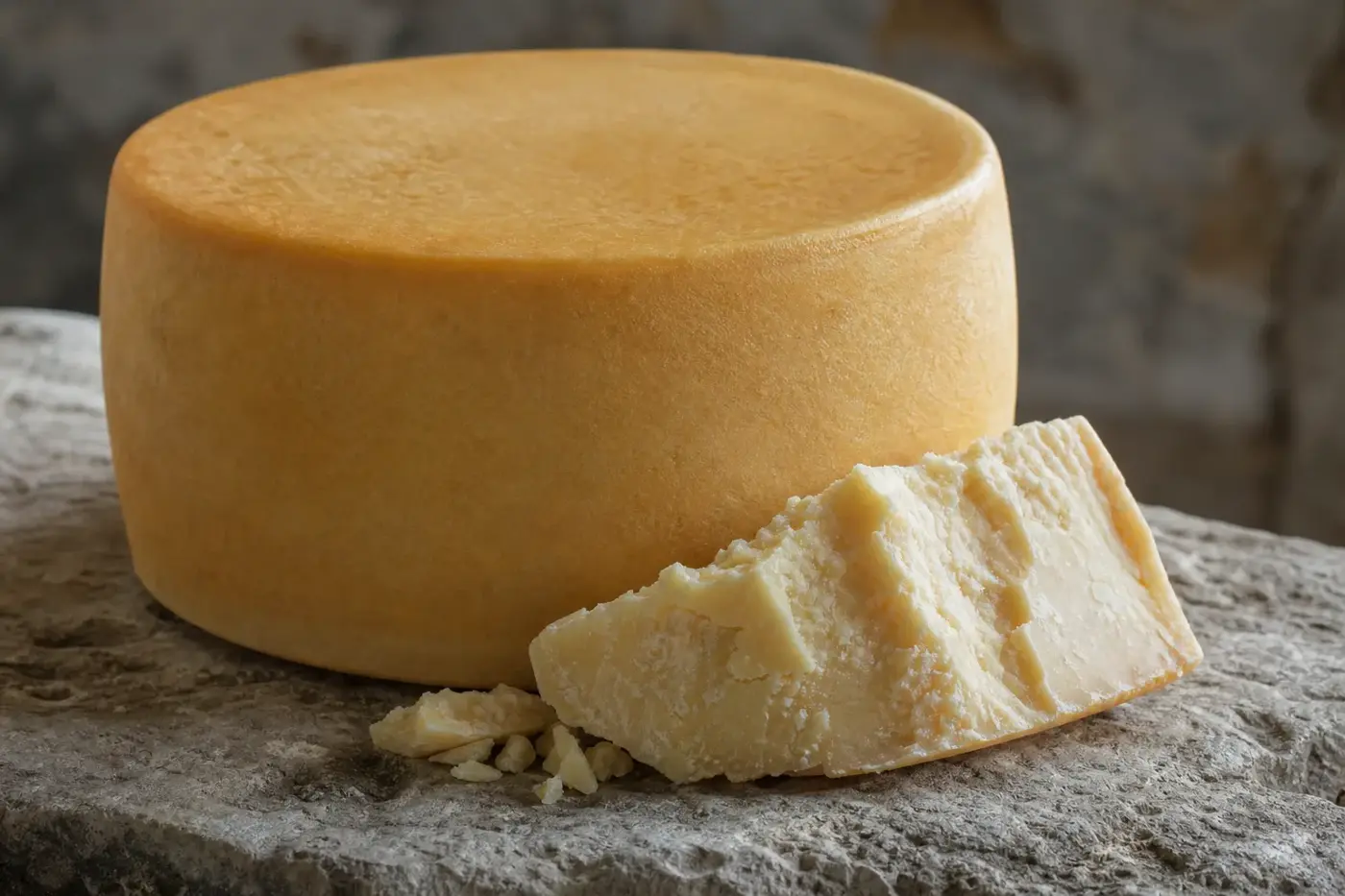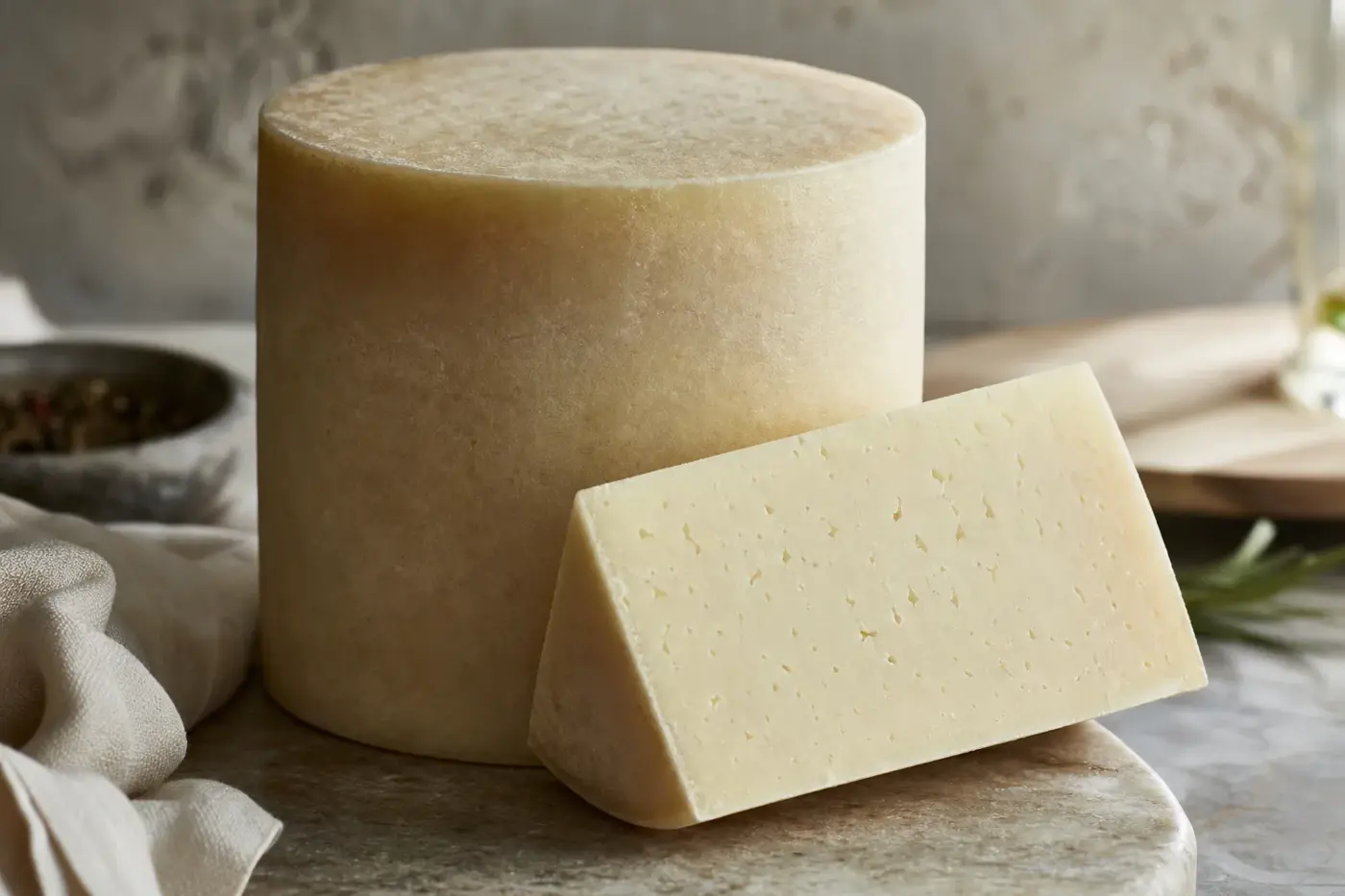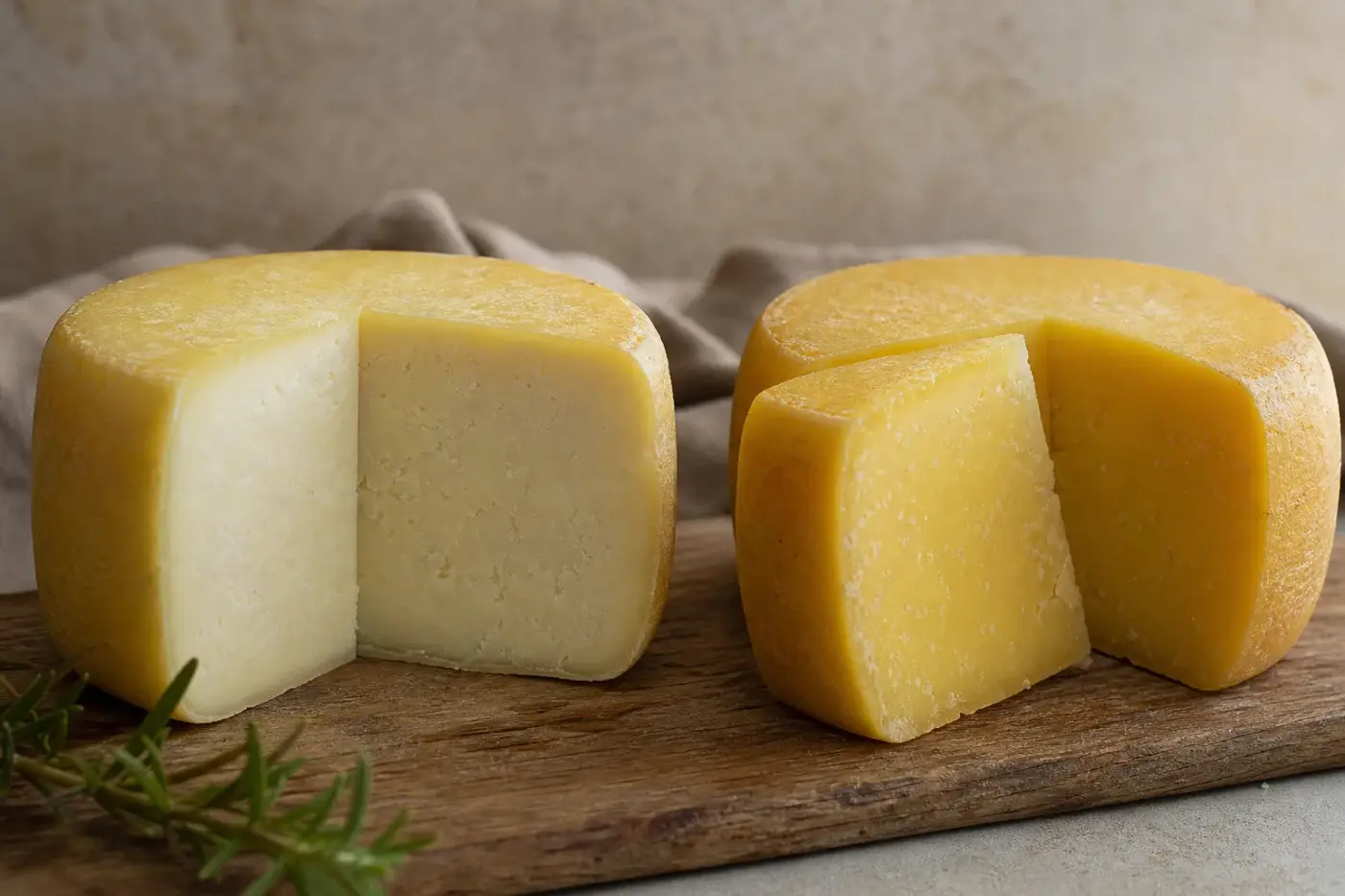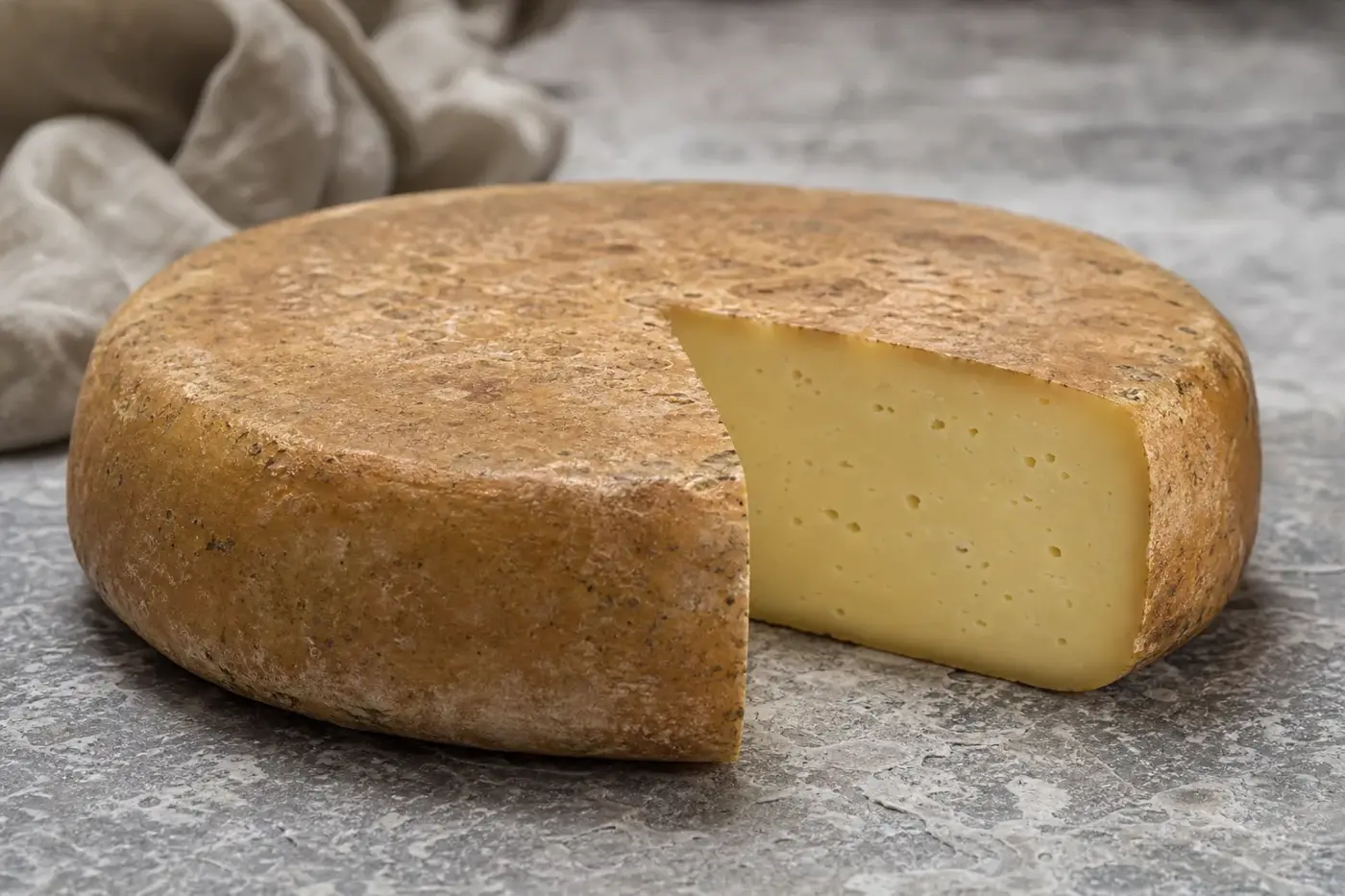
First, the scrape of the rind. Then linseed oil, rubbed into its surface: from the third month of maturation, this is part of tending Nostrano Valtrompia. Cut through that carefully kept exterior and you find a yellow interior, coloured partly by saffron added during cheesemaking. [1,2,4]
You’re in Val Trompia, in Brescia, Lombardy, home to this raw-milk cows’ cheese. It holds an unusual place among Italy’s long-matured mountain cheeses, with a name protected as a designation of origin in the EU and Great Britain. That handsome rind has quite a story underneath it. [1,2,4]
Get acquainted before your first slice
| What you’d like to know | The detail |
|---|---|
| Familiar and registered name | Nostrano Valtrompia. [1,4] |
| EU authority and identifier | European Commission; register ID: Not verified. [1] |
| EU legal basis | Registration: Implementing Regulation (EU) No 629/2012; amendment approval: Implementing Regulation (EU) 2021/2044. [1,3] |
| Protection, November 2026 | EU: PDO; Great Britain: registered PDO since 31 December 2020. Northern Ireland, Switzerland and the United States: Not verified. [1,3,4] |
| Milk | Raw cows’ milk, partly skimmed by natural cream separation. [2,6] |
| Cows behind the milk | At least 90% of milk from herd-book Italian Brown cows. [2,6] |
| Minimum maturation | 12 months after salting; minimum total production time 13 months. [2,3] |
| Permitted coagulant | Not verified; current specification required before publication |
| Permitted saffron form | Not verified; current specification required before publication |
| Main allergen | Milk. [2] |
| Production season | All year. [2] |
Head into the mountains of Val Trompia
Picture steep slopes, narrow meadows and mountain pastures. That is the agricultural setting described in Nostrano Valtrompia’s specification. Its production area covers 18 municipalities of Val Trompia and the mountainous Quarone and Civine parts of Gussago, all in the province of Brescia. [2,6]
Milk production, cheesemaking, maturation, scraping and oiling must all happen within that area. Historically, small holdings brought farmer, cheesemaker and affineur together. The same holding produced the milk, made the cheese and took responsibility for its maturation. [2,6]
Making a wheel, then, was not the finish line. Turning, scraping and oiling carried the work far beyond the vat. Those repeated acts help you understand why tending the rind matters so much in this mountain tradition. [2,6]
Meet the Italian Brown cows behind the wheel
At least 90% of the milk must come from Italian Brown cows entered in the herd book. Other breeds or crosses may supply the remainder. The milk must be raw and partly skimmed: cream rises naturally, then some is removed, rather than whole milk being used throughout. [2,6,9]
The feeding rules bring those grasslands into the story, too. Grass or hay must provide at least 75% of the ration’s dry matter, and maize silage is excluded. Long before you reach the vat, clear rules are shaping the milk. [2,6]
When you compare makers or production seasons, ask about these details alongside the wheel’s age. They tell you how its milk was produced, not simply how long the cheese has matured. For the differences between milk treatments, turn to the guide to raw, thermised and pasteurised cheese. [2,6]
Follow the saffron, then ask about rennet
Saffron goes either into the milk in the vat or into the curd and whey mixture before cooking. The permitted quantity is 0.05 to 0.2 g per 100 kg of milk. It is a small addition with a distinctive place in the process. [2]
The official account particularly links saffron to colour. It helps correct a greenish cast associated with partly skimmed milk and the cows’ diet. So that yellow interior has a practical explanation as well as visual appeal. [2]
If you’re vegetarian, the crucial question is which rennet the maker used. Ask the seller for the maker’s ingredient information before choosing your piece; neither colour nor age can tell you. The guide to rennet explained sets out the differences between animal and other coagulants, ready for your conversation at the counter.
From rice-sized curds to patient rind care
The curd is cut into rice-sized grains, stirred and cooked at 47 to 52 °C. Once settled, it is lifted out and transferred to moulds. The approved 2021 amendment allows either dry salting or brining. [2,3]
That amendment also makes the ageing clock clear. Maturation lasts at least 12 months after salting, while the complete production process takes at least 13 months. This cheese will not be hurried on account of your lunch plans. [2,3]
During maturation, the cheeses are turned. From the third month, their rinds are scraped and rubbed with linseed oil, care that the specification says limits premature moisture loss. When you buy, ask the wheel’s age and who has tended it: minimum maturity is only the beginning of that conversation. [2]
Let the cut face tell its story
A whole wheel weighs 8 to 18 kg, measures 30 to 45 cm across and stands 8 to 12 cm high. Its hard rind ranges from yellow-brown to reddish. Inside, the paste, or body of the cheese, is straw-yellow tending towards yellow-green. [2,5]
Expect a hard texture that is not excessively crumbly. Medium to small eyes, those little openings in the paste, may be evenly distributed through it. The label deserves your attention, but so does the cheese beneath it. [2,5]
Look at those openings, the texture towards the rind and how the piece breaks when cut. Each gives you something specific to discuss with the seller. Note the maker and age alongside your tasting notes, so next time you can compare identifiable cheeses rather than chase the memory of a particularly good wedge.
Taste slowly and give age its say
The official description promises full, intense aroma and flavour, without perceptible acidic notes at minimum maturity. Very mature cheese may develop a slight pungency. Qualivita also associates saffron with distinctive aromatic notes, so look for it within the whole character rather than expecting it to claim every mouthful. [5,7]
Start with a small piece on its own. Take in the aroma before chewing, then notice the firmness, any sharpness and how long the flavour stays with you. The accompaniments can wait their turn.
If two ages are available, taste them side by side first. You may prefer one at the table and another grated over a dish. Making that distinction before you choose your piece gives you something more useful than age alone.
Read the story behind the protected name
DOP is the Italian abbreviation corresponding to PDO, protected designation of origin. Nostrano Valtrompia was registered through Commission Implementing Regulation (EU) No 629/2012, adopted on 6 July 2012 and published on 13 July. Its entry-into-force provision specifies the twentieth day after publication, 2 August 2012. [1,4]
Great Britain’s register separately records PDO registration from 31 December 2020. If your piece is already wrapped, ask the cheesemonger to show you the original wheel information. You can still find out where your wedge began. [1,4]
The guide to protected names explains how origin protection differs from a brand. For identification and portion requirements, consult the current specification.
Make room on the board and beside the grater
Nostrano Valtrompia belongs on the cheese board and at the grater. Qualivita recommends it as a table cheese and for grating, suggesting fruit or vegetable preserves and honey alongside it. Start simply: plain bread, a few pieces of cheese and one accompaniment served separately. [7]
Taste the cheese first. Then add a little preserve or honey and see how it suits that particular wheel. You’re looking for a partner, not a disguise.
In the kitchen, try a little freshly grated over polenta, vegetable soup or pasta. Taste before adding more, and treat these as serving suggestions rather than fixed recipes. Keep some cheese aside to eat alongside the finished dish, so you can compare its character alone with its role as a seasoning.
For an alcohol free pairing, try sparkling water or an unsweetened apple drink. Give the cheese room to remain the centre of your tasting.
Choose thoughtfully and bring it home well
Ask for the maker, the wheel’s age and its storage instructions. Keep the original label or photograph it. Let your plans guide your choice, whether you want a piece for the table or mainly for grating.
Before leaving, ask how to wrap the cut cheese and whether its existing packaging should stay in place. For home storage, follow the label’s wrapping and storage instructions. Consult the Food Standards Agency’s current refrigeration guidance for England, Wales and Northern Ireland. [8]
This page summarises published guidance from the official sources it cites. It is not medical advice. Guidance differs between countries and changes over time, so check the current source for where you live, and ask your doctor, midwife, pharmacist or dietitian about your own circumstances.
Get clear advice on milk allergy, raw milk and pregnancy
Nostrano Valtrompia contains cows’ milk. The NHS distinguishes milk allergy, a reaction to milk protein, from lactose intolerance, which concerns the digestion of milk sugar. If you suspect a reaction, speak to a GP or another health professional, as the NHS advises. [2,9]
Keep the cheese’s label available for that discussion. Check every accompaniment separately, too. Each food served alongside the cheese needs its own consideration.
For pregnancy in the UK, the NHS lists hard cheeses made with pasteurised or unpasteurised milk among foods that can be eaten. It distinguishes these from mould-ripened soft cheeses and soft blue cheeses. Follow the current NHS pregnancy guidance (November 2026) for the relevant category, and ask your midwife or doctor about your personal circumstances. [10]
If you belong to another higher-risk group, consult the official advice where you live. Guidance for your circumstances is what matters. [10]
Questions people ask
Where is Nostrano Valtrompia made?
It is made in Val Trompia in Brescia, Lombardy. The defined area covers 18 municipalities and the mountainous Quarone and Civine parts of Gussago.
How long is Nostrano Valtrompia aged?
It matures for at least 12 months after salting. The complete production process takes at least 13 months.
What does Nostrano Valtrompia taste like?
It has a full, intense aroma and flavour, without perceptible acidic notes at minimum maturity. Very mature cheese may develop a slight pungency.
Is Nostrano Valtrompia vegetarian?
That depends on which rennet the maker used. Ask the seller for the maker’s ingredient information for the particular wheel.
Can you eat Nostrano Valtrompia during pregnancy?
The NHS lists hard cheeses made with pasteurised or unpasteurised milk among foods that can be eaten during pregnancy. See the current NHS pregnancy guidance on foods to avoid, and ask your midwife or doctor about your circumstances.
Sources
-
European Commission. Commission Implementing Regulation (EU) No 629/2012 of 6 July 2012 entering a name in the register of protected designations of origin and protected geographical indications [Nostrano Valtrompia (PDO)]. Official Journal L 182, 13 July 2012, pages 12 to 13. Official regulation.
-
European Commission. Publication of an application for approval of an amendment, which is not minor, to a product specification: Nostrano Valtrompia. 2021/C 313/07, Official Journal C 313, 5 August 2021, pages 18 to 24. Includes the amendment text and single document, reference PDO-IT-0823-AM01. Official publication.
-
European Commission. Commission Implementing Regulation (EU) 2021/2044 of 17 November 2021 approving non-minor amendments to the specification for a name entered in the register of protected designations of origin and protected geographical indications (‘Nostrano Valtrompia’ (PDO)). Official Journal L 418, 24 November 2021, pages 4 to 5. Official approval.
-
Department for Environment, Food & Rural Affairs. Nostrano Valtrompia. Great Britain protected food names register, published 4 January 2021; live entry checked November 2026. Register entry.
-
Italian Ministry of Agricultural, Food and Forestry Policies. Disciplinare di produzione della Denominazione di Origine Protetta «Nostrano Valtrompia». Undated original-version document, Article 2; retrieved extract from a third-party-hosted copy. Used only for physical and sensory characteristics corroborated by source 2, not superseded composition limits. Retrieved document.
-
Rijksdienst voor Ondernemend Nederland. Publicatie AGOS, wijziging productdossier BOB ‘Nostrano Valtrompia’. Staatscourant 2021, 39207, 2021. Official Dutch publication reproducing the amendment and single document. Official publication.
-
Fondazione Qualivita. Nostrano Valtrompia PDO. Qualigeo, undated product account, checked November 2026. Its sensory and serving descriptions are attributed to the foundation. Published account.
-
Food Standards Agency. How to chill, freeze and defrost food safely. Published 18 December 2017; current guidance checked November 2026. Applies to England, Northern Ireland and Wales. Official guidance.
-
NHS. Dairy and alternatives in your diet. Current online edition, checked November 2026. Official guidance.
-
NHS. Foods to avoid in pregnancy. Current online edition, checked November 2026. Official guidance.
This piece was researched from official registration instruments, published specification material, national guidance and an attributed cheese reference account, with editorial serving suggestions and no first-hand tasting.
Last checked: November 2026
Last checked November 2026.
The editors suggest you read next
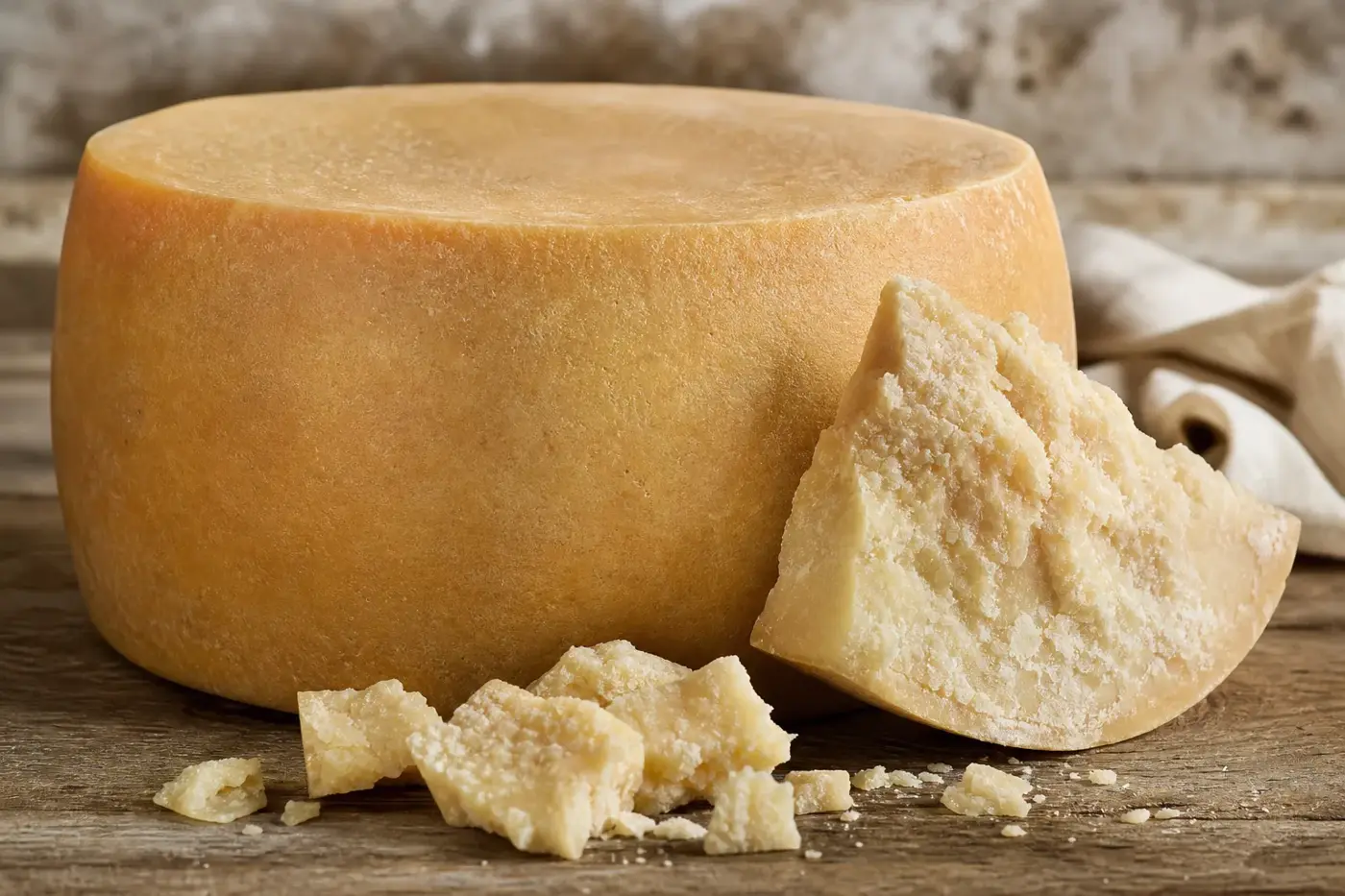
Parmigiano Reggiano
Break into a wheel of Parmigiano Reggiano and flakes fall away, revealing a finely granular cheese, pale straw to straw in colour.