Odenwälder Frühstückskäse
Cut into a young Odenwälder Frühstückskäse and a white, quark-like centre greets your knife.
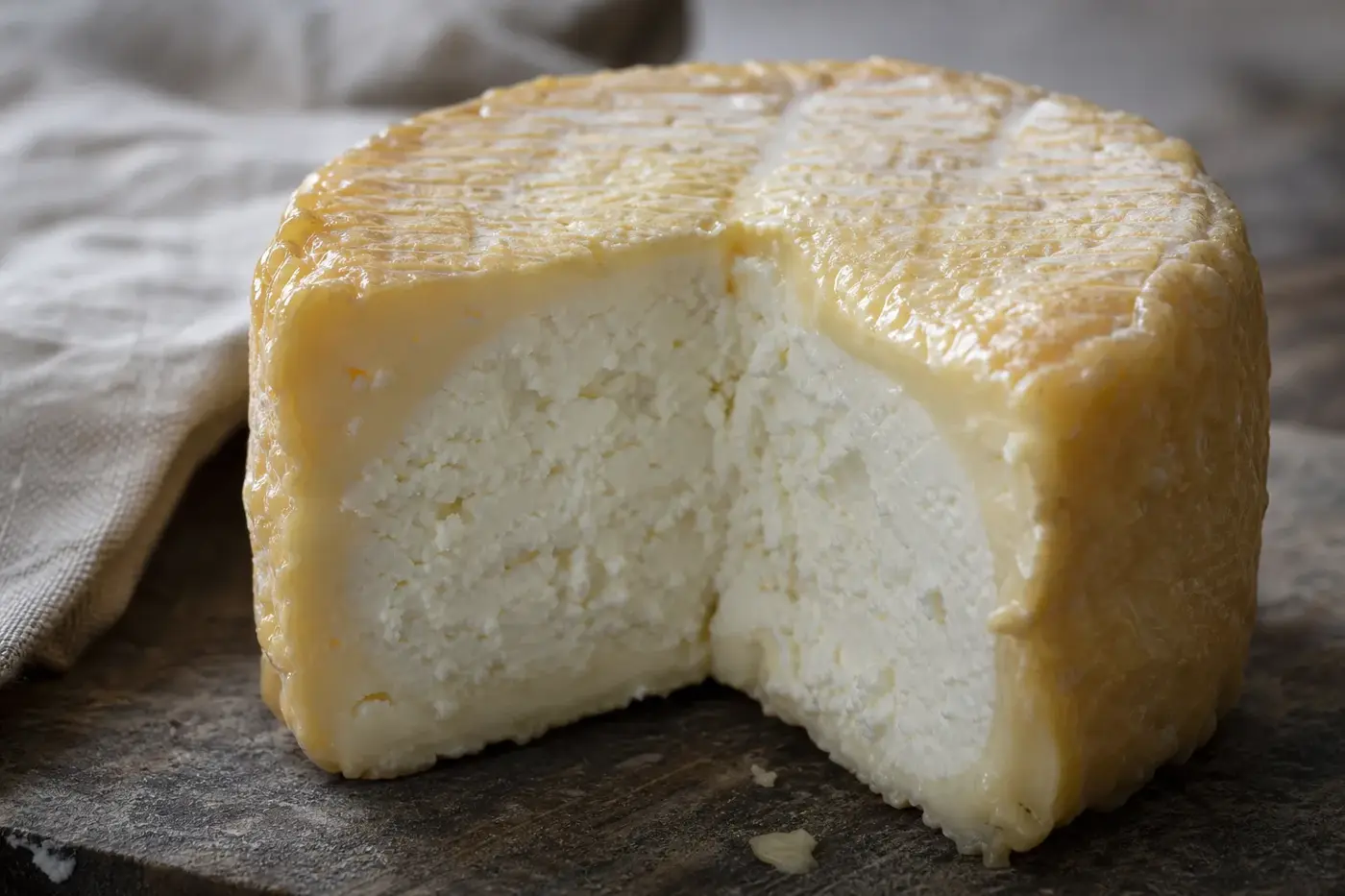
Cut into a young Odenwälder Frühstückskäse and a white, quark-like centre greets your knife. Give this small cow’s milk cheese time, and ripening travels inwards from the surface, turning mildness into something hearty and piquant. Its name carries you to breakfast after morning milking in Germany’s Odenwald, with bread and an onion dressing for company. A promising reward for getting up early. [1][2][6]
Pull up a chair after morning milking
Frühstückskäse means breakfast cheese, but there is a morning’s work behind this particular breakfast. Landesvereinigung Milch Hessen, the Hessian dairy industry body, suggests the name comes from eating it as a second breakfast after milking. The regional authority also connects it with farmers’ breakfast after the morning’s work. [1][6]
You can borrow that working-day approach: bread, cheese, little fuss. Happily, the name sets no breakfast deadline. Lunch or an evening bread supper suits it just as comfortably.
Ripeness matters more than the hour. For your first taste, ask for a younger cheese and try it plain before reaching for onions or vinegar. Let that first mouthful have its say before the sharp dressing joins the conversation.
Meet the Hessian landscape behind the name
Odenwaldkreis and Bergstraße, in the Hessian Odenwald, form the documented production area. The regional authority places both the milk supply and cheesemaking within these districts. Its account of the local dairy landscape takes in sandy soils and upland grazing. [1][5]
Keep that geography in mind when you read a label. “Odenwald” gives you the wider regional association; Odenwaldkreis and Bergstraße mark the precise boundary recorded for this cheese. The familiar regional name tells only part of its story.
In Mossautal, Molkerei Hüttenthal includes Odenwälder Frühstückskäse in its product brochure. The maker connects its cheese with local milk and the breakfast tradition. Alongside the official record of the protected name, you have a producer’s account of what makes it worth putting on the table. [2]
Look for the full name, accents included
Odenwälder Frühstückskäse has protected designation of origin status, or PDO, in GIview’s EU registration record. In German, you will see g.U., short for geschützte Ursprungsbezeichnung. When choosing your cheese, look for the full registered name, accents included. [3]
Great Britain’s separate register also lists it as a registered PDO. The UK scheme date is 31 December 2020, while the entry separately gives the original EU registration date. These mark different registration events, rather than conflicting dates for one occasion. [4]
Start with the full name, then read the producer, milk treatment and storage information on the pack. A regional nickname can be useful at the cheese counter. The registered wording gives you a more precise buying reference.
If you would like to untangle origin-linked registrations and traditional specialities, turn to protected names explained.
Small cheese, carefully drawn rules
Fourteen days is the minimum age recorded in the published German cheese ordinance reproduced by the Bavarian state agriculture institution. Its Odenwälder Frühstückskäse entry also specifies local, pasteurised cheesemaking milk. Yellow or red smear bacteria carry out the ripening. [5]
That version sets a minimum of 10% fat in dry matter, with dry matter making up 31 to 42% of the whole cheese. If that phrase leaves you pausing over the label, here is the useful distinction: fat in dry matter means the proportion of fat after water is excluded. It does not mean grams of fat per 100 g of cheese. [5]
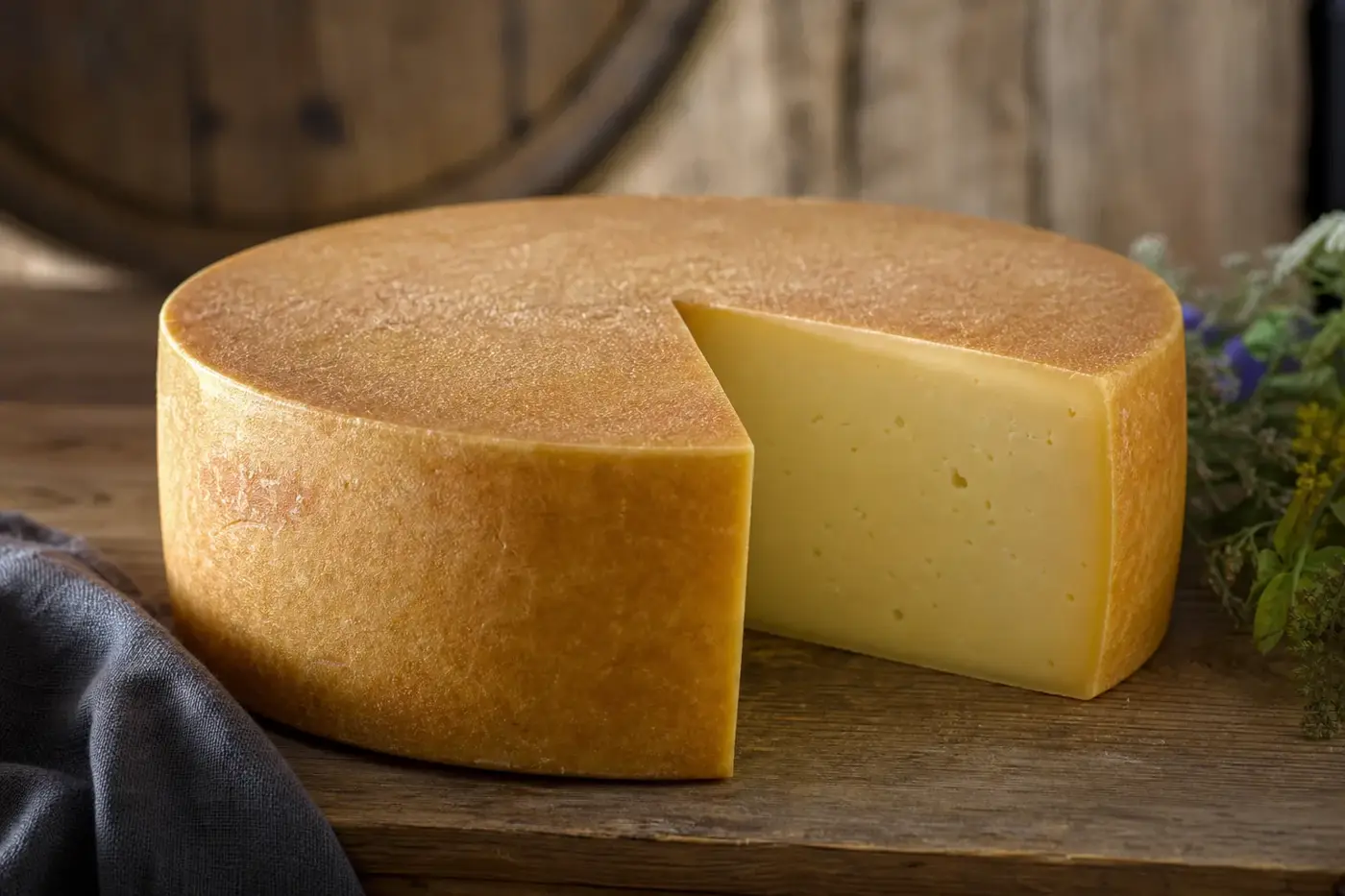
The same published German standard describes a round cheese with a manufacturing weight of 100 g. Its skin is supple, with a slightly sticky smear ranging from yellowish to reddish-brown. Inside, you should expect a closed texture, with occasional small openings between the curd particles. [5]
This page summarises published guidance from the official sources it cites. It is not medical advice. Guidance differs between countries and changes over time, so check the current source for where you live, and ask your doctor, midwife, pharmacist or dietitian about your own circumstances.
From milk to mould, by hand
Calf rennet sets the milk in the regional authority’s production account. Picture the milk becoming a gel: that is the coagulant at work. Cutting this set mass creates curds, the solid pieces that will become cheese, while the liquid whey drains away. [1]
The curds are ladled into moulds by hand. Turning and further drainage give the cheese its small cylindrical shape, before surface ripening builds its character. Despite the regional habit of calling it Handkäse, this process makes Odenwälder Frühstückskäse a rennet-set soft cheese. [1][6]
The named ripening bacteria work on the surface. They have a different role from starter cultures used earlier in cheesemaking. When you come across “culture”, look at the context: different organisms have different jobs at different stages.
For a closer look at setting, cutting and draining, follow how cheese is made.
Taste from the outside in
A white centre tells you that ripening is still under way. Landesvereinigung Milch Hessen describes regular smearing with a bacterial culture, with ripening moving from the outside towards the middle. In a young cheese, that middle stays white and quark-like as the flavour develops from mildly aromatic to hearty and piquant. [6]
Molkerei Hüttenthal’s published tasting notes trace the same progression. First comes the characteristic white centre, followed by a more savoury character as the cheese matures. These are the maker’s descriptions of its cheese, giving you a useful starting point for tasting. [2]
Cut yourself a piece that includes both surface and centre. Try each part separately and notice any difference in firmness and intensity. Then taste them together: the centre alone cannot tell you the whole story.
Set the table with bread and onions
Begin with bread and an undressed piece of cheese. Rye, a mixed-grain loaf or a plain crusty roll would all fit comfortably on your plate. Put accompaniments alongside rather than over everything, so you can choose how much sharpness to add.
The established regional preparation is Handkäse mit Musik: cheese served with onions, vinegar, oil and seasonings. The regional authority includes caraway among those seasonings. Molkerei Hüttenthal also publishes an apple-and-onion version with apple vinegar and walnuts, plus a bread-based serving idea using quark. [1][2][7]
For a simple plate, take the essentials: bread, cheese, a little onion dressing and apple alongside. There is no need to turn breakfast cheese into a major kitchen project. Keep the walnuts optional, especially if you are feeding a group.
Sparkling water or an alcohol free apple drink make straightforward choices alongside. These suggestions take their cue from the accompaniments, rather than a recorded pairing trial. Keep things simple and let your preferred ripeness set the tone.
Choose your ripeness and keep it well
Ask the seller whether the cheese is young or more fully ripened, and explain which character you prefer. Look for the full registered name on the pack. A cheese called Handkäse in conversation is not necessarily Odenwälder Frühstückskäse. [3][6]
Follow the pack’s refrigeration and storage instructions, including any directions for after opening. For England, Northern Ireland and Wales, the Food Standards Agency recommends a domestic fridge temperature between 0 and 5 °C (32 to 41 °F), with dairy products kept refrigerated. Cover your cheese and keep it separate from raw foods that could drip onto it. [8]
Molkerei Hüttenthal suggests taking its cheese out of the fridge an hour before eating. If you follow that flavour advice, take out only the portion you need. The FSA’s guidance for England, Northern Ireland and Wales says chilled food should spend the shortest possible time outside refrigeration during preparation, with a maximum of four hours. [7][8]
Use a clean plate, with bread and dressing alongside. Return the remaining cheese promptly to the fridge and keep its packaging for the date and handling instructions. You can find more household advice in how to store cheese at home.
Get to know its character and its cousins
A younger cheese’s white centre is part of its documented ripening pattern, not automatically a defect. The supple, smeared surface belongs to its character too. Compare your cheese with the maker’s description, rather than looking for the dry, hard rind you might expect elsewhere. [2][5]
Appearance and aroma cannot replace date and storage instructions. UK government guidance distinguishes a use by date, which concerns safety, from a best before date, which concerns quality. Do not eat food after its use by date, even if it looks and smells normal; incorrect storage can also make it unsafe before that date. [9]
Handkäse is the most useful German comparison, though the methods differ. Landesvereinigung Milch Hessen distinguishes the sour-milk cheese normally associated with that name from rennet-set Odenwälder Frühstückskäse. Think of your breakfast cheese among surface-ripened soft cheeses, even when it shares a serving tradition with its cousin. [6]
Pregnancy and allergies: what to know before serving
The NHS advises pregnant people not to eat soft cheeses with a washed rind unless cooked until steaming hot. This advice applies even when the milk is pasteurised. Consult the current NHS guidance for its full advice on cheese in pregnancy. [10]
This cheese is a milk product, and UK government consumer guidance lists milk among the allergens businesses must disclose. Accompaniments can introduce others, including mustard, walnuts or gluten-containing bread. Check the whole plate, not just the cheese, and ask the seller about ingredients whenever necessary. [11]
Questions people ask
Where is Odenwälder Frühstückskäse made?
Its documented production area is the Odenwaldkreis and Bergstraße districts of Hesse, Germany. The regional authority places both the milk supply and cheesemaking within these districts.
Why does it have a white centre?
The cheese ripens from the surface towards the middle, leaving a white, quark-like centre when young. As it matures, its flavour develops from mildly aromatic to hearty and piquant.
Is Odenwälder Frühstückskäse made with rennet?
The regional authority’s production account says it is made with calf rennet. The milk is skimmed and pasteurised in that account.
How is Odenwälder Frühstückskäse traditionally served?
The regional preparation called Handkäse mit Musik serves the cheese with onions, vinegar, oil and seasonings. The regional authority includes caraway among the seasonings.
What does the NHS say about eating this kind of cheese during pregnancy?
The NHS advises pregnant people not to eat soft cheeses with a washed rind unless cooked until steaming hot, even when made with pasteurised milk. See the NHS guidance on foods to avoid in pregnancy for its full advice on cheese.
Sources
- Regierungspräsidium Gießen. Odenwälder Frühstückskäse, official regional information leaflet, March 2018. Sections “Beschreibung”, “Geografisches Gebiet”, “Geschichte”, “Herstellung” and “Verwendete Rohstoffe”. Official leaflet.
- Molkerei Hüttenthal. Vielfalt, die begeistert · Qualität, die überzeugt, product brochure, undated retrieved edition. Odenwälder Frühstückskäse product spread. Commercial producer source. Product brochure.
- European Union Intellectual Property Office, GIview. Odenwälder Frühstückskäse, record EUGI00000013265, file PDO-DE-0462, retrieved November 2026. Registration record.
- Department for Environment, Food & Rural Affairs. Odenwälder Frühstückskäse, Great Britain protected food name register, published 4 January 2021, retrieved November 2026. Register entry.
- Bundesministerium für Ernährung und Landwirtschaft. Käseverordnung, non-official consolidated version reproduced by Bayerische Landesanstalt für Weinbau und Gartenbau, undated retrieved edition, Anlage 1b, page 21. Published ordinance copy.
- Landesvereinigung Milch Hessen. Odenwälder Frühstückskäse g.U., undated, retrieved November 2026. Industry body source. Cheese description.
- Molkerei Hüttenthal. Das „Stöffche“ liebt leckeren Handkäs, recipe leaflet, undated retrieved edition. Commercial producer source. Serving leaflet.
- Food Standards Agency. How to chill, freeze and defrost food safely, published 18 December 2017, retrieved November 2026. Applies to England, Northern Ireland and Wales. Official guidance.
- GOV.UK. Understanding food labelling: Best before and use-by dates, current retrieved edition, November 2026. Official guidance.
- NHS. Foods to avoid in pregnancy, current retrieved edition, November 2026. Official pregnancy guidance.
- GOV.UK. Understanding food labelling: Allergen labelling, current retrieved edition, November 2026. Official allergen guidance.
Researched from official registration information, a regional authority’s production account, a published German standard, attributed industry and producer descriptions, and official UK consumer guidance.
Last checked: November 2026
Last checked November 2026.
The editors suggest you read next
Allgäuer Emmentaler
Two Swiss dairymen arrive in Weiler in 1821, carrying cheesemaking knowledge into the western Allgäu.