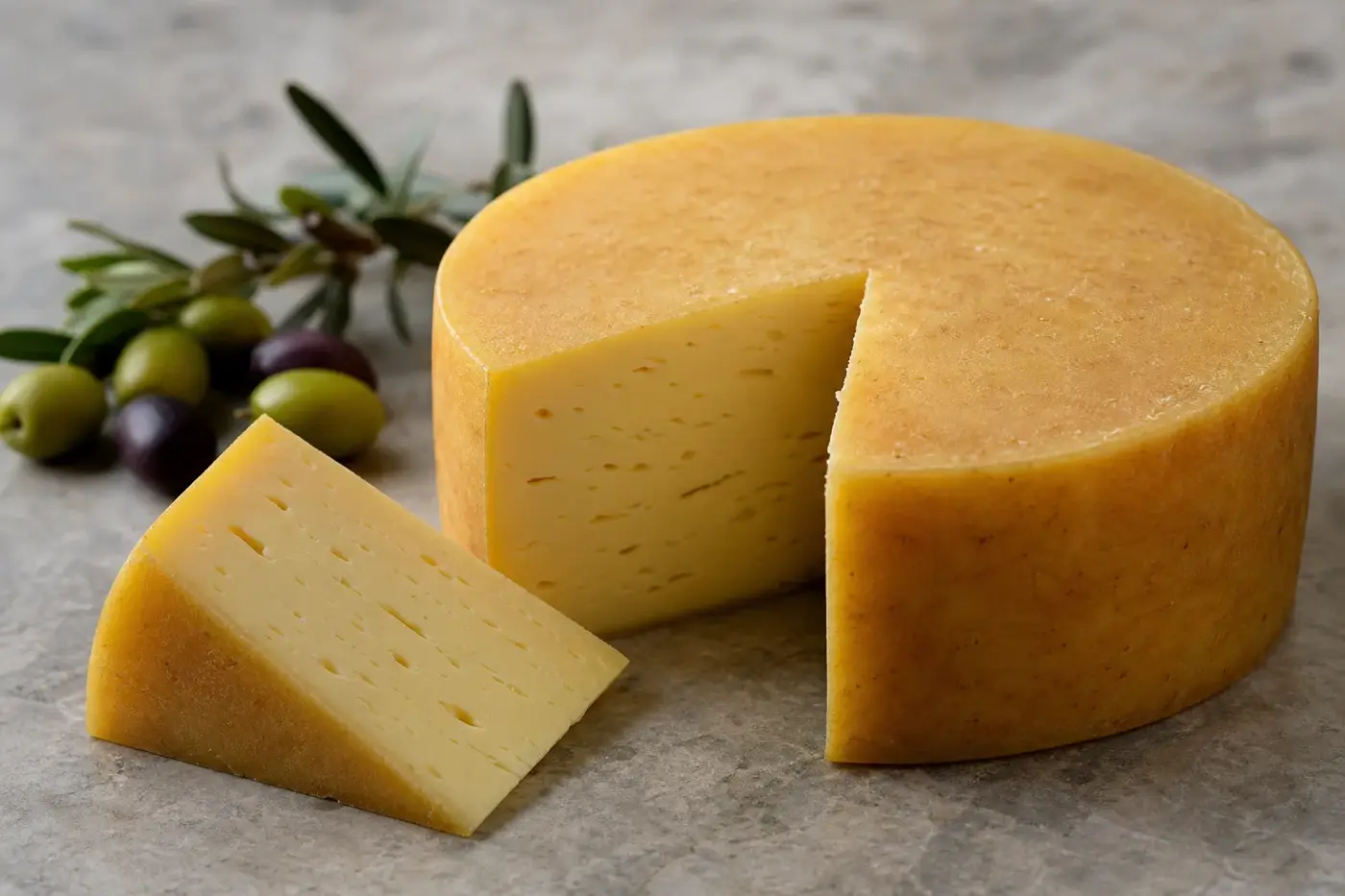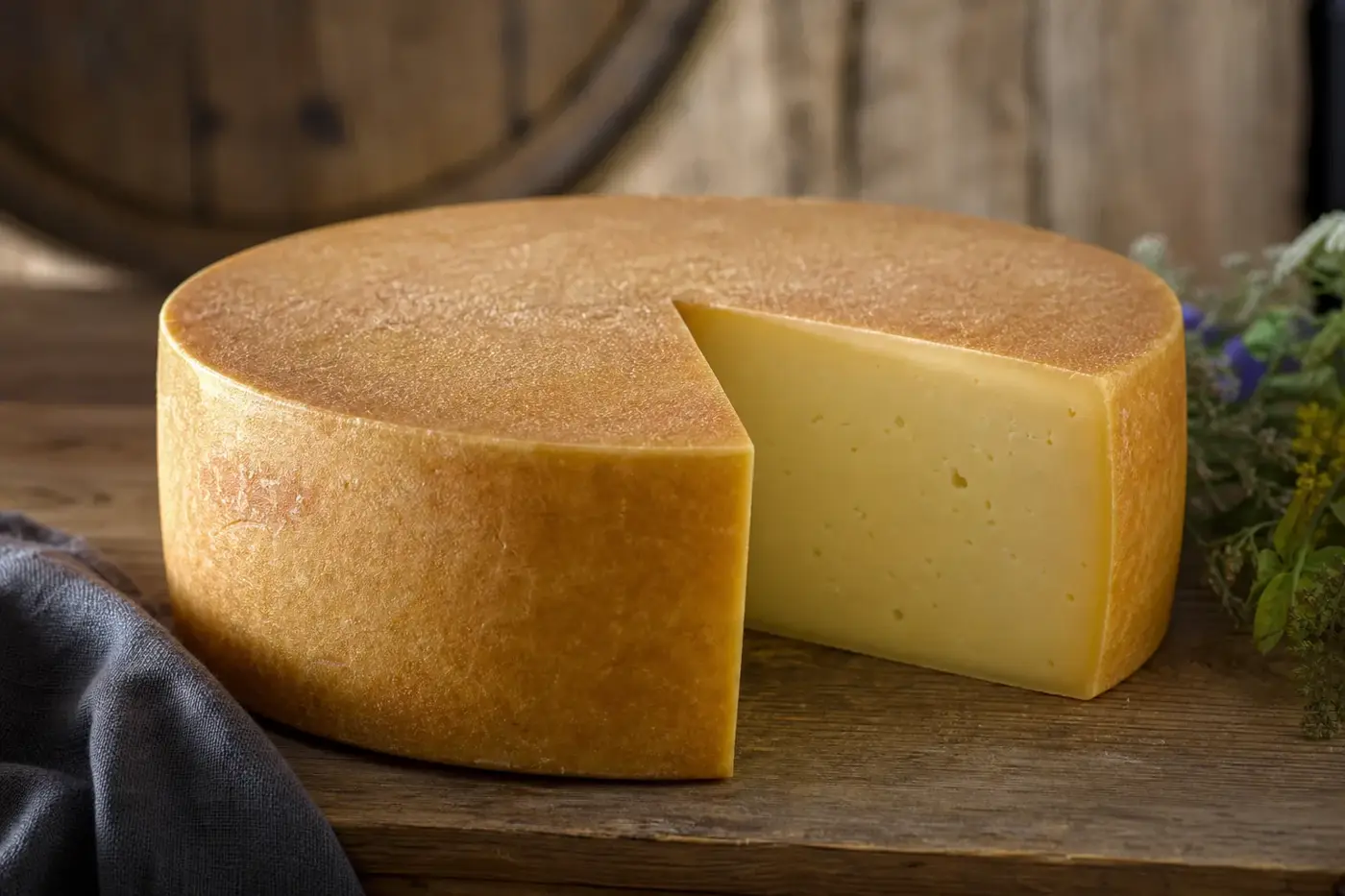
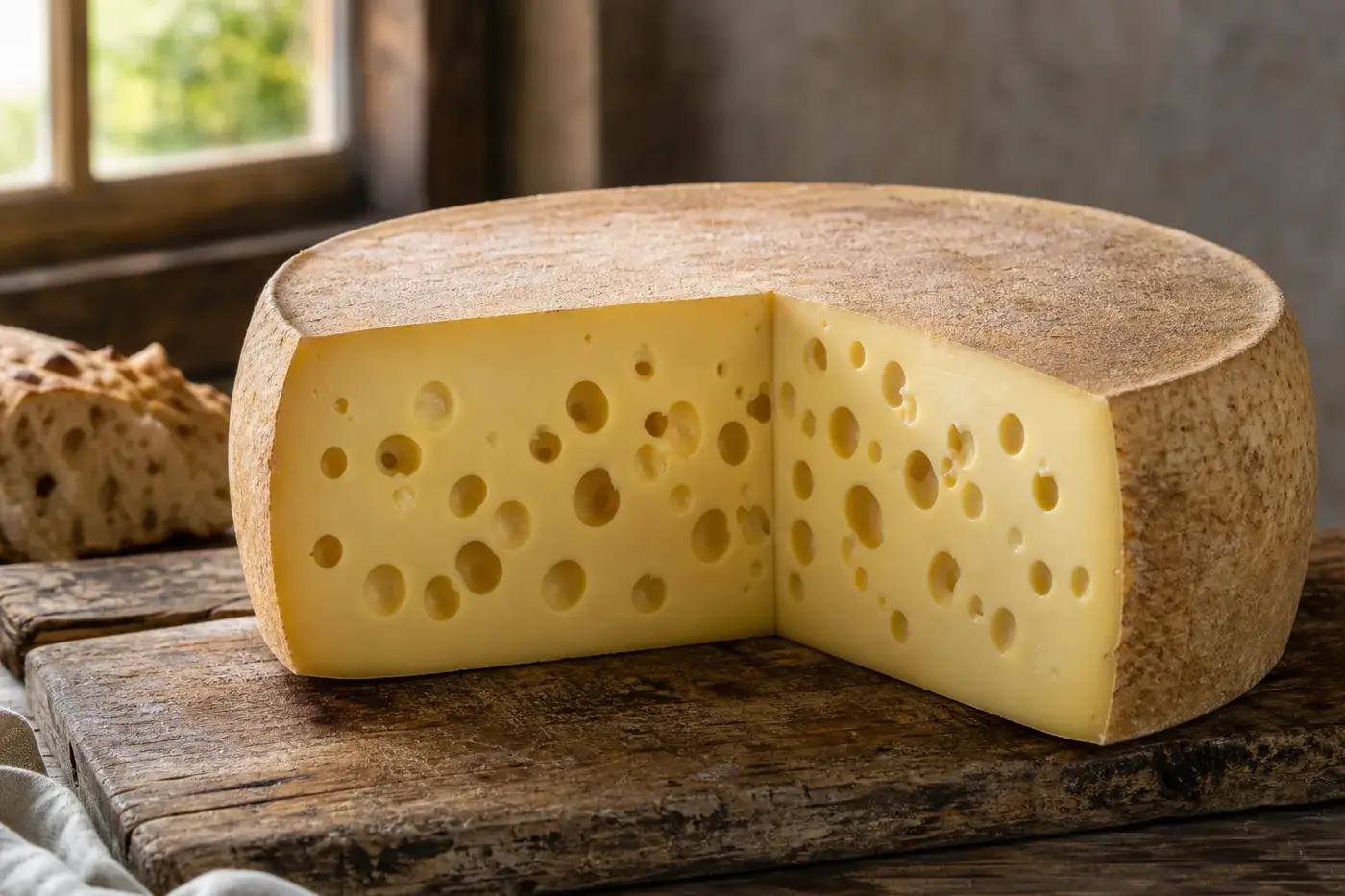
A 15 to 50 kg wheel lands on the counter. Suddenly, your plans for “a little cheese” look rather modest. Meet Allgäuer Bergkäse, a raw cow's milk cheese from the northern side of the Alps, with small holes scattered through a largely closed interior. It matures for at least four months, and longer if you want its flavour to speak more loudly. [1, 3, 5]
| What you might want to know | The detail |
|---|---|
| Name to look for | Allgäuer Bergkäse. [1, 4] |
| EU registration authority and entry | European Commission; register identifier: unspecified. [2] |
| EU protection | Current register status and effective date: unspecified. [2] |
| Northern Ireland protection | Status unspecified. |
| Great Britain protection | Registered PDO; UK scheme registration dated 31 December 2020 at 23:00; status as at November 2026. [4] |
| Where it comes from | Germany: defined districts and cities in Bavaria and Baden-Württemberg. [1, 3] |
| Milk | Raw cow's milk from the production area. [1, 3] |
| Minimum maturation | Four months. [3] |
| Looking for an older cheese? | Ask for the particular wheel's age. |
| Wheel size and shape | Rind-matured rounds, 15 to 50 kg at manufacture. [3] |
| One producer's rennet | Baldauf declares animal rennet for its Allgäuer Bergkäse PDO. [6] |
| Pregnancy guidance | Guidance unspecified. |
Take the long route through its Alpine homeland
Picture more than a single mountain valley. Allgäuer Bergkäse belongs to a dairy region stretching across two German states. Its protected production area takes in several districts and cities, giving you a broader landscape to explore. [3]
In Bavaria, that means Lindau, Oberallgäu, Ostallgäu and Unterallgäu, alongside the independent cities of Kaufbeuren, Kempten and Memmingen. Cross the state boundary and you reach Ravensburg and Bodenseekreis in Baden-Württemberg. [3]
Keep that broad homeland in mind when you read the label. This is cheese from a defined region, not exclusively from high summer pastures. The European Commission connects its character with milk from herds grazing the northern Alpine foothills. [1]
The Bavarian agricultural institute traces the story from forage to milk, cheesemaking and maturation. It describes fresh grasses, legumes and herbs during the green-feeding season, with hay central to winter feeding. What the cows eat is the beginning of the story, which continues through the dairy, far beyond the mountain picture on a wrapper. [3]
Meet the Swiss workers who made their mark
Around 1820, Swiss Alpine herdsmen and dairy workers settled and took employment in the Allgäu. According to the European Commission, the climate, agricultural structure and countryside offered familiar conditions. Their cheesemaking skills found a home here too. [1]
They brought techniques associated with Swiss cheesemaking, including Emmental production. The Commission describes new cheeses emerging and existing ones being refined, particularly Bergkäse. Knowledge travelled with people, then became regional practice through local milk and local dairies. [1]
The regional food organisation Schmeck den Süden sets this within a bigger transformation. Alpine cheesemaking gave way to village dairies and, later, industrial production. If you fancy following that story further, it identifies Wangen's cheesemaking museum as documenting those successive stages of the Allgäu dairy industry. [7]
Follow the milk from vat to wheel
The making begins with raw cow's milk and a gentle warming. The Commission describes heating it below 40 °C before renneting; the Bavarian agricultural institute specifies a maximum of 40 °C at this stage. Keep this first warming separate in your mind from the later heating of the cut curd. [1, 3]
Rennet is the enzyme preparation that turns milk into a gel. Allgäu GmbH, the regional organisation, describes adding cheesemaking cultures, allowing the milk to develop, then adding rennet. Once set, the gel is cut into solid curds, with liquid whey surrounding them. [5]
Next comes more heating. The curds are gathered in a cloth and pressed in a round mould, with whey draining away as they consolidate into a wheel. Turning and careful handling continue before the cheese goes into a salt bath. [5]
You can see the substantial round taking shape through those steps. This is a dense, pressed cheese, quite unlike a soft cheese ladled into a small mould. Follow the wider process in how cheese is made, or explore the coagulation choices in rennet explained.
Step into the cellar as flavour gathers pace
That rind does not look after itself. Allgäu GmbH describes brushing the cheese with red-smear cultures during the early weeks, followed by continued maturation in humid cellars. Surface cultures help form the rind while time brings changes within. [5]
According to Allgäu GmbH, the flavour starts mild and aromatic, becoming stronger and more savoury as maturation progresses. For nuttiness and changes in texture, let the particular piece guide your impressions rather than expecting a fixed description. Ask about the age of the actual wheel at your counter, too. [5]
Ask how many months it has matured, rather than settling for “mature”. Then tell the cheesemonger your plan: slices with bread, a piece to taste alone or cheese to grate into a dish. The oldest wheel in the room does not automatically win.
Look beneath the rind, then taste for yourself
Start with the outside. Allgäu GmbH describes a matt yellow to brownish rind, enclosing a predominantly closed interior with occasional pea-sized holes. Those sparse openings give you one of the clearest visual ways to distinguish it from Allgäuer Emmentaler. [3, 5]
Now look at the interior, often called the paste. Baldauf describes its own Allgäuer Bergkäse PDO as evenly golden-yellow, firm enough to slice yet supple. Its tasting notes call the cheese aromatic, savoury and piquant. [6]
If samples are available, try a younger piece beside a longer-matured one. Notice gentle flavours, any nuttiness you perceive and the more pronounced savoury finish. Bend or break the pieces, too: you need not squeeze every wheel into the same tasting vocabulary.
For your first purchase, let the meal guide the texture and intensity you choose. Note the dairy and age alongside your impressions. Next time you fancy a piece, you will have something more useful to go on than a fond but hazy memory.
Find the protected name on the label
PDO stands for Protected Designation of Origin. The European Commission explains that production, processing and preparation happen within the specified region. For Allgäuer Bergkäse, that connection includes the milk and cheesemaking, not merely the address where it is packed. [1, 3]
Look for the complete registered name: Allgäuer Bergkäse. On German packaging, g.U., short for geschützte Ursprungsbezeichnung, expresses the PDO designation. The official GB register separately records the name as a registered PDO in Great Britain. [3, 4]
Start with the name, then look for the dairy, product information and stated maturation. Buying a freshly cut piece? Ask to see the original wheel label or accompanying information. “Bergkäse” alone tells you less about the cheese you are taking home.
For help distinguishing a food's name from its producer and packing details, turn to how to read a cheese label. You can explore the different schemes in protected names explained.
Give Allgäuer Emmentaler a place beside it
The holes offer an immediate clue, but there is more to this comparison. Wheel size and minimum maturation also distinguish these cheeses from the same regional dairy setting. The table follows the Bavarian agricultural institute's descriptions; the GB register records Allgäuer Emmentaler's separate registered name. [3, 8]
| What to look at | Allgäuer Bergkäse | Allgäuer Emmentaler |
|---|---|---|
| Milk | Raw cow's milk | Raw cow's milk |
| Shape and size at manufacture | Round, 15 to 50 kg | Round, at least 60 kg; blocks also described |
| Holes | Pea-sized, isolated to sparse | Round, regularly distributed, 1 to 3 cm |
| Published minimum maturation | Four months | Three months |
| Great Britain designation, November 2026 | Registered PDO | Registered PDO |
Put both on a cheese board and explore the differences yourself. Look at the spacing of the holes, feel a slice's texture and notice the finish after swallowing. When cooking, choose the particular piece for its flavour and texture rather than treating the names as interchangeable.
Ask three questions, then clear a fridge shelf
Who made it, how long has it matured, and what does the seller recommend it for? Those three questions make buying easier. If you take home a wrapped portion, keep the label so its storage instructions and product details stay with you after opening.
The Food Standards Agency advises consumers in England, Northern Ireland and Wales to keep fridges between 0 and 5 °C and follow packaging instructions. Use the directions for your portion, including any instructions that apply after opening. [9]
Cut a manageable amount for the table and leave the rest refrigerated. The FSA's November 2026 guidance for England, Northern Ireland and Wales advises keeping chilled food out of refrigeration for the shortest possible time during preparation. [9]
Need help choosing a wrapper or looking after a cut face? See how to store cheese at home.
Start with bread and see where supper takes you
Begin with a plain slice and bread. Then try the same cheese with apple or pear for freshness, or a little mustard for contrast. A few toasted hazelnuts bring a roasted flavour alongside it. Let what you notice in your piece guide the accompaniments.
For an alcohol-free drink, start with sparkling water. Next, try unsweetened apple juice diluted to your taste. Keeping the first accompaniment simple helps you notice what each addition contributes, and which combinations you would happily return to.
Cut thin slices for bread or smaller pieces for a shared plate. In the kitchen, try grating it over potatoes, folding it through spätzle or adding it to a vegetable gratin. Taste before seasoning, especially when other salty ingredients are involved.
The European Commission also publishes a pasta pairing: pappardelle with Allgäuer Bergkäse PDO, sweet potatoes and hazelnuts. If sweet vegetables and toasted nuts appeal to you, there is a starting point for your next meal. [1]
Before you buy, consider raw milk and rennet
If you avoid raw milk, choose another cheese with an explicit pasteurised-milk declaration. The European Commission describes Allgäuer Bergkäse as a raw cow's milk cheese. Heating curds during manufacture is a different stage from pasteurising the milk. [1, 5]
For vegetarian suitability, look at the particular product's rennet declaration. Baldauf's published product sheet lists animal rennet, so that example does not meet a requirement to avoid animal rennet. Ask other suppliers for their own information: one producer's declaration cannot tell you what is used in every wheel. [6]
For more background on those milk distinctions, see raw milk, thermised and pasteurised cheese.
General information only, not medical advice: follow the official guidance where you live.
Questions people ask
Is Allgäuer Bergkäse made from raw milk?
Yes, it is made from raw cow's milk from the production area. The milk is warmed before renneting, while the cut curds are heated at a later stage.
Is Allgäuer Bergkäse suitable for vegetarians?
Check the rennet declaration for the particular product. Baldauf lists animal rennet for its Allgäuer Bergkäse PDO, but that does not establish which rennet every producer uses.
How long is Allgäuer Bergkäse matured?
It matures for at least four months. Its initially mild, aromatic flavour becomes stronger and more savoury as maturation progresses.
How is Allgäuer Bergkäse different from Allgäuer Emmentaler?
Allgäuer Bergkäse has a largely closed interior with occasional pea sized holes, while Allgäuer Emmentaler has regularly distributed round holes measuring 1 to 3 cm. Their published minimum maturation periods are four months and three months respectively.
How should I store Allgäuer Bergkäse?
The Food Standards Agency advises consumers in England, Northern Ireland and Wales to keep fridges between 0 and 5 °C and follow packaging instructions. It also advises keeping chilled food out of refrigeration for the shortest possible time during preparation.
Sources
- European Commission, Directorate-General for Agriculture and Rural Development. Allgäuer Bergkäse PDO. Undated official feature, accessed November 2026.
- European Commission. eAmbrosia: entry EUGI00000013263. Register destination linked from source 1, retrieved November 2026; see access limitation in the evidence log.
- Bayerische Landesanstalt für Landwirtschaft. Bayerische Originale: Herkunftsschutz, entries for Allgäuer Bergkäse and Allgäuer Emmentaler, printed pages 12 to 15. Edition date not verified; accessed November 2026.
- Department for Environment, Food & Rural Affairs. [Allgäuer Bergkäse](../allgauer-bergkase/). Published 4 January 2021; register entry accessed November 2026.
- Allgäu GmbH. Geschützte Allgäuer Käsesorten. Undated regional organisation account, accessed November 2026.
- Baldauf Käse. Allgäuer Bergkäse g.U., product sheet. File identified as 2025; accessed November 2026. Commercial producer source for its own product.
- Schmeck den Süden. [Allgäuer Bergkäse](../allgauer-bergkase/). Undated regional food account, accessed November 2026.
- Department for Environment, Food & Rural Affairs. [Allgäuer Emmentaler](../allgauer-emmentaler/). Published 4 January 2021; register entry accessed November 2026.
- Food Standards Agency. How to chill, freeze and defrost food safely. Published 18 December 2017; guidance accessed November 2026. Applies to England, Northern Ireland and Wales.
Researched through official protection records, an agricultural authority's published descriptions, regional accounts, producer documentation and official consumer storage guidance.
Last checked: November 2026
Last checked November 2026.
The editors suggest you read next
Allgäuer Emmentaler
Two Swiss dairymen arrive in Weiler in 1821, carrying cheesemaking knowledge into the western Allgäu.