German Cheese
Cut into Allgäuer Bergkäse and look closely.
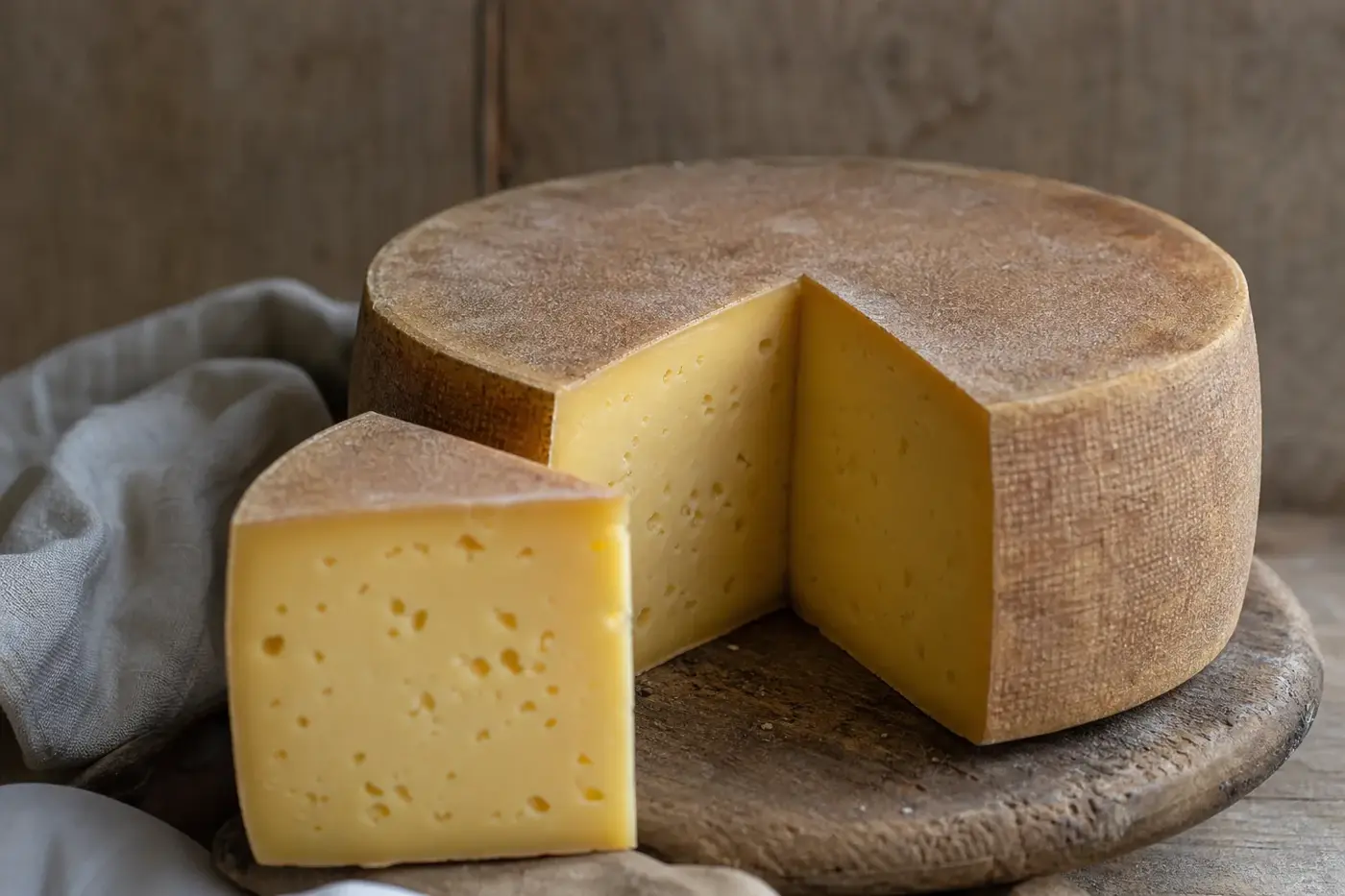
Cut into Allgäuer Bergkäse and look closely. Beneath its dark yellow to brownish rind, the supple, matt yellow cheese is scattered with pea-sized holes. Taste a young piece beside an older one and you can follow the story in Bavaria’s culinary heritage account: mild flavours becoming fuller and more pronounced with age.[3]
You have only just opened the cheese cupboard. The Alpine south brings substantial raw-milk cheeses, while central and northern Germany have their small, tangy sour-milk traditions. Between them, Quark, Butterkäse and Tilsiter offer everyday introductions, and plenty of reasons to fetch more bread.[1][2][4][5]
| Your quick guide to Germany | What to look for |
|---|---|
| Cheese traditions to explore | Alpine hard cheeses, sour-milk cheeses, fresh Quark and sliceable cheeses.[1][4][5] |
| Rules behind the names | The Milchproduktequalitätsverordnung, including sections 32 and 33 and Annex 4, sets requirements for named standard varieties in Germany.[4] |
| Protection terms on German labels | Geschützte Ursprungsbezeichnung, abbreviated g.U., means PDO; geschützte geografische Angabe, abbreviated g.g.A., means PGI.[8] |
| Complete count of currently protected German cheese names | No definitive total given here |
| Protection information on this page | Great Britain register records as at November 2026 appear below.[9] Current EU register status and operative specifications are outside this page’s stated protection information. |
Begin in the Allgäu, with bread at the ready
For mountain cheese, start in the Allgäu in southern Germany. The European Commission describes Allgäuer Bergkäse as a raw cow’s-milk cheese rooted in the German Allgäu. Its regional identity belongs to the landscape and the dairy farming that takes place there.[1]
Picture more than summer pastures above the villages, though. Bavaria’s official culinary heritage account follows Bergkäse production downhill into the valleys during the nineteenth century. Cheesemaking spread from Alpine summer dairies to winter dairies below, becoming part of the working landscape beyond the mountainsides.[3]
Move towards lowland and inland traditions and your cheese selection changes. Quark belongs among Germany’s fresh-cheese standards, while Harzer and Handkäse sit in the sour-milk category. Butterkäse and Tilsiter each have their own category in German standards, and their own place on your breadboard.[4]
Let the methods guide your tasting. Start fresh and spoonable, move to mild and sliceable, then try firm and matured before exploring small, ripened sour-milk cheeses. Geography tells you part of the story; the guide to how to tell cheese styles apart helps explain the rest.
At the counter, start with the milk
Cow’s milk connects many of these traditions, but the results are far from identical. Allgäuer Bergkäse uses it raw. For Hessischer Handkäse, the Hessian authority identifies cow’s-milk sour curd as the starting material.[1][6]
You can explore sheep’s- and goat’s-milk products, too. The Bavarian state nutrition centre’s dairy reference includes both alongside cow’s-milk products. Keep those possibilities in mind when you feel like stepping beyond the more familiar styles.[5]
At the counter, three questions will serve you well: which milk, what age, and how does the producer describe the cheese? On a packet, read the milk declaration. A picture, a regional association or a tempting word in the name cannot do that job for you.
This is about finding what you enjoy, not making shopping complicated. Two cheeses from the same region need not taste alike. Start with the milk rather than asking the postcode to explain the flavour.
Make room for Bergkäse and Emmentaler
Set Allgäuer Bergkäse beside Allgäuer Emmentaler and you have two examples of the Alpine hard cheese tradition described by the Bavarian agricultural authority.[2] Their current EU register status and operative specifications are outside the protection information stated here.
For Bergkäse, ask about age before choosing your piece. The name identifies the cheese; maturity helps explain its character. Your cheesemonger can tell you how long it has matured and whether to expect something relatively gentle or more assertive.
If possible, compare two ages from the same producer. That gives you a clearer view of maturation than a line-up of unrelated cheeses. You can follow one changing character rather than untangling several differences at once.
Allgäuer Emmentaler makes a useful companion. The Bavarian agricultural authority’s production summary specifies raw milk from the geographical area and describes its characteristic larger holes. Its minimum production formats are substantially larger than those of Allgäuer Bergkäse, too.[2]
Bergkäse has a place in the regional kitchen as well as on your board. Bavaria’s heritage source names it as an important ingredient in Allgäuer Käsespätzle.[3] Before cooking, taste a plain piece of each cheese and notice the firmness, holes and character alongside the producer’s stated maturity.
Give Quark a spoon and a kitchen shelf
Spoon into Quark and you might think of yoghurt before mountain cheese. Germany’s dairy quality regulation places Speisequark firmly among the standard varieties of Frischkäse, or fresh cheese. It specifies a uniformly soft texture and a lightly lactic taste.[4]
Its story starts with acid-set milk. Acidification thickens the milk, then liquid whey is separated from the curd. Quark skips the cheese-ripening stage of the Alpine cheeses; the Bavarian nutrition centre describes its uses in herb spreads, fillings, desserts and cakes.[5]
That makes it an accommodating ingredient in your kitchen. Try chopped herbs and Quark on bread, or take it towards fruit for something sweet. Fresh acidity is the thread running through both preparations.[5]
When shopping, separate plain Quark from preparations that are already seasoned or sweetened. Choose plain if you want control over the finished dish, and follow your particular recipe’s specification when baking. The guide to reading a cheese label helps you pick out the product name from everything else competing for your attention.
Harzer Käse has a story at its centre
Cut into a Harzer and look for a pale middle. The Bavarian nutrition centre explains that sour-milk cheeses ripen from the outside in. A younger cheese can have a whitish core, which shrinks as maturation advances and the flavour becomes more intense.[5]
Harzer Käse starts with sour-milk curd made from skimmed milk. The same reference describes acidification with lactic-acid bacteria, followed by shaping and ripening with surface cultures. Among its examples is Harzer Roller, with a yellow or reddish surface smear.[5]
Those cultures help explain how such a small cheese can change so noticeably. Ask whether the batch still has a distinct pale centre or is more fully ripened. You will learn more from that answer than from assuming every Harzer tastes alike.
Give sour-milk cheese a little space in your tasting. Put a small amount beside bread, then taste it separately before deciding whether you prefer it plain or dressed. Add fresh Quark or a sliceable cheese alongside and the contrast becomes part of the pleasure.
Pull up a chair for Handkäse mit Musik
Onions, vinegar, oil, farmhouse bread and butter: here is a regional introduction with lunch attached. The Hessian authority describes this serving as Handkäse mit Musik. You meet Hessischer Handkäse through a meal, rather than through a list of tasting terms.[6]
The cheese is small and made from cow’s-milk sour curd without added rennet, the milk-clotting enzyme used in many other cheeses. The authority’s account lists ripening salts, salt, casein and ripening cultures. Caraway is an optional ingredient.[6]
Every processing stage must take place in Hesse, although the raw materials need not come from there. That distinction matters when you read a geographical name. A connection to a place does not always mean that every ingredient began there.[6]
At home, use the traditional combination for a straightforward plate. Keep the bread plain enough to let you taste the cheese, and serve the onion dressing separately if you want to compare dressed and undressed pieces. For an alcohol-free accompaniment, try apple juice diluted with sparkling water.
Butterkäse and Tilsiter: good company for bread
Sometimes you want a slice for bread, rather than a more pronounced sour-milk cheese. Keep Butterkäse and Tilsiter in mind. German standards classify Butterkäse as halbfester Schnittkäse, a semi-soft sliceable category, and Tilsiter as Schnittkäse, a firmer sliceable category.[4]
Those categories give you a starting point, not the whole answer. Ask whether the producer describes the particular cheese as mild or more strongly matured. Find out whether a rind or surface treatment affects how you should serve it, too.
Either cheese can provide a familiar centre for a beginner’s selection. Add something made by a different method to make the contrast useful. Butterkäse beside Harzer, for example, tells you more than several cheeses chosen because their labels look different.
A neat rectangular slice is not much of a storyteller. Read the pack and ask the cheesemonger about milk, maturation and maker. Those details give you a better idea of what you are taking home than the shape alone.
Put two regional names in your notebook
Save a little space in your shopping notebook for Altenburger Ziegenkäse and Nieheimer Käse. They give you something more specific to ask for than German cheese. Great Britain’s official protected-food register records Altenburger Ziegenkäse as a registered PDO and Nieheimer Käse as a registered PGI, as at November 2026.[9]
Ask the seller about the particular cheese’s milk, maker, texture and intended use. Set those answers beside what you have learnt from fresh, Alpine and sour-milk cheeses. Each new cheese then finds a place in your understanding, rather than becoming another name to memorise.
For a selection, choose one as the piece you want to explore. Give it room on the plate and its own note in your tasting record. Clear contrasts in a smaller selection are easier to follow, and each cheese gets a proper share of your attention.
The whole cheese name is worth reading
If you want a regional cheese, pay attention to the full name. Allgäuer Bergkäse and Allgäuer Emmentaler are geographical names, while Bergkäse and Emmentaler also appear as standard-variety names in German dairy legislation. Handkäse appears in the national standards too, separately from the geographical name Hessischer Handkäse.[2][4][6]
On German labels, g.U. means PDO, protected designation of origin. The abbreviation g.g.A. means PGI, protected geographical indication. Bavaria’s agricultural authority explains that PDO links all production stages to the defined area, while PGI requires at least one qualifying production stage there.[8]
Ask for the exact name when you want the regional product. A general style name and a geographical designation answer different questions. Neither gives you the complete picture of the maker or the particular cheese in front of you.
Protection has geographical limits, too. Great Britain maintains separate register records for the five regional names discussed here. Read those as Great Britain status, not as evidence of rights everywhere else.[9]
For a closer look at the distinctions, turn to the explanation of PDO, PGI and TSG. It covers the schemes in greater depth. Keep the whole name in view as you explore, rather than stopping at the familiar word.
This page summarises published guidance from the official sources it cites. It is not medical advice. Guidance differs between countries and changes over time, so check the current source for where you live, and ask your doctor, midwife, pharmacist or dietitian about your own circumstances.
Shop with supper in mind, then store with care
Begin with what you want to eat: bread, a cheese plate, baking or a cooked dish. Ask for the exact cheese, its maker and a description of its current maturity. With Harzer and related cheeses, include the state of the centre in that conversation.[5]
At home, keep opened dairy products covered and different cheeses separately wrapped. Germany’s Lower Saxony food authority, LAVES, advises protecting cheese from drying while allowing moisture exchange. Its suggested arrangements include suitable cheese containers or waxed papers.[7]
Keep the original storage instructions with your cheese. For guidance on wrapping, fridge organisation and the needs of different types, turn to how to store cheese at home.
When you are ready to serve, keep things simple. Set out rye bread or farmhouse bread, a little butter, apple slices and radishes, with plain water or an alcohol-free apple drink. Taste each cheese before adding anything, then follow the combinations you enjoy rather than dressing every piece identically.
Start with a dish, then build your board
For an Alpine introduction, try Käsespätzle. Bavaria’s culinary heritage account specifically identifies Allgäuer Bergkäse in the dish. Then head in another direction with Handkäse mit Musik, a cold preparation built around sour-milk cheese, onions, vinegar and oil.[3][6]
Quark opens another part of the kitchen. The Bavarian nutrition centre documents herb spreads, cakes, desserts and Quark-based doughs, including a Quark pastry for quiche. If your plans begin and end with cheese melted over dinner, there is more here for you.[5]
For your first selection, choose plain Quark, either Butterkäse or Tilsiter, Allgäuer Bergkäse, and a Harzer or Hessischer Handkäse. You get four different experiences without crowding the table. Compare how they are made as well as how they taste.
Next time, put Allgäuer Emmentaler beside the Bergkäse, or ask a specialist seller about Altenburger Ziegenkäse and Nieheimer Käse. Notice what brings you back: fresh acidity, firmness, degree of maturation or sour-milk character. Those preferences become your tasting map, and a useful guide to the next cheese you bring home.
Questions people ask
What is Quark?
Quark is a fresh cheese with a uniformly soft texture and a lightly lactic taste. It is made by acidifying milk and separating the whey from the curd, without a cheese ripening stage.
Is Allgäuer Bergkäse made with raw milk?
Yes, Allgäuer Bergkäse is made with raw cow’s milk. Its flavour grows from mild to fuller and more pronounced with age.
Does Hessischer Handkäse contain rennet?
Hessischer Handkäse is made from cow’s milk sour curd without added rennet. All processing stages must take place in Hesse, although the raw materials need not originate there.
What do g.U. and g.g.A. mean on German cheese labels?
g.U. means PDO, or protected designation of origin, while g.g.A. means PGI, or protected geographical indication. PDO links all production stages to the defined area, while PGI requires at least one qualifying production stage there.
How should German cheese be stored after opening?
Germany’s Lower Saxony food authority, LAVES, advises keeping opened dairy products covered and different cheeses separately wrapped. It recommends protecting cheese from drying while allowing moisture exchange, using suitable cheese containers or waxed papers.
Sources
[1] European Commission, Directorate-General for Agriculture and Rural Development. Allgäuer Bergkäse PDO. Undated official product account, retrieved November 2026. Official account.
[2] Bayerische Landesanstalt für Landwirtschaft. Bayerische Originale: Produkte mit Herkunftsschutz in Bayern. Retrieved edition, publication date not verified. Entries for Allgäuer Bergkäse and Allgäuer Emmentaler, pages 12 to 15. Official publication.
[3] Bavarian official culinary heritage portal, GenussErbe Bayern. Allgäuer Bergkäse. Undated online edition, retrieved November 2026. Official regional account.
[4] Federal Republic of Germany, Gesetze im Internet. Verordnung über Qualitätsanforderungen an Milchprodukte (Milchproduktequalitätsverordnung: MilchPQV). 2025 instrument, consolidated online text retrieved November 2026. Sections 32 and 33; Annex 4, sections A and B. Official legal text.
[5] Kompetenzzentrum für Ernährung, Bayerische Landesanstalt für Landwirtschaft. Milch, Käse & Co: Echte Multitalente in der Ernährung. Second edition, November 2015. Fresh-cheese, sour-milk-cheese and culinary-use passages only. Official reference.
[6] Regierungspräsidium Gießen. Hessischer Handkäse. Official information leaflet, retrieved edition, publication date not verified. Description, raw materials, area and serving passages. Official leaflet.
[7] Niedersächsisches Landesamt für Verbraucherschutz und Lebensmittelsicherheit, LAVES. Die richtige Lagerung von Lebensmitteln. Online guidance, retrieved November 2026. Dairy and cheese storage passages. Official storage guidance.
[8] Bayerische Landesanstalt für Landwirtschaft. Geschützte Herkunftsbezeichnungen und traditionelle Spezialitäten. Online edition, retrieved November 2026. Scheme terminology, geographical requirements and control responsibilities. Official scheme explanation.
[9] Department for Environment, Food & Rural Affairs. Protected food and drink names: individual register records. Records published January 2021, retrieved November 2026: Allgäuer Bergkäse, Allgäuer Emmentaler, Altenburger Ziegenkäse, Hessischer Handkäse / Hessischer Handkäs and Nieheimer Käse.
This desk-researched draft brings together official German dairy references, regional authority accounts, legislation and separately identified Great Britain register records.
Last checked: November 2026
Last checked November 2026.
The cheeses of Germany
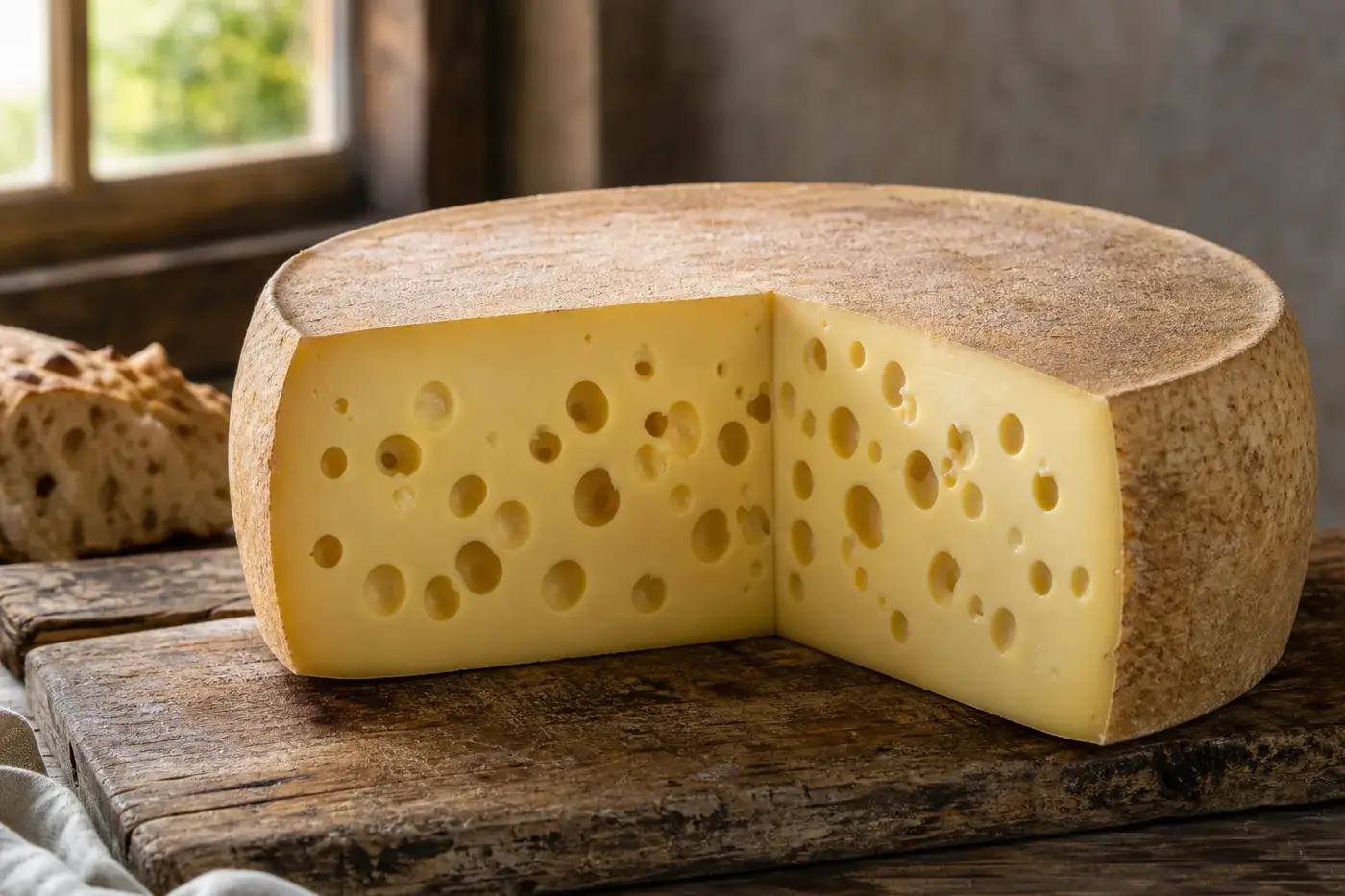
Allgäuer Emmentaler
Two Swiss dairymen arrive in Weiler in 1821, carrying cheesemaking knowledge into the western Allgäu.
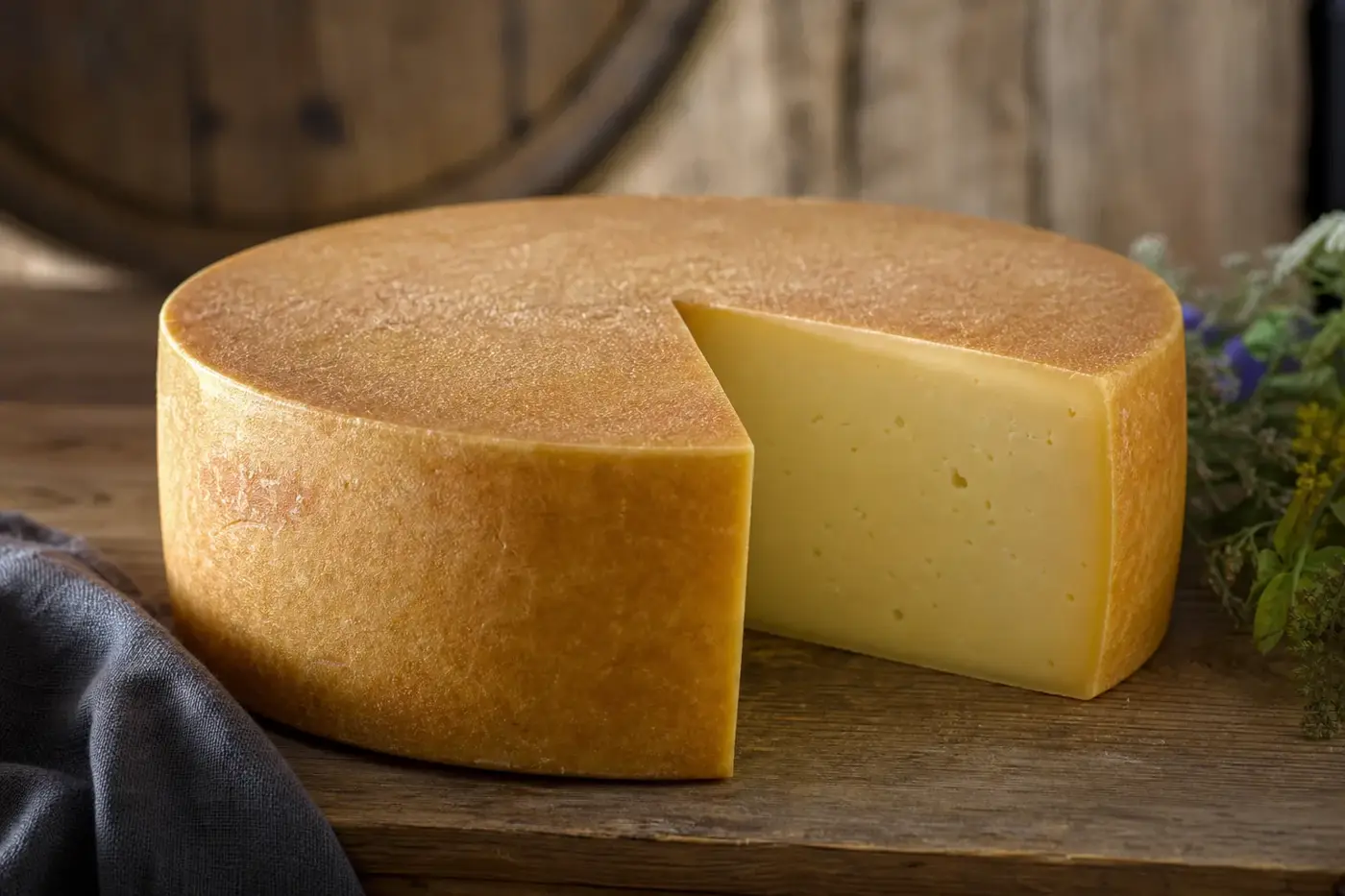
Allgäuer Bergkäse
A 15 to 50 kg wheel lands on the counter.
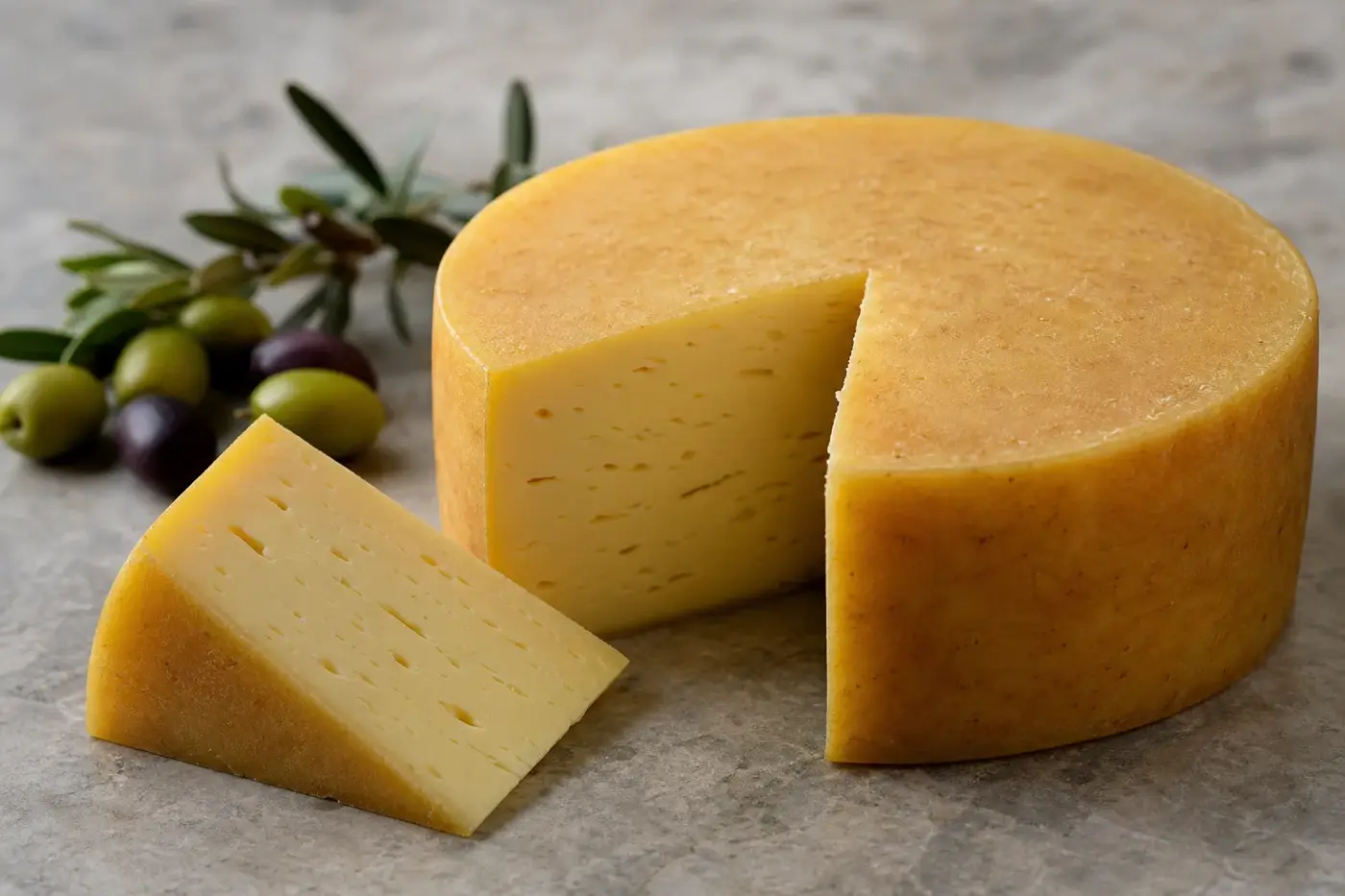
Tilsit
Your knife slips through a yellow-brown to reddish rind into pale, supple cheese, its surface scattered with ragged slits or smaller round eyes.
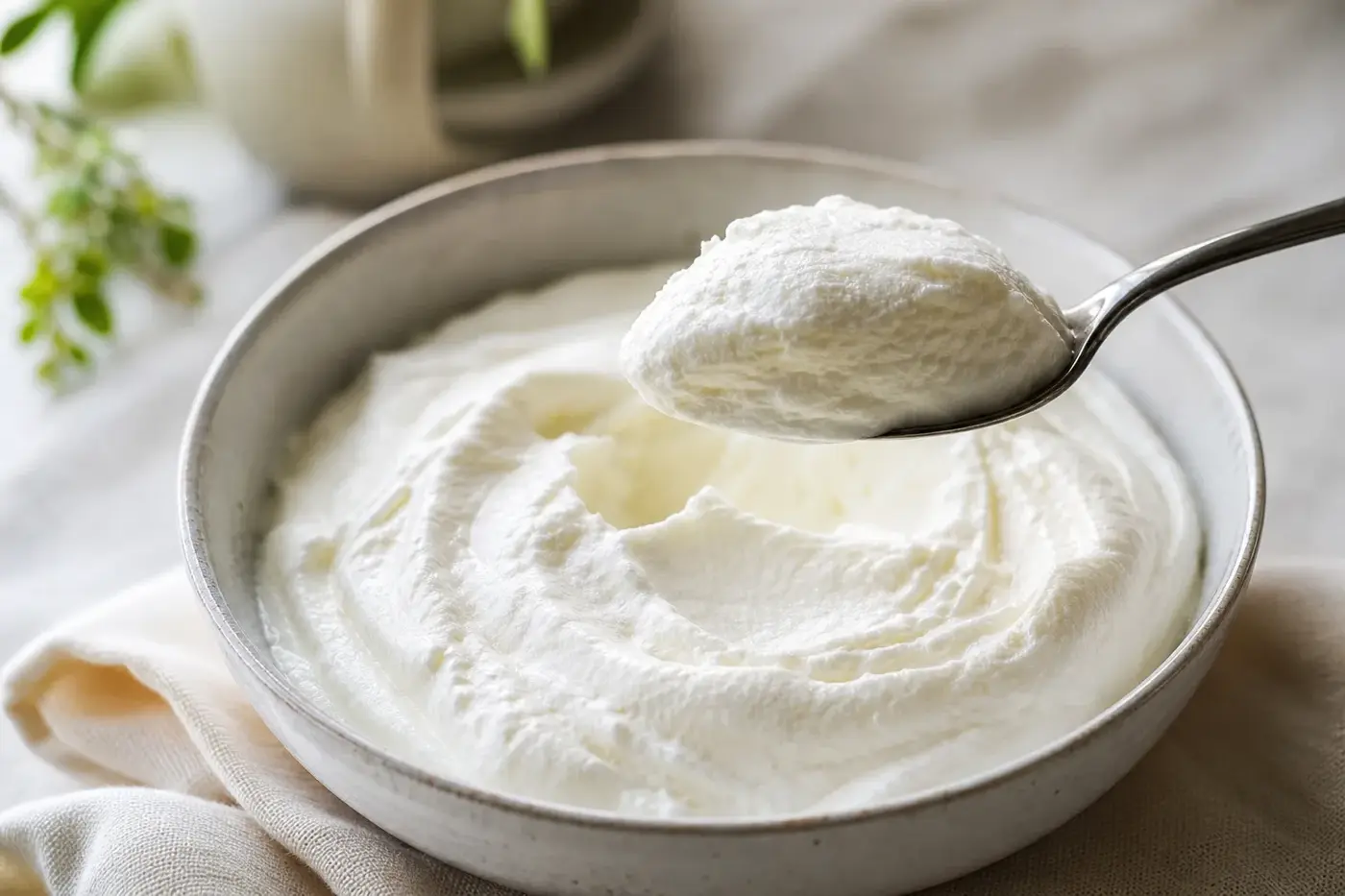
Quark
A spoonful of quark beside boiled potatoes, a scattering of chopped chives: you are halfway to a little German comfort.
Handkäse and Harzer
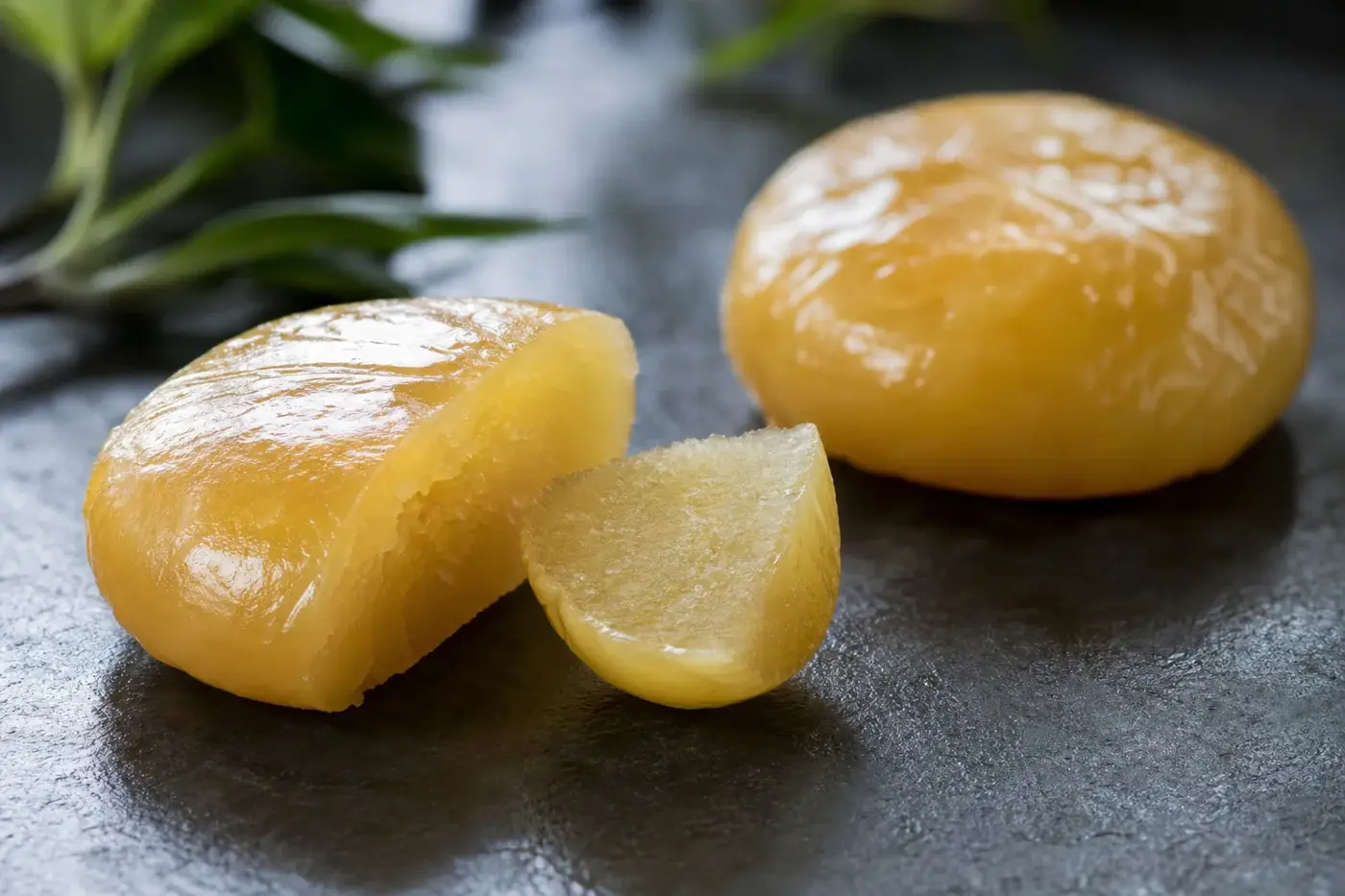
Your knife cuts through a fully mature Handkäse or Harzer, revealing a yellow, slightly translucent interior.
Butterkäse
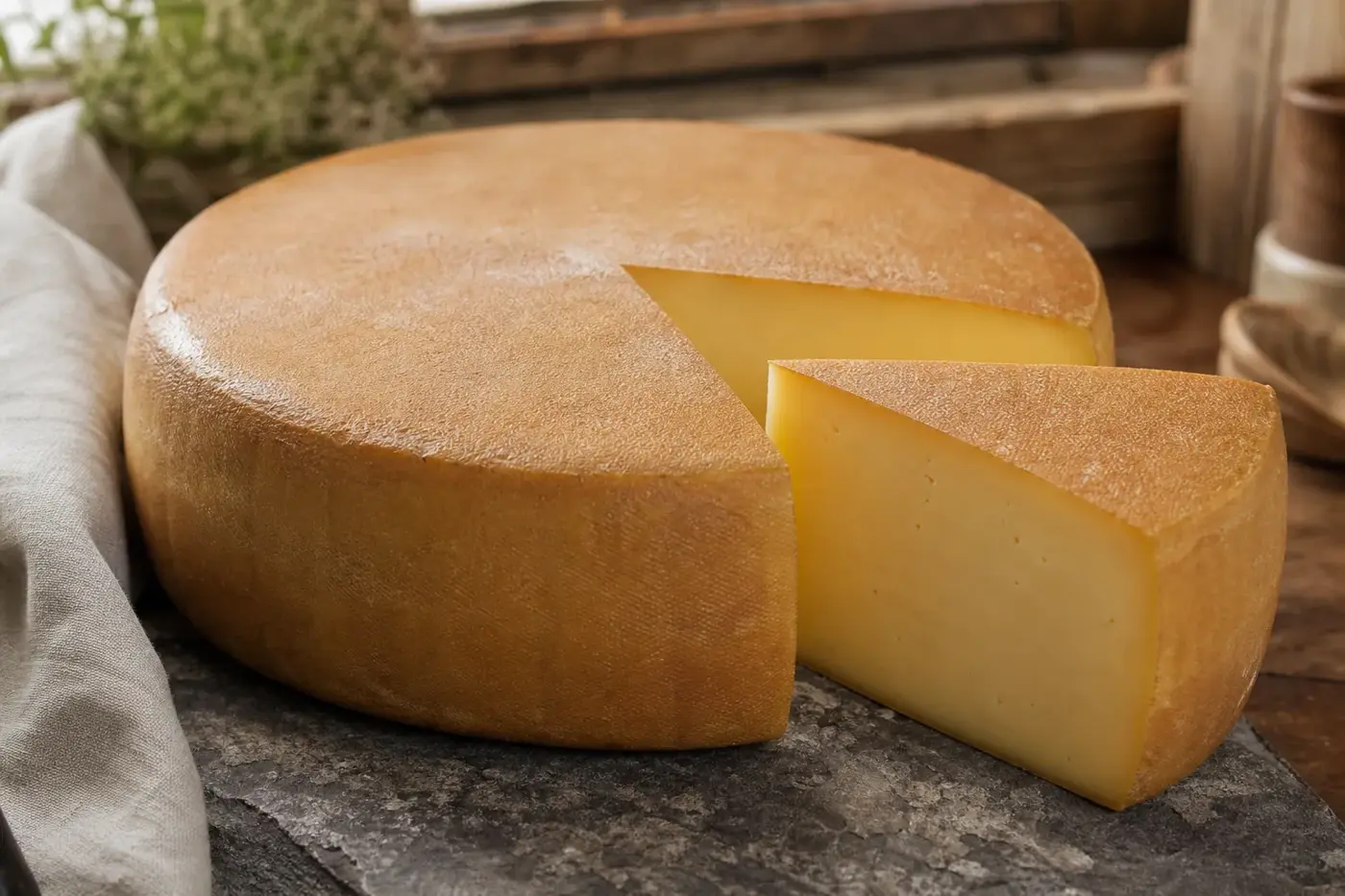
Your knife slips through Butterkäse, leaving a supple slice with a gentle flavour and buttery character.
Altenburger Ziegenkäse
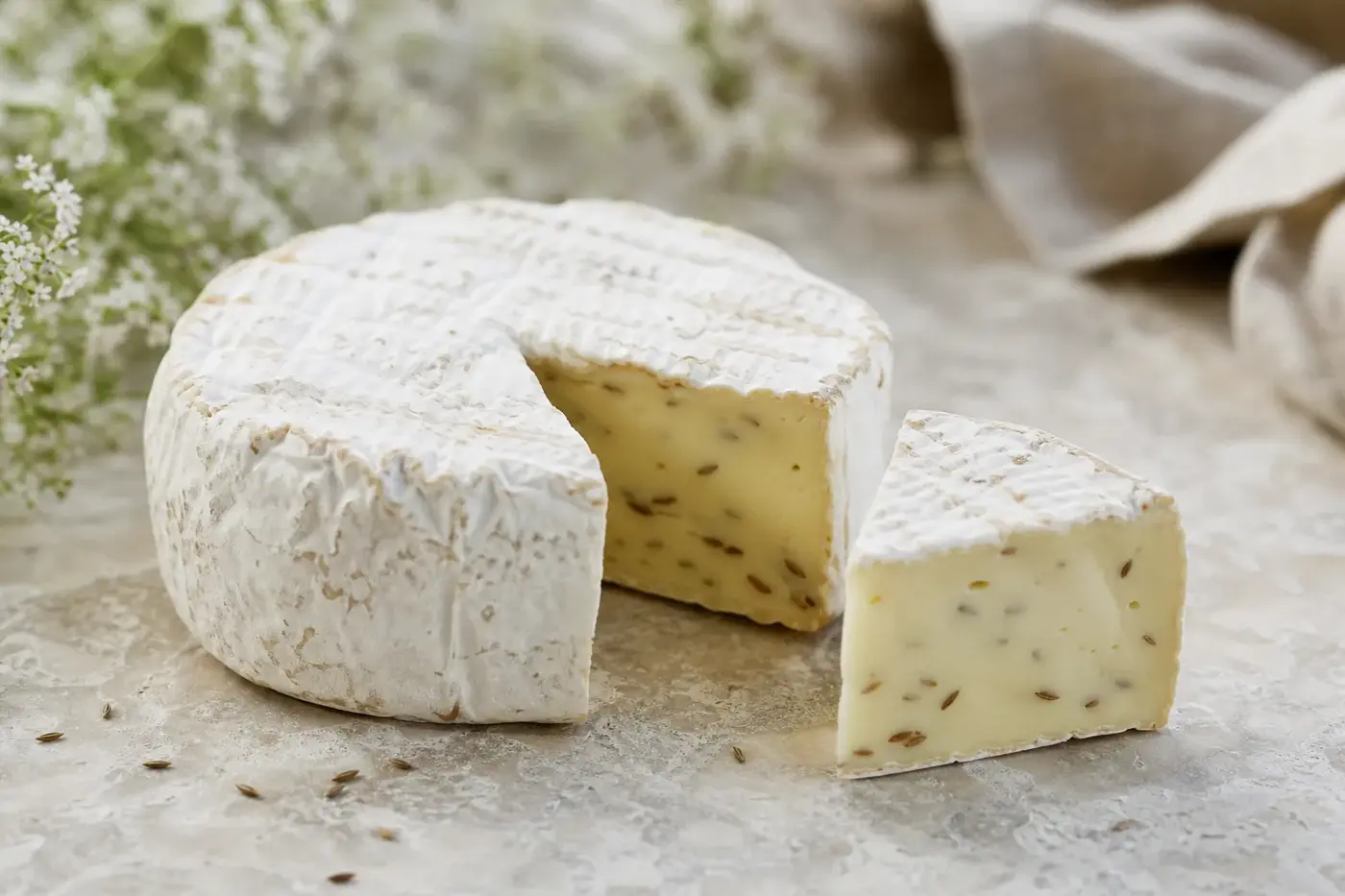
Cut into Altenburger Ziegenkäse and caraway makes its entrance.
Nieheimer Käse
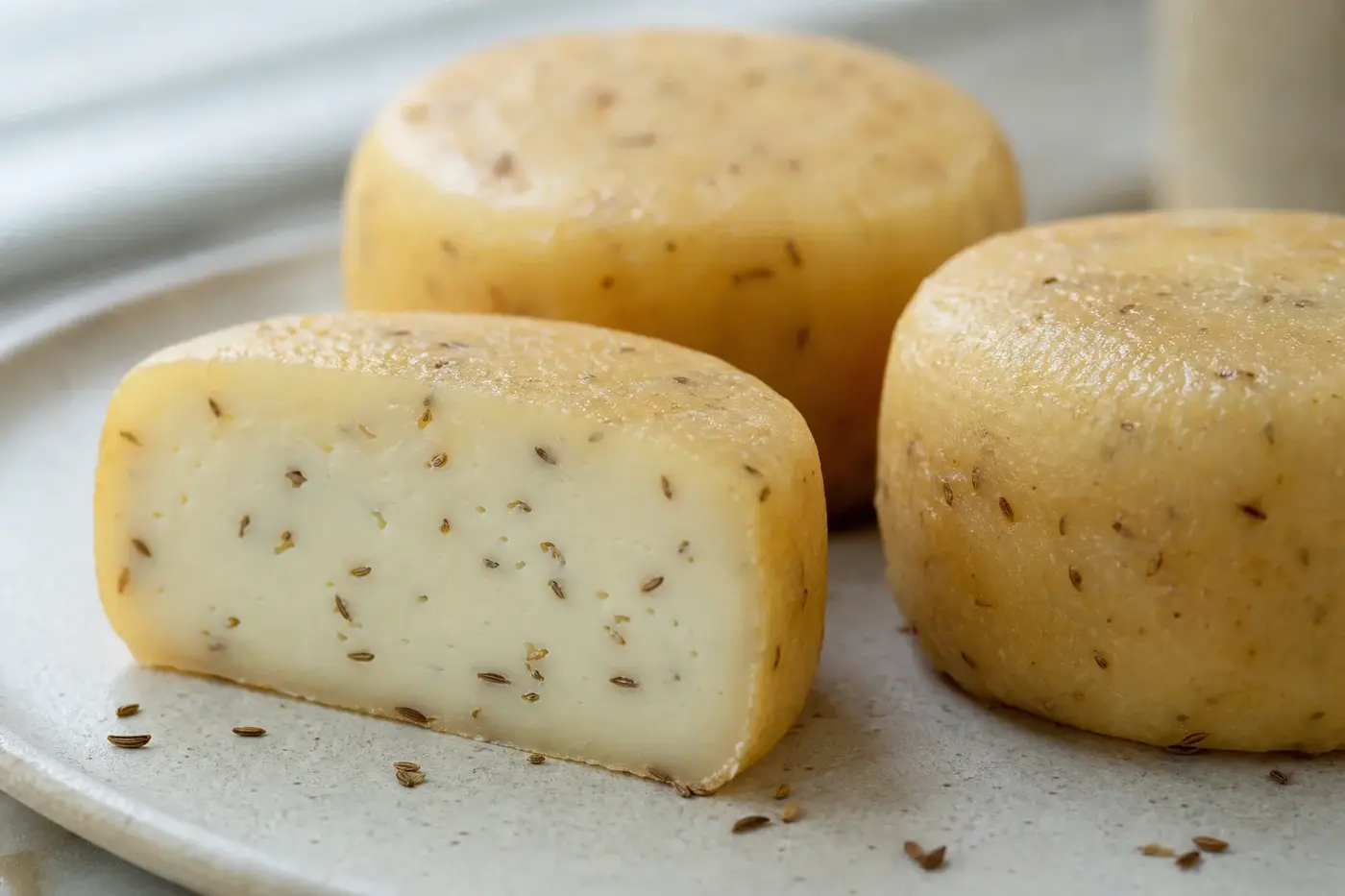
Cut into a little round of Nieheimer Käse and you may find caraway dotted through its compact heart.
Odenwälder Frühstückskäse
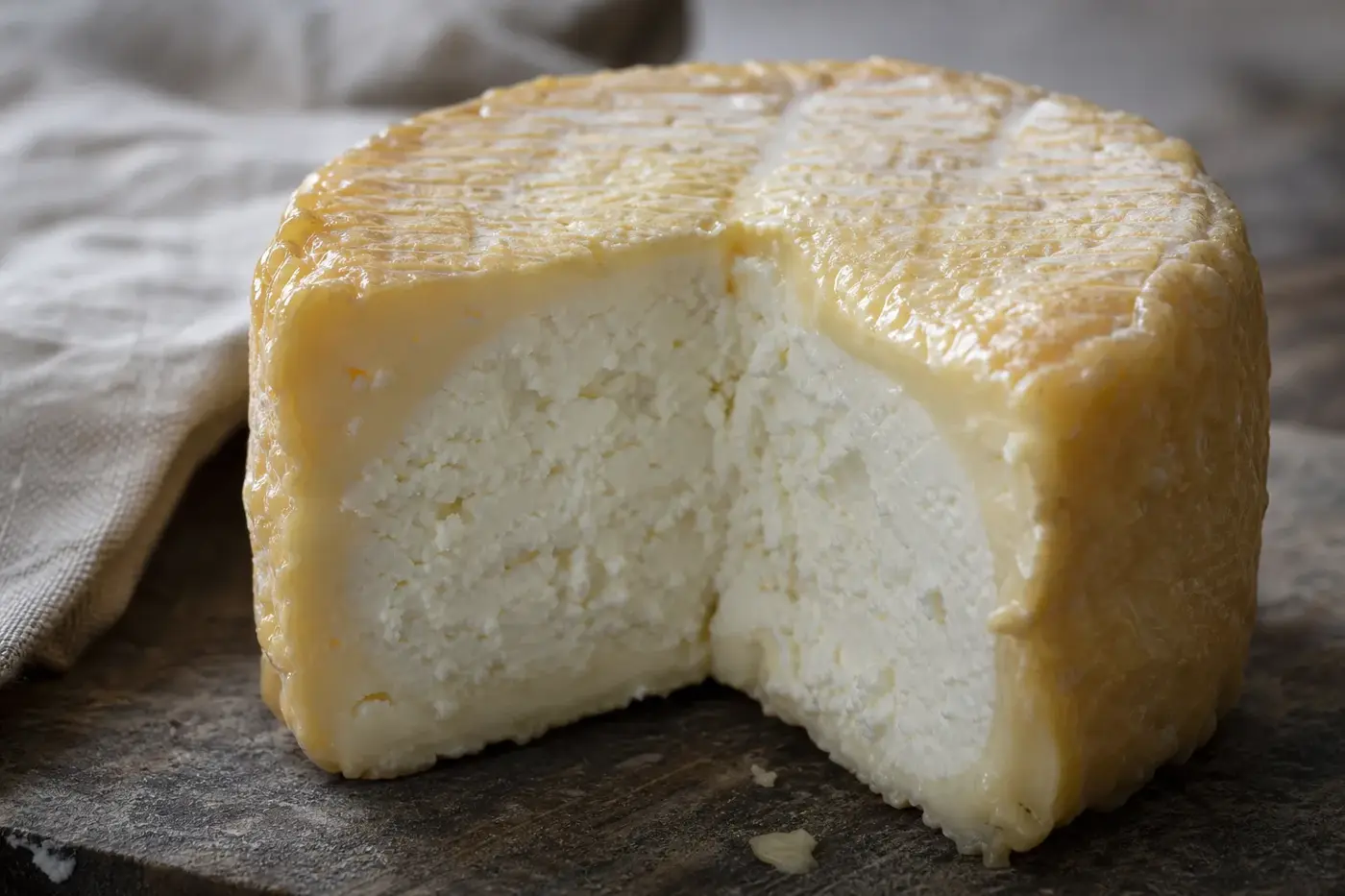
Cut into a young Odenwälder Frühstückskäse and a white, quark-like centre greets your knife.
The editors suggest you read next
French Cheese: The Complete Guide
Picture Normandy’s pastures, then follow the milk towards the Loire’s goat dairies, the Jura’s shared cheesemaking traditions and the sheep country of the Pyrenees.