Quark
A spoonful of quark beside boiled potatoes, a scattering of chopped chives: you are halfway to a little German comfort.
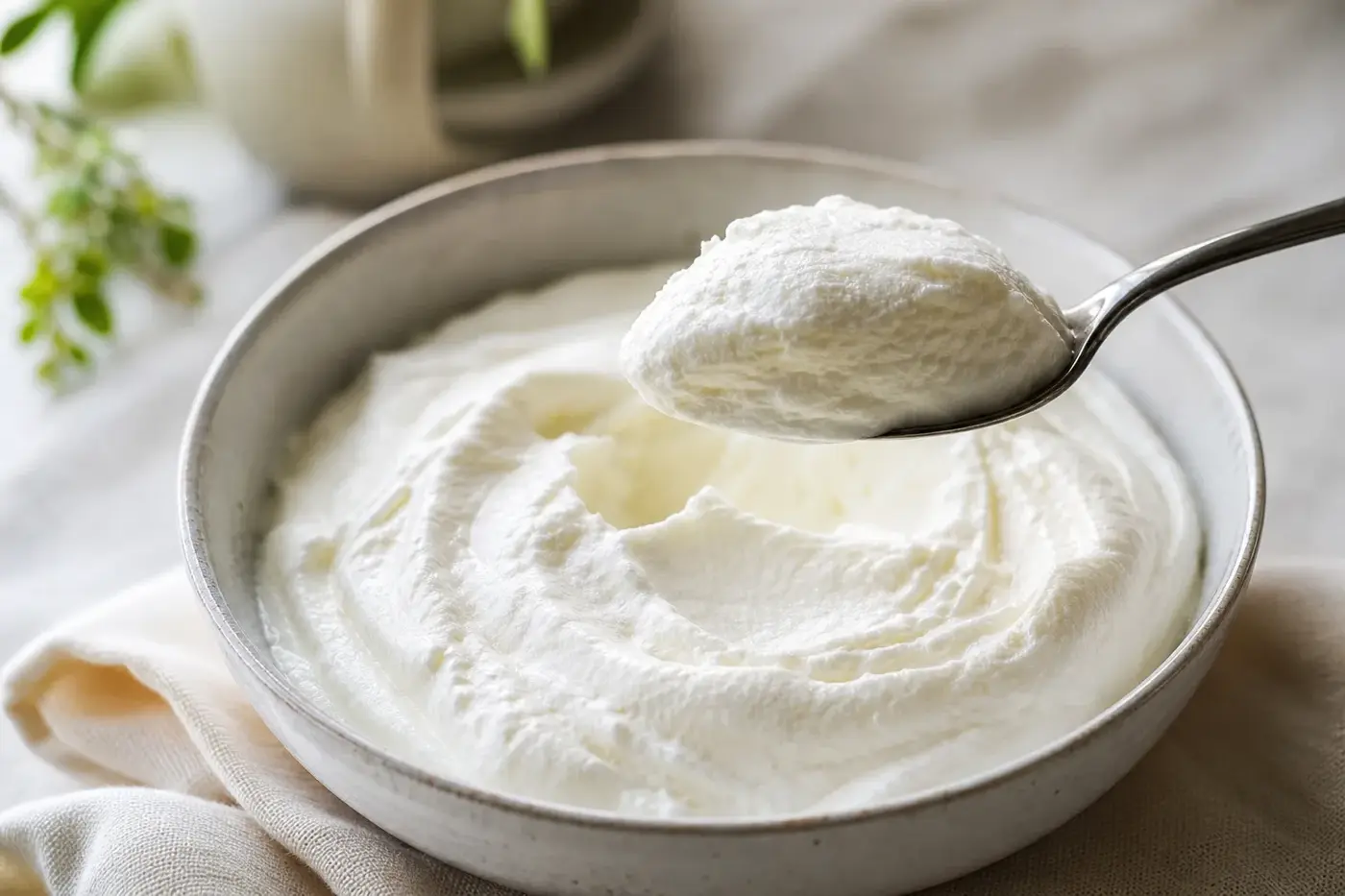
A spoonful of quark beside boiled potatoes, a scattering of chopped chives: you are halfway to a little German comfort. Soft, white and gently tangy, this fresh, rindless cheese is an everyday kitchen mainstay in Germany. In Käsekuchen, the familiar German quark cheesecake, it supplies the substance of the filling. Here is a cheese you can spread, spoon or bake, depending on how it is made. [1, 2, 3, 4]
| Quark at a glance | What you need to know |
|---|---|
| How it begins | Cultured milk is set, then concentrated by removing whey. [5, 6] |
| Age and rind | Fresh, unripened and rindless. [5, 14] |
| Its German family | Speisequark is a standard variety within Frischkäse, the fresh cheese group. [4] |
| Colour and character | Milk-white to cream-yellow, uniformly soft, with clean, mildly lactic acidity in the German standard. [4] |
| Fat levels | Several fat classes; German classifications use fat in dry matter. [4, 5] |
| Where to put it to work | Herb spreads, potato accompaniments, desserts and baking. [1, 2, 3] |
Pull up a chair at the German table
Quark gives herbs room to speak. You can taste chives, parsley and dill distinctly against its fresh acidity, while its soft body makes a substantial companion for potatoes. In REWE's German recipe for Pellkartoffeln mit Kräuterquark, potatoes cooked in their skins meet low-fat quark loosened with milk and crème fraîche. [2]
Spread that herb mixture on bread and lunch starts looking promising. The Bavarian Kompetenzzentrum für Ernährung, or KErn, documents quark and fresh cheese mixed with herbs for exactly this purpose, alongside sweet dishes and cakes. You need not save it for a cheese course: quark belongs at breakfast, in a simple meal or in something baked for the table. [1]
Beyond Germany, you find a wider central and northern European tradition of cultured fresh curds. Dairy-processing literature describes related products across countries, with different concentrations and manufacturing methods. That family resemblance makes substitutions possible, but your recipe cares more about moisture and texture than a translated name. [6]
From milk to a spoonful of soft curd
Quark's gentle acidity starts with fermentation. A starter culture, selected microorganisms added to milk, converts some lactose, the milk sugar, into lactic acid. As acidity builds, casein, the principal cheesemaking protein, forms a soft gel called curd. The liquid separated from it is whey. [5, 7]
The German dairy industry association describes a common industrial method using pasteurised skimmed milk, lactic acid bacteria and a little rennet. Rennet is a preparation of coagulating enzymes that helps a setting process led chiefly by acid. Once the curd is concentrated, cream can be mixed in to reach the desired fat level. [5]
Then comes the business of getting the whey out. Tetra Pak's Dairy Processing Handbook describes older cloth-bag drainage, modern centrifugal separation and ultrafiltration, a membrane process that concentrates milk components. Its quark process uses a small amount of rennet to strengthen the gel and improve separation. These different methods help explain why one quark feels unlike another. [6]
For the fuller story, explore how cheese is made. If the coagulant matters to your diet, read the manufacturer's declaration: quark is not always made without rennet.
Get to know the texture in your tub
Some quark swirls smoothly through a dip. Some is firmer, drier and slightly grainy. What you feel reflects the liquid left behind, the handling of the curd and whether cream has been added, not necessarily the cheese's age. [3, 5, 6]
The German Speisequark standard describes a uniformly soft paste, from delicately supple to paste-like. Tetra Pak also records substantial differences in the dry matter of quark made in different countries. Your spoonable supermarket tub and a firmly drained curd can therefore behave very differently before anything else reaches the bowl. [4, 6]
Before cooking, see whether your quark holds its shape or releases liquid. Good Food notes that its moisture and acidity can mean adjusting other recipe ingredients. Look at the consistency before pouring in all the milk or other liquid listed for a filling. [3]
Make sense of German fat labels
Magerquark and quark enriched with cream begin with the same cultured curd. They offer different balances of dairy fat, texture and flavour, and German labels commonly distinguish between them. The dairy industry association identifies products around 20% and 40% fat in dry matter among familiar German offerings. Added cream brings fuller texture and flavour. [5]
The legal classifications cover a wider range. Under Germany's current Milchproduktqualitätsverordnung, Magerstufe means less than 10% fat in dry matter, Halbfettstufe means at least 20% but less than 30%, and Fettstufe means at least 40% but less than 45%. Other classes extend from Viertelfettstufe through Doppelrahmstufe. [4]
Fat in dry matter excludes the water in the cheese. A German declaration of 40% fat in dry matter therefore does not mean 40 g of fat per 100 g of quark. To compare products usefully, turn to the nutrition panel's fat per 100 g. [4, 5]
If your recipe names a type, match it where possible, especially for baking. Lean quark and a cream-enriched version are different starting ingredients. Change fat and moisture together and you can change what comes out of the oven. [3]
Meet the neighbours: yoghurt, skyr and fresh cheeses
Similar tubs do not always hold interchangeable ingredients. Fermentation connects these foods, but concentration, curd handling and added cream shape their textures. Those differences come into the kitchen with you, however alike the contents look on a spoon. [5, 6, 7]
| Product | What makes it different | If you're swapping |
|---|---|---|
| Quark | Cultured fresh curd, concentrated after setting. [5, 6] | Match your recipe's fat level and consistency. |
| Yoghurt | Fermented milk; concentrated versions have whey removed. [7] | Choose thick yoghurt, not a pouring version. |
| Skyr | Concentrated cultured product; manufacturing and market descriptions vary. [7, 8] | Look at the ingredients and fat content. |
| Fromage frais | Fresh cheese, but not a promise of identical composition. [3] | Choose plain and unsweetened; compare thickness and fat. |
| Cottage cheese | Fresh cheese, usually with distinct curds. [6, 14] | Consider those curds if your filling needs to be smooth. |
Arla describes its UK skyr range as yoghurt. Its published product information lists skimmed milk and yoghurt cultures. That tells you about this manufacturer's products, rather than defining every skyr you might encounter. [8]
Let the dish guide your substitute. A cold herb dip gives you more freedom than a cheesecake filling, where moisture, eggs and dairy solids need a particular balance. The oven is less easily persuaded by a family resemblance. [1, 3]
Let quark take the lead in Käsekuchen
In Käsekuchen, quark is the heart of the dish, not a finishing spoonful. Good Food identifies baked German cheesecake as a classic quark preparation. It gives your filling substance and cultured acidity together. [3]
You can keep dessert much simpler, too. Fruit, a little sugar or cream can turn quark into a spoonable accompaniment, and German culinary guidance documents its use in desserts, cakes and sweet fillings. Choose plain quark and you stay in charge of sweetness and flavouring. [1, 3]
Its baking talents stretch beyond cheesecake and beyond the filling itself. KErn includes quark in a pastry dough for a savoury quiche. Here, follow a recipe designed around the cheese rather than freely swapping it for butter or cream. [1]
Stir a good dip and treat sauces gently
Start by stirring quark smooth, then decide how much liquid it needs. Its consistency is your best clue. REWE's herb-quark preparation adds milk and crème fraîche, finely chopped herbs and shallot, making lean quark easier to spoon beside potatoes. [2]
Herbs and chopped vegetables are established additions to spreads and sandwich fillings, too. Add liquid gradually rather than all at once. Quark that already holds more whey needs less loosening than a firmly drained curd. [3]
Heat calls for a gentler hand. Quark's acid-set protein system can become unstable under strong heat, leaving you with graininess and separated liquid. In its industrial discussion of heat-treated quark, Tetra Pak specifically describes stabilising that protein system before final heating. [6]
In your kitchen, the cautious approach is to finish the sauce, take it off strong heat and stir in quark near serving. Do not expect it to behave like a melting cheese or repeatedly bring it to a rolling boil. The processing evidence is the basis for this cautious approach to texture. [6]
Find the right tub in Britain
Read beyond the big word on the lid. For general cooking, choose plain quark and look at fat per 100 g, ingredients, milk treatment, storage instructions and consistency. Fruit or herb versions suit particular dishes, but they are not neutral starting points. [3, 5, 9, 10]
For a cold dip, thick plain yoghurt or plain fromage frais can work. For a baked filling, start with a recipe written for your substitute. Good Food notes that acidity, fat and moisture affect the exchange, so two equally thick products may behave differently in the oven. [3, 7]
Cottage cheese brings a different curd structure, while cream-enriched fresh cheese changes the fat balance. Consider both before substituting by weight. You'll find useful comparisons in our guide to reading a cheese label.
Keep your quark fresh and know when to discard it
Keep quark covered and refrigerated, taking it out only as long as needed. For England, Wales and Northern Ireland, the Food Standards Agency advises a domestic fridge temperature between 0 and 5 °C and refrigerating dairy products according to their packaging instructions. Return your tub promptly after use and follow any shorter instruction for eating it after opening. [9, 10]
A use-by date is a safety limit, even if the quark looks and smells normal. Official UK guidance distinguishes this from a best-before date, which concerns quality. Your nose cannot establish that food with a use-by date remains safe after that date. [10]
Unexpected yeastiness, bitterness or visible mould means discarding the quark, not rescuing a portion. Its usual lactic tang is different from a newly developed yeasty character. KErn identifies that yeastiness as a spoilage change. [1]
For pregnancy in the UK, the NHS lists pasteurised cottage cheese and cream cheese among cheeses that can be eaten. It advises against mould ripened soft cheeses and soft blue cheeses unless cooked until steaming hot. Check the milk treatment declaration and consult the full NHS guidance for your circumstances (November 2026). [11]
For more handling advice, visit storing cheese at home and cheese food safety.
Follow Handkäse and Harzer down a different path
Fresh quark reaches your table without ripening. Handkäse and Harzer take acid-set curd somewhere else: they are ripened sour-milk cheeses, classified separately from fresh Speisequark under Germany's current regulations. Shared beginnings do not make them the same cheese. [4, 5]
Producer Käserei Loose describes its sour-milk specialities as based on Sauermilchquark. KErn explains how subsequent surface treatment and ripening develop their exterior and stronger character. Fresh quark shares their curd ancestry, but your tub cannot stand in for a ripened Handkäse or Harzer. [1, 13]
General information only, not medical advice: follow the official guidance where you live.
Questions people ask
What is quark and how is it made?
Quark is a fresh, unripened cheese without a rind. Milk is cultured until it forms a soft curd, which is then concentrated by removing whey.
Is quark made with rennet?
Some quark is made with a small addition of rennet, although acid is chiefly responsible for setting the curd. If the coagulant matters to your diet, check the manufacturer's declaration.
What can I use instead of quark?
Thick plain yoghurt or plain fromage frais can work in a cold dip. For a baked filling, start with a recipe written for the substitute, as acidity, fat and moisture can affect the result.
Does 40% fat on a German quark label mean 40 g of fat per 100 g?
Not if the figure refers to fat in dry matter, which excludes the water in the cheese. To compare actual products, use the nutrition panel's fat per 100 g.
How should I store quark?
For England, Wales and Northern Ireland, the Food Standards Agency advises keeping a domestic fridge between 0 and 5 °C and refrigerating dairy products according to their packaging instructions. Consult the agency's guidance and follow any shorter instruction for consumption after opening.
Sources
- Kompetenzzentrum für Ernährung (KErn). Milch, Käse & Co., second edition, 2016. Sections on fresh cheese, sour-milk cheese, spoilage and culinary uses. PDF.
- REWE. Pellkartoffeln mit Kräuterquark, undated online recipe, retrieved November 2026. A retailer's culinary source, used for its own published preparation. Recipe.
- Good Food. Quark, undated glossary entry, retrieved November 2026. Used for culinary applications and substitution considerations. Entry.
- German Federal Ministry of Justice and Federal Office of Justice. Milchproduktqualitätsverordnung, 24 November 2025, amended 21 May 2026. Sections 32, 33 and 36, and Annex 4. Consolidated official text.
- Milchindustrie-Verband. Speisequark, undated Milkipedia entry, retrieved November 2026. Industry association explanation of production and familiar fat levels. Entry.
- Tetra Pak. Dairy Processing Handbook, 2025 online edition, chapter “Cheese”, sections on fresh cheese and quarg. Equipment manufacturer's technical reference. Chapter.
- Tetra Pak. Dairy Processing Handbook, 2025 online edition, chapter “Fermented milk products”, including concentrated yoghurt. Chapter.
- Arla Foods. Arla Skyr, UK product-range page, retrieved November 2026. Manufacturer's description of its own products. Product information.
- Food Standards Agency. How to chill, freeze and defrost food safely, current online guidance, retrieved November 2026. Applies to England, Northern Ireland and Wales. Guidance.
- GOV.UK. Understanding food labelling: Best before and use-by dates, current online guidance, retrieved November 2026. Guidance.
- NHS. Foods to avoid in pregnancy, current online guidance, retrieved November 2026. Guidance.
- Food Standards Agency. Alerts, live official index, inspected November 2026 for the editorial recall review. Alerts.
- Käserei Loose. Official website, undated production description, retrieved November 2026. Producer's statement about its sour-milk specialities. Website.
- Milchindustrie-Verband. Frischkäse, undated Milkipedia entry, retrieved November 2026. Entry.
Researched from German legislation, dairy-processing references, German culinary sources and official UK consumer guidance, with manufacturer statements identified separately.
Last checked: November 2026
Last checked November 2026.
The editors suggest you read next
Allgäuer Emmentaler
Two Swiss dairymen arrive in Weiler in 1821, carrying cheesemaking knowledge into the western Allgäu.