Pecorino Crotonese
Run your fingers over a wheel of Pecorino Crotonese and you can follow the basket’s imprint across its rind.
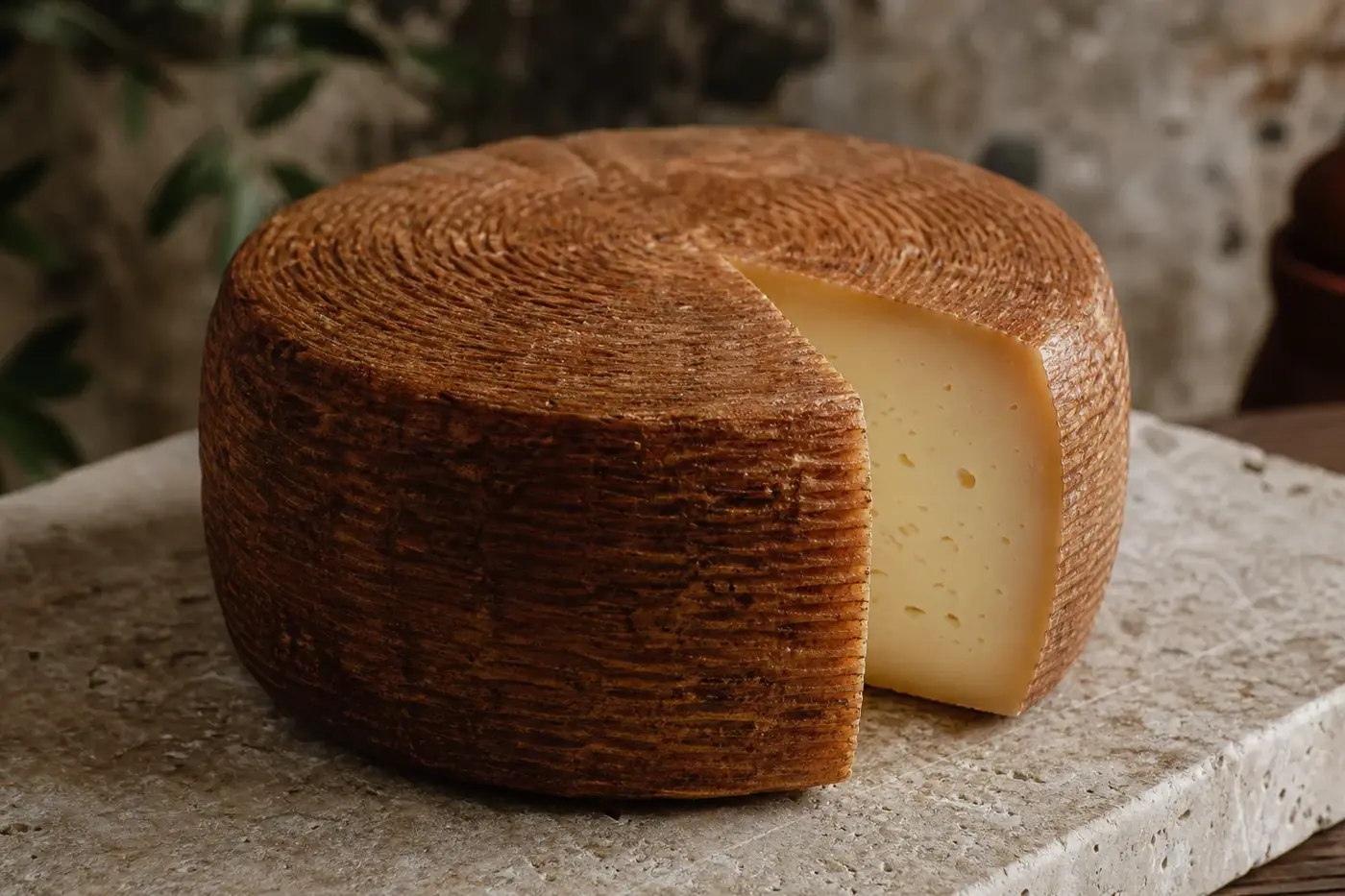
Run your fingers over a wheel of Pecorino Crotonese and you can follow the basket’s imprint across its rind. Cut inside and this whole sheep’s milk cheese might be tender and lightly acidic, or firmer, brown-rinded and more persistent in flavour with age. Between Calabria’s Ionian coast and the Sila uplands, a tradition centred on Crotone continues under EU protected designation of origin rules. The basket has left its signature; the landscape has too. [1][2][3]
| What to know | The useful detail |
|---|---|
| Familiar and registered name | Pecorino Crotonese. [3][4] |
| EU authority and identifier | European Commission; registration instrument: Commission Implementing Regulation (EU) No 1262/2014. Register record ID: not established. [3] |
| EU status | Registered PDO; registration regulation adopted 18 November 2014, published 27 November 2014 and effective 17 December 2014. Status as at November 2026. [3] |
| Great Britain status | Registered PDO from 31 December 2020 at 23:00. Status as at November 2026. [4] |
| Where it is made | Listed municipalities in the Calabrian provinces of Crotone, Catanzaro and Cosenza. [1] |
| Milk and rennet | Whole sheep’s milk, raw, thermised or pasteurised; kid rennet paste. [1] |
| Categories and ageing | Fresco: no numerical minimum specified in the cited specification. Semiduro: 60 to 90 days. Stagionato: minimum unresolved because the specification is internally inconsistent. [1][2] |
| Additives and allergens | Additives and preservatives prohibited by the specification; made from sheep’s milk. [1] |
| Pregnancy guidance | UK NHS guidance, November 2026: see source [5]. |
Follow the basket marks to your first taste
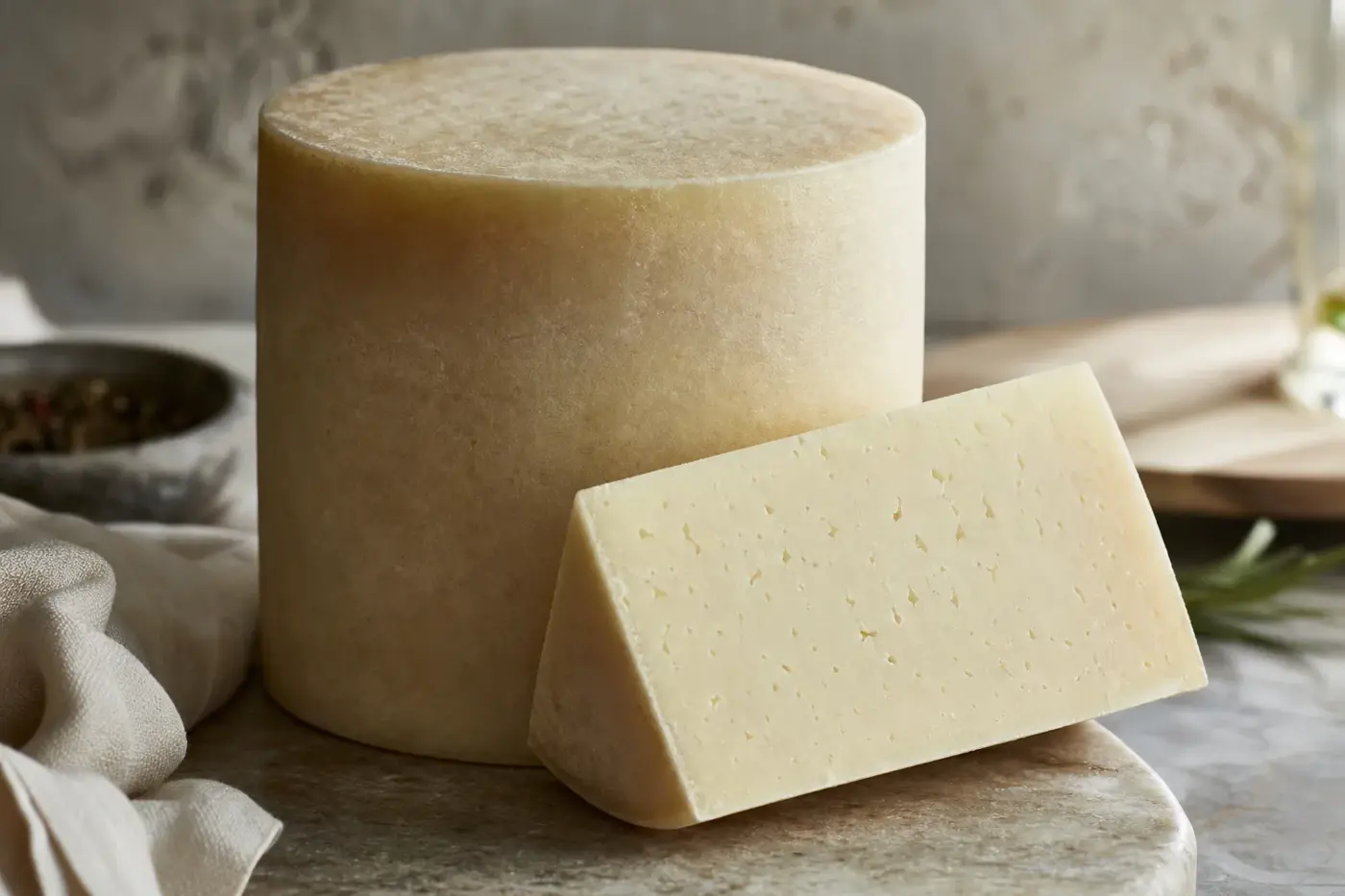
Cut beneath that basket-marked rind and you’ll find a close paste with few small openings. In the fresh cheese, the specification describes a tender, milk-white interior. With longer maturation, the colour moves towards pale straw, while texture and flavour change along with it. [1]
The aroma description gives you plenty to look for: sheep’s milk, hay, mature field herbs, hazelnut and a suggestion of smoke. Take those words to the cheese counter, but ask about texture and maturity first. Then taste how the milk and pasture aromas sit together. There is no examination afterwards. [1]
The protected name tells you about both a place and a way of making cheese. If you’d like to untangle a regional designation from a cheese style, try protected names explained.
From Crotone’s clay hills to Sila’s summer pastures
The milk, cheesemaking and maturation must all stay within the defined area. Its listed municipalities cross three Calabrian provinces, linking the clay hills around Crotone with mountain country reaching towards Sila Piccola and Sila Grande. You can think of that landscape as part of the recipe, rather than scenery behind it. [1][2]
In Catanzaro province, the included municipalities are Andali, Belcastro, Botricello, Cerva, Cropani, Marcedusa, Petronà, Sellia, Sersale, Simeri Crichi, Soveria Simeri and Zagarise. In Cosenza province, they are Bocchigliero, Calopezzati, Caloveto, Campana, Cariati, Cropalati, Crosia, Mandatoriccio, Paludi, Pietrapaola, San Giovanni in Fiore, Scala Coeli and Terravecchia. You’ll find the Crotone municipalities individually enumerated in Article 2. [1][2]
The specification follows the flocks as they graze the hills, then move to the Sila plateaux for summer pasture. Their annual basic ration consists principally of local forage, including grazing and locally grown, unfermented hay. Supplementary feed cannot exceed 40% of the annual total. [1]
Those pastures, then, are a production requirement as well as a handsome setting. The specification links the cheese’s character to local vegetation, local milk cultures and the cheesemaker’s handling of the curd. What reaches your plate comes from all three working together. [1]
Meet a cheese that travelled before it was protected
In January 1712, cheese from Cotrone, the older name for Crotone, was sold to a merchant in Naples. That sale gives the specification’s historical account a tangible moment: cheese changing hands, with somewhere to go. The wider story places it within the former Marchesato di Crotone and reports evidence of exports from the sixteenth century. [1]
You won’t find a single grand founding moment here. Instead, there is a regional trade, with details that reveal what mattered across the counter: the cheese’s condition and its freedom from defects. A good story was welcome, but a sound cheese was the point. [1]
Formal protection came much later. The European Commission adopted the registration regulation on 18 November 2014, published it on 27 November and brought it into force twenty days afterwards. These mark three separate steps in the name’s legal history, not three dates for the same event. [3]
Inside the dairy, from milk to basket
The making begins with whole sheep’s milk from animals reared within the defined area. Raw, thermised and pasteurised milk are all permitted, so check the individual product if treatment matters to your choice. Thermisation is a heat treatment distinct from pasteurisation; milk treatments explained takes you through the difference. [1]
Kid rennet paste turns the milk into curd, the solid portion separated from liquid whey. Natural milk or whey starters from the area may be used, with additional restrictions on starter cultures for heat-treated milk. If you choose cheese on vegetarian grounds, the required animal rennet is the detail to notice. [1]
| Step in the dairy | What happens under the rules |
|---|---|
| Setting the milk | Kid rennet paste at 36 to 38 °C for 40 to 50 minutes. [1] |
| Working the curd | Broken to rice-sized grains, then heated at 42 to 44 °C for 5 to 6 minutes. [1] |
| Moulding and draining | Basket moulds; pressing for raw-milk curd, or steam treatment for thermised or pasteurised-milk curd. [1] |
| A dip in whey | Basketed cheeses immersed briefly in hot whey, no hotter than 55 °C. [1] |
| Salting and maturing | Dry salting or brining; maturation in cool, lightly ventilated rooms or suitably equipped sandstone caves. [1] |
Those baskets may be rush, plastic or other suitable food-contact materials. Their pattern records the moulding on the rind, giving you that distinctive first impression. The marks alone cannot tell you which basket material was used. [1]
Choose your moment: fresco, semiduro or stagionato
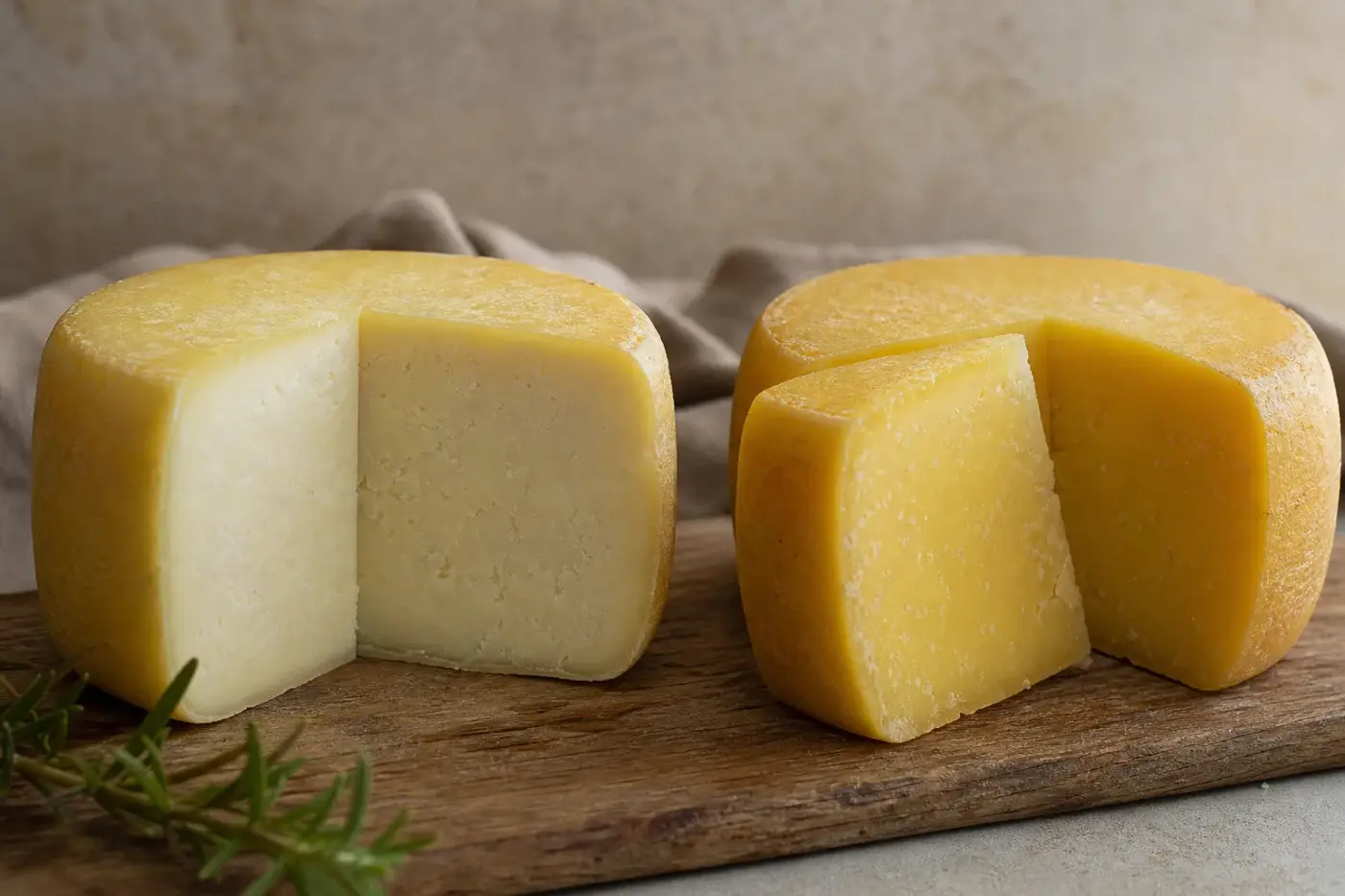
You have three recognised categories to explore: fresco, semiduro and stagionato. Maturity changes rind, paste and flavour, taking you from tender fresco towards hard-rinded stagionato. The published specification contains an inconsistency: Article 4 requires more than 90 days for stagionato, while Article 3 describes it as long-matured, beyond six months. Neither figure should serve as a definitive minimum without authoritative clarification. [1][2]
| Your choice | Ageing requirement | What you’ll find |
|---|---|---|
| Fresco | No numerical minimum specified | Thin white or faintly straw-coloured rind; tender, milk-white paste; pronounced, slightly acidic flavour. [1][2] |
| Semiduro | 60 to 90 days | Thicker, lightly brown rind; compact, semi-hard paste; intense, balanced flavour. [1][2] |
| Stagionato | Minimum unresolved | Hard brown rind; slightly straw-coloured paste; intense flavour with a lightly piquant aftertaste. [1][2] |
Longer-matured wheels may have their rinds treated with olive oil or olive-oil sediment. Ask your seller which treatment was used. It is worth asking how that particular wheel’s rind has been handled, too. [1]
Wheel sizes vary considerably. Fresh cheeses can weigh 0.5 to 1.2 kg or 1.3 to 3 kg; semiduro and stagionato can weigh 1.3 to 2.5 kg or 5 to 15 kg. Smaller formats measure 10 to 18 cm across and 5 to 12 cm high. Larger wheels reach 18 to 30 cm across and 12 to 20 cm high. [2]
Let the label help you choose
On EU-labelled cheese, look for the complete name Pecorino Crotonese, DOP or its full Italian wording, the cheese’s own logo and the EU protected-origin symbol. The producer’s or packer’s business name and address are also required. Each wheel carries a unique business identification code for traceability. [1][2]
At the counter, ask to see the original wheel label or accompanying product information. Basket impressions offer a visual clue, but labels and traceability details tell you more. Even their presence alone cannot establish authenticity.
Four questions will help you find the cheese you want:
- Which dairy made it?
- Which maturity category is it, and what is its actual age?
- Was the milk raw, thermised or pasteurised?
- What storage instructions and date information accompany this cut?
Actual age is especially useful when you’re choosing between slicing and grating. Keep the seller’s information with your wrapped cheese. That way, the useful details make it home with you, rather than remaining a hazy memory of a very agreeable cheese counter.
Get to know the other pecorinos
The word pecorino doesn’t point you to a single place. Pecorino Romano and Pecorino Siciliano each have their own EU PDO specifications, separate from Pecorino Crotonese. Romano’s area includes Sardinia, Lazio and Grosseto province; Siciliano’s is Sicily. Neither designation belongs to Calabria. [7][8]
Pecorino Romano’s published specification requires at least five months’ maturation for table cheese and food preparations, and at least eight months for its grating category. Pecorino Siciliano requires raw whole sheep’s milk and lamb rennet. Compare that with Crotonese’s permitted milk treatments and its kid rennet, and the distinctions become clearer. [1][7][8]
In the kitchen, let the particular cheese’s maturity, saltiness and texture guide you, not simply the word pecorino. A substitution can change a dish substantially. If your cheesemonger offers tastings, compare a few with the food you have in mind. This is research of a particularly agreeable kind.
Bring a little Calabria to your table
The specification recognises Pecorino Crotonese as a table cheese across its categories, and also as a grating cheese. [1] Those changing textures give you plenty to explore. Start with the cheese, then build the plate around it.
Try fresco first as a small slice with plain bread. Then bring in tomato, cucumber or a little olive oil. A restrained first accompaniment lets you judge the cheese before deciding how much acidity or seasoning you want beside it.
For a Calabrian-inspired plate, serve semiduro with roasted peppers, aubergine and bread. Keep chilli separate until you’ve tasted the cheese. Everyone can then adjust the balance without pushing the cheese out of the picture.
Try a firmer, longer-matured example in small pieces with pear or dried figs, or grate it over pasta, beans or roasted vegetables. Add a little, taste the whole dish, then adjust the cheese and salt. Leave some ungrated so you can compare its texture at the table with its effect in the food.
Water makes a straightforward alcohol-free accompaniment. You could also explore an unsweetened herbal infusion. Serve it separately, rather than using it to flavour the cheese.
Keep your cheese well and its details close
Keep your wrapped cheese refrigerated and follow its storage instructions. The UK Food Standards Agency advises a fridge between 0 and 5 °C. Retain the label, including instructions for after opening; with a counter-cut piece, follow your seller’s directions. [6]
For England, Wales and Northern Ireland, consult the FSA’s current guidance on keeping chilled food out of the fridge during preparation. Put out a small portion and leave the rest refrigerated. The guidance referenced here is dated November 2026. [6]
If you’re pregnant, compare the individual cheese’s milk treatment and texture with current UK NHS guidance on cheese, milk and other dairy products. Get the product information from your seller first. Then consult the NHS guidance and your midwife or doctor about your circumstances. [5]
For dietary enquiries, take the product details to your seller, including sheep’s milk, animal rennet and any other declared ingredients. If you have allergy questions, consult your clinician and the product information. You can explore the distinction between allergy and intolerance in cheese allergy versus lactose intolerance.
General information only, not medical advice: follow the official guidance where you live.
Questions people ask
Where does Pecorino Crotonese come from?
It comes from listed municipalities in the Calabrian provinces of Crotone, Catanzaro and Cosenza. Milk production, cheesemaking and maturation must all take place within the defined area.
What does Pecorino Crotonese taste like?
Fresco is tender and slightly acidic, while semiduro has an intense, balanced flavour. Stagionato is intense with a lightly piquant aftertaste.
How long is Pecorino Crotonese aged?
Semiduro is aged for 60 to 90 days, while no numerical minimum is specified for fresco. The specification gives conflicting thresholds for stagionato, so its minimum ageing period is not verified.
Is Pecorino Crotonese made with raw milk, and is it vegetarian?
The specification permits raw, thermised or pasteurised whole sheep’s milk, so check the individual product. It requires kid rennet paste, which is animal rennet.
Can I eat Pecorino Crotonese during pregnancy?
Check the individual cheese’s milk treatment and texture against current UK NHS guidance on cheese, milk and other dairy products. Obtain the product information from the seller and consult the NHS guidance and your midwife or doctor about your circumstances.
Sources
- MASAF, Disciplinare di produzione DOP Pecorino Crotonese, December 2023 version currently linked from the ministry’s cheese specification directory. Articles 1 to 9. Production specification.
- Gazzetta Ufficiale della Repubblica Italiana, Provvedimento 27 dicembre 2023: Registrazione della modifica del disciplinare della DOP «Pecorino Crotonese», annexed specification, Serie generale No 5, 8 January 2024. Official publication.
- European Commission, Commission Implementing Regulation (EU) No 1262/2014 of 18 November 2014 entering a name in the register of protected designations of origin and protected geographical indications (Pecorino Crotonese (PDO)), 2014. Registration regulation.
- Defra, Pecorino Crotonese, Great Britain protected food-name register, published 2021, current entry accessed November 2026. Register entry.
- NHS, Foods to avoid in pregnancy, current online guidance accessed November 2026, section “Cheese, milk and other dairy”. Official pregnancy guidance.
- Food Standards Agency, How to chill, freeze and defrost food safely, current online edition accessed November 2026. Official storage guidance.
- MASAF, Disciplinare di produzione “Pecorino Romano” DOP, ministry-linked document dated 16 March 2026. Current ministry specification.
- MASAF, Modifica del disciplinare di produzione della Denominazione d’Origine Protetta “Pecorino Siciliano”, undated ministry-linked edition accessed November 2026. Ministry specification.
Researched through official production specifications, registration legislation, the Great Britain register and UK public-health guidance; serving suggestions are editorial proposals, without a site tasting or recipe test.
Last checked: November 2026
Last checked November 2026.
The editors suggest you read next
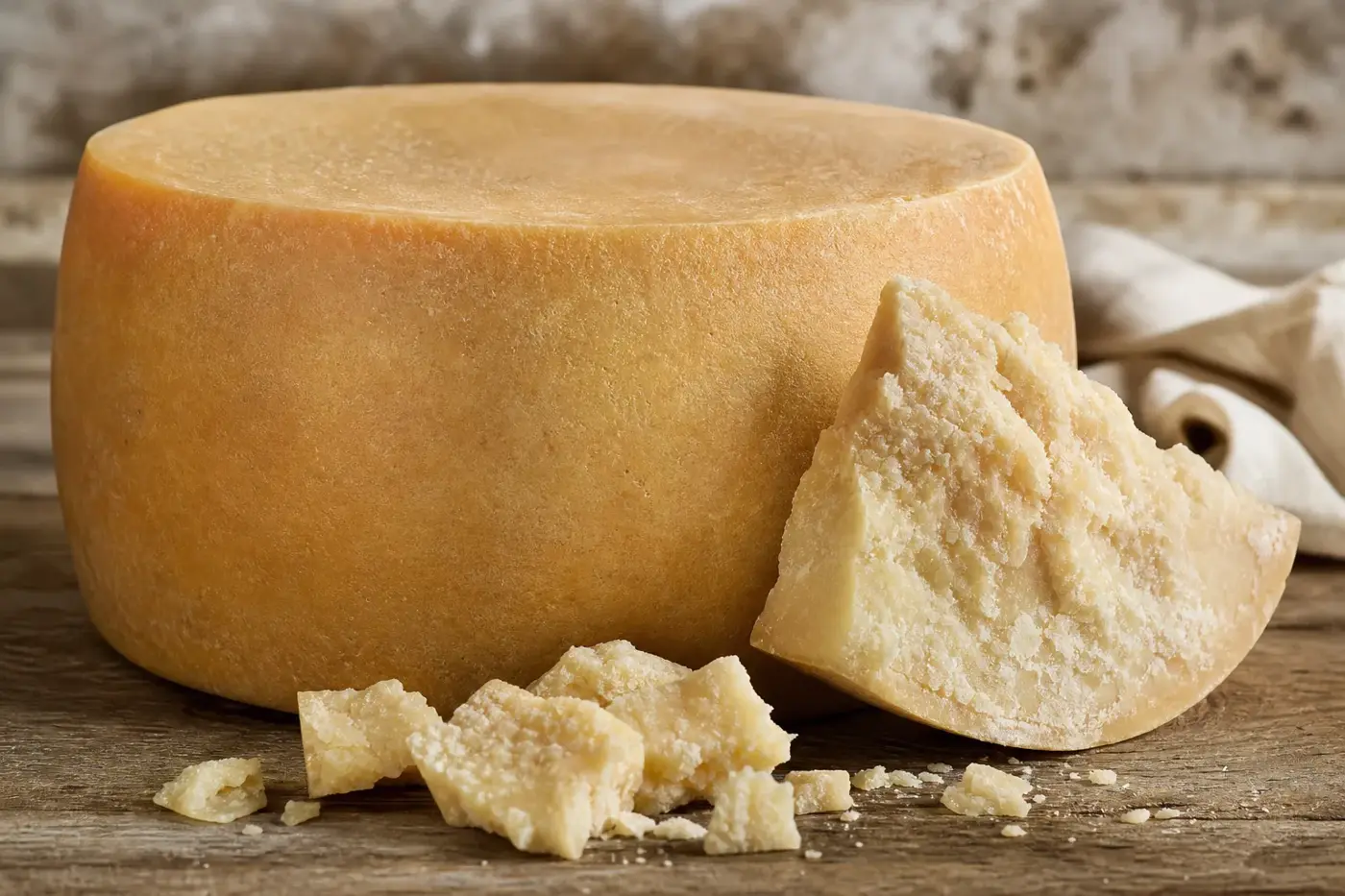
Parmigiano Reggiano
Break into a wheel of Parmigiano Reggiano and flakes fall away, revealing a finely granular cheese, pale straw to straw in colour.