Pecorino Siciliano
Look closely at a wheel of Pecorino Siciliano and you can trace the weave of a rush basket.
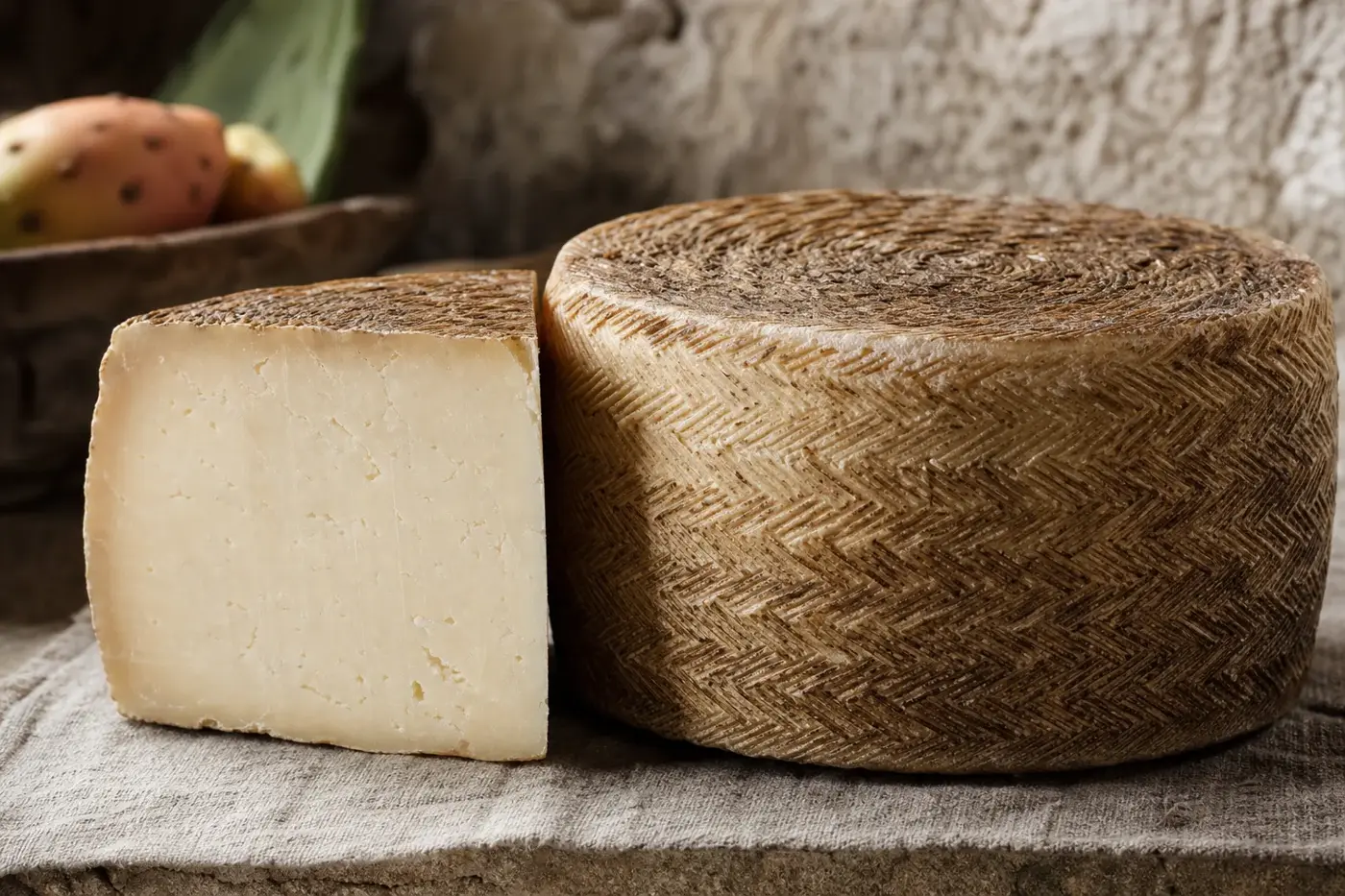
Look closely at a wheel of Pecorino Siciliano and you can trace the weave of a rush basket. Someone pressed that curd into place by hand, leaving the marks of a protected production method. Inside, raw sheep’s milk takes you from sweet young Fresco to pungent Stagionato as the cheese ages. It has EU protected designation of origin status, and an exterior that gives you a glimpse of the work behind it. [1][2][5]
| What you might want to know | The details |
|---|---|
| Familiar and registered name | Pecorino Siciliano. [1][2] |
| EU authority and record | European Commission; current register record and identifier unspecified here. Amendment file PDO-IT-0019-AM01. [2] |
| EU legal record | PDO registered under Regulation (EC) No 1107/96; specification amendment approved by Implementing Regulation (EU) 2020/1338. [3] |
| Great Britain | Registered PDO; UK scheme registration dated 31 December 2020. Status as at November 2026. [4] |
| Northern Ireland | Status unspecified here. |
| Switzerland | Status unspecified here. |
| United States | Status and any applicable rights unspecified here. |
| Where it is made | The territory of Sicily. [5] |
| Milk and coagulant | Whole, raw sheep’s milk; lamb rennet paste. [5] |
| Maturation names to look for | Fresco, Semistagionato and Stagionato. [2] |
| Separate typical ageing range | Unspecified here. |
| Allergen | Contains sheep’s milk. [5] |
Let the basket marks lead you in
Those woven impressions are not there for decoration. Production rules require fuscelle di giunco, rush baskets into which the curd is pressed by hand. Each mark connects the finished wheel to that work and to Sicilian pastoral craft. [5]
For your first piece, ask for some of the outer surface to stay attached. Look at it beside the cut face. There is the woven pattern, the developing rind and the contrast between outside and inside to explore before you take a bite.
Then ask about age. Pecorino Siciliano names the cheese, but its maturation category helps you choose between a piece for slicing at the table and one for grating. The specification recognises three categories, not one uniformly mature hard cheese. [2]
Follow Sicily from craft to protection
The documented legal story reaches back to Presidential Decree No 1269 of 30 October 1955. The official amendment application identifies that Italian recognition, followed by European registration under Regulation (EC) No 1107/96 in 1996. Those dates chart the cheese’s journey into legal protection. [2][3]
The production document takes you closer to the making. You find a wooden milk vat, a wooden tool for breaking curd and rush baskets. These are requirements of the prescribed craft, while the dates establish its legal recognition. [5]
Ancient accounts of shepherds making cheese belong to the broader story of pastoral food. Connecting a literary cheese to today’s protected specification needs further evidence. Here, the documented story joins Sicilian sheep’s milk and local making practices to their eventual legal definition.
What the Sicilian name promises you
Every stage belongs in Sicily. The defined area covers the island’s territory, and sheep rearing, milk production, cheesemaking and maturation must all happen within it. Production records and the registration of participating operators allow the cheese to be traced through the chain. [5]
PDO ties that origin to a prescribed method. Look for the complete registered name, Pecorino Siciliano. “Pecorino”, a Sicilian address or a basket-patterned surface alone cannot identify the protected cheese: the name matters as much as the looks. [2][5]
Protection also depends on where you are. The EU legal record and the Great Britain register are separate sources; the latter records Pecorino Siciliano as a registered PDO. [3][4] For the relationship between origin, production rules and protection, turn to the guide to protected names.
Step up to the vat and basket
The starting ingredients are whole, raw sheep’s milk and lamb rennet paste. In a wooden vat, the rennet turns the milk into a gel that can be cut into curd. A wooden tool then breaks it into pieces approximately the size of rice grains. [5]
Hot water helps release the whey. The gathered curd goes into rush baskets for pressing by hand, followed by a later heating stage using scotta, the liquid left after ricotta production. That patterned surface has a good deal of work behind it. [5]
Picture those stages and the exterior begins to make sense. Its pattern comes from milk handling, curd working and heating, not an ornamental finish applied to the wheel. This is the protected production method, rather than a recipe to try at home.
Planning a meal for someone who avoids animal rennet? The specification requires it here. See rennet explained for a comparison of coagulants, and milk treatments for the differences between raw, thermised and pasteurised milk.
Find your Fresco, Semistagionato or Stagionato
These three names are your starting point at the counter. Control documentation allows both dry salting and salting in brine. It also keeps maturation records separate from records for making and portioning the cheese. [6]
The requirements below give you the youngest and most mature categories. The intermediate ageing value remains unresolved, so ask about the particular wheel rather than guessing from its name.
| Category | Maturation requirement | What to ask for |
|---|---|---|
| Fresco | 20 to 30 days. [2][6] | A young cheese for the table. |
| Semistagionato | Unspecified here. | Its actual age and how best to use it. |
| Stagionato | At least 120 days. [2][6] | A piece for grating or eating in small pieces. |
Older descriptions may lead you through a different set of names. The 2020 amendment replaced Tuma and Primo sale with Fresco, and renamed Secondo Sale as Semistagionato. Keep that change in mind when reading about the protected cheese. [2]
Two questions earn their place at the counter: “Which category is this?” and “How old is this particular wheel?” The first gives you the relevant description. The second helps you compare the cheese in front of you, rather than expecting its category to do all the talking.
Give the rind a moment before tasting
Age changes both the wheel’s size and its surface. The specification describes cylindrical wheels with flat faces, allowing a slightly concave upper face. Fresco and Semistagionato weigh 3 to 5 kg, with diameter and height each between 10 and 20 cm; Stagionato weighs 6 to 14 kg, measures 15 to 30 cm across and stands 15 to 25 cm high. [2]
Fresco has no developed rind, just an edible outer surface that is white to pale straw-coloured. Semistagionato develops a thin straw-coloured rind; Stagionato’s is yellowish. Whichever category you choose, the basket impression remains a defining feature. [2]
For flavour, the official specification gives the younger cheeses sweetness and pronounced pasture aromas. Stagionato is characteristically pungent. Those are the specification’s descriptions, rather than a fromage.co.uk tasting. [2]
To get a feel for the paste and texture of an individual piece, ask to see the cut face as well as the outside. Put the category, actual age and seller’s description together. You will have a better basis for choosing something that suits your plans.
Make room for a little black pepper
Whole black peppercorns are permitted in Fresco and Semistagionato. They go in as the curd enters the baskets, after the hot-water treatment required by the production rules. [5]
The specification describes the peppered younger cheese as lightly spiced. Stagionato’s prescribed paste description does not include peppercorns. Check the category rather than expecting pepper in every version. [2]
If you are comparing them for the first time, taste an unpeppered piece before a peppered one. Give the cheese a moment on its own. Then judge what the spice adds, and which version deserves the next piece of bread.
Get acquainted with the other Italian pecorinos
Before comparing names, decide what you want to eat. Slices, shavings or a grated finishing ingredient? Then look at actual ages as well as the names Pecorino Siciliano, Pecorino Romano, Pecorino Toscano and Pecorino Sardo.
For a gentler table cheese, Pecorino Toscano offers a useful contrast. Its consortium describes its flavour as delicate. That takes you in a different direction from the pungency officially described for Pecorino Siciliano Stagionato. [2][9]
Pecorino Sardo gives you another comparison shaped by age. Its consortium describes younger Dolce as soft, sweet and aromatic, and Maturo as stronger and tangy. Try the younger cheeses together first, or give the mature examples a comparison of their own. [10]
Pecorino Romano belongs among the names you might consider. For a direct comparison of flavour and uses with Pecorino Siciliano, ask about the particular cheeses on offer. The names are a starting point; your choice is between actual pieces.
Give Sicily a little space at the table
On a cheeseboard, give Pecorino Siciliano room rather than surrounding it with several equally assertive cheeses. Even a cheese lover’s enthusiasm need not turn every board into a crowded party. Start with plain bread, then bring in accompaniments one at a time so you can tell what each mouthful contributes.
For a Sicilian-inspired selection, try olives, almonds, fresh pear or a little citrus preserve. Treat this as a serving suggestion, not a documented traditional formula. Keep the sweet things separate, and taste the cheese alone before adding them.
In the kitchen, consider grating Stagionato over pasta with tomato, aubergine or cooked greens. A younger piece could join a bread-based lunch or sit in pieces beside vegetables. Add a little, taste, then decide whether the dish needs more cheese or further seasoning.
Bring home the right piece and keep it well
Before buying, ask about category, actual age, pepper content and storage instructions. Keep the identifying label, especially if your portion comes from a larger wheel. The guide to reading cheese labels explains which details are worth holding on to.
At home, follow the UK Food Standards Agency’s advice: refrigerate dairy products, observe packaging instructions and keep the fridge between 0 and 5 °C. Follow any storage instructions for after opening, too. Neither the name nor the age of your cheese establishes its shelf life. [7]
To serve, take out only what you intend to eat and let it briefly lose its refrigerator chill. UK NHS guidance says to “eat ready-to-eat foods within 4 hours of taking them out of the fridge”. Any stricter product instructions take precedence. [8]
If you need broader handling advice, turn to storing cheese at home. Keep the instructions for your particular piece alongside that general guidance.
Raw milk: find the guidance for your piece
Pecorino Siciliano must be made with raw milk. That makes its maturation category and texture important when you match a particular piece to official health guidance. Pay particular attention to younger cheese when you look at the advice. [5]
For pregnancy, the UK NHS lists pasteurised and unpasteurised hard cheeses among foods that can be eaten; its semi-hard cheese examples specify pasteurised milk. Cheese cooked until steaming hot is also among its permitted choices. Compare the current guidance with the product you have, particularly if it is younger. [11]
The NHS identifies pregnancy, newborn babies, weakened immunity and increasing age as factors associated with more serious listeriosis. If you or someone you are serving belongs to these groups, consult its current listeriosis guidance. Ask your clinician about your individual circumstances. [8]
General information only, not medical advice: follow the official guidance where you live.
Questions people ask
Where is Pecorino Siciliano made?
Every stage must take place in Sicily, from sheep rearing and milk production to cheesemaking and maturation. Look for the complete registered name, Pecorino Siciliano.
How long is Pecorino Siciliano aged?
Fresco matures for 20 to 30 days, while Stagionato matures for at least 120 days. The maturation requirement for Semistagionato has not been verified.
Is Pecorino Siciliano vegetarian?
The specification requires lamb rennet paste, which is animal rennet. It also requires whole, raw sheep’s milk.
Does Pecorino Siciliano contain black pepper?
Whole black peppercorns are permitted in Fresco and Semistagionato. Stagionato’s prescribed paste description does not include peppercorns.
Can you eat Pecorino Siciliano during pregnancy?
The UK NHS lists both pasteurised and unpasteurised hard cheeses among foods that can be eaten during pregnancy, while its examples of semi hard cheeses specify pasteurised milk. Pecorino Siciliano is made with raw milk, so check the current NHS guidance on foods to avoid in pregnancy against the particular cheese, especially if it is young.
Sources
- European Commission. eAmbrosia: Pecorino Siciliano, record EUGI00000013001. Register endpoint retrieved November 2026; record content did not render. Official register entry.
- European Commission. Publication of an application for approval of a non-minor amendment: Pecorino Siciliano, 2020/C 170/07, 18 May 2020. Official Journal document retrieved from CoRFiLaC. Document.
- European Commission. Commission Implementing Regulation (EU) 2020/1338 of 21 September 2020, approving amendments to the Pecorino Siciliano specification. Published 28 September 2020; entered into force 18 October 2020. Official legal text.
- Department for Environment, Food & Rural Affairs. Pecorino Siciliano, Great Britain protected food names register, published 4 January 2021. Register entry.
- Italian agriculture ministry, MASAF. Modifica del disciplinare di produzione della Denominazione d’Origine Protetta “Pecorino Siciliano”, undated ministry-hosted document. Articles 3 to 5 used for production details; its intermediate-ageing value is withheld pending reconciliation. Document.
- CoRFiLaC. Pecorino Siciliano DOP: Appendice piano dei controlli, revision 1, 20 October 2020, especially sections 7 and 8. Control document.
- Food Standards Agency. How to chill, freeze and defrost food safely, published 18 December 2017; guidance applying to England, Northern Ireland and Wales. Guidance.
- NHS. Listeriosis, current online guidance retrieved November 2026. Guidance.
- Consorzio Tutela del Formaggio Pecorino Toscano DOP. Pecorino Toscano DOP, undated online account. Industry source used for its own flavour description. Account.
- Consorzio per la Tutela del Formaggio Pecorino Sardo DOP. Mild and Mature, undated online account. Industry source used for its own sensory descriptions only. Account.
- NHS. Foods to avoid in pregnancy, current online guidance retrieved November 2026. Guidance.
Researched through official registration and amendment records, published production and control documents, UK agency guidance and attributed consortium accounts; serving suggestions are editorial desk research.
Last checked: November 2026
Last checked November 2026.
The editors suggest you read next
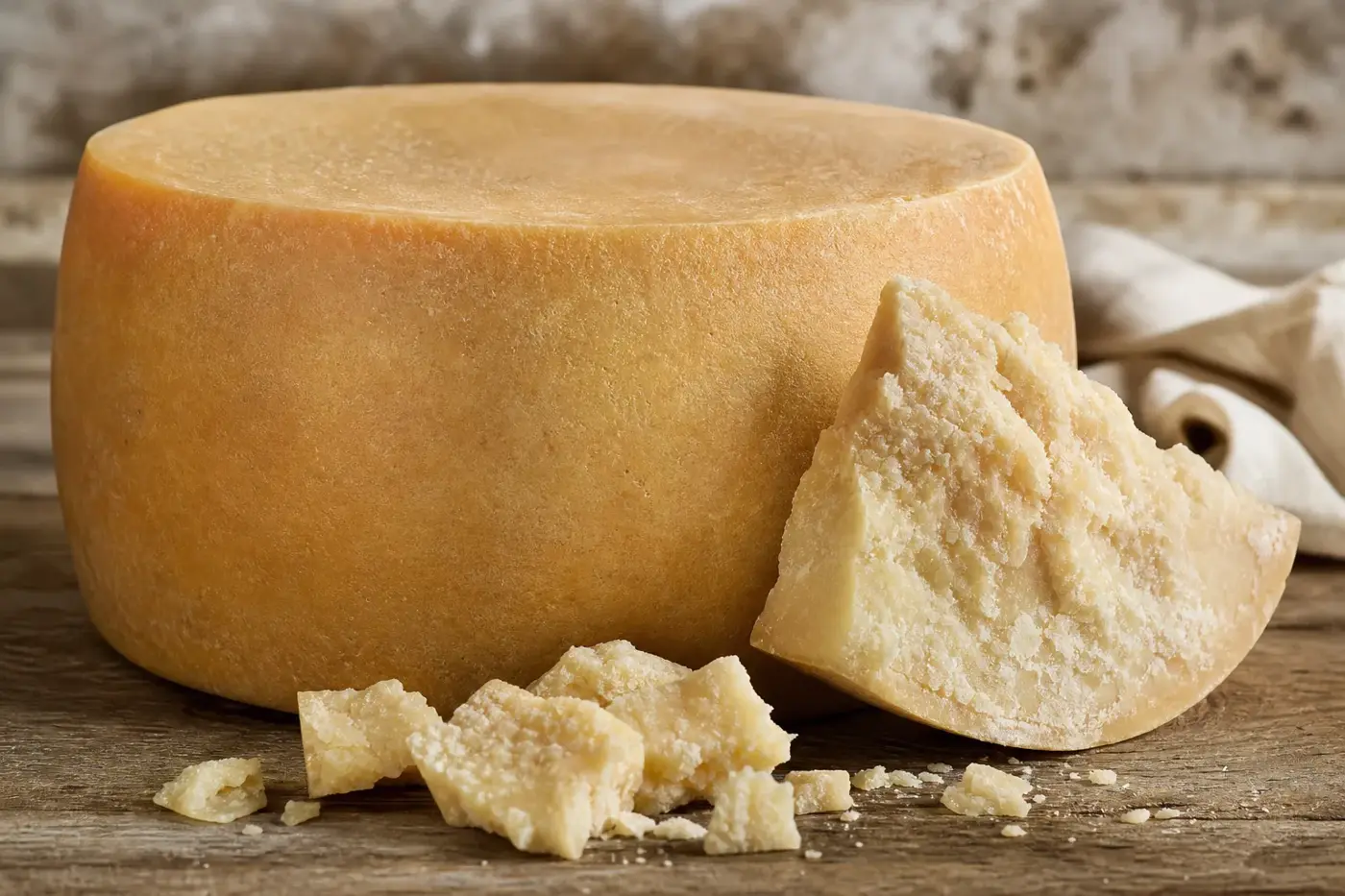
Parmigiano Reggiano
Break into a wheel of Parmigiano Reggiano and flakes fall away, revealing a finely granular cheese, pale straw to straw in colour.