Peruvian Cheese
In Tacna, your first taste might be a piece of cheese beside boiled maize.
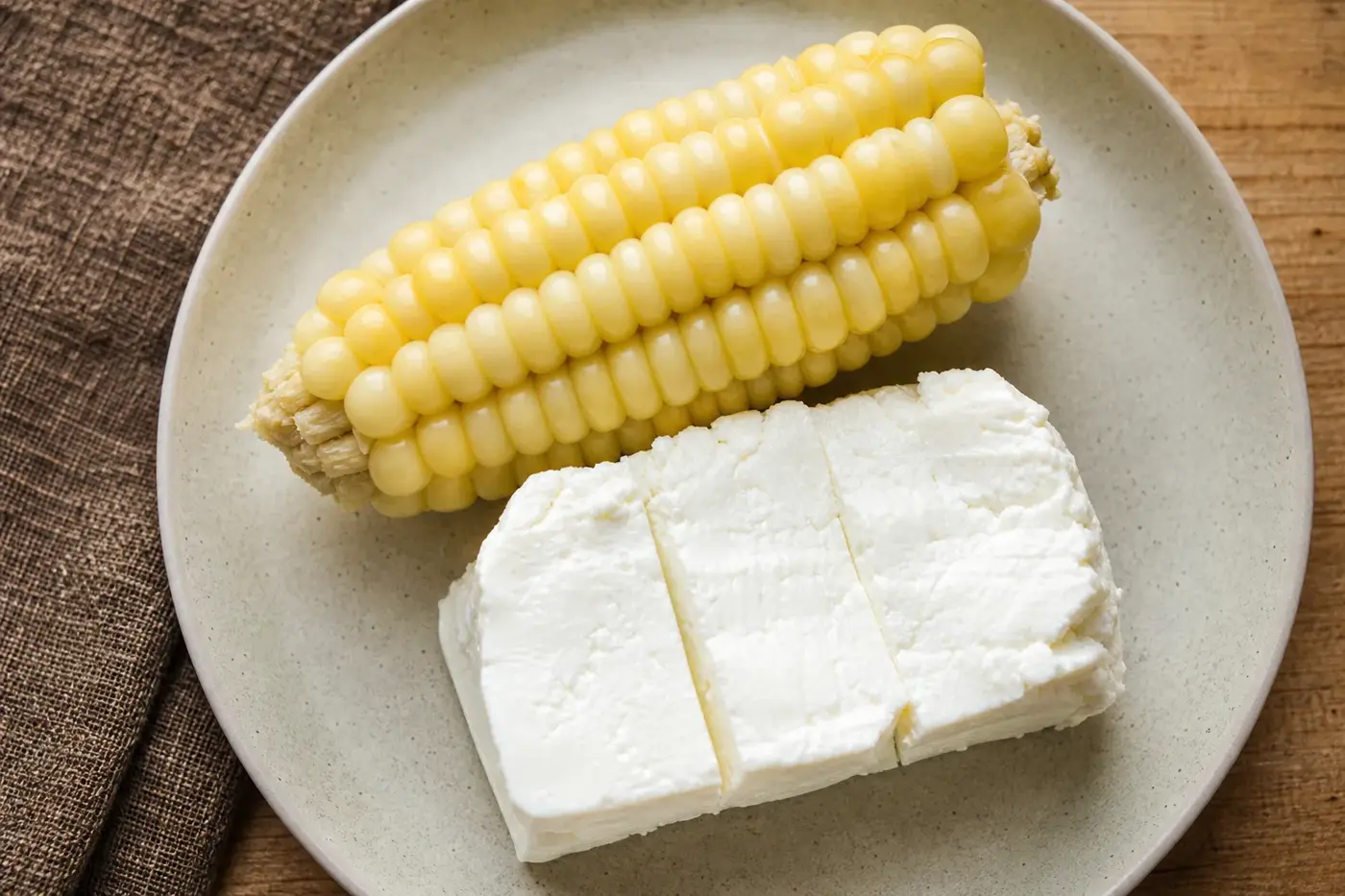
In Tacna, your first taste might be a piece of cheese beside boiled maize. Nothing elaborate. The cheese might come from goat’s milk in Palca or cow’s milk in Huanuara, in Candarave: local choclo con queso, with both ingredients firmly rooted in everyday Peruvian cooking. Beyond that plate, moist queso fresco and Cajamarca’s soft, buttery mantecoso await. [1][3]
| Your quick guide | Peru |
|---|---|
| Cheeses to get to know | Queso fresco, queso paria, queso mantecoso and cheeses sold as queso andino. [2][3] |
| The milk behind most production | Cow’s milk underpins the dairy systems described by Agromercado; INACAL also specifies sheep’s milk for paria. [2][3] |
| Where you will find goat’s milk | Cheese from Palca, Tacna, recorded in a regional culinary publication. [1] |
| Who handles national origin protection | INDECOPI, through its Dirección de Signos Distintivos. [4] |
Let the cheeseboard wait
Look for cheese beside Peru’s maize, potatoes, broad beans and chillies, rather than only on a separate cheese course. You might find it served simply alongside something, scattered through a chopped salad or spooned over potatoes as a sauce. The cheeseboard can cope with a little neglect: these everyday dishes introduce you to the cheeses, their names and the places that make them. [1][5][6]
Even the maize in choclo con queso has a local story worth knowing. The university publication recording Tacna’s cooking celebrates Pachía’s smaller, tender maize alongside cheese from Palca and Huanuara. Both ingredients bring a particular place to your plate. [1]
For your first exploration, follow cheese through three preparations. Begin with a piece beside maize, move to the sauce in papa a la huancaína, then try the separate cubes in an Arequipa solterito. You will meet cheese as an accompaniment, as part of a sauce and as distinct pieces among salad ingredients. [1][5][6]
Follow the milk, from coast to highlands
Peruvian dairying takes you from coastal valleys to highland pasture. Agromercado distinguishes extensive grazing in the highlands and forest regions, intensive systems concentrated in coastal valleys, and semi-intensive production in inter-Andean valleys. Highland cattle graze natural and cultivated pasture; coastal production relies more heavily on managed feeding and specialised facilities. [3]
There is more to this landscape than a handsome view. Agromercado identifies drought, frost and pasture shortages as pressures on milk production, particularly in high Andean areas, alongside limited refrigerated storage and transport. As you explore a cheese region, consider the milk supply and its journey to market as well as the scenery. [3]
Cow’s milk is the industry’s starting point, but sheep and goats belong in the story too. INACAL’s description of paria includes whole cow’s milk, sheep’s milk or a mixture, while Tacna’s culinary record identifies goat’s milk cheese from Palca. Those examples bring all three animals into view, without suggesting their milks are equally prevalent nationally. [1][2][3]
At the counter, ask which animal supplied the milk and where the cheese was made. A regional style name cannot fully answer either question. The guide to reading a cheese label helps you distinguish the product name from its maker and origin.
Four cheeses to make room for
Queso fresco: a gentle place to begin
Queso fresco needs no maturation. Agromercado describes it as very soft, moist and gentle in flavour, an inviting first acquaintance. In solterito, you meet it in recognisable pieces; in papa a la huancaína, it becomes part of the sauce. [3][5][6]
Try cheese beside maize first, where you can taste it separately. Then notice what changes when cheese is crushed and combined with other ingredients for a sauce, rather than served as a slice. In a salad, its pieces remain visible among the vegetables and dressing: fresh cheese doing quite different jobs. [1][5][6]
Queso paria: get to know the maker
With paria, begin by asking about the dairy and the milk. Peruvian sources describe the cheese differently, leaving uncertainty around its characteristic texture, flavour and regional associations. The name alone does not settle those questions. [2][3]
Ask the seller which milk was used and who made the cheese. Those concrete answers give you more to work with than the regional name alone. They also give you a firmer starting point for choosing what to take home.
Queso mantecoso: the work behind Cajamarca’s buttery cheese
Cajamarca’s mantecoso begins with quesillo, a drained curd. Makers wash it, work it with salt, then grind and knead it into a cohesive cheese, a transformation described in research published through the CIRAD, CIAT and IICA project. This is not simply curd pressed into a firmer block: that working creates a different texture. [7]
Agromercado describes the result as semi-soft, mild and buttery. The name offers a clue, too: mantecoso refers to a butter-like character. As you taste, consider how much of that character comes from the work done to the curd. [3][7]
Behind the cheese is a connection between rural producers and city cheesemakers. Research on Cajamarca’s dairy networks follows quesillo from rural production areas towards makers connected with the city. Mantecoso’s regional identity belongs to those linked people and skills, not just the finished cheese you find at the counter. [8]
Queso andino: a name that invites questions
“Which andino is this?” is a useful question to take to the counter. The name describes a broad regional style, with published Peruvian accounts using related terms including queso andino semiduro madurado and queso tipo Andino. Let the maker introduce the cheese rather than expecting one uniform product. [3][9]
The published descriptions show you why. MIDAGRI describes a ripened, semi-hard andino with a soft, buttery texture and no holes. Agromercado’s later table describes a pressed cheese with eyes, a firm texture and a sweet, slightly nut-like flavour. Ask about texture, maturation and production method to discover which kind is on offer. [3][9]
You can explore those distinctions further in the guide to cheese styles. A broad geographical adjective has its uses, but it cannot do all your shopping for you.
Look beyond the place name
A cheese can belong to a place without having a registered origin name. For Peru’s protection system, turn to INDECOPI. Its published information identifies the Dirección de Signos Distintivos as the body responsible for declaring protection for denominations of origin. [4]
Cajamarca’s mantecoso has a documented history of seeking that recognition. An older inventory lists Queso Mantecoso de Cajamarca, application file 462155-2011, dated 22 April 2011, under national denominations of origin in progress. That entry records the application and its procedural status at the time, rather than establishing a current registration. [10]
| Name to look for | What the historical record tells you | Current Peruvian registration, November 2026 |
|---|---|---|
When you read a label, distinguish the stated place of manufacture from a regional description or a producer’s mark. They tell you different things, even when they appear close together. The guide to protected names explains the kinds of evidence behind geographical protection.
Find your way through the dishes
Papa a la huancaína: cheese becomes the sauce
In papa a la huancaína, queso fresco goes into the sauce, not on top as a finishing touch. A preparation published by Peru’s Ministry of Education combines it with ají amarillo, oil, milk and a little lemon. You serve that sauce over boiled potatoes with lettuce, hard-boiled egg and olives. [5]
Pay attention to the order: first crush the cheese, then incorporate the other sauce ingredients. It becomes part of the dressing for the potatoes, quite a change from a slice beside maize. Follow that combination of potato, yellow chilli and cheese, then compare it with the different herbal character of Arequipa’s ocopa. [5][6]
Arequipa: give cheese a seat at the meal
Solterito de queso keeps the cheese in distinct pieces. PROMPERÚ describes broad beans, maize, onion, cheese, olives and chopped tomatoes, dressed with vinegar, parsley and seasoning. Unlike the crushed or blended cheese in huancaína sauce, those pieces remain a separate part of each mouthful. [6]
Ocopa takes another route, bringing cheese together with huacatay, chillies, peanuts and seasonings to serve over boiled potatoes. In PROMPERÚ’s account, cheese also appears among the ingredients of rocoto relleno, Arequipa’s filled chilli dish. Visit a picantería, a traditional regional restaurant, and you can explore several ways of cooking with cheese, not simply several cheeses. [6]
Meet the people behind the curd
Peruvian dairying developed after Spanish arrival, as farming changed. Research on Cajamarca traces colonial estates initially centred on mixed agriculture and wool sheep, followed by a stronger turn towards cattle during the nineteenth century. Before you reach the cheese, there is a story of animals, land and changing livelihoods. [7]
The same account connects later dairy development with cultivated forage, imported dairy breeds and expanding collection networks. In rural cheese production, quesillo and mantecoso became linked products. Grinding and kneading helped give mantecoso its particular form, making the makers’ technique as important as the milk supply. [7]
Research published in 2005 follows the relationships between rural quesillo producers, intermediaries and city cheesemakers. It also records collective efforts to improve quality and establish a recognisable regional identity. Behind the finished cheese, you find not only livestock and technique, but people organising its journey from curd to counter. [8]
Make your first taste count
Take three questions with you: what is made here, where does the milk come from, and how do people eat the cheese locally? They give you a practical starting point at both a market counter and a restaurant table.
Cajamarca is your place to explore mantecoso and the quesillo network behind it. At markets and dairy shops, ask who made the cheese and where the curd came from. Research documents connections between the city and production areas including Chanta and Yanacancha, giving those questions a useful geographical starting point. [8]
Arequipa invites you to follow the dishes. Explore market cheese counters, then seek solterito, ocopa or rocoto relleno in regional restaurants. Compare cheese sold for eating in pieces with cheese chosen for a sauce, and your market visit and meal begin to tell the same story. [6]
Puno and the surrounding southern highlands give you a starting point for exploring paria. Ask about the dairy, milk species and texture rather than expecting the name to tell you everything. Before setting out for a dairy, confirm the visit directly, including booking requirements, public access and accessibility arrangements. [2]
For freshness and handling questions, consult Peru’s DIGESA and the product’s instructions. A DIGESA-hosted technical document addresses pasteurisation for fresh and semi-ripened cheese production, hygienic containers and protection against contamination. Consider those production controls alongside the cheese’s age and how it has been transported and displayed. [11]
Before travelling, consult the current DIGESA notices. For the underlying distinction between milk treatments, read raw milk, thermised and pasteurised cheese. [12]
General information only, not medical advice: follow the official guidance where you live.
Questions people ask
What is queso fresco like?
Agromercado describes queso fresco as very soft, moist and gentle in flavour. It needs no maturation and can be served in pieces or crushed into a sauce.
What milk is used to make queso paria?
INACAL’s description includes whole cow’s milk, sheep’s milk or a mixture. Ask the seller which milk was used and which dairy made the cheese.
What is queso andino?
Queso andino is a broad regional style name rather than a description of one uniform product. Published accounts differ on its texture and whether it has holes, so ask the maker about the particular cheese.
How is cheese used in papa a la huancaína?
Queso fresco is crushed into a sauce with ají amarillo, oil, milk and a little lemon. The sauce is served over boiled potatoes with lettuce, boiled egg and olives.
What is solterito de queso?
Solterito de queso is an Arequipa dish in which the cheese remains in distinct pieces. PROMPERÚ describes it with broad beans, maize, onion, olives and chopped tomatoes, dressed with vinegar, parsley and seasoning.
Sources
- Universidad de San Martín de Porres, Tacna, el sabor de la patria, regional culinary publication, “Choclo con Queso”, p. 183; edition year not verified. Publication.
- INACAL, Inacal establece requisitos de calidad del queso paria para un consumo seguro, 2024. Search retrieval supplied the quoted technical descriptions; the full page could not be opened. Official publication.
- Agromercado, dairy value-chain report, file dated 18 November 2025, sections 1.3.2 and 4.2, and table 14. Full cover title not recoverable from the extracted text. Report.
- INDECOPI, ¡Feliz 28! Estos son los 11 productos peruanos con denominación de origen que son motivo de orgullo patrio, 2024. Search retrieval only; full-page access failed. Official publication.
- Ministerio de Educación, Comunicación 3: Cuaderno de trabajo, tercer grado, “A la huancaína”, pp. 63 to 64; edition year not verified. Publication.
- PROMPERÚ, De Arequipa para el mundo: conoce los 5 platos típicos de la ‘Ciudad blanca’, 2020. Official tourism article.
- ITDG, CIRAD, CIAT and IICA project, Queserías rurales en Cajamarca, 2004, historical chapters and account of mantecoso production. Research publication.
- Agroalimentaria, La concentración de las queserías rurales de Cajamarca: retos y dificultades de una estrategia colectiva de activación, 2005, section 4.1. Research article.
- MIDAGRI, En el Perú existen 388,450 productores que elaboran más de 50 diferentes variedades de queso, 2021. Search retrieval only; full-page access failed. Official publication.
- ASIPI-hosted inventory, Denominaciones de origen, undated, section “Denominaciones de Origen Nacionales en trámite”. Historical evidence only. Inventory.
- MINSA/DIGESA, document headed NTS N° 192-MINSA/DIGESA-2022, hosted as RM 807-2022-MINSA, section 6.7.1. The retrieved document also carries a “Proyecto de norma sanitaria” heading; its operative legal status requires review. Document.
- DIGESA, Comunicados, live notice index, accessed November 2026. Official notices.
This desk-researched draft brings together Peruvian institutional publications, documented culinary preparations and research on regional dairy production.
Last checked: November 2026
Last checked November 2026.
The editors suggest you read next
French Cheese: The Complete Guide
Picture Normandy’s pastures, then follow the milk towards the Loire’s goat dairies, the Jura’s shared cheesemaking traditions and the sheep country of the Pyrenees.