Port-Salut
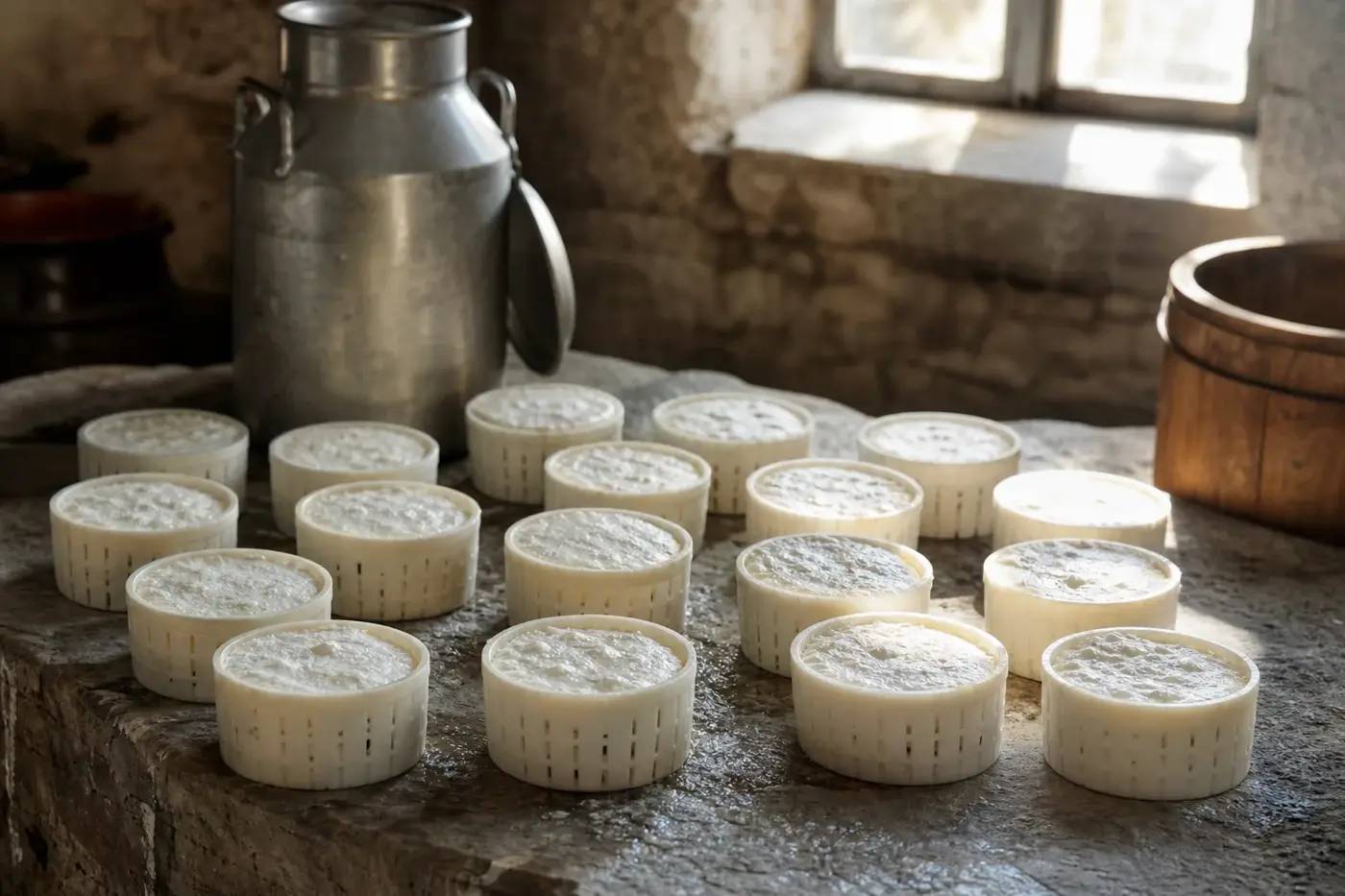
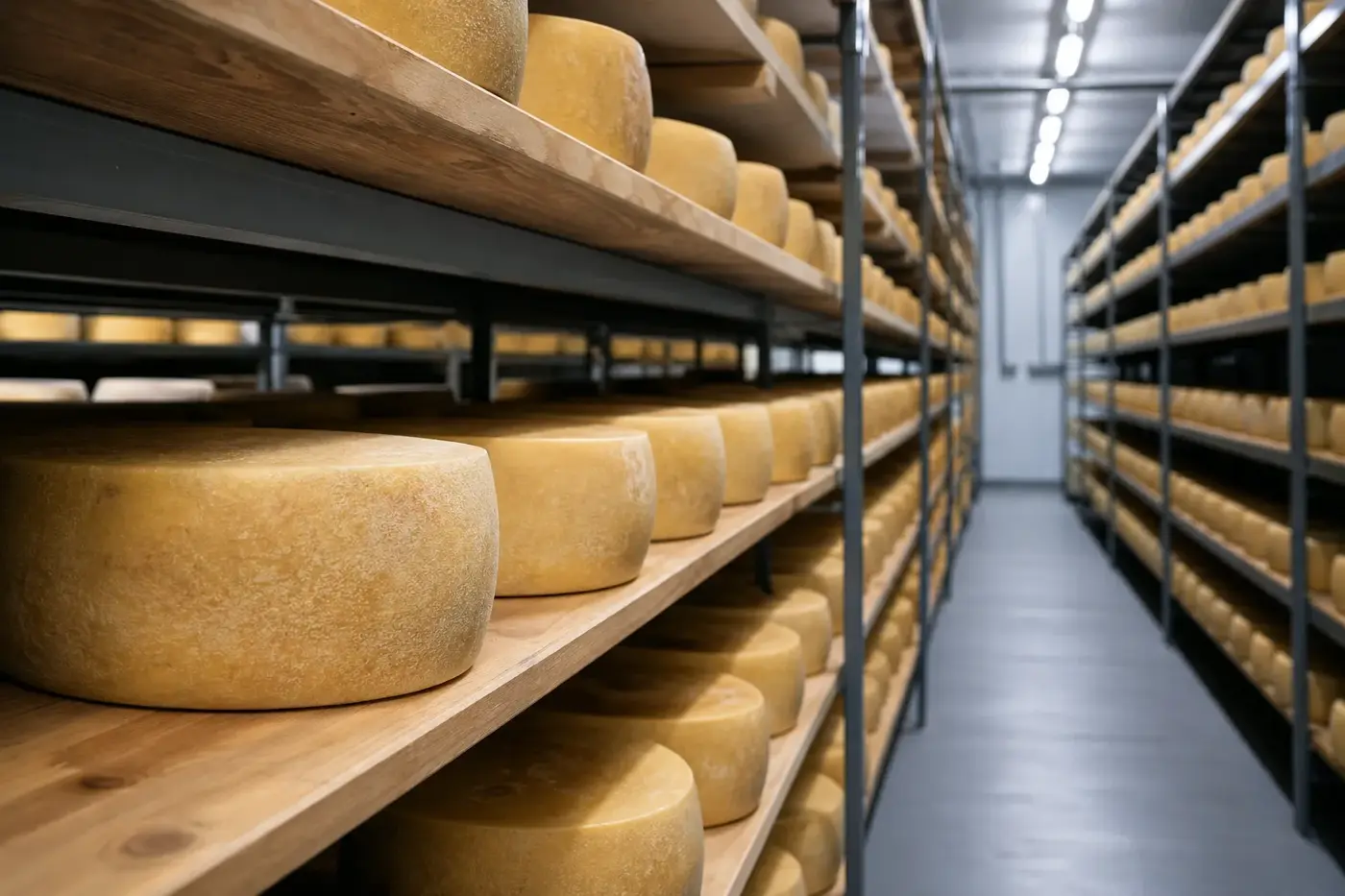
Picture the monastery dairy at Entrammes in Mayenne: milk waiting to become something that would keep, and new maturing cellars built in 1850.
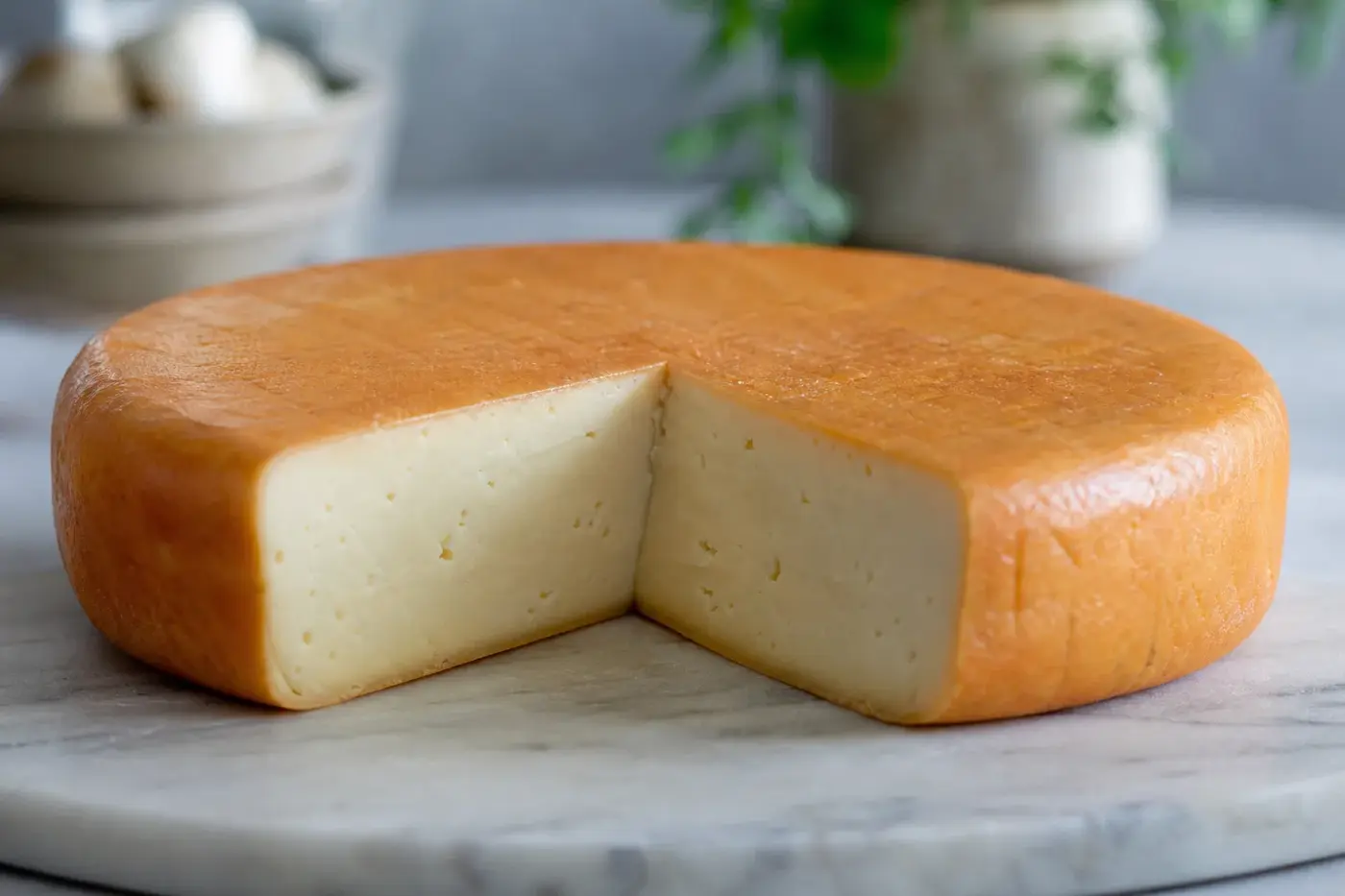
Picture the monastery dairy at Entrammes in Mayenne: milk waiting to become something that would keep, and new maturing cellars built in 1850. By 1873, the monks' cheese had reached Paris. You know its descendant as Port Salut, with its orange exterior and pale, supple paste. The abbey sold the brand in 1959; today's British range belongs to Bel's commercial portfolio.[1,2,3,13]
Get acquainted with the orange-coated cheese
| What you might want to know | The detail |
|---|---|
| Brand name | Port Salut.[3] |
| What you'll find in the British range | Wedge and slices.[13] |
| UK operator | Bel UK Ltd.[3] |
| Milk treatment | Pasteurised cow's milk.[5] |
| What sets the milk | Vegetarian rennet.[5] |
| What to know about the rind | Inedible coating.[6] |
| Allergen | Milk.[5,7] |
Follow the milk from the monastery to Paris
A growing dairy herd gave the monks a practical problem: what could they make from their milk that would keep, and that people would buy? Cheese supplied the answer. The abbey's history records its dairy expansion and new maturing cellars in 1850, with neighbouring farms contributing milk alongside the monastery's own supply.[2]
First came customers around Laval. Then, in 1873, the cheese reached Paris. You can follow that widening circle from monastery dairy to regional business, then on to customers further afield.[2]
Bel's British history dates the cheese's creation to 1816. Alongside the abbey's account, it takes you back well before commercial ownership. The monks were already feeding a market far beyond their own community.[1,2]
The name leaves the abbey, but not the dairy
The abbey registered PORT DU SALUT in 1874. In 1959, it sold the brand to Société Anonyme Les Fermiers Réunis. Changes in milk production and the market had made the cheese operation too large for the religious community, the abbey explains.[2]
Selling the name did not mean closing the dairy doors. According to Bel's history, commercial Port Salut continued to be made within the original abbey grounds until 2005, when production moved. Ownership and production departed decades apart.[1]
Nor did the sale finish the monks' cheesemaking story. Afterwards, the abbey returned to small-scale, raw-milk cheesemaking under another name: Fromage de l'Abbaye.[2]
Let the pack tell you where to look
As of November 2026, Bel UK Ltd operates Port Salut's British website and includes the cheese among its brands. That gives you the British commercial connection to Bel. It does not, by itself, give you a factory address.[3]
For a French-market 185 g Port Salut, Bel Foodservice's product sheet names the Fromagerie de Cléry at Cléry-le-Petit, in Meuse, eastern France. It specifies French milk, too. That production address belongs to that product; the British product's factory location remains an open question in the fact box.[4]
An abbey name, a British distributor's address and a French dairy address each tell you something different. Read the producer information and identification mark alongside the product name to understand the cheese in your hand. The guide to reading a cheese label helps you untangle those details.[3,4]
Port Salut and Saint-Paulin: meet the relatives
You may come across both names when looking at this cheese. Port Salut is the commercial brand; Saint-Paulin describes the related cheese type. The abbey's history connects Saint-Paulin with cheeses made in imitation of Port du Salut, while Bel's French product sheet describes its own Port Salut as Saint-Paulin.[2,4]
Monastic history, brand ownership and geographical designation are separate matters. The official Great Britain register records geographical indications and traditional specialities, rather than simply recording a brand's abbey roots.[11] If the terminology has you reaching for another cracker, try protected names explained.
From milk to curd: what's in your wedge?
The British wedge begins with pasteurised milk of French origin. Its ingredients also include milk protein, salt, lactic ferments, vegetarian rennet, annatto norbixin and natamycin. Lactic ferments are the starter cultures; rennet is the coagulant that sets the milk into curd.[4,5]
Bel's French sheet is more specific about its product's setting agent, describing it as a microbial coagulating enzyme. Keep that market distinction in mind when choosing vegetarian cheese. The British declaration says vegetarian rennet, without naming a species or strain.[4,5]
You can follow setting, draining and maturation in how cheese is made. When comparing packs, look at the setting agent each one declares. A vegetarian claim belongs to that product, not automatically to its neighbour on the shelf.
Admire the orange edge, then trim it away
The British wedge's orange exterior is easy to spot, but it is not for eating. The manufacturer describes this inedible coating as approved for contact with food, rather than as a food product, and tells consumers to remove it. The packaging also identifies an inedible rind.[6]
The British ingredient list names annatto norbixin as the colour and includes the preservative natamycin. Bel's French sheet places E160b colouring in the rind. It also states that the rind is not intended for consumption.[4,5]
Before you serve the British wedge, trim away the orange edge. Keep the wrapper nearby until you have read the maker's instructions for the particular product you are about to eat.[6]
Find good company for that gentle flavour
For the sliced product, the brand suggests bread, crunchy apple and walnuts. It also recommends slipping the rectangular slices into baguettes and rolls, or serving them on crackers. You can make a simple plate of bread, apple and cheese, removing any inedible coating first.[6,7]
You can take Port Salut into the kitchen, too. Bel suggests using it as an ingredient and publishes a cheese sauce recipe. Think of a mild cheese sauce, rather than the forceful flavour you might want from an aged cheese.[6,8]
Keep it chilled and serve your portion
Keep your Port Salut refrigerated and follow the packaging. For households in England, Wales and Northern Ireland, the Food Standards Agency recommends a fridge temperature between 0 and 5 °C. Read the date alongside the storage and after-opening instructions, and do not eat the cheese after its use-by date.[9]
When preparing food, the FSA advises keeping chilled items out of the fridge for the shortest possible time, with a maximum of four hours. Serve what you need rather than leaving the whole pack out through a long meal. The rest can stay chilled while you enjoy your portion.[9]
For the rest of your fridge routine, see how to store cheese at home.
Choosing vegetarian? Remember the milk
The manufacturer declares both the British wedge and slices suitable for vegetarians. Both ingredient lists specify vegetarian rennet, and both products contain milk. If you manage a milk allergy, the vegetarian claim does not replace the allergen declaration: it concerns the setting agent and product formulation.[6,7]
The NHS distinguishes lactose intolerance, meaning difficulty digesting milk sugar, from an allergy to milk protein. If you suspect either, speak to a GP or another health professional. If you follow an individual avoidance plan, use the current ingredients and allergen information on your pack.[10]
This page summarises published guidance from the official sources it cites. It is not medical advice. Guidance differs between countries and changes over time, so check the current source for where you live, and ask your doctor, midwife, pharmacist or dietitian about your own circumstances.
Pregnant? Read the pack alongside British guidance
As of November 2026, NHS pregnancy guidance includes pasteurised semi-hard cheeses and a range of pasteurised soft cheeses among foods you can eat. It says soft cheeses with a white rind and soft blue cheeses should be cooked until steaming hot before eating. This applies whether their milk is pasteurised or unpasteurised.[12]
Port Salut is not named among the examples. Read your product's milk-treatment and cheese-type information alongside the current NHS guidance, and ask your midwife about your circumstances. The NHS also advises keeping pre-packaged cheese sandwiches chilled and eating them before their use-by date.[12]
Look beyond mildness to salt and saturated fat
A gentle flavour does not mean negligible salt or saturated fat. Port Salut contains appreciable amounts of both. These are the British manufacturer's published figures for the wedge, with its stated 30 g portion alongside 100 g to help you compare.[5]
| What's in your wedge | Per 100 g | Per 30 g |
|---|---|---|
| Fat | 27 g | 8.1 g |
| Saturated fat | 18 g | 5.4 g |
| Protein | 21 g | 6.3 g |
| Salt | 1.6 g | 0.48 g |
The wedge exceeds both NHS thresholds. More than 5 g saturated fat per 100 g counts as high in saturated fat; more than 1.5 g salt per 100 g counts as high in salt. The NHS advises keeping track of how much cheese you eat and how often.[5,10]
Your choice of format matters, too. The British slices page lists 19 g saturated fat and 1.9 g salt per 100 g, against 18 g and 1.6 g for the wedge. Read the nutrition panel on the format you buy, especially if you have been advised to monitor salt or saturated fat.[5,7]
Questions people ask
Can you eat the orange rind on Port Salut?
The orange exterior of the British wedge is an inedible coating. The manufacturer says to remove it.
Is Port Salut suitable for vegetarians?
The manufacturer declares both the British wedge and slices suitable for vegetarians. Their ingredient lists specify vegetarian rennet.
Where is Port Salut made?
A Bel product sheet identifies the Fromagerie de Cléry in Cléry le Petit, eastern France, as the production site for a French market Port Salut. The factory for the British product remains unverified.
Can you eat Port Salut during pregnancy?
Port Salut is not named in the examples in NHS pregnancy guidance. The NHS guidance includes pasteurised semi hard cheeses and a range of pasteurised soft cheeses among foods that can be eaten. Check the current NHS guidance and ask your midwife about your circumstances.
How should Port Salut be stored?
Keep it refrigerated and follow the packaging instructions. For households in England, Wales and Northern Ireland, the Food Standards Agency recommends a fridge temperature between 0 and 5 °C and says not to eat cheese after its use by date.
Sources
- Bel UK, Port Salut. A Brief History of Port Salut Cheese, undated web edition, retrieved November 2026. Manufacturer history.
- Abbaye Notre-Dame du Port du Salut. Et le fromage ?, undated abbey account, retrieved November 2026. Abbey account.
- Bel UK Ltd. Website Terms of Use, sections 3.1 and 7.1, undated web edition; and Welcome to Bel UK, brand navigation, retrieved November 2026. Website terms and Bel UK.
- Bel Foodservice France. PORT SALUT® 185G, undated downloadable product sheet, retrieved November 2026. French product sheet.
- Bel UK, Port Salut. Semi-Soft French Cheese Wedge, ingredients and nutrition, undated web edition, retrieved November 2026. British wedge information.
- Bel UK, Port Salut. Your Questions Answered, storage, vegetarian suitability, cooking and rind entries, undated web edition, retrieved November 2026. Manufacturer FAQ.
- Bel UK, Port Salut. Natural French Cheese Slices, ingredients, serving suggestions and nutrition, undated web edition, retrieved November 2026. British slices information.
- Bel UK, Port Salut. Rich Port Salut Cheese Sauce, undated manufacturer recipe, retrieved November 2026. Manufacturer recipe.
- Food Standards Agency. How to chill, freeze and defrost food safely, published 18 December 2017, current retrieved edition November 2026. Applies to England, Northern Ireland and Wales. Official storage guidance.
- NHS. Dairy and alternatives in your diet, current retrieved edition November 2026, sections on cheese, milk allergy and lactose intolerance. Official dietary guidance.
- Department for Environment, Food & Rural Affairs. Protected geographical food and drink names, live Great Britain register, retrieved November 2026. The register introduction was readable; a conclusive Port Salut search was not obtained. Official GB register.
- NHS. Foods to avoid in pregnancy, current retrieved edition November 2026, cheese and dairy section. Official pregnancy guidance.
- Bel UK, Port Salut. Our Indulgent French Cheese Range, undated manufacturer product overview, retrieved November 2026. British range overview.
- European Commission. eAmbrosia geographical indications register, live register interface, accessed November 2026. The interface supplied no readable search results in this session. Official EU register.
This desk-researched account compares the abbey's history with manufacturer records and reports British health and storage guidance from the NHS and FSA.
Last checked: November 2026
Last checked November 2026.
The editors suggest you read next
Who Makes the World's Cheese? The Big Dairy Groups
You pick up Galbani at the cheese counter, then pause over Kerrygold.