Puzzone di Moena
Twice a week, someone turns a wheel and wets it with lukewarm water, sometimes lightly salted.
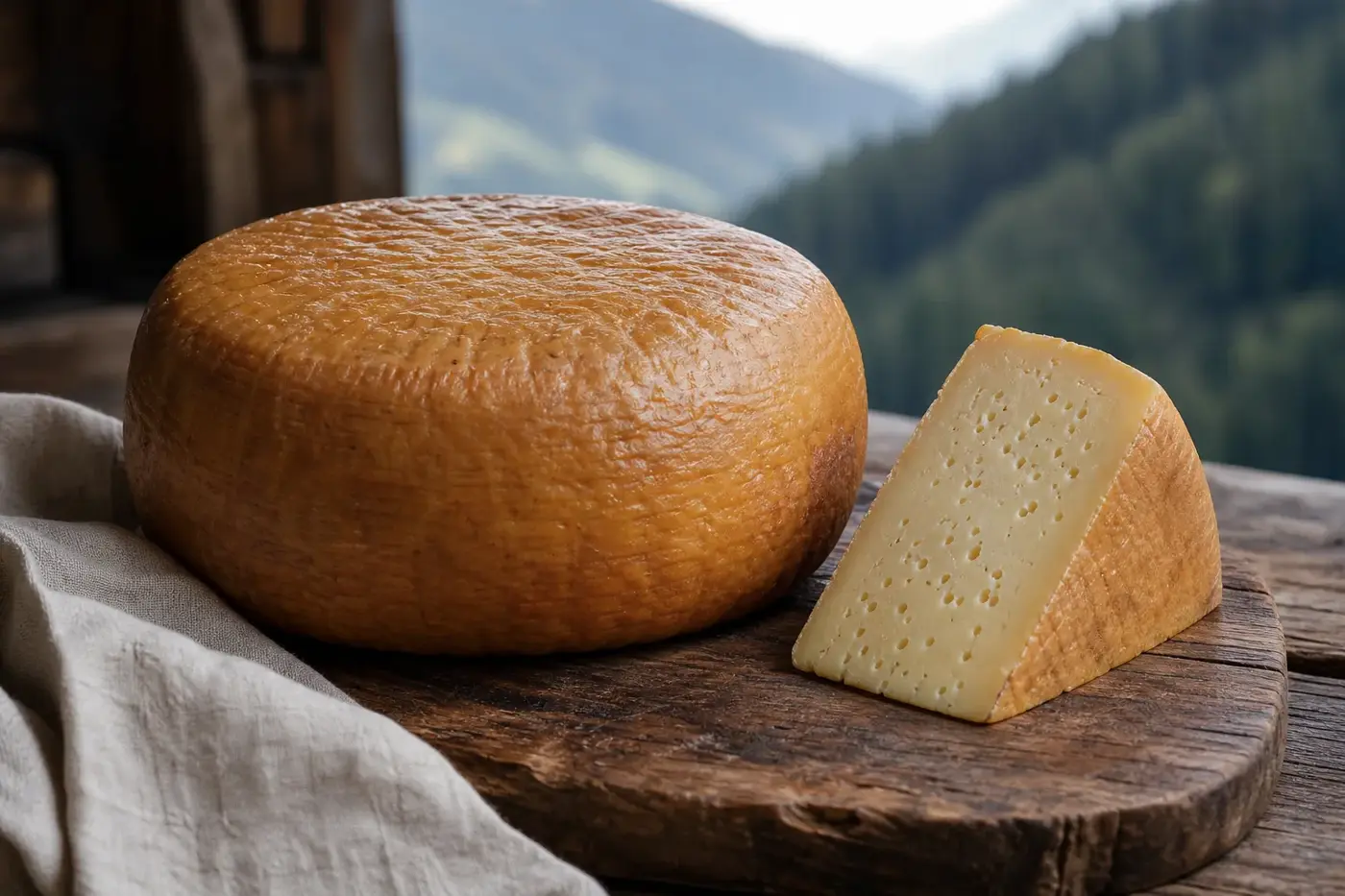
Twice a week, someone turns a wheel and wets it with lukewarm water, sometimes lightly salted. For the first two to three weeks of Puzzone di Moena’s maturation, this small ritual helps build that penetrating aroma.[3] Beneath the washed rind, you find persistent, salty flavour, restrained bitterness and, with age, a sharper edge, according to Italy’s cheese tasting association ONAF.[2][5]
| What you might want to know | The detail |
|---|---|
| Familiar name | Puzzone di Moena.[1] |
| Full registered name | Puzzone di Moena / Spretz Tzaorì.[2] |
| EU authority and record reference | European Commission; amendment reference PDO-IT-0950-AM01.[2] Register ID: unconfirmed. |
| EU status | PDO recorded in an official amendment publication; current register status unconfirmed.[2] |
| Registration instrument | Commission Implementing Regulation (EU) No 1162/2013, identified in Italy’s July 2026 approval decree.[4] |
| Legally defined home | Specified municipalities in the provinces of Trento and Bolzano, Italy.[1] |
| Milk and rennet | Cow’s milk; bovine rennet. More on milk treatment below.[1] |
| Time to mature | At least 90 days; stagionato permitted after 150 days.[3] |
| When it is made | Throughout the year.[3] |
| Rind and texture | Washed rind; semi-hard, supple paste with scattered holes.[3] |
| UK pregnancy guidance | NHS, Foods to avoid in pregnancy, November 2026.[7] |
Meet a cheese with no quiet entrance
Puzzone puts that powerful smell right into the name. ONAF explains the connection and translates the Ladin name Spretz Tzaorì as “flavoursome cheese”. Both belong to the EU registered designation, keeping the cheese’s local Ladin identity alongside its familiar Italian name.[2][5]
Your nose gets the first introduction, but it does not tell the whole story. ONAF describes persistent flavour, restrained bitterness and increasing sharpness at advanced maturity. Notice them in turn: the force of the aroma, the flavour that follows and the finish an older cheese leaves behind.[5]
For your first encounter, choose a modest wedge and simple accompaniments. Give it room on the plate rather than a crowd of strongly flavoured ingredients. This is not a cheese that needs help getting noticed.
Follow the cheese into its Alpine valleys
Moena lends the cheese its familiar name, but its protected home reaches beyond the village. It embraces the Fassa and Fiemme valleys and Primiero-Vanoi, together with Anterivo and Trodena in the province of Bolzano. Named municipalities mark the legal boundary: these particular Alpine places matter.[1][2]
The official account of the geographical link takes you from valley meadows and pastures up to high mountain grazing. Family farming, haymaking and grazing shape the story, alongside the locally preserved skill of washing the rind. Behind that Alpine identity is daily work: feeding cattle, collecting milk and tending maturing wheels.[2]
The milk must come from within that landscape. Dairy farms and cheesemaking premises must both sit inside the defined area, and milk from cows fed silage is excluded. Permitted breeds and their crosses include Bruna, Grigio Alpina and Rendena, so the specification protects a local dairying system, not just one breed’s milk.[1]
Read the promise behind the name
PDO means protected designation of origin, or DOP in Italian. It ties Puzzone di Moena to a defined place and a documented production specification. The official EU record identifies it as a PDO; an Italian decree published on 15 July 2026 confirms approval of a further standard amendment.[2][4]
At the cheese counter, that name gives you something useful to go on. Its requirements cover origin, milk, production, maturation and identification. Add the dairy’s name and the cheese’s age, and you begin to see what separates your wedge from another carrying the same designation.[1]
Look for the complete name and DOP or PDO wording, then ask which dairy made it. For more on the label, turn to protected cheese names, which explains how a geographical designation differs from a brand.
Step inside the dairy
The specification’s milk instructions contain a complication. Article 2 describes raw cow’s milk, while Article 5 refers to raw or thermised milk, leaving uncertainty over the operative requirement.[1] Ask the seller to confirm the declared milk treatment for your particular wedge.
Those terms matter when you are choosing cheese. The guide to raw, thermised and pasteurised cheese explains the distinction.
The making process builds a pressed cheese with a supple heart. Natural milk starter supplies the fermenting cultures, and bovine rennet sets the milk. The curd is cut into grains, heated, drained, moulded and pressed, then salted, either by dry salting or brining under the current specification.[1]
Here, semi-cooked means the curd is heated to 44 to 48 °C during cheesemaking. Selected cultures may supplement the natural starter, but additives are prohibited. Bovine rennet is an animal-derived coagulant, a useful detail when you want to understand exactly how your cheese is made.[1]
Watch that washed rind develop
Washing belongs to maturation, not the finishing touches. The established specification calls for turning and wetting twice weekly during the first two to three weeks, then weekly thereafter. The wash is lukewarm water, sometimes lightly salted; diluted brine is also permitted.[3]
That repeated attention develops the characteristic greasy surface film. As maturation progresses, its colour moves through ochre yellow towards light brown or reddish brown. The official geographical account connects this surface development with the biochemical activity behind the distinctive aroma and flavour.[2][3]
Look closely and you can see clues to all that tending. The documented surface is smooth or slightly wrinkled, with an oily character. You are looking for a washed rind, not a white, downy coat: the outside tells part of the same maturation story as the cheese beneath.[3]
Get to know the wedge in front of you
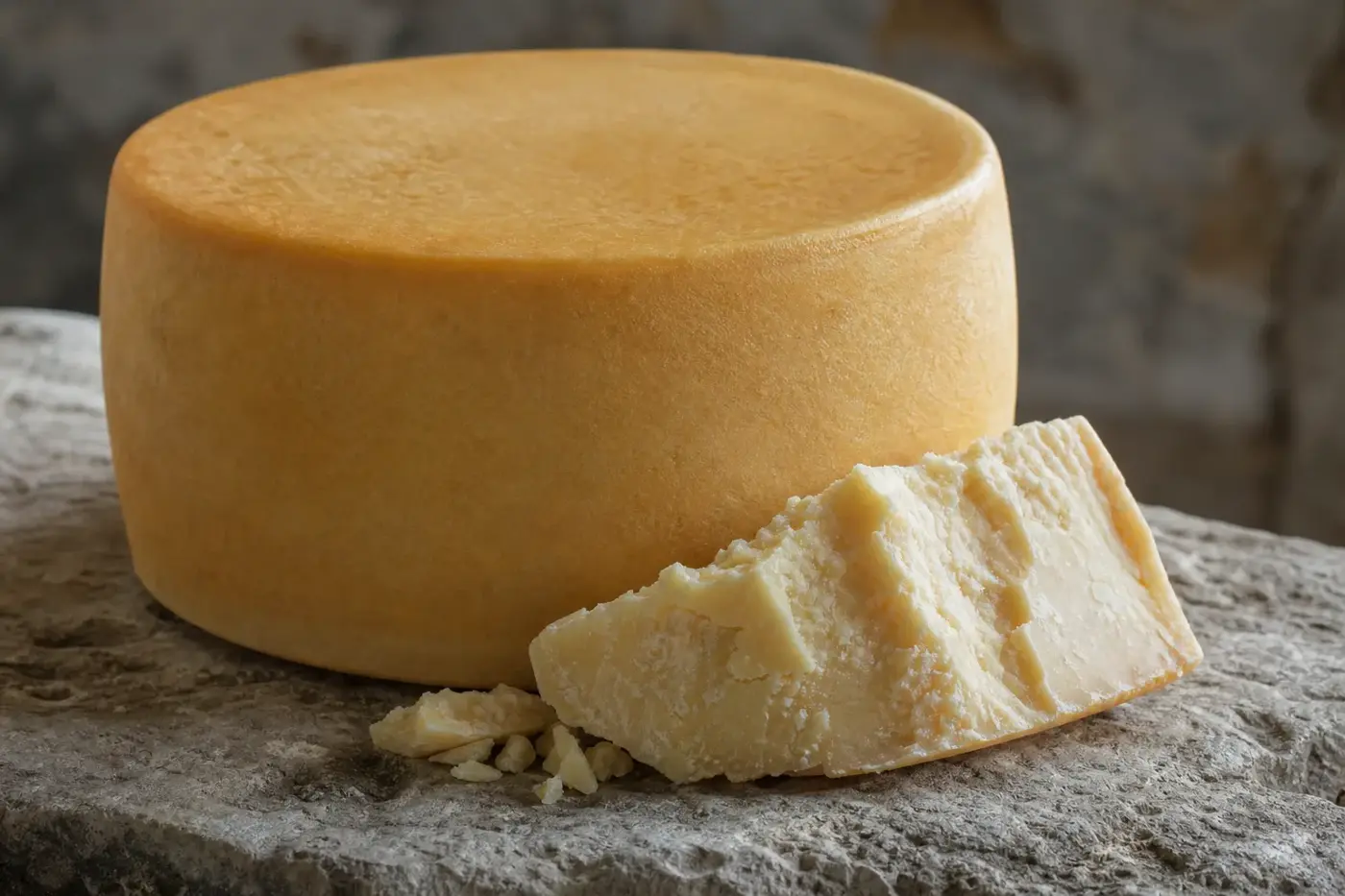
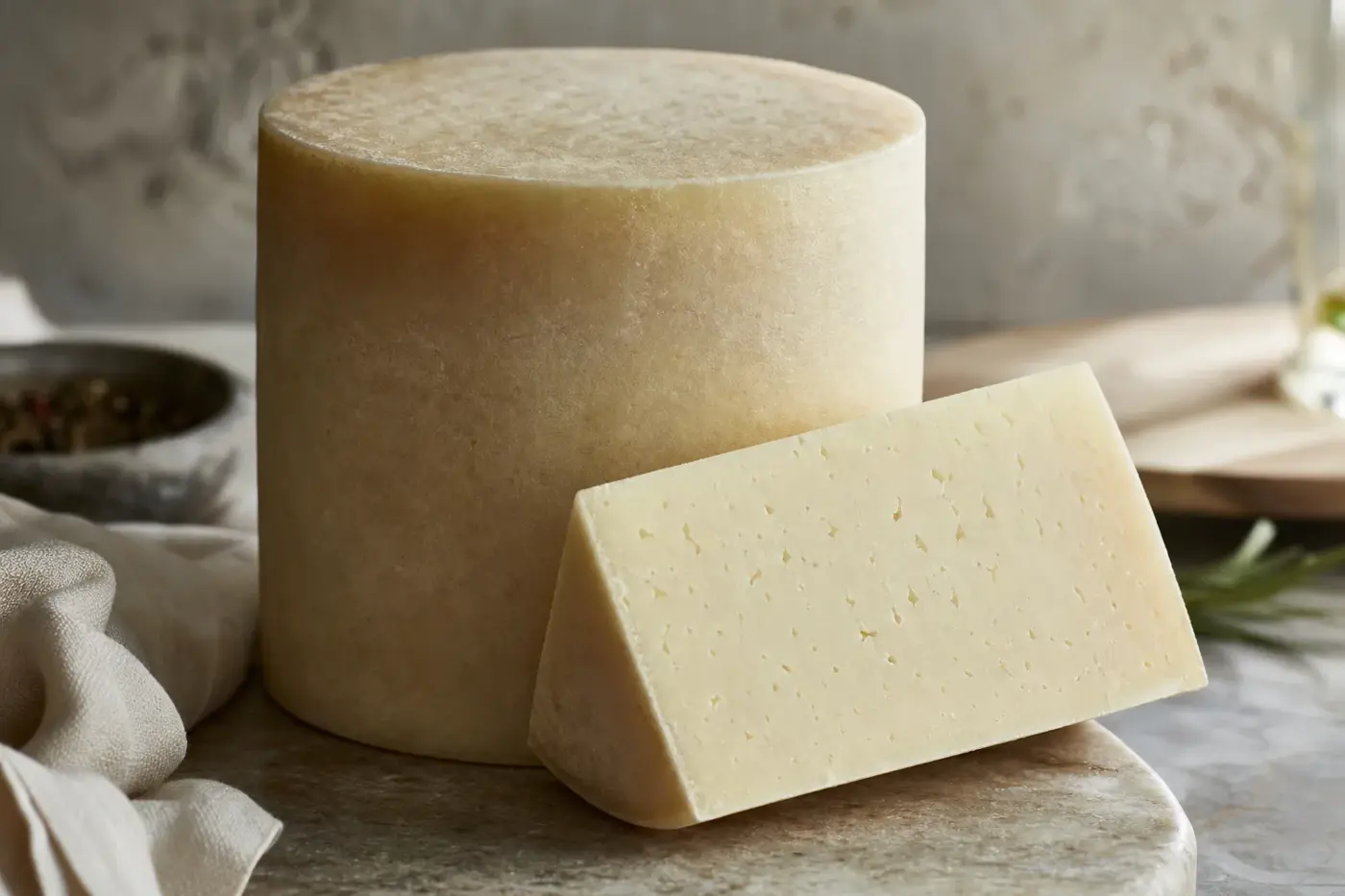
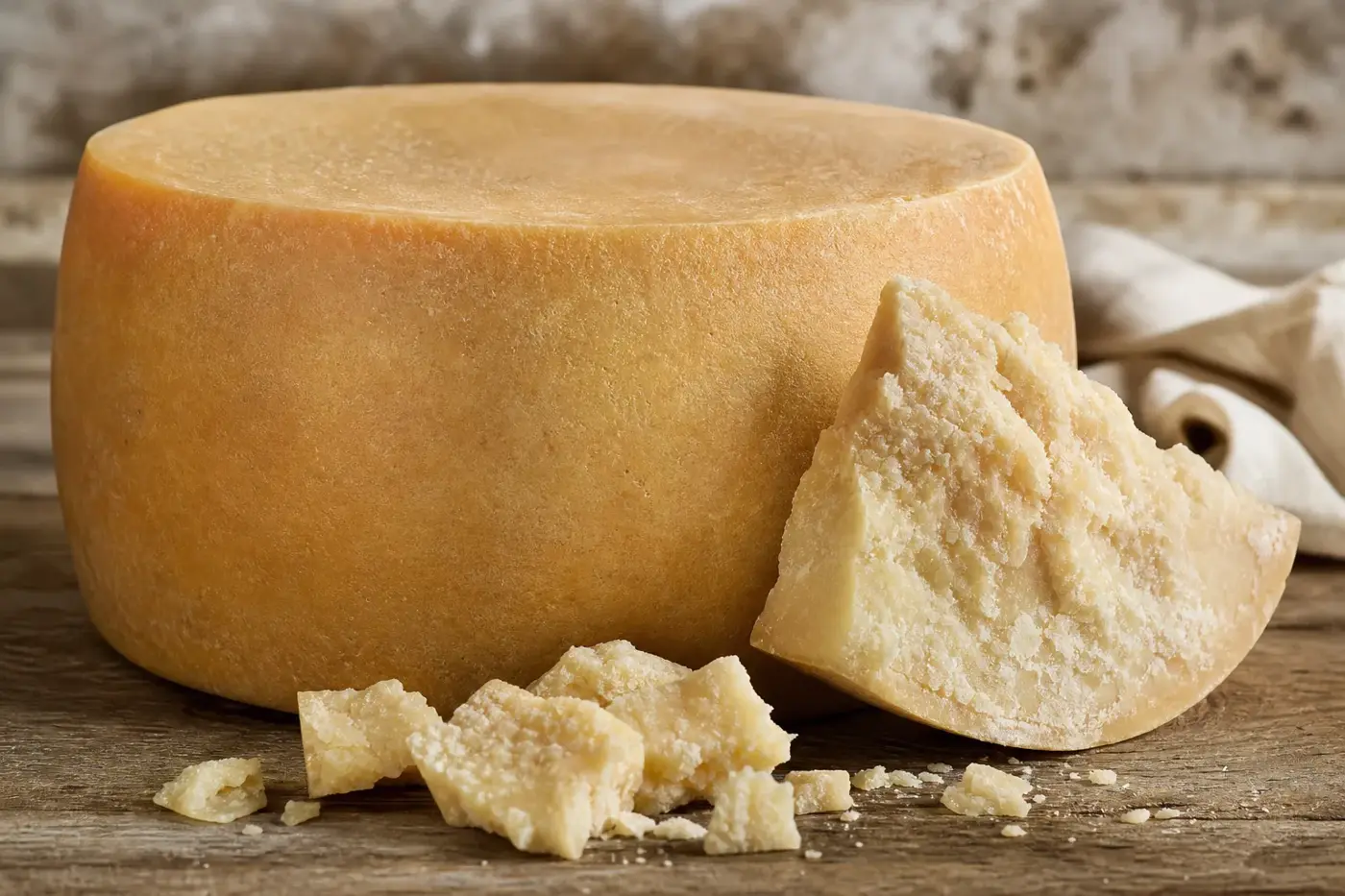
The whole wheel is a broad, relatively low cylinder, with flat or slightly convex faces. Its specified diameter is 34 to 42 cm, and its height is 8 to 12 cm.[1] Official sources give differing wheel weights, leaving the permitted weight uncertain.[1][2]
Inside, the paste runs from white to pale yellow, scattered with small to medium holes. ONAF describes a yielding texture that becomes slightly adhesive in your mouth. Think supple rather than dry and granular, with continuous paste between the openings: a cheese to slice, not simply crumble over food.[3][5]
Ask to see the cut face at the counter. Take in the rind, the paste’s colour and the distribution of holes together. That view gives you something useful to compare when wedges of different ages catch your eye.
Follow your nose, then trust your palate
Ripe fruit, pasture grass and touches of toasted hazelnut appear in ONAF’s description of the penetrating aroma. The flavour follows its own course: persistence, pleasant saltiness, a barely perceptible bitter aftertaste and a sharper sensation in more mature cheese.[5]
The affineur Guffanti also describes a strong, lasting aroma and slight sharpness after prolonged maturation in the cheese it sells. These professional descriptions offer useful tasting prompts. Your own wedge still deserves your own attention.
Take the first bite before adding anything sweet. Notice the initial aroma, then the texture as the paste softens in your mouth, followed by salt, sharpness and the finish. Keeping that bite plain helps you separate the sensations before choosing an accompaniment.[9]
Ask about age, too. The legal minimum maturation is 90 days; after 150 days, the cheese may carry the term stagionato. Find out its actual age as well as the label term, then choose the intensity you want on your plate.[3]
Look higher for the mountain-pasture version
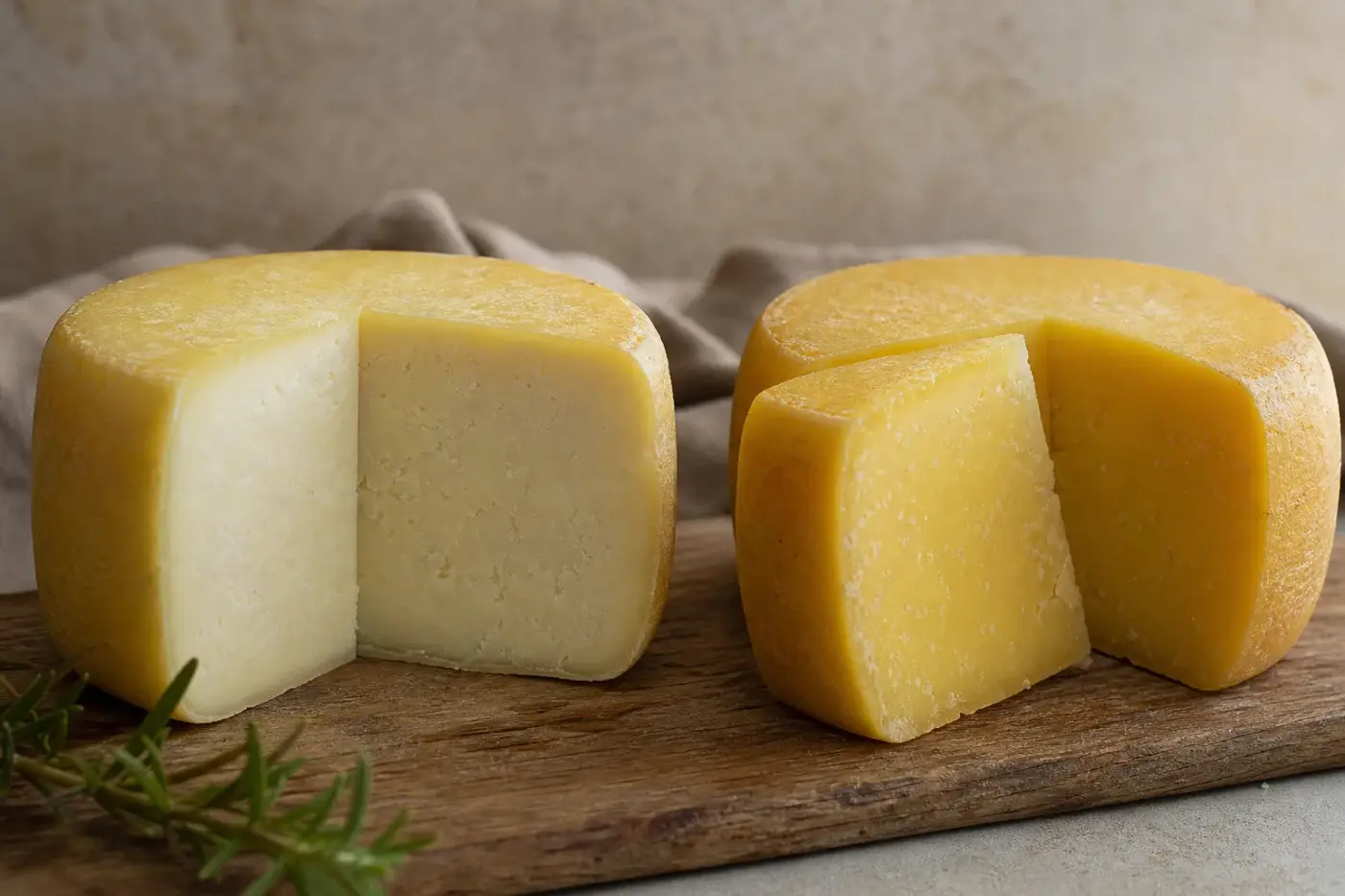
Di malga identifies cheese made exclusively with milk from cattle on mountain pasture. Under the current labelling rules, an uppercase M on the wheel gives you an additional identifier for this version.[1]
The cut face offers another clue. The documented mountain-pasture cheese has a more strongly yellow paste and medium to large holes, rather than the paler interior and smaller openings described for the general cheese. Put them side by side and you have concrete differences to explore before your first bite.[3]
Ask about pasture origin and maturation separately. One tells you about the milk’s seasonal setting; the other tells you how long the cheese has developed. Start with cheeses of similar age to explore pasture origin, then turn your attention to maturation.
Ask a few good questions before taking it home
Start with three questions: who made it, how was the milk treated and how long has it matured? Then consider whether you will serve it as it is or cook with it. Ask whether it is di malga, and whether your portion has particular rind or storage instructions.
Let the producer’s directions guide you on the rind. For a first tasting, begin with the paste, then try the rind separately if the producer identifies it as edible. When cooking, trimming the rind is a straightforward way to keep the dish focused on the interior.
For storage at home, the UK NHS advises keeping chilled ready-to-eat food at 5 °C or below. Follow the label and use opened food within two days unless the packaging says otherwise. Observe use-by dates, and keep raw foods separate from ready-to-eat foods.[8]
Cut only what you expect to eat, rather than putting out the whole wedge. The NHS advises eating ready-to-eat foods within four hours of removal from refrigeration: a UK handling limit, not an invitation to warm cheese for that long.[8] You will find the wider practical guide in storing cheese at home.
Make room for it at your table
Polenta, potatoes and onions are among the established kitchen companions recorded by ONAF. The association also describes uses with gnocchi, rice and filled pasta. For the table, its simpler accompaniments include bread, fruit, honey and peach preserve.[6]
For an uncomplicated plate, start with bread and one fruit accompaniment. Water or an alcohol-free apple drink can sit alongside. Serve honey or preserve separately, so you can choose how much sweetness joins the cheese.
In the kitchen, treat these combinations as starting points rather than complete recipes. Keep the cheese’s contribution clear:
- Polenta: melt the cheese into the polenta, with onions served as a separate savoury element.
- Risotto: melt it into the rice, then taste before adding more seasoning.
- Potato dishes: melt it over potatoes and onions in a bake, rather than adding several competing cheeses.
- Gnocchi: take the recorded pairing as your starting point for a cheese-led dressing.[6]
Let this one aromatic cheese carry the dish. A short ingredient list makes its contribution easier to judge. Next time, you can decide whether you want a milder result, greater sharpness or a more generous helping, that familiar conclusion to many a cheese tasting.
This page summarises published guidance from the official sources it cites. It is not medical advice. Guidance differs between countries and changes over time, so check the current source for where you live, and ask your doctor, midwife, pharmacist or dietitian about your own circumstances.
Choose safely with UK raw milk guidance
The UK NHS lists hard cheeses made from pasteurised or unpasteurised milk, and semi hard cheeses made from pasteurised milk, among cheeses that can be eaten during pregnancy. It also advises that cheese cooked until steaming hot can be eaten. Consult the current NHS guidance for the product, and ask your midwife about your circumstances.[7]
Older people, newborn babies and people with weakened immunity are among the groups the NHS identifies as being at greater risk of serious listeriosis. Its guidance includes unpasteurised dairy products among foods that can carry listeria.[8] If you belong to a vulnerable group, consult those dated official sources and your healthcare professional before choosing a raw-milk cheese.
For the wider handling context, turn to Listeria and cheese safety.
Questions people ask
What does Puzzone di Moena taste like?
ONAF describes a persistent, pleasantly salty flavour with a barely perceptible bitter aftertaste. More mature cheese has a sharper sensation.
Is Puzzone di Moena made with raw milk?
The specification gives conflicting instructions: Article 2 describes raw cow’s milk, while Article 5 refers to raw or thermised milk. The operative requirement is not verified, so ask the seller about the milk treatment of a particular wedge.
Can I eat Puzzone di Moena during pregnancy?
The NHS lists semi hard cheeses made from pasteurised milk among cheeses that can be eaten during pregnancy, and advises that cheese cooked until steaming hot can be eaten. Check the current NHS page Foods to avoid in pregnancy for the product and ask your midwife about your circumstances.
How long is Puzzone di Moena matured?
The minimum maturation is 90 days. After 150 days, the cheese may carry the term stagionato.
What does di malga mean on Puzzone di Moena?
It identifies cheese made exclusively with milk from cattle on mountain pasture. An uppercase M on the wheel provides an additional identifier for this version.
Sources
[1] Ministero dell’agricoltura, della sovranità alimentare e delle foreste, Disciplinare di produzione «Puzzone di Moena»/«Spretz Tzaorì», August 2026 version, Articles 1 to 8. Official specification.
[2] European Commission, Publication of the communication of an approved standard amendment to a product specification of a geographical indication, C/2026/3003, published 4 June 2026, amendment record PDO-IT-0950-AM01 and accompanying single document. Official publication.
[3] Italian agriculture ministry, Disciplinare di produzione “Puzzone di Moena” / “Spretz Tzaorì”, earlier official version, undated file, Articles 2 and 5. Used only for provisions also present in the retrieved August 2026 specification. Earlier official specification.
[4] Italian agriculture ministry, decree approving the standard amendment to the Puzzone di Moena/Spretz Tzaorì PDO specification, Gazzetta Ufficiale, published 15 July 2026, reference 26A03501. Official decree.
[5] Organizzazione Nazionale Assaggiatori di Formaggio, Puzzone di Moena / Spretz Tzaorì DOP, undated cheese profile, retrieved November 2026. Expert association account of the name, appearance and sensory characteristics. ONAF profile.
[6] Organizzazione Nazionale Assaggiatori di Formaggio, Puzzone di Moena / Spretz Tzaorì, undated technical and tasting sheet, retrieved November 2026, “Utilizzo” sections. ONAF tasting sheet.
[7] NHS, Foods to avoid in pregnancy, current online version retrieved November 2026, “Cheese, milk and other dairy”. Official pregnancy guidance.
[8] NHS, Listeriosis, reviewed 10 November 2023, current online version retrieved November 2026, “Risks of listeriosis” and “How to avoid listeriosis”. Official listeriosis guidance.
[9] Guffanti, Puzzone di Moena DOP, undated product account, retrieved November 2026. Commercial affineur source used only for its attributed sensory description. Guffanti account.
Researched through official production documents, EU amendment publications, published professional tasting accounts and current NHS guidance, without a site tasting or recipe trial.
Last checked: November 2026
Last checked November 2026.
The editors suggest you read next
Parmigiano Reggiano
Break into a wheel of Parmigiano Reggiano and flakes fall away, revealing a finely granular cheese, pale straw to straw in colour.