Queso Chihuahua
Fresh milk, cooked milk, melted butter: imagine those aromas rising from a slice on your plate.
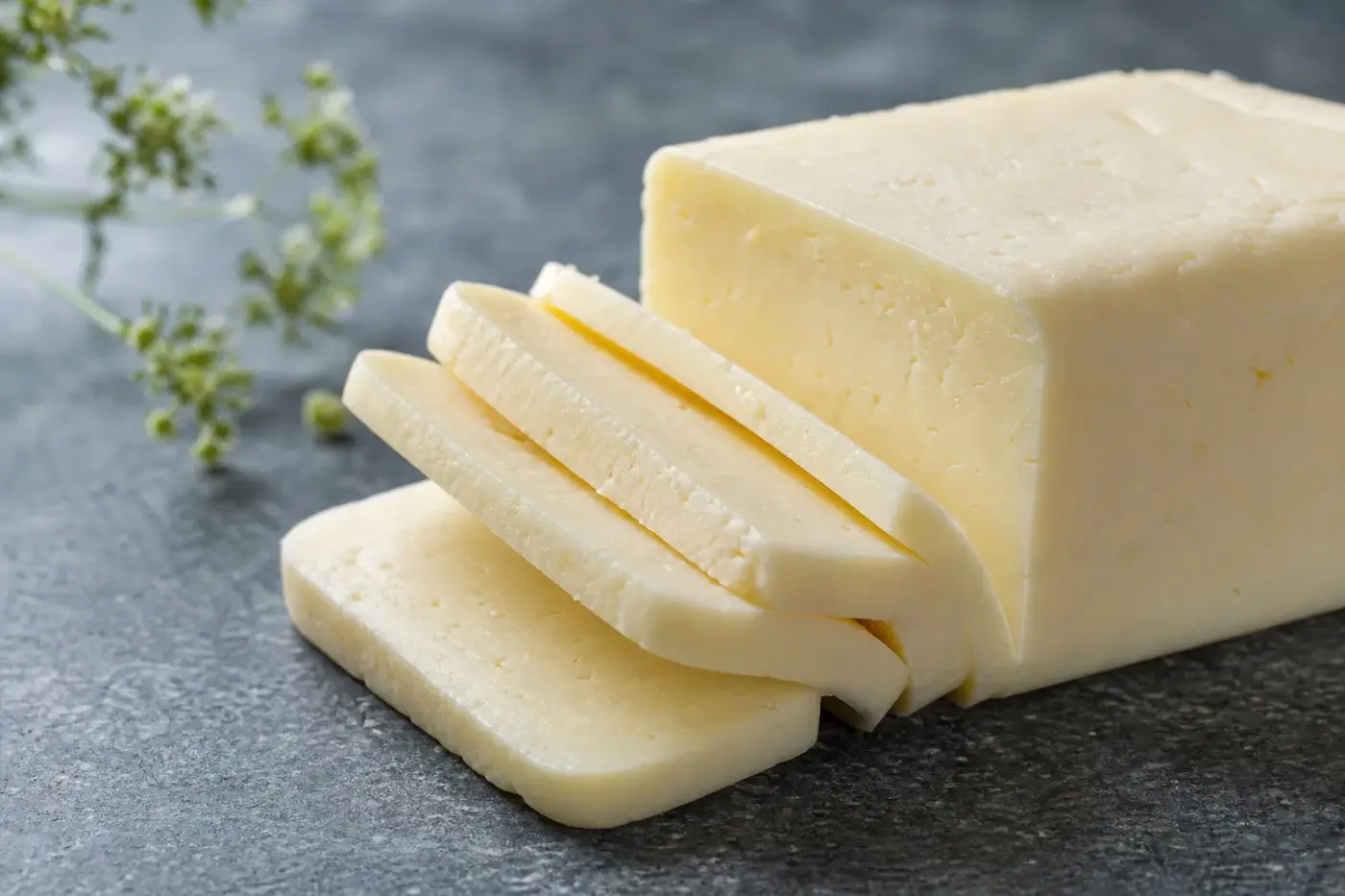
Fresh milk, cooked milk, melted butter: imagine those aromas rising from a slice on your plate. Ten trained judges found all three in ten Chihuahua cheeses in a 2018 Mexican study.[2]
Slide a knife through this supple cow’s milk cheese, then watch it melt readily. Its other name, queso menonita, takes you towards the Mennonite communities that helped shape its story in Chihuahua, Mexico.[1][3]
| What you might want to know | The detail |
|---|---|
| Name | Queso Chihuahua; queso menonita.[1] |
| Where its story belongs | Chihuahua state, Mexico.[1] |
| Milk | Cow’s milk; raw and pasteurised versions studied.[3] |
| Style and shape | Young, semi-hard and sliceable; blocks documented.[3] |
| Rind | No description supplied. |
| Usual age | Often sold and eaten within 3 to 6 weeks of manufacture in published research.[3] |
| Mexican standard record | NMX-F-738-COFOCALEC-2011, declared in 2011.[4] |
| Current protection and register ID | No details supplied. |
| Legal minimum ageing | No minimum specified here. |
| Allergen | Milk.[2] |
Follow the Mennonite name to the makers
Queso menonita and queso Chihuahua name the same cheese, according to the government of Chihuahua, Mexico. One name points you towards Mennonite communities; the other towards the state. Together, they offer two entrances to the same story.[1]
Mennonite dairies are not its only makers, though. A study of traditional raw milk Chihuahua cheese sampled five dairies: two run by Mennonite farmers and three by non-Mennonite farmers. To find the people behind your block, look for the dairy’s name and place of manufacture.[5]
That distinction matters especially when you buy abroad. A producer’s location, the place where the cheese was made and its stylistic name tell you different things. Read them together, rather than assuming every Chihuahua cheese comes from one community.[5][9]
Take a slice and follow the butter
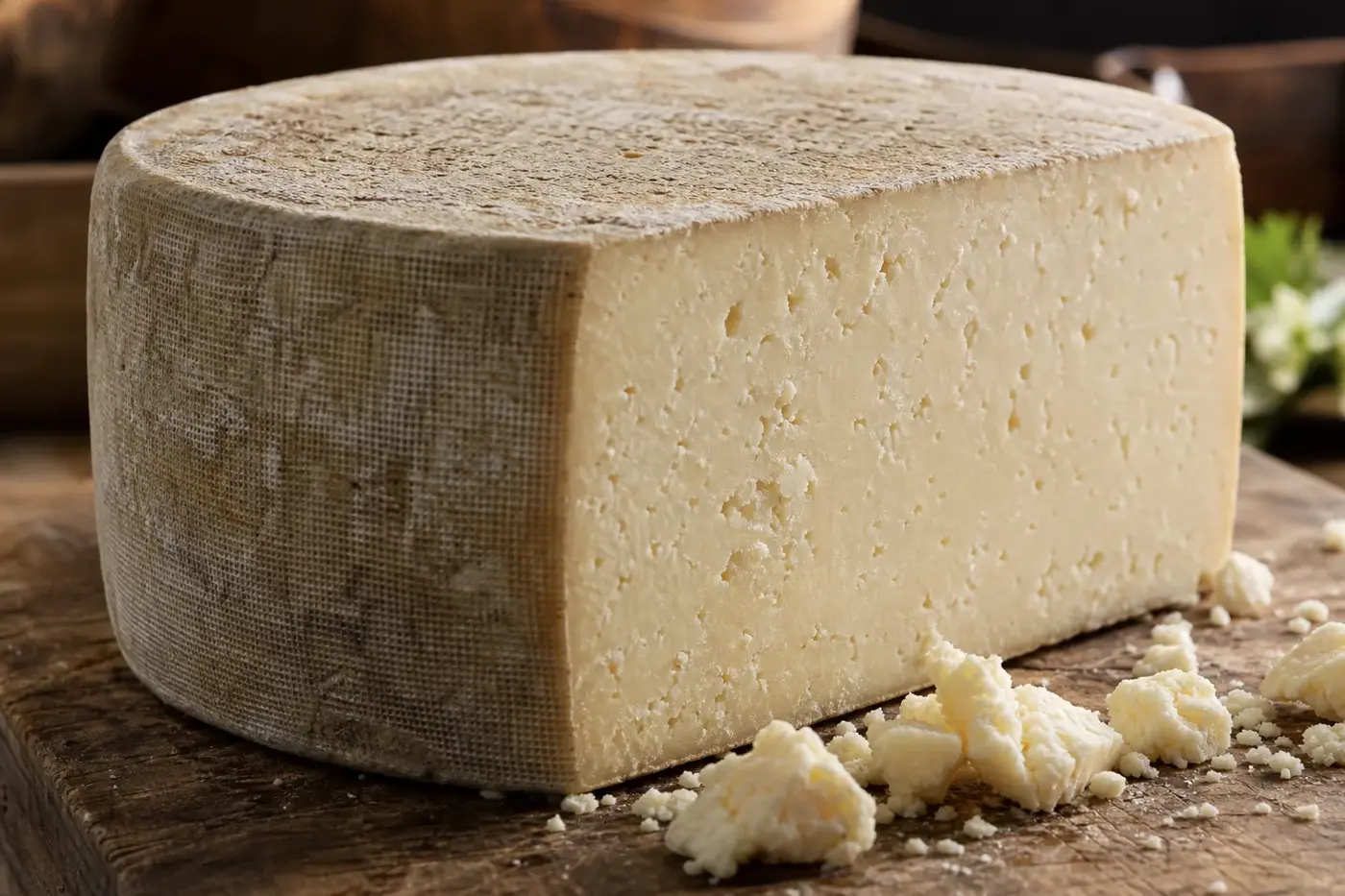
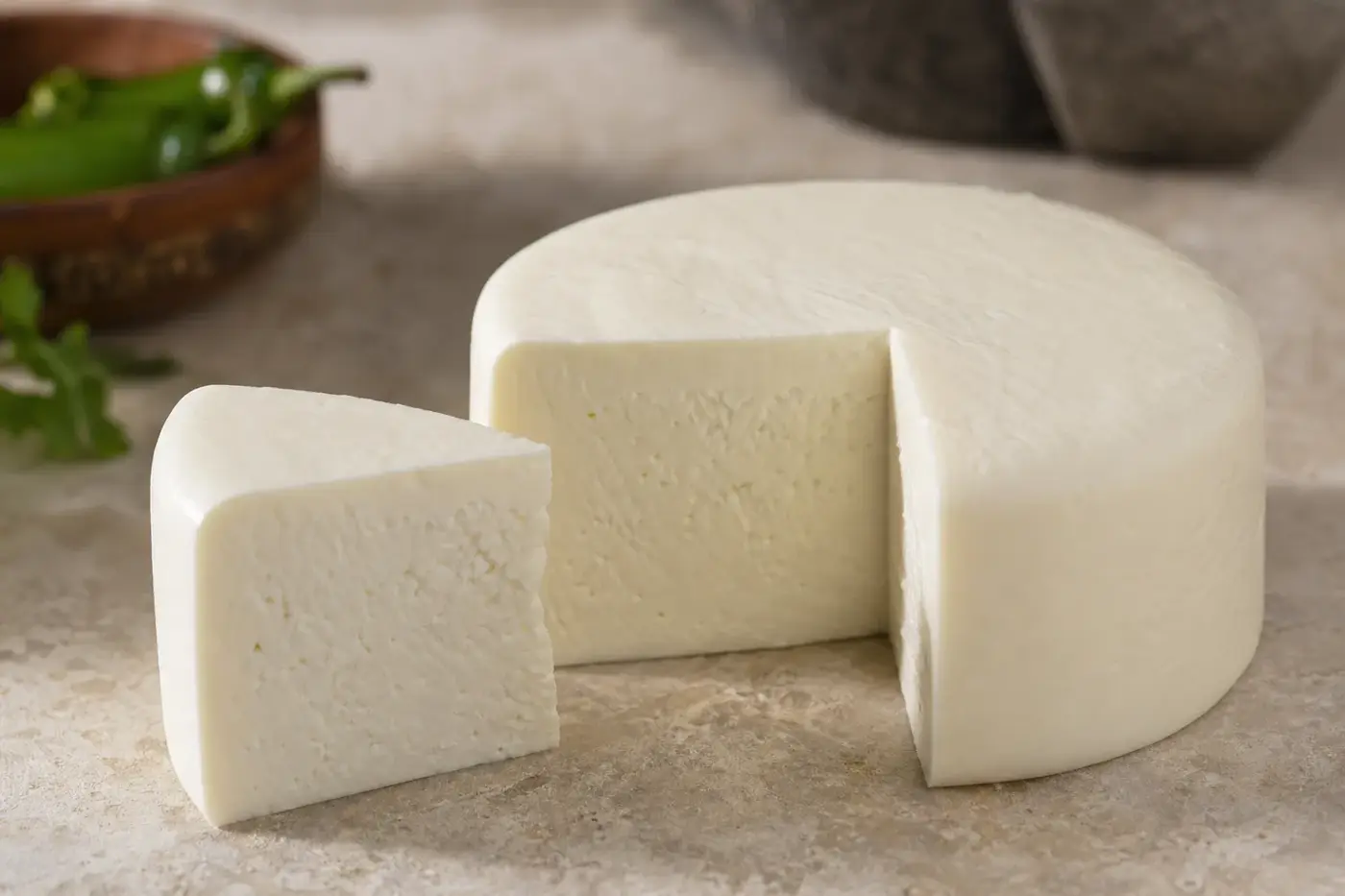
Reach for a knife, rather than trying to crumble it. Mexico’s 1985 Chihuahua-type standard described a white or slightly yellow cheese with a semi-hard, sliceable consistency. That gives you a useful historical picture; the later standard record comes below.[6]
The ten trained judges in the 2018 Mexican study found relatively restrained flavour intensity, alongside fresh milk, cooked milk and melted butter aromas. Think “mild and buttery” in that specific sense. You are looking at dairy aromas and a yielding paste, not a cheese that elbows everything else off the plate.[2]
Still, one maker’s block does not speak for everybody’s. A separate study of fourteen brands found salty, sour, cooked, whey and milk-fat notes. Its raw milk samples had greater sourness and bitterness: a result for those particular cheeses, not a prediction you can make from milk treatment alone.[7]
From the milk vat to your chopping board
Pressing helps give Chihuahua its character. First, rennet, the enzyme preparation that sets milk, creates a gel. Cutting separates curd, the milk solids, from whey, the liquid; draining, acid development, salting and pressing then shape the cheese.[6][8]
The four dairies in the functional study followed different routes through those stages. Both pasteurised-milk producers added commercial starter cultures, bacteria selected to develop acidity and flavour. The two raw milk producers added no commercial starters, while all four used commercial rennet and differed in curd cooking, milling and pressing.[3]
Those choices leave room for differences in moisture, acidity and microbial activity within this closely related family. They help explain why two blocks need not behave alike in your pan. Follow the stages more closely in how cheese is made and rennet explained.[3][8]
Young cheese, still finding its melt
Chihuahua generally reaches your plate young. The 2011 functional study described sale and consumption within 3 to 6 weeks of manufacture. In its controlled ageing experiment, the cheeses became easier to slice and more meltable as they aged, alongside changes in protein structure.[3]
Age is not simply a story of moisture disappearing or cheese getting harder. It works with acidity and the protein network, and can bring further protein breakdown. Research on four raw milk brands found very different amounts of breakdown during storage, linking some resulting peptides, small protein fragments, with bitterness.[8]
Your most useful kitchen guide is the cheese in front of you. Start with a supple block that slices cleanly, then heat a small trial portion in your intended dish. How it flows tells you more than an age description alone.[3][7]
Chihuahua, Asadero or Oaxaca? Start with dinner
If you are offered Asadero or Oaxaca instead, think first about what you are cooking. A quesadilla needs cheese that melts into a cohesive filling. For a topping, decide whether you want a flowing layer, pronounced strands or a browned surface.
Chihuahua’s documented benchmark is a pressed, semi-hard cheese. Ask whether the alternative is pressed or stretched, how moist it is and what happens when you heat it. Those answers make for a more useful comparison than the name alone.[2][7]
Give Chihuahua something delicious to do
When melted cheese needs to bring a filling together, Chihuahua is ready for the job. Profeco, Mexico’s consumer protection agency, describes it as suited to melting and gratinating, as well as eating on its own.[9] Here is how you can put those uses into practice.
For quesadillas, grate your chilled cheese or cut it into thin pieces. Spread it evenly rather than building a thick mound in the centre: a quesadilla is not a cheese storage facility. Use moderate heat so tortilla and filling progress together, turning it down if the outside colours before the cheese softens.
For queso fundido, cook mushrooms, peppers or other wet additions separately before combining them with the cheese for the final melting. That keeps you in charge of the filling’s moisture. Serve small batches rather than repeatedly heating the whole dish.
Try Chihuahua over beans, inside a toasted sandwich or across roasted vegetables. Add it towards the end if melting is all you need. Give it a brief final browning when a coloured surface suits the dish, and start with less added salt, adjusting after you taste.
Find good company for that gentle flavour
Give mild Chihuahua some contrast without losing its dairy character. Roasted green peppers, cooked mushrooms, beans and corn tortillas provide a savoury setting; tomato salsa or a squeeze of lime brings a sharper accent. Put the acidic accompaniment on the table so everyone can adjust their own.[2]
In your glass, try sparkling water with lime, unsweetened iced tea or an alcohol-free lager. Choose for the whole dish, especially its chilli, acidity and salt. A gently flavoured drink leaves you room to taste the cheese.
Look beyond the name on the block
Read the milk treatment, maker, origin, ingredients and storage instructions together. Ask whether the cheese is meant for slicing, melting or both, and whether the shop can describe its age. If you need vegetarian suitability, ask the producer about the declared rennet source: “Chihuahua” cannot answer that for an individual product.[3]
There is a standard behind the name, too. Mexican authorities published a declaration for NMX-F-738-COFOCALEC-2011 covering the denomination, specifications and test methods for Chihuahua cheese marketed in Mexico.[4] That standard record is distinct from a geographical protection claim; protected names explained takes you through the difference.
Need a substitute? Start with a young, supple Cheddar, or ask your seller for a melting cheese suited to the dish. Test a little before committing the whole filling, looking for the texture and strength you need, then adjust the salt and accompanying ingredients.[7][8]
Look at the cut face as well as the outside, and ask whether any covering needs removing before cooking. Keep the original packaging until you have finished the cheese, so its handling instructions stay handy. A clean slice and the melting behaviour you need tell you more than the block’s shape.
Make room in the fridge and keep the packet
For home storage in November 2026, follow the Food Standards Agency’s guidance for England, Wales and Northern Ireland: keep your fridge between 0 and 5 °C (32 to 41 °F), and follow the packet’s storage instructions. Cover the cheese, use clean utensils and return it promptly after preparation.[10]
Follow the packet’s opening instructions as well as its storage advice. Consult the current NHS guidance on avoiding listeriosis, too.[11]
Never taste cheese to assess a possible safety concern. Consult current official guidance for the product, and follow any recall notice for the exact product and batch.
This page summarises published guidance from the official sources it cites. It is not medical advice. Guidance differs between countries and changes over time, so check the current source for where you live, and ask your doctor, midwife, pharmacist or dietitian about your own circumstances.
Choose with care: raw milk and higher risk
If you are pregnant in the UK, consult the NHS guidance on cheese, milk and other dairy. Read its advice on unpasteurised milk, including its exceptions for hard cheeses.[12]
Look at the milk treatment on your individual packet, then read the current NHS page for its full categories and exceptions. The NHS also identifies weakened immunity as a factor in more serious listeriosis.[11] If you are choosing cheese for someone at higher risk, consult the relevant official guidance and their healthcare professional.
Research on traditional raw milk production helps explain Chihuahua’s flavour and history. For the practical differences between treatments, continue with raw, thermised and pasteurised cheese. Then follow the official advice for the country where you live.[5]
Questions people ask
Is queso Chihuahua the same as queso menonita?
Yes. According to the government of Chihuahua, Mexico, the two names refer to the same cheese and reflect its association with the state and Mennonite communities.
Does queso Chihuahua melt well?
Chihuahua melts readily. Profeco, Mexico’s consumer protection agency, describes it as suited to melting and gratinating, as well as eating on its own.
What can I use instead of queso Chihuahua?
The page suggests starting with a young, supple Cheddar or asking a seller for a melting cheese suited to the dish. Test a small amount before using it for the whole filling.
How should I store queso Chihuahua?
The Food Standards Agency advises keeping the fridge between 0 and 5 °C and following the packet’s storage instructions. Its guidance applies to England, Wales and Northern Ireland.
Can I eat queso Chihuahua during pregnancy?
Check the milk treatment on the individual packet. For pregnancy in the UK, consult the current NHS guidance on cheese, milk and other dairy, including its advice on unpasteurised milk and exceptions for hard cheeses.
Sources
-
Government of the State of Chihuahua. Su gente, section “Los Menonitas”. Undated official account, retrieved November 2026. Records settlement in March 1922 and explicitly connects the names queso menonita and queso Chihuahua. Official account.
-
Universidad Autónoma de Ciudad Juárez, published in Agrociencia. Sensorial and physicochemical profile of Chihuahua cheese considering consumer preferences. Volume 52, pages 361 to 378, 2018. Research paper.
-
USDA Agricultural Research Service and Centro de Investigación en Alimentación y Desarrollo, published in Journal of Dairy Science. Mexican Queso Chihuahua: Functional properties of aging cheese. Volume 94, pages 4292 to 4299, 2011. DOI: 10.3168/jds.2010-3884. Research paper.
-
Secretaría de Economía, Diario Oficial de la Federación. Declaratoria de vigencia de las normas mexicanas NMX-F-707-COFOCALEC-2011, NMX-F-735-COFOCALEC-2011 y NMX-F-738-COFOCALEC-2011. Declaration signed 7 June 2011. Official declaration.
-
Universidad Autónoma de Chihuahua, published in Foods. Microbiological Changes during Ripening of Chihuahua Cheese Manufactured with Raw Milk and Its Seasonal Variations. Volume 7, article 153, 2018. Research record and paper.
-
Secretaría de Comercio y Fomento Industrial, Dirección General de Normas. NMX-F-209-1985, Alimentos, Lácteos, Queso tipo Chihuahua. Historical 1985 text, copy hosted by Universidad Autónoma de Chihuahua. Historical standard.
-
Journal of Dairy Science. Mexican chihuahua cheese: sensory profiles of young cheese. 2006. DOI: 10.3168/jds.S0022-0302(06)72414-6. Research abstract.
-
USDA Agricultural Research Service, published in Journal of Food Science and Technology. Sensory and protein profiles of Mexican Chihuahua cheese. Published online in 2012; volume 51, pages 3432 to 3438, November 2014 issue. Research paper.
-
Procuraduría Federal del Consumidor, Revista del Consumidor. Study of Chihuahua and Mexican manchego-type cheeses, December 2014. Used for documented culinary uses, not present protection status or the historical settlement date. Consumer study.
-
Food Standards Agency. How to chill, freeze and defrost food safely. Published 18 December 2017, live official edition retrieved November 2026; applies to England, Wales and Northern Ireland. Official storage guidance.
-
NHS. Listeriosis. Live official guidance retrieved November 2026. Official guidance.
-
NHS. Foods to avoid in pregnancy. Live official guidance retrieved November 2026, especially “Cheese, milk and other dairy”. Official pregnancy guidance.
This desk-researched article brings together Mexican official records, published sensory and production research, and attributed UK consumer safety guidance.
Last checked: November 2026
Last checked November 2026.
The editors suggest you read next