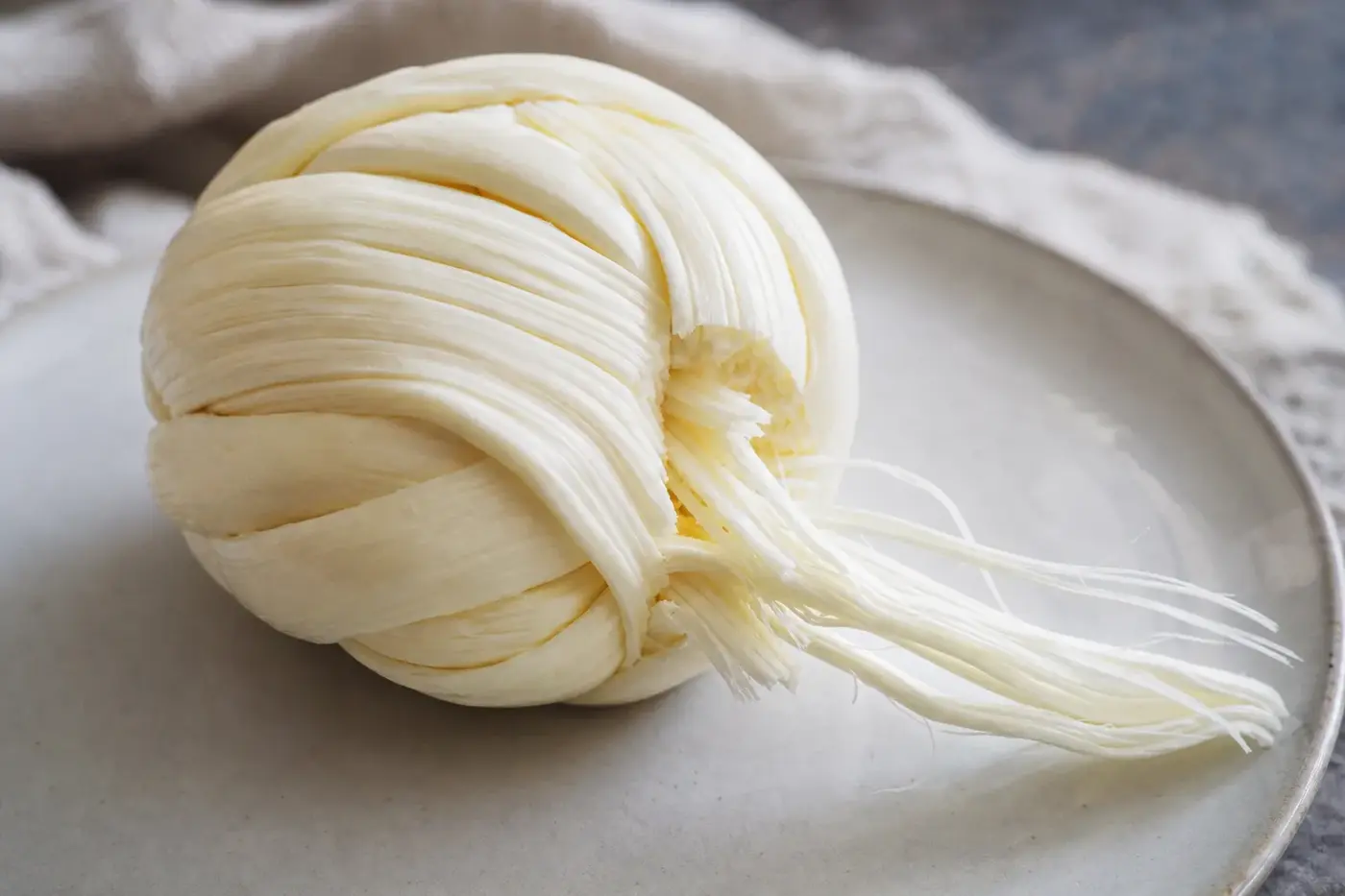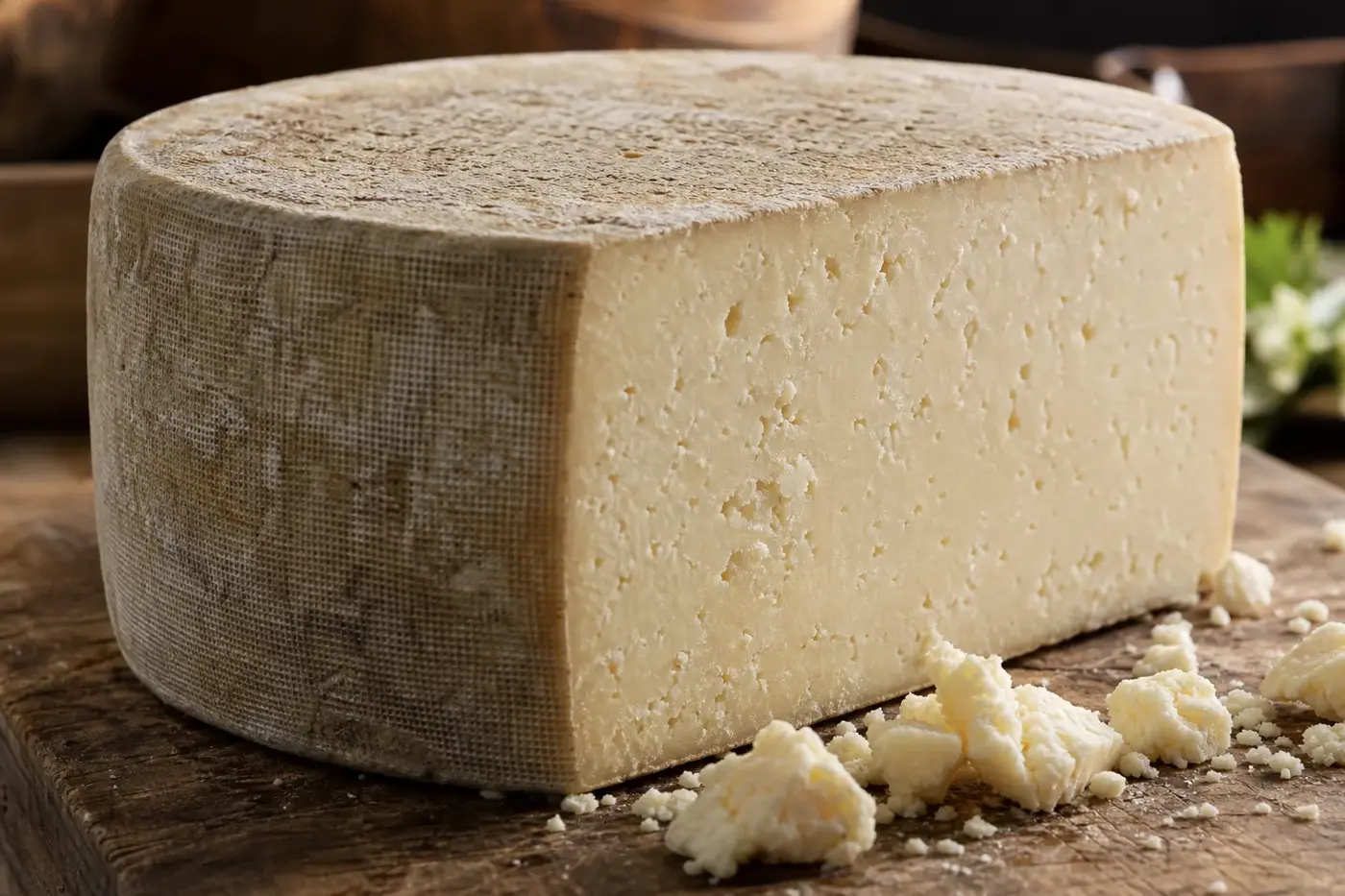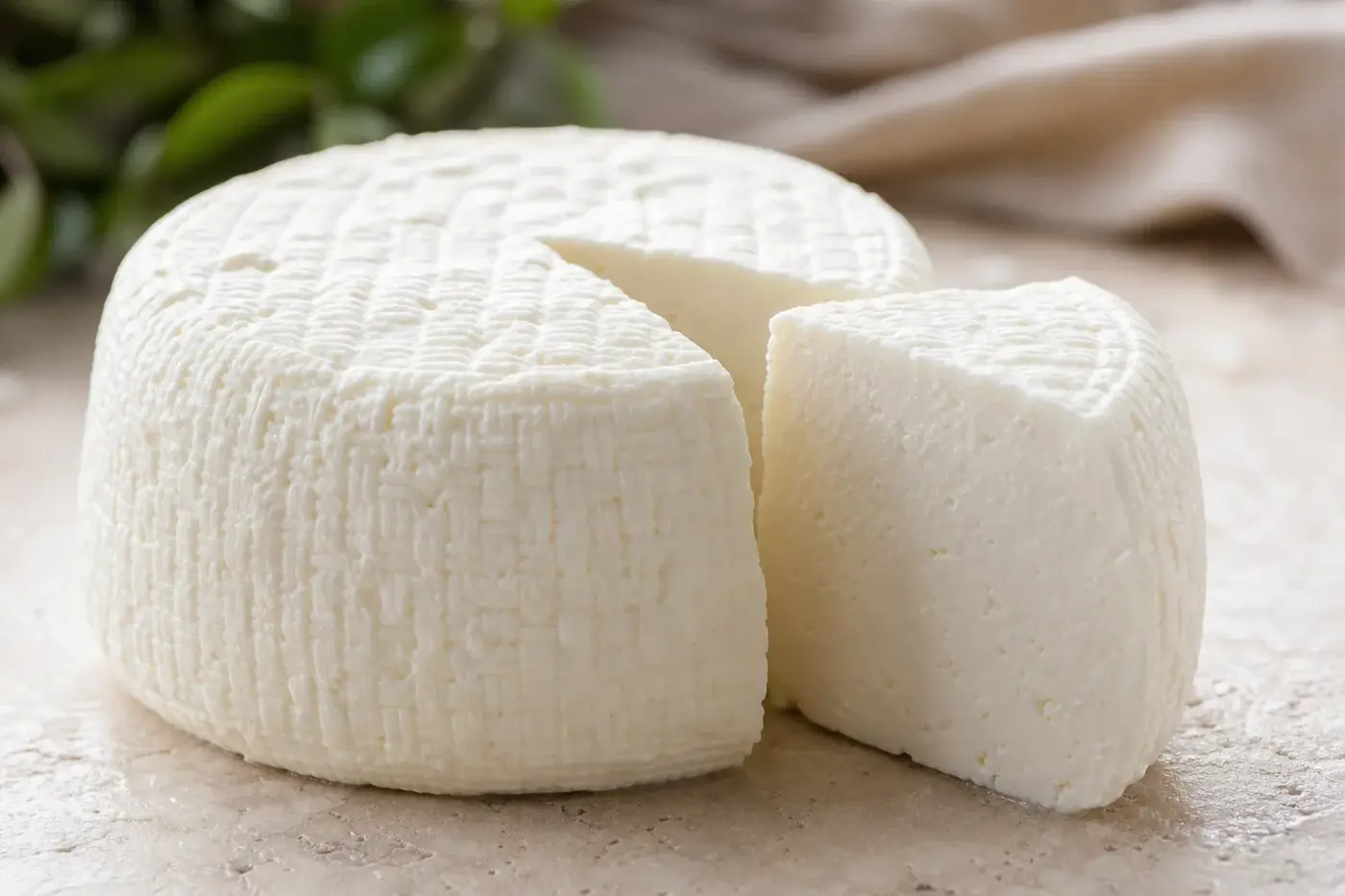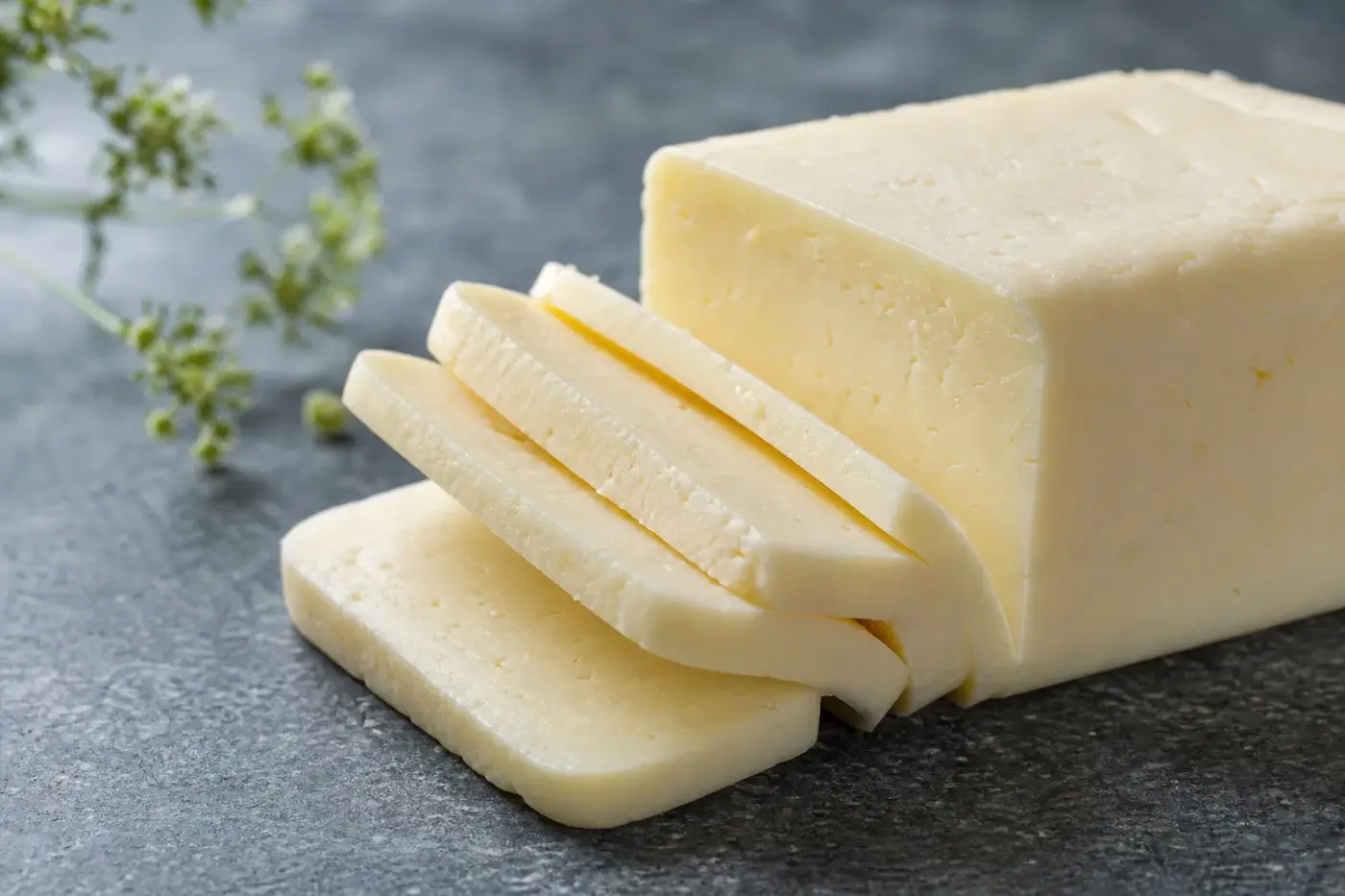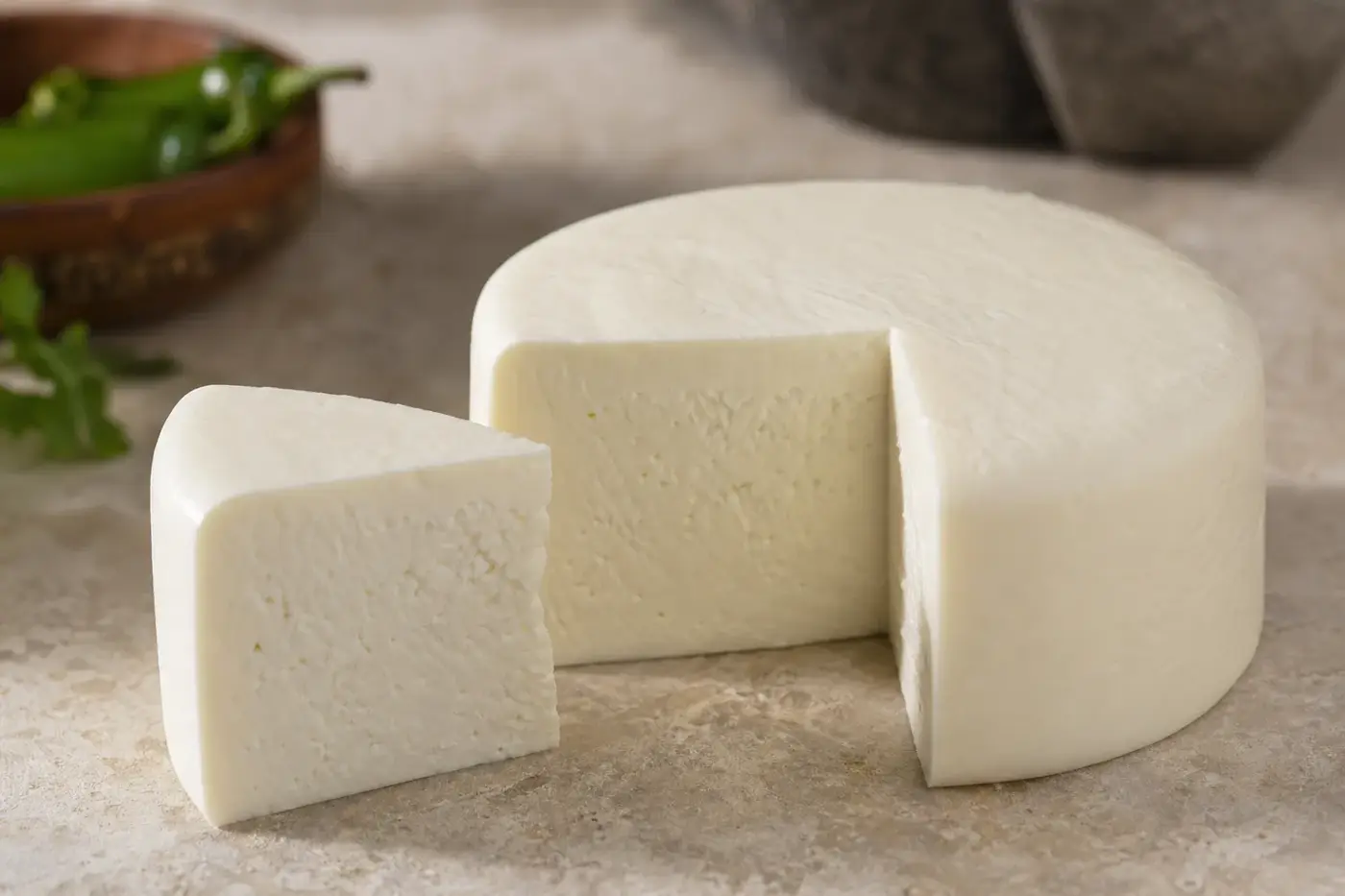
Slip asadero into a tortilla and let the heat get to work. The cheese softens, then melts readily into the filling. In Chihuahua, its story can begin with something less expected: trompillo berries, Solanum elaeagnifolium, used to help turn milk into curd. Researchers documented this local plant coagulant in a 2013 study of the fresh, white cheese.[1,3,4]
Heat and kneading give asadero its shape and character. Closely associated with northern Mexico, especially Chihuahua, it varies in texture, acidity and melting behaviour according to how it is made. You get a cheese with a familiar purpose, but each maker's version has its own way of getting there.[1,3,4]
| A quick introduction | What to know |
|---|---|
| Name | Queso asadero.[1] |
| Regional roots | Northern Mexico, especially Chihuahua.[1,2] |
| Milk used in published research | Cow's milk; raw and pasteurised examples.[1,4] |
| How it is made | Enzyme-set, hot-worked curd.[1,4] |
| Ageing | Fresh, unripened.[1] |
| Pregnancy guidance | UK NHS advice, November 2026.[9] |
Watch your slice turn into a flowing melt
Cool, asadero lets you cut a slice. Heated, it becomes a cohesive, flowing mass. It belongs to the pasta filata family, whose curds are worked hot until pliable and elastic. Think stretched-curd companions such as mozzarella, rather than cheeses you crumble over a finished dish.[1,3]
A 2013 study from a university in Ciudad Juárez describes Chihuahua asadero as fresh and white, with a pleasant tang. Here, “fresh” means unripened, not that you must eat it on the day it is made. That journey from sliceable cheese to flowing melt is the attraction; you can explore the wider process in how cheese is made.[1,3]
Head north to Chihuahua
Chihuahua is asadero's strongest documented regional connection. The Ciudad Juárez study records production and consumption across the state, including the use of that local plant coagulant. The tradition crosses state borders, too: another original study, published in 2008, obtained asadero from a cheese factory in Rayón, Sonora.[1,2]
Those regional roots introduce you to the cheese, but they cannot tell you where your particular piece began. For that, read the product information or ask the seller. An importer or distributor's address tells you who handled it, not necessarily where it was made.
Meet the berries, milk and hot curd
Acid and coagulant do different jobs here. Acid changes conditions within the milk; a coagulant brings milk proteins together into curd, the solid portion separated from liquid whey. The 2026 production study explicitly uses cow's milk. Documented coagulants include commercial rennet and Chihuahua's distinctive plant alternative.[1,3,4]
Trompillo berries contain protein-cutting enzymes that can coagulate milk. In their 2013 experiment, researchers compared an extract of Solanum elaeagnifolium with commercial rennet, using pasteurised milk. That local practice does not mean every asadero uses plant rennet. If vegetarian suitability matters to you, ask the maker about the coagulant.[1]
Once the milk has coagulated, the curd is cut and some whey drains away. Heating and kneading turn it into a continuous mass, ready for shaping and cooling. Published methods reach the required acidity through bacterial fermentation, direct acidification or combinations involving sodium citrate. Citrate changes calcium availability within the protein structure, and its use depends on the method.[3,4]
The manufacturing account summarised in the dairy-science review describes heating asadero curd in a small quantity of whey until pliable. Working the warm curd creates its structure. Only then does it take its final shape, whether blocks, balls or discs.[5]
Discover why one stretches and another spreads
Acidity, calcium balance and heat determine whether the curd becomes pliable. Kneading the warm mass develops a connected, elastic body. You meet that structure twice: first in the cheese's supple texture, then in its stretch when heated.[4]
Stretch and flow are not the same thing. In the 2026 pilot study, researchers compared four production treatments, measuring melting by how far heated cheese samples spread. Changes to acidification and citrate use altered performance. Judge the cheese in front of you: two packets bearing the same name may have rather different ambitions in your pan.[4]
Make room for that gentle tang
Expect pale, smooth-bodied cheese, not a mature crumble. A technical account from the Institute of Food Technologists describes asadero as firm and smooth, with a slightly tangy, buttery flavour. It includes cylinders and balls among the possible shapes. Appearance alone, then, cannot reliably tell you what you have.[1,3]
Mild and milky gives you a useful starting point, with acidity adding definition. A 2005 study of commercial asadero, panela and queso fresco from two manufacturers found differences in their organic acid profiles, including lactic acid. That small comparison gives you good reason to ask about an individual product's flavour. Not every asadero will taste alike.[6,12]
Get acquainted with Oaxaca and queso Chihuahua
Oaxaca is the close stretched-curd comparison. A Journal of Dairy Science review explicitly notes that the cheeses share enough characteristics to be confused, while regional usage and retail descriptions can blur the boundary. A ball or bundle of strands tells you less than two questions: how was it made, and what happens when you heat it?[3,5]
Queso Chihuahua comes from a different, semi-hard tradition, also associated with Mennonite cheesemaking. Original sensory research on young Mennonite-style cheeses from 15 Chihuahua dairies found prominent salty and sour tastes and diacetyl flavour. Diacetyl is associated with a butter-like aroma. Those findings describe the sampled Chihuahua cheeses, not a flavour specification for asadero.[6]
Let a quesadilla make the introductions
A quesadilla gives you a straightforward introduction. The tortilla holds the cheese while the melt binds the filling; thin slices or grated cheese help distribute it evenly. Keep your first one simple to learn its salt and acidity, then try cooked mushrooms, roasted chillies or beans. Consider it research, with a conveniently edible result.
Asadero's documented melting and shredding qualities also suggest queso fundido, a dish built around melted cheese. You could try a melting layer in burritos, enchiladas and filled chillies, too. Keep the accompaniments proportionate: strong seasoning leaves the cheese contributing mostly texture. Simpler fillings give its lactic tang room to show.[3,5]
For everyday cooking, use moderate heat and watch the cheese rather than the clock. When thorough cooking is required, follow NHS advice: the whole dish must be steaming hot right through. A softened centre or the first stretch at the edges is not enough.[9]
Find the right stand-in for your supper
If your filling needs stretch, start with Oaxaca or a firm cooking mozzarella. Choose for performance, not colour alone. Mozzarella belongs to the same broad stretched-curd family, making it a practical cooking substitute. That does not make these named cheeses equivalent.[1,5]
Look at the format before you cook. Mozzarella packed in liquid needs a different approach from a firm block, especially when excess liquid could soften your tortilla; find more in mozzarella. Queso Chihuahua is another melting option, provided its different flavour profile suits your dish.[3,6]
Take three questions to the cheese counter
Ask where it was made, whether the milk was pasteurised and how the maker recommends using it. Buying a packet? Give the ingredients and storage instructions as much attention as the name on the front. You can use how to read a cheese label as your fuller checklist.
The UK Food Standards Agency's home refrigeration guidance cited here applies to England, Wales and Northern Ireland. Keep your fridge between 0 and 5 °C and follow the pack's instructions. The NHS advises using opened food within two days unless the packaging says otherwise.[7,8,10]
Never exceed a use-by date, and follow any shorter instruction on the pack. If you move the cheese into another container, keep its original date and instructions with it. You will need those details for storage and use.[7,8,10]
UK government guidance distinguishes use-by dates, which concern safety, from best-before dates, which concern quality. Follow a use-by date even if the cheese looks unchanged, and follow the official notice if a batch is recalled. For questions about surface mould, see mould on cheese.[8,11]
For loose cheese, ask to see the original storage instructions and the maker's product information. Unexpected mould, discolouration, sliminess or swollen packaging calls for checking current UK Food Standards Agency guidance before you eat it. Follow any applicable recall notice too.
Look beyond the name to the milk treatment
Published research includes both raw-milk and pasteurised-milk asaderos, so look at your particular product's details. Pasteurisation is one stage of control; the 2013 production study identifies handling afterwards as a contamination point. Heating curd during manufacture is also separate from cooking a finished dish.[1,4]
UK NHS pregnancy guidance from November 2026 lists hard cheeses, including those made with unpasteurised milk, and pasteurised semi-hard cheeses among those that can be eaten. It also lists pasteurised soft cheeses without a white coating on the outside, provided they are not blue cheeses. The name asadero alone cannot settle the question. Read the product label alongside current NHS guidance.[9]
Soft cheeses with a white coating and soft blue cheeses should be cooked until steaming hot all the way through. Check the current NHS guidance when making your choice. The product's details matter more than its familiar name.[9]
The NHS identifies pregnancy, newborn babies, weakened immunity and older age as circumstances associated with more serious listeriosis. Its guidance advises keeping chilled ready-to-eat foods cold, separating raw and ready-to-eat foods, and following storage and cooking instructions. If you or someone you are buying for is in these groups, check current official advice and discuss individual circumstances with a doctor, midwife or dietitian.[10]
For help with a particular purchase, turn to raw milk, thermised and pasteurised cheese and how to store cheese at home.
General information only, not medical advice: follow the official guidance where you live.
Questions people ask
What is queso asadero?
Asadero is a fresh, unripened cheese closely associated with northern Mexico, especially Chihuahua. It can be sliced when cool and becomes a cohesive, flowing mass when heated.
Is asadero suitable for vegetarians?
Asadero can be made using a plant coagulant from trompillo berries, but this is not a given. The page also documents commercial rennet and advises asking the maker which coagulant was used.
Is asadero the same as Oaxaca cheese?
Both are stretched curd cheeses and share enough characteristics to be confused. Oaxaca is suggested as a substitute when a filling needs stretch.
Can I eat asadero during pregnancy?
The NHS lists pasteurised semi hard cheeses and pasteurised soft cheeses without a white coating, provided they are not blue cheeses, among those that can be eaten. It advises cooking soft cheeses with a white coating and soft blue cheeses until steaming hot all the way through. Check the product label and current NHS pregnancy guidance, as the name asadero alone cannot settle the question.
How should I store asadero?
The UK Food Standards Agency advises keeping the fridge between 0 and 5 °C and following the pack's instructions; this guidance applies to England, Wales and Northern Ireland. The NHS advises using opened food within two days unless the packaging says otherwise. Never exceed the use by date or a shorter instruction on the pack.
Sources
-
Universidad Autónoma de Ciudad Juárez, Food and Nutrition Sciences. “Microbiological Quality of Asadero Cheese Manufactured with a Plant Based Coagulant from Solanum elaeagnifolium”, volume 4, 2013, pages 75 to 81. Original experimental research, including a description of Chihuahua production and a comparison of coagulants. Full paper.
-
Centro de Investigación en Alimentación y Desarrollo, Journal of Dairy Science. “Release of Butylated Hydroxytoluene from an Active Film Packaging to Asadero Cheese and Its Effect on Oxidation and Odor Stability”, volume 91, 2008. Its materials section identifies the study cheese as manufactured in Rayón, Sonora. Full paper.
-
Institute of Food Technologists, Food Technology. “Hispanic Cheeses: The Quest for Queso”, online technical account, publication date not independently verified. Retrieved extract covers asadero's texture, flavour, manufacture and formats. Technical account.
-
Journal of Food Processing and Preservation. “Acidification and Sodium Citrate Modulate the Yield, Functionality, and Acceptability of Artisanal Asadero Cheese Made From Raw Milk”, first published 31 July 2026. Original pilot-scale production research. Full paper.
-
Journal of Dairy Science. “Invited review: Hispanic-style cheeses and their association with Listeria monocytogenes”, 2017. Retrieved table extract describes asadero's manufacture, formats and confusion with Oaxaca. Review.
-
American Dairy Science Association. 2005 Joint Annual Meeting Abstracts, abstracts M49, “Mexican Mennonite-style cheese: Sensory profile of young cheeses from Chihuahua, Mexico”, and M50, “Organic acid profiling of commercially available Hispanic cheeses”. These are research abstracts, rather than full study reports. Meeting abstracts.
-
Food Standards Agency. “How to chill, freeze and defrost food safely”, published 18 December 2017, online version checked November 2026. Applies to England, Northern Ireland and Wales. Official guidance.
-
GOV.UK. “Understanding food labelling: Best before and use-by dates”, online version checked November 2026. Official guidance.
-
NHS. “Foods to avoid in pregnancy”, online version checked November 2026, section “Cheese, milk and other dairy”. Official pregnancy guidance.
-
NHS. “Listeriosis”, reviewed 10 November 2023, online version checked November 2026. Sections “Risks of listeriosis” and “How to avoid listeriosis”. Official guidance.
-
Food Standards Agency. “Alerts”, live official alert index, accessed November 2026. Official alerts.
-
Institute of Food Technologists, Food Technology. “Choosing Cheese”, online technical account, publication date not independently verified. Retrieved extract describes asadero as mild. Technical account.
Researched through published production studies, research abstracts, technical descriptions and current UK official guidance, with culinary suggestions identified as editorial judgement.
Last checked: November 2026
Last checked November 2026.
The editors suggest you read next