Panela
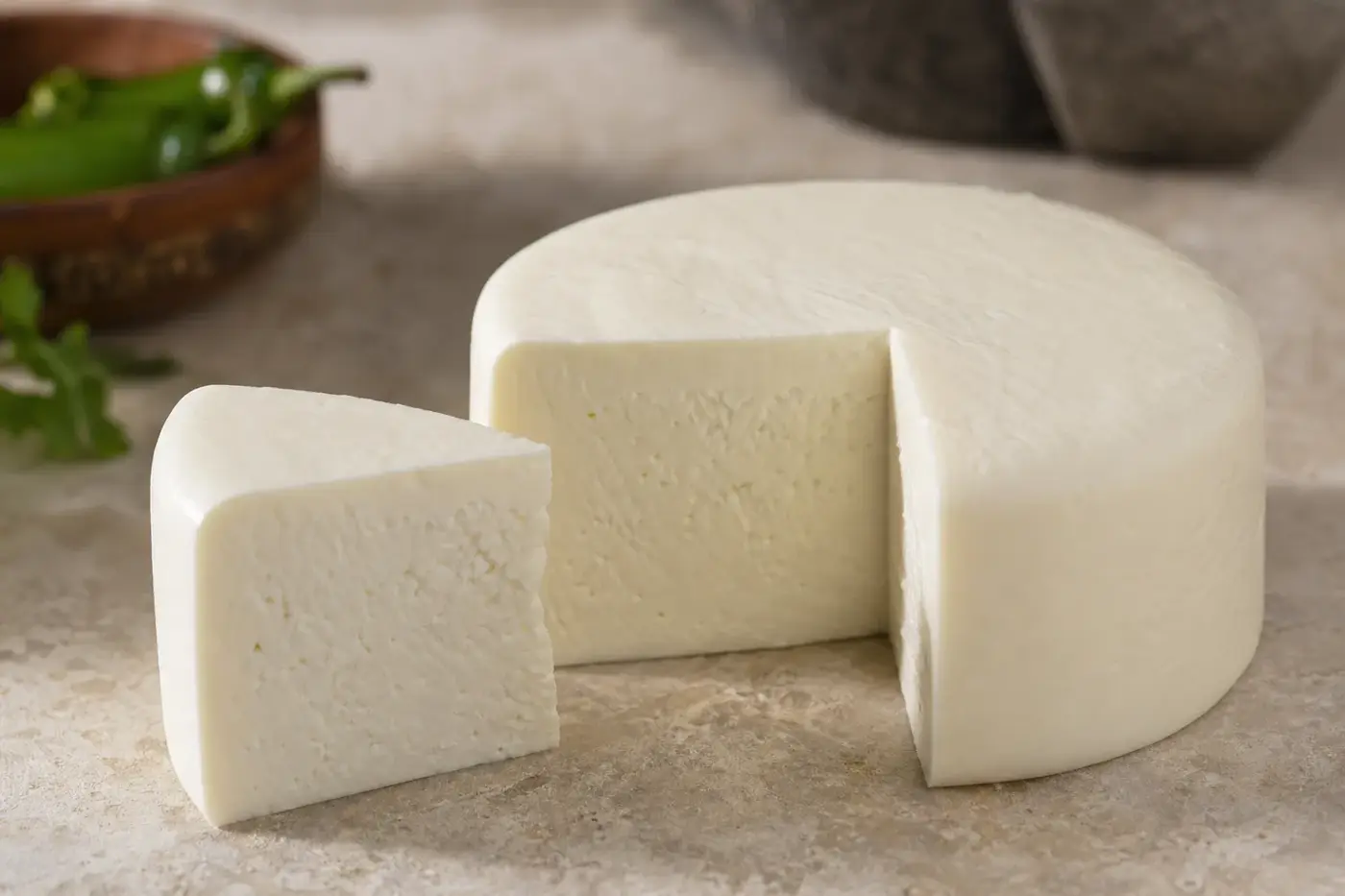
Run your eye over a piece of panela and the basket is still there, pressed into its white surface.
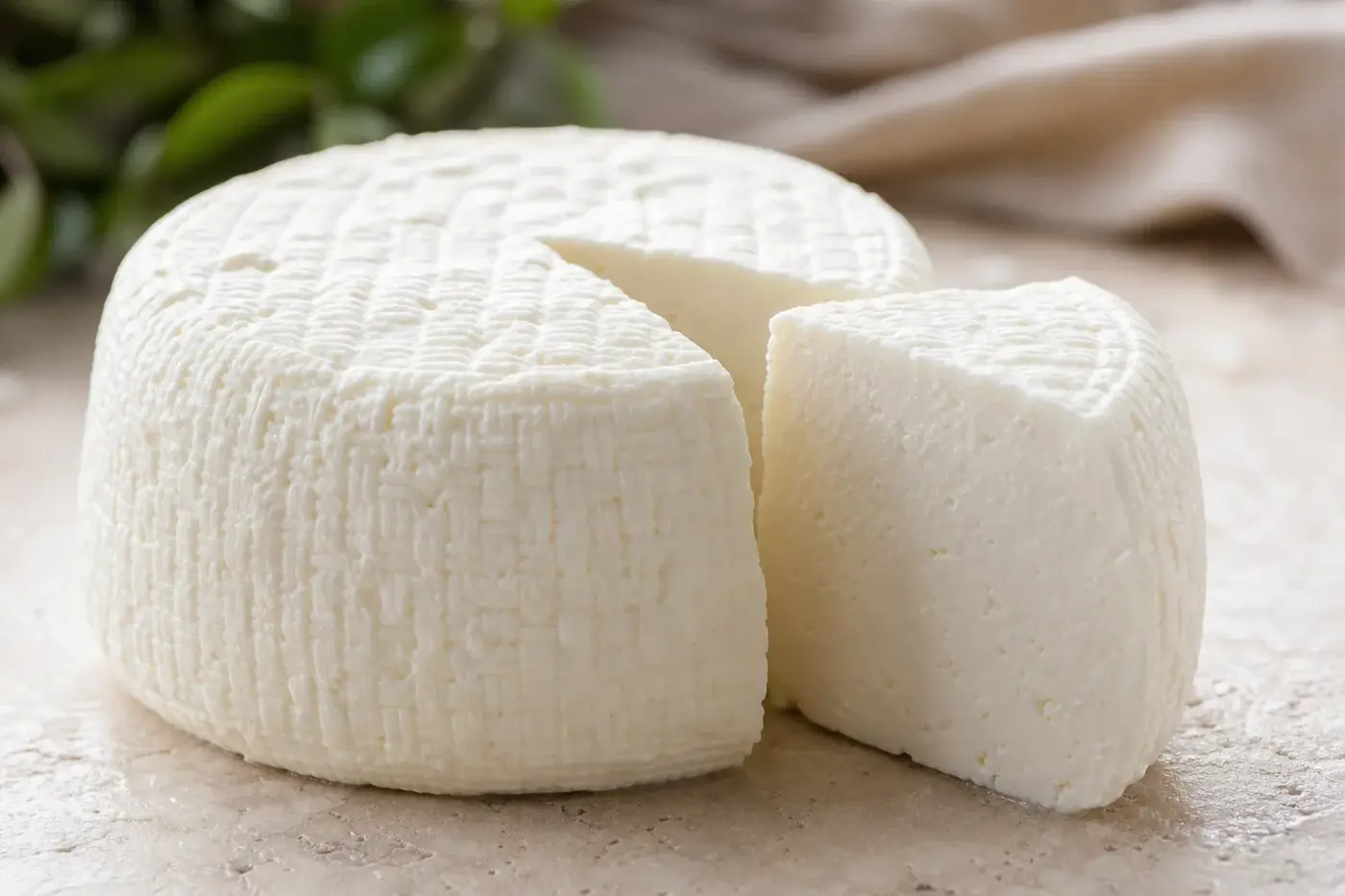
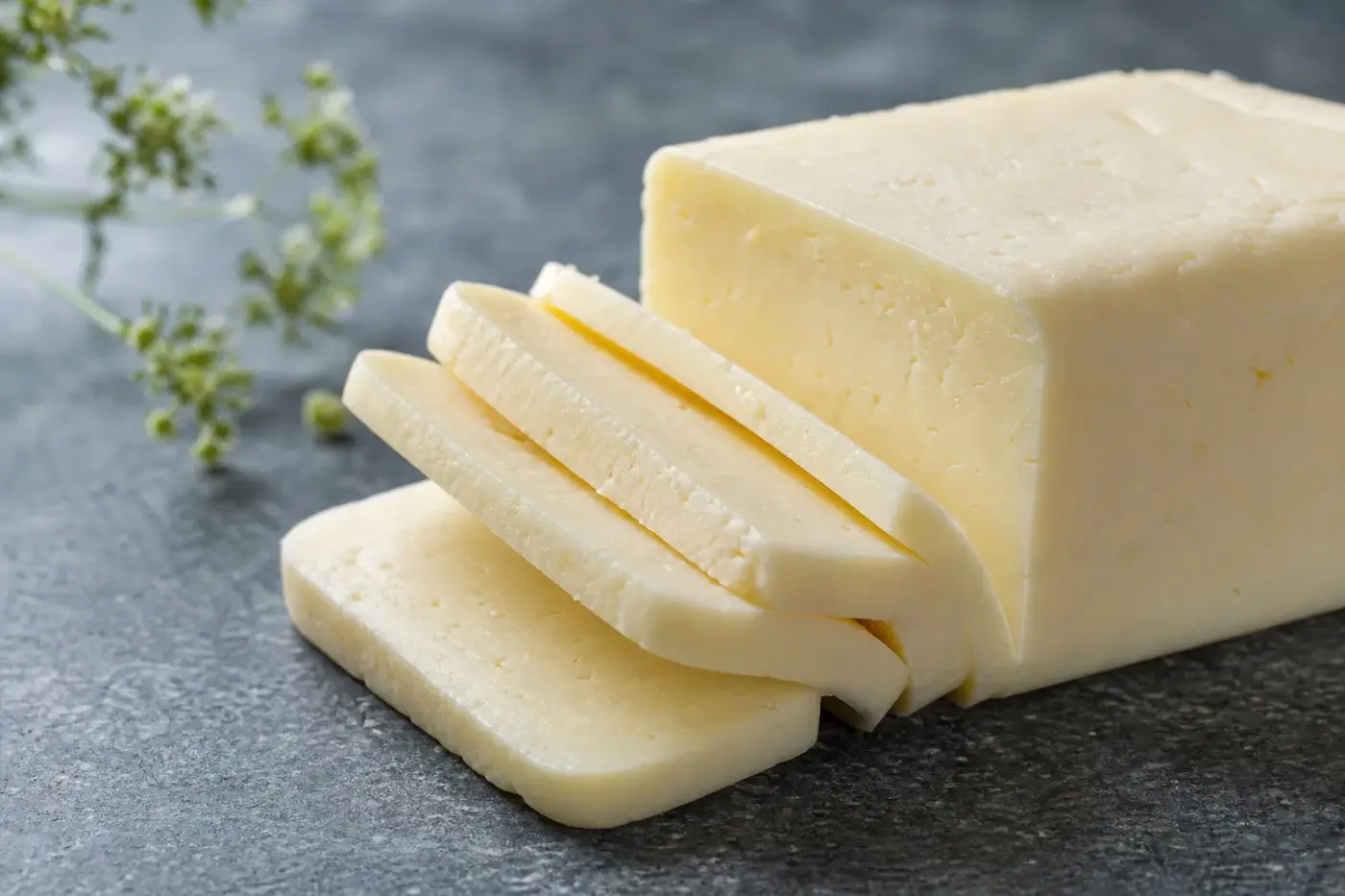
Run your eye over a piece of panela and the basket is still there, pressed into its white surface. Those woven impressions show where wet curd settled and drained. Slide your knife through this fresh Mexican cheese, usually made from cow’s milk, and you get a moist slice that holds together.[1][2][3]
Now put it in a hot pan. The slice softens but largely keeps its shape, rather than spreading into a melted pool. Here is a cheese that can take the heat without losing its composure.[1][2][3]
| Get to know panela | The essentials |
|---|---|
| Names on the pack | Panela; queso panela.[1][2] |
| Its customary home | Mexico.[2] |
| The milk | Usually cow’s milk; read the product’s declaration.[2][3] |
| Its cheese family | Fresh, unripened cheese.[4] |
| How the curd forms | Rennet or other milk-coagulating enzymes; cultures vary by method.[3][4] |
| What you’ll see | White paste, often basket-marked; no developed ripened rind.[1][2][4] |
| What you’ll feel | Moist and soft, yet cohesive enough to slice.[1][5] |
| What heat does | Generally softens while holding its shape.[3] |
| Pregnancy guidance | See the official advice for your country below, November 2026.[10][11][12] |
Follow the basket marks to your first bite
Those basket impressions tell you something about the making. Research on Mexican panela records palm or plastic baskets, while producer Cacique describes basket-weave impressions around its cheese’s outer edges. You are looking at the outline of the container where wet curd settled and released its whey.[1][2]
Cut into it and the white continues all the way through. Panela is sold fresh, rather than matured to develop a separate rind. There is no aged outer layer for you to remove during normal preparation.[2][4]
Mexican public food specifications describe a mild cheese with a soft, smooth consistency, sometimes firm enough to slice. Cacique calls its own panela slightly tangy and less crumbly than its queso fresco. According to the producer, your first bite may even squeak.[1][5]
These descriptions suggest a moist curd with a little spring to it. The tang and squeak come from the producer’s account of its particular cheese, though. They are not promises that every panela will make the same entrance.[1][5]
Mildness appears in the public specification, but salt and firmness are worth considering pack by pack. Read the salt information on the label. Compare the firmness of individual packs, too.[5]
From milk to basket, with room for variation
Before you get that basket pattern, you need curd. Coagulation turns milk into a gel, which separates into protein-rich curd and liquid whey. The curd stays behind as the whey drains away.[4]
Profeco, Mexico’s consumer protection authority, describes production using rennet or other specific coagulating enzymes. Whey separation and moulding come next. That gives you the broad route, though not every maker follows precisely the same path.[4]
A Mexican public food procurement description lists fresh or powdered milk as possible starting materials, whether whole, partly skimmed or skimmed. It also describes optional calcium chloride and lactic cultures, followed by cutting, salting and shaping the curd. These are documented manufacturing options, not a compulsory recipe for every panela.[5]
The basket lets liquid escape while giving the cheese its shape and patterned surface. Profeco includes pressing, while accounts of the familiar basket form emphasise drainage through the mould. Describing panela as “never pressed” would leave part of the story out.[2][4]
Starter cultures, the bacteria used to develop acidity, vary too. Experimental research describes panela made with few or no starters. A Mexican pilot-plant study examined a version made with a lactic culture, so both approaches belong in the picture.[2][3]
If you would like to follow milk through the whole process, explore how cheese is made.
Why your slice holds its own in the pan
The basket gives panela its looks; protein helps it stay together in your pan. Casein, the principal cheese-forming milk protein, builds a network whose behaviour depends partly on acidity and calcium. Research identifies retained calcium phosphate as a structural reason for panela’s limited melting.[2]
In the kitchen, the distinction you need is softening versus flowing. Heat can make a slice more yielding without breaking down the connected structure that holds it together. That is useful when you want cheese to remain a recognisable part of your dish.[3]
An experimental comparison looked at how ingredients affect that behaviour. Researchers made wheyless panela from different milk protein powders and compared it with conventionally drained, whole-milk panela. During refrigerated storage, they measured texture, rheology and sensory properties.[3]
The cheese made with a calcium-reduced ingredient showed greater meltability. Calcium therefore plays a part, but milk ingredients and manufacturing choices matter as well.[3]
Choose panela when you want a slice to keep its identity. For a filling that needs to flow, choose a cheese documented to melt instead.[3][7]
Make room for panela at your table
Taste fresh pieces and seared slices and you meet two sides of panela. Sliced, cubed or broken into pieces, it brings a fresh-textured contrast to the ingredients around it. Cacique recommends its product both fresh and pan-seared.[1]
The producer’s published preparations pair seared panela with salad leaves, and grilled panela with mango and habanero salsa. You can take those examples in three useful directions at home:[13][14]
- Salads: add pieces alongside vegetables and dressing, or follow a published preparation using seared slices.[13]
- Tacos: use slices or broken pieces when you want a distinct cheese texture, rather than a melted coating.
- Grilled or pan-seared slices: put the cheese at the centre of the plate, with salsa or vegetables alongside. Published producer preparations show both approaches.[13][14]
These are serving ideas, not a cooking timetable. For quantities, pan settings and timings, follow the particular preparation and the cheese maker’s instructions.
Leave a little room for something sweet, too. Cacique suggests guava paste and berry compotes with its panela. Chilli and savoury toppings need not have the cheese entirely to themselves.[1]
For a family meal, start by asking what you want your cheese to do. Cool pieces, cheese softened inside a warm tortilla and a separate grilled slice each make different use of panela’s texture. That question will take you further than simply asking whether it “melts”.[1][3]
Meet panela’s neighbours at the cheese counter
Queso fresco, queso blanco and Oaxaca may sit alongside panela at the counter. Once you get them home, they can do quite different jobs: an intact slice is not a crumbling topping or a melting filling. These producer descriptions help you choose between the particular products described.[1][6][7][8]
| Cheese | How the producer describes it | What that means for your cooking |
|---|---|---|
| Panela | Cacique describes a sliceable curd cheese, less crumbly than its queso fresco.[1] | Distinct pieces or seared slices.[1] |
| Queso fresco | Cacique describes its product as soft, moist and curd-like.[6] | Topping or stuffing.[6] |
| Queso blanco | Tropical notes regional variations; its own version is fresh and firm.[8] | Its product softens without melting.[8] |
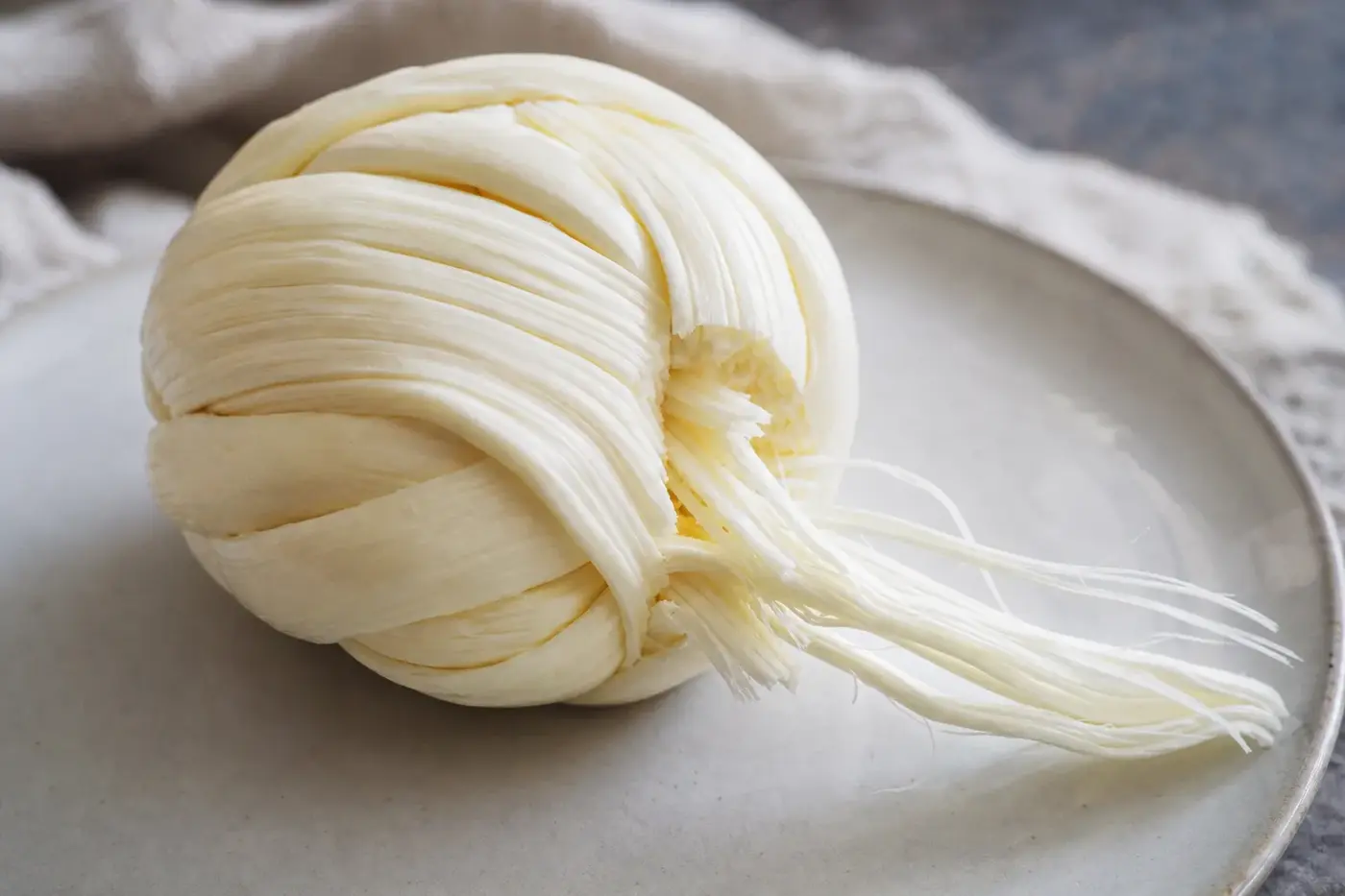
| Oaxaca | Cacique describes curd stretched into ribbons and wound into a knot.[7] | Its product melts for quesadillas.[7] |
Queso fresco literally means “fresh cheese”, but the pack in front of you deserves attention as its own product. That is particularly important for texture. A cheese that breaks readily over a dish does a different job from one you want to serve in an intact slice.[1][6]
Queso blanco also covers regional variation. Tropical explicitly acknowledges differences across Latin America. The maker’s description therefore tells you more than the name alone.[8]
Oaxaca offers the clearest contrast here. In place of panela’s basket-drained form, you have stretched ribbons and a cheese described as melting.[7][8]
Find the right pack for your kitchen
Begin with the milk declaration and ingredients. Look for the animal species, whether the milk is pasteurised and any added ingredients. Cacique’s published panela ingredients, for example, include cultured pasteurised milk and skimmed milk, salt and enzymes; that declaration applies to its own product.[1]
Then check the packaging and temperature. For queso fresco-type cheeses, the US FDA advises choosing sealed, unopened packs with identifiable manufacturer details, a date and a clear pasteurised-milk declaration. Avoid anything unrefrigerated, not cold to the touch or in swollen packaging.[11]
Choose an amount you can finish within the maker’s instructions after opening. Appearance is only one part of freshness: the date, handling and storage history matter too. UK food labelling guidance makes an important distinction: a use-by date concerns safety; a best-before date concerns quality.[9]
Keep the packaging information, including batch identification, until you finish the cheese. If you need help separating the product name, ingredients and handling instructions, see our guide to reading a cheese label.
Keep every slice properly chilled
If you follow Food Standards Agency guidance in England, Wales and Northern Ireland, keep your fridge between 0 °C and 5 °C. The agency recommends checking the temperature with a fridge thermometer. Follow the product’s storage instructions as well.[15]
Refrigerate panela promptly and follow the maker’s directions after opening. If the label gives both an opening limit and a use-by date, finish it by whichever comes first. UK guidance warns that incorrect storage can make food unsafe before its use-by date.[9]
If you move the cheese into another container, keep its labelled instructions available. During preparation, take out only what you need. The FSA advises keeping chilled food outside refrigeration for the shortest possible time.[15]
For broader storage advice, including separating ready-to-eat food from raw ingredients, see how to store cheese at home.
This page summarises published guidance from the official sources it cites. It is not medical advice. Guidance differs between countries and changes over time, so check the current source for where you live, and ask your doctor, midwife, pharmacist or dietitian about your own circumstances.
Pregnancy and higher-risk groups: find your local guidance
Pasteurisation matters, but it is not the whole safety picture. The FDA explains that cheese made from pasteurised milk can become contaminated in an unsanitary manufacturing environment. It also identifies the high moisture and low acidity of queso fresco-type cheeses as conditions that can support Listeria growth.[11]
Official advice on eating these cheeses differs between countries. When making your choice, use the guidance for where you live.[11]
United Kingdom, November 2026: NHS pregnancy guidance includes pasteurised soft cheeses among its permitted choices. Its examples include cottage cheese, mozzarella, paneer and halloumi. It also lists hard cheeses, including those made with unpasteurised milk, as choices during pregnancy.[10]
For soft cheeses covered by its restrictions, the NHS advice is to cook until steaming hot all the way through. Panela is not named in the list. If you are uncertain, discuss the product and the linked NHS guidance with your midwife.[10]
United States, November 2026: the FDA recommends that pregnant people, adults aged 65 and older, and people with weakened immune systems avoid queso fresco-type cheeses. The CDC’s prevention table identifies unheated queso fresco-type cheeses as a riskier choice, whether pasteurised or unpasteurised. Its alternative is to heat them to 74 °C (165 °F) or until steaming hot.[11][12]
Follow the official source for where you live and ask your healthcare professional for individual advice. For more on contamination and refrigeration, see Listeria and cheese safety.
Questions people ask
What is panela cheese?
Panela is a fresh, unripened cheese from Mexico, usually made from cow’s milk. It is white, moist and soft, but cohesive enough to slice.
Does panela melt when heated?
Panela generally softens in a hot pan while keeping its shape rather than flowing into a melted pool. Research identifies retained calcium phosphate as one reason for its limited melting.
How is panela different from queso fresco?
Cacique describes its panela as less crumbly than its queso fresco and suitable for distinct pieces or seared slices. It describes its queso fresco as soft, moist and curdlike, for use as a topping or stuffing.
How should panela be stored?
The Food Standards Agency recommends keeping the fridge between 0 °C and 5 °C and following the product’s storage instructions. Once opened, follow the maker’s directions and, where both an opening limit and a use by date are given, finish the cheese by whichever comes first.
Can I eat panela during pregnancy?
NHS pregnancy guidance includes pasteurised soft cheeses among its permitted choices, but does not name panela. Check the product and NHS pregnancy guidance with your midwife if uncertain. In the United States, the FDA recommends that pregnant people avoid queso fresco type cheeses; consult the FDA guidance and CDC prevention table.
Sources
- Cacique Foods, Panela, undated product description, ingredients and serving suggestions, accessed November 2026. Commercial producer source: product page.
- CyTA, Journal of Food, Evaluation of proteolytic and physicochemical changes during storage of fresh Panela cheese from Queretaro, Mexico and its impact in texture, volume 10, issue 4, 2012, pages 296 to 305: published paper.
- University of Wisconsin-Madison research group, Use of milk powders to manufacture panela cheese by a wheyless cheesemaking process, Journal of Dairy Science research abstract, PubMed record 41260477: research record.
- Procuraduría Federal del Consumidor, Queso panela, Revista del Consumidor, March 2007: issue containing the laboratory report.
- Sistema para el Desarrollo Integral de la Familia del Estado de Chihuahua, Manual ETC, “Queso Panela” product specification, edition date not verified: official manual.
- Cacique Foods, Queso Fresco, undated product description, accessed November 2026. Commercial producer source: product page.
- Cacique Foods, Oaxaca, undated product description, accessed November 2026. Commercial producer source: product page.
- Tropical Cheese, Queso Blanco, undated product description, accessed November 2026. Commercial producer source: product page.
- UK Government, Understanding food labelling: Best before and use-by dates, current online guidance, accessed November 2026: official guidance.
- NHS, Foods to avoid in pregnancy, current online guidance, accessed November 2026: official pregnancy guidance.
- US Food and Drug Administration, Avoid Queso Fresco-Type Cheeses if You're in High-Risk Groups, current online guidance, accessed November 2026: official FDA guidance.
- US Centers for Disease Control and Prevention, Preventing Listeria Infection, current online guidance, accessed November 2026: official CDC guidance.
- Cacique Foods, Baby Green Salad with Seared Panela and Avocado Vinaigrette, undated recipe, accessed November 2026. Commercial producer source: published preparation.
- Cacique Foods, Grilled Cacique Panela with Mango Habanero Salsa, undated recipe, accessed November 2026. Commercial producer source: published preparation.
- Food Standards Agency, How to chill, freeze and defrost food safely, published 2017, current online text accessed November 2026: official storage guidance.
This piece was researched from Mexican public documents, original cheese research, attributed producer descriptions and official UK and US food safety guidance.
Last checked: November 2026
Last checked November 2026.
The editors suggest you read next