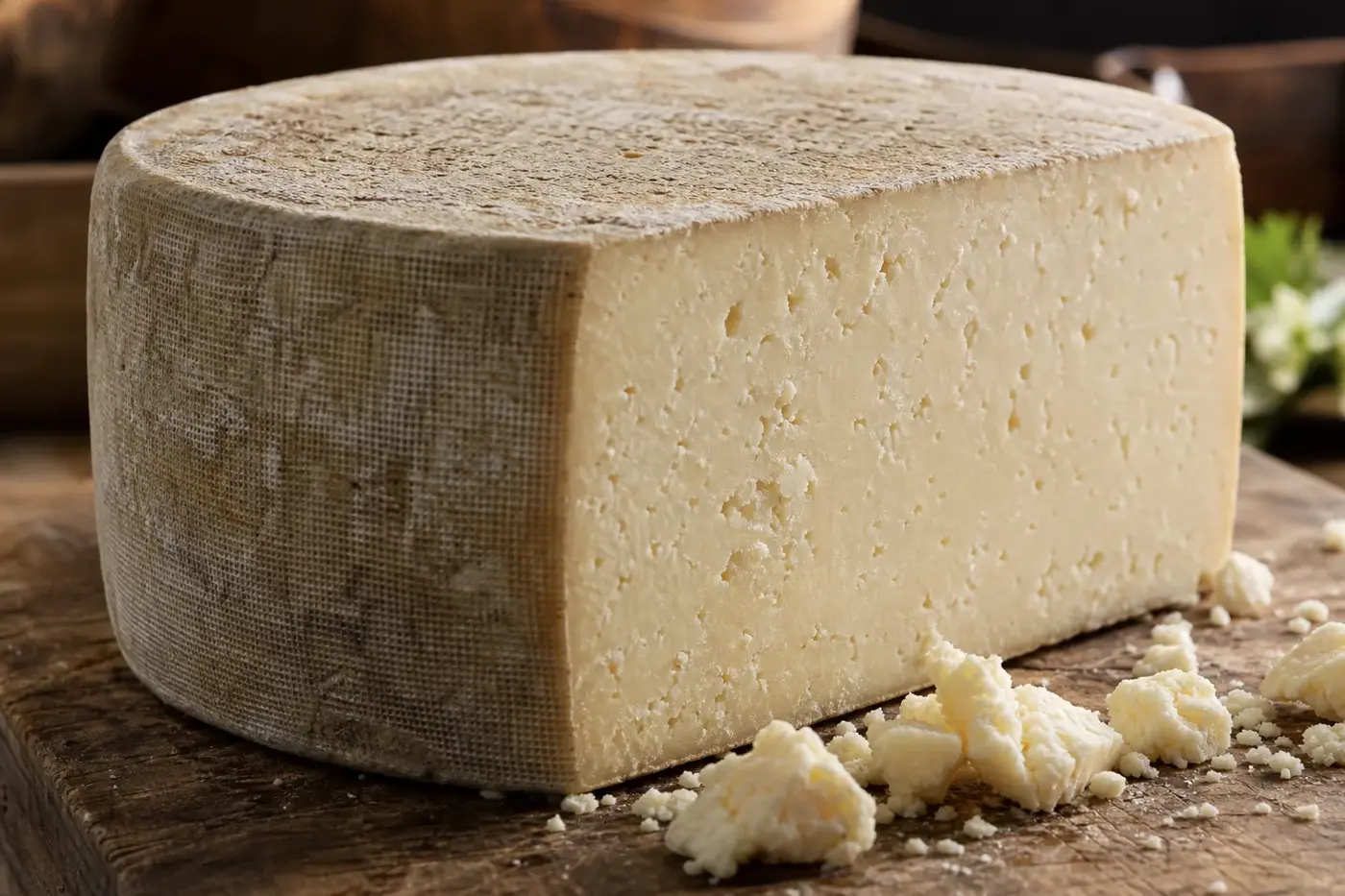
Rain greens the mountain pastures between Michoacán and Jalisco. From July to October, the milk becomes substantial wheels of Cotija, made to outlast the wet season. This Mexican cow’s milk cheese is salty, robust and rooted in mountain ranching. The Cotija you buy for crumbling, though, may be younger, moister and quite different from those traditional aged wheels. [1,2,3]
Your first taste of Cotija
| What to know | The detail |
|---|---|
| Name | Cotija. [2] |
| Traditional home | Sierra de Jalmich, across parts of Michoacán and Jalisco, Mexico. [2,3] |
| Traditional milk | Raw cow’s milk. [1] |
| What sets the milk | Rennet, an enzyme preparation that turns milk into curd. [1] |
| Time to mature | Traditional regional cheese: at least three months. [1] |
| Shape | Cylindrical wheel with a hard rind. [4] |
| Colour inside | Unspecified. |
| Regional mark in historical documentation | Cotija Región de Origen. [3] |
| Mexican registration authority, register ID and current status | Unspecified. |
| Binding legal minimum ageing | Unspecified. |
| Allergen | Milk; check the individual label for other ingredients. [6] |
Follow the name up into the mountains
Cotija takes its name from a town in Michoacán, western Mexico. But its traditional cheesemaking territory reaches further, into the Sierra de Jalmich and across the state boundary with Jalisco. You have a trading centre’s name attached to a much wider ranching culture. Behind the label are mountains, pastures and the people making the cheese. [2,3]
A regional field study prepared for FAO and IICA describes scattered ranches making cheese during the rains. That generally means July to October, although the precise timing varies between years. Cattle graze local vegetation, and their milk becomes cheese nearby. Pasture, milk and cheesemaking belong to the same farming system. [3]
Maturation gives that seasonal milk a longer life. Cheese made in the wet months can be sold and eaten later, bringing something of the rainy season into your kitchen at another time of year. This rhythm of rain, milk and keeping helps explain why ageing matters so much to traditional Cotija. [2,3]
From fresh milk to a cloth-bound wheel
Traditional regional Cotija begins with raw cow’s milk and animal rennet, according to UNAM’s account of production. Rennet sets the milk into curd, a soft solid holding much of the milk’s fat and protein. When the maker cuts the curd, whey begins to escape. That is the liquid drained away during cheesemaking. [1]
The maker drains the curd in cloth, works it by hand and mixes in salt before moulding and pressing. Once out of the mould, the cheese is bound to help it keep its shape, then aired before maturation. Look closely and you may spot the cloth’s weave on the surface. It is a small, visible trace of the maker’s work. [1]
Ageing does more than firm things up. As moisture leaves, enzymes and microorganisms transform the cheese’s components. UNAM describes changes to sugars, fats and proteins that build aroma and flavour, with at least three months’ maturation for the regional cheese. Some wheels stay longer. [1]
A hard rind, and no shortage of character
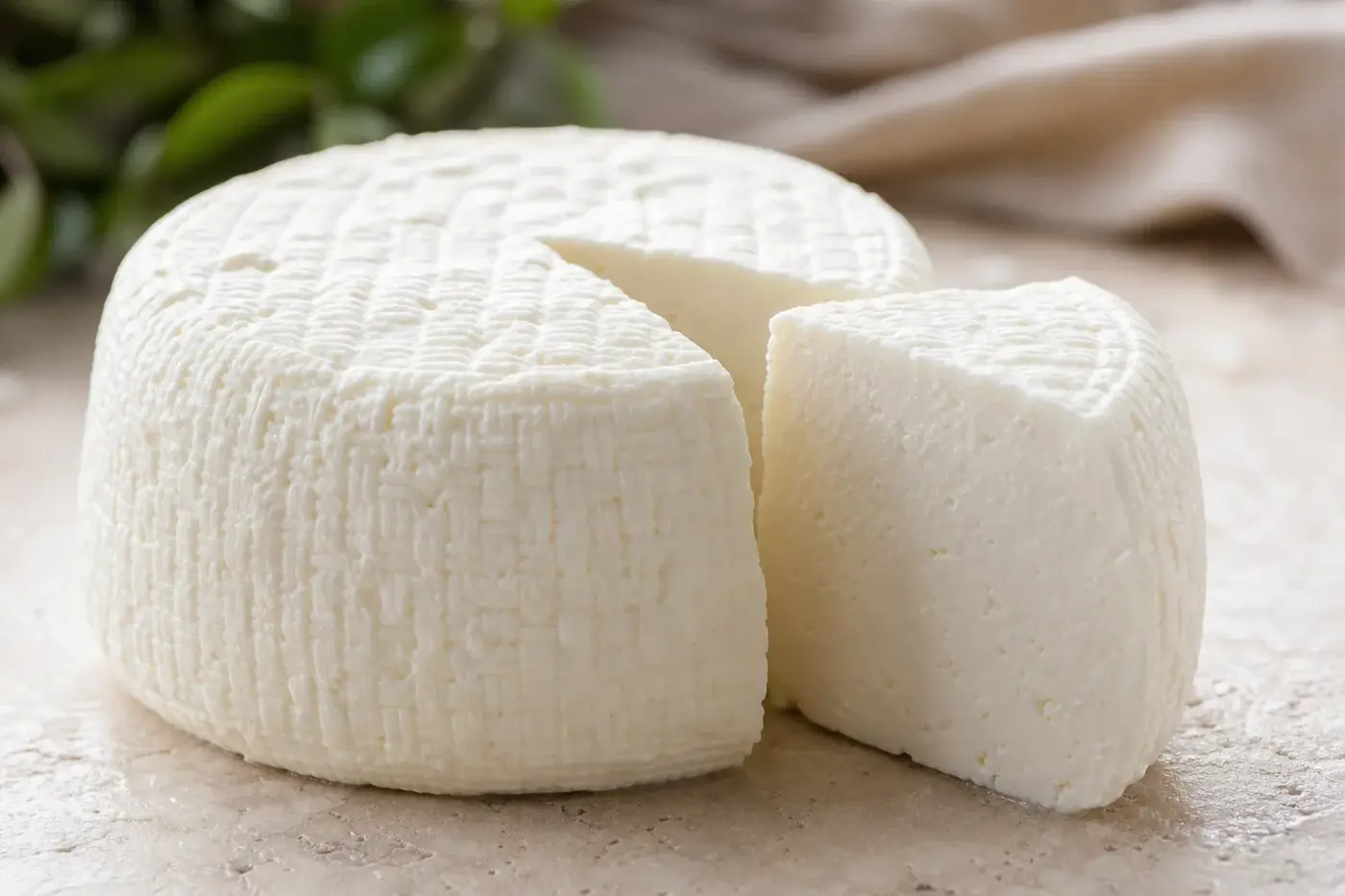
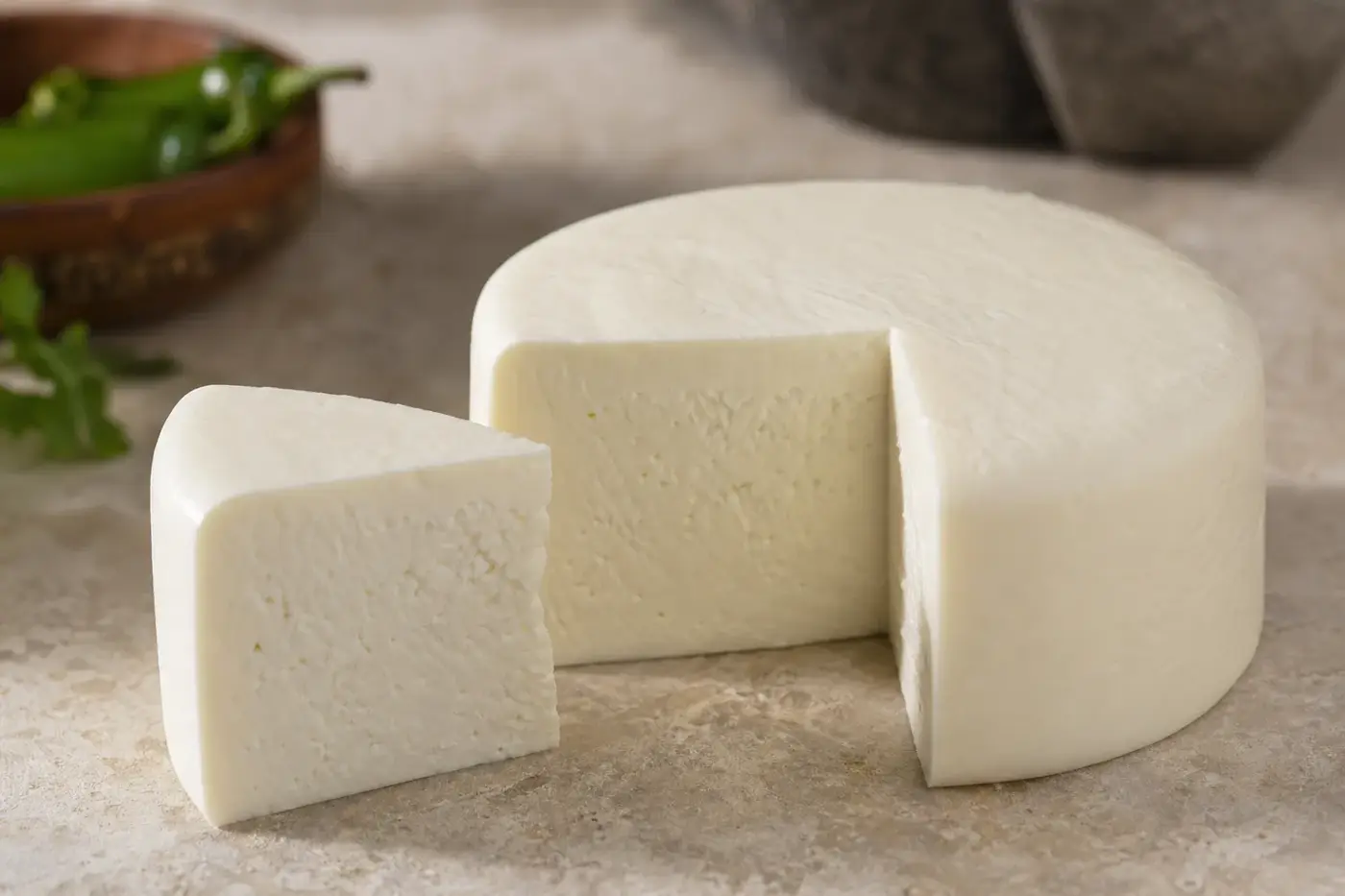
Traditional Cotija comes in substantial wheels. A broader FAO account describes cylindrical cheeses with a hard rind and a hard, closely textured body, interrupted by occasional small openings. The cloth impression can remain on the outside, preserving a little evidence of the regional making process. [1,4]
Do not expect a timid cheese. Researchers describing artisanal Cotija in a 2024 study call it crumbly, with an intense, penetrating aroma and a strong, acidic flavour. Salt plays its part alongside the changes of ripening. Remember, though: this describes traditional aged Cotija, not every cheese carrying the name. [5]
Soft crumbs or fine gratings? Find your Cotija
Age and moisture tell you more about how to use Cotija than the name alone. Younger, moister cheese breaks into soft crumbs; drier, firmer cheese suits fine grating. Ask how long yours has matured and whether its producer recommends crumbling, grating or both. [3,6]
A commercial pack does not necessarily mean a young cheese. Cacique describes its Cotija as aged, dry, salty and granular, and lists pasteurised milk and skimmed milk among its ingredients. Read those details separately. Packaging, milk treatment and maturity each tell you something different about the cheese inside. [6]
Find the people and place behind the label
“Cotija Región de Origen” is the wording recorded in Mexican regional documentation for a collective mark initiative associated with the mountain producers. Treat that historical wording separately from questions about its current registration and rules of use. If you want cheese from this tradition, look for the producer’s identity and stated place of manufacture. [2,12]
The name alone does not establish origin. In its February 2019 investigation, Mexico’s consumer protection agency, Profeco, reported that none of the products examined came from the region defined for artisanal Cotija. That finding belongs to those samples at that time. For today’s purchase, read the actual origin rather than relying on “Cotija” across the pack. [2]
Finish with a little salt and crumble
Cotija earns its place at your table by adding seasoning as well as texture. Cacique recommends crumbling or grating its cheese over beans, tacos and soups, or mixing it into sauces. Try that finishing approach with everyday dishes, adjusting the amount to the particular cheese you have. The temptation to add “just a little more” is understandable. [6]
For elotes, the dressed corn cobs often served with chilli and lime, make fine crumbs that spread across the surface. Scatter Cotija over finished beans, then taste before adding salt. Add it to tacos after the filling to keep the topping distinct. Or crumble a little through salad leaves or over tomatoes before adjusting the dressing.
Looking for a stretchy filling? Give this cheese a different job: Cacique says its Cotija does not melt, making a granular topping more useful when heated. Stir it through a sauce to distribute the cheese and salt, or scatter it afterwards for concentrated little crumbs. Allow for that seasoning before finishing the dish. [6]
Ageing removes water, so the same portion has less moisture. Saltiness also depends on how much salt the maker uses and how you serve the cheese. Start lightly, especially over salted beans, a salty sauce or a dish with another cheese. Taste a complete mouthful before adding more. [1,6]
Need a substitute? Give it a clear job
Choose your stand-in for what it needs to do, not simply what it resembles. Cacique compares its Cotija’s flavour with Parmesan and feta. The suggestions below follow those different topping roles, with queso fresco’s fresh, moist character illustrated by its maker’s description. Leave your final seasoning adjustment until the end. [6,7]
| Substitute | Where it works | How to use it | What will be different |
|---|---|---|---|
| Feta | Crumbled topping | Drain, crumble and add a little before tasting. | It brings its own acidity and texture. |
| Parmesan | Finely grated finish | Grate finely rather than making soft crumbs. | It does the topping job, but the flavour is not identical. |
| Queso fresco | Soft crumbled topping | Choose it where fresh curds suit your dish. | Cacique describes its version as soft, moist and milky. [7] |
Explore feta and Parmigiano Reggiano for their individual identities. Queso fresco means fresh cheese; queso añejo means aged cheese. Those terms help you distinguish fresh crumbles from an aged seasoning cheese. The label and producer tell you what is actually in the packet. [7]
Take your dinner plans to the cheese counter
Start with dinner. Do you want loose crumbs for a topping, or a firm piece to grate? Then ask about the place of manufacture, milk treatment, ingredients and any stated maturation. Together, those details give you a clearer picture than the name alone. [6,10]
If you want a vegetarian product, check the rennet separately. “Enzymes” does not tell you whether they are animal, microbial or fermentation-produced, so ask the manufacturer if the label is unclear. Read the full ingredients list and allergen declaration. Keep the packaging so the storage instructions and date information stay with your cheese. [6,10]
Need a hand with the small print? See rennet explained and reading a cheese label.
Give your Cotija a good home in the fridge
Follow the storage instructions on your particular pack. The UK Food Standards Agency’s guidance for England, Wales and Northern Ireland recommends refrigerating dairy products and keeping the fridge between 0 and 5 °C. Cover the cheese, use clean utensils and promptly return the portion you are keeping to the fridge. [8]
Follow any instruction to use the cheese within a stated period after opening, as well as the printed date. UK government guidance draws an important distinction: a use-by date concerns safety; a best-before date concerns quality. Do not eat food after its use-by date, even if it looks and smells normal. [10]
Buying a piece cut at the counter? Keep its label, or ask for the same information in writing. You can find further handling advice in storing cheese at home. [8,10]
This page summarises published guidance from the official sources it cites. It is not medical advice. Guidance differs between countries and changes over time, so check the current source for where you live, and ask your doctor, midwife, pharmacist or dietitian about your own circumstances.
Find the right UK guidance for higher-risk circumstances
The NHS pregnancy guidance referenced here in November 2026 lists both pasteurised and unpasteurised hard cheeses among foods that can be eaten. Pasteurised semi-hard cheeses appear separately. Soft mould-ripened and soft blue cheeses receive different advice: cook them until steaming hot. Match those categories to your actual cheese’s texture and milk treatment. [9]
The NHS also identifies older people and people with weakened immunity as being at greater risk of serious listeriosis. Its advice addresses the food’s characteristics and handling. If you need help applying that advice to your circumstances, take the actual product label to a healthcare professional. [11]
Questions people ask
Is Cotija vegetarian?
Traditional regional Cotija is made with animal rennet. For other products, check the rennet separately and ask the manufacturer if the label is unclear.
Does Cotija melt?
Cacique says its Cotija does not melt. It recommends crumbling or grating the cheese over foods such as beans, tacos and soups, or mixing it into sauces.
What can I use instead of Cotija?
Feta can be used as a crumbled topping, while Parmesan suits a finely grated finish. Queso fresco is another option where a soft, moist crumbled topping suits the dish.
Can I eat Cotija during pregnancy?
The NHS pregnancy guidance lists both pasteurised and unpasteurised hard cheeses among foods that can be eaten, while soft mould ripened and soft blue cheeses receive different advice. Check the NHS guidance against the actual cheese's texture and milk treatment, and ask a healthcare professional about your circumstances.
How should I store Cotija?
Follow the instructions on the pack. The UK Food Standards Agency recommends refrigerating dairy products and keeping the fridge between 0 and 5 °C.
Sources
[1] Universidad Nacional Autónoma de México, UNAM Global. Queso cotija: un alimento tradicional que esconde ciencia en su elaboración. Published 28 September 2026. Sections “Elaboración del queso” and “La maduración del queso”. Source document.
[2] Procuraduría Federal del Consumidor, Profeco. Queso Cotija. Revista del Consumidor, February 2019, pages 37 to 43. Laboratory investigation conducted from November 2018 to January 2019. Source document.
[3] Universidad Autónoma Chapingo, consultancy prepared for the FAO and IICA joint study on origin-linked quality products. El queso Cotija, México: Un producto con marca colectiva queso “Cotija Región de origen”, en proceso de adquisición de una Denominación de Origen. November 2007. Regional field study, particularly sections 3 and 4. Source document.
[4] Food and Agriculture Organization of the United Nations. The technology of traditional milk products in developing countries. Undated online chapter, section 3.4, “Cotija cheese”. This technical account describes a wider production category than the regional raw milk tradition. Source document.
[5] UNAM researchers, published in Foods. Microbiological Evaluation of Two Mexican Artisanal Cheeses: Analysis of Foodborne Pathogenic Bacteria in Cotija Cheese and Bola de Ocosingo Cheese by qPCR. Volume 13, article 2824, published 5 September 2024. Introductory description of artisanal Cotija; the study’s sample findings are not used to give consumer safety assurances. Source document.
[6] Cacique Foods. Cotija. Undated product page, retrieved November 2026. Manufacturer’s own flavour description, suggested uses and ingredient declaration; a commercial source describing its product. Source document.
[7] Cacique Foods. Ranchero® Queso Fresco. Undated product page, retrieved November 2026. Manufacturer’s description of its fresh cheese and its uses; a commercial source describing its product. Source document.
[8] Food Standards Agency. How to chill, freeze and defrost food safely. Published 18 December 2017, live guidance retrieved November 2026. Applies to England, Northern Ireland and Wales. Section 1, “Chilling food”. Source document.
[9] NHS. Foods to avoid in pregnancy. Live guidance retrieved November 2026. Section “Cheese, milk and other dairy”. Source document.
[10] GOV.UK. Understanding food labelling, including “Best before and use-by dates”. Live guidance retrieved November 2026. Overview and date guidance.
[11] NHS. Listeriosis. Live guidance retrieved November 2026. Sections “How you get listeriosis” and “Risks of listeriosis”. Source document.
[12] Instituto de Ciencia, Tecnología e Innovación del Estado de Michoacán. Caso de Estudio; Queso Cotija, Región Origen. Undated institutional page, retrieved November 2026. Describes the regional collective-mark initiative. Source document.
This piece was researched through regional field documentation, Mexican public-sector publications, academic sources, manufacturer specifications and current UK official guidance.
Last checked: November 2026
Last checked November 2026.
The editors suggest you read next