Queso Majorero
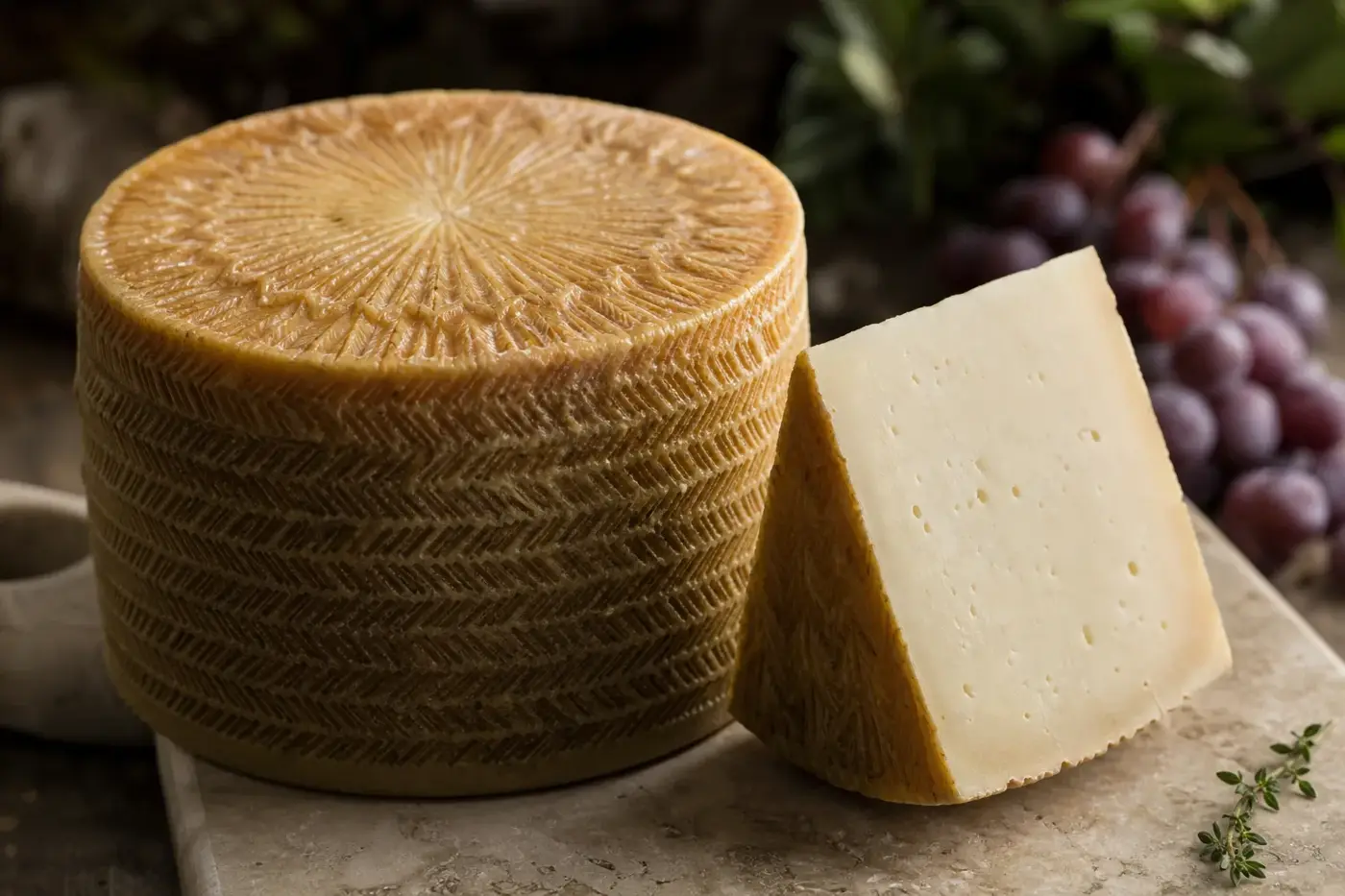
Trace a finger around a wheel of Queso Majorero and you meet the imprint of plaited palm leaves.
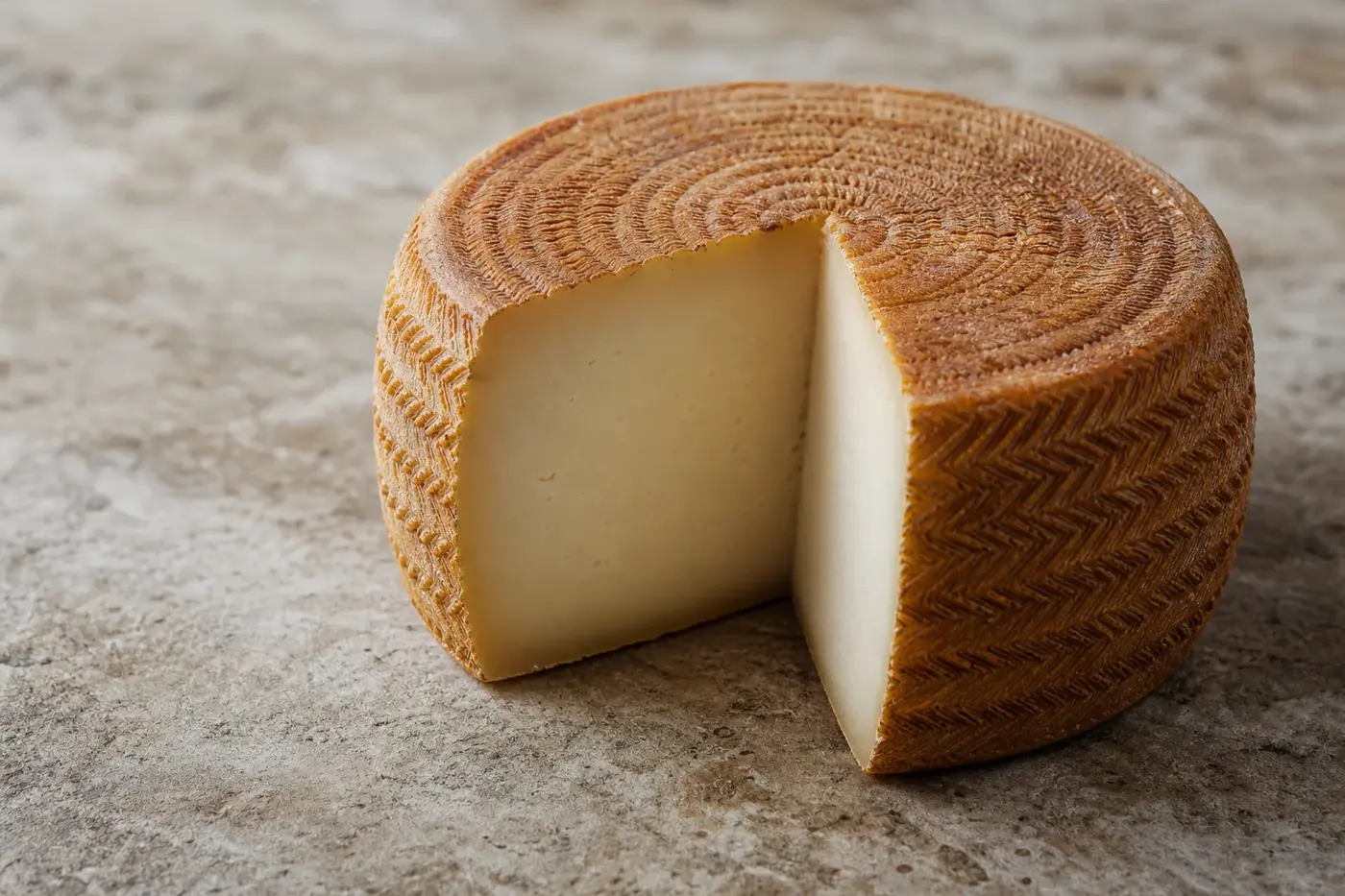
Trace a finger around a wheel of Queso Majorero and you meet the imprint of plaited palm leaves. The pattern comes from the traditional empleita mould, though modern moulds suitable for food use can reproduce it too. Inside is cheese made from the milk of Fuerteventura’s hardy Majorera goats: supple and white when young, firmer and ivory with time. [1][2][3][9][10]
This pressed cheese comes from a dry, volcanic Canary Island and has a protected designation of origin in the EU. Its wheels may wear oil, red paprika or toasted gofio flour. You have quite a bit to explore before the first bite, assuming patience is among your cheeseboard skills. [1][2][3][9][10]
| What you might want to know | The detail |
|---|---|
| Name to look for | Queso Majorero. [2] |
| EU registration authority and record | European Commission; register record and current status unspecified here. |
| EU protection | Current register status unspecified here. |
| Great Britain protection | Registered PDO; UK scheme registration dated 31 December 2020 at 23:00. [5] |
| Where it must come from | Fuerteventura, Canary Islands, Spain; milk production, cheesemaking and maturation all happen on the island. [3] |
| Milk in the cheese | Majorera goat’s milk, optionally with up to 15% Canaria sheep’s milk; raw or pasteurised. [3] |
| Minimum maturation | Eight days; further category minima depend on wheel weight. [3] |
| Rind treatments | Oil, paprika or gofio, as described by the designation body; applicable permitted treatments unspecified here. [8] |
| Applicable legal text | Unspecified here. |
| Northern Ireland protection | Unspecified here. |
| Permitted coagulant | Unspecified here. |
| Typical ageing | Unspecified here. |
| Pregnancy guidance | Official guidance link and date unspecified here. |
Meet the goats that call Fuerteventura home
Fuerteventura may look barren, but give it a closer look. The official specification describes pronounced aridity, brief periods of rain and low, open scrub adapted to dry conditions. Cardón, tabaiba and aulaga grow here, while different plant communities find shelter in the valleys. [2]
The Majorera goat belongs in this demanding landscape. The Canarian agricultural research institute, ICIA, describes a short-haired animal shaped by generations of selection in the island’s arid surroundings. Its account distinguishes intensive dairy husbandry from systems that combine grazing with supplementary feeding. [6]
Rainfall helps decide what the herds have to eat. The 2026 single document names brassicas, cosco, tedera and lucerne among grazing resources, alongside supplementary hay, concentrates and agricultural by-products. These farms draw on several resources, rather than wild volcanic scrub alone. [3]
At the island’s cheese museum, you can follow the human story through early accounts of goat keeping, cheesemaking and trade between islands. Its historical interpretation presents cheese as a way to preserve milk and support island households. The woven pattern on today’s wheels puts a little of that pastoral history beneath your fingertips. [7]
Start with the milk, then read the label
Majorera goat’s milk is the foundation of Queso Majorero. Sheep’s milk may also feature, although the applicable conditions for adding it are unspecified here. [1]
The milk may be raw or pasteurised, so ask which your particular cheese uses. The designation allows both; the name alone cannot tell you. For the differences, see raw, thermised and pasteurised milk. [3]
Look for Artesano on the label if you want to know more about the milk’s source. Within the designation, the 2026 single document defines it as cheese made by an operator using milk from their own herd. It tells you about sourcing, not age or rind treatment. [3]
Follow the curd from vat to wheel
Queso Majorero is an uncooked, pressed cheese. Coagulation turns milk into curd, the solid material that becomes cheese; the liquid drained away is whey. The designation’s production account follows the curd through cutting, moulding, pressing, salting and maturation. [9]
Rennet supplies the enzymes that set milk into curd. The specification expresses a preference for rennet from dried kid stomachs; baifo is the local word for a kid. If the coagulant matters to you, ask for the maker’s information for that particular cheese. [2]
Even the size of those curd pieces matters. The designation body explains that smaller fragments encourage whey removal for cheeses destined for longer maturation, while larger fragments suit younger cheese. Pressing finishes the drainage and gives the wheel its shape. [9]
Salt goes on dry or through immersion in brine. During maturation, the cheeses are turned, cleaned and, where appropriate, rubbed with their surface treatment. These stages help explain the differences between wheels; you can follow the broader sequence in how cheese is made. [9]
Read the pattern before you take a bite
Queso Majorero has a characteristic cylindrical shape. Its applicable dimensions are unspecified here. [1]
Look around the sides for the impression of the empleita, the traditional band of plaited palm leaves that held the curd. Modern moulds suitable for food use reproduce that pattern. You can still see the old equipment’s imprint without palm necessarily being used for every wheel. [9][10]
The flat faces carry the characteristic pinta pattern. Inside, the designation’s single document describes a compact paste, generally without holes, although small openings may appear. As the cheese matures, white gives way to ivory. [3][10]
You can feel that passing time in the texture, too. ICIA’s sensory work describes younger cheese as more elastic and moist, with later stages becoming firmer, drier and sometimes sandier. Its published profiles also record changing aromas and a finish that develops with maturation. [11]
Find your favourite age: tierno, semicurado or curado
The Spanish maturation terms are tierno, semicurado and curado. Their applicable minimum maturation periods and weight boundary are unspecified here.
For flavour, ICIA’s sensory profiles give you a useful route through the choices. Younger cheese is predominantly lactic, with modest salt and acidity and a shorter finish. Intermediate stages bring more aromatic intensity, adding dried-fruit or fermented-fruit notes to that milk character. [11]
Allow more time and the texture becomes firmer, the flavour more persistent. ICIA records more developed butter, dried-fruit and fermented notes, sometimes hay. Piquancy and bitterness can appear in later stages too. [11]
Choose tierno if you want something gentler and more yielding. Try semicurado for the middle ground, or curado for a firmer bite and longer finish. Older is different, not automatically better: this is cheese, not a competition for the longest finish. [6][11]
Get to know the oil, paprika and gofio rinds
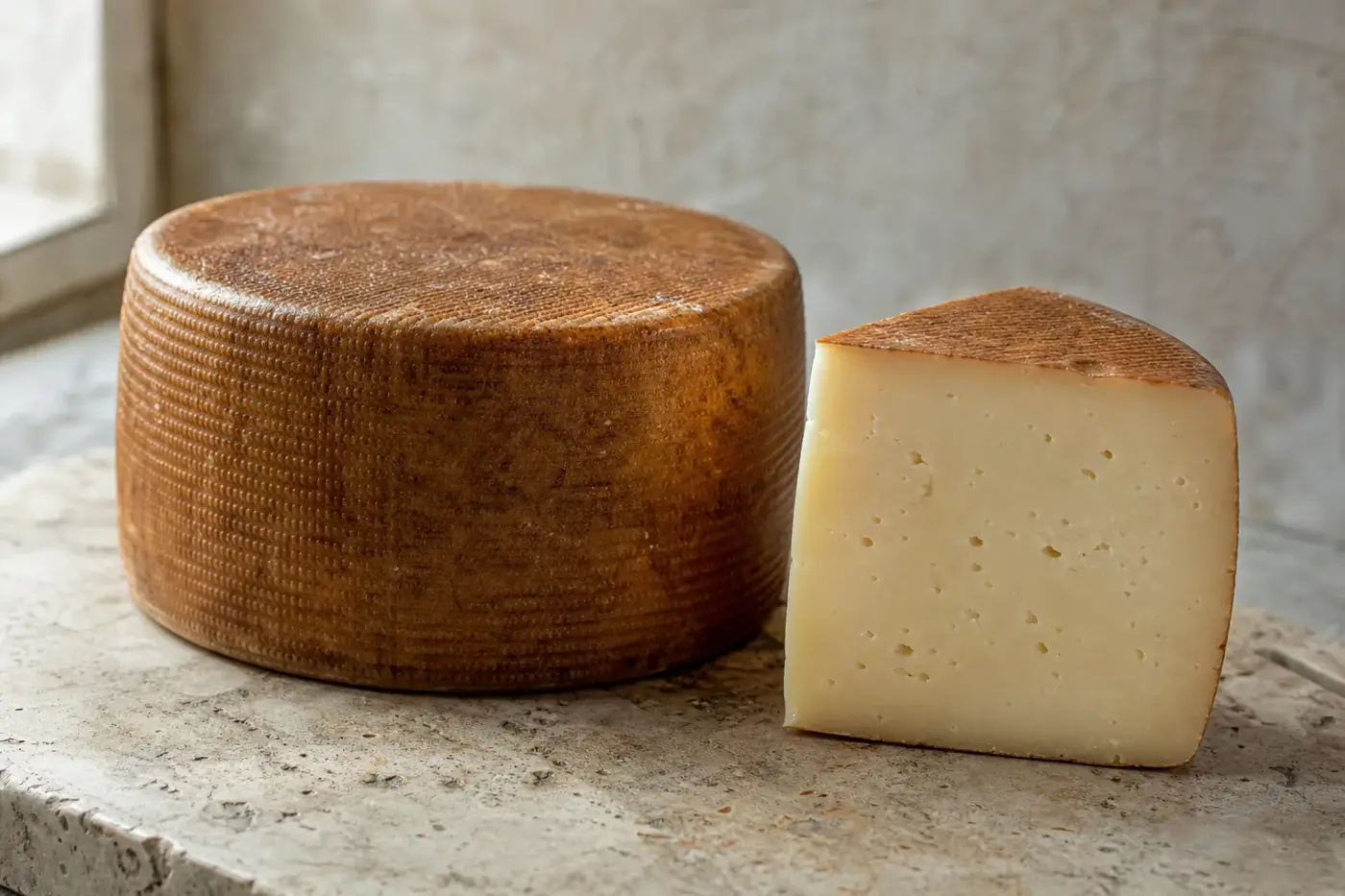
The three traditional treatments give you distinctly different exteriors. According to the designation body, olive oil produces the most natural-looking surface. Paprika brings that recognisable reddish colour and its own characteristic flavour. [8]
Gofio is toasted cereal flour, commonly made from maize or wheat. It leaves a flour-coated rind and adds flavour around the cheese’s edge. The official specification links increasing maturity and the chosen rub with roasted or spice-family aromas. [2][8]
Ask about age and coating separately. One tells you how the cheese has developed; the other tells you what has gone onto its surface. Both are worth a question, whether you are choosing a whole wheel or a cut piece.
Before serving, trim away wax or any other coating that is not food. Ask the maker or seller whether that particular rind is intended to be eaten. Colour or a dusting of flour cannot answer that question.
Know the labels behind your wheel
The designation ties milk production, cheesemaking and maturation to Fuerteventura. Certification involves registered holdings and premises, product checks and a numbered contraetiqueta. That is the designation’s identifying back label. [2][3]
Look for the registered name, designation identification and numbered label alongside the producer’s commercial label. If you are buying a cut piece, ask to see the original wheel’s identification or traceability information. The designation’s published guide illustrates the numbered, serialised label. [10]
The Consejo Regulador manages the designation. The specification separately names the Instituto Canario de Calidad Agroalimentaria within its control structure. These are distinct jobs: managing the designation and providing official oversight. [2][12]
For a guide to the initials, turn to PDO, PGI and TSG explained.
Give the first bite your full attention
Start with a small piece on its own, then try accompaniments individually. Guided by the published sensory profiles, this approach lets you notice the paprika, gofio and changing milk character. You can get to know each without everything competing at once. [11]
The designation body suggests honey with younger cheese. For a Canarian inspired plate, add plain bread and serve the honey separately. Find your own balance, one bite at a time. [8]
Water or an unsweetened alcohol free drink can accompany the cheese. You can keep the choice as simple as you like.
Ask at the counter, then care for it at home
Start with three questions: which maturation category, which milk treatment and which rind treatment? Ask about the maker and original wheel size too, particularly when comparing maturation labels. Buy an amount you can use within the product’s stated storage instructions. [3][13]
For home handling, Food Standards Agency guidance for England, Wales and Northern Ireland, as of November 2026, advises refrigerating dairy products and following the packaging instructions. Use a fridge thermometer to make sure the temperature is between 0 and 5 °C. [13]
Bring out only the portion you plan to serve. The FSA says chilled food should spend the shortest possible time outside the fridge during preparation, no more than four hours. Throw away anything remaining after that time, and consult its hot weather guidance for any shorter limit. [13][14]
Keep the original label with the remaining cheese, so you have the storage instructions close at hand. For wrapping choices and looking after a cut piece, see storing cheese at home.
Let the cheese’s age lead you in the kitchen
Choose age as carefully for cooking as for the cheeseboard. Try younger cheese in sandwiches or with warm vegetables, and a smaller amount of mature cheese grated over potatoes or folded into a filling. These suggestions follow its documented progression from yielding and milky to firmer and more persistent in flavour. [6][11]
Taste before seasoning, especially with a mature piece. Keep paprika-coated rind separate until you decide whether its flavour belongs in the dish. Remove any coating that is not food.
General information only, not medical advice: follow the official guidance where you live.
Questions people ask
Where is Queso Majorero made?
Queso Majorero comes from Fuerteventura in the Canary Islands, Spain. Its milk production, cheesemaking and maturation all take place on the island.
Is Queso Majorero made with raw or pasteurised milk?
It can be made with either raw or pasteurised milk. Ask which milk treatment a particular cheese uses, as the designation alone does not tell you.
What is the difference between tierno, semicurado and curado?
Tierno is gentler and more yielding, while semicurado offers a middle ground. Curado is firmer and has a longer finish.
Can you eat the rind of Queso Majorero?
A coloured or flour coated surface alone does not establish whether the rind is intended to be eaten. Ask the maker or seller about the particular rind and remove any wax or other non food coating.
Is Queso Majorero suitable for vegetarians?
The specification expresses a preference for rennet from dried kid stomachs. If the coagulant matters to you, check the maker’s information for the particular cheese.
Sources
- Instituto Canario de Calidad Agroalimentaria, Majorero, current official overview, undated, retrieved November 2026. Official overview.
- Instituto Canario de Calidad Agroalimentaria, Pliego de condiciones de la Denominación de Origen Protegida “Queso Majorero”, modified 2026 edition. Product specification.
- Instituto Canario de Calidad Agroalimentaria, Documento único: Queso Majorero, 2026 edition. Single document.
- European Commission, eAmbrosia: Queso Majorero, record EUGI00000013442, retrieved November 2026. Register record. The register interface did not expose readable status information during retrieval.
- Department for Environment, Food & Rural Affairs, Queso Majorero, published 4 January 2021, current register entry retrieved November 2026. Great Britain register entry.
- Instituto Canario de Investigaciones Agrarias, Queso Majorero DOP: Características sensoriales, undated edition, sections on husbandry and sensory characteristics. Research institute publication.
- Museo del Queso Majorero, Orígenes y comercio del Queso Majorero, undated historical interpretation, retrieved November 2026. Museum account.
- Consejo Regulador de la Denominación de Origen Protegida Queso Majorero, Queso Majorero, undated product and serving account, retrieved November 2026. Designation body account.
- Consejo Regulador de la Denominación de Origen Protegida Queso Majorero, Elaboración del Queso, undated production account, retrieved November 2026. Production account.
- Consejo Regulador de la Denominación de Origen Protegida Queso Majorero, Guía de quesos de Fuerteventura, undated bilingual edition, hosted in December 2022. Designation guide.
- Instituto Canario de Investigaciones Agrarias, Los sentidos y la maduración, undated sensory profile sheet. Sensory profiles.
- Consejo Regulador de la Denominación de Origen Protegida Queso Majorero, Consejo Regulador, undated institutional account, retrieved November 2026. Management body account.
- Food Standards Agency, How to chill, freeze and defrost food safely, published 18 December 2017, current text retrieved November 2026; applies to England, Northern Ireland and Wales. Official handling guidance.
- Food Standards Agency, Food safety in a heatwave: advice for consumers, current text retrieved November 2026. Official hot-weather guidance.
Researched from official designation documents, government registers, Canarian agricultural research publications and attributed institutional accounts, with editorial serving suggestions identified separately.
Last checked: November 2026
Last checked November 2026.
The editors suggest you read next