Sbrinz
In a central Swiss cellar, great wheels of Sbrinz stand upright on silver fir boards, taking their time.
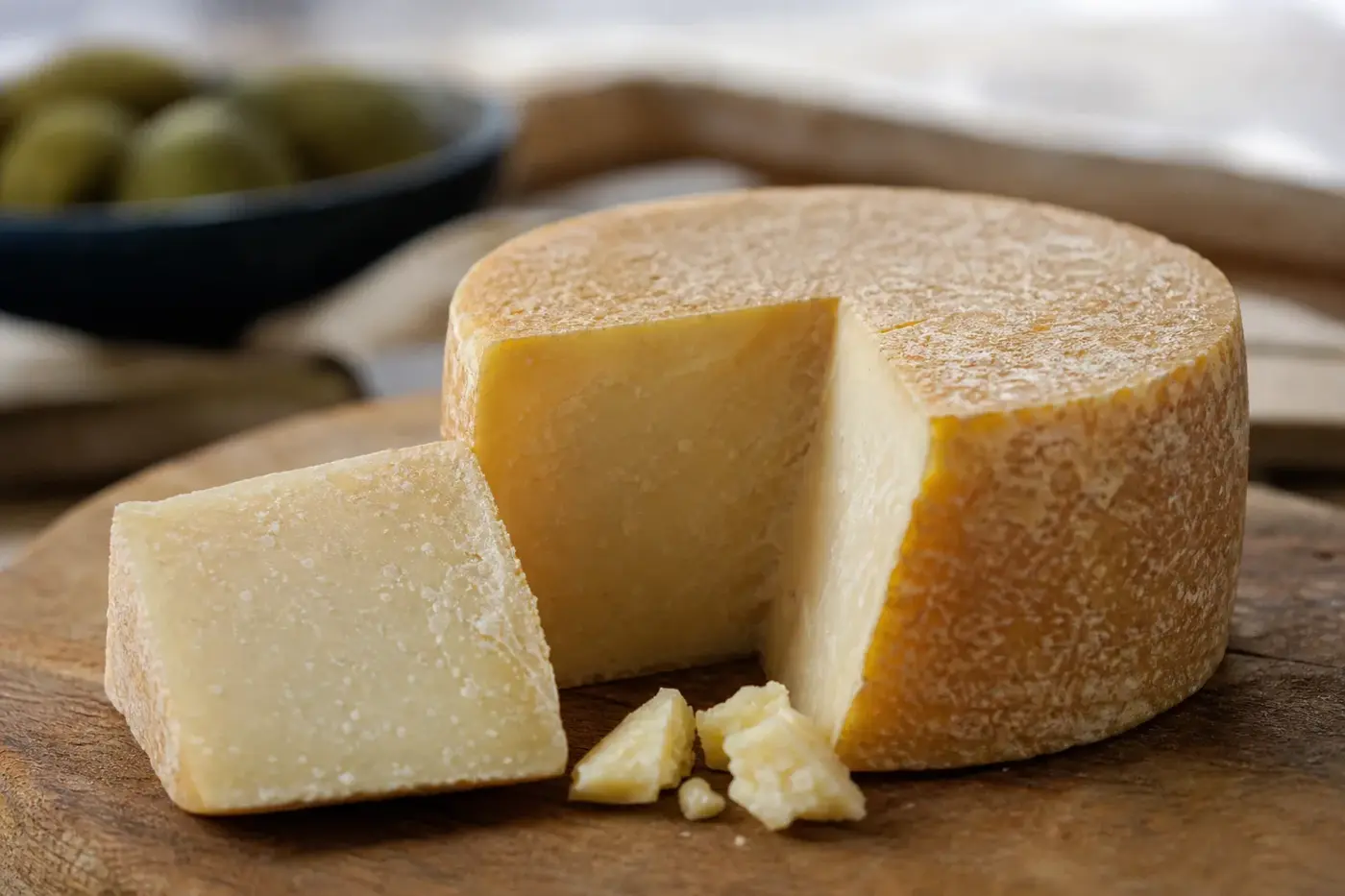
In a central Swiss cellar, great wheels of Sbrinz stand upright on silver fir boards, taking their time.[6] Your reward comes later: a fine curl, a rough morsel, a savoury grating. This very hard raw cows' milk cheese has a story that winds over the Alps towards northern Italy, and a texture worth stopping to notice.[2][3][4]
Your first look at the wheel
| What you want to know | The detail |
|---|---|
| Familiar and registered name | Sbrinz.[1] |
| Swiss protection | Registered AOP, Federal Office for Agriculture; November 2026.[1] |
| Register ID | Not established here.[1] |
| Binding specification | Sbrinz specification, amended by decision of 13 May 2019, Switzerland.[2] |
| Milk | Raw cows' milk.[2] |
| Permitted coagulant | Rennet or substitutes, subject to the specification's restrictions.[2] |
| Size of a wheel | 35 to 48 kg; 50 to 62 cm diameter.[2] |
| Outside and inside | Firm, dry natural rind; ivory to pale yellow paste.[2] |
| Minimum time to mature | 18 months before sale to consumers.[2] |
| Producer's advice on maturity | About 22 months for fuller flavour; 24 months described as ideal.[3] |
Break a piece and get to know it
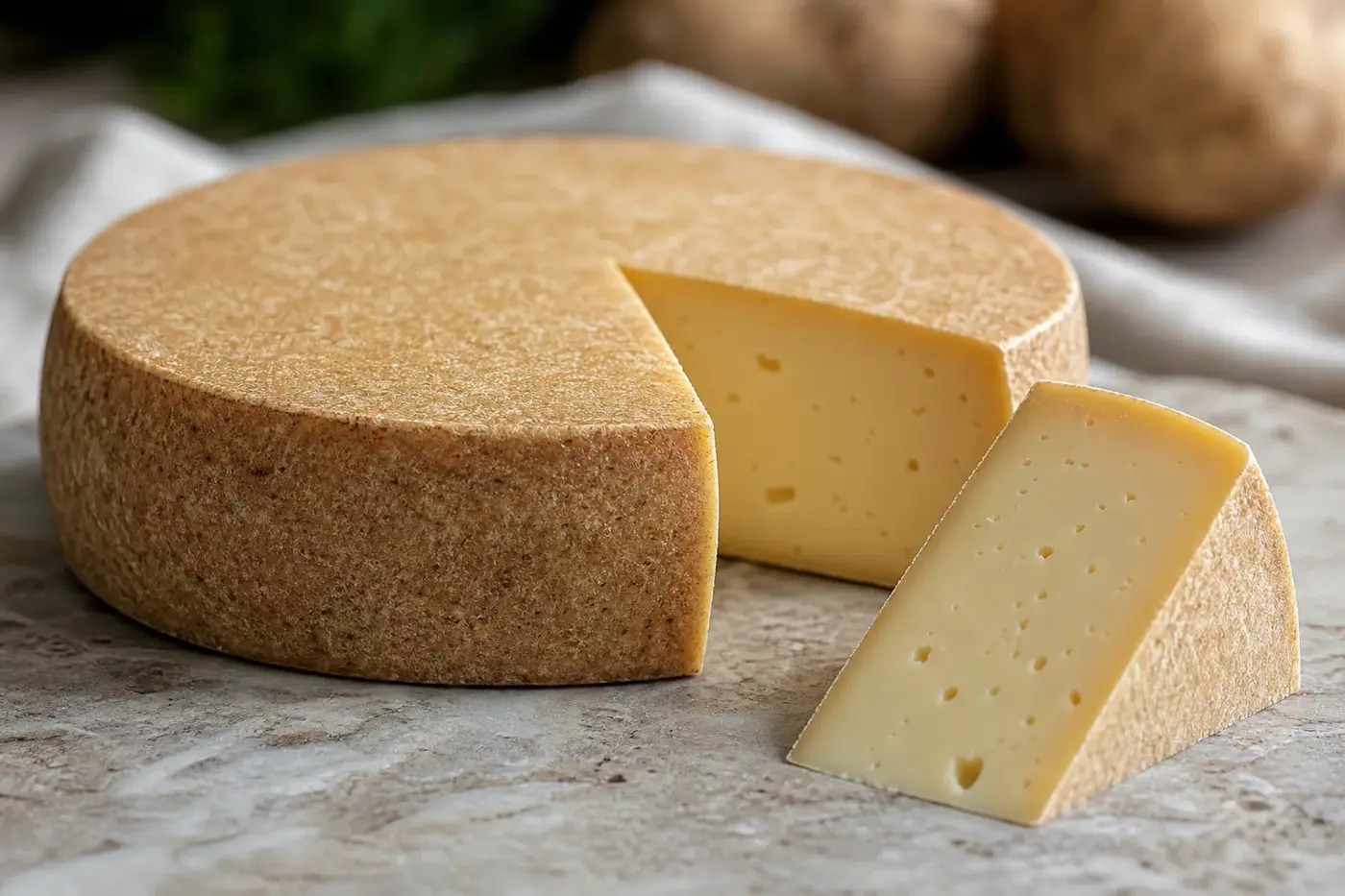
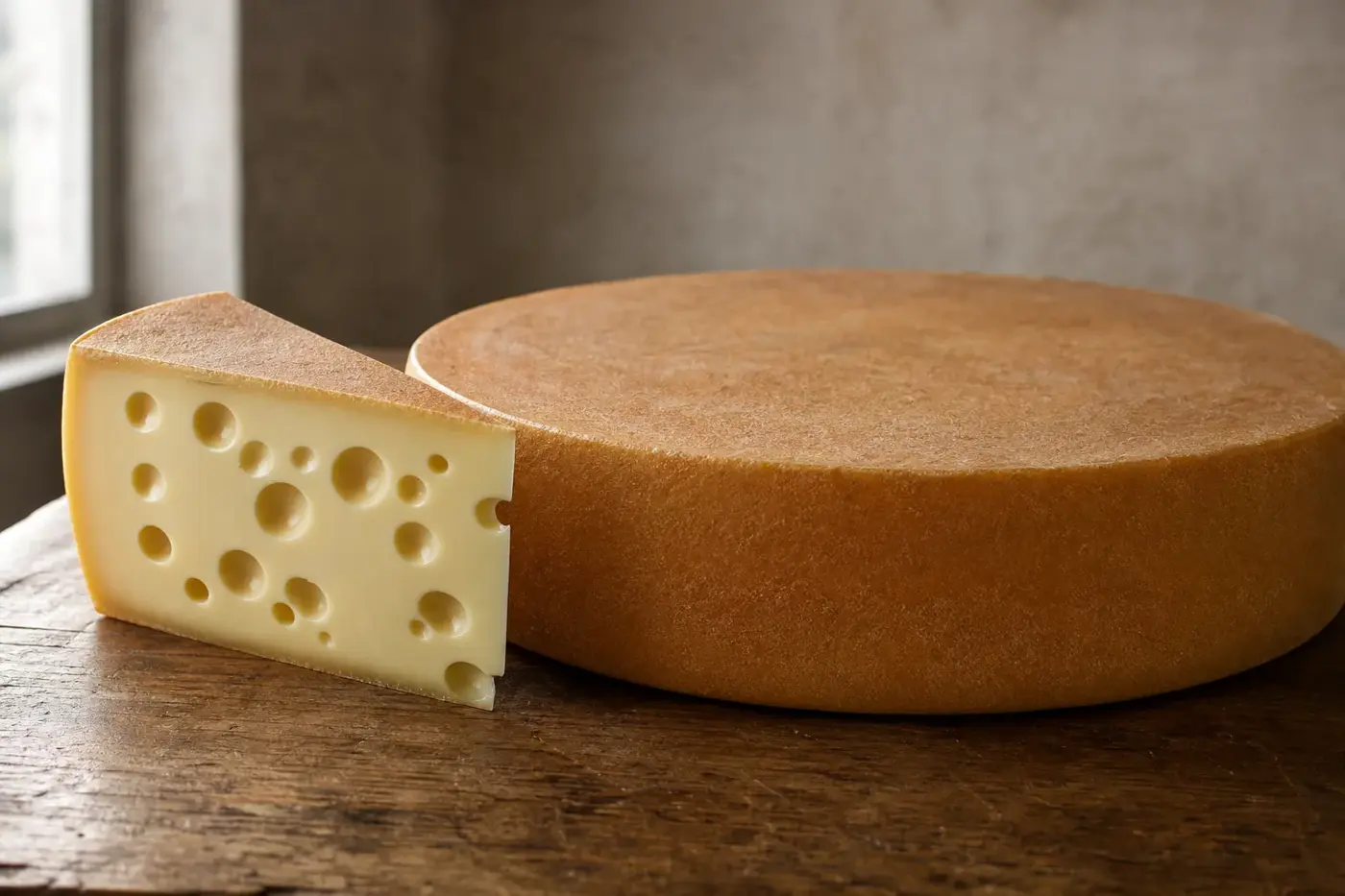
Sbrinz breaks rather than bends. The Swiss specification describes a rather dry paste with little give, slight to moderate crumbliness and perceptible granular crystals. You will find few holes, if any: this is a compact cheese, not an open, elastic one.[2]
Its official tasting profile gives you plenty to explore. Fruit and spice meet lightly roasted aromas, a suggestion of roasted chicory and a slightly astringent, spicy finish. Keep those clues in mind when choosing a piece, or tasting different maturities side by side.[2]
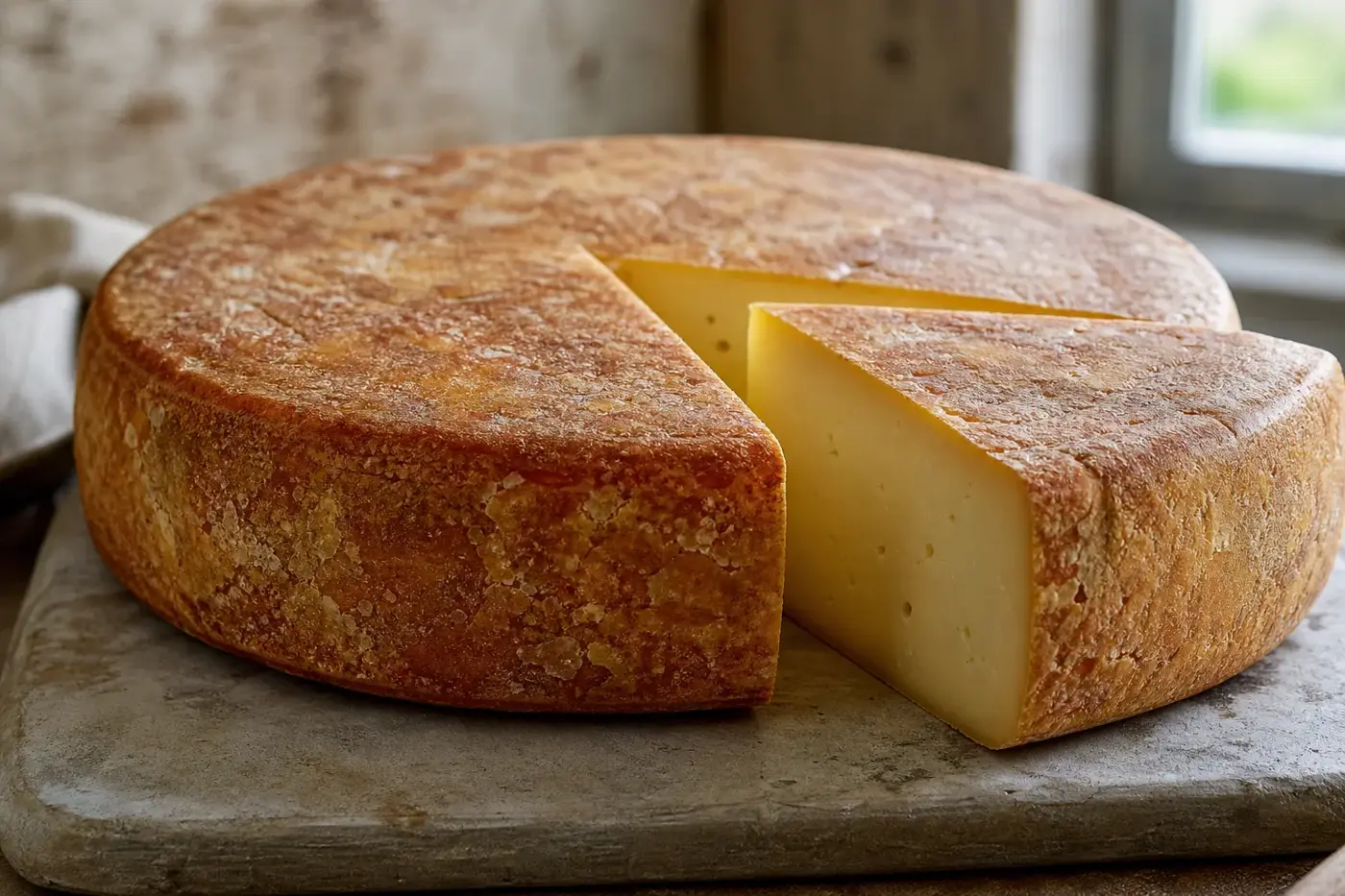
The large cylindrical wheels have a firm, dry rind, pale to golden yellow. Inside, the ivory to pale yellow cheese offers a different pleasure with each cut. A fine curl feels delicate; a broken piece puts those granules firmly in the spotlight.[2][3]
Find the dairies behind the name
Look for AOP: appellation d'origine protégée, meaning protected designation of origin. In Switzerland, Sbrinz's current specification covers Lucerne, Schwyz, Obwalden, Nidwalden and Zug. It also includes specifically defined milk collection areas in St Gallen and Aargau.[1][2]
These boundaries follow dairy connections rather than simply enclosing whole cantons. In St Gallen, the See-Gaster and Toggenburg supply areas serve the Walde and Schönenberg dairies. In Aargau, the Muri district supplies the Matten-Hünenberg dairy in Zug, which is why these two additional cantons are included only in part.[2]
You are choosing a geographically defined cheese made by a prescribed method. Sbrinz is not a brand name available to any extra-hard cheese. The guide to protected names explains how an origin designation differs from a general cheese style.[1][2]
Follow the old cheese route over the Alps
Picture Brienz as a collecting and trading point, with hard cheese arriving for the journey south. The Federal Office for Agriculture's registration dossier reports a sixteenth-century Bern archive record of central Swiss hard cheeses reaching the town for export. That documented trade gives you firmer historical ground than claims of an unbroken recipe reaching back to Roman times.[4]
Sbrinz Käse GmbH, the producer and trading organisation, describes mules carrying cheese towards northern Italy over the Grimsel and Gries passes. Its account puts Brienz at the centre of the exchange and links the cheese's later name to the Italian form “sbrinzo”. The registration dossier records the same explanation.[4][5]
This was regional hard cheese travelling long before the modern protected specification existed. Follow the dairies, the collecting town and the Alpine crossings, and you have the historical thread. It also helps explain why Sbrinz feels at home on your cheese plate and in your kitchen, ready for grating.[4][5]
From copper vat to silver fir board
Sbrinz begins with raw milk from cows fed without silage, the fermented forage used in some dairy systems. Sbrinz Käse GmbH describes local collection within a radius of 30 kilometres. The Swiss specification allows neither thermisation nor pasteurisation of the milk before cheesemaking.[2]
In copper vats, cultures of lactic acid bacteria and a coagulant help form the curd: the solids separated from liquid whey. The specification permits rennet or substitutes, with restrictions on genetically modified sources. If you need vegetarian cheese, ask about the particular product rather than relying on the name alone.[2]
The curd is cut, heated to 54 to 57 °C, then formed and pressed for at least ten hours. Hoops support the young wheels before salting. After brining come washing and a drying stage, when a natural film of fat forms on the surface.[2]
For the longer maturation, the wheels stand upright in the cellar. This dry-ripened treatment is central to Sbrinz's character, and the Swiss AOP-IGP Association describes wheels resting on silver fir boards, tended throughout maturation.[6] For the broader journey from milk to wheel, turn to how cheese is made.
Eighteen, twenty-two or twenty-four months?
Before Sbrinz reaches consumers, it must mature for at least 18 months. The first twelve months must be spent within the geographical area. Both are binding requirements in the Swiss specification.[2]
Beyond that minimum, your choice becomes a matter of flavour and purpose. The producer organisation associates younger maturity with shaving into curls and describes fuller flavour from about 22 months. Elsewhere, it names 24 months as the ideal eating age: advice for enjoyment, distinct from the legal threshold.[3]
As the cheese ages, the producer describes increasing aromatic intensity and spice. Ask “How old is it?” and then “What will I do with it?” For rolls, choose a piece that will shave; for breaking and grating, ask for a well-matured piece.[3]
At the table, let the texture lead. An older piece may give you distinct, irregular morsels, while a younger shaving offers the pleasure of thinness. You need not appoint a winner, though tasting both is a perfectly respectable way to postpone the decision.[3]
Choose your tool, choose your pleasure
Sbrinz gives you three quite different ways to enjoy its texture. Sbrinz Käse GmbH recommends a slicer or ordinary peeler for curls, a dedicated cutter for broken morsels and an ordinary grater for cooking. Start with how you want to eat it, then reach for the tool.[3]
| What you fancy | Choose this | How to do it |
|---|---|---|
| Fine shavings or rolls | A piece towards the younger end of maturity that shaves well | Draw a slicer or peeler across it for thin ribbons.[3] |
| Broken morsels, or Möckli | Mature cheese with a crumbly fracture | Break off small, irregular pieces with a suitable cheese tool.[3] |
| Grated cheese | A mature piece to spread through or over food | Grate just what your dish needs.[3] |
Use a stable board and keep your fingers clear of the tool's path. If the cheese will not form a ribbon, make morsels or grate the fragments rather than forcing the blade. For your first tasting, put curls beside broken pieces and try both before adding accompaniments.
Make a little room on your plate
Begin with plain bread, a crisp apple or pear, and water or an alcohol-free sparkling apple drink. You get something fresh alongside the dry, savoury cheese. It is a simple way to leave room for those documented roasted and fruity notes.[2]
Try broken morsels beside bread rather than surrounding them with strongly flavoured chutneys. For a salad, add broad shavings at the end, so you get cheese in some bites and a pause in others. The idea is to enjoy Sbrinz's texture and flavour, not make them compete for attention.[2][3]
In the kitchen, the producer organisation suggests grated Sbrinz for pasta, risotto and gratins, plus savoury pastries and fillings.[3] Give it one clear job: stir it through for seasoning, or finish with a little on top for a more distinct impression of the cheese. Even a good cheese need not do all the work.
A simple vegetable risotto or pasta with greens makes a useful starting point. Keep other assertive ingredients restrained, add grated cheese gradually and taste before reaching for more salt. You want to recognise the Sbrinz, rather than lose it in an anonymous final dusting.
Sbrinz, Le Gruyère or Berner Hobelkäse for you?
A Swiss origin does not make these cheeses interchangeable. Sbrinz is extra-hard; Le Gruyère has its own production tradition and maturity range. Its interprofession describes cheeses at six to nine months, Réserve from ten months, and some wheels matured considerably longer.[2][7]
Berner Hobelkäse leads you into the Bernese Alpine cheesemaking tradition. Agroscope, Switzerland's agricultural research institute, describes summer production on Alpine pastures, followed by the selection of suitable Berner Alpkäse for extended maturation into extra-hard Hobelkäse. That seasonal Alpine route to a shaving cheese differs from Sbrinz's combination of valley and Alpine dairies.[6][8]
Let your dish and the texture you want guide your choice. Shaving and grating give these cheeses a useful connection in your kitchen, but do not make them the same. Each name protected in Switzerland retains its own geographical and production requirements.[1][2][8]
Find your piece and bring it home
Start with the Sbrinz name and AOP designation, then ask about maturity and explain how you want to serve it. In Switzerland, look for both the name and designation on the pack; the specification also requires traceability through the production chain.[2] The guide to reading cheese labels helps you distinguish the cheese's identity from the packer's or seller's details.
If curls are the plan, ask your cheesemonger whether that particular cut will shave cleanly. For regular cooking, a wedge gives you the freedom to grate, shave or break it. If you choose ready-prepared rolls or grated cheese, keep the pack for storage instructions and batch information.
At home, follow the product's refrigeration instructions and any directions for use after opening. Cover your cut cheese and use clean utensils. The guide to storing cheese at home explains the broader routine, but your pack's directions are the starting point for that particular piece.
Raw milk: the guidance that applies to you
Sbrinz is made with raw milk, so consult official advice for the person eating it and the country whose guidance you follow. The following guidance is dated November 2026. Use the current sources for the advice that applies to you.[2][9][10]
United Kingdom, pregnancy: the NHS lists pasteurised and unpasteurised hard cheeses among foods you can eat during pregnancy, including cheddar, gruyère and parmesan as examples. It separately advises avoiding unpasteurised milk and gives precautions for soft mould-ripened and blue cheeses. Follow the NHS's current pregnancy food guidance for those distinctions.[9]
United States: consult the CDC's current Listeria prevention guidance for advice on cheese made with unpasteurised milk. It also explains the groups to whom that advice applies.[10]
If you have questions about your circumstances, take the product label to your doctor, midwife, pharmacist or dietitian. For the distinction between milk treatment and cheese style, turn to raw milk, thermised and pasteurised cheese.
General information only, not medical advice: follow the official guidance where you live.
Questions people ask
How long is Sbrinz aged?
Sbrinz must mature for at least 18 months before sale to consumers. The producer organisation describes fuller flavour from about 22 months and gives 24 months as its ideal eating age.
What does Sbrinz taste and feel like?
Sbrinz has fruity, spicy and lightly roasted aromas, with a slightly astringent, spicy finish. Its paste is rather dry and crumbly, with perceptible granular crystals.
Is Sbrinz suitable for vegetarians?
The Swiss specification permits rennet or substitutes, subject to restrictions on genetically modified sources. Anyone requiring a vegetarian cheese should check the particular product.
Can you eat Sbrinz during pregnancy?
The NHS lists pasteurised and unpasteurised hard cheeses among foods that can be eaten during pregnancy, with cheddar, gruyère and parmesan among its examples. Follow the NHS's current pregnancy food guidance and ask your doctor, midwife, pharmacist or dietitian about your own circumstances.
How do you serve Sbrinz?
You can shave it into curls, break it into irregular morsels or grate it. The producer organisation suggests grated Sbrinz in pasta, risotto, gratins, savoury pastries and fillings.
Sources
- Swiss Federal Office for Agriculture. AOP / IGP Ursprungsbezeichnungen und geografische Angaben, current register, Sbrinz entry, checked November 2026. Records the decision of 20 December 2001, subsequent amendments and publication of the registration on 24 April 2002.
- Swiss Federal Office for Agriculture. Cahier des charges: Sbrinz, consolidated specification incorporating the amendment decision of 13 May 2019. Articles 1 to 5, 8 to 12 and 15 to 17.
- Sbrinz Käse GmbH. Craftsmanship, undated producer organisation account, current page checked November 2026. Sections on presentations, agriculture, maturation and culinary uses. This organisation represents commercial participants in Sbrinz production and trade.
- Swiss Federal Office for Agriculture. Zusammenfassung des Eintragungsgesuchs für Sbrinz, 15 January 2002, section 7, historical elements. Used for its account of historical records, not its superseded production figures.
- Sbrinz Käse GmbH. Tradition, undated producer organisation account, current page checked November 2026. Account of Brienz, mule transport and the Grimsel and Gries crossings.
- Swiss AOP-IGP Association. Sbrinz AOP, undated industry association profile, current page checked November 2026. Used for valley and Alpine production, dry maturation, silver fir boards and commercial presentations.
- Interprofession du Gruyère. Le Gruyère AOP, current producer interprofession website, checked November 2026, section “Nos 4 variétés”. Used for its published maturity ranges.
- Agroscope. Berner Alpkäse AOP und Berner Hobelkäse AOP, undated technical profile, current page checked November 2026. Used for summer Alpine production and maturation of selected Alpkäse into Hobelkäse.
- NHS. Foods to avoid in pregnancy, current guidance checked November 2026, section “Cheese, milk and other dairy”.
- US Centers for Disease Control and Prevention. Preventing Listeria Infection, 31 January 2025, current guidance checked November 2026. Sections identifying higher-risk groups and the food avoidance and alternatives table.
This piece was researched from the Swiss official register and specification, an official registration dossier, attributed producer and industry accounts, Agroscope and national public health guidance.
Last checked: November 2026
Last checked November 2026.
The editors suggest you read next