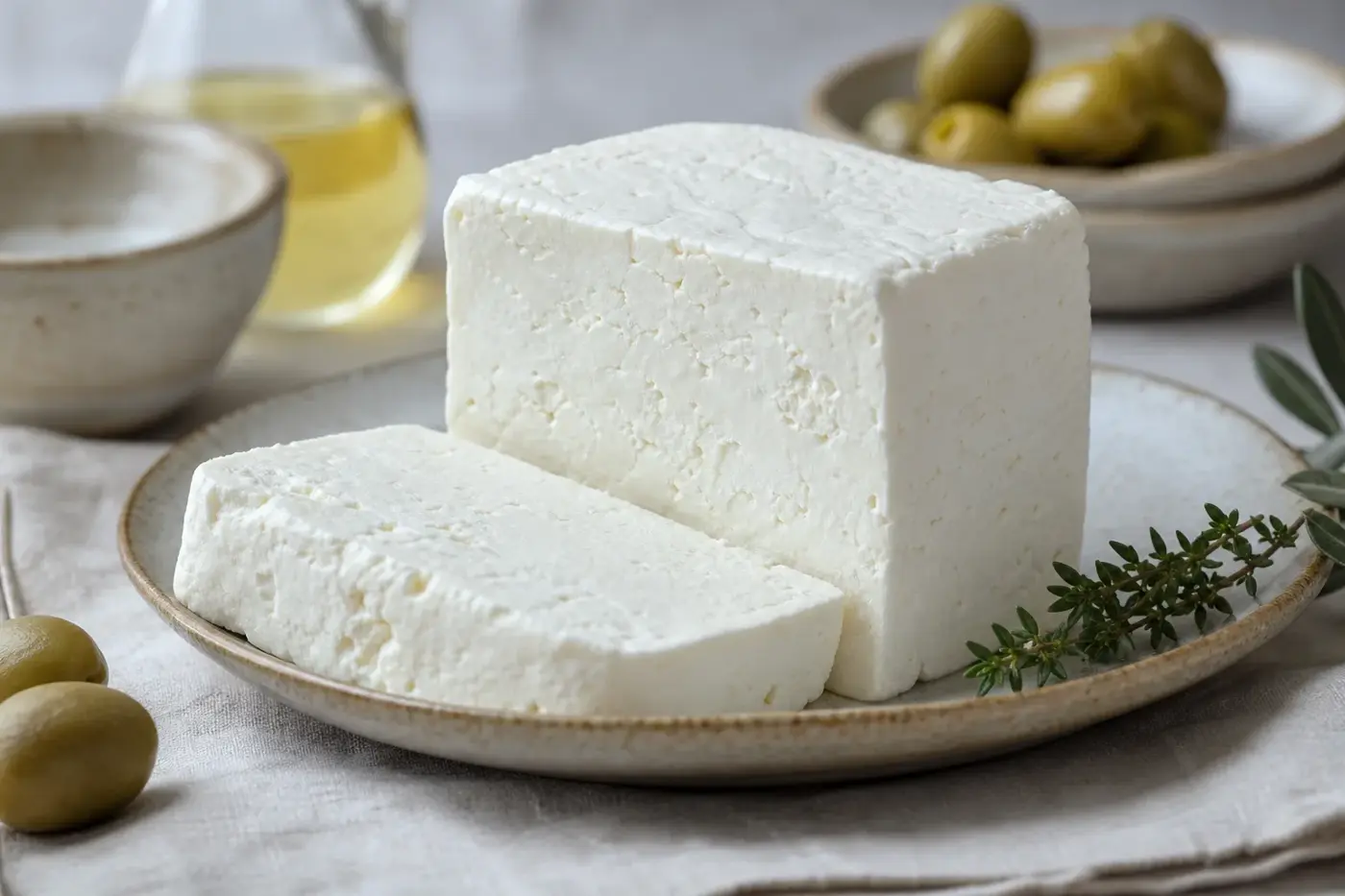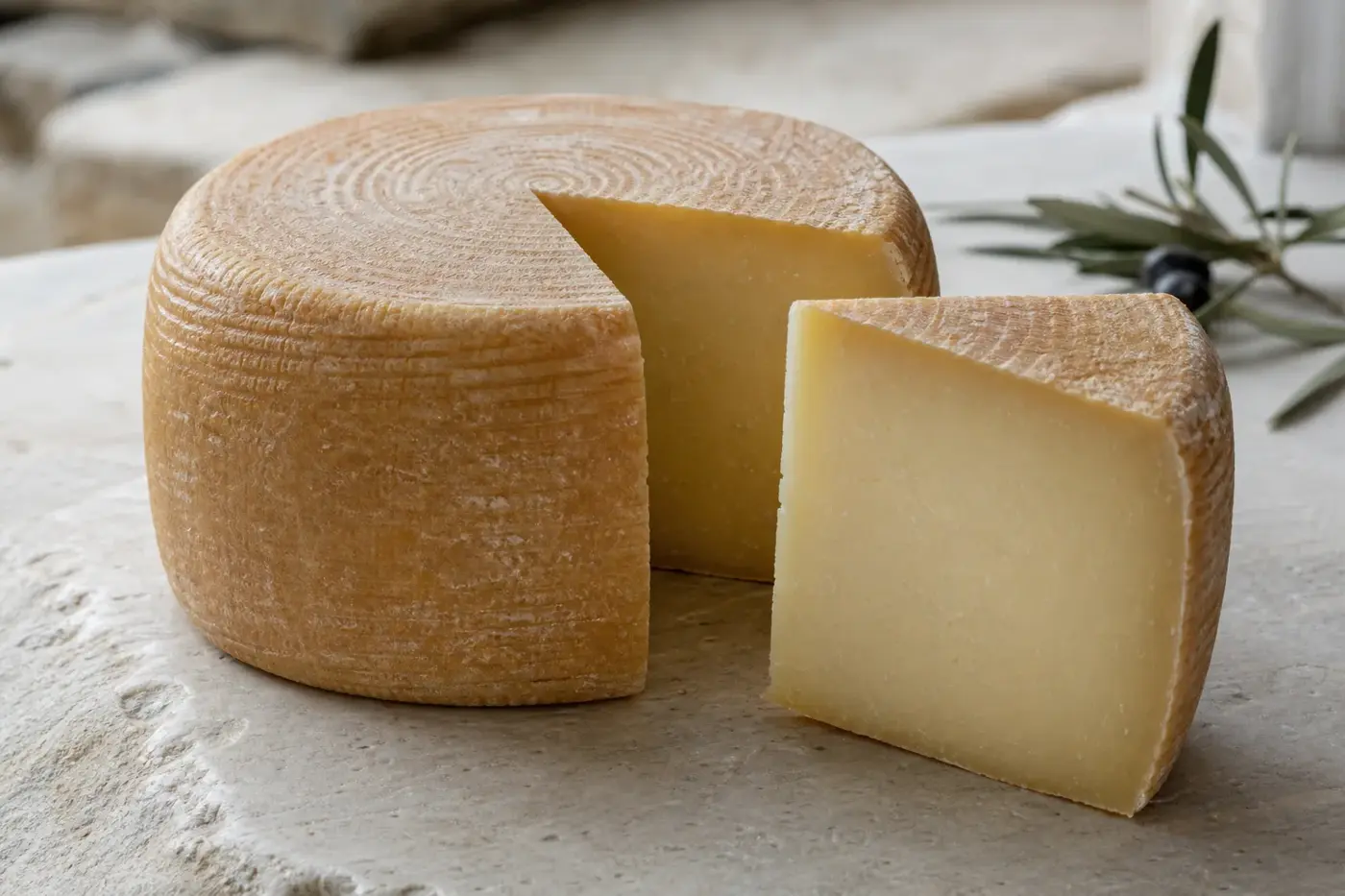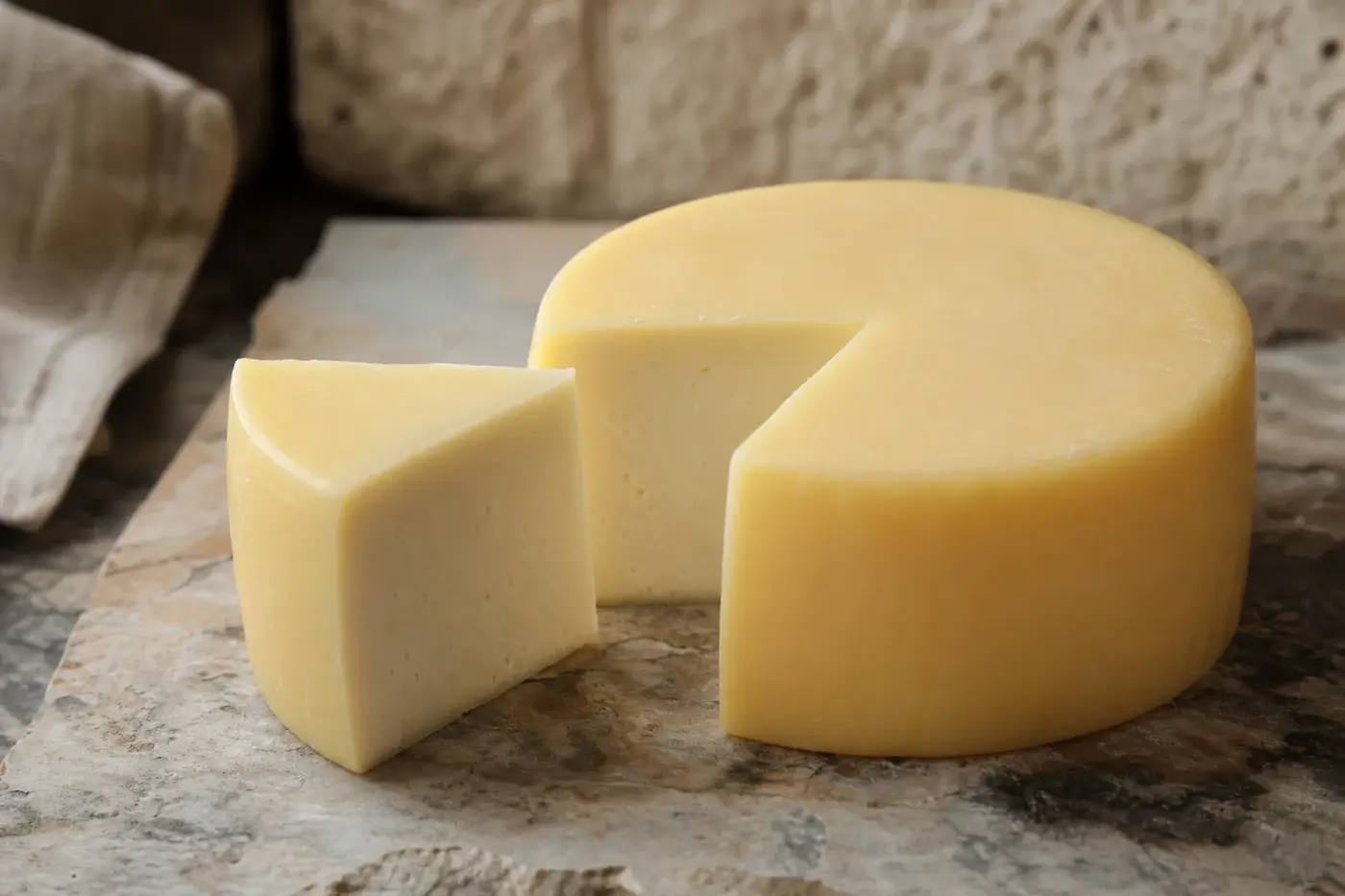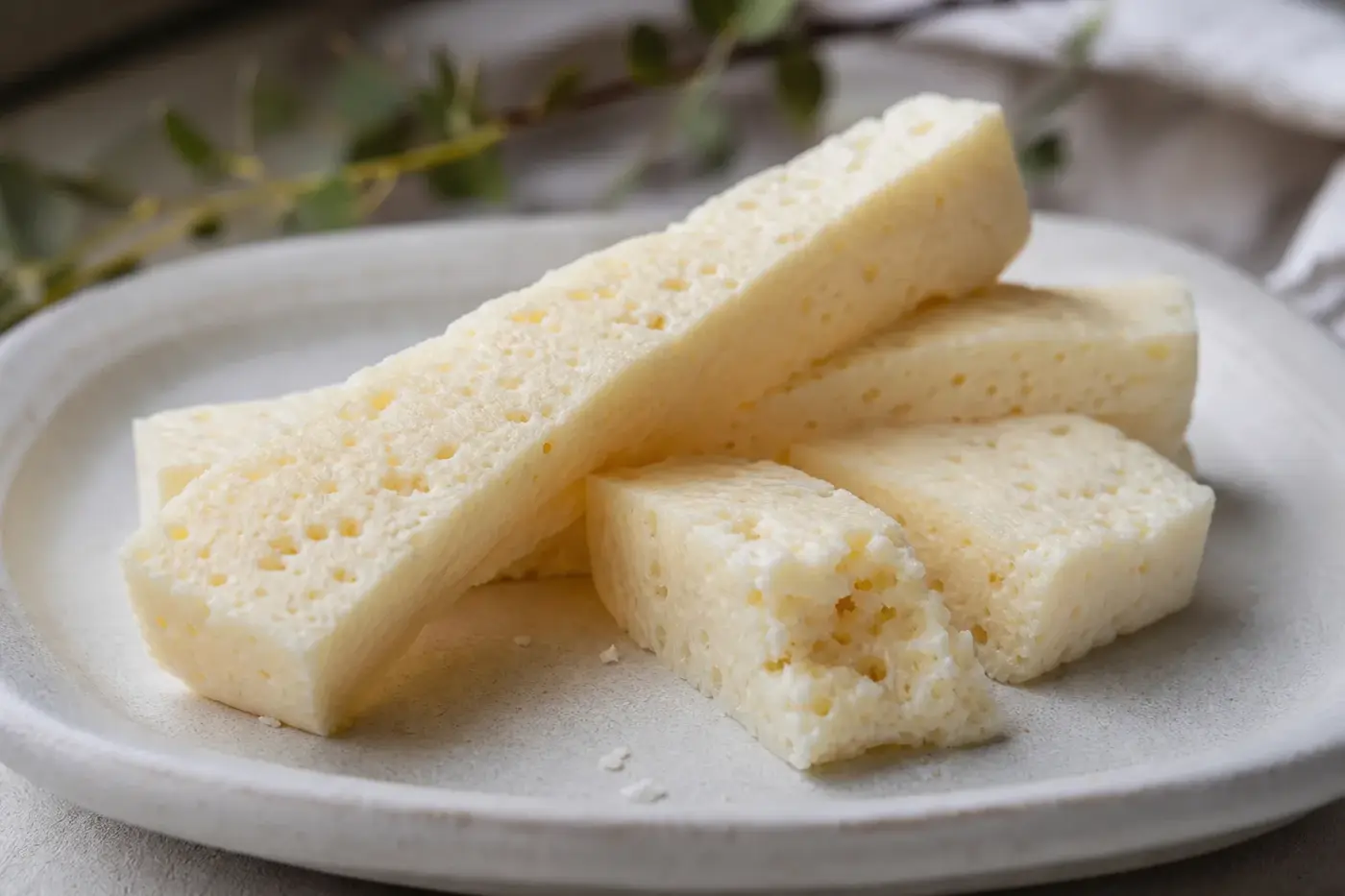
Your knife meets a firm strip of pale cheese. Salt arrives first, then a piquant bite: Sfela does not need much introduction once it reaches your plate. This traditional Greek brined cheese comes from Messinia and Laconia in the southern Peloponnese, and its name holds a clue to those strips. It is equally at home in a frying pan, with rather more to offer than being compared with Feta. [1][4]
| Get to know it | Sfela |
|---|---|
| Familiar and registered names | Sfela; Σφέλα / Sfela. [2] |
| Registration authorities | European Commission, EU scheme; Defra, GB scheme. [2][3] |
| Register identifier | Unspecified. |
| EU protection | EU register status unspecified. |
| Great Britain protection | Registered PDO from 31 December 2020 at 23:00. Information dated November 2026. [2] |
| Northern Ireland | The EU GI scheme applies. [3] |
| Where it comes from | Messinia and Laconia, Greece. [4][6] |
| Milk described by the University of the Peloponnese | Sheep’s milk or sheep-and-goat mixtures; raw or pasteurised. [5] |
| Required milk proportions | Unspecified. |
| Legal minimum maturation | Unspecified. |
| Reported composition | Maximum moisture 45% of the whole cheese; minimum fat in dry matter 40%. [5] |
Follow the strips to the southern Peloponnese
Sfela’s name gives you something to look for. Kalamata’s municipal gastronomy resource connects it with sfelida, meaning a strip, and those strips remain a recognisable part of its making and presentation. The same account places Sfela firmly in Messinia and Laconia, rather than leaving it among the anonymous ranks of Greek white cheese. [4]
When you buy your first piece, that connection matters as much as its appearance. Look for the name Sfela, the producer and the southern Peloponnese origin together. Then ask about the milk and maturation of the cheese in front of you.
Its local companions tell you how to eat it. Kalamata’s account puts Sfela beside tomatoes, peppers, rusks and lalangia, the region’s fried dough strips, and records it in pies and egg dishes. This is a cheese with kitchen duties, not merely an appointment on the appetiser plate. [4]
A protected name with room for different makers
PDO means protected designation of origin, but what does that mean when you are buying cheese? A registered name belongs to qualifying production, not one business. Under the geographical indication schemes described by Defra, producers must follow the specification and demonstrate compliance: the name is tied to its origin and defined characteristics. [3]
That explains why several dairies can sell Sfela under their own names. The producer tells you who made your cheese. The protected designation identifies the product and the requirements that producer must meet. [3]
The GB register records Σφέλα / Sfela as a registered PDO, with an original EU registration date of 21 June 1996. Great Britain’s separate registration took effect on 31 December 2020 at 23:00. The GB scheme covers England, Scotland and Wales; Northern Ireland follows the EU scheme. These territorial details are dated November 2026. [2][3]
If you would like to untangle the names from the schemes, turn to protected names explained.
Meet the milk behind your slice
The University of the Peloponnese describes Sfela made with sheep’s milk or sheep-and-goat mixtures, using either raw or pasteurised milk. Its account connects the cheese’s regional identity with traditionally reared animals adapted to the area and feeding on its vegetation. Here, the landscape is part of the cheese’s story, not just the scenery. [5]
Ask which milk mixture your producer uses. The answer describes that particular product, not necessarily every Sfela you will encounter. Ask about treatment separately: Raw, thermised and pasteurised milk are distinct descriptions, and the cheese’s name alone cannot tell you which was used.
Two cuts, a cloth and a bath of brine
Sfela is cut twice during its making, with a different purpose each time. The university’s account begins with coagulation at 30 to 32 °C, followed by cutting and reheating to 38 to 40 °C while stirring. The curd, the solid part separated from the liquid whey, is then drained in cloth and pressed into a joined mass. [5]
The second cut comes after pressing, producing the strips associated with Sfela’s name. These are surface-salted and matured in brine, with a later refrigerated ripening stage. Picture the first cut dividing the newly formed curd before draining, and the second giving the cheese the shape you recognise. [5]
To follow the wider journey, from coagulation through to maturation, explore how cheese is made.
A pale cheese with plenty to say
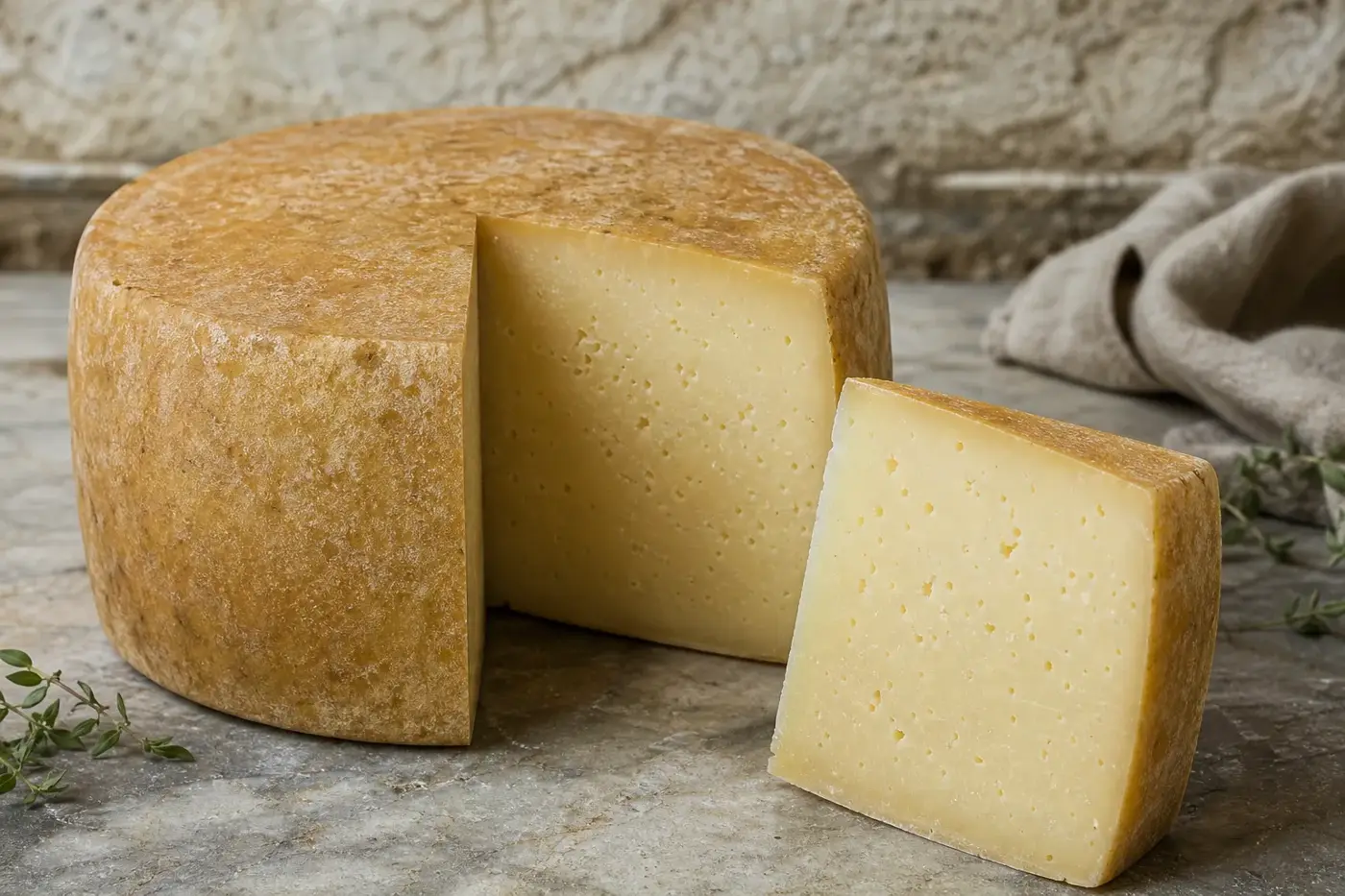
When your cheesemonger shows you a cut piece, look for a pale surface dotted with small openings. The university describes Sfela as white to yellowish-white, semi-hard and rindless, with numerous small openings. Its characteristic flavour is piquant and distinctly salty: a quiet appearance, perhaps, but not a quiet mouthful. [5]
Producer Laviogal also highlights a spicy character in its own Sfela and recommends it for saganaki. Keep that distinction in mind: this is the maker describing its particular cheese. [6]
Ask about age alongside flavour: how long has this piece matured, and how has it been kept? If you want to compare ages, choose cheeses from the same producer where possible. Otherwise, differences between dairies can leave maturation taking all the credit.
Sfela or Feta? Let your dish decide
Both belong to the world of brined cheese, but their making follows different paths. Pressing and reheating distinguish the university’s Sfela account from the Greek Feta production specification. The Greek Feta decision describes natural drainage without pressure, followed by salting and maturation. [5][7]
| What you are comparing | Sfela | Feta under the Greek PDO specification |
|---|---|---|
| Milk | Sheep’s milk or sheep-and-goat mixtures, as described by the university. [5] | Sheep’s milk, or sheep’s milk with up to 30% goat’s milk. [7] |
| How it drains | Cloth drainage and pressing. [5] | Natural drainage without pressure. [7] |
| Texture | Semi-hard. [5] | Soft, but sliceable. [7] |
| Openings | Numerous small openings. [5] | Few or none, with some mechanical openings. [7] |
| Where to begin in the kitchen | Sliced appetiser, grilled or fried cheese. [4][6] | Allow for its softer structure when choosing a preparation. [7] |
Choose your cheese for the job ahead. If a substantial piece will be the centre of your dish, Sfela’s documented grilling and frying uses make it worth seeking out by name. If your recipe calls for Feta, respect its expectations about texture and moisture rather than assuming the two will behave identically. [4][7]
You can explore Feta’s production area and specification in the separate Feta guide.
Begin with a slice, then reach for the pan
Start with a plain slice. Before adding anything else, taste how salty it is and decide how much your finished dish needs. That small pause is particularly useful if other salty ingredients are waiting their turn.
For a cold plate, borrow the combinations recorded by Kalamata’s gastronomy resource: tomatoes, peppers, rusks or lalangia. The same account puts Sfela in salads, pies, omelettes and kagianas, a tomato-and-egg preparation. You have plenty of reasons to take it beyond the cheeseboard. [4]
Grilling and frying are established uses, too. Kalamata records both, while Laviogal specifically recommends its product for saganaki. Choose a recipe written for your cheese and cooking method, especially when the cheese is the main event. [4][6]
Keep your first dish simple: cheese, vegetables and bread. Taste before deciding on extra seasoning, and take the same approach with a pie or egg dish before adding olives or other salty ingredients. Let the cheese guide you rather than treating this as a fixed recipe.
A few good questions at the cheese counter
Start with the registered name, then turn to the details. Check the producer, milk species, milk treatment, date marking and storage instructions. The PDO name, ingredient list and refrigeration instructions each tell you something different, so give each your attention. [2][3][8]
The packaging matters, too. Laviogal’s published range includes cheese in tins and vacuum-packed portions, so your retail piece may look different from cheese lifted from a larger container. Follow the instructions for the pack you actually take home. [6][8]
Buying at a counter? Ask for storage advice and date information to accompany your wrapped piece, including whether it should stay in any supplied brine. For help distinguishing the product name, producer and handling information, see how to read a cheese label.
Make room for Sfela in your fridge
Keep dairy products refrigerated according to their packaging instructions. Food Standards Agency guidance for England, Northern Ireland and Wales recommends a fridge between 0 and 5 °C. The home-handling advice here follows that guidance, with information dated November 2026. [9]
Kalamata’s account describes Sfela as traditionally matured and kept in brine. If your retail pack supplies brine, follow its directions for keeping the liquid and storing the opened cheese. For vacuum-packed portions, use that pack’s instructions rather than automatically transferring the cheese into homemade brine. [4][8]
Read the opening instructions to find out how quickly to finish your cheese. Write the opening date on the container and buy a portion that suits the meals you have planned. Different products and packs do not all have the same refrigerated life.
A use-by date is about safety; a best-before date is about quality. Government food-labelling guidance makes that distinction and warns that improper storage can make food unsafe before its use-by date. Read the date and storage conditions together. [8]
Do not rely on appearance or smell to decide whether food past its use-by date is safe. For mould, follow the relevant food safety agency’s current advice alongside your product’s storage instructions. You can also read mould on cheese. [8]
Let the label guide your dietary questions
For pasteurisation and ingredients, read the label on the product you intend to eat. If you need to establish vegetarian suitability, ask which coagulant that producer used in that product. The cheese’s name cannot answer that question for you.
For pregnancy in the UK, the NHS lists pasteurised semi-hard cheeses among those that can be eaten. Consult its current guidance and ask your midwife or doctor about your circumstances. [10]
If your question concerns allergy or intolerance, take the ingredient information to your clinician or dietitian. Keep the packaging so your discussion is about the particular cheese you intend to eat.
General information only, not medical advice: follow the official guidance where you live.
Questions people ask
How is Sfela different from Feta?
Sfela is drained in cloth and pressed, while the Greek Feta specification describes natural drainage without pressure. Sfela is also firmer, with numerous small openings, whereas Feta is soft and sliceable, with few or no openings.
What milk is used to make Sfela?
The University of the Peloponnese describes Sfela made from sheep’s milk or a mixture of sheep’s and goat’s milk. Either raw or pasteurised milk may be used, so check the particular product.
How do you eat or cook Sfela?
Kalamata’s gastronomy resource records Sfela served with tomatoes, peppers, rusks and lalangia, as well as in pies and egg dishes. It also records grilling and frying, while producer Laviogal recommends its Sfela for saganaki.
How should Sfela be stored?
The Food Standards Agency recommends a fridge temperature between 0 and 5 °C in England, Northern Ireland and Wales. Check its current guidance and follow the storage and opening instructions on the pack.
Can you eat Sfela during pregnancy?
The NHS lists pasteurised cheeses with a firm texture, including those described as semi hard, among cheeses that can be eaten during pregnancy. Check the product label and consult the NHS’s current guidance, as well as your midwife or doctor about your circumstances.
Sources
- Hellenic Ministry of Rural Development and Food, Τυριά [Cheeses], current online list of Greek PDO cheeses and linked specifications, accessed November 2026.
- Department for Environment, Food & Rural Affairs, Σφέλα / Sfela, GB protected food names register entry, published 2021, accessed November 2026.
- Department for Environment, Food & Rural Affairs, Protected geographical food and drink names: UK GI schemes, updated 8 March 2024, accessed November 2026.
- Kalamata Gastronomy, Municipality of Kalamata, ΣΦΕΛΑ ΠΟΠ, undated online account, accessed November 2026.
- University of the Peloponnese, food-authentication research project, Προϊόντα, section Παραδοσιακό ΠΟΠ τυρί «Σφέλα», undated online account, accessed November 2026.
- Laviogal, Sfela P.D.O., undated producer product page, accessed November 2026. This is a commercial producer’s account of its own product.
- Hellenic Republic, Ministerial Decision 313025, Recognition of protected designation of origin for Feta cheese, Government Gazette B 8, 11 January 1994, Articles 1 to 4, printed pages 51 to 52.
- GOV.UK, Understanding food labelling: Best before and use-by dates, current online guidance, accessed November 2026.
- Food Standards Agency, How to chill, freeze and defrost food safely, published 18 December 2017, current online text accessed November 2026. Applies to England, Northern Ireland and Wales.
- NHS, Foods to avoid in pregnancy, current online guidance, accessed November 2026.
Researched through official register and government records, a regional university account, municipal food documentation and an attributed producer source; no site tasting or cooking trial was undertaken.
Last checked: November 2026
Last checked November 2026.
The editors suggest you read next