The US 60 Day Rule for Raw Milk Cheese
Picture a raw milk Cheddar reaching its 60th day of curing.
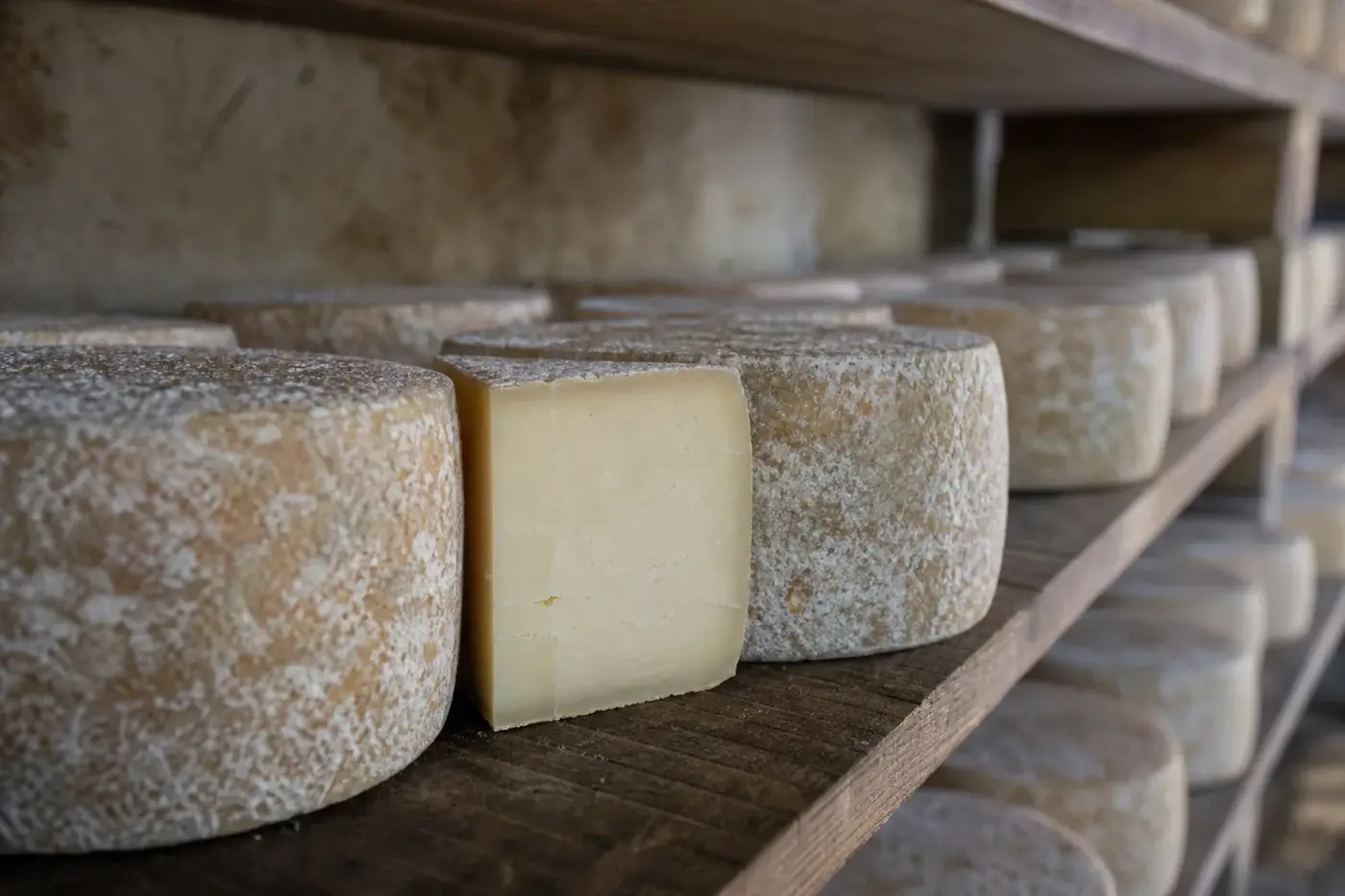
Picture a raw milk Cheddar reaching its 60th day of curing. The legally required ageing period is complete. Yet the cheese can still contain a pathogen. That is the crucial distinction behind the US 60 day rule: federal regulations offer an ageing route for certain cheeses, but time alone cannot guarantee that contaminated cheese becomes safe.[1][2][5]
Before the birthday, the rule
Before you reach for the calendar, start with pasteurisation. Under 21 CFR 1240.61(a), milk and milk products in final packages for direct human consumption must generally be pasteurised, or made entirely from pasteurised dairy ingredients, when delivered into interstate commerce or sold or distributed after interstate shipment. The regulation expressly recognises alternatives elsewhere in federal regulations, including curing certain cheeses under 21 CFR Part 133.[1]
Those alternatives give specified raw milk cheeses a place in federal law through their manufacturing standards. A standard of identity sets the requirements for food sold under a particular name. Depending on the standard, that means ingredients, composition and production conditions.[1][2][3]
State law adds another layer. Section 1240.61 addresses interstate commerce, while making or selling cheese within an individual state also means understanding that state’s rules. If you make cheese, establish those requirements with your local dairy or food authority alongside your federal obligations.[1]
Want to get the milk treatments straight first? Start with raw, thermised and pasteurised cheese.
Cheddar’s 35 °F rule: read the thermometer carefully
The Cheddar standard, 21 CFR 133.113(a)(1), requires cheese made with unpasteurised dairy ingredients to be cured for at least 60 days at a temperature of not less than approximately 1.7 °C (35 °F). The legally specified temperature is 35 °F. The Celsius figure is its rounded conversion.[2]
That is a minimum temperature, not a maximum storage temperature. Reading it as “keep the cheese below 35 °F” reverses the requirement. Putting any fresh cheese in a refrigerator for two months does not, by itself, make it lawful Cheddar.[2]
The same section sets Cheddar’s composition and describes acid development, whey drainage, salting and pressing. These are the steps that turn milk into this particular cheese. Curing belongs within that whole standard, not as a separate permission detached from the cheese’s identity and manufacture.[2]
For Cheddar beyond the paperwork, settle into the broader Cheddar article. It deserves more than a supporting role beside a thermometer. Here, though, it makes the law tangible: the familiar 60 day shorthand means a precise combination of product, time and temperature.
Which cheeses get an ageing route?
You cannot tell from a firm texture or a mature appearance. The applicable regulation decides. Part 133 contains standards for individually named cheeses and broader categories, and those broader standards expressly exclude cheeses covered by a more specifically applicable standard.[3]
Find your cheese’s federal provision: November 2026
| Provision | Cheeses covered | Required ageing for unpasteurised milk | Where to find the rule |
|---|---|---|---|
| Cheddar | US federal Cheddar standard | At least 60 days at not less than approximately 1.7 °C (35 °F) | 21 CFR 133.113(a)(1).[2] |
| Hard cheeses | US federal category standard, unless a more specific standard applies | At least 60 days at not less than approximately 1.7 °C (35 °F) | 21 CFR 133.150(a).[3] |
| Soft ripened cheeses | US federal category standard, unless a more specific standard applies | At least 60 days at not less than approximately 1.7 °C (35 °F) | 21 CFR 133.182(a).[3] |
Pause at soft ripened cheeses. The federal ageing alternative reaches beyond hard cheeses, but each maker or importer still needs to identify the applicable standard and meet its other requirements. This is not an exemption for every raw milk cheese.[1][3]
If you have a cheese normally eaten young in mind, first find the legal provision that governs it. Only then does counting to 60 become useful.
Back to 1949, and the thinking behind the rule
On 22 April 1949, proposed cheese standards published in the Federal Register set out the reasoning behind pasteurising milk or holding cheese. Reading them brings you close to the public health thinking of the time, including the limits of the available evidence. They remain a useful primary record.[4]
The record described two ways pathogens could enter cheese milk: infection in the animal and contamination during handling. Ordinary cheesemaking temperatures did not necessarily destroy those organisms. Holding cheese offered another route because viable pathogens tended to decline over time.[4]
How long was enough? The proposal acknowledged uncertainty about the holding time different cheeses needed, and recognised that pathogens could remain viable for months under some conditions. Against that background, it judged 60 days at 35 °F or above a reasonable precaution on the evidence then available.[4]
This was a proposal, not today’s legal instrument. Its historical importance lies in the judgement it records: a practical public health precaution made under uncertainty. The persistence of pathogens was explicitly recognised, not overlooked.[4]
Later evidence sharpened that concern. FDA’s subsequent sampling programme specifically investigated whether 60 days might fail to eliminate or adequately reduce pathogens.[5]
Inside the cheese, more than time is at work
A calendar tells you how much time has passed. The cheese determines the conditions microorganisms encounter. Whether they grow, persist or decline depends on the cheese and its manufacture, so understanding ageing means keeping both parts in view.[2][5]
Cheddar’s standard takes you through the making. Bacterial cultures develop acidity; cutting, heating and draining separate whey from curd. The curd is then salted before pressing: a sequence of manufacturing steps, not simply a spell in storage.[2]
Acid development and salt can inhibit some pathogens. Moisture and temperature influence whether organisms survive or grow. Those effects depend on the organism, cheese and process, so an age statement alone cannot tell you that hazards are controlled.
Moisture mattered to FDA’s sampling priorities. Its programme focused on softer cheeses because their relatively high moisture content makes them susceptible to Listeria monocytogenes growth if the organism is present.[5]
Handling matters too. FDA identified product handling practices or procedures as a possible explanation for its Listeria findings. Controls therefore need to address contamination during production and handling, as well as organisms originally present in the milk.[6]
Meet the three pathogens ageing may not defeat
Listeria monocytogenes may grow in certain cheeses during ageing. That is why FDA’s assessment of raw milk cheese considers growth as well as any gradual decline in the original contamination.[5]
Disease-causing E. coli, including E. coli O157:H7, can also challenge the ageing approach. FDA cites evidence that 60 days may not eliminate or adequately reduce it. Detecting this pathogen is not the same as detecting generic E. coli, which FDA describes principally as an indicator of potentially insanitary processing conditions.[5][6]
Salmonella is another organism for which FDA identifies limits to the protection offered by 60 days of ageing. Reaching that age does not settle the question for this pathogen either.[5]
FDA’s large sampling exercise collected 1,606 raw milk cheese samples, covering domestic and imported products. The reported contamination rate for each pathogen tested was below 1%, but contamination was detected. FDA cautioned that these low frequencies limited comparisons between cheese types and origins.[6]
The central finding is straightforward: aged raw milk cheese can contain pathogens. These results do not tell you the risk of an individual serving, or establish equal risk across all cheeses.[6]
For American cheesemakers, the release date matters
For domestic makers, the ageing alternative provides a federal route to producing specified cheeses from unpasteurised milk. It also gives the release date legal weight. The applicable curing requirement must be completed before the cheese can satisfy that provision.[1][2][3]
If you make a cheese intended for longer maturation, a 60 day requirement can fit comfortably into its production cycle. For a style normally eaten much younger, it can clash with the intended point of sale. That tension comes from applying a fixed minimum to different maturation patterns, not from a judgement about the quality of one tradition.[2][3]
The soft ripened category makes the challenge particularly clear. Its standard permits an unpasteurised route subject to curing conditions. The maker must still reconcile that legal minimum with the intended cheese.[3]
Keep the practical order clear: establish the lawful manufacturing route, then document compliance. An ageing date answers one part of the task. The applicable standard and evidence of controlled manufacture answer the rest.[1][2][3]
Bringing cheese into the US? Start beyond its age
Commercially imported cheese must meet US requirements as well as those governing its production abroad. FDA states that imported and domestically produced foods must meet the same US legal requirements. It also considers all imported food to be interstate commerce.[10]
Permission to make or sell a cheese in its country of origin does not settle whether it can enter the United States. If you import cheese, establish the applicable US manufacturing and food safety requirements. Registration, prior notice and other obligations relevant to the shipment need attention too.[10]
FDA and USDA have distinct roles. FDA oversees the food requirements described on this page. Within USDA, the Animal and Plant Health Inspection Service, or APHIS, regulates animal-derived materials to prevent the introduction of foreign animal diseases, and directs importers to its Veterinary Services Permitting Assistant for current permit requirements.[10][11]
These requirements apply together; they do not replace one another. Meeting an ageing provision answers only part of the import question. This section concerns commercial imports into the United States, while personal baggage needs a separate check of the operative traveller rules.[10][11]
When sampling leads to recalls
FDA’s raw milk cheese sampling programme shows you enforcement in practice. When domestic samples were contaminated, the agency worked with responsible businesses on recalls where appropriate and followed up with facility inspections. For contaminated imports, it refused entries and placed responsible firms or products on an import alert.[6]
The programme’s report also records investigations involving FDA, CDC and state officials.[5] State dairy and food authorities may inspect facilities and enforce state requirements, although their powers and rules vary by state. If you make cheese, contact the authority where you operate.
When you read a recall notice, details matter. Match the cheese’s name, producer, pack details and lot information against the notice, then follow its instructions. FDA maintains separate pages for food recalls and foodborne illness outbreaks.[12][13]
For makers, completing the curing period does not end regulatory scrutiny. FDA examined aged cheese because meeting an ageing interval and keeping cheese free of pathogens are separate questions.[5][6]
Before you buy, serve or open the fridge
Start with milk treatment, not a description of maturity. CDC recommends that everyone choose pasteurised milk and dairy products. FDA specifically advises pregnant women, older people and people with weakened immune systems against consuming unpasteurised milk and unpasteurised milk products.[7][8]
US agency recommendations: November 2026
Follow current official guidance for your circumstances, and take individual questions to a doctor, midwife, pharmacist or dietitian. Pasteurised cheese needs appropriate handling too. CDC notes that soft cheese made from pasteurised milk can become contaminated during production.[8]
For foods requiring refrigeration in the United States, FDA advises keeping your refrigerator at 4 °C (40 °F) or below. Its consumer guidance says not to leave these foods out for more than two hours, or one hour when the air temperature is above approximately 32 °C (90 °F).[9]
If milk treatment is unclear, ask the seller. Keep packaging that identifies the product and lot, and check relevant recall notices.[8][12] For your next practical steps, turn to how to read a cheese label, how to store cheese at home and Listeria and cheese safety.
General information only, not medical advice: follow the official guidance where you live.
Questions people ask
What is the US 60 day rule for raw milk cheese?
Certain federal cheese standards allow cheese made with unpasteurised milk to be cured for at least 60 days at 35 °F or above. The applicable standard and its other requirements must also be met; there is no exemption for every raw milk cheese.
Does ageing raw milk cheese for 60 days make it safe?
Not necessarily. FDA identifies limits to the protection provided by 60 days of ageing against Listeria, disease causing E. coli and Salmonella. In its sampling programme, contamination was detected among 1,606 raw milk cheese samples, although the reported rate for each pathogen tested was below 1%.
Can raw milk cheese be imported into the United States?
Commercially imported cheese must meet US requirements as well as those governing its production abroad. FDA says imported and domestically produced foods must meet the same US legal requirements, and it considers all imported food to be interstate commerce.
What do US agencies advise about eating raw milk cheese during pregnancy?
FDA advises pregnant women against consuming unpasteurised milk and unpasteurised milk products. Check current FDA guidance and take individual questions to a doctor, midwife, pharmacist or dietitian.
How should cheese that needs refrigeration be stored?
FDA advises keeping the refrigerator at 4 °C or below for foods requiring refrigeration in the United States. Its consumer guidance says not to leave these foods out for more than two hours, or one hour when the air temperature is above approximately 32 °C.
Sources
[1] US Food and Drug Administration, 21 CFR 1240.61: Mandatory pasteurization for all milk and milk products in final package form intended for direct human consumption, current eCFR text retrieved November 2026, particularly paragraph (a). Official text.
[2] US Food and Drug Administration, 21 CFR 133.113: Cheddar cheese, current eCFR text retrieved November 2026, particularly paragraphs (a)(1) and (a)(3). Official text.
[3] US Food and Drug Administration, 21 CFR Part 133: Cheeses and Related Cheese Products, current eCFR text retrieved November 2026, particularly sections 133.150 and 133.182. Official text.
[4] Federal Security Agency, Food and Drug Administration, Proposed cheese definitions and standards of identity, Federal Register, 22 April 1949, findings 19 to 21, printed pages 1961 to 1962. Historical proposal, not current law. Official archival issue.
[5] US Food and Drug Administration, FY 2014 to 2016 Microbiological Sampling Assignment: Summary Report: Raw Milk Cheese Aged 60 Days, 21 July 2016, particularly “Why Raw Milk Cheese?”, sample collection by cheese type and regulatory follow-up. Report.
[6] US Food and Drug Administration, Microbiological Surveillance Sampling: FY14-16 Raw Milk Cheese Aged 60 Days, agency summary, retrieved November 2026. FDA summary.
[7] US Food and Drug Administration, Listeria (Listeriosis), current web guidance retrieved November 2026, prevention advice for groups at increased risk. Official guidance.
[8] US Centers for Disease Control and Prevention, How Listeria Spread: Soft Cheeses and Raw Milk, current web guidance retrieved November 2026. Official guidance.
[9] US Food and Drug Administration, Are You Storing Food Safely?, current consumer guidance retrieved November 2026. Official storage guidance.
[10] US Food and Drug Administration, Importing Food Products into the United States, current guidance retrieved November 2026. Official import guidance.
[11] US Department of Agriculture, Animal and Plant Health Inspection Service, Animal Product Imports, last modified 18 June 2026, retrieved November 2026. Official guidance and permitting links.
[12] US Food and Drug Administration, Recalls of Foods & Dietary Supplements, live recall resource retrieved November 2026. Official recall resource.
[13] US Food and Drug Administration, Outbreaks of Foodborne Illness, live outbreak resource retrieved November 2026. Official outbreak resource.
This desk-researched article compares federal regulatory text, an archival rulemaking proposal, FDA sampling evidence and current US agency guidance.
Last checked: November 2026
Last checked November 2026.
The editors suggest you read next
Cheese Law Around the World: The Complete Guide
GRUYERE reached an American legal border and lost its exclusivity.