Tiroler Bergkäse
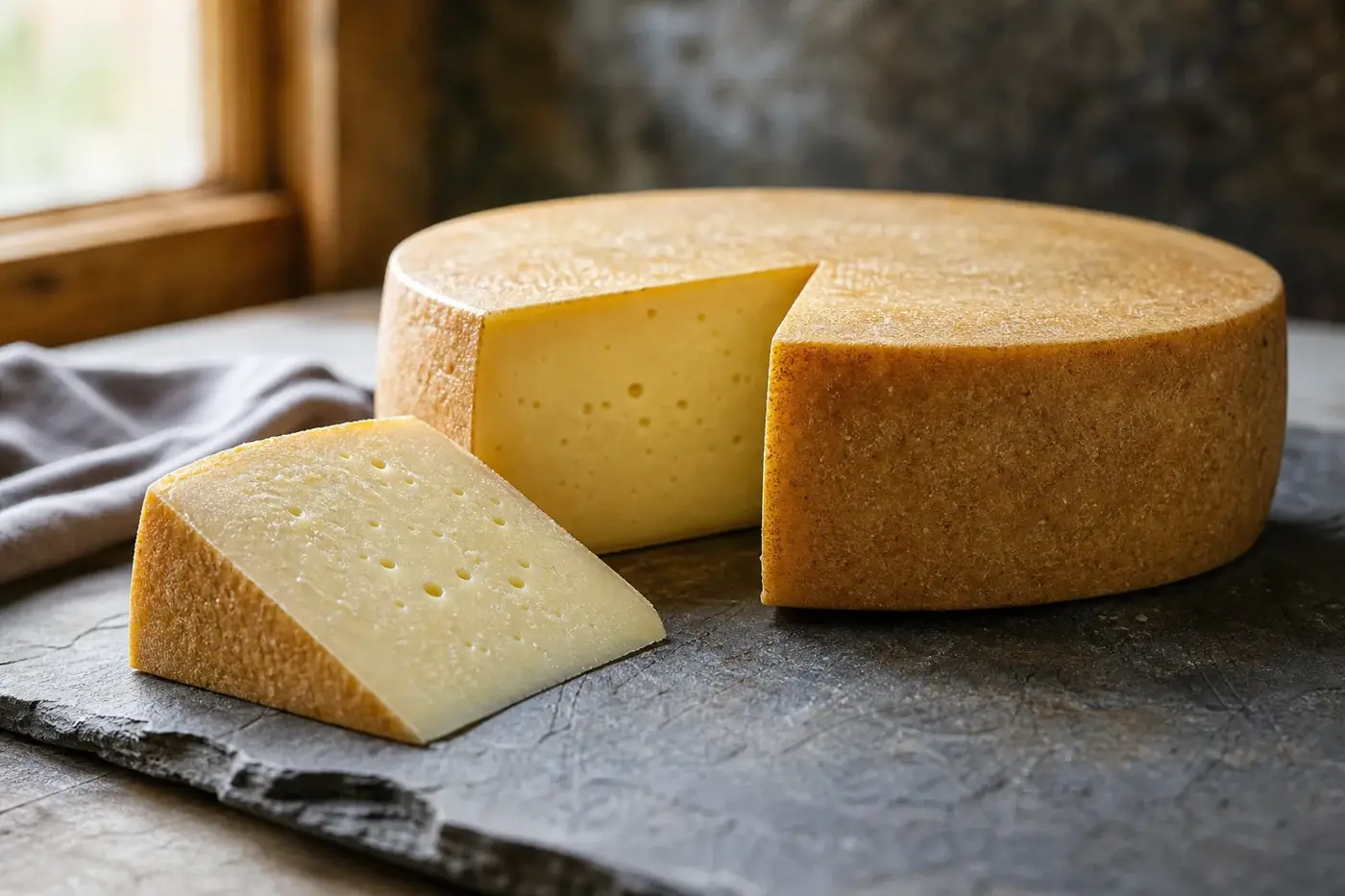
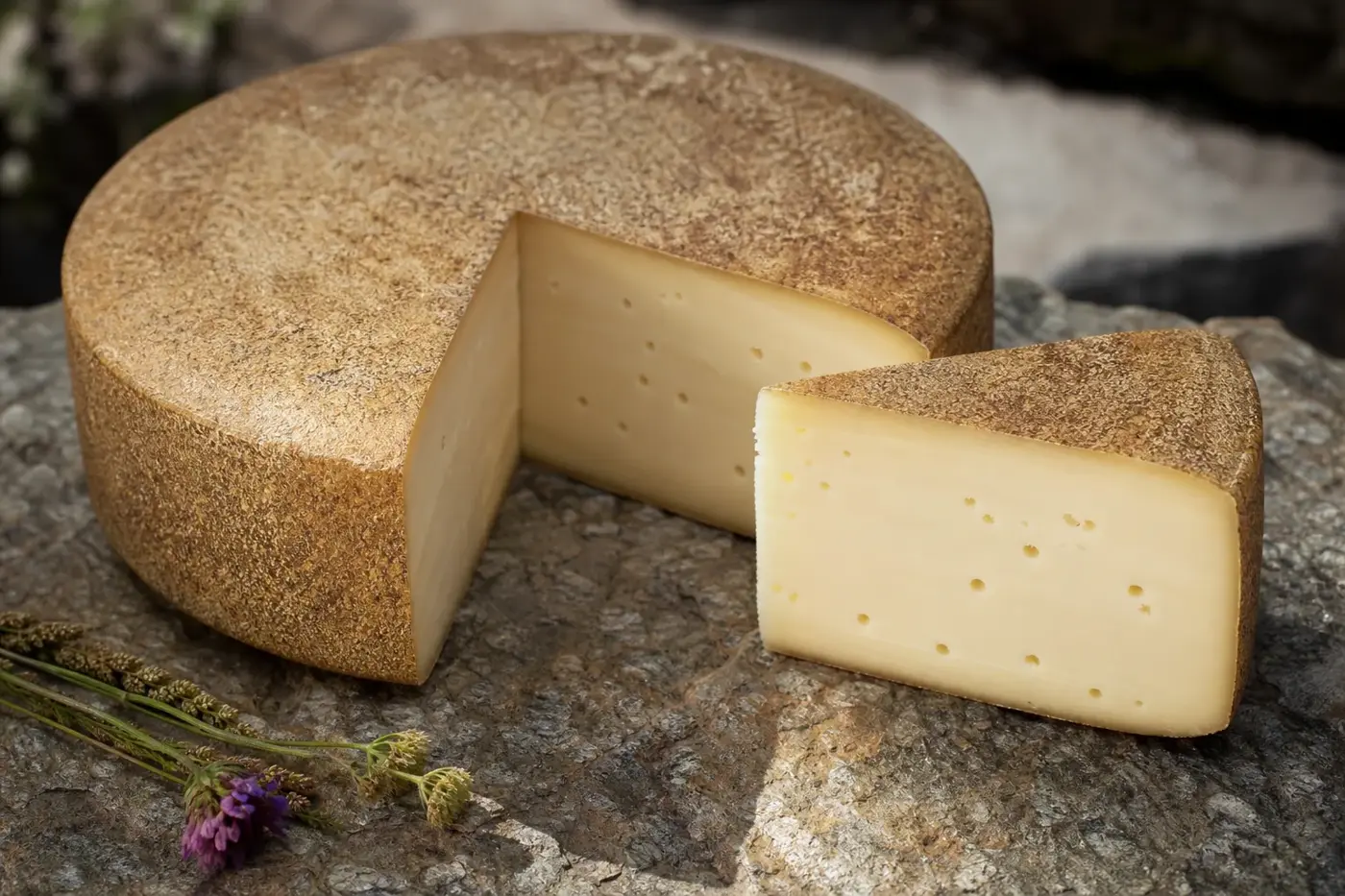
Cut through the brownish yellow to brown rind and an ivory to pale yellow interior appears, dotted with sparse, pea-sized holes.
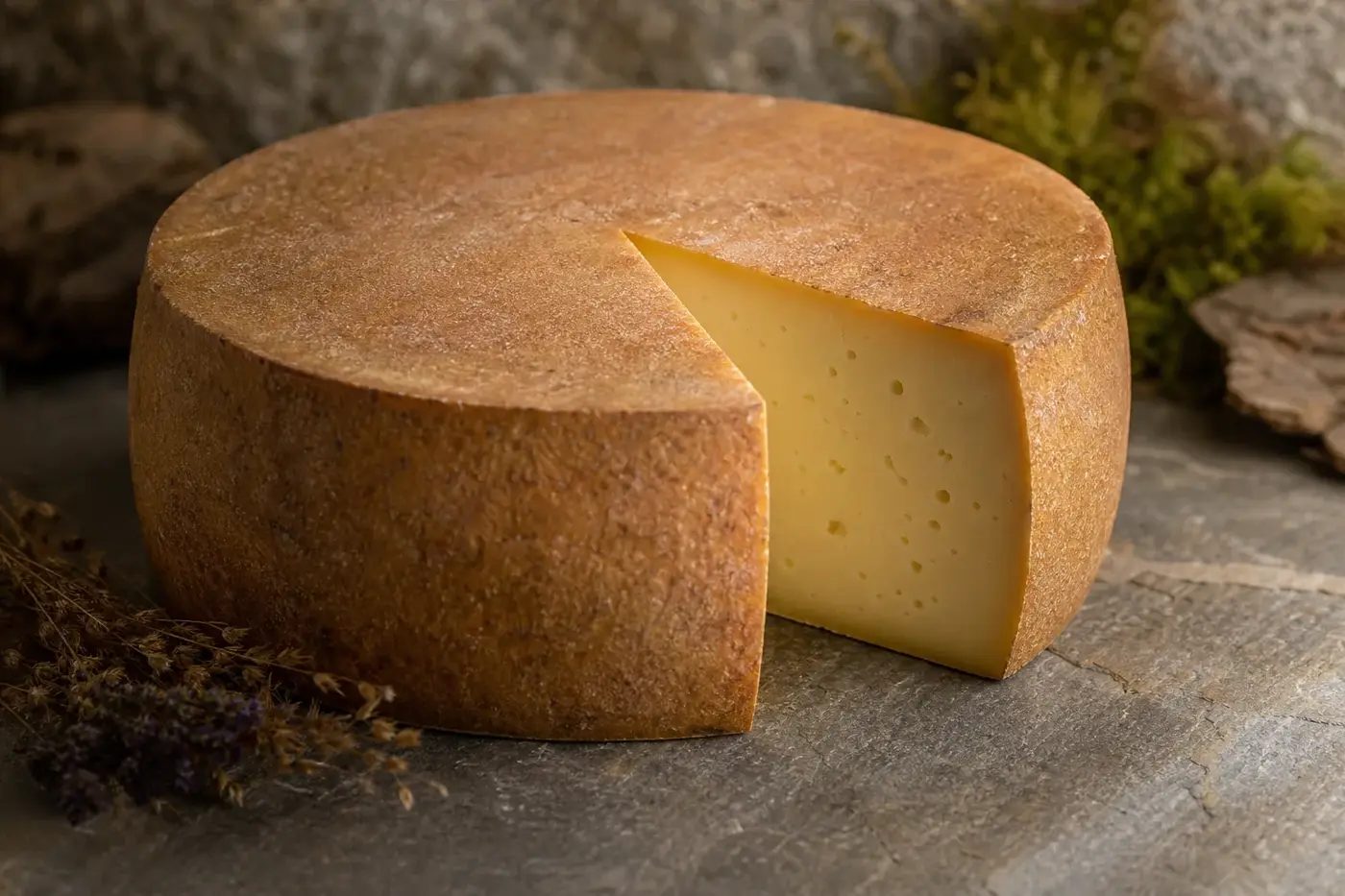
Cut through the brownish yellow to brown rind and an ivory to pale yellow interior appears, dotted with sparse, pea-sized holes. The protected specification compares the aroma of Tiroler Bergkäse to nut kernels. A whole wheel weighs at least 12 kg, so this is a cheese that makes an entrance before anyone has tasted it. [1][2]
Behind your slice are the mountain dairies of North and East Tyrol. Their raw milk comes from cows fed predominantly on local grass and hay. Expect flavour that moves from mildly aromatic to lightly piquant, with plenty to explore at a pleasantly conversational volume. [1][2]
| Your quick introduction | What to know |
|---|---|
| Familiar and registered name | Tiroler Bergkäse. [1][4] |
| Registration authority and identifier | EU: European Commission; current eAmbrosia identifier: Not verified. Austrian national file: HA 7/2007. [1] |
| Protection status, November 2026 | EU: individual register entry not verified. Great Britain: registered PDO; UK scheme registration dated 31 December 2020. Northern Ireland: Not verified. Switzerland: Not verified. United States: rights not verified. [4] |
| Legally defined production area | The Austrian federal state of Tyrol: North Tyrol and East Tyrol. [2] |
| Milk and rennet | Raw cow’s milk; calf-stomach rennet. [2] |
| Cultures | Lactic acid bacteria; surface smear cultures described in the production method. [1][2] |
| Composition | At least 45% fat in dry matter; no more than 40% moisture in the whole cheese. [2] |
| Maturation ages to explore | Three, six and twelve months in the Austrian hay-milk association’s sensory publication. [5] |
| Wheel size | At least 12 kg; prescribed diameter and height: Not verified. [2] |
| Pregnancy guidance, November 2026 | UK: see NHS guidance linked in Sources. [8] |
From a Tyrolean valley to the city
Picture milk that needs to travel beyond its home valley. Turning it into cheese made that journey possible, opening a route to distant urban markets. According to Austria’s agriculture ministry, full-fat cheesemaking, including Bergkäse, spread through Tyrol in the 1840s. Keeping cheese and carrying it elsewhere are central to its story. [3]
That history places Tiroler Bergkäse in both mountain and valley farming, and firmly within Tyrolean food culture. The protected production description accepts alpine-pasture milk and valley milk. When you see the name, then, think beyond summer cheesemaking high on an alp, however appealing that picture may be. [2][3]
For your first taste, reach for bread before the cooking pot. Look for aromatic depth and a gently piquant finish, taking your cue from the specification’s restrained description. Give yourself a moment to notice the quieter details. [2]
What the protected name promises you
Tiroler Bergkäse belongs to the Austrian federal state of Tyrol, specifically North Tyrol and East Tyrol. That boundary is important to its identity. South Tyrol, in Italy, falls outside the defined production area. [2]
The Austrian Patent Office identifies it as an EU-registered protected designation of origin: PDO in English, g.U. in German. Its published specification ties the name to that area, its milk supply, feeding conditions and cheesemaking requirements. Your piece of cheese comes with a particular set of commitments behind it. [1][2]
Great Britain has a separate register entry, recording the name as registered. It gives 31 December 2020 as the UK scheme registration date and 13 June 1997 as the original EU registration date. These mark two separate registration events. [4]
At the counter, ask for the full name, Tiroler Bergkäse, and the producer. In the EU and Great Britain, the name identifies a PDO cheese; the maker and stated maturation help you tell one wheel from another. For more, the guide to protected cheese names explains how a designation differs from a style or brand. [1][4]
Begin in the pasture, with the cows
The story starts with raw milk from cows in North or East Tyrol. The published single document requires milk suitable for hard cheesemaking. It must not be heated above its temperature at milking or undergo centrifugal bacterial removal. [2]
The cows eat predominantly grass and hay from Tyrolean alpine pastures and mountain country. Fermenting or fermented feeds, including silage, are excluded, as is green fodder that has heated in heaps. The specification explicitly connects this feeding regime and the regional vegetation to the cheese’s aroma. [2]
Those details tell you more than a mountain picture on a packet. They describe how the milk must be produced, rather than simply where it comes from. To follow a particular wheel’s provenance, ask whether the dairy can identify the milk’s locality and season of production.
Calf-stomach rennet is required too. It helps turn liquid milk into curd, the solid material that will become the wheel. If the coagulant matters to your cheese choices, ask before buying; rennet explained takes you through the different types. [2]
Into the dairy, then the ripening room
The published method begins by partially skimming the delivered milk to approximately 3% fat. Cultures and rennet take it towards coagulation. The curd is then worked and heated to approximately 52 °C. [1]
Presses come next, shaping the curd into wheels before a brine bath. The method describes that bath as approximately 20% salt, with a pH of 5.25. These are manufacturing figures, not instructions for making or storing cheese in your kitchen. [1]
In the ripening room, the temperature stays at 12 to 16 °C, with 90 to 95% relative humidity. Twice a week, the wheels receive salt-water treatment. This encourages the surface flora that contributes to their aromatic, piquant character; where the necessary organisms are absent, the method describes adding smear cultures to the brine. [1]
The rind you see at the counter is the result of that repeated attention throughout maturation. Its exterior develops under regular care, rather than simply being left alone. To follow the wider journey, from coagulation through drainage to ripening, explore how cheese is made.
Take a closer look at your slice
Ask to see both the outside and the cut face. The specification calls for wheels weighing at least 12 kg, with a smeared, dried surface coloured brownish yellow to brown. Inside, the paste, or body, is ivory to pale yellow, with a consistency ranging from cleanly sliceable to supple. [2]
Look closer and you should find relatively sparse, round openings, approximately pea-sized and evenly distributed. Their surfaces may be matt or shiny. That modest scattering of holes gives you a useful feature to recognise. [2]
Together, the rind and cut face offer a fuller picture of the cheese. Compare the exterior with the colour, openings and consistency within. Rind darkness alone tells you less about maturity, so give the inside its share of your attention.
Three, six, twelve months: follow the flavour
Older does not simply mean stronger. ARGE Heumilch, the Austrian hay-milk association, publishes separate sensory descriptions of Tiroler Bergkäse at three, six and twelve months. Its accounts give you a richer vocabulary for following maturity than simply turning up the volume. [5]
At three months, it describes yoghurt, toasted white bread, apple and malt associations, with a dense, short-textured body. At six months, the account moves towards hay, peanut, biscuit and light caramel aromas, alongside fruity notes. At twelve months, it records honey and nutmeg aromas, with citrus, malt and roasted-peanut flavour associations. [5]
Give texture as much attention as flavour as you taste. Across the different ages, the publication describes compactness, slight graininess and a more yielding sensation in the mouth. There is more to notice here than how long the flavour lingers. [5]
Keep the maker and age together in your tasting notes. Start with two ages from one dairy, then try two dairies at a similar stated age. The specification gives them a shared identity, while the sensory publication shows the breadth within it. A focused comparison makes those differences easier to follow.
Get to know the Austrian neighbours
For a close comparison in method and appearance, turn to Vorarlberger Bergkäse. Its specification requires raw cow’s milk from Vorarlberg, silage-free feeding and calf-stomach rennet. Its production area is different, and its wheels may weigh 7 to 40 kg, with maturation of at least three months. [6]
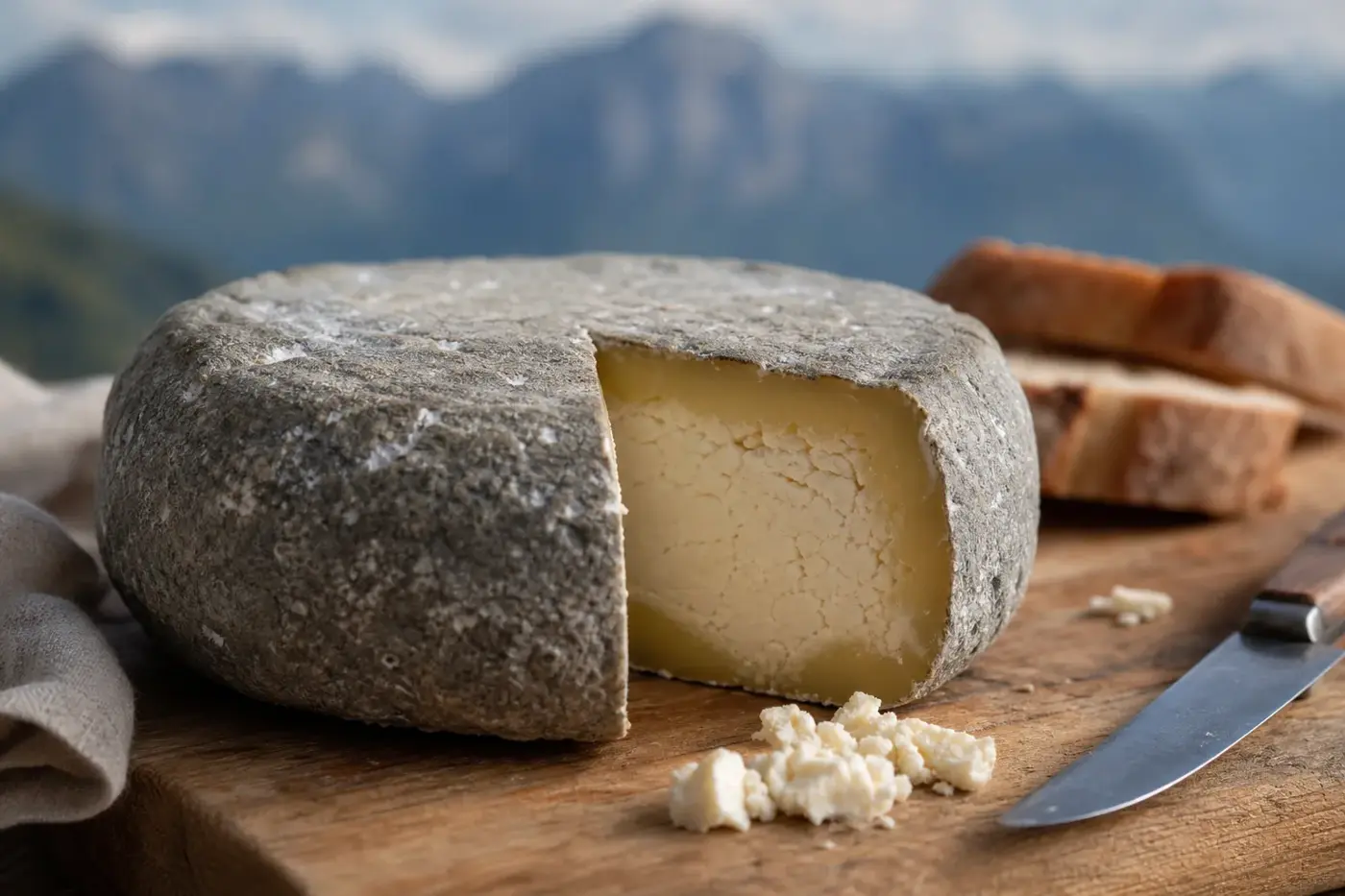
Tiroler Graukäse takes you into another family altogether. Its specification describes an acid-set cheese made without rennet, using raw or pasteurised cow’s milk, usually skimmed. Expect sour to sharply piquant flavour, a greyish rind and ripening patterns that vary by region. [7]
| Cheese | Its Austrian home | What makes it different |
|---|---|---|
| Tiroler Bergkäse | North and East Tyrol | Raw cow’s milk, calf-stomach rennet, substantial pressed wheels. [1][2] |
| Vorarlberger Bergkäse | Specified regions of Vorarlberg | Raw cow’s milk, calf-stomach rennet; its own specification and maturation requirements. [6] |
| Tiroler Graukäse | North and East Tyrol | Acid coagulation without rennet; usually skimmed milk. [7] |
If you need a substitute for cooking, Vorarlberger Bergkäse is your nearer stylistic starting point. Graukäse needs another approach because its composition and acid-set structure differ. Whichever you choose, let the substitute keep its own name. [6][7]
Three questions at the counter, then home to the fridge
Who made it? How long did it mature? What storage instructions apply after cutting? Ask for the stated age in months where available, and choose for how you plan to eat it, rather than automatically awarding the oldest wheel first prize.
For storage, follow the label or your cheesemonger’s instructions for that particular product. UK Food Standards Agency consumer advice recommends a home fridge temperature of 5 °C or below. Its hot-weather guidance advises cool bags and ice packs for chilled shopping, followed by prompt refrigeration when you get home. [10]
Cut only what you will serve and keep the rest chilled. Put out thin slices and a few thicker pieces so you can explore the texture. Taste the cheese alone first, then bring in bread and other accompaniments.
In hotter than usual weather, the FSA advises discarding perishable foods left out of refrigeration for more than two hours. It also recommends caution when you do not know how long food has been out. For broader advice, see storing cheese at home. [10]
Give Tiroler Bergkäse a place at your table
Cheese Spätzle with browned onions is one way to make a Tyrolean-inspired meal with Tiroler Bergkäse. Pressed cheese dumplings, served with broth or salad, are another. Treat these as serving ideas, and use a complete recipe for quantities and cooking methods.
If you enjoy a kitchen comparison, change only the cheese in a familiar dish. Keep the other ingredients constant, note the producer and maturity, and taste before adding more salt. You will find it easier to decide which wheel you like in cooking and which you would rather save for slices.
With an uncooked piece, try rye bread, apple or pear, and a little pickled onion. Taste the bread first, fruit second and pickles last. Keep the accompaniments separate, leaving yourself room to return to the cheese between mouthfuls.
For a drink, try sparkling water or an apple spritzer. The association’s fruit and malt descriptors give you a starting point for those pairings. Let those descriptions guide your tasting rather than dictate what you must find. [5]
This page summarises published guidance from the official sources it cites. It is not medical advice. Guidance differs between countries and changes over time, so check the current source for where you live, and ask your doctor, midwife, pharmacist or dietitian about your own circumstances.
Raw milk: the safety guidance to read
If you are pregnant, the NHS’s UK Foods to avoid in pregnancy page lists pasteurised and unpasteurised hard cheeses among foods that can be eaten. Read the current guidance directly. Discuss your individual circumstances with a midwife or clinician too. [8]
The NHS identifies pregnant people, newborn babies, older people and people with weakened immunity as groups at greater risk of serious listeriosis in the UK. Consult its listeriosis guidance alongside its pregnancy food guidance. [8][9]
When you serve vulnerable people, the FSA advises extra care with refrigeration, use-by dates and thorough cooking. Check the actual product’s label and current official notices. Follow any recall instructions affecting its producer, pack or batch. [10][11][12]
Questions people ask
Where is Tiroler Bergkäse made?
Its defined production area is North Tyrol and East Tyrol in Austria. South Tyrol in Italy lies outside that area.
What milk and rennet are used in Tiroler Bergkäse?
It is made with raw cow’s milk and calf stomach rennet. The cows’ feed must consist predominantly of grass and hay from Tyrolean alpine pastures and mountain country.
How long is Tiroler Bergkäse matured?
The legal minimum maturation is not verified on the page. ARGE Heumilch publishes tasting descriptions for examples matured for three, six and twelve months.
Can you eat Tiroler Bergkäse during pregnancy?
The NHS lists pasteurised and unpasteurised hard cheeses among foods that can be eaten during pregnancy. Check its current guidance at https://www.nhs.uk/pregnancy/keeping-well/foods-to-avoid/ and ask a midwife or clinician about your circumstances.
How should Tiroler Bergkäse be stored?
Follow the label or the cheesemonger’s product specific instructions. The UK Food Standards Agency recommends keeping a home fridge at 5 °C or below.
Sources
- Austrian Patent Office. Tiroler Bergkäse g.U., current listing and linked specification dossier, including the original production description and subsequent correspondence. Retrieved November 2026. Listing and specification.
- Austrian Patent Office. Tiroler Bergkäse: Einziges Dokument, published file incorporating correspondence dated 8 May 2009. Sections 3.2 to 5.3. Published document.
- Austrian agriculture ministry. Tiroler Bergkäse g.U., Register of Traditional Foods, entry 3, online edition retrieved November 2026. Official account.
- Department for Environment, Food & Rural Affairs. Tiroler Bergkäse, protected food name register entry, published 4 January 2021, retrieved November 2026. GB register entry.
- ARGE Heumilch. Käsesprache, August 2023 revision, printed pages 94 to 99. Industry association sensory descriptions of three-, six- and twelve-month Tiroler Bergkäse. Sensory publication.
- Austrian Patent Office. Vorarlberger Bergkäse, single document and specification, published online file retrieved November 2026. Sections 4.2 to 4.5. Specification.
- Austrian Patent Office. Tiroler Graukäse g.U., current listing and linked single document, retrieved November 2026. Sections 3.2 and 4. Listing and specification.
- NHS. Foods to avoid in pregnancy, live edition retrieved November 2026, section “Cheese, milk and other dairy”. Pregnancy guidance.
- NHS. Listeriosis, reviewed 10 November 2023, live edition retrieved November 2026. Sections “Risks of listeriosis” and “Foods to avoid if you’re at risk”. Listeriosis guidance.
- Food Standards Agency. Food safety in a heatwave: advice for consumers, live edition retrieved November 2026. Sections on shopping, outdoor food and vulnerable people. Consumer guidance.
- Food Standards Agency. Alerts, live recall and allergy-alert portal, accessed November 2026. Official alerts.
- AGES. Produktwarnungen & Produktrückrufe, Austrian product-warning and recall portal, accessed November 2026. Official Austrian notices.
Researched through official Austrian specification documents, the GB register, attributed industry sensory descriptions and UK public-health guidance; serving and pairing suggestions are editorial recommendations.
Last checked: November 2026
Last checked November 2026.
The editors suggest you read next