Austrian Cheese
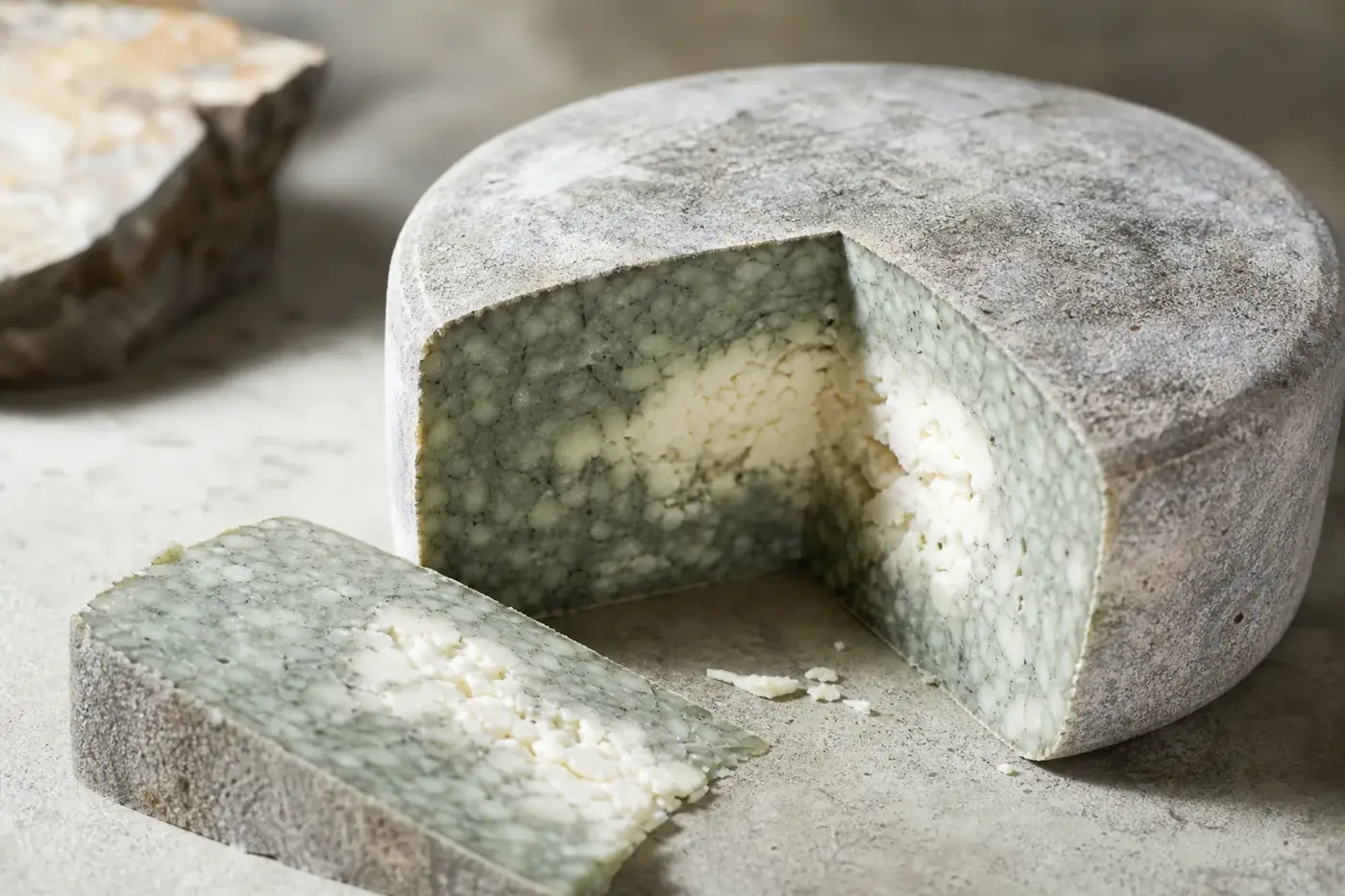
Cut through the thin, bluish-grey rind of Tiroler Graukäse and you might meet a marbled interior, perhaps a white core.
Cut through the thin, bluish-grey rind of Tiroler Graukäse and you might meet a marbled interior, perhaps a white core. This is quite a departure from Austria’s substantial mountain wheels. Sour and piquant, it grows distinctly sharp as it ripens. Made by acidifying milk, usually skimmed, it takes your palate somewhere very different from the firm, rennet-set cheeses of the mountain dairies. [4]
Up on summer pastures, milk can become cheese close to where the cows graze. Down in valley dairies, cheesemakers turn milk from surrounding farms into mountain cheese. Austria’s cheeses belong to both worlds. What happens to the milk matters just as much as where it comes from. [1,2,3,4]
Your first taste of Austria
- Country: Austria. [1]
- Traditions to get to know: Mountain hard cheeses, ripened sour milk cheeses and fresh curd cheeses. [1,3,5,8]
- EU origin labels, November 2026: The six full names in the comparison below are recorded as PDOs by the Austrian Patent Office. [1,2,3,4,5,6]
Follow the milk from pasture to dairy
Where was your cheese actually made? The answer tells you more than the mountains on its wrapper, however handsome they look. An alp, or Alm, is a mountain pasture used seasonally for grazing. Vorarlberger Alpkäse must be made on the designated alpine or intermediate pastures; Vorarlberger Bergkäse may use alpine or valley milk. [1,2]
Summer is a making season, not an eating deadline. Wheels made during grazing can carry on maturing afterwards, so ask about the making season and age separately. Summer pasture cheese and long-matured cheese tell you different things. Neither alone tells you how forceful the flavour will be. [2]
The cows’ menu matters, too. Both Vorarlberg specifications require milk from cows that are not fed silage. Their accounts connect the cheeses’ character with local vegetation, milk and cheesemaking practice, and describe how maturation changes them. That gives you something more useful to explore than “mountain cheese”. [1,2]
Vorarlberg: make room for a side-by-side tasting
Start with Vorarlberger Bergkäse, a hard cheese made from raw cows’ milk. It uses alpine or valley milk and matures for at least three months. The distinction from Alpkäse lies in the production setting. It is not a neat division between traditional and modern dairying. [1]
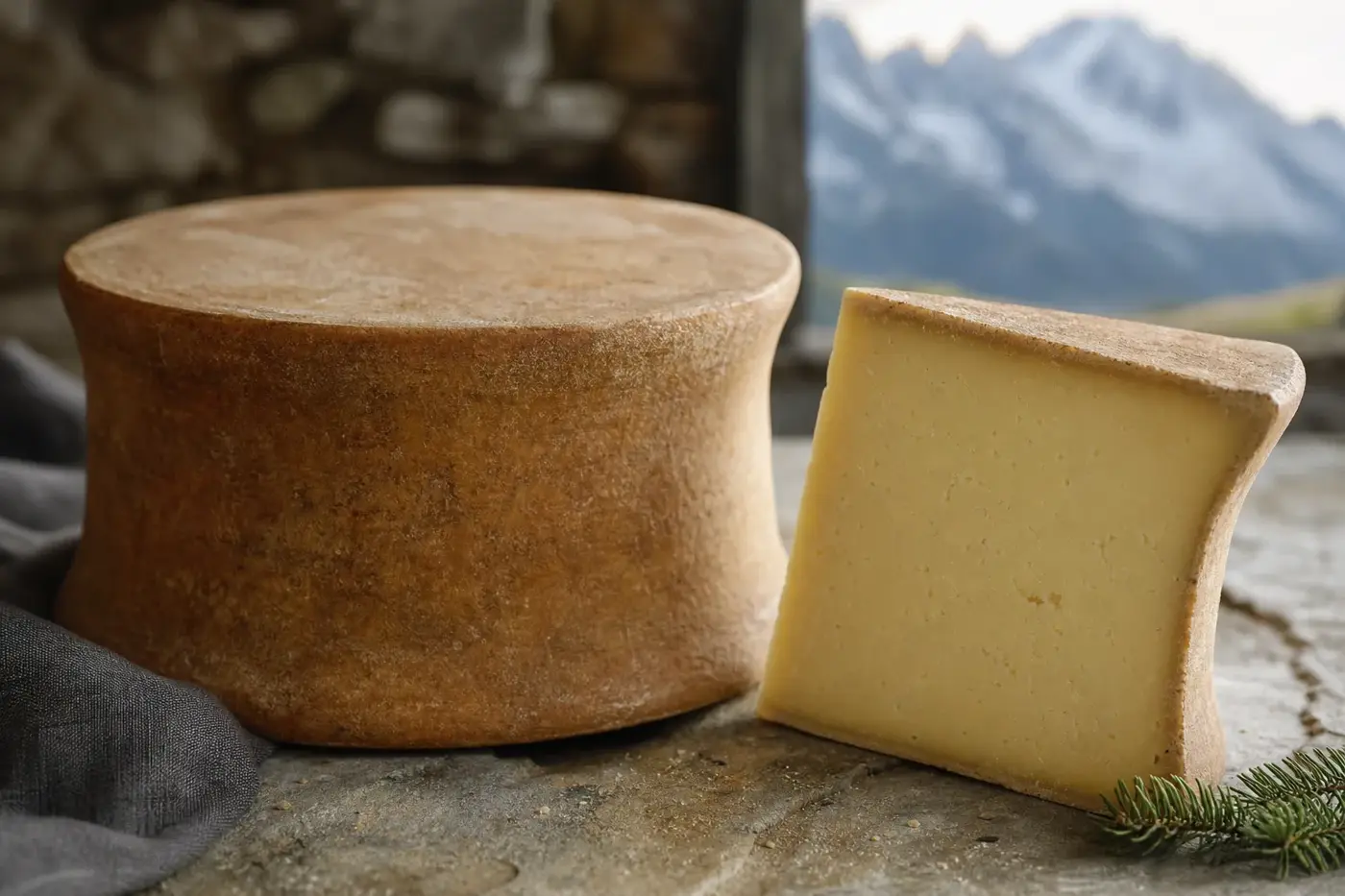
Vorarlberger Alpkäse is made from raw cows’ milk on the region’s alpine and intermediate pastures. Beneath its brownish-yellow to brown granular rind, you will find an ivory-coloured paste with sparse holes roughly the size of peas. Its current specification describes a texture from sliceable to supple, and a mild taste that becomes more piquant with age. The legal minimum maturation is three months. [2]
Taste the two at a similar age to explore that difference in place. Ask your cheesemonger what distinguishes the particular batches, and keep the labels beside your tasting notes. The full names matter here. Otherwise, you could mistake several extra months of ripening for the influence of where a cheese was made.
Tyrol: start with a firm wheel, then change course
Tiroler Bergkäse brings you to the firm-wheel side of Tyrol’s cheese tradition. Its specification requires raw cows’ milk from North or East Tyrol, calf rennet, and feed based predominantly on grass and hay from Tyrolean pastures and mountain land. Rennet is the enzyme preparation that coagulates milk. It separates the curd from the liquid whey. [3]
Beneath the brownish rind, the official description gives you an ivory to pale-yellow paste, sliceable to supple. The flavour moves from mildly aromatic to slightly piquant. Take a moment over the aroma, too: it is likened to nut kernels. [3]
Tiroler Graukäse takes another route entirely, using lactic acid fermentation without rennet. Bacteria acidify the milk until it forms curd, and the specification permits raw or pasteurised cows’ milk, usually skimmed. Removing the cream sends that milk in a different direction from a full-bodied mountain wheel. Graukäse belongs to the practical tradition of using milk left after cream separation. [4]
Graukäse: let the ripening show itself
With Graukäse, you can see ripening at work. Its specification describes a thin bluish-grey to greenish-grey rind, sometimes with surface mould or mould veining. Inside, you may find grey-green marbling or a white core. Expect a sour, piquant flavour that becomes distinctly sharp. [4]
As ripening continues, the curd develops a yellowish, waxy-looking consistency, though pieces of less-ripened curd can remain. Regional preferences help shape what reaches your plate. The official account contrasts the upper Inn Valley’s more thoroughly ripened, waxy-textured cheese with the lower Inn Valley’s curd-like, slower-ripening version. [4]
Ask whether your piece is curdy or fully ripened, and whether that is the maker’s intended style. For your first encounter, buy a small piece. Taste it with plain bread before introducing strong accompaniments, so you can get to know the cheese itself.
Carinthia: meet Gailtaler Almkäse on its own ground
For Gailtaler Almkäse, the working mountain dairy is part of the story, not just the scenery. This cheese must be made on the Gailtaler Almen, the alpine pastures of the Gail Valley in Carinthia. Its specification requires pasture milk and excludes valley milk. [5]
The milk is raw cows’ milk, with up to 10% raw goats’ milk permitted. Picture a golden-yellow natural rind around a yellowish, supple interior dotted with sparse round holes, as the official description sets out. Natural rennet and lactic cultures are the permitted cheesemaking additions. [5]
Give its maturation rules a moment of your attention. Cheese for commercial sale must mature for at least seven weeks, with a five-week exception for particular catering needs at the alpine dairies. Airtight-packed cheese must be at least 75 days old. The answer to “How old must it be?” depends on the circumstances. [5]
Styria: get acquainted with crumbly Steirerkas
Ennstaler Steirerkas brings a crumbly character to Austria’s sour milk traditions. This EU PDO cheese from the Styrian Enns Valley is made from raw or pasteurised skimmed cows’ milk, without rennet. Its specification requires at least three weeks’ ripening under the influence of mould. [6]
The agriculture ministry describes a dry, cracked surface, brownish to greyish, and a grainy to crumbly, marbled interior. It also records differences between makers’ recipes. Ask about the local version you are buying. There is more than one expression of that name. [7]
The same account tells a practical story of using surplus skimmed milk and providing food for later consumption. To serve it, you grate or crumble the finished Ennstaler cheese from its larger form. Start with a little, then add more once you know its strength. In a dish, it can be seasoning as much as substance. [7]
Topfen: find the right curd for your kitchen
Topfen takes you away from long-ripened wheels and straight into the kitchen. Austria’s fresh curd cheese has a distinct role there, and the Austrian Food Book treats fresh cheese within its cheese chapter. When you buy Topfen, ask whether it is smooth or crumbly. Check the moisture and declared fat level, too. [8]
For savoury cooking, think herb spreads and fillings. For something sweet, turn to strudel, pancakes and dumplings. Follow a recipe that specifies the Topfen texture, because a wetter product can change a filling considerably. Choose it for the job, just as you would a melting cheese for a hot dish.
Käsknöpfle and Kaspressknödel: supper starts with the cheese
With Käsknöpfle, cheese joins small cooked dough pieces, commonly finished with onions. If you are making it at home, ask for a blend that melts well and suits your preferred level of pungency. Once you find a version you love, write down the cheeses. “Bergkäse” alone leaves your shopping list with rather a lot of unanswered questions.
Kaspressknödel are flattened cheese and bread dumplings, fried and served in soup or with salad. Regional cheeses give them their character. The agriculture ministry’s account names Bierkäse in Salzburg’s Pinzgau and Pongau, mountain cheese and Graukäse in Tyrol, and Sura Kees in Vorarlberg. [9]
In the Austrian National Tourist Office’s published version, you mix cheese with bread, potatoes, eggs and parsley before flattening and frying the dumplings. The cheese carries flavour through the bread mixture itself. When you compare recipes, begin with that regional cheese choice. [10]
At the counter, give the cheese its full name
Look for the complete protected name, not just the bit you recognise. Vorarlberger Bergkäse and Vorarlberger Alpkäse are separate registered names with different production requirements. On Austrian labels, g.U. means geschützte Ursprungsbezeichnung, the German wording for PDO, or protected designation of origin. The Austrian Patent Office publishes each name’s current specification alongside its EU registration information. [1,2]
Here is your EU PDO comparison for November 2026. These requirements are summarised from current specifications published by the Austrian Patent Office. [1,2,3,4,5,6]
| Cheese name | EU protection | Milk used | Where it belongs |
|---|---|---|---|
| Vorarlberger Bergkäse | Registered PDO | Raw cows’ | Alpine or valley milk [1] |
| Vorarlberger Alpkäse | Registered PDO | Raw cows’ | Alpine and intermediate pastures [2] |
| Tiroler Bergkäse | Registered PDO | Raw cows’ | North and East Tyrol [3] |
| Tiroler Graukäse | Registered PDO | Raw or pasteurised cows’, usually skimmed | North and East Tyrol [4] |
| Gailtaler Almkäse | Registered PDO | Raw cows’, with up to 10% raw goats’ | Gailtaler alpine dairies [5] |
| Ennstaler Steirerkas | Registered PDO | Raw or pasteurised skimmed cows’ | Styrian Enns Valley [6] |
At the counter, ask for the maker, age, milk treatment and the particular product’s ingredients. The cheese label guide helps you find your way through the wider vocabulary. For the difference between origin schemes, styles and brands, turn to protected names.
Bring home a little contrast
Begin with one mountain hard cheese, one ripened sour milk cheese and Topfen for cooking. You will get a clearer sense of the different methods than you would from several similar wheels. Ask the seller to explain the intended rind and paste of each piece. That conversation is especially useful for your first sour milk cheese.
For home storage in England, Wales and Northern Ireland, the Food Standards Agency advises keeping your fridge between 0 and 5 °C and following the packaging’s storage instructions and date marks. Keep chilled food out for the shortest possible time during preparation. Put out a small serving, not your whole supply. You will find fuller handling guidance in storing cheese. [12]
Try rye bread with the mountain cheeses, plain bread for your first taste of Graukäse, and apple or pear alongside the board. Keep dressings and strongly flavoured accompaniments separate at first, giving yourself room to taste each cheese. To drink, try water or an alcohol free apple drink.
This page summarises published guidance from the official sources it cites. It is not medical advice. Guidance differs between countries and changes over time, so check the current source for where you live, and ask your doctor, midwife, pharmacist or dietitian about your own circumstances.
Pregnancy and milk treatment: start with your cheese
If you are considering pregnancy suitability, start with the individual cheese. Several mountain cheeses here require raw milk, while Tiroler Graukäse and Ennstaler Steirerkas permit either raw or pasteurised milk. Austrian origin alone cannot answer the question. The milk treatment guide explains the terminology. [1,2,3,4,5,6]
For UK pregnancy guidance, consult the NHS advice on cheese and dairy, with November 2026 as the reference date here. It distinguishes cheese types, milk treatment and cooking. Ask your midwife or doctor about your circumstances. [11]
Questions people ask
What is the difference between Vorarlberger Bergkäse and Alpkäse?
Vorarlberger Alpkäse must be made on designated alpine or intermediate pastures. Vorarlberger Bergkäse may use alpine or valley milk. Both are made from raw cows’ milk and mature for at least three months.
What does Tiroler Graukäse taste like?
Its flavour is sour and piquant, becoming distinctly sharp as it ripens. Inside, it may be grey and green with marbling, retain a white core, or develop a yellowish, waxy consistency.
What is Topfen used for?
Topfen is Austria’s fresh curd cheese. It can be used in savoury herb spreads and fillings, as well as sweet dishes such as strudel, pancakes and dumplings.
Can I eat Austrian cheese during pregnancy?
The NHS pregnancy guidance on cheese and dairy distinguishes between cheese types, milk treatment and cooking. Consult that guidance and ask your midwife or doctor about your circumstances.
How should I store Austrian cheese?
For home storage in England, Wales and Northern Ireland, the Food Standards Agency advises keeping the fridge between 0 and 5 °C and following the packaging’s storage instructions and date marks. It also advises keeping chilled food out for the shortest possible time during preparation.
Sources
- Austrian Patent Office. Vorarlberger Bergkäse g.U. Current official status page and linked specification, including the 2023 amendment. EU file reference PDO-AT-1419.
- Austrian Patent Office. Vorarlberger Alpkäse g.U. Current official status page and linked specification, including the 2023 amendment. EU file reference PDO-AT-1413.
- Austrian Patent Office. Tiroler Bergkäse g.U. Current official status page and linked specification, undated published compilation.
- Austrian Patent Office. Tiroler Graukäse g.U. Current official status page and linked specification, undated published compilation.
- Austrian Patent Office. Gailtaler Almkäse g.U. Current official status page and linked specification, undated published compilation.
- Austrian Patent Office. Ennstaler Steirerkas g.U. Current official status page and linked specification, incorporating the 2021 registration record. EU file reference PDO-AT-02588.
- Austrian Federal Ministry of Agriculture, Forestry, Climate and Environmental Protection, Regions and Water Management. Ennstaler Steirerkas g.U. Traditional Foods Register, entry 252, current web edition, undated.
- Austrian consumer health authority. Österreichisches Lebensmittelbuch, IV. Auflage, Codexkapitel B 32: Milch und Milchprodukte. Published 9 January 2023, amendment dated 30 June 2023.
- Austrian Federal Ministry of Agriculture, Forestry, Climate and Environmental Protection, Regions and Water Management. Pinzgauer Kaspressknödel. Traditional Foods Register, entry 162, web edition recording a reference check on 3 January 2024.
- Austrian National Tourist Office. Kaspressknödel. Published recipe attributed to Kössener Küchenschätze, current web edition, undated.
- NHS. Foods to avoid in pregnancy. Current web guidance, accessed November 2026.
- Food Standards Agency. How to chill, freeze and defrost food safely. GOV.UK guidance, originally published 18 December 2017, current retrieved edition; applies to England, Northern Ireland and Wales.
This desk-researched draft brings together official Austrian cheese specifications, agricultural accounts, published culinary material and attributed UK public health guidance.
Last checked: November 2026
Last checked November 2026.
The cheeses of Austria
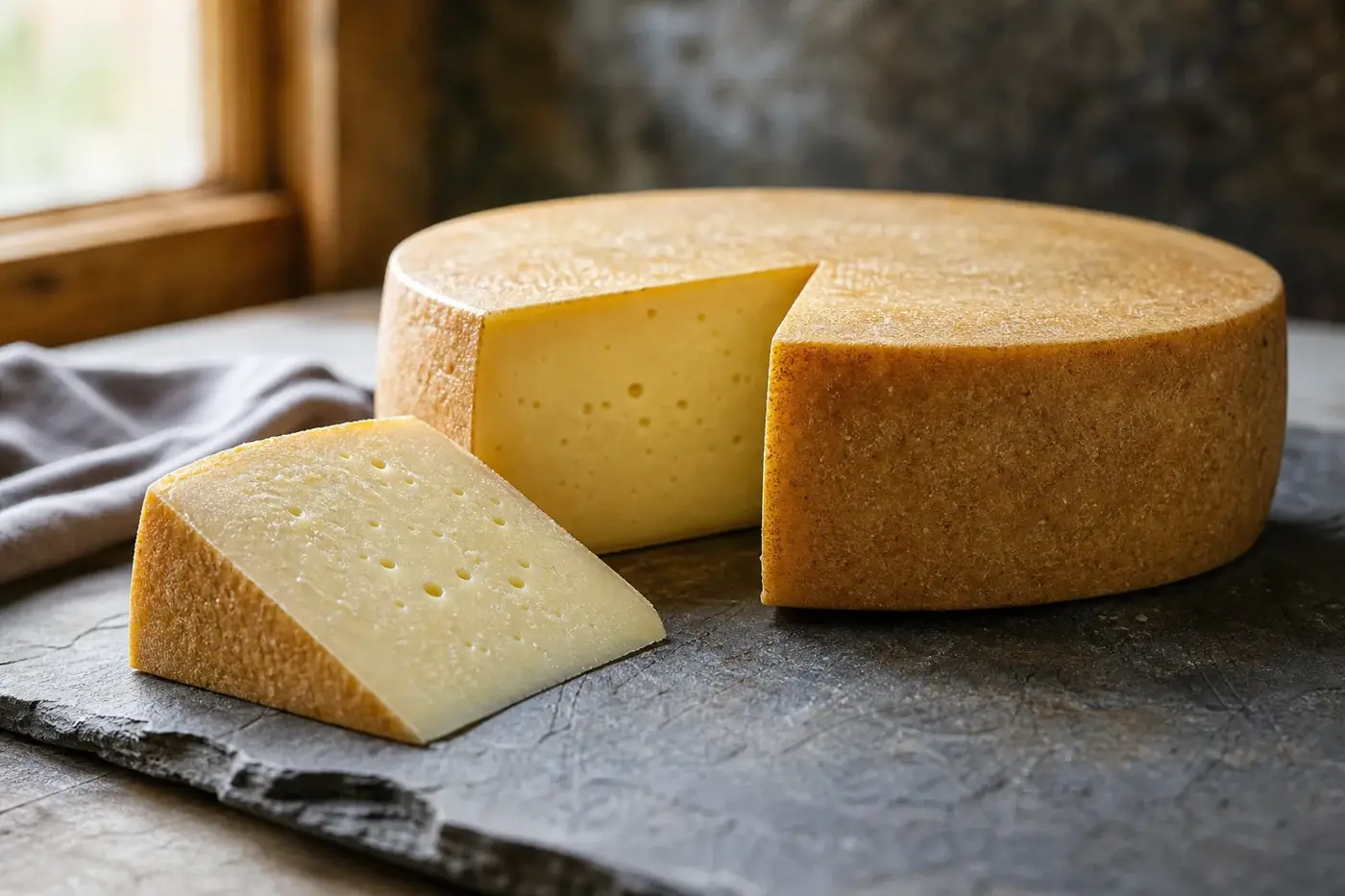
Vorarlberger Bergkäse
Salt water meets a brush.
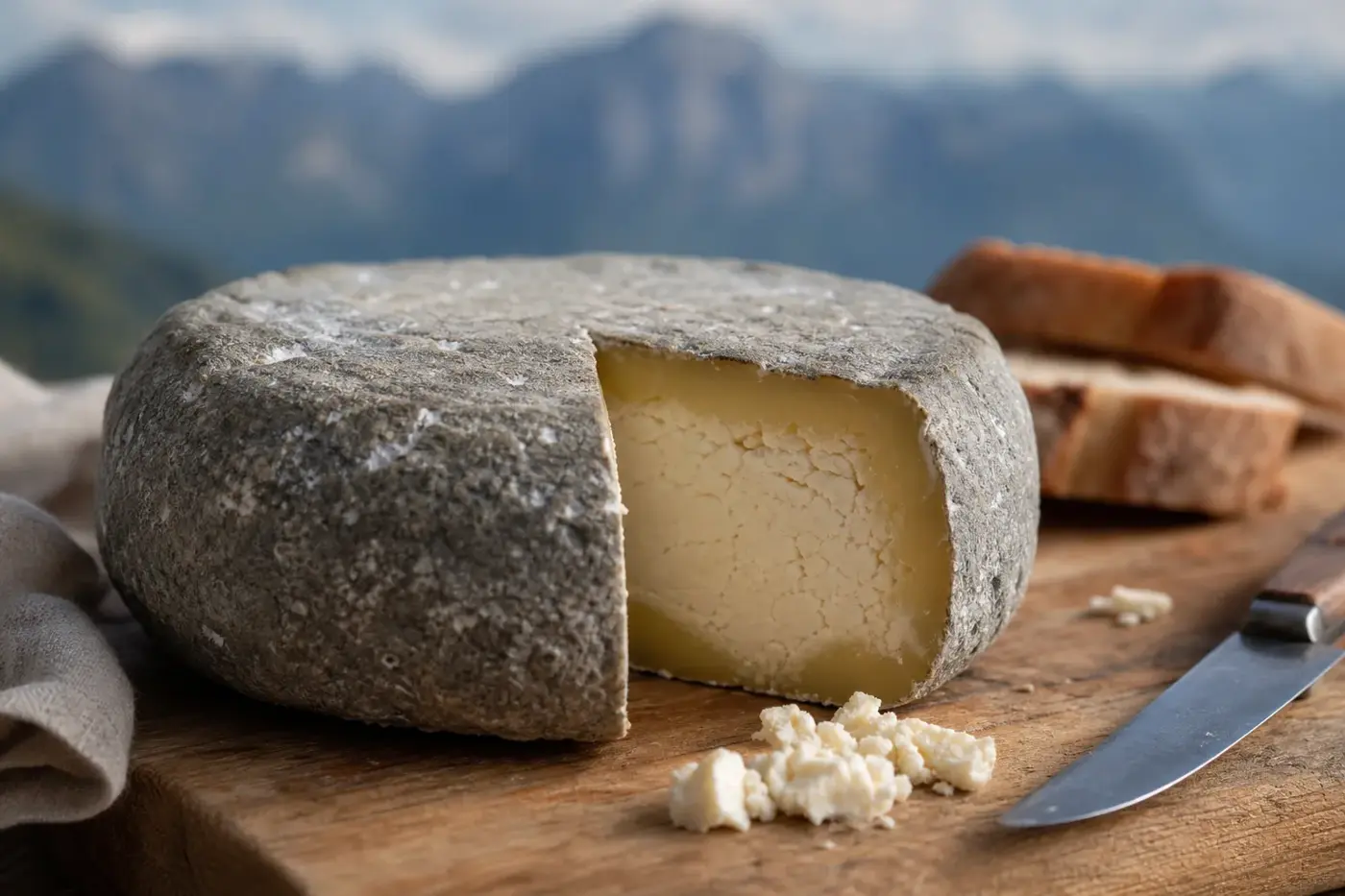
Tiroler Graukäse
Cut into Tiroler Graukäse and you might find two textures sharing the same piece: a pale, crumbly centre and supple, translucent cheese where ripening has travelled further.
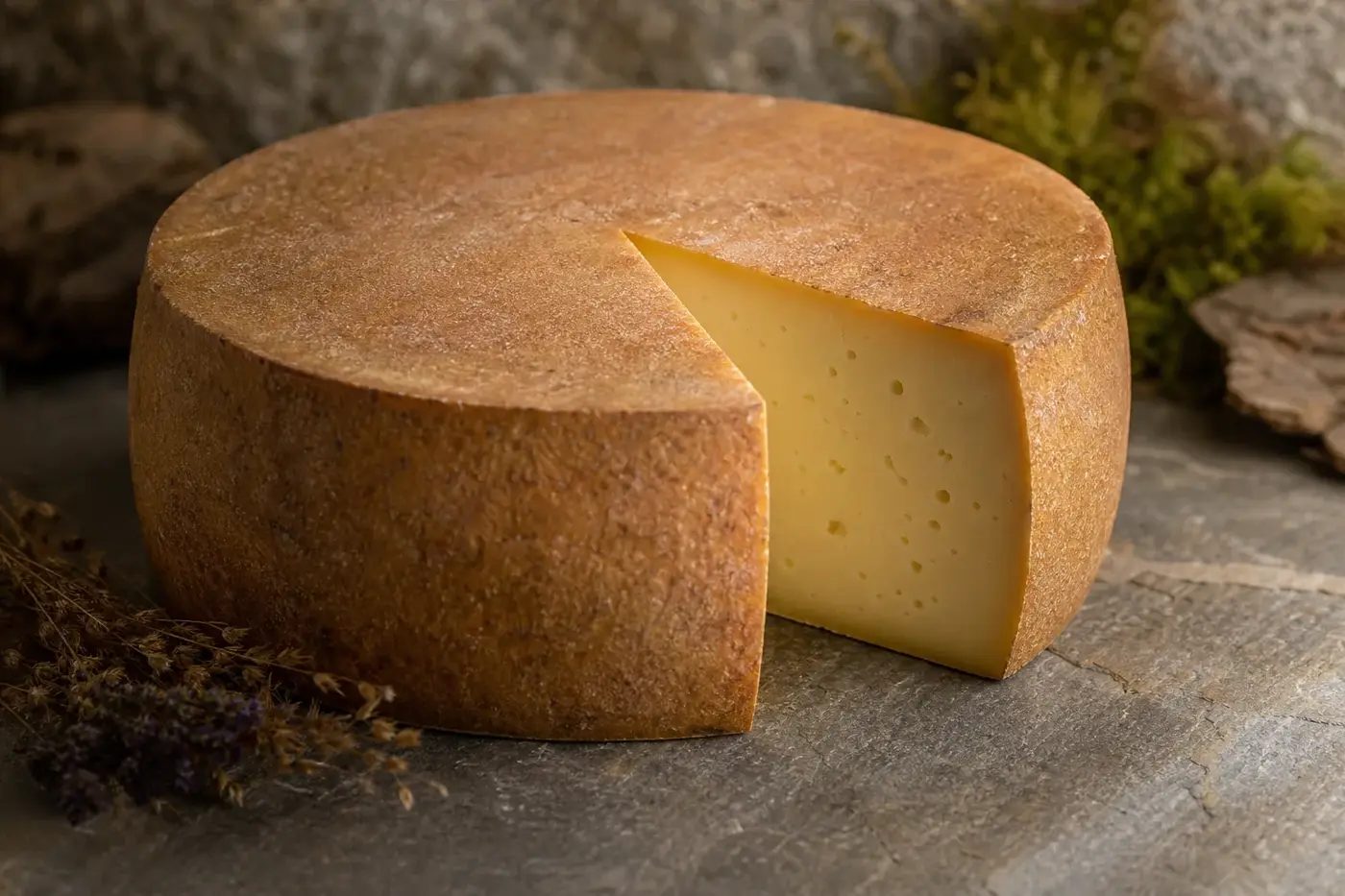
Tiroler Bergkäse
Cut through the brownish yellow to brown rind and an ivory to pale yellow interior appears, dotted with sparse, pea-sized holes.
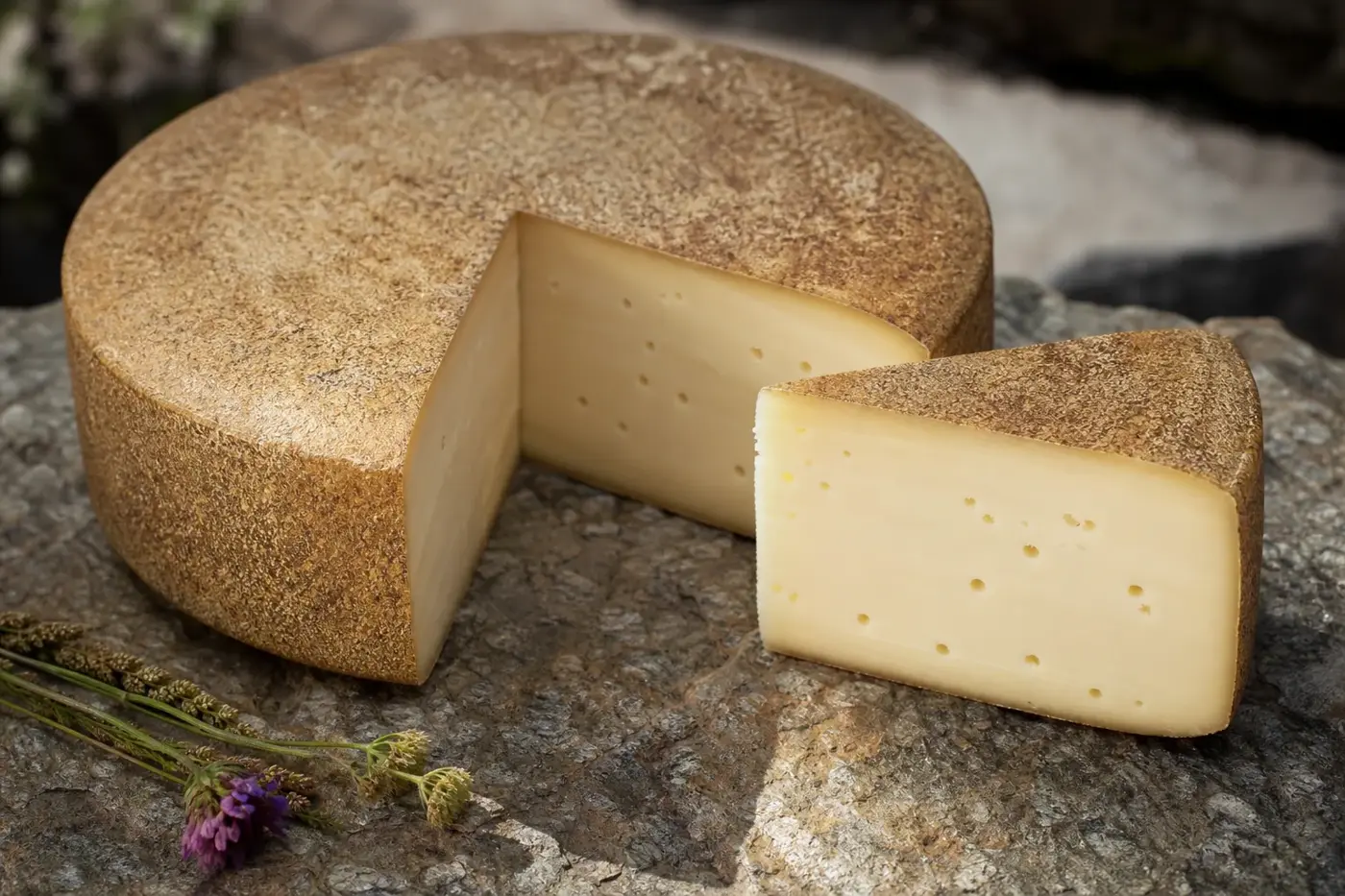
Vorarlberger Alpkäse
Picture cows grazing at 1,000 to 1,800 metres in western Austria.
The editors suggest you read next
French Cheese: The Complete Guide
Picture Normandy’s pastures, then follow the milk towards the Loire’s goat dairies, the Jura’s shared cheesemaking traditions and the sheep country of the Pyrenees.