Travelling with Cheese: Airline, Customs and Import Rules
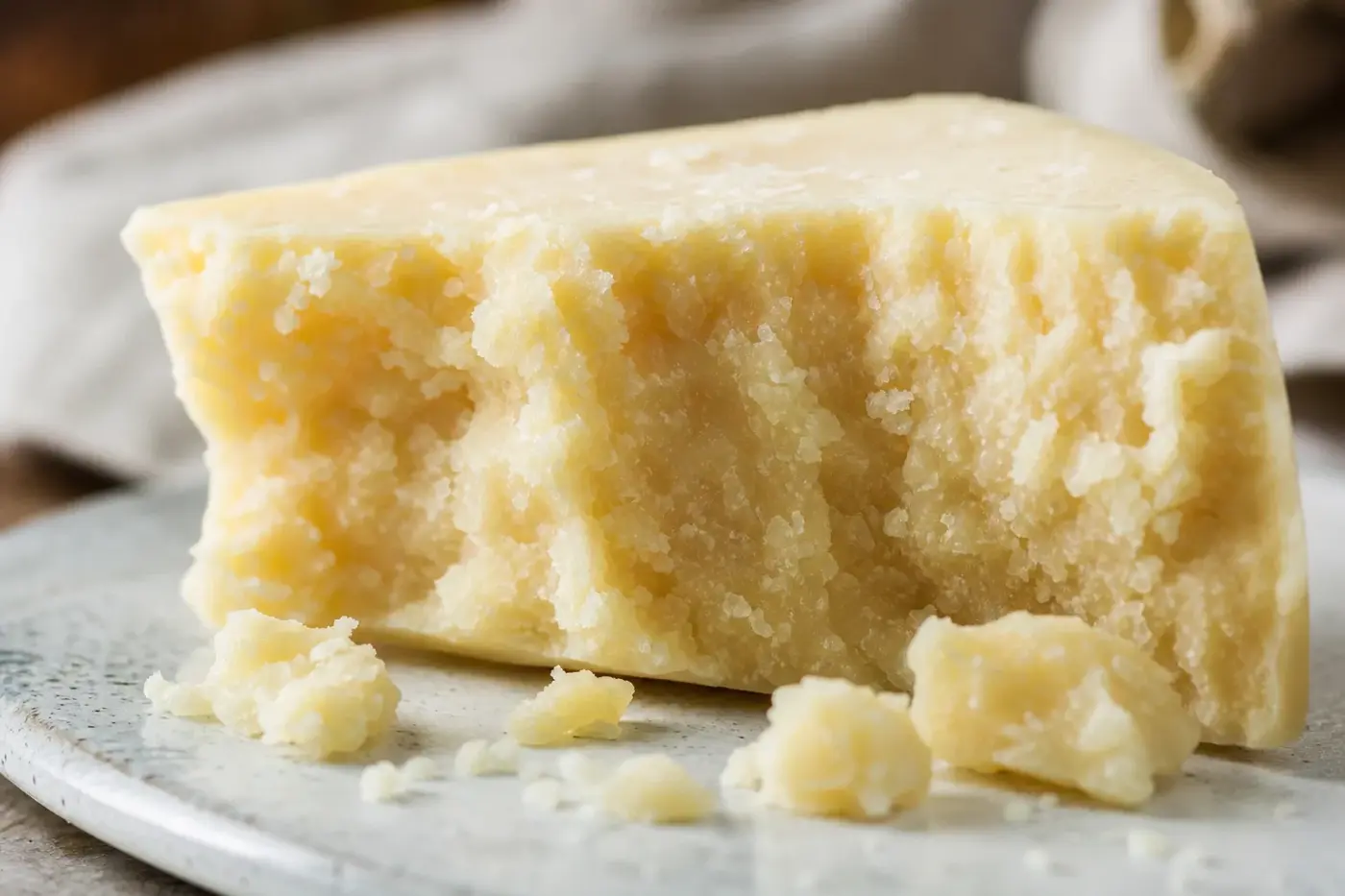
Your holiday cheese is ready for its journey home: a firm wedge bought in the EU, waiting to be carefully wrapped.
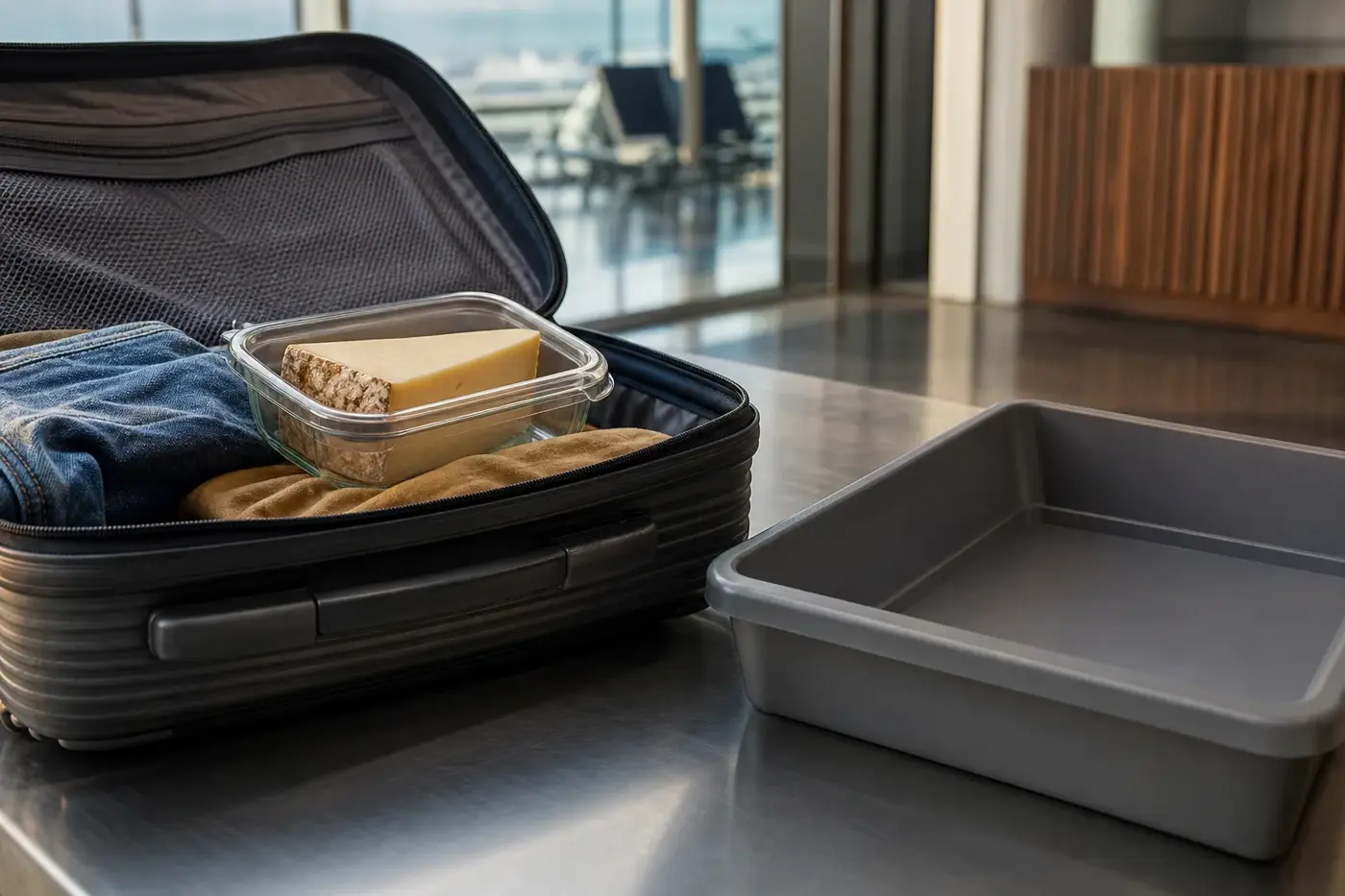
Your holiday cheese is ready for its journey home: a firm wedge bought in the EU, waiting to be carefully wrapped. But if home is Great Britain, it cannot currently travel in your luggage. Animal disease restrictions prohibit it.[1]
Before you pack, there are four separate hurdles to clear: keeping it cold, passing security, meeting the airline’s conditions and crossing the border. Permission at airport security is not permission to import it.[1][6][9]
Before you fall for a cheese, map its journey
Start with your destination’s official customs or agriculture website. Look for personal food imports, accompanied baggage and dairy products. Next, read your departure airport’s security page and the operating airline’s baggage conditions, repeating those checks for every connecting airport and your return journey.[1][5][6][9]
Note where the cheese was made, where you will buy it, its ingredients and whether it needs refrigeration. Keep those details with your itinerary, so an official has something specific to assess if the guidance leaves your product or route unclear. Your receipt helps establish origin; the label supplies product and storage information.[5][12]
Ask about the whole journey: “May I carry this cheese, made in this country, through this connection and into the destination for personal use?” Recheck shortly before departure. Animal disease measures can change the answer.[2][4][5]
Great Britain, Northern Ireland and the EU: find your route
For personal imports, Great Britain means England, Scotland and Wales. GOV.UK traveller guidance in November 2026 prohibits cheese arriving from the EU, Switzerland, Norway, Iceland, Liechtenstein, the Faroe Islands and Greenland because of animal disease restrictions. That includes an ordinary holiday cheese purchase in your luggage.[1]
From countries outside that group, the same guidance generally prohibits milk and milk based products. Narrow exceptions exist for specified infant or medical foods, with their own conditions. They do not cover your holiday cheese.[1]
Read the current traveller page alongside Defra’s live animal product restrictions, rather than relying on an old announcement. The operative measures differ across England, Wales and Scotland. The practical restriction on these cheese imports, however, is shared.[2]
| Your journey | What this means for your cheese | Official guidance, November 2026 |
|---|---|---|
| EU to Northern Ireland | DAERA permits dairy in original, intact packaging with an EU oval health mark, subject to disease controls. | DAERA [3] |
| Great Britain to Northern Ireland | Ask DAERA about your route and current disease controls before travelling. | Consult DAERA for this route. |
| Within the EU | You can bring cheese for personal consumption, subject to localised animal disease restrictions. | European Commission [4] |
| Great Britain to the EU | Ordinary cheese purchases are prohibited under rules for arrivals from most non-EU countries. | European Commission [4] |
EU guidance includes Andorra, Iceland, Liechtenstein, Norway, San Marino and Switzerland within its permitted travel area. Special quantity rules apply to the Faroe Islands and Greenland. For Northern Ireland, use DAERA’s separate guidance and select your actual origin and route: the Great Britain page is not the one for Belfast.[3][4]
Taking cheese to the United States? Declare it
Declare cheese to US Customs and Border Protection, even if you believe it is allowed. US Department of Agriculture guidance requires travellers to declare all agricultural products. Before you buy, read APHIS’s current dairy guidance carefully.[5]
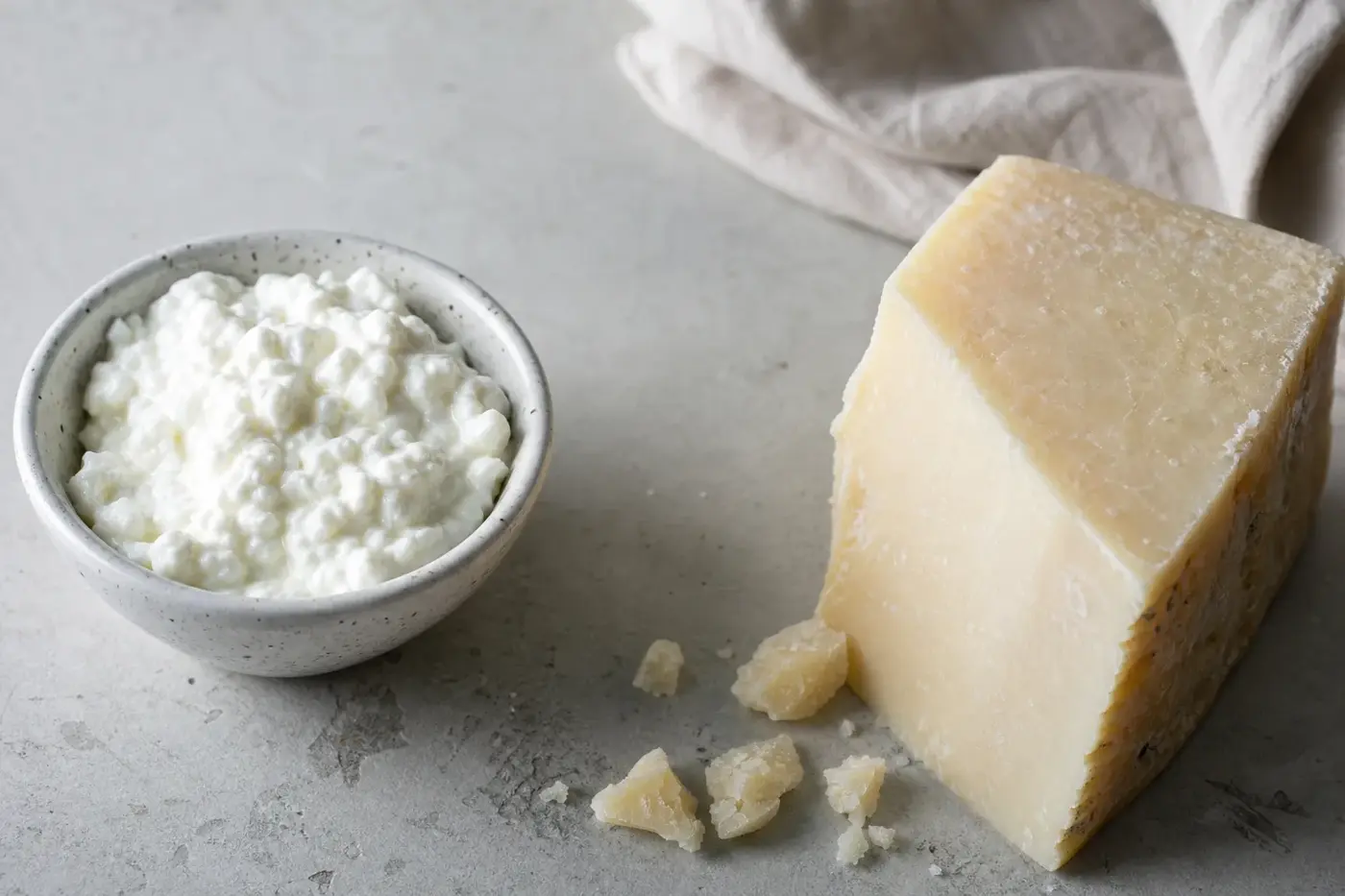
Its published exemptions allow solid hard or soft cheeses from any country, provided they contain no meat and do not pour like a liquid. Ricotta and cottage cheese are named as examples outside that solid cheese exemption. Your firm wedge and your spoonable tub therefore need different checks.[5]
Keep the original label and receipt within reach. APHIS lists both as documents that can help establish origin. If your cheese falls outside the stated exemption, ask APHIS about that specific product and its origin before packing.[5]
At security, a wedge and a spread are different things
For UK departures, GOV.UK includes liquid and semi-liquid foods, pastes and similar consistencies within its liquids rules. Ask your departure airport about spreadable cheese, cheese sauce or cheese held in liquid. Give the contents and container size, rather than just the cheese’s name.[6]
Where a liquid limit applies, the container’s capacity counts. A large tub does not become a small container because you have eaten half its contents. GOV.UK says most airports use a 100 ml limit, while some permit containers up to 2 litres, so check every airport where you will pass security.[6]
Heathrow’s published rules in November 2026 allow liquid containers up to 2 litres through security at all four terminals. That local rule shows why it is worth going straight to the airport’s own guidance. Heathrow also warns that food may need additional screening, so pack your cheese where you can reach it readily.[8]
Tell your airline what you plan to pack
Check the operating carrier’s rules for every flight, including cabin bag dimensions and weight, checked baggage conditions and accepted cooling materials. Your insulated bag needs to fit those requirements too. British Airways permits solid food on board but applies liquid restrictions to liquid foods, and cannot refrigerate passengers’ food.[9]
Ice packs need a separate security check. GOV.UK says frozen items, including ice packs, cannot usually travel in hand luggage. Ask the airport about your exact pack and its condition at screening, then ask the airline about cabin or hold carriage before choosing cheese that depends on cooling.[7]
Dry ice brings additional dangerous goods conditions. The UK Civil Aviation Authority lists a maximum of 2.5 kg per person, operator approval, packaging that releases carbon dioxide and marking requirements for checked packages. British Airways publishes its own approval conditions, so follow your operating airline’s complete instructions if you use dry ice.[9][10]
A connection counts as part of the journey
Every connecting passenger at Heathrow goes through security again. The airport says passengers on separately booked flights generally need to pass immigration, collect baggage and check in again. Establish whether you stay airside, within the airport’s secure transit area, or go through arrivals.[11]
Check each transit country’s border requirements as well as the airport’s transfer instructions. If you must collect luggage or leave for a hotel, ask the relevant authority how personal food rules apply. Let that answer guide your purchase, especially if your connection is in Great Britain.[1][6][11]
Choose a cheese that can manage the miles
A firm, intact piece in sound wrapping is easier to handle. It needs less structural support than a delicate soft cheese, and you avoid managing a tub of liquid. For packing purposes, think sturdy travelling companion rather than demanding house guest.
Choose the form only after checking the route, though. Great Britain’s import restriction still applies to that tidy firm wedge.[1]
For fresh or highly perishable cheese, work backwards from the labelled storage conditions. The Food Standards Agency advises following packaging instructions and keeping dairy products refrigerated. Choose a shorter, simpler journey, or leave the cheese behind if you cannot maintain the required conditions.[12]
Read the storage wording before asking the cheesemonger to wrap your purchase. The guide to reading a cheese label explains which information is worth keeping with it.
Pack for bumps, leaks and a look inside
Keep original packaging intact wherever possible, with the receipt alongside it but not touching the food. For a counter-cut piece, ask for food-suitable wrapping and retain the identifying label. Protect the wrapped cheese in a clean, rigid, leakproof container, then place that inside your insulated bag.[3][5]
Cheese sold in brine or whey needs its original closed tub kept upright inside secondary containment. Support the tub against movement and keep heavy items off it. Your cheese has enough travelling to do without becoming a cushion for the rest of your luggage.
Make the cheese and label easy for an inspector to reach without dismantling your suitcase. These precautions protect the contents, but you still need to check the security classification separately.[6][8]
If approved cooling packs can travel with you, distribute them through the insulated bag instead of putting them all underneath. The FSA recommends this arrangement for chilled picnic food. Keep the bag closed as much as possible too.[13]
Count the whole journey, not just the flight
Your cooling plan starts before you board. Count the journey to the airport, check-in, queues, flight, connection, baggage reclaim and onward travel, with room for delays. Cheese requiring refrigeration needs cooling throughout, so plan for suitable cold packs and temperature checks as well as an insulated bag: the bag alone is not enough.[12][13]
For England, Northern Ireland and Wales, the FSA recommends a domestic fridge temperature of 0 to 5 °C (32 to 41 °F). Follow your cheese’s storage instructions before travel and refrigerate it promptly on arrival. Use a thermometer to assess the temperature, rather than trusting how the outside of the bag feels.[12]
Consult the FSA’s current picnic guidance [13] for advice on keeping perishable food cool. Follow the product’s storage instructions too.
If a delay affects those storage conditions, consult the FSA’s current guidance and the product’s instructions.[12][13] Once you arrive, see how to store cheese at home.
At the border, keep the cheese and its story handy
Have your label, receipt and itinerary accessible, and declare cheese wherever required. Entering the United States means making the agricultural declaration even for cheese covered by the published exemption. In the EU, undeclared prohibited dairy products can be confiscated and destroyed, with further penalties possible.[4][5]
Be ready to open the container and follow the official’s instructions on inspection, surrender or disposal. If your route does not permit the cheese, enjoy it before travelling, following its storage instructions. Or choose something else to bring home.[1][4][5]
For wider handling principles, read the cheese food safety guide.
General information only, not medical advice: follow the official guidance where you live.
Questions people ask
Can I bring cheese home from the EU to Great Britain?
GOV.UK traveller guidance checked in November 2026 prohibits cheese arriving from the EU because of animal disease restrictions. An ordinary cheese purchase in your luggage is included, even if it is a firm wedge.
Can I take cheese from Great Britain to the EU or Northern Ireland?
Ordinary cheese purchases from Great Britain are prohibited under EU rules for arrivals from most countries outside the EU. The page does not verify the rules for travel from Great Britain to Northern Ireland, so check the route and current disease controls with DAERA.
Can I take cheese into the United States?
You must declare cheese to US Customs and Border Protection. APHIS lists an exemption for solid hard or soft cheeses from any country, provided they contain no meat and do not pour like a liquid. Check its current dairy guidance before buying.
Can I take spreadable cheese through airport security?
GOV.UK includes liquid and semi liquid foods and pastes within its liquids rules. Ask your departure airport about the cheese and its container size. Where a limit applies, the container's capacity counts even if it is only partly filled.
How should I keep cheese cold while travelling?
The Food Standards Agency advises following the packaging instructions and keeping dairy products refrigerated. Its current picnic guidance recommends distributing cooling packs through an insulated bag and keeping the bag closed as much as possible. GOV.UK says frozen items, including ice packs, cannot usually travel in hand luggage, so check with the airport and airline.
Sources
-
UK Government, Bringing food into Great Britain: Meat, dairy, fish and animal products, current online guidance retrieved November 2026. Relevant sections distinguish the listed European origins from other countries and prohibit personal cheese imports on those routes.
-
Department for Environment, Food & Rural Affairs and Animal and Plant Health Agency, Imports, exports and EU trade of animals and animal products: topical issues, current online version retrieved November 2026. “Personal imports from the European Union” identifies the restrictions and separate operative measures for England, Wales and Scotland.
-
Department of Agriculture, Environment and Rural Affairs, Summary of personal food import restrictions, current online guidance retrieved November 2026. Relevant sections cover EU arrivals, packaging, health marks and restrictions for other origins.
-
European Commission, Your Europe, Taking animal products, food or plants with you, current online guidance retrieved November 2026. Relevant sections cover permitted personal consumption, the associated travel area, disease restrictions, non-EU arrivals and border controls.
-
US Department of Agriculture, Animal and Plant Health Inspection Service, International Traveler: Milk, Dairy, and Egg Products, modified 13 January 2026. Relevant passages cover agricultural declarations, origin documentation and the exemption for qualifying solid cheeses.
-
UK Government, Hand luggage restrictions at UK airports: Liquids, current online guidance retrieved November 2026. Relevant passages define liquid consistencies, explain container limits and require checks at departure, transit and return airports.
-
UK Government, Hand luggage restrictions at UK airports: Overview, current online guidance retrieved November 2026. “Food and powders” and “Frozen items” address additional screening and the usual restriction on frozen items, including ice packs.
-
Heathrow Airport, Hand baggage and liquids, current online airport instructions retrieved November 2026. Relevant passages state the 2 litre container limit across Terminals 2, 3, 4 and 5 and possible additional food screening.
-
British Airways, Restricted and prohibited items, current online conditions retrieved November 2026. Relevant passages cover solid and liquid foods, lack of onboard refrigeration and the airline’s dry ice approval conditions.
-
UK Civil Aviation Authority, What items can I travel with and which are restricted, current online guidance retrieved November 2026. The dry ice entry specifies quantity, operator approval, ventilation and checked baggage marking requirements.
-
Heathrow Airport, Connecting flights, current online instructions retrieved November 2026. Relevant passages cover repeat security, baggage transfer and separately booked flights.
-
Food Standards Agency, How to chill, freeze and defrost food safely, published 18 December 2017, current online version retrieved November 2026. The chilling section covers domestic fridge temperatures, dairy products, thermometers and labelled storage instructions.
-
Food Standards Agency, Keeping food safe on a picnic, published 11 January 2018, current online guidance and printable version retrieved November 2026. Relevant passages cover distributed cooling packs, keeping containers closed and time limits for warm perishable food.
Researched by comparing official border guidance, airport instructions, airline conditions and food safety advice, with practical packing recommendations identified as editorial synthesis.
Last checked: November 2026
Last checked November 2026.
The editors suggest you read next
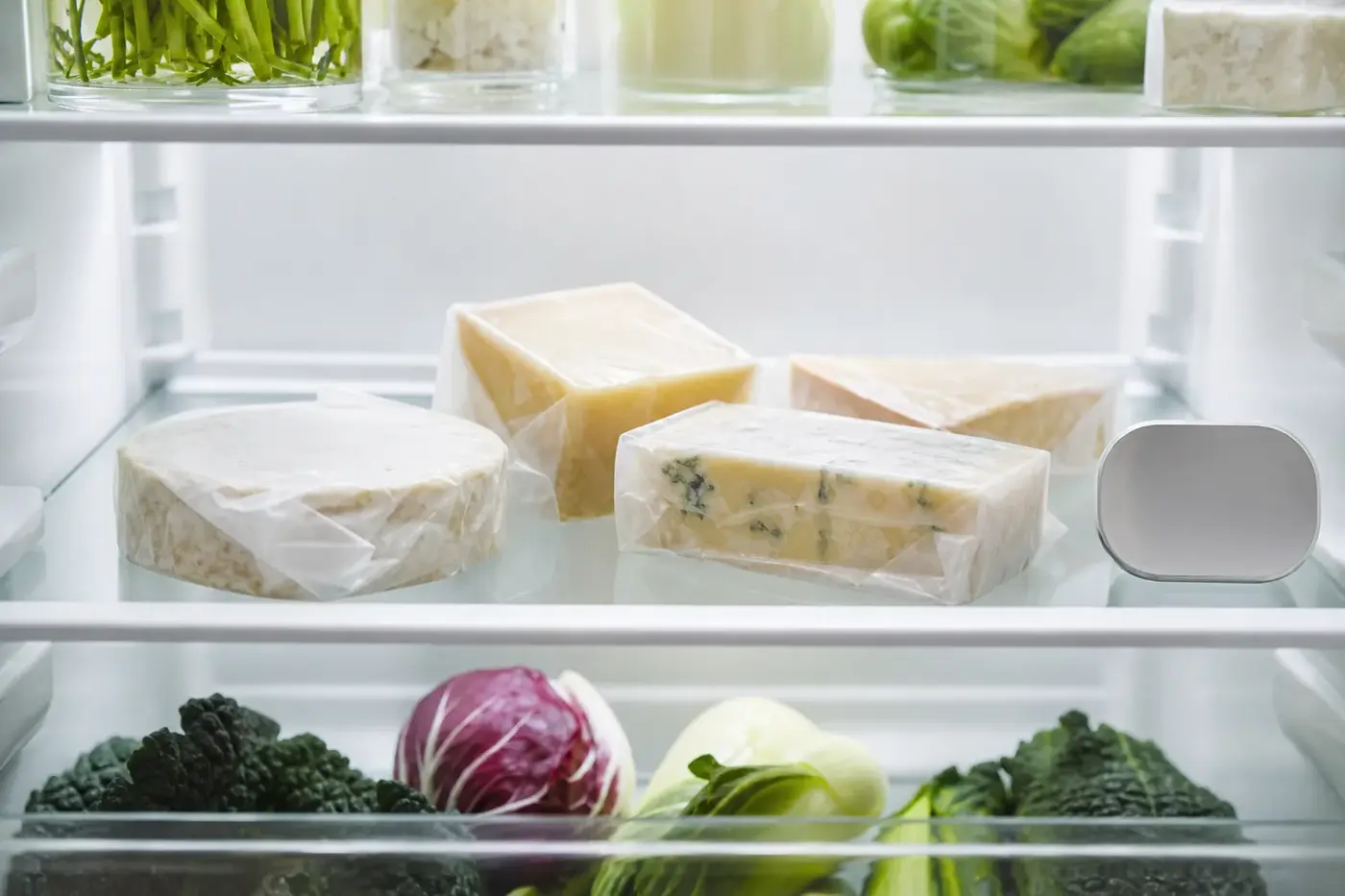
How to Store Cheese at Home
Open the fridge and a strongly aromatic cheese may introduce itself before you have found the milk.