Vegetarian Cheese and Rennet Explained
You pick up a wedge of cheese.
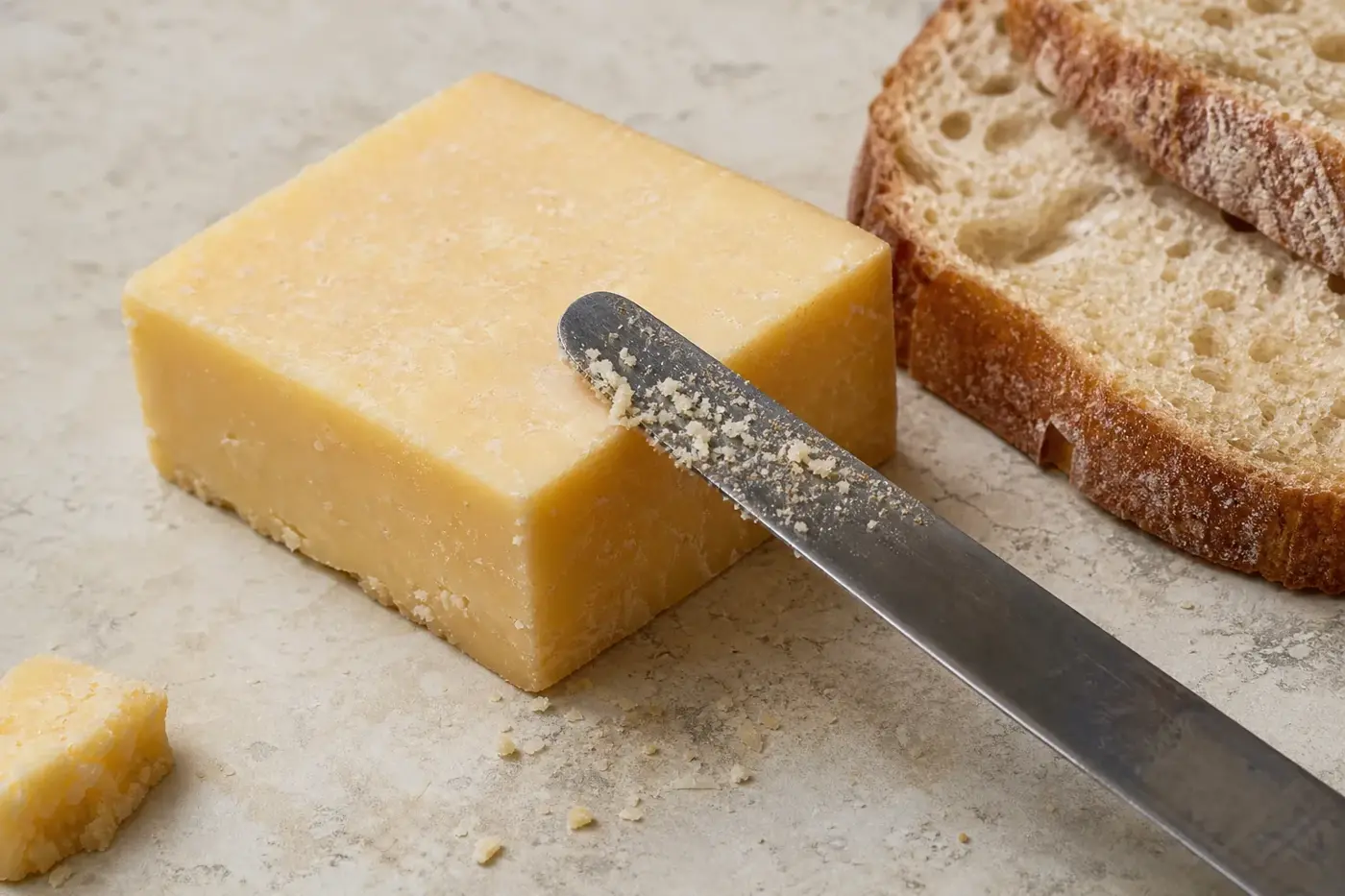
You pick up a wedge of cheese. Its appearance gives nothing away about whether the milk was set with an enzyme extracted from an animal’s stomach. Cheese can be remarkably good at keeping its own counsel.
For a vegetarian choice, look for a clear vegetarian claim or certification covering the finished product. If neither is available, ask about the coagulant. The ingredients list alone may not tell you enough. [1,7,10]
That small change that turns milk into curd
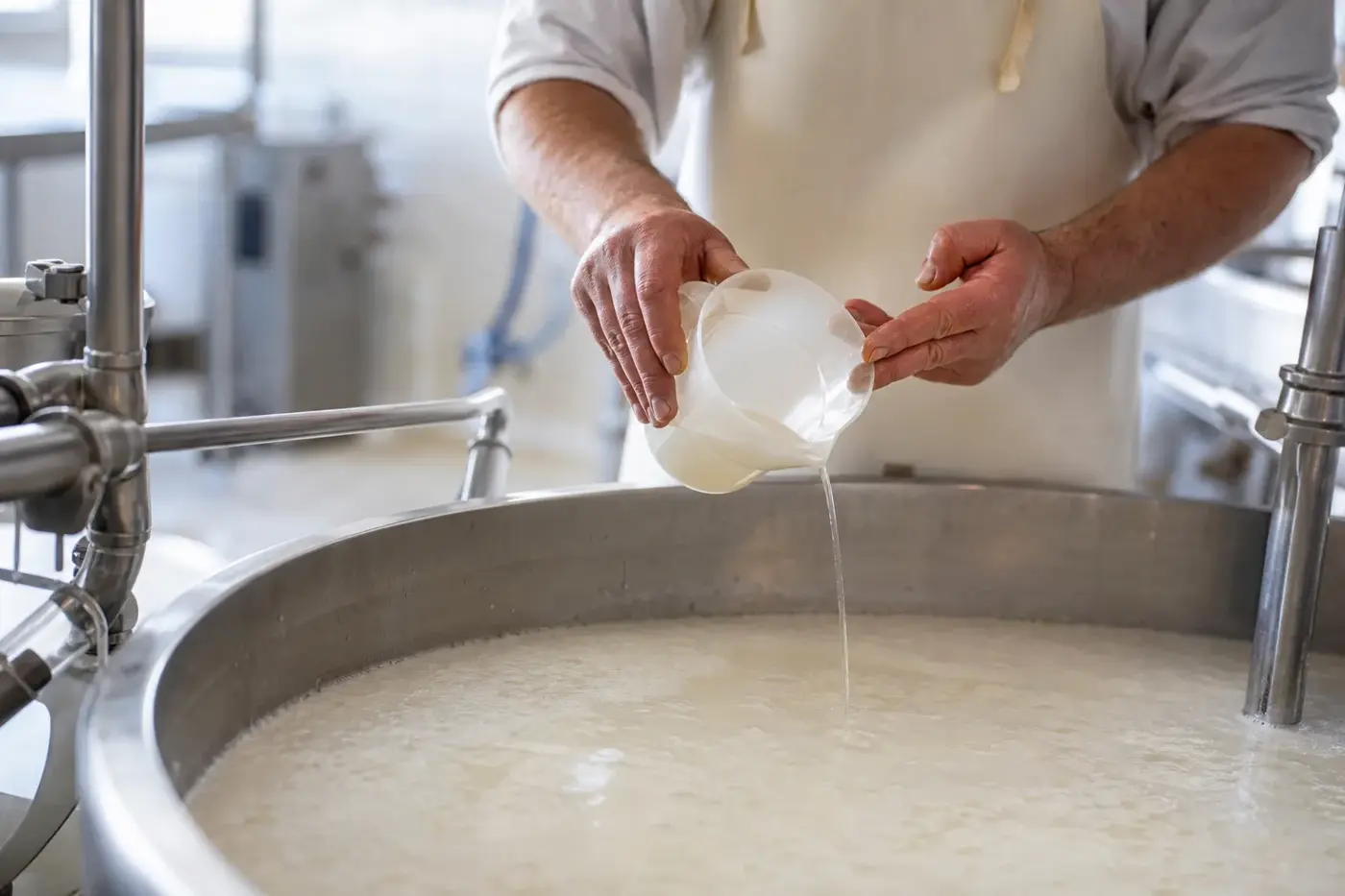
Milk becomes curd through a small but crucial change to its proteins. Rennet supplies the milk-clotting enzymes responsible; the best-known is chymosin. It cuts a particular bond in kappa-casein, a milk protein, destabilising the protein particles called casein micelles so the milk can set. [1,3]
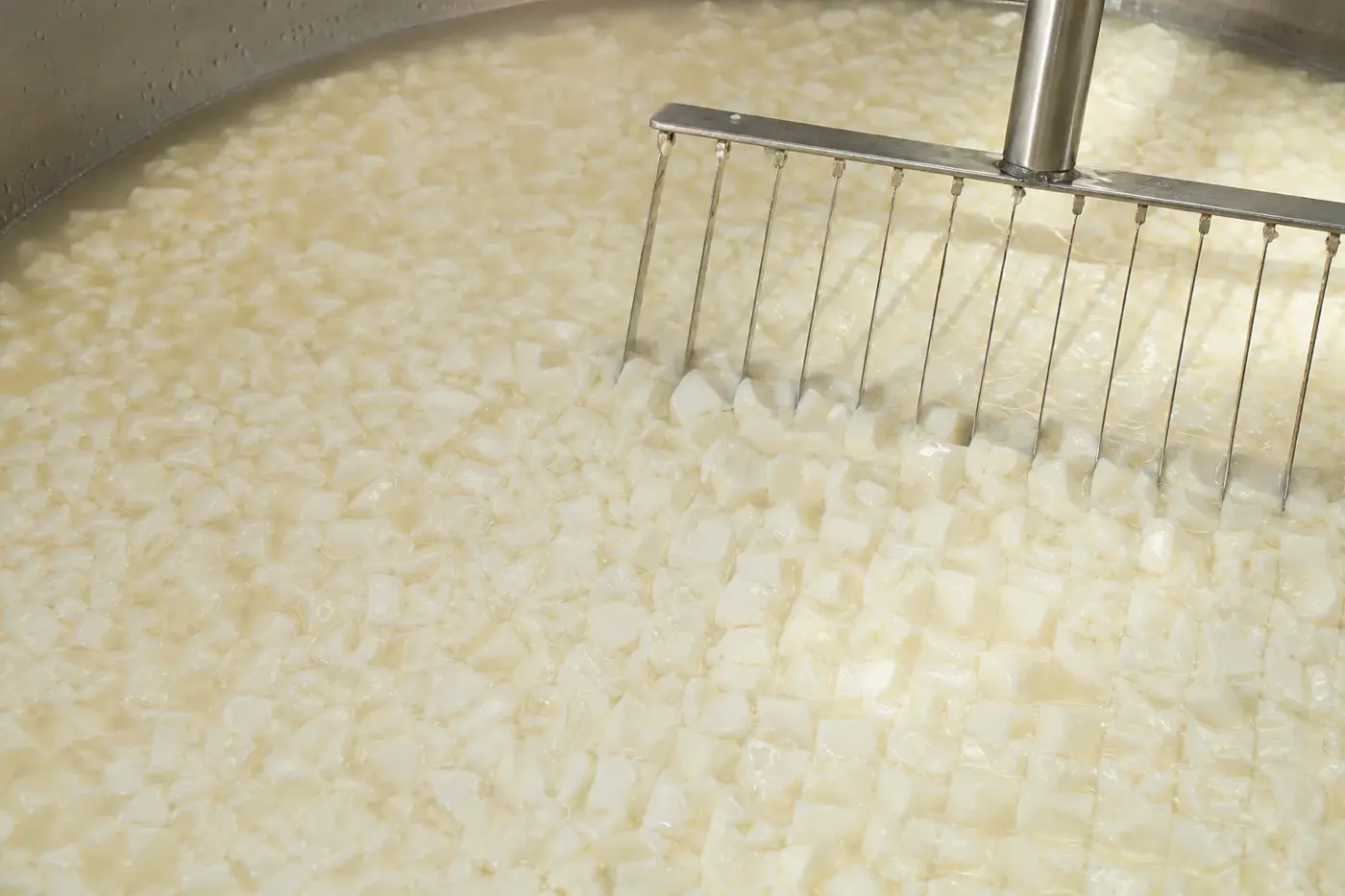
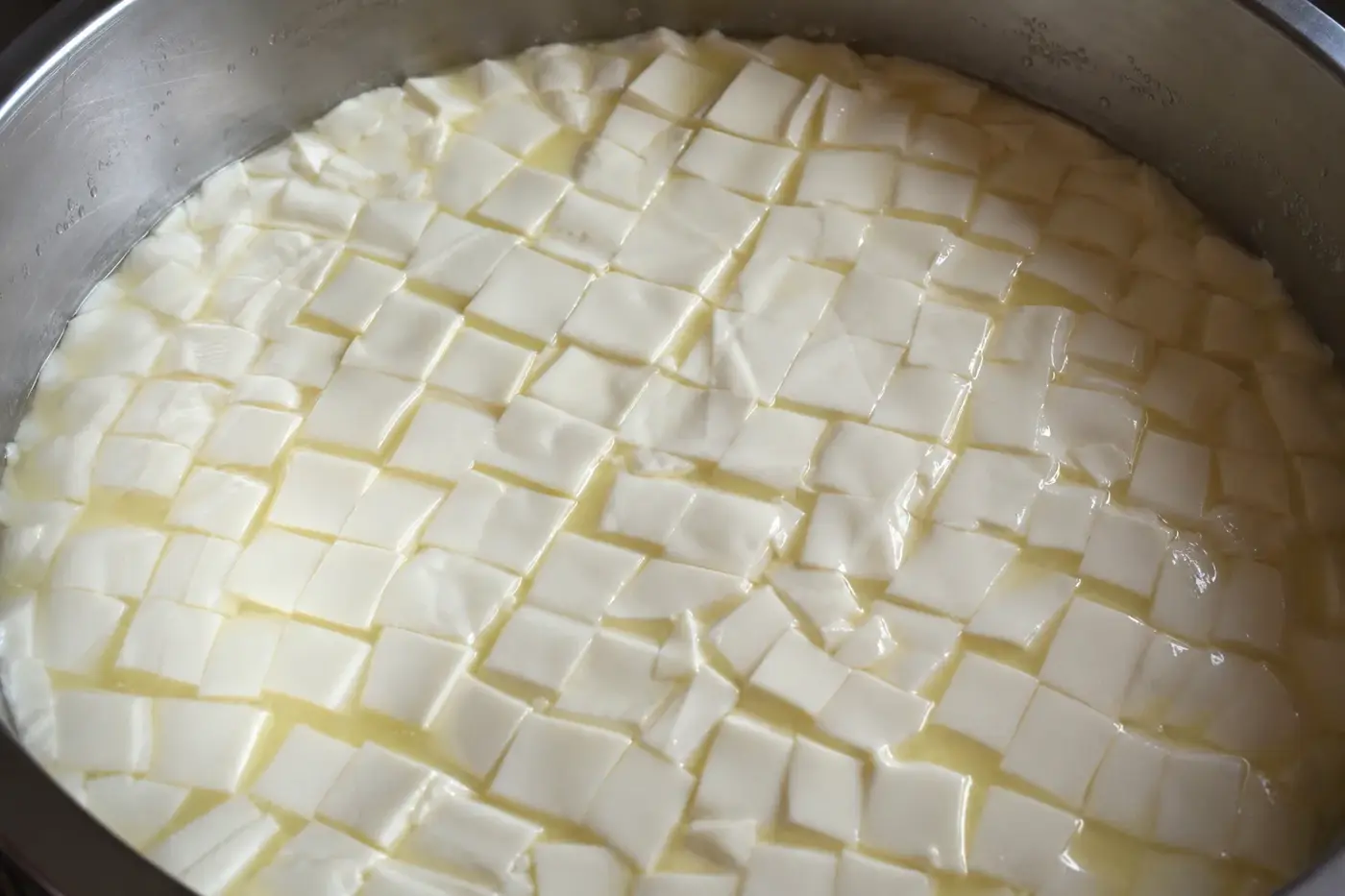
The solid curd becomes cheese, while the liquid whey drains away. Some coagulant can stay in the curd, continuing to break down proteins as the cheese ripens. Vegetarian suitability therefore depends on how the cheese is made, including its processing aids, not just the ingredients you recognise on your plate. [1,6]
You can follow the whole journey in how cheese is made. For now, hold on to one distinction: an enzyme’s job is not the same thing as its source. Different coagulants do the same essential work, but start with very different materials.
Where traditional animal rennet begins
Traditional animal rennet begins in the abomasum, the fourth stomach compartment of a ruminant. Calves, lambs and goat kids are familiar sources. The European farmhouse dairy guide describes preparations from suckling ruminants, while EFSA’s cattle rennet assessment describes extraction from the stomachs of slaughtered calves and cows. [1,2]
Animal rennet can contain pepsin as well as chymosin. Both cut proteins, but their source is the important part here. The Vegetarian Society’s certification criteria exclude animal rennet and other slaughter by-products, including processing aids, so cheese made with animal rennet fails that vegetarian standard, despite being made from milk. [1,6]
Microbial coagulants take another route
With microbial coagulants, microorganisms supply the enzymes instead of animal stomachs. The European Commission’s enzyme application register includes mucorpepsin from the mould Rhizomucor miehei and endothiapepsin from Cryphonectria parasitica. These fungal enzymes have identities of their own: they are not calf chymosin produced by another route. [4]
When you choose cheese, separate two questions. Which organism produces the enzyme, and does the whole product meet your vegetarian requirements? “Microbial rennet” helps answer the first; a vegetarian claim or certification is more useful for the second, because it covers the cheese you buy rather than just one input. [4,10]
Fermentation-produced chymosin, without the guesswork
Fermentation-produced chymosin, usually shortened to FPC, is chymosin made by a microorganism. Genetic modification can give that microorganism the instructions to produce the enzyme. The production culture grows through fermentation, after which the enzyme is recovered and prepared for cheesemaking. [3]
EFSA’s 2022 assessment of the genetically modified Aspergillus niger strain DSM 29544 gives one documented example. It describes fermentation followed by filtration, separating the production cells from the enzyme-containing liquid. Tests found neither viable production organisms nor recombinant DNA in that particular enzyme preparation. Those findings concern the assessed preparation, not every product called FPC. [3]
For you, avoiding slaughter-derived rennet and avoiding genetic engineering are separate decisions. If both matter, ask about both explicitly. “Chymosin” alone cannot tell you the production method: EFSA documents it in animal extracts and fermentation-produced preparations alike. [1,3]
Cardoon flowers and the cheesemaking traditions of Spain and Portugal
Dried cardoon flowers have a role in the cheesemaking of Spain and Portugal: their pistils can turn milk into curd. In its 2023 assessment, EFSA describes phytepsin extracted from cardoon, Cynara cardunculus. The resulting filtered extract is used to coagulate milk. [5]
That plant coagulant tells you the botanical source of the setting enzyme, but not everything about the cheese. The Vegetarian Society’s criteria also cover other ingredients and processing aids. Cardoon answers the rennet question; a vegetarian declaration for the finished cheese addresses the rest, particularly flavourings, fillings and other additions. [5,10]
Herbs on the label are no clue to what set the milk. For that, read the coagulant description itself. You can explore the different enzyme preparations in the rennet explainer.
Why the label may not tell the whole story
In Great Britain, a cheese label can legally say nothing about the coagulant. Under Article 19(1)(d) of assimilated Regulation (EU) No 1169/2011, certain cheeses need no ingredients list at all. The exemption covers cheese containing only the specified dairy products, essential enzymes and cultures, plus, except for fresh and processed cheese, the salt needed for manufacture. [7]
There is another provision worth knowing. Even where an ingredients list appears, Article 20(b)(ii) allows food enzymes used as processing aids to be omitted, subject to allergen requirements. An apparently complete list can therefore leave the coagulant unnamed. Neither exemption means the cheese was made without animal rennet. [7]
November 2026 is the reference point for these Great Britain labelling provisions. If you buy cheese elsewhere, consult that market’s rules and supplier information. Wherever you shop, an absent declaration and a positive vegetarian statement tell you different things: look for the statement rather than treating silence as an answer.
For help with the rest of the pack, turn to how to read a cheese label. It is particularly useful when you are comparing the name of the food with its voluntary descriptions.
Look for a vegetarian promise about the whole cheese
Start with wording about the finished product, such as “suitable for vegetarians”. Under Article 36 of assimilated Regulation (EU) No 1169/2011, voluntary food information in Great Britain must not mislead or be ambiguous or confusing. That legal duty stands separately from membership of a private certification scheme. [7]
The Vegetarian Society Approved vegetarian trademark is one recognisable example of certification. Its published standard excludes animal rennet and processing aids made from slaughter by-products, and requires measures against cross-contamination during manufacture. Its vegetarian and vegan marks have different criteria, so look closely at the mark on your exact product. [6,10]
If avoiding genetic modification matters to you too, read the scheme’s precise criteria. The Society includes a GMO-free provision and separately states that vegetarian rennet is acceptable. Ask the scheme or maker about the particular enzyme production route rather than assuming the logo answers that question. [6]
When the pack leaves you wondering, this guide can help. Start with what it actually tells you, then ask for the missing detail.
| What you spot | What it tells you | Your next step |
|---|---|---|
| A vegetarian certification mark | Certification is claimed under the scheme’s criteria | Make sure it covers this exact product. [6,10] |
| Microbial or plant coagulant | The stated source of the enzyme | Look for a vegetarian declaration for the whole cheese. [4,5,10] |
| Rennet, enzymes or chymosin | Too little detail to identify the source | Ask the maker which preparation they use. [1,3] |
| No rennet declaration | Nothing confirming that rennet is absent | In Great Britain, bear the declaration exemptions in mind, then ask. [7] |
Protected cheese names come with recipe rules
A protected cheese’s traditional recipe may specify which coagulant is permitted. You need the production specification for that detail: an explicit requirement, rather than a general account of customary cheesemaking. If the rules require animal rennet, that settles suitability under a vegetarian standard excluding slaughter-derived processing aids. [6,12]
For Parmigiano Reggiano, the consortium’s published FAQ lists milk, salt and rennet as the ingredients. That is less specific than a clause identifying an animal or other source for the rennet. For Comté, the interprofessional body’s website points to the production specification as the document setting its manufacturing rules. [11,12]
Production specifications for the named examples, November 2026
| Named cheese | Coagulant requirement in the current specification |
|---|---|
Ask for the exact cheese name and a vegetarian declaration covering the product on offer. For grating or cooking, choose a vegetarian-labelled cheese suited to the task and use its own name. Sharing a job in the kitchen does not make it the named protected cheese, however confidently it handles the grater.
Vegetarian cheese still brings milk to the table
Changing the coagulant does not remove the milk. Vegetarian cheese remains a dairy food. The Vegetarian Society’s vegan criteria exclude dairy products, while its vegetarian criteria allow a different category of foods: vegetarian and vegan are distinct claims. [6,10]
For UK allergen information, the Food Standards Agency’s guidance treats milk from cows, sheep, goats and buffalo as milk. Their proteins have similar structures, it explains, and people allergic to cows’ milk are likely to react to other mammalian milks. A vegetarian mark does not establish suitability for a milk allergy. The Vegetarian Society expressly says its trademarks are not allergen labels. [8,10]
In Great Britain, Article 21 sets allergen presentation rules, including emphasis in an ingredients list and an exception where the food’s name clearly identifies the allergen. The FSA explains how “cheese” can identify milk, even on an exempt product without an ingredients list. Read that official guidance for your circumstances, and seek your clinician’s advice if you have a milk allergy. [8,9]
Dietary choices, milk allergy and lactose intolerance raise different questions. For those distinctions, continue to cheese allergy versus lactose intolerance.
Give the maker a question they can answer
Ask about all enzymes and processing aids, not just rennet. The American Halal Foundation’s technical account identifies animal-derived lipases, enzymes used to develop flavour, as another sourcing question. A vegetarian declaration covering every processing aid tells you more than reassurance about the coagulant alone. [10,14]
Make your question specific to the cheese you intend to buy, rather than the dairy’s entire range. A retailer may stock several similar cheeses, so keep the product name and any pack details to hand. You can ask:
Please confirm whether this cheese is suitable for vegetarians, including its coagulant and any other enzymes or processing aids. Is the coagulant animal rennet, a microbial enzyme, fermentation-produced chymosin or a plant extract?
If genetically modified production microorganisms matter to you, add a separate question about them. In a restaurant, ask about the cheese actually being used, including any grated garnish. A useful answer identifies the product or refers you to the supplier’s declaration.
If the reply simply repeats “rennet” or “enzymes”, ask where they come from. If nobody can confirm the source, choose a product with clearer information. Keep written confirmation with the product details, so your next purchase comes with a record of exactly which cheese and information that answer covered.
Vegetarian, kosher and halal are different promises
Vegetarian suitability, kosher certification and halal certification are not interchangeable. OU Kosher explains that its cheese certification requires special rabbinic supervision of production, even when the coagulant itself is acceptable. A microbial enzyme alone therefore does not establish certification under OU’s requirements. [13]
The American Halal Foundation likewise describes vegetarian rennet as only one part of its assessment. Its checks also cover other enzymes, rind treatments and manufacturing arrangements. Under that certifier’s requirements, animal rennet needs documentation of halal slaughter. Plant, microbial and fermentation-produced alternatives still need the relevant production documentation. [14]
Choose certification that meets your own religious requirements, and confirm its scope with the certifying authority. The Dietary and Religious Rules hub will point you towards the relevant kosher and halal guidance.
General information only, not medical advice: follow the official guidance where you live.
Questions people ask
How can I tell if cheese is vegetarian?
Look for a vegetarian claim or certification covering the finished cheese. If neither is available, ask the maker about the coagulant and other processing aids.
Can cheese contain animal rennet if it is not listed on the label?
Yes. In Great Britain, certain cheeses need no ingredients list, and enzymes used as processing aids can also be omitted from an ingredients list, subject to allergen requirements.
Is fermentation produced chymosin genetically modified?
Fermentation produced chymosin is made by a microorganism, which can be genetically modified to produce the enzyme. If avoiding genetic modification matters to you, ask about the production method separately.
Are Parmigiano Reggiano and Comté vegetarian?
The page did not verify the coagulant requirement in the current specifications for either cheese. Ask for the exact cheese name and a vegetarian declaration covering the product offered.
Is vegetarian cheese suitable for someone with a milk allergy?
A vegetarian mark does not establish suitability for someone with a milk allergy, and the Vegetarian Society says its trademarks are not allergen labels. The Food Standards Agency explains that people allergic to cows’ milk are likely to react to other mammalian milks; see its Food Allergen Labelling and Information Requirements Technical Guidance.
Sources
-
European Food Safety Authority, Safety evaluation of the food enzyme rennet containing chymosin and pepsin A from the abomasum of calves and cows, EFSA Journal 21(6), 8084, 2023. Sections 3.1, 3.2 and 3.5.1. Published assessment.
-
FACEnetwork, European guide for good hygiene practices in the production of artisanal cheese and dairy products, European Commission-hosted PDF, 2017, Section III, coagulants and animal rennet. Commission-hosted guide.
-
European Food Safety Authority, Safety evaluation of the food enzyme chymosin from the genetically modified Aspergillus niger strain DSM 29544, EFSA Journal 20(7), 7464, 2022. Sections 3.1, 3.2 and 3.3.4. Published assessment.
-
European Commission, Register of food enzymes to be considered for inclusion in the Union list, February 2026 update, entries for endothiapepsin, mucorpepsin and plant coagulants. Register PDF.
-
European Food Safety Authority, Safety evaluation of the food enzyme phytepsin from Cynara cardunculus L., EFSA Journal 21(3), 7909, 2023. Sections 3.1 and 3.2. Published assessment.
-
Vegetarian Society, Trademark criteria, live edition retrieved November 2026, vegetarian criteria (a), (c) and (d), and vegan criteria (a). Scheme criteria.
-
UK legislation publisher, Regulation (EU) No 1169/2011, 2011, assimilated text retrieved November 2026: Article 19, Article 20 and Article 36.
-
Food Standards Agency, Food allergen labelling and information requirements technical guidance, live GOV.UK edition retrieved November 2026, paragraphs 40 to 42. Official technical guidance.
-
UK legislation publisher, Regulation (EU) No 1169/2011, 2011, assimilated text retrieved November 2026, Article 21. Allergen presentation requirements.
-
Vegetarian Society, Our trademarks, live edition retrieved November 2026. Certification overview and allergen qualification.
-
Consorzio del Formaggio Parmigiano Reggiano, FAQ, live edition retrieved November 2026, ingredients answer. Consortium FAQ.
-
Comité Interprofessionnel de Gestion du Comté, Un cahier des charges exigeant, live edition retrieved November 2026. Interprofessional body's explanation of the specification.
-
OU Kosher, Kosher cheese, live edition retrieved November 2026, production supervision and certification requirements. Certifier's guidance.
-
American Halal Foundation, Halal certification for cheese and dairy, live edition retrieved November 2026, enzyme sourcing, vegetarian claims and cheese FAQs. Certifier's guidance.
This desk-researched article brings together official enzyme assessments, Great Britain labelling provisions and certification criteria to distinguish evidence about the coagulant from evidence about the finished cheese.
Last checked: November 2026
Last checked November 2026.
The editors suggest you read next