Aaruul and Kurut: Dried Fermented Curds
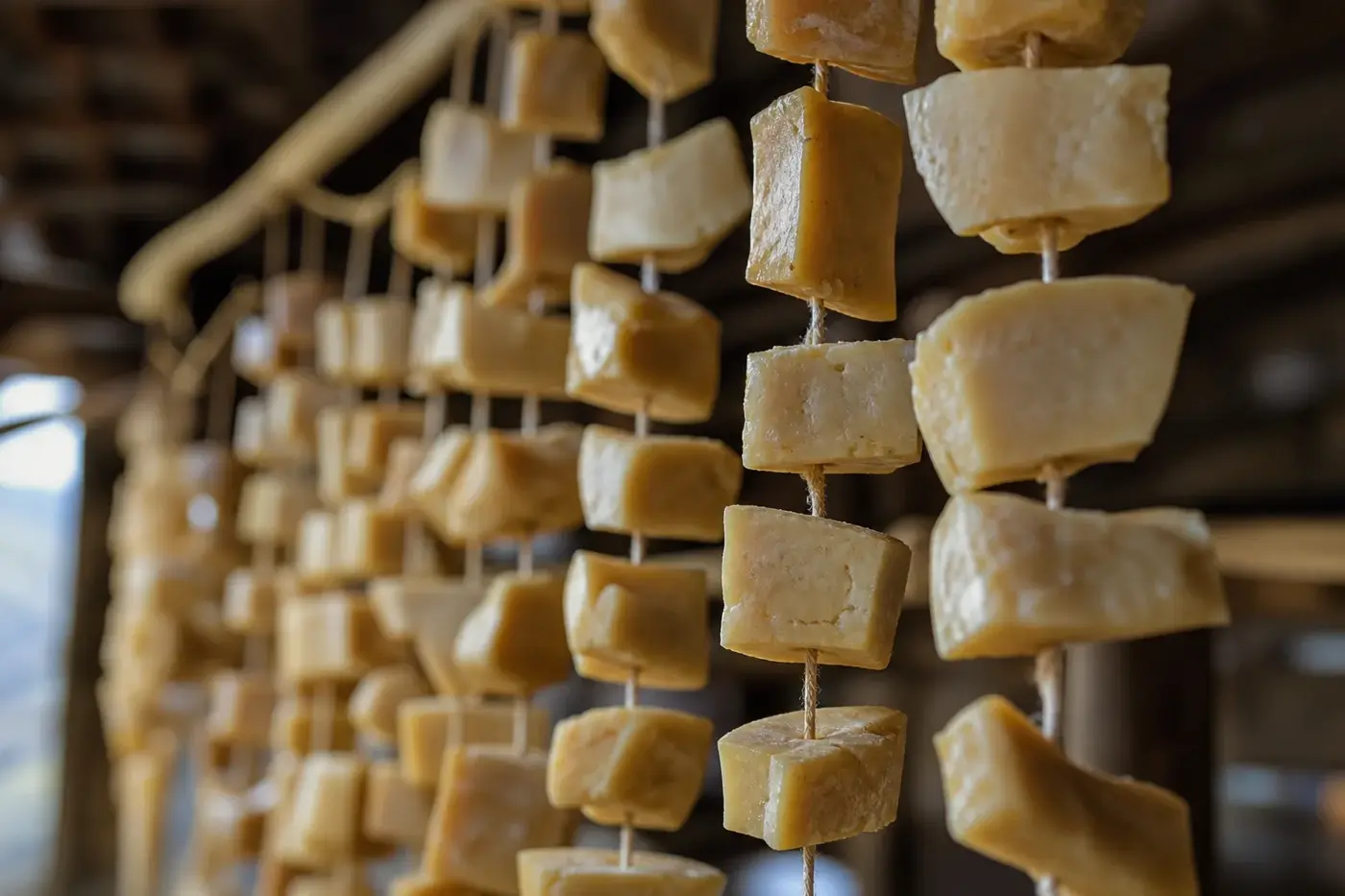
Look up at a ger roof in Mongolia and you might spot tomorrow's provisions taking the air: a cake of pressed curd, sliced and laid out to dry.
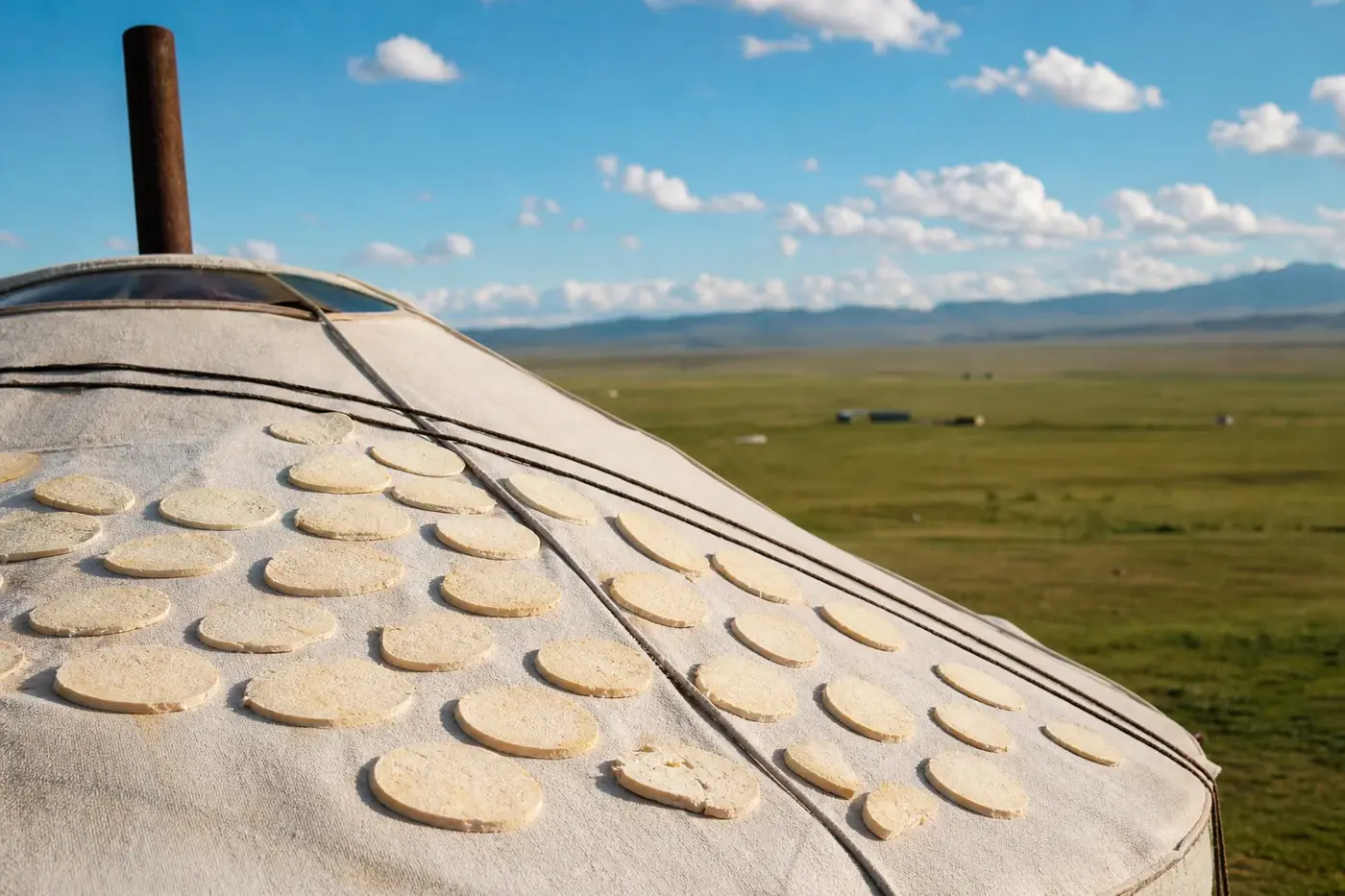
Look up at a ger roof in Mongolia and you might spot tomorrow's provisions taking the air: a cake of pressed curd, sliced and laid out to dry. In Kyrgyzstan, salted curd balls rest on reed mats. Both turn wet, fermented dairy into food for the months ahead. Aaruul and kurut belong to related families of preserved foods, shaped by local herds and household methods, rather than two recipes everyone has agreed to follow. [1,3]
Follow the names, find the landscape
Aaruul carries summer milk into winter. Rooted in Mongolia's pastoral dairy culture, it turns something perishable into something portable and lasting. FAO places it among the country's protein-based milk products, alongside aarts and byaslag, and identifies it specifically as fermented dried curd. [4]
Follow these dairy traditions into neighbouring pastoral regions and the landscape opens out. ICHCAP places Kyrgyz dairy foods within a cultural area encompassing Central Asia, the Altai and southern Siberia. Techniques travel across those landscapes, while local names and preparations retain their own identities. [3]
Here, kurut is particularly associated with Central Asian traditions documented in Kyrgyzstan and Kazakhstan. You will encounter the English spellings kurut and kurt, both used in research on a sample collected in Kazakhstan's Zhambyl region. Treat the spelling on a packet as an introduction, not the whole conversation: its origin, milk and method tell you more about what is inside. [3,6]
Meet the herds behind your handful
Cow and yak milk feature prominently in documented Mongolian aaruul. In the Australian National University's Mongolia Institute account, most examples begin with yoghurt made from those animals' milk. Its first-hand observations show how both the milk and the yoghurt leave their mark on the finished curd's taste and texture. [5]
A Swedish agricultural university project in Ulaanbaatar explored that variety by making experimental aaruul from cow, yak, goat and camel milk. Six products went into a consumer assessment. These deliberately developed samples reveal the possibilities of different dairy sources, alongside the established variety of household preparations. [7]
Mare's milk had a turn, too, but did not form the curd needed for the project's test products. That leaves you with a useful question: what actually made the curd? Just because a community uses an animal's milk does not mean that milk goes into every local dairy food. [7]
Kyrgyz kurut is documented from cow, sheep, goat and yak milk. For yak dairying in particular, look towards the inner Tien Shan, Alai and Pamir mountains. [3]
From a pail of milk to provisions
Sour the milk, separate the curd, remove the water: that is the shared principle. Fermentation develops acidity through microbial activity. Curd is the coagulated milk material; whey is the liquid separated from it. Research describes kurut as acid-coagulated, although heating, fermenting and draining happen in different orders across preparations. [6,8]
If you would like to follow that transformation more broadly, start with how cheese is made. Then come back to the household details, where these particular foods acquire their character.
A Smithsonian field report from Khuvsgul in northern Mongolia takes you through the work. Milk is mixed with yoghurt and boiled, then the curd is drained in cloth and pressed between weighted boards. The cake is sliced and laid on a drying table outside a ger, the portable dwelling, or on its roof. In late autumn, the report also records larger broken pieces. [1]
The differences begin before the boards come out. Mongolian engineering research describes several starting materials, including yoghurt curd and curd left from milk distillation. Draining and pressing lead to cutting or moulding, then drying. What a household puts aside may therefore come from different branches of milk processing. [8]
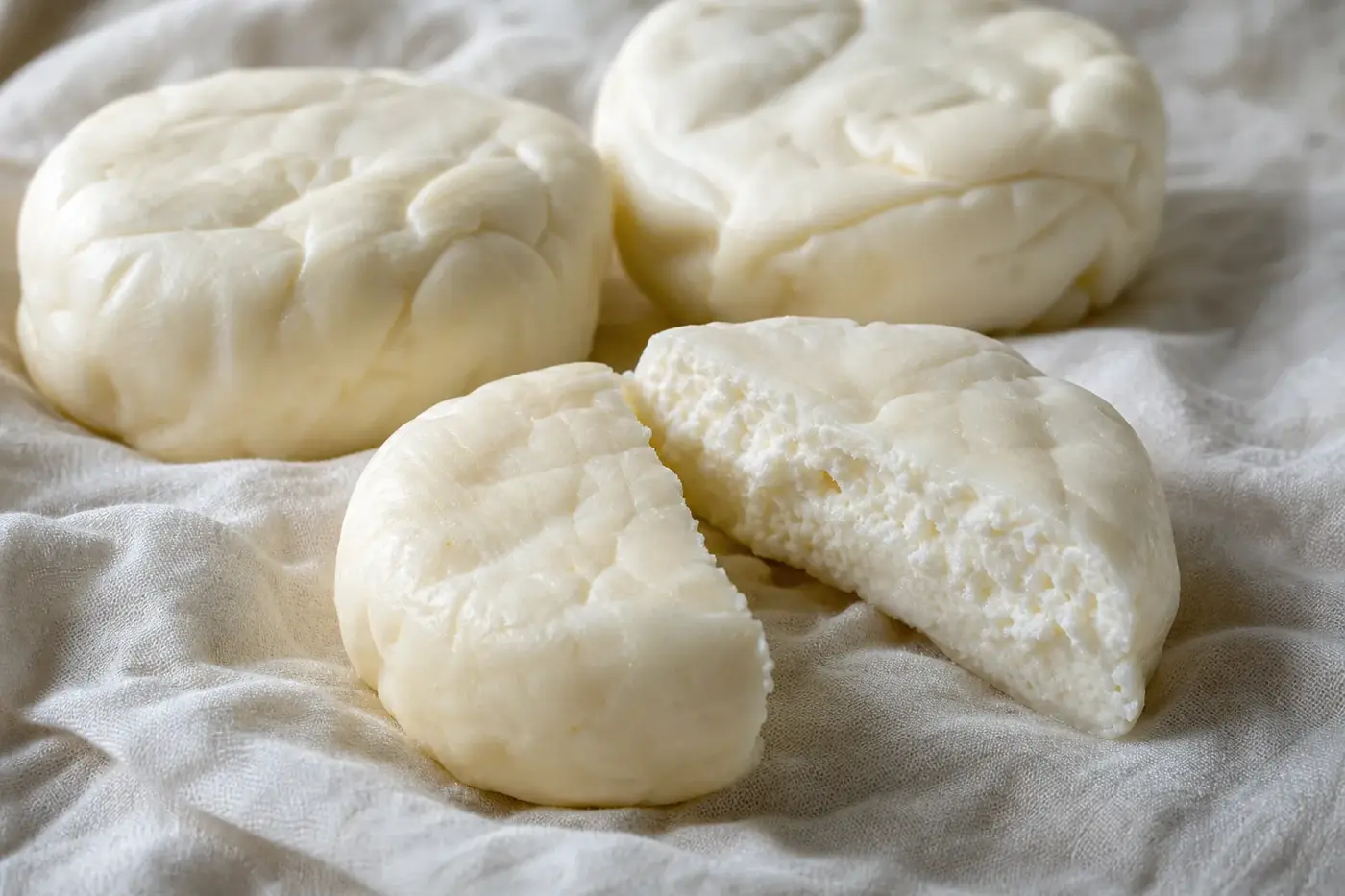
In the Kyrgyz account, ayran is strained in a bag. The curd is then salted, shaped into balls and dried on reed mats. Both boiled-curd and unboiled-curd preparations are recorded. [3]
A little shape, plenty of character
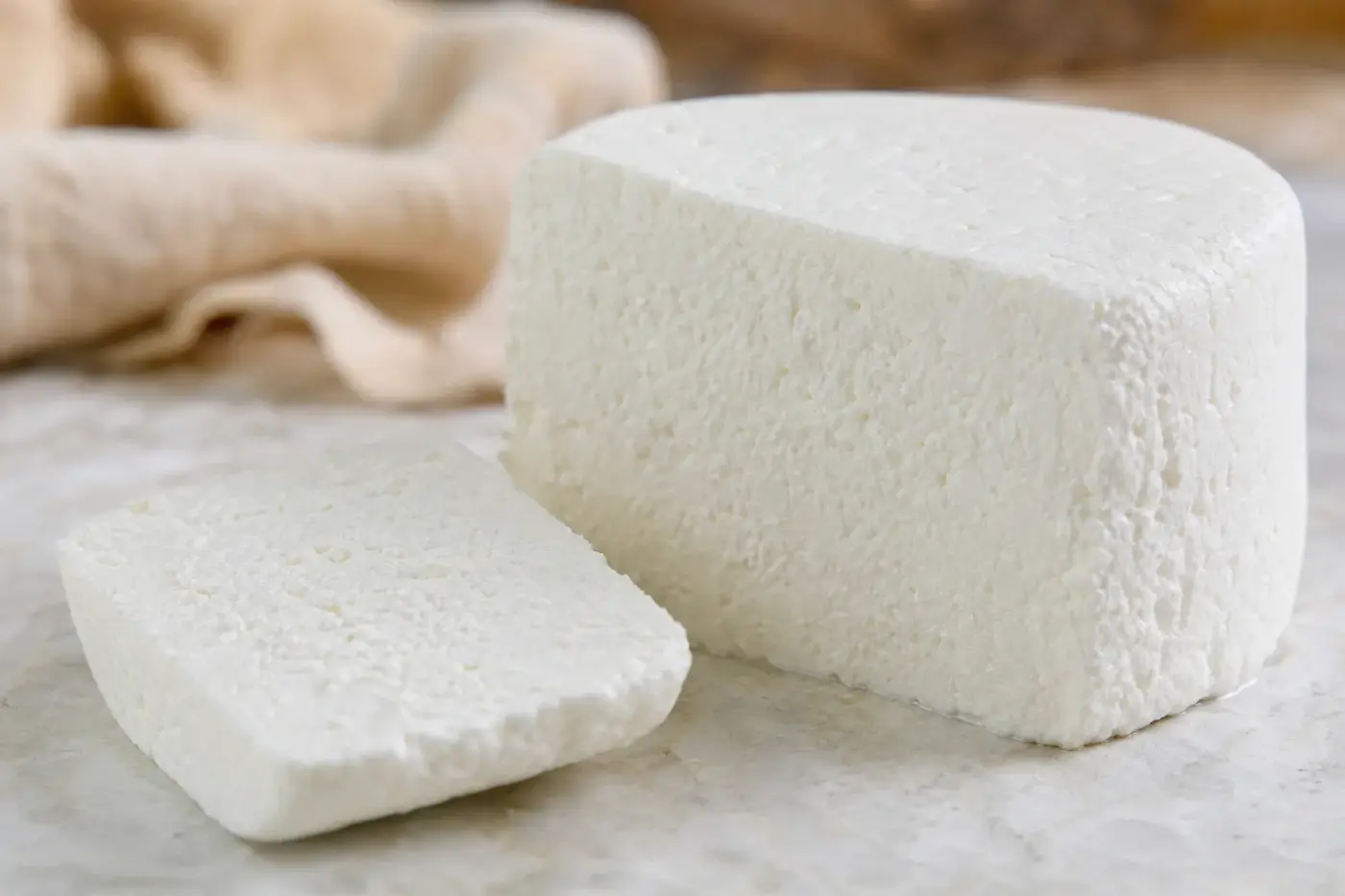
Aaruul might reach you as flat slices, irregular broken chunks or pieces shaped before drying. An ethnographic glossary published by Cambridge University Press describes pressed and sliced curds, with or without added sugar, as well as larger portions of yak aaruul. The ANU account finds textures ranging from firm and chewy to softer and crumbly. [2,5]
White balls are characteristic of the Kyrgyz examples, while Turkish dairy research also describes round, oval and conical kurut. Wet curd takes the shape; drying consolidates it. The surface you see is the outside of that dried mass, not necessarily a separate, developed rind of the kind found on many ripened cheeses. [3,9]
That distinction tells you more than the silhouette. You can explore it further in the guide to cheese styles.
Keep sourness and saltiness separate in your mind. Kyrgyz kurut is described as sour and salted, while the Mongolian examples recorded by ANU include sugar and vanilla additions. Sweetness can sit alongside fermented dairy acidity, and texture may run from a yielding crumble to a dense piece that takes its time softening. Some curds are clearly in no hurry. [3,5,6]
Nor is salt inevitable: it is optional in one yoghurt-based method described by the Turkish study. Ask whether the product in front of you is salted, sweetened or plain. You will learn far more from that answer than from expecting every dried curd to taste alike. [9]
Take a piece, or put the kettle to work
Aaruul is an everyday portable snack. The ANU account describes handmade pieces offered by a Mongolian family, with different shapes delivering different textures. A crumbly piece and a particularly firm one can give you quite different experiences at the table, despite answering to the same name. [5]
The Ulaanbaatar project took cow's-milk aaruul in another direction, testing versions with dried sea buckthorn or goji berries. These were specific experimental formulations, showing how an established preservation technique can carry new ingredients. They sit within a wider category that also includes plain, sweetened and differently shaped curds. [7]
Kyrgyz kurut can be eaten dry, offered to family or guests, or mashed and diluted in warm water. The account records that rehydration without specifying whether the result is a drink or goes into soup. [3]
Water can also bring dried curd back to the cooking pot. A study of kurut from Erzurum and Bingöl describes pieces dissolved in water for traditional meals. It also documents products made from the buttermilk left after butter production. Drying keeps those remaining milk solids for a later dish. [9]
What drying changes, and what it cannot promise
Drying reduces the water available to microorganisms. Food scientists call this water activity, which differs from a food's total moisture content. Texas A&M's food microbiology guidance explains that microorganisms surviving drying can remain alive for prolonged periods and become active again after rehydration. [10]
Several steps work together to preserve the curd. Fermentation changes acidity, draining removes whey, and drying further restricts available water. Alongside handling and packaging, that combination determines how the finished product behaves. A hard exterior cannot tell you what conditions were achieved inside a piece. [6,8,10]
The outdoor drying you see on roofs and mats is now being studied alongside controlled methods. Research from the Mongolian University of Life Sciences tested equipment with controlled air movement and temperature, partly because open-air drying exposes curds to dust and insects. Roofs and reed mats remain part of a living food tradition, with room for changes in equipment and production settings. [8]
A few useful questions before you buy
Start with the information for the actual product: maker, milk source, ingredients, date marking and storage directions. Ask whether it is salted or sweetened, and whether it needs refrigeration, including after opening. Those details help you distinguish a fully dried snack from a softer product sold under a related name. For the terminology, see how to read a cheese label. [6,7,9,11]
For consumer advice in the United States, turn to the FDA's food storage guidance, with November 2026 as this page's reference date. It covers storage, mould, hygiene and the limits of appearance and smell as indicators. [11]
Elsewhere, consult your relevant national food safety authority and follow the product's instructions. For broader storage questions, visit the guide to storing cheese at home.
Meet aarts and byaslag, the wetter relatives
To understand what comes before aaruul's drying stage, get to know aarts. The Cambridge ethnographic glossary describes it as curds from sour milk, made from boiled yoghurt with a portion of milk, then drained and pressed. Aaruul takes the process onwards into drying. The useful distinction is how the preparations relate, rather than simply whether English calls either food cheese. [2]
Byaslag has its own place in Mongolian dairying. In the Khuvsgul field report, yoghurt is added to boiled milk before draining and pressing into a square shape. The cheese is sliced into soup instead of noodles, or seasoned with onions and salt for a cooked cheese pie. Those uses belong to byaslag, not the dried aaruul preparation recorded in the same report. [1]
When you compare names, keep each preparation beside its documented setting. The distinctions below give you a useful starting point for reading a menu or asking a seller what you are looking at and how it was made. [1,2,6]
| Preparation | Where you will find it documented | The step to remember |
|---|---|---|
| Aarts | Mongolia | Sour curd, drained and pressed. [2] |
| Aaruul | Mongolia | Pressed curd, shaped and dried. [1,2] |
| Byaslag | Khuvsgul, Mongolia | Yoghurt added to boiled milk, then drained and pressed. [1] |
| Kurut or kurt | Kazakhstan research terminology | Fermented curd, including a dried sample. [6] |
Keep exploring, from milk to texture
- How Cheese Is Made: From Milk to Cheese: follow the main ways milk becomes curd.
- How to Tell Cheese Styles Apart: Milk, Rind, Texture and Method: compare texture and production without relying on shape alone.
General information only, not medical advice: follow the official guidance where you live.
Questions people ask
What is the difference between aaruul and kurut?
Aaruul is rooted in Mongolia’s pastoral dairy culture, while kurut is associated here with traditions documented in Kyrgyzstan and Kazakhstan. Both are families of preserved curds shaped by local herds and household methods.
What milk is used to make aaruul and kurut?
Cow and yak milk feature prominently in documented Mongolian aaruul. Kyrgyz kurut is documented from cow, sheep, goat and yak milk.
What do aaruul and kurut taste like?
Kyrgyz kurut is described as sour and salted. Mongolian aaruul examples include additions of sugar and vanilla, and their textures range from firm and chewy to softer and crumbly.
How are aaruul and kurut eaten?
Aaruul is an everyday portable snack. Kyrgyz kurut is eaten dry or mashed and diluted in warm water.
How should dried curds be stored?
Check the product’s storage directions, including whether it needs refrigeration after opening. In the United States, consult the FDA’s food storage guidance; elsewhere, consult the relevant national food safety authority.
Sources
[1] Smithsonian Institution, Arctic Studies Center. Mongolia Deer Stone Project: Field Report 2007, Part V, discussion of Khuvsgul food preparation, printed pages 96 to 97. 2007. Field report.
[2] Cambridge University Press. Living with Herds: Human-Animal Coexistence in Mongolia, glossary, particularly “Mongolian dairy products”. 2011. Publisher's front matter and glossary.
[3] International Information and Networking Centre for Intangible Cultural Heritage in the Asia-Pacific Region, ICHCAP. Traditional Dairy Products: Kurut. ICH Courier, volume 53, December 2022. Institutional cultural account.
[4] Food and Agriculture Organization of the United Nations. Mongolia: Rebuilding the dairy industry. Undated web chapter, edition retrieved November 2026. FAO chapter.
[5] Australian National University, Mongolia Institute. White Foods. Undated web account, edition retrieved November 2026. Institutional first-hand account.
[6] Frontiers in Food Science and Technology. Production of kurut (kurt) using probiotic Lacticaseibacillus rhamnosus GG strain in combination with a yeast isolated from Kazakhstan kurut. Article 1045579, DOI 10.3389/frfst.2022.1045579, web edition retrieved November 2026. Research article.
[7] Swedish University of Agricultural Sciences. Aaruul, a Mongolian dried curdled milk: evaluation of the consumer acceptance and the health aspect. Master's project, Department of Food Science publication 404. 2015. Institutional repository record and abstract.
[8] Mongolian University of Life Sciences. Results of optimization of technological parameters for aaruul drying equipment. Mongolian Journal of Agricultural Sciences, volume 17, number 40. 2024. Research paper.
[9] Manas Journal of Agriculture Veterinary and Life Sciences. Some Quality Properties of Kurut, a Traditional Dairy Product in Turkey. Volume 8, number 1, pages 68 to 74. 2018. Research paper.
[10] Texas A&M AgriLife Extension. Introduction to the Microbiology of Food, section “Dry Foods”. Undated web edition, retrieved November 2026. Institutional food microbiology guidance.
[11] US Food and Drug Administration. Are You Storing Food Safely?, sections “Storage Basics” and “Refrigeration Tips”. Web edition retrieved November 2026. Official consumer guidance.
This desk-researched article compares documented regional preparations, institutional field accounts and dairy research, with consumer handling advice attributed separately to its national authority.
Last checked: November 2026
Last checked November 2026.
The editors suggest you read next