Byaslag
Beneath weighted wooden boards, a square cloth holds curds while whey trickles away.
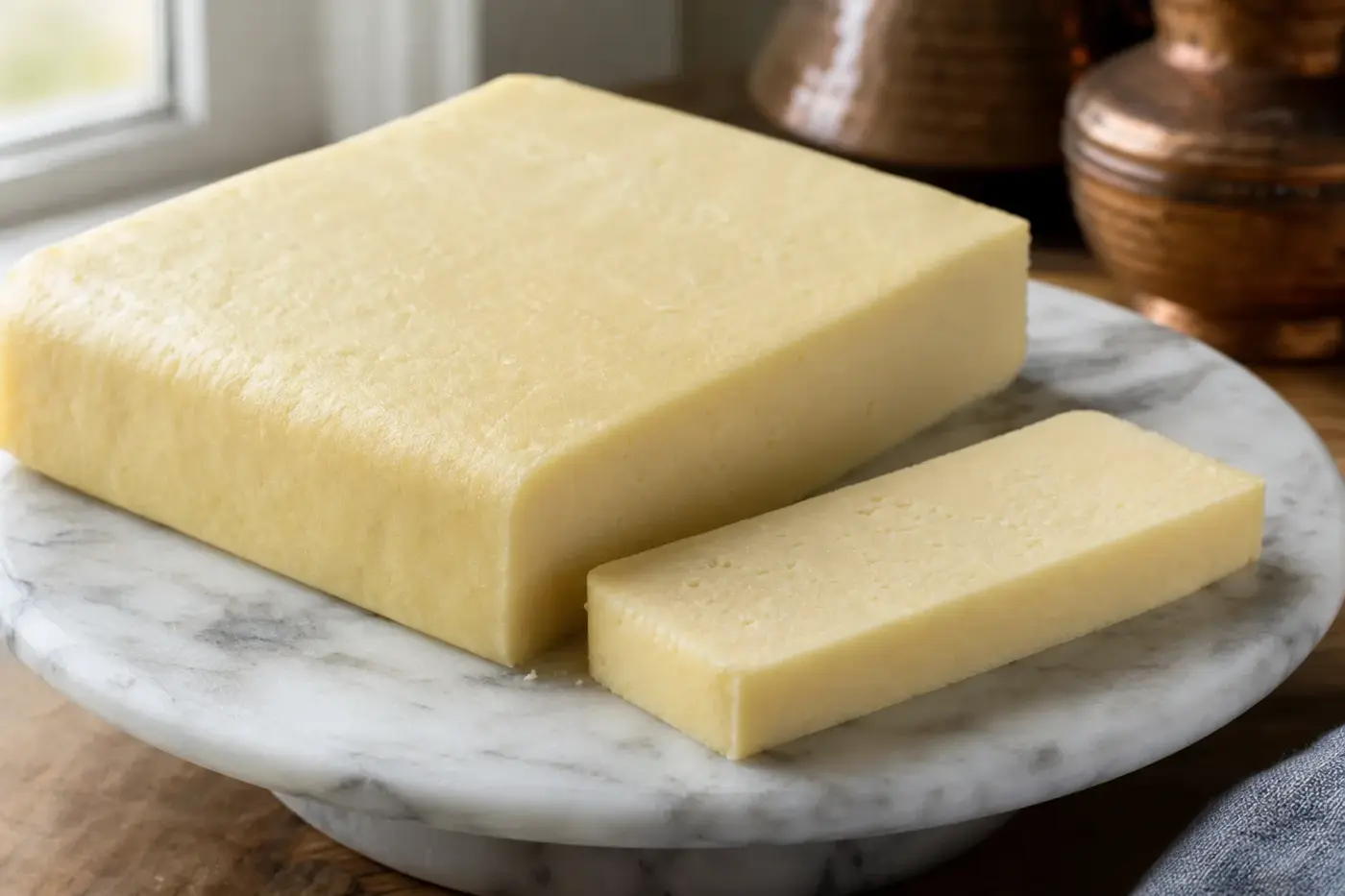
Beneath weighted wooden boards, a square cloth holds curds while whey trickles away. This is byaslag taking shape in Mongolia’s pastoral households: heated milk, a sour dairy addition and the patient work of pressing. Traditionally unripened, the cheese can be eaten fresh or cut into slices and dried. Your first decision is whether to reach for a slice or put some aside.[1][2]
| What you might want to know | The details |
|---|---|
| Names you might see | Byaslag; бяслаг.[1] |
| Where it comes from | Mongolia’s pastoral dairy traditions.[2][3] |
| Milk behind the cheese | Cow’s and sheep’s milk in a Mongolian production account; yak’s and goat’s milk in published culinary documentation.[2][4] |
| How it takes shape | Heat and sour dairy ingredients separate curds, which are drained and pressed.[2][5] |
| Fresh or matured? | Traditionally unripened; also sliced and dried.[4][5] |
Find the name beneath the press
Look at the press and you have a clue to the name. The Mongolian dictionary Монгол хэлний их тайлбар толь defines бяслаг through its making: milk is curdled and strained, then the whey is pressed out. Its expression бяслаг шахах means pressing byaslag. Whey is the liquid released when milk separates; curds are the solids you gather from it.[1]
“Byaslag” is the English transliteration used here. FAO’s account of Mongolian dairy foods translates it simply as “cheese”, alongside separate entries for yoghurt, clotted cream and dried curds. Those distinctions give you a glimpse of Mongolian dairying’s richness. Several foods can begin with the same household’s milk, then head in quite different directions.[6]
The press also tells you what to expect from the cheese. Byaslag takes its shape from gathered, compressed curds, rather than a long spell of surface ripening. Following that process gives you a clearer way to recognise it than the broad English word “cheese”, which has rather a lot on its plate.[1][5]
Lift the cloth: pale, mild and quietly appealing
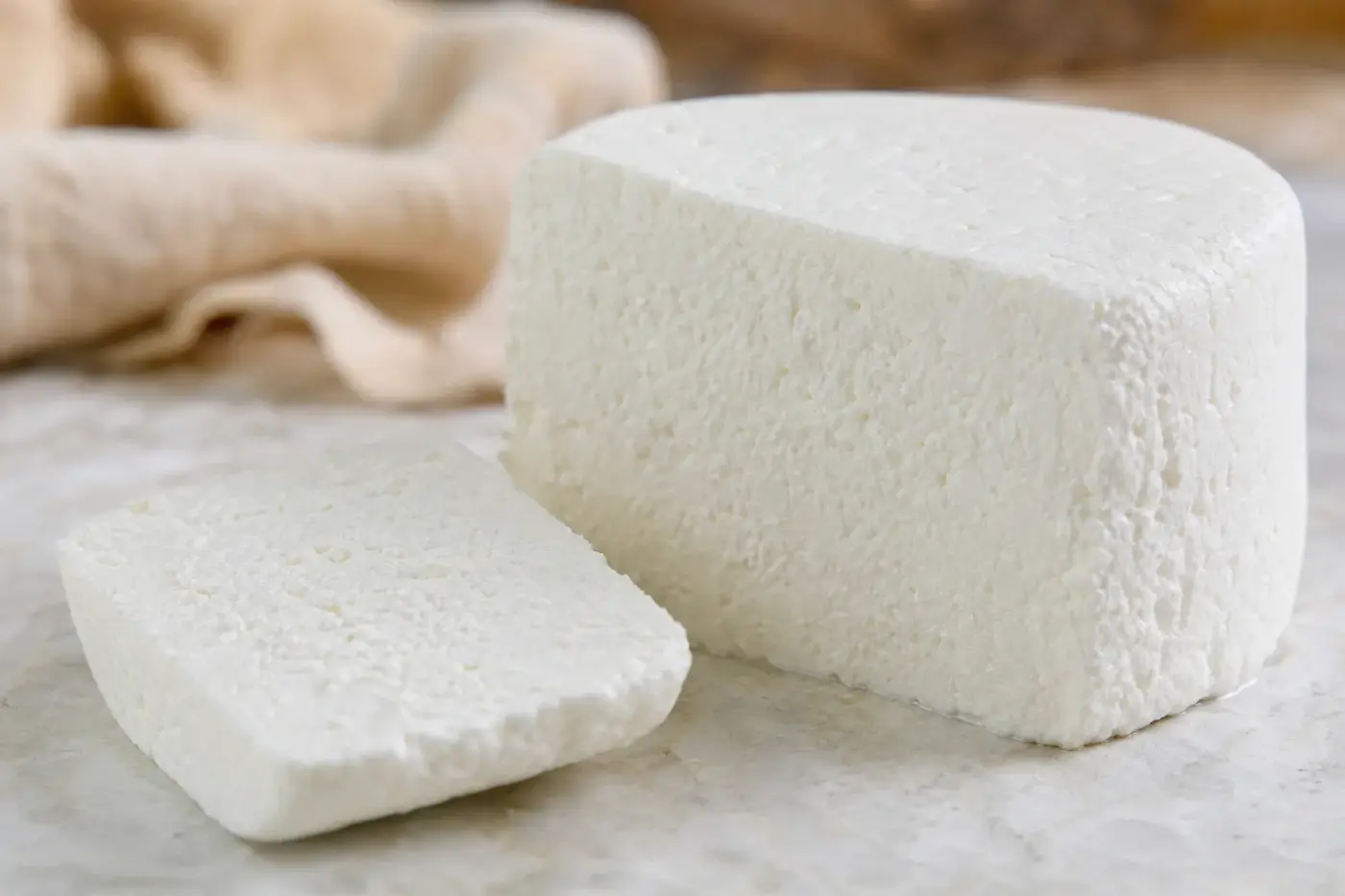
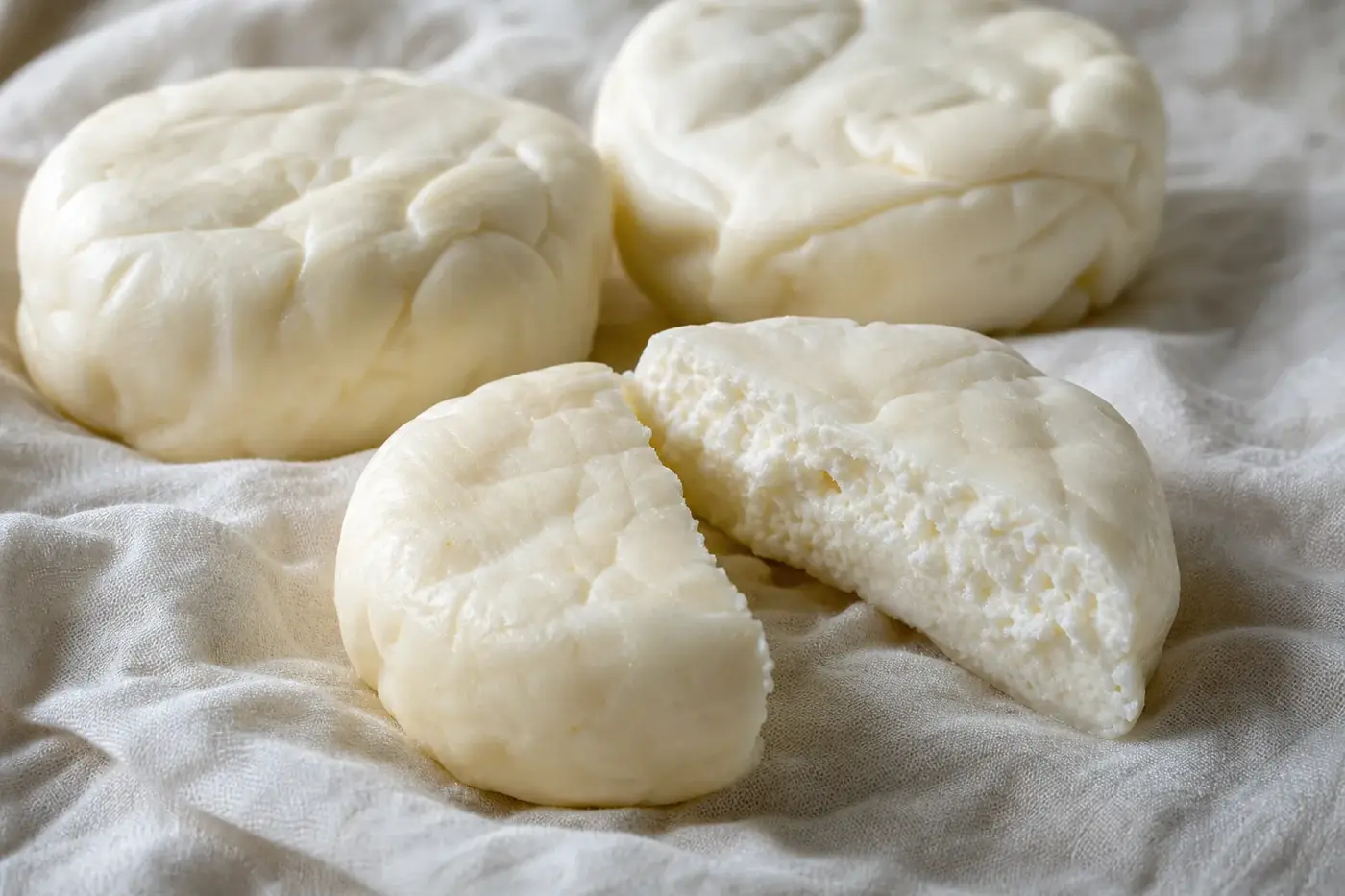
Picture pale yellow pieces, round or roughly square, their surfaces plain. This is the byaslag illustrated by All Mongolian Recipes, which describes a mild, unripened cheese. If you like gentle dairy flavours and a pressed texture, that is the invitation here. Do not expect the powerful aroma of some surface-ripened cheeses.[4]
A 2024 study of traditional Mongolian cheese sold in Ulaanbaatar describes a dense curd formed through heat and acid, then moulded and pressed. The researchers distinguish this fresh cheese from cheeses made with separate salting and maturation stages. Here, much of the character takes shape in the pot and beneath the press.[5]
To understand the piece in front of you, ask three questions. Was the cream retained, how thoroughly were the curds drained, and was the cheese dried? Removing cream changes the starting milk; draining changes the liquid left behind; drying changes the cheese again. “Fresh byaslag” gives you a starting point, but the household’s method tells you considerably more.[2][3][5]
Follow your slice back to the herd
Byaslag draws on the pastoral milk available locally, rather than milk from just one animal species. A Mongolian dairy production account records cow’s and sheep’s milk. Published culinary documentation also includes yak’s and goat’s milk, describing cattle and yak milk as common choices.[2][4]
The place behind that milk matters. Mongolia’s National Center for Cultural Heritage explains that dairy techniques vary with regional nature and climate. It identifies sheep’s and yak’s milk as rich in fat and protein, making them suited to cheese, curds and butter. Change the milk and you can change the substance of the finished cheese.[3]
The milk may have already taken another turn before it reaches the cheesemaking pot. Mongolian households can separate the cream, then continue processing the milk left behind. If your byaslag was made this way, its starting balance of milk components differs from cheese made with the cream retained.[3]
For a broader look at what shapes a cheese, explore milk, rind, texture and method.
Watch the pot, then let the boards work
First comes heating, followed by souring, draining and pressing. A 2016 Mongolian production account describes yoghurt being added to heated milk, then the curdled mass gathered in a square cloth. Wrapped and placed between weighted wooden boards, the curds come together as liquid escapes.[2]
That change in the pot has a name: coagulation. Milk proteins gather into curds, and research on traditional Mongolian cheese identifies this as heat-acid coagulation. Heat and acidity work together to separate those proteins. The cloth catches the solids; the press removes more whey and gives the mass its shape.[5]
Simple equipment does not mean an identical cheese every time. Preparing the milk determines what enters the pot, while the sour ingredient supplies acidity. Draining separates solids from liquid, and pressing determines the finished shape. Follow those household decisions and you can see how related methods produce recognisably different cheeses.[2][3][5]
You can follow the wider principles in how cheese is made.
A little sourness: yoghurt or kefir?
Both yoghurt and kefir appear in published accounts of byaslag. A Mongolian production account documents yoghurt, as does an ethnographic dairy glossary describing a small addition to warm milk. All Mongolian Recipes uses kefir as the sour dairy ingredient instead.[2][4][7]
What connects them is acidity from a fermented dairy food, helping the heated milk separate. You may see this addition called a “culture”. It helps to distinguish between the fermented food going into this pot and a measured commercial cheesemaking starter.[2][5][7]
Think of these as related household methods, not a single recipe speaking for every pastoral household. Yoghurt and kefir both offer examples of sour-dairy coagulation, each with its own details. To recognise byaslag, look at the pressed curd you end up with as well as the route taken to get there.[2][4][7]
A slice for now, dried pieces for later
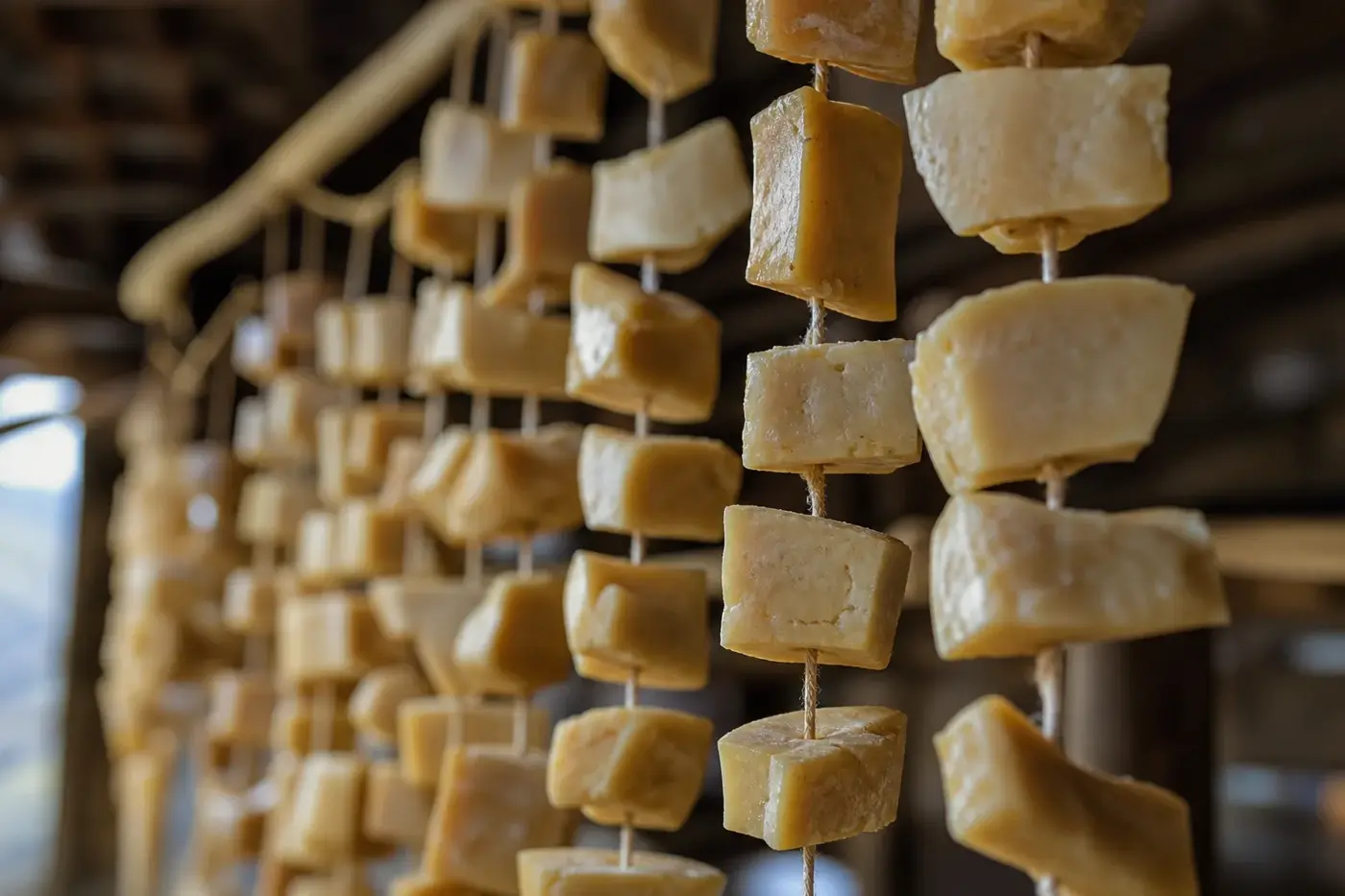
A fresh slice of byaslag can be a snack in its own right. The pressed cheese can also be sliced and dried for preservation. All Mongolian Recipes describes dried pieces so hard that they are often soaked in tea before eating. Here, tea has a job beyond keeping your cheese company.[4]
Fresh and dried byaslag ask different things of you at the table. You can eat a fresh slice directly, while a hard dried piece may be more agreeable once liquid has softened it. Both begin as pressed cheese, but the way you eat them changes considerably.[4]
FAO places drying within the practical demands of pastoral life, where seasonal milk must become foods with different keeping qualities. Dried dairy foods carry milk beyond the time when it is plentiful. For the particular packet you bring home, follow its storage instructions.[6][10]
Let Mongolia’s white foods lead you through the year
Byaslag belongs to tsagaan idee, the foods commonly called white foods. Cheese is only one part of this much broader dairy tradition. Cream separation, fermentation, distillation and curd drying can form connected branches of processing, producing different foods from the same basic materials. The National Center for Cultural Heritage emphasises that breadth.[2][3]
The seasons set the pace for those household routines. FAO describes the importance of preserving Mongolia’s seasonal milk supply. A Mongolia Institute field-course account records the traditional association of summer with dairy foods and winter with meat. Fresh white foods were also dried and put aside for winter.[6][8]
A northern Mongolian ethnographic report from 2007 brings that seasonal rhythm into the household. Among the households visited, the researcher recorded a June move from stored dried meat towards dairy foods. You can see the dairy year here through changing provisions, rather than simply through dates on a calendar.[9]
Byaslag, aaruul and kurut: follow the curds
Draining, pressing and drying can feature in the making of both byaslag and aaruul. That does not make them the same food. Mongolian dairy accounts distinguish them, and FAO lists byaslag as cheese and aaruul as solidified dried curds.[6]
To tell them apart, trace the ingredients backwards. An ethnographic glossary describes aarts as curds from sour milk, including boiled yoghurt, and aaruul as curds pressed, sliced and dried, sometimes with sugar. Its byaslag entry begins instead with warm milk and a small addition of yoghurt. When both finished foods are dry, knowing that processing history is especially helpful.[7]
Kurut has its own documented tradition. A 2024 study from Kyrgyzstan describes this Kyrgyz dairy product in dried, salted forms and other preparations. It does not establish kurut as another name for byaslag. On that evidence, you should not treat the names as interchangeable.[11]
Make room for slices, soup and tea
Begin with a fresh slice and give its restrained character a little room. Taste a small piece on its own, then choose an accompaniment to suit its moisture and firmness. All Mongolian Recipes documents eating fresh byaslag as a snack, so a simple slice is a good place to start.[4]
You can also find it in a savoury meal. The northern Mongolian fieldwork report describes byaslag flavoured with onions and salt and cooked as a cheese pie. It also records long slices added to soup in place of noodles. This cheese has a place in the cooking pot as well as on its own.[9]
For dried pieces, All Mongolian Recipes documents softening in tea. Tea and soup offer two established ways to bring liquid into the eating experience. You might soak a hard piece to soften it, or add slices to a meal.[4][9]
Before you buy, get to know your cheese
Is it fresh or dried, which milk does it contain, and how should you store it? These three questions reflect documented differences in byaslag’s milk and preparation. If you buy it packaged, keep the label so you still have the maker’s storage directions after opening.[2][3][10]
For readers in England, Northern Ireland and Wales, the Food Standards Agency advises keeping a home fridge at 5 °C or below. Its guidance, as of November 2026, also says to follow the storage instructions on food packaging.[10]
Dried byaslag needs its stated storage conditions too. Drying explains its traditional role among stored provisions; the packet tells you how to keep the cheese you have bought today. If directions are missing, ask the supplier before choosing where to store it.[6][10]
See how to read a cheese label for the information to retain, and how to store cheese at home for the wider storage guide.
General information only, not medical advice: follow the official guidance where you live.
Questions people ask
What is byaslag?
Byaslag is a traditionally unripened cheese from Mongolia’s pastoral dairy traditions. It can be eaten fresh or sliced and dried.
How is byaslag made?
Milk is heated and a sour dairy ingredient is added to separate the curds. The curds are gathered in a square cloth and pressed between weighted wooden boards.
What milk is used to make byaslag?
Published accounts document byaslag made with cow’s, sheep’s, yak’s and goat’s milk. One culinary account describes cattle and yak milk as common choices.
Is byaslag the same as aaruul?
No. FAO lists byaslag as cheese and aaruul as solidified dried curds. An ethnographic glossary describes aaruul as curds that are pressed, sliced and dried, sometimes with sugar.
How should byaslag be stored?
For readers in England, Northern Ireland and Wales, the Food Standards Agency advises keeping a home fridge at 5 °C or below and following the storage instructions on food packaging. Check its current guidance and follow the product’s storage instructions.
Sources
- Mongolian language dictionary, Монгол хэлний их тайлбар толь, entry “Бяслаг”, undated online edition. Definition and associated expressions. Dictionary entry.
- Niigata University repository, The Safety of Mongolian Dairy Production, Studies in Humanities and Social Sciences, No. 63, December 2016, particularly Table 2. Research paper.
- National Center for Cultural Heritage, Mongolia, The traditional technique of preparing the dairy milk products, 2022, reproduced in the IRCI Research Database. Heritage record.
- All Mongolian Recipes, Byaslag, Бяслаг, undated culinary account and accompanying photograph. Byaslag account.
- Bulletin of Almaty Technological University, Investigation of physico-chemical and microbiological parameters of traditional Mongolian cheese, issue 3 (145), 2024, pages 73 to 79. DOI: 10.48184/2304-568X-2024-3-73-79. Research article.
- FAO, Pastoralism in the new millennium, 2001, section “What do pastoralists produce and how do they market it?”, particularly Table 5. Dairy products section.
- Cambridge University Press, Living with Herds: Human-Animal Coexistence in Mongolia, first edition, 2011, glossary of Mongolian dairy products. Published glossary.
- Australian National University Mongolia Institute, White Foods, undated field-course account. Field account.
- Smithsonian Institution, Mongolia Deer Stone Project: Field Report 2007, Part V, “Ethnographic Report on Northern Mongolian Ethnic Groups”, pages 96 to 98. Field report.
- Food Standards Agency, How to chill, freeze and defrost food safely, published 18 December 2017, current retrieved edition, applying to England, Northern Ireland and Wales. Official storage guidance.
- Bulletin of Almaty Technological University, Perspective of sublimation drying application in “Kurut” fermented milk product production, 2024, pages 86 to 96. DOI: 10.48184/2304-568X-2024-4-86-96. Research article.
This desk-researched article brings together Mongolian dictionary and heritage records, documented production methods, original fieldwork, food research and official storage guidance.
Last checked: November 2026
Last checked November 2026.
The editors suggest you read next