Abaty Glas
A soft, buttery bite, a little tang, then the temptation to cut another sliver.
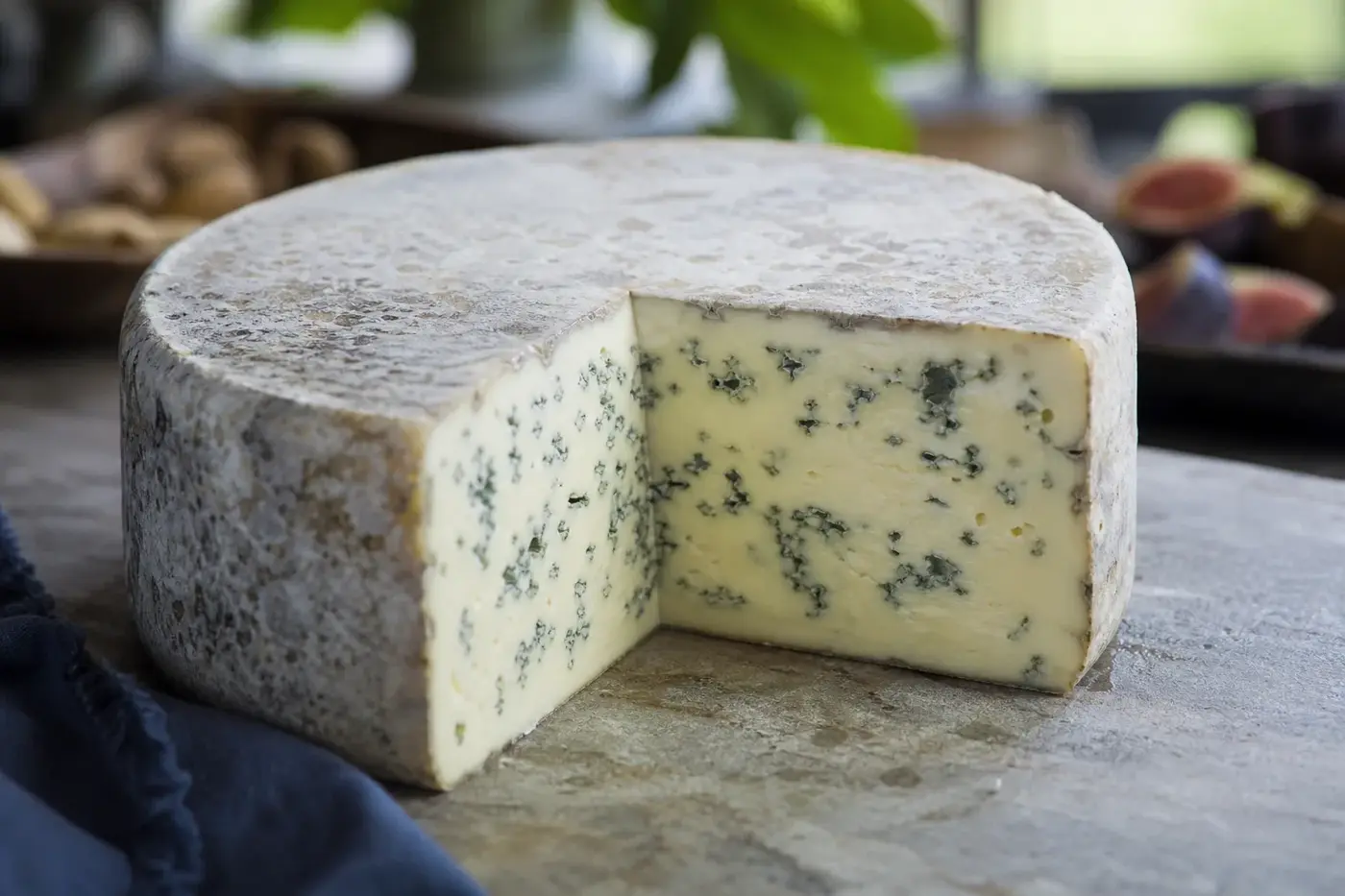
A soft, buttery bite, a little tang, then the temptation to cut another sliver. Abaty Glas is a creamy blue made from raw cow’s milk, with a flavour cheesemongers describe as relatively mild. Follow that bite back to its beginnings and you reach the Jenkins family’s single herd, supplying Caws Penhelyg’s small dairy near Aberystwyth in Ceredigion, Wales. [1,3,4,5]
| What you might want to know | The details |
|---|---|
| Name | Abaty Glas [1] |
| Maker | Caws Penhelyg [1] |
| Made in | Near Aberystwyth, Ceredigion, Wales [1,3] |
| Milk | Cow [4,5] |
| Milk treatment | Raw, unpasteurised [1] |
| Milk supply | Single herd belonging to the Jenkins family [1] |
| Style | Soft blue [1] |
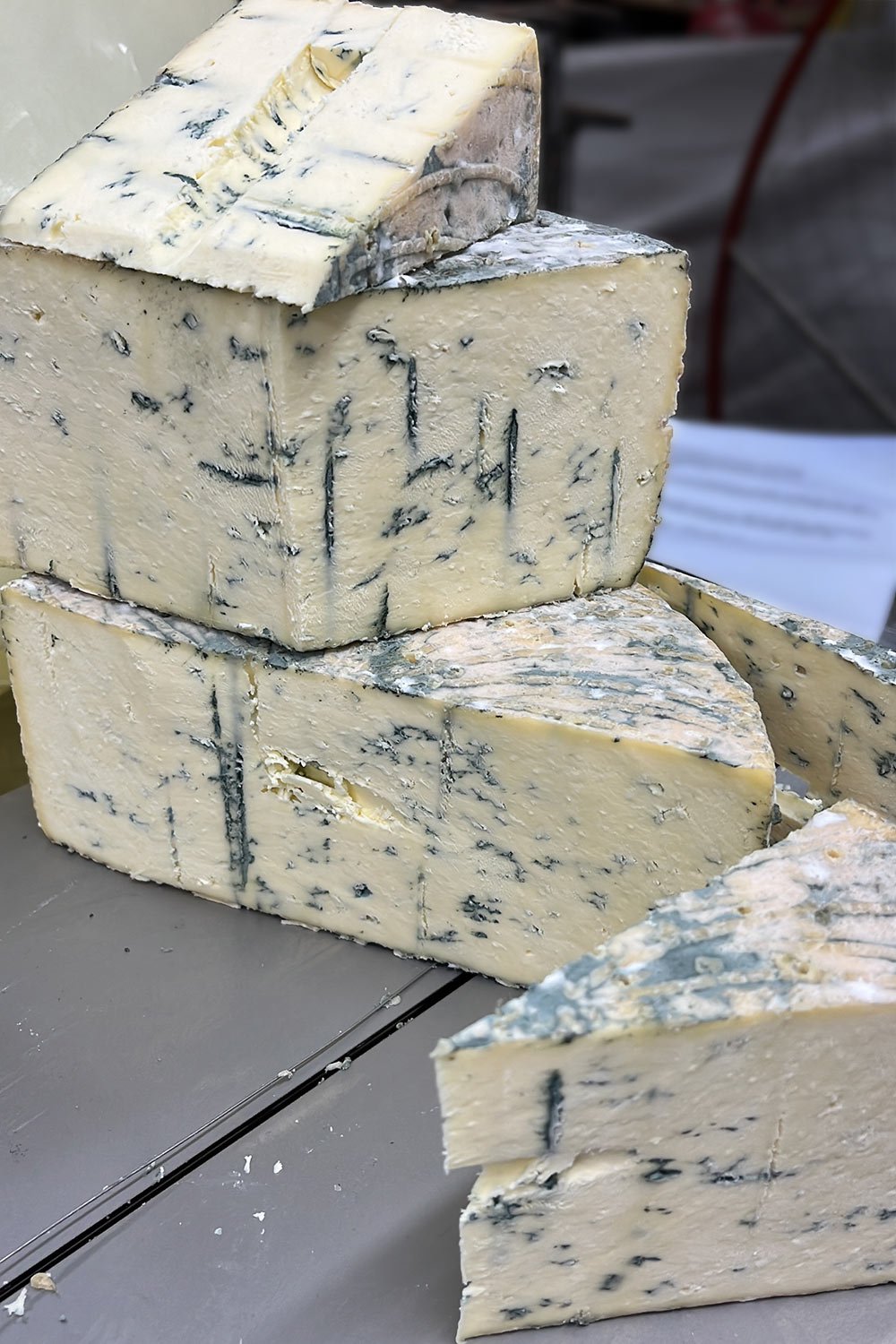
| Appearance | Pale ivory paste, blue-green veining and a mottled grey-white rind in the maker’s photograph [2] |
Meet the people behind your slice
At Caws Penhelyg, cheese is handmade on a small scale, with milk from the Jenkins family’s single herd. The Food Standards Agency’s business record places the dairy at Cwm Helyg in Rhydyfelin, Ceredigion. Your slice has a precise home: a named maker, a particular milk supply and a place on the map. [1,3]
The dairy lists two cheeses, and it pays to linger over their names. Abaty is the Brie-style cheese; Abaty Glas is the soft blue. Ask for Abaty Glas by its full name when you fancy blue: even an excellent cheese can be the wrong cheese. [1]
Take a closer look at those blue-green seams
In the maker’s photograph, blue-green mould threads through the pale ivory interior, known as the paste. You can follow irregular seams and patches, with some lines running almost vertically through the cut faces. The pale background gives those markings room to stand out. [2]
The photograph shows substantial sections cut from a round cheese. Curved outer edges and a shallow cylindrical profile reveal its shape, while the rind is mottled grey and white. There is plenty to catch your eye before your knife gets involved. [2]
Start with one herd and raw milk
Caws Penhelyg confirms two details at the beginning of the story: the milk is raw, and it comes from one herd. Those are useful starting points when you compare Abaty Glas with cheeses made using other milk treatments. For the broader differences between raw, thermised and pasteurised milk, explore raw milk and pasteurisation. [1]
Follow the butter, cream and gentle tang
Buttery and creamy are the Welsh Cheese Company’s words, alongside less bitterness than many other blue cheeses. The Cambridge Cheese Company describes a velvety texture, a slight tang and a milder blue flavour. These accounts come from cheesemongers selling Abaty Glas, so treat them as clues for your first taste. [4,5]
If you are new to blue cheese, begin with the texture. Then notice how the tang and bitterness balance, tasting a little Abaty Glas alone before adding bread or fruit. Does the blue flavour arrive straight away, or become clearer after swallowing? You have something specific to look for, rather than an exam to pass. [4,5]
At the counter, tell the cheesemonger what you enjoy, rather than asking only for something “not too strong”. A smooth paste, a restrained bitter edge or a gentle tang gives them more to work with. Ask about the particular piece being cut, too. That is the one you will be taking home. [4,5]
A Bronze moment for Abaty Glas
Abaty Glas received Bronze in class 5, Blue, at the 2026 Artisan Cheese Awards. The organiser’s published results name both Caws Penhelyg and Abaty Glas. It is a distinction for this particular cheese, rather than simply for the dairy’s name. [6]
Make room for that first bite
Keep your first tasting simple: a small piece of Abaty Glas, plain bread or an unsweetened cracker, and water. Try the cheese first, then introduce one accompaniment at a time. That gives you a starting point for each comparison, and leaves you to decide what you enjoy.
- Serve a small portion cool from the fridge, leaving the rest refrigerated. For food handling advice in England, Northern Ireland and Wales, consult the Food Standards Agency’s current guidance. [7]
- Cut across the wedge to include both pale paste and blue veining. For a shared board, set out several small slices rather than the whole piece at once.
- Try plain bread, followed by a slice of pear or apple. Give that fresh fruit contrast a taste before reaching for a strongly flavoured chutney.
- For an alcohol-free drink, try still water, unsweetened black tea or a little apple juice alongside water. Compare each with a taste of the cheese alone.
Let the occasion guide how much you serve. If you are introducing Abaty Glas, offer a small first taste and let people take more if they wish. Sharing a board with several cheeses? Give each its own space and a separate utensil, so you can distinguish that first taste of Abaty Glas.
Bring your cheese home and keep it well
Follow the storage instructions and date on your piece. In England, Northern Ireland and Wales, the Food Standards Agency advises keeping your home fridge at 0 to 5 °C (32 to 41 °F), checked with a fridge thermometer. It also advises keeping raw meat, poultry and fish below ready-to-eat food, where drips cannot reach it. [7]
A use-by date is about safety; a best-before date is about quality. Official guidance in those same jurisdictions makes that distinction. Follow instructions about consumption after opening as well as the printed date, and do not eat food after its use-by date. [8]
If you buy a piece cut from a larger wheel, ask the cheesemonger to include its name, date and storage instructions. Keep those details with the cheese at home. For wrapping and fridge organisation, see how to store cheese; for help with the wording on the pack, see reading a cheese label.
General information only, not medical advice: follow the official guidance where you live.
Questions people ask
What is Abaty Glas?
Abaty Glas is a soft blue cheese made by Caws Penhelyg near Aberystwyth in Wales. It is handmade on a small scale.
Is Abaty Glas made with raw milk?
Yes, it is made from raw, unpasteurised cow’s milk. The milk comes from the Jenkins family’s single herd.
What does Abaty Glas taste like?
Cheesemongers describe it as buttery and creamy, with a mild blue flavour and a slight tang. The Welsh Cheese Company also describes it as less bitter than many other blue cheeses.
What is the difference between Abaty and Abaty Glas?
Both are made by Caws Penhelyg, but they are separate cheeses. Abaty is a Brie style cheese, while Abaty Glas is a soft blue.
How should Abaty Glas be stored?
Follow the storage instructions and date on the piece you buy. In England, Northern Ireland and Wales, the Food Standards Agency advises a home fridge temperature of 0 to 5 °C, checked with a fridge thermometer; consult its current food handling guidance.
Sources
- Caws Penhelyg, Organic Artisan Welsh Cheese, English-language website, undated, retrieved November 2026. Maker’s website.
- Caws Penhelyg, Abaty-Glas-Welsh-blue-cheese.jpg, undated product photograph linked from its English-language website, retrieved November 2026. Maker’s photograph.
- Food Standards Agency, Caws Penhelyg: Rating Business Details, business record 1378615, inspection dated 26 September 2025, retrieved November 2026. Official business record.
- The Welsh Cheese Company, Abaty Glas, undated product description, retrieved November 2026. Commercial cheesemonger’s account of a cheese it sells. Product description.
- The Cambridge Cheese Company, Abaty Glas, undated product description, retrieved November 2026. Commercial cheesemonger’s account of a cheese it sells. Product description.
- Artisan Cheese Awards, 2026 Artisan Cheese Awards, 2026 results, “Awards by Cheesemaker” table, retrieved November 2026. Organiser’s published results.
- Food Standards Agency, How to chill, freeze and defrost food safely, published 18 December 2017, current retrieved text, November 2026. Applies to England, Northern Ireland and Wales. Official guidance.
- GOV.UK, Understanding food labelling: Best before and use-by dates, current retrieved edition, November 2026. Official guidance.
Researched through the maker’s published account and photograph, an official business record, attributed cheesemonger descriptions, competition results and official food-handling guidance.
Last checked: November 2026
Last checked November 2026.
The editors suggest you read next
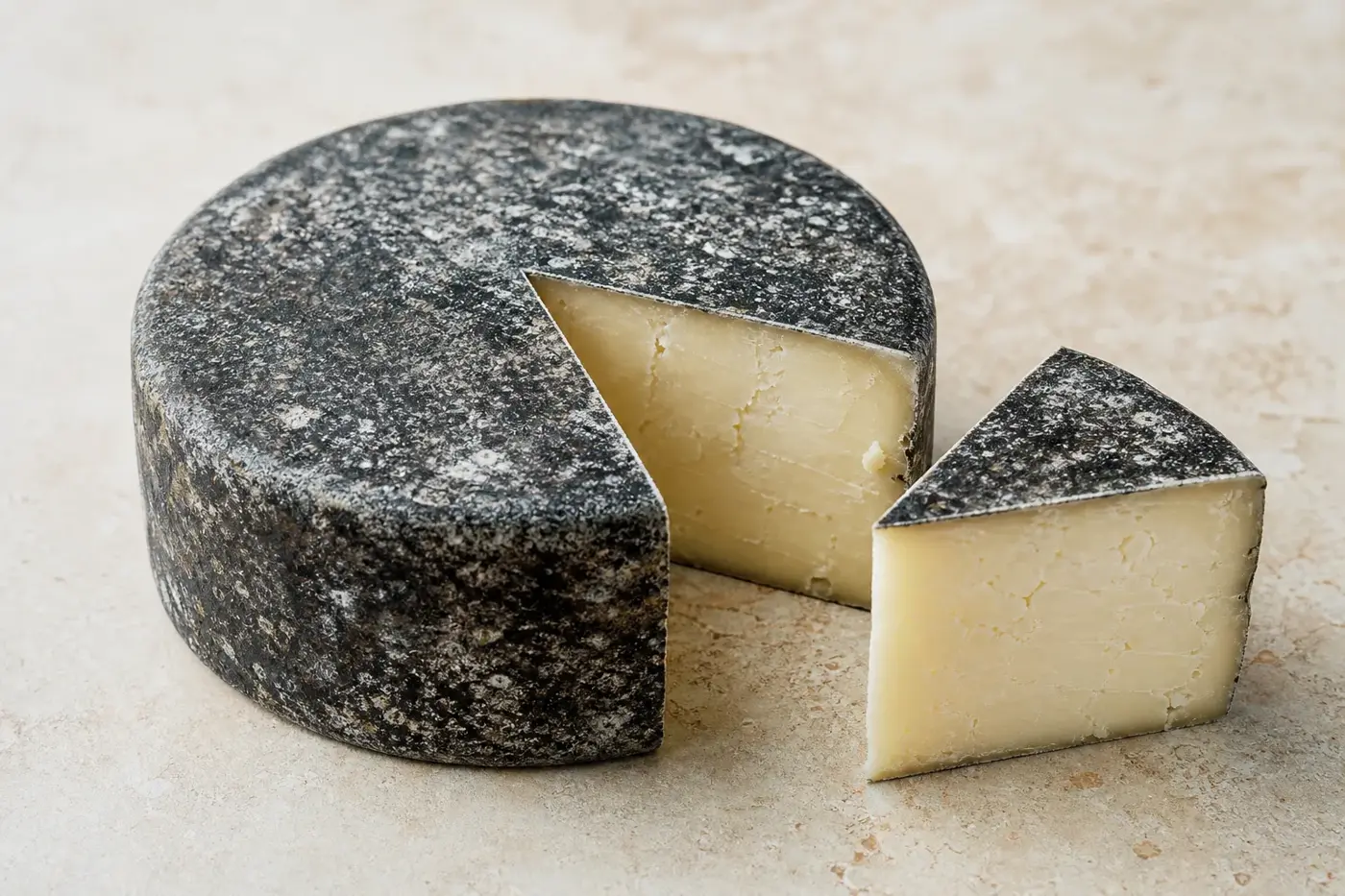
Caerphilly
Your knife meets a rind-ripened Caerphilly, and one wedge offers two pleasures: a fresh, crumbly centre and a softer, creamy layer just beneath the rind.