Caerphilly
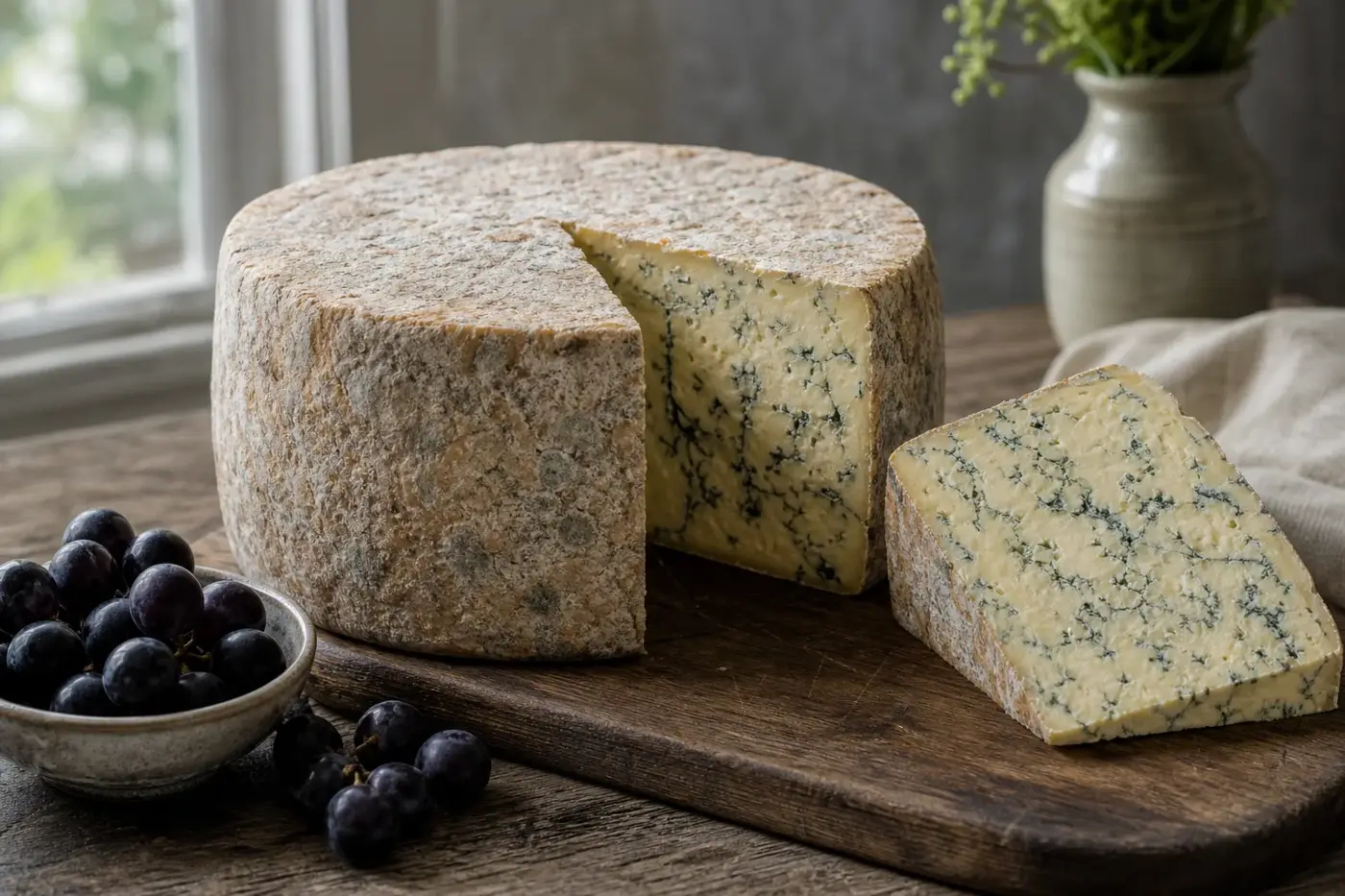
Your knife meets a rind-ripened Caerphilly, and one wedge offers two pleasures: a fresh, crumbly centre and a softer, creamy layer just beneath the rind.
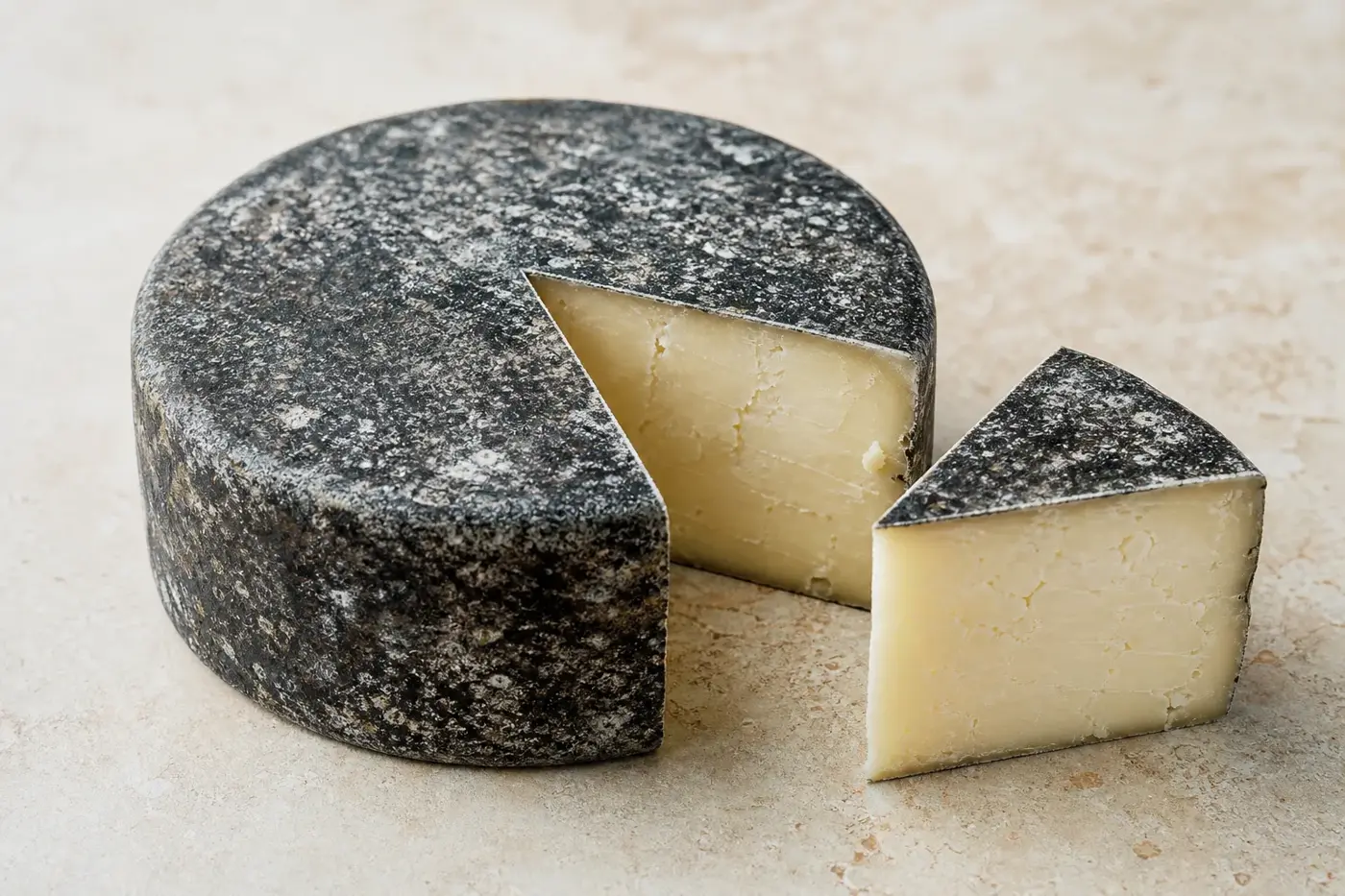
Your knife meets a rind-ripened Caerphilly, and one wedge offers two pleasures: a fresh, crumbly centre and a softer, creamy layer just beneath the rind.[4] You could call it indecision made delicious. This cow’s milk cheese has Welsh roots and a story that travels beyond Wales, though its full registered name, Traditional Welsh Caerphilly / Traditional Welsh Caerffili, belongs to a specific Welsh product with its own production specification.[1]
| What to look for | What it tells you |
|---|---|
| Familiar name | Caerphilly.[1] |
| Full registered name | Traditional Welsh Caerphilly / Traditional Welsh Caerffili.[1] |
| Registration authority | Defra, UK protected food names register; original EU registration through the European Commission.[1][3] |
| Great Britain | Registered PGI; UK scheme registration dated 31 December 2020 at 23:00. Register information as at November 2026.[1] |
| EU and Northern Ireland | Current registration status unspecified. The UK register gives 30 January 2018 as the original EU registration date; the EU registration instrument was published that day.[1][3] |
| Where it is made | Wales, with cow’s milk from Welsh farms.[2] |
| Permitted milk treatment | Raw or pasteurised.[2] |
| Specified ingredients | Milk, cultures, rennet and salt.[2] |
| Reported maturation | Ready from 10 days; may mature for up to six months, according to the Welsh Government.[7] |
| Usual protected shape and size | Flat round, normally 2 to 4 kg, 20 to 25 cm across and 6 to 12 cm deep. Miniatures are also permitted.[2] |
Taste your way from centre to rind
Fresh acidity makes the first impression. The Welsh Government describes the protected cheese as mild and slightly lemony, with a fresh aroma and a close, flaky texture. Give it time to mature and the flavour becomes fuller and more pronounced, while remaining mild.[7]
A naturally ripened rind brings another character to your plate. Trethowan Brothers describes Gorwydd Caerphilly as having a mushroom-flavoured rind, a creamy layer beneath it and a delicate, crumbly centre. Those notes belong to Gorwydd specifically, not every cheese called Caerphilly.[4]
Try those parts separately. Take a small piece from the centre, then another that includes the layer immediately beneath the rind. Where that softer layer has developed, tasting the maker’s distinct zones tells you more than “mild” or “mature” alone.[4]
In a rind-ripened example, savoury character sits beside the fresher centre rather than simply replacing it. You might prefer the bright acidity and flakes. Or you might want the whole mouthful, softer outer layer and mushroom notes included.[4][7]
Meet Caerphilly at the market
Picture the weekly market in nineteenth-century Caerphilly, a town that became renowned for cheese. The protected cheese’s historical account places it among the farmhouse cheesemaking traditions of south Wales. It also records a grading stamp used to identify approved cheeses.[2]
Then a recipe notebook brings the story into sharper focus. Dated 1907, it is cited by the Welsh Government as a written record behind the present traditional cheese. The government’s modern account of the manuscript traces the associated skills further back into the nineteenth century.[7]
You may also encounter later stories linking Caerphilly with coal miners. Those tales sit separately from the reported recipe notebook and documented market history. They should not be confused with those accounts.
The market helps explain how a town lent its name to a cheese tradition. But do not let that name draw too tight a circle on your map. Today’s protected production area covers the whole of Wales, not just Caerphilly and its immediate surroundings.[2]
Follow a cheesemaker across the border
For one modern Welsh Caerphilly business, the journey begins with learning in Somerset. Trethowan Brothers describes mastering traditional Caerphilly making there before establishing production on the family farm in west Wales in 1996.[6]
Later, the business wanted a new dairy and a closer relationship with a single milk-producing farm. Its account records finding a site at Puxton in North Somerset in 2014. The maker’s current website identifies that Somerset dairy as Gorwydd Caerphilly’s home.[6]
So the journey runs in both directions. Skills learned in Somerset supported cheesemaking in Wales, before production moved back across the border. This is Trethowan Brothers’ particular route, rather than the complete history of Caerphilly production.[6]
When you choose a wedge, look at where it was made as well as its style name. Somerset-made Caerphilly and cheese bearing the full Welsh PGI name have different geographical descriptions. Their makers may share an interest in traditional methods, but geography still matters.[1][6][8]
Read the Welsh name in full
Look for Traditional Welsh Caerphilly / Traditional Welsh Caerffili and you are looking at a Protected Geographical Indication, usually shortened to PGI. Defra lists the name as registered. Its UK scheme registration date is 31 December 2020 at 23:00.[1]
The EU registration instrument is Commission Implementing Regulation (EU) 2018/138. It was adopted on 16 January 2018 and published on 30 January 2018. Article 2 provides for entry into force on the twentieth day following publication, so publication and entry into force are separate events.[3]
Which scheme applies depends on where you are. Defra explains that UK schemes protect registered names in Great Britain, while EU schemes apply in the EU and Northern Ireland. Producers using a registered name must follow its specification and meet the scheme’s compliance requirements.[8]
For this cheese, a Welsh address alone is not enough. The specification requires production in Wales and milk from Welsh farms.[2] The full name tells you about both a defined origin and a production method.
If the label says simply Caerphilly, read the origin and product information too. Somerset production shows why the shorter name alone does not establish compliance with the Welsh specification.[6][8] For more on the distinction between a cheese style and a registered geographical name, turn to protected cheese names.
Ask for a look inside
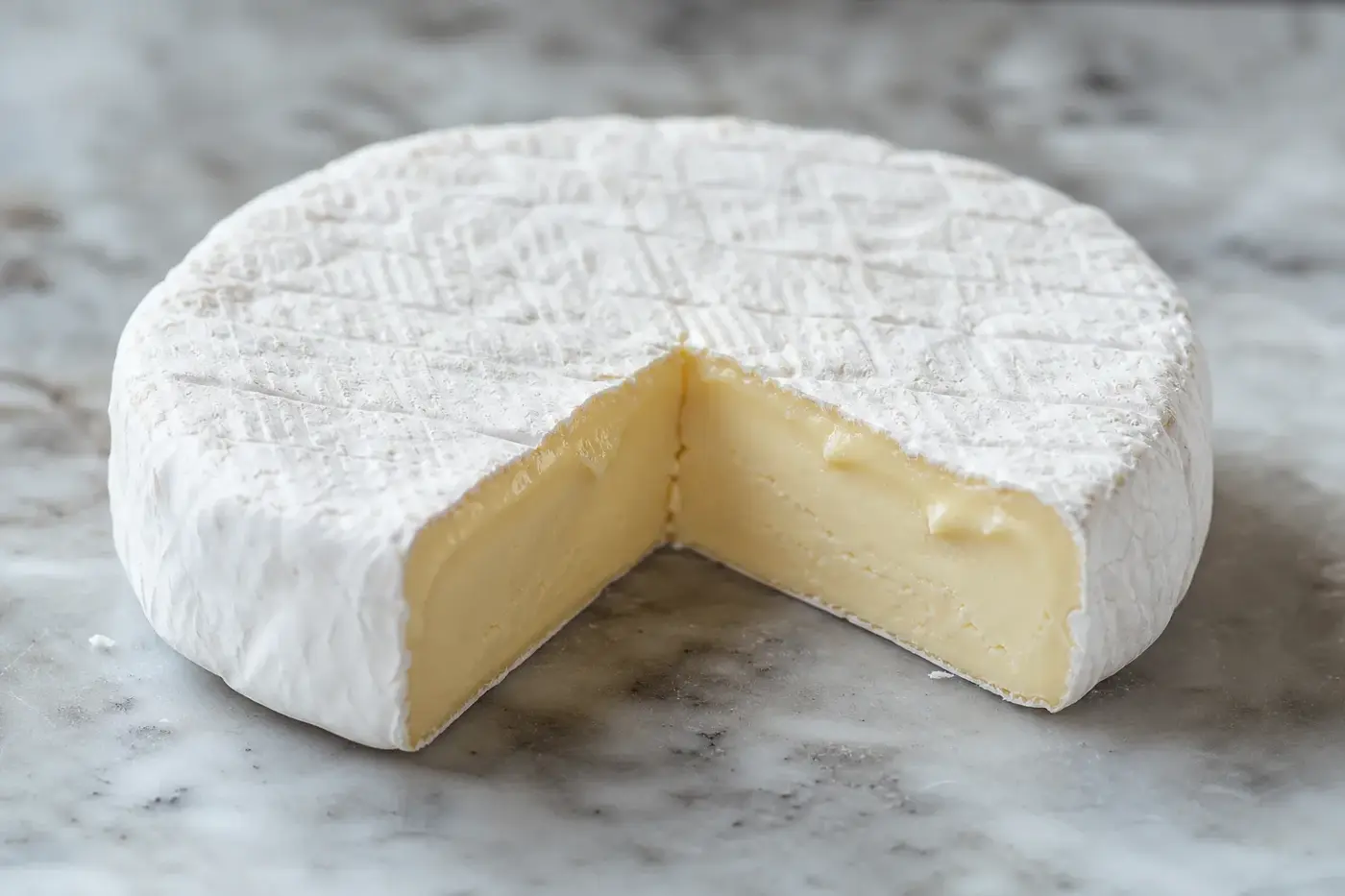
The protected cheese is a pale, flat round with an intact surface that may carry a light mould coat. You will find it sold without a permanent cloth binding.[2] Inside, the Welsh Government describes a creamy-white cheese with a close, flaky texture.[7]
Gorwydd gives you a more visibly divided picture. Trethowan Brothers describes its rind as soft and velvety, with a distinct softer layer underneath.[4] A cut face reveals rather more than the words “pale cheese” might lead you to expect.
Ask to see that cut face if you can. Notice how much crumbly centre remains and whether a softer outer layer has developed, then ask your cheesemonger which part to taste first. This is useful research, conveniently conducted with cheese.
For a wider look at what appearance can tell you, see how to distinguish cheese styles. Keep it in mind when you want to compare the cheeses on the counter.
Step into the dairy
The specified method has a balancing act at its heart: retain moisture while developing acidity. Cultures go into the milk, followed by rennet to help it set into curd. The curd is cut, gently heated and drained of whey, the liquid separated during cheesemaking.[2]
Next comes cutting and turning the curd. It is broken into smaller pieces, salted and packed into moulds by hand. Pressing starts lightly before the pressure increases; further surface salting or brining may follow before maturation completes the process.[2]
Do not assume that “pressed” means dense and dry. Moisture retention is deliberate in this specification, and pressing is only one stage alongside setting, draining and ripening.[2] You can follow the wider process in how cheese is made.
Choose your moment of maturity
Young protected Caerphilly is ready from 10 days, while maturation may continue for up to six months. The Welsh Government describes a growing fullness of flavour with age.[7] That gives you a useful starting point when choosing your wedge.
Gorwydd offers a particular longer-ripened example. Trethowan Brothers gives its maturation as two to three months on the cheese page and six to twelve weeks in its FAQ. Both place it beyond the youngest end of the style.[4][5]
“Farmhouse” is your invitation to ask questions, not a promise of one texture. Does the cheese have a natural rind, and how long has it matured? Does its milk come from the producer’s own farm or another supplier? Those answers tell you more than the word alone.
Choose according to the pleasure you want. A younger example suits an appetite for fresh acidity; a rind-ripened wedge offers contrast between centre and outer layer. Neither outranks the other: they offer different attractions, as the published descriptions suggest.[4][7]
Choose carefully, then keep it cool
Start with the full name, maker, production location and age. Check the declared milk treatment and rennet rather than assuming every Caerphilly follows one formula. Gorwydd’s current cheese page specifies pasteurised milk, for example, while the maker’s FAQ declares calf rennet.[4][5]
At home, keep dairy products refrigerated and follow the packaging instructions. The Food Standards Agency’s consumer guidance for England, Wales and Northern Ireland recommends a fridge between 0 and 5 °C (32 to 41 °F).[9]
For Gorwydd, Trethowan Brothers recommends keeping the waxed wrapping paper. It advises against clingfilm because of sweating around the rind.[5] Follow your particular cheese’s label for dates and storage after opening.
You will find broader wrapping and fridge organisation advice in storing cheese at home. When it is time to eat, take out only the portion you intend to serve.
Make a little room at the table
Start simply: plain bread or an oat biscuit, followed by slices of apple or pear. These suggested companions leave you room to compare the fresh centre with the softer outer layer. For an alcohol-free drink, consider water or an unsweetened apple drink, keeping your attention on the cheese.
If you are cooking, Glamorgan sausages offer a clear direction. The protected specification records a recommendation for using Caerphilly in them.[2] It is an appealing route when the cheese’s fresh, flaky character is what draws you in.
You could also crumble a younger wedge over cooked vegetables or use it in a savoury tart. Choose your recipe first, then decide whether you need a crumbly cheese or a softer, more mature one. Treat these as serving suggestions rather than tested recipes.
Comparing wedges can help you choose, too. Cheddar is generally firmer, while Caerphilly often has a crumbly centre; Cheshire can be crumbly as well. Taste the individual cheeses for acidity, salt and texture before deciding what suits your table or dish, and explore Cheddar in its own guide.
General information only, not medical advice: follow the official guidance where you live.
Questions people ask
What does Caerphilly taste like?
The Welsh Government describes traditional Welsh Caerphilly as mild and slightly lemony, with a fresh aroma and flaky texture. Its flavour becomes fuller as it matures, although it remains mild.
Does Caerphilly have to be made in Wales?
Traditional Welsh Caerphilly or Traditional Welsh Caerffili must be made in Wales using milk from Welsh farms. Cheese labelled simply Caerphilly can be made elsewhere, including Somerset.
Is Caerphilly made with raw or pasteurised milk?
The specification for Traditional Welsh Caerphilly permits either raw or pasteurised cow’s milk. Check the product information rather than assuming which has been used.
How long is Caerphilly matured?
According to the Welsh Government, traditional Welsh Caerphilly is ready from 10 days and may mature for up to six months. The legal minimum maturation period was not verified.
How should I store Caerphilly?
The Food Standards Agency recommends keeping dairy products refrigerated at between 0 and 5 °C and following the packaging instructions. For Gorwydd, Trethowan Brothers recommends retaining its waxed wrapping paper and advises against clingfilm because of sweating around the rind.
Sources
[1] Department for Environment, Food & Rural Affairs. Traditional Welsh Caerphilly / Traditional Welsh Caerffili. UK protected food names register, published 2021, live entry checked November 2026.
[2] Defra. Traditional Welsh Caerphilly / Traditional Welsh Caerffili product specification. Undated specification linked from the current UK register; sections 4.2 to 4.6, checked November 2026.
[3] European Commission. Commission Implementing Regulation (EU) 2018/138 of 16 January 2018 entering a name in the register of protected designations of origin and protected geographical indications. Official Journal L 25, 30 January 2018, page 3; Articles 1 and 2.
[4] Trethowan Brothers. Our cheeses. Undated maker’s descriptions and production statements, retrieved November 2026. Commercial primary source for its own cheese.
[5] Trethowan Brothers. Your FAQs. Undated maker’s information on rennet, maturation, wrapping and serving, retrieved November 2026. Commercial primary source for its own products.
[6] Trethowan Brothers. Our cheesemaking. Undated company account of its history and production location, retrieved November 2026.
[7] Welsh Government, Business Wales. Traditional Welsh Caerphilly / Traditional Welsh Caerffili (PGI). Undated account of the cheese’s character and historical recipe, retrieved November 2026. Its registration-year statement is excluded for the reason recorded in the evidence log.
[8] Defra. Protected geographical food and drink names: UK GI schemes. Updated 8 March 2024; sections on geographical scope and use of registered names, checked November 2026.
[9] Food Standards Agency. How to chill, freeze and defrost food safely. Published 18 December 2017; consumer guidance applying to England, Northern Ireland and Wales, checked November 2026.
This article is desk research synthesising the official registration documents, government guidance and attributed maker accounts; culinary suggestions are editorial recommendations.
Last checked: November 2026
Last checked November 2026.
The editors suggest you read next
Perl Las
Cut into Perl Las and the knife reveals gold, creamy paste and threads of blue mould.