Black Sheep
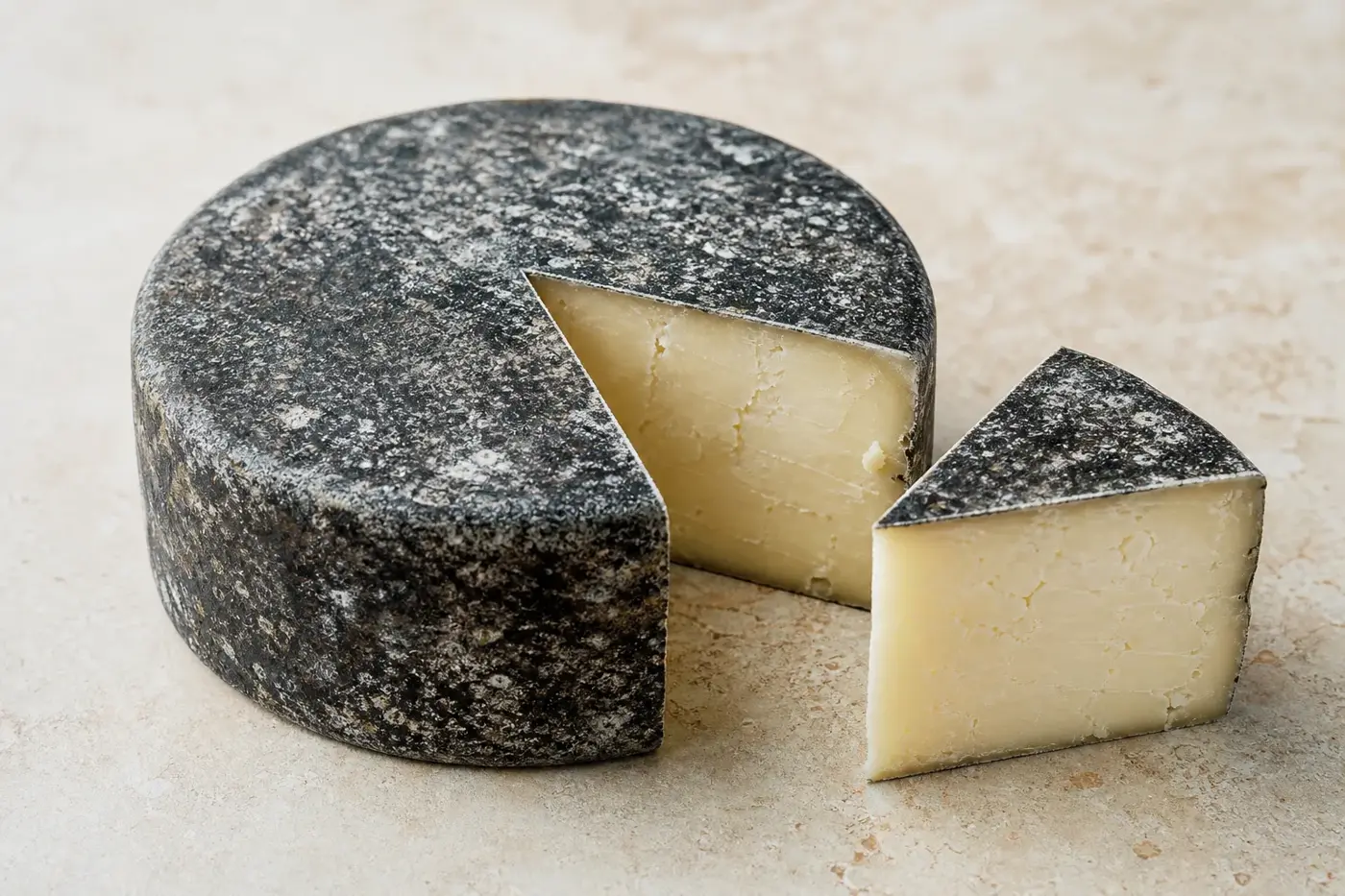
Slip off the black paper sleeve, cut through the ivory wax, and you reach pale yellow cheese with a close interior, slightly broken where the knife has passed.
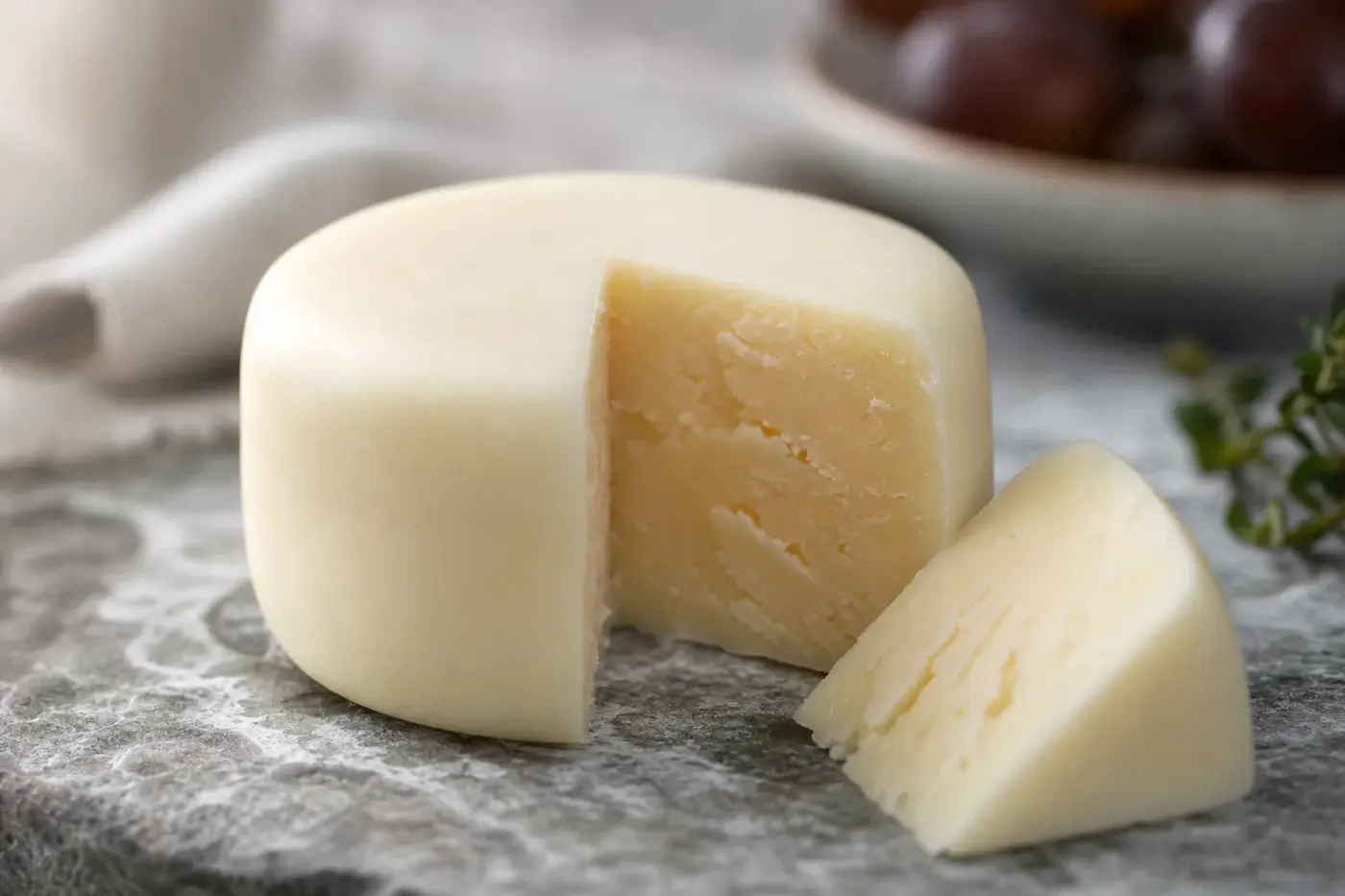
Slip off the black paper sleeve, cut through the ivory wax, and you reach pale yellow cheese with a close interior, slightly broken where the knife has passed.[2] Black Sheep comes from Caws Cenarth in Carmarthenshire, Wales. This firm sheep’s milk cheese promises a gently nutty tang and underlying sweetness, with “creamy” added on its packaging.[1][2] Quite an introduction for a little cheese.
Get acquainted with Black Sheep
| What to know | The detail |
|---|---|
| Name | Black Sheep [1] |
| Maker | Caws Cenarth [1] |
| Home | Fferm Glyneithinog, Pontseli, Lancych, Carmarthenshire, Wales [3] |
| Milk | Pasteurised sheep’s milk [1] |
| Style | In the maker’s hard cheese collection [4] |
| Size | Mini cheese, 150 g [1] |
| Outer covering | Wax, ivory in the maker’s photographs [1][2] |
Take a look beneath the black sleeve
Black Sheep is small and rounded, under a smooth covering of wax. In Caws Cenarth’s product photographs, you can see the contrasts clearly: pale cheese, wax much lighter than the black sleeve, and a close texture across the cut face.[2]
Look for both Black Sheep and Caws Cenarth on the packaging. Wax colour alone will not settle its identity. The dairy places it in its hard cheese collection and offers this mini format at 150 g, so keep the packaging for the details of your particular cheese.[1][4]
Find the family in the Cych valley
Caws Cenarth’s story begins with a farm finding a new way forward. In 1987, milk quotas prompted the move into cheesemaking. The family’s published history reaches further back, to 1903, with Caerffili central to its early reputation.[5]
You will find the dairy’s address listed as Fferm Glyneithinog, Pontseli, Lancych, Carmarthenshire.[3] Its history places the farm in the valley of the River Cych. Behind this little cheese, then, is a family business with a very particular west Wales home.[5]
If you fancy a visit, consult the dairy’s current visitor information and contact it before travelling. Its visitor page describes a shop, visitor centre and opportunities to watch cheesemaking. It also asks you to enquire directly about the day’s production arrangements.[6]
Begin with the sheep’s milk
Sheep’s milk is where Black Sheep starts. Caws Cenarth’s product page specifies pasteurised ewes’ milk, making pasteurisation the declared treatment.[1]
For help untangling the different treatments, turn to raw milk, thermised and pasteurised cheese. Once you bring Black Sheep home, keep its current wrapper with it. You will have the product details and storage instructions close to hand.
Follow the curd on its way
Milk, cultures, curd, whey: Caws Cenarth’s cheesemaking account lets you follow the transformation. Cultures go into the milk, curd forms, and cutting releases the whey. Stirring, moulding, salting and ripening follow. The curd is the solid part that becomes cheese; whey is the liquid separated from it.[5]
That account covers several cheeses, including soft and blue varieties, rather than Black Sheep alone.[5] For Black Sheep itself, the product page confirms pasteurised milk and a wax coat.[1] The particular curd handling, waxing method and maturation period remain unspecified here.
If you would like the bigger picture, explore how cheese is made. Use that guide to follow the broader stages, then return to the current product label for the cheese in your hand.
Give that nutty tang a moment
Nutty tang leads Caws Cenarth’s tasting notes, with sweetness underneath. The packaging adds “creamy”.[1][2] Take those words as a starting point, not a tasting exam. Nobody needs to revise for a piece of cheese.
Try a small piece on its own before reaching for bread or fruit. Does it break cleanly or crumble, and how quickly does it soften as you chew? Notice whether sweetness or tang stays longest. Those details tell you more about your own taste than “strong” or “mild” ever could.
Make room for it on your board
Start simply, with bread or oatcakes, sliced apple or pear, and a small spoonful of chutney to one side. Keep the accompaniments separate. That lets you return to the cheese alone and compare the sweetness and tang described by the maker.[1]
A 150 g mini cheese gives you six 25 g pieces or five 30 g pieces.[1] Choose the cut that suits the rest of your meal and the other cheeses on your board. These are portioning options, not dietary recommendations.
Put out a little at a time rather than leaving the whole cheese on the table for a long afternoon. In England, Wales and Northern Ireland, the Food Standards Agency advises keeping your home fridge at 5 °C or below.[7] Follow its current guidance for preparing and serving chilled food.
Choose a drink and taste along
For an alcohol free pairing, try sparkling water with apple slices alongside. Alternatively, serve an unsweetened apple drink separately from the cheese.
Both suggestions follow the sweetness and tang in Caws Cenarth’s description.[1] Taste the drink, fruit and cheese in turn. Give yourself a moment with each, so you can compare them.
Unwrap, slice and keep a little back
Remove the paper sleeve and cut a manageable wedge on a stable board. Peel or trim away the wax before eating, keeping it separate from the pieces you serve. The maker’s photographs show that smooth outer covering clearly against the cut cheese.[2]
Caws Cenarth tells buyers to keep Black Sheep refrigerated.[1] Follow the pack’s date and any instructions for use after opening, then return the remainder promptly to the fridge.[7] For more household advice, see how to store cheese at home.
If you have a piece left, try thin slices in a sandwich with apple. Small pieces alongside bread and soup are another simple option. Either way, you keep the cheese recognisable and give yourself another chance to explore its texture. No recipe required.
Let your cheese curiosity wander
- How to Tell Cheese Styles Apart: Milk, Rind, Texture and Method: find a framework for comparing firm cheeses.
- How to Read a Cheese Label: get to know the details worth keeping with your wrapped mini cheese.
- How to Store Cheese at Home: practical help for looking after the cut piece.
General information only, not medical advice: follow the official guidance where you live.
Questions people ask
What is Black Sheep cheese made from and what does it taste like?
Black Sheep is made from pasteurised sheep’s milk. Caws Cenarth describes a gently nutty tang with underlying sweetness, and the packaging calls it creamy.
Is Black Sheep suitable for vegetarians?
The rennet used in Black Sheep has not been verified. Keep the current wrapper with the cheese so its product information stays close to hand.
Do you eat the wax on Black Sheep cheese?
Peel or trim away the wax before eating. Keep the coating separate from the pieces you serve.
How should I store Black Sheep cheese?
Caws Cenarth instructs buyers to keep it refrigerated and follow the pack’s date and any instructions for use after opening. The Food Standards Agency advises keeping a home fridge at 5 °C or below in England, Wales and Northern Ireland.
Can I visit the dairy where Black Sheep is made?
Caws Cenarth’s visitor page describes a shop, visitor centre and opportunities to watch cheesemaking. Check its current visitor information and contact the dairy about the day’s production arrangements before travelling.
Sources
[1] Caws Cenarth, Black Sheep, Mini 150g, undated product page, retrieved November 2026. Product name, size, sheep’s milk, pasteurisation, tasting description, wax coating and refrigeration instruction.
Read at cawscenarth.co.uk
[2] Caws Cenarth, Black Sheep product photographs, undated images linked from the product page, retrieved November 2026. Photographic evidence of the ivory coating, black sleeve, pale interior and visible cut texture. These photographs establish appearance, not a recorded tasting.
Read at cawscenarth.co.uk
Read at cawscenarth.co.uk
Read at cawscenarth.co.uk
[3] Caws Cenarth, Contact Us, undated location page, retrieved November 2026. Dairy address.
Read at cawscenarth.co.uk
[4] Caws Cenarth, Hard Cheeses, undated collection page, retrieved November 2026. Black Sheep’s inclusion in the maker’s hard cheese collection.
Read at cawscenarth.co.uk
[5] Caws Cenarth, Our Story, undated company account, retrieved November 2026. Family history, River Cych setting and general dairy production overview.
Read at cawscenarth.co.uk
[6] Caws Cenarth, Visit Us, undated visitor information, retrieved November 2026. Visitor facilities and instruction to confirm production arrangements before visiting.
Read at cawscenarth.co.uk
[7] Food Standards Agency, How to chill, freeze and defrost food safely, published 18 December 2017, live version retrieved November 2026. Household guidance applying to England, Northern Ireland and Wales.
Read at gov.uk
[8] Food Standards Agency, Alerts, live recall and allergy alert database, accessed November 2026. Used for the editorial recall check, not as evidence of a general safety verdict.
Read at alerts.food.gov.uk
This draft was researched from the maker’s product information, photographs and published history, alongside official household food handling guidance.
Last checked: November 2026
Last checked November 2026.
The editors suggest you read next
Caerphilly
Your knife meets a rind-ripened Caerphilly, and one wedge offers two pleasures: a fresh, crumbly centre and a softer, creamy layer just beneath the rind.