Perl Las
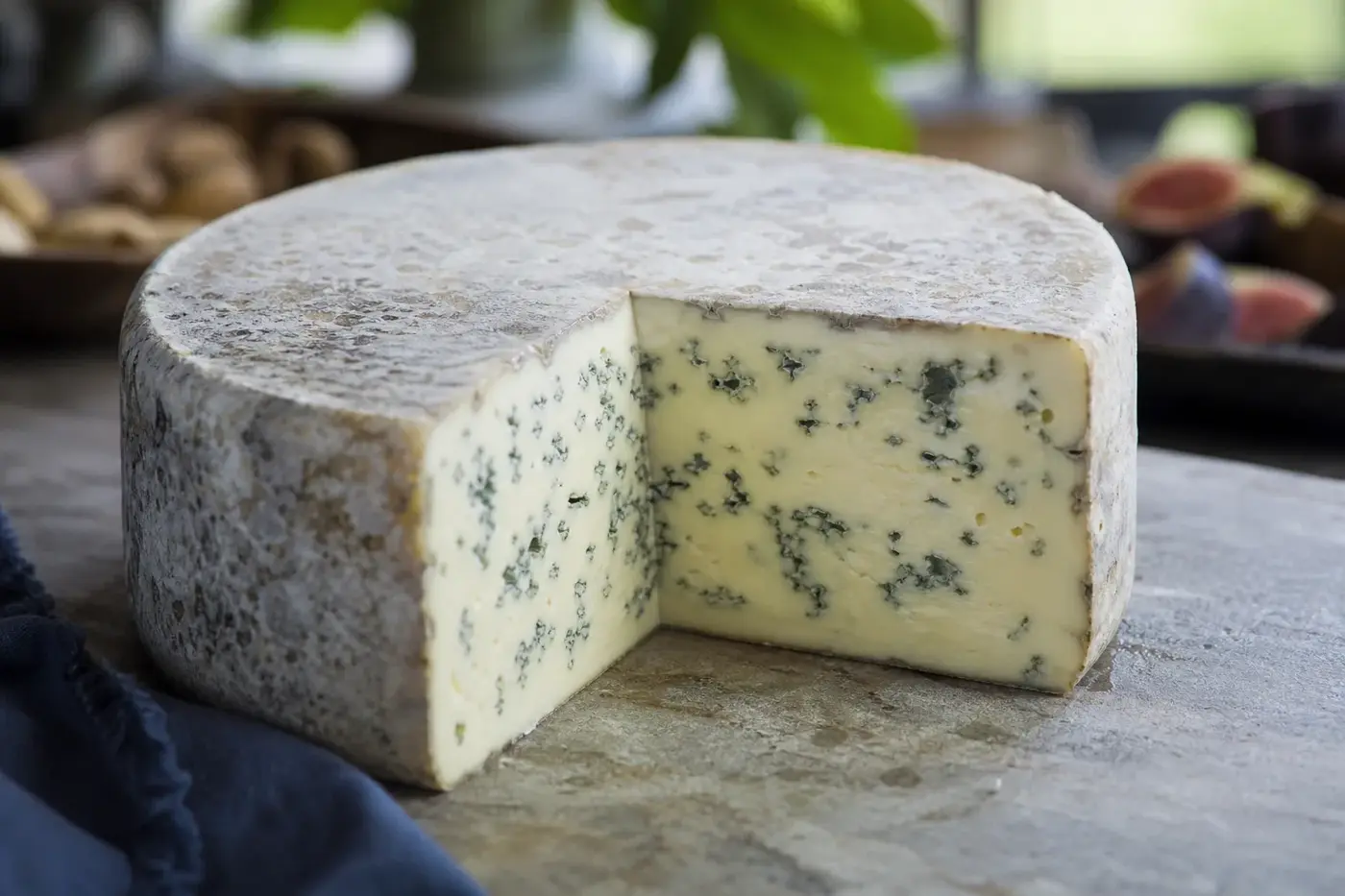
Cut into Perl Las and the knife reveals gold, creamy paste and threads of blue mould.
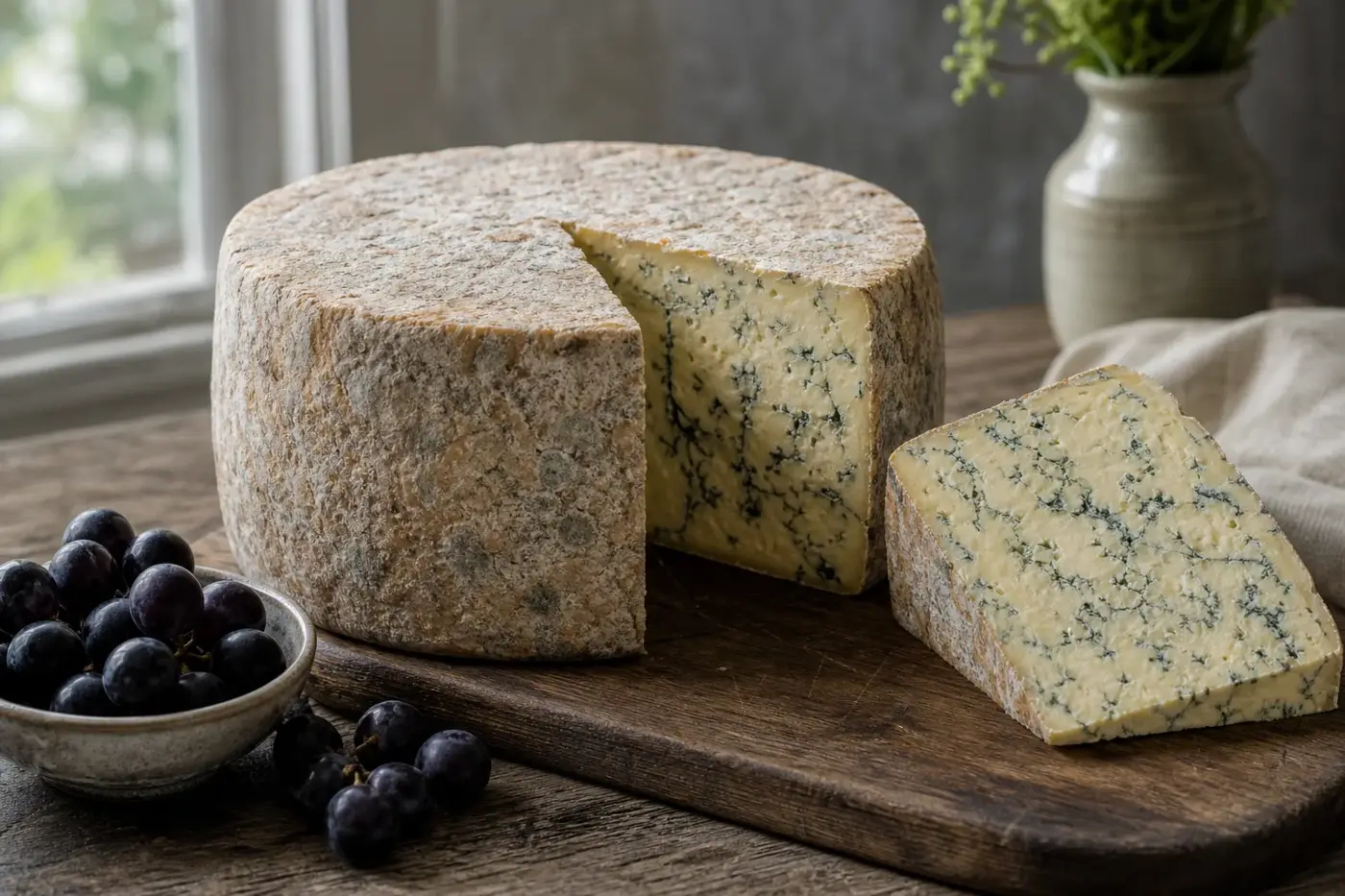
Cut into Perl Las and the knife reveals gold, creamy paste and threads of blue mould. You are looking at a cheese from Caws Cenarth in the Cych Valley of west Wales, with a gently salty flavour that its maker says grows stronger with maturity. Same name, rather different conversation as it ages.[1][2]
| What you might want to know | The detail |
|---|---|
| Name for your shopping list | Perl Las.[1] |
| Who makes it | Caws Cenarth.[1][3] |
| Where you will find the dairy | Glyneithinog, in the valley of the River Cych, west Wales.[3] |
| Milk the maker lists | Pasteurised cow’s milk.[1][2] |
| Coagulant the maker lists | Vegetarian rennet.[1][2] |
| Blue mould the maker lists | Penicillium roqueforti.[1][2] |
| Other listed ingredients | Sea salt and cultures.[1][2] |
| Sizes to look for | 200 g cheese; large wheel with a stated minimum weight of 2.5 kg.[1][2] |
Find the blue that suits you
Creaminess, gentle salt and blue flavour that builds with age are Perl Las’s calling cards, according to its maker. So maturity is a useful place to begin your conversation at the cheese counter. You and a devoted blue lover might choose the same cheese but want quite different pieces.[1][2]
Ask about the cheese being cut, rather than treating the amount of blue as a strength gauge. Tell the cheesemonger whether you will eat it alone, introduce it to blue cheese newcomers or put it in a dish. That gives them rather more to work with than “mild” or “strong”.
When you taste, let each sensation have its turn. Notice the texture, then the salt, then how long the blue flavour stays with you. A soft, yielding mouthful can still have plenty to say afterwards.
Meet Perl Wen, the sister with her own ideas
Caws Cenarth calls Perl Wen the “sister” of Perl Las, though you will find two distinct characters here. Perl Las is blue. Perl Wen, in the maker’s description, is a cross between Brie and Caerffili.[1][4]
Perl Wen begins with the dairy’s farmhouse Caerffili recipe. Caws Cenarth says this foundation gives its soft centre a citrus character and a suggestion of sea salt. Taste it with that in mind and you have a connection between the dairy’s newer cheeses and its Caerffili background.[4]
Try the sisters side by side if you fancy exploring the range. Taste each alone first, then consider what stands out: texture, salt, rind character or blue flavour. You are getting to know a dairy’s repertoire, not refereeing a family dispute.
Follow the family back to the Cych Valley
At Glyneithinog in 1987, milk quotas prompted a return to cheesemaking. Caws Cenarth’s published family history tells how the founding generation revived a tradition at the farm in the valley of the River Cych. That revival established the business there.[3]
The family story takes you further back, to 1903, when relatives made cheese for the household and the local market. Those two dates tell different parts of the story. The business began in 1987, but that was not the launch of Perl Las, and the cheesemaking roots run deeper.[3]
Caerffili sits at the heart of this history. Perl Las belongs to the wider range the dairy subsequently developed, alongside soft white-rinded cheeses and other styles. Different cultures and approaches to maturation gave the working dairy room to expand its repertoire.[3][4]
This page summarises published guidance from the official sources it cites. It is not medical advice. Guidance differs between countries and changes over time, so check the current source for where you live, and ask your doctor, midwife, pharmacist or dietitian about your own circumstances.
Get to know the milk, mould and rennet
The November 2026 ingredient information for both the small Perl Las and the large wheel lists pasteurised cow’s milk, sea salt, vegetarian rennet, Penicillium roqueforti and cultures. These are the maker’s product declarations for the two formats you may encounter.[1][2]
Rennet helps milk set into curd, the solid material from which cheese takes shape. Caws Cenarth declares its rennet here to be vegetarian. If you would like to untangle animal, microbial and fermentation-produced coagulants, rennet explained takes you through them.[1][2][5]
When a production claim matters to you, read the description and packaging of the cheese you are buying. Choosing a cut piece? Ask the seller to confirm that it matches the maker’s current information, and use reading a cheese label to separate ingredients from broader claims about the producer.
Give the blue a little breathing room
The blue in Perl Las is deliberately cultivated. Caws Cenarth lists Penicillium roqueforti among the ingredients and describes piercing its blue cheese to make holes where the mould can develop. Those little channels are part of the cheesemaking, not decoration.[1][3]
They bring oxygen into the cheese. Openings between curd particles provide more room for mould growth, which makes the structure of the paste important too. The Basics of Cheesemaking explains how that open structure, oxygen and internal blue mould development work together.[5]
Outside, the surface has a different set of conditions. Moisture, salt, air and surface microorganisms shape its ripening in the maturation room. Caws Cenarth’s general production account describes hand-salting, removing excess salt, drying the surface and moving cheeses into maturation rooms.[3][5]
Look at your cut piece with that distinction in mind. Blue mould develops inside the paste, while the exterior follows its own course under different conditions. Both help shape the finished cheese; how cheese is made guides you through the broader sequence.
Look, smell, taste and trust your own words
You can buy Perl Las as a small 200 g cheese or a substantially larger wheel. A wheel’s cut face lets you see the exterior, pale paste and blue mould together. The small format gives you a whole cheese to divide at the table.[1][2]
The maker describes golden colour, creaminess and gentle salt, with flavour growing stronger as the cheese matures. Ask how the piece in front of you compares with that description. In particular, find out how pronounced its blue character has become.[1][2]
Some blue cheese aroma comes from mould working on milk fat and protein. Research using experimental cheeses made with twelve mould strains found differences between mould populations in both blue area and aroma-related compounds. Methyl ketones and secondary alcohols were among the compounds associated with blue-cheese aroma.[6]
You need no elaborate vocabulary to explore your own piece. Smell it freshly cut, then notice the aroma again as you chew. “Faint at first, stronger afterwards” does a useful job, without requiring you to audition as a tasting notebook.
Make room for Stilton beside it
If Stilton is your familiar reference point, compare two actual pieces at their present maturity. Ask the cheesemonger for a Stilton they consider stronger than the Perl Las you plan to serve. The names alone cannot tell you how every piece will taste.
Start with Perl Las, then move to the stronger selection. Notice how readily each cheese breaks or spreads, how quickly the salt arrives and how long the blue flavour lingers. Plain bread and water between tastes keep the comparison simple.
That suggested order follows the maker’s description of Perl Las strengthening with maturity.[1][2] You need not choose a favourite straight away. Especially if blue cheese is new to you, discovering whether texture, salt or lingering flavour matters most can be the more interesting result.
Bring it home and give it proper care
Before you buy, ask when the cheese was cut, how mature it is and what storage instructions come with it. Choose an amount that suits your occasion. Keep the original label, or the cheesemonger’s written instructions, with any cheese left over.
Caws Cenarth says to refrigerate Perl Las. For home handling, Food Standards Agency guidance published on GOV.UK for England, Northern Ireland and Wales recommends a fridge between 0 and 5 °C. Follow the packaging instructions and keep chilled food out of the fridge for the shortest possible time.[1][7]
Take out only the portion you intend to serve. As cheese warms, its milk fat becomes less solid, helping explain why a firm piece from the fridge becomes more yielding. Follow current Food Standards Agency guidance for England, Northern Ireland and Wales, alongside the packaging instructions, for safe serving.[7]
Begin any assessment of condition with the date, storage history and supplied instructions. Ask the seller about an unfamiliar surface before serving it. Expected ripening and food safety are separate questions; how to store cheese at home offers more handling guidance.
Set the table with bread, pear and potato salad
Start with Perl Las, plain bread and a ripe pear. Taste the cheese alone, then try bread for a quieter mouthful or pear for contrast. These suggestions take their cue from the maker’s description of creaminess and gentle salt.[1]
Begin with water so you can form an impression of the cheese before introducing another flavour. If you fancy something different afterwards, an alcohol-free apple drink is another option to try.
For cooking inspiration, turn to Caws Cenarth’s Perl Las potato salad. It brings together roasted baby potatoes, lightly charred onions, celery, lamb’s lettuce and a mustard dressing. This is the producer’s recipe, and Caws Cenarth has a commercial interest in its cheese.[8]
Questions people ask
Where is Perl Las made?
Perl Las is made by Caws Cenarth at Glyneithinog in west Wales. The dairy is in the valley of the River Cych.
Is Perl Las vegetarian and made with pasteurised milk?
Caws Cenarth lists pasteurised cow’s milk and vegetarian rennet among its ingredients. If a production claim matters to you, check the packaging or ask the seller to confirm the current information.
What does Perl Las taste like?
The maker describes it as creamy and gently salty, with a blue flavour that grows stronger as it matures. Ask the cheesemonger how mature the piece is and how pronounced its blue character has become.
How should I store Perl Las?
Caws Cenarth says to keep Perl Las refrigerated. Food Standards Agency guidance for England, Northern Ireland and Wales recommends a fridge between 0 and 5 °C; follow the packaging instructions and consult the current guidance on GOV.UK.
What can I serve with Perl Las?
Try it with plain bread and a ripe pear, tasting the cheese on its own first. Caws Cenarth also has a Perl Las potato salad recipe with roasted baby potatoes, lightly charred onions, celery, lamb’s lettuce and mustard dressing.
Sources
[1] Caws Cenarth, Perl Las, 200g, undated current product page, ingredient list and storage instructions, checked November 2026.
[2] Caws Cenarth, Perl Las, (Large Wheel) 2.5kg, undated current product page, description, format, ingredients and storage instructions, checked November 2026.
[3] Caws Cenarth, CawsCenarth: The Family Dairy, undated current “Our Story” page, family history and production account, checked November 2026.
[4] Caws Cenarth, Perl Wen, 200g, undated current product page, cheese description, checked November 2026.
[5] American Society for Microbiology, The Basics of Cheesemaking, Microbiology Spectrum, 2013, DOI 10.1128/microbiolspec.CM-0002-2012, sections on coagulation, milk fat, finishing and interior ripening, checked November 2026.
[6] Strong effect of Penicillium roqueforti populations on volatile and metabolic compounds responsible for aromas, flavor and texture in blue cheeses, 2021, PubMed record 34103155, abstract, checked November 2026.
[7] Food Standards Agency, How to chill, freeze and defrost food safely, published 18 December 2017, current GOV.UK version, applicable to England, Northern Ireland and Wales, checked November 2026.
[8] Caws Cenarth, Delicious Caws Cenarth Recipes, undated current recipe index, “Smokey Onion Perl Las Potato Salad” description, checked November 2026.
This piece was researched from the producer’s published product and family records, published cheesemaking research and official household refrigeration guidance.
Last checked: November 2026
Last checked November 2026.
The editors suggest you read next
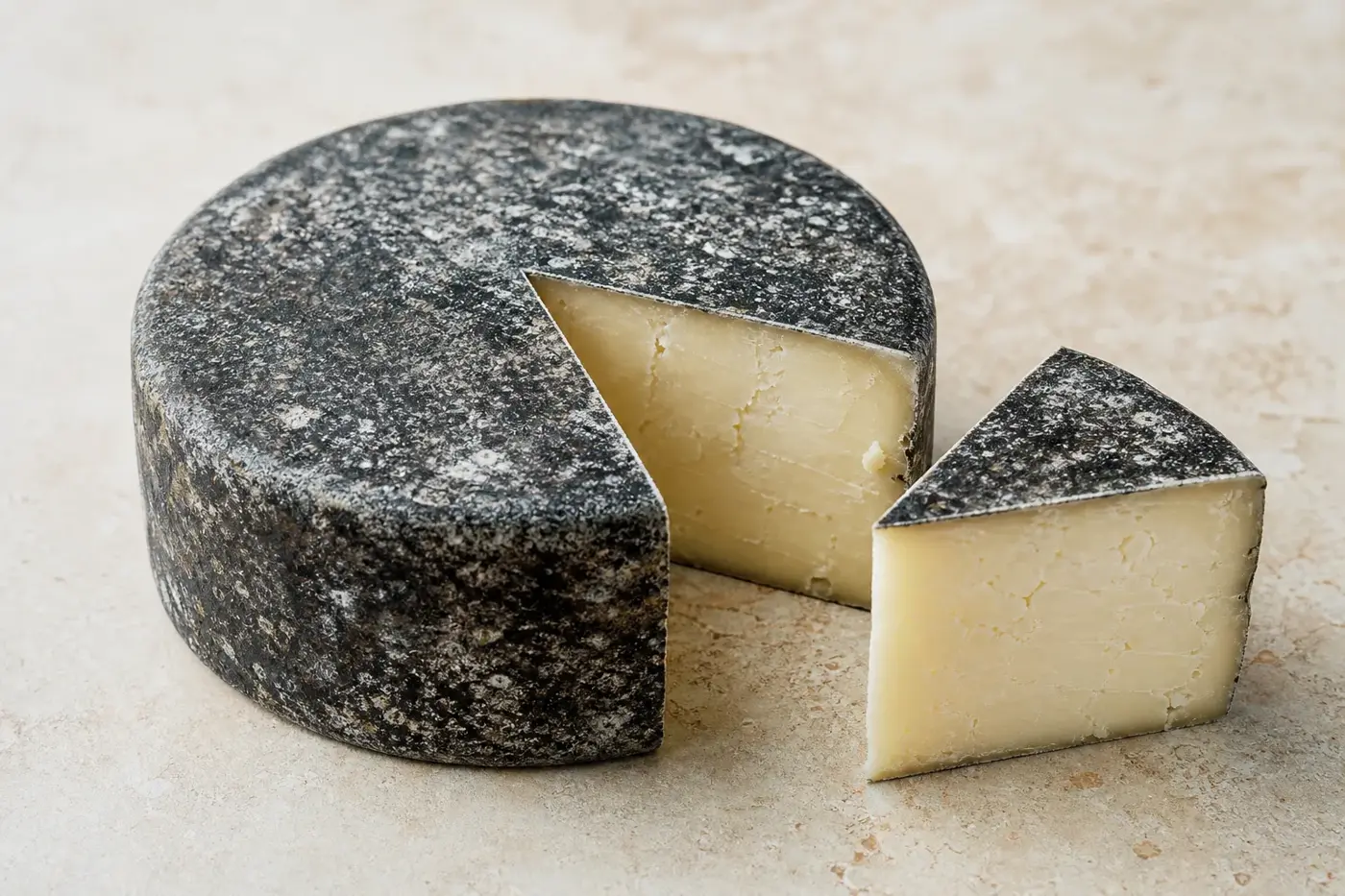
Caerphilly
Your knife meets a rind-ripened Caerphilly, and one wedge offers two pleasures: a fresh, crumbly centre and a softer, creamy layer just beneath the rind.