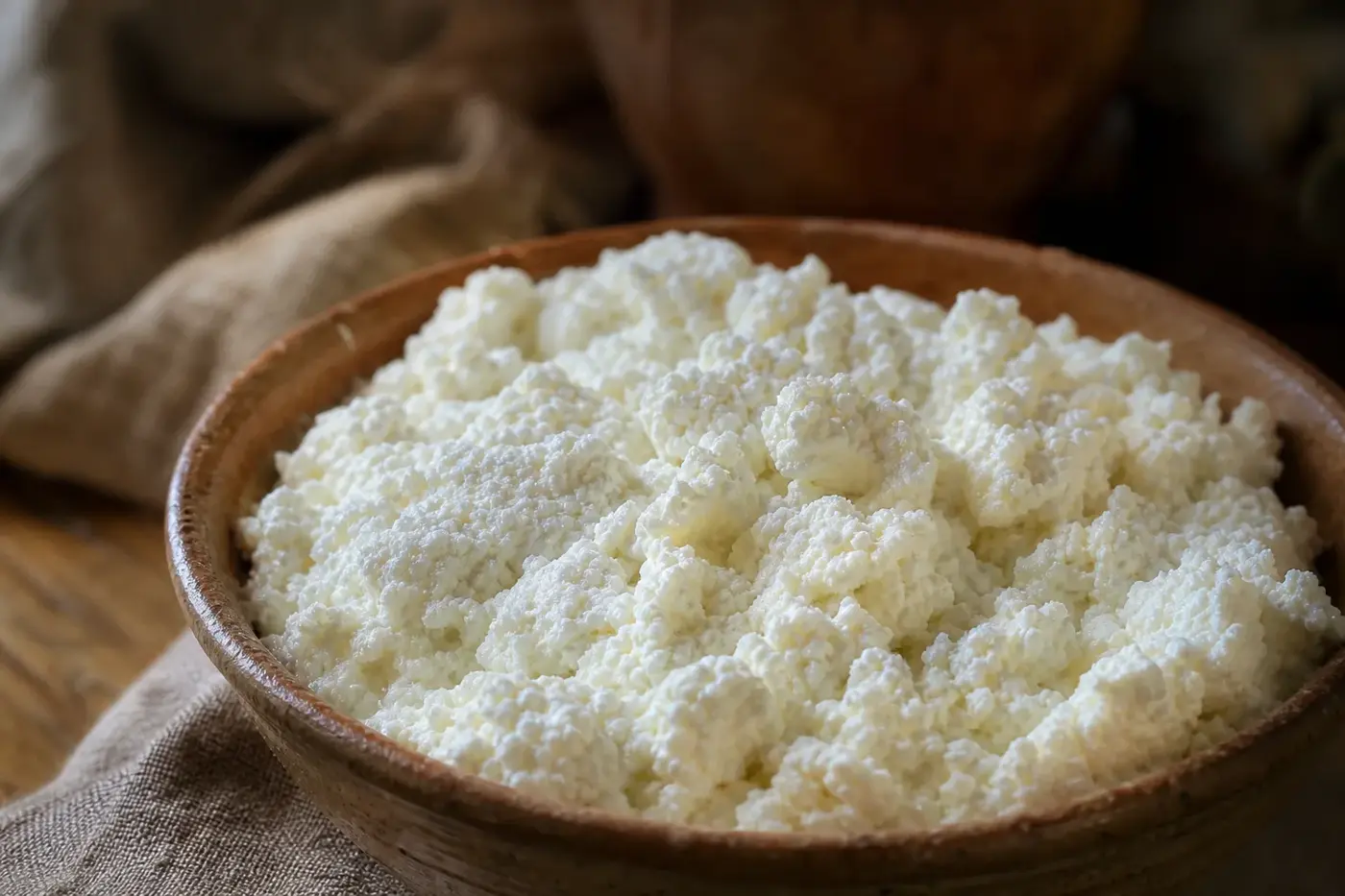
First comes the butter. Then the sour liquid left in the churn is gently heated and drained, gathering into loose white curds. You have ayib: fresh, gently sour, and ready to join the food on your plate. In traditional Ethiopian butter making, this cheese gives fermented milk a second purpose, closely tied to the butter maker’s work.[1]
Get acquainted with ayib
- Customary home: Ethiopia.[1]
- Milk: Cow’s milk in the documented Eastern Gojjam household survey.[5]
- Style: Fresh, unripened curds formed through acid and heat coagulation.[2,4]
- Traditional starting point: Fermented milk after butter removal, called arera or arerra.[1,4]
- Rind and shape: No rind; loose curds kept in a bowl or pot.[4]
- Allergens: Milk; check the particular product for added seasonings.[5,6]
A bowl of white curds with a sour little edge
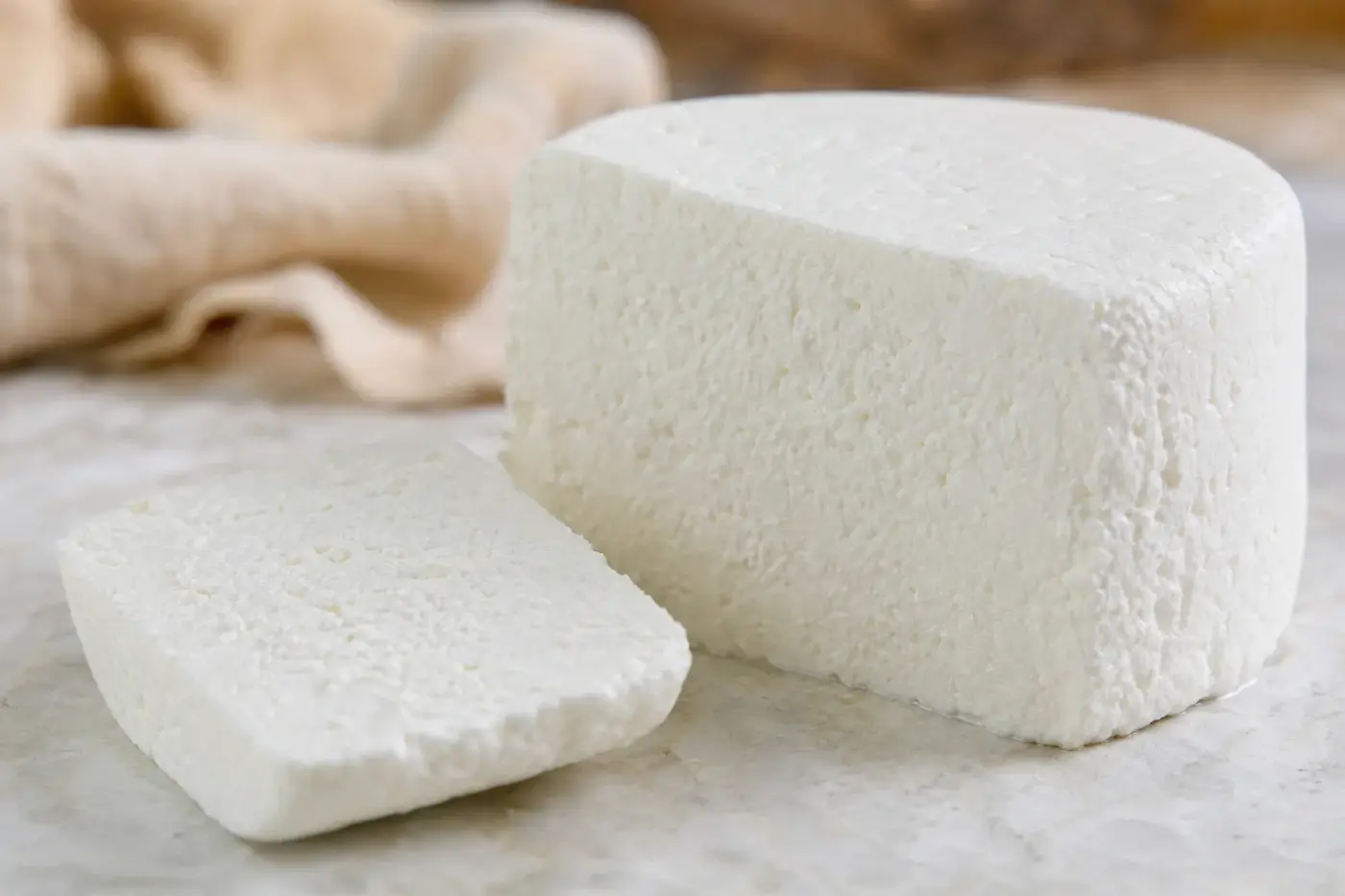
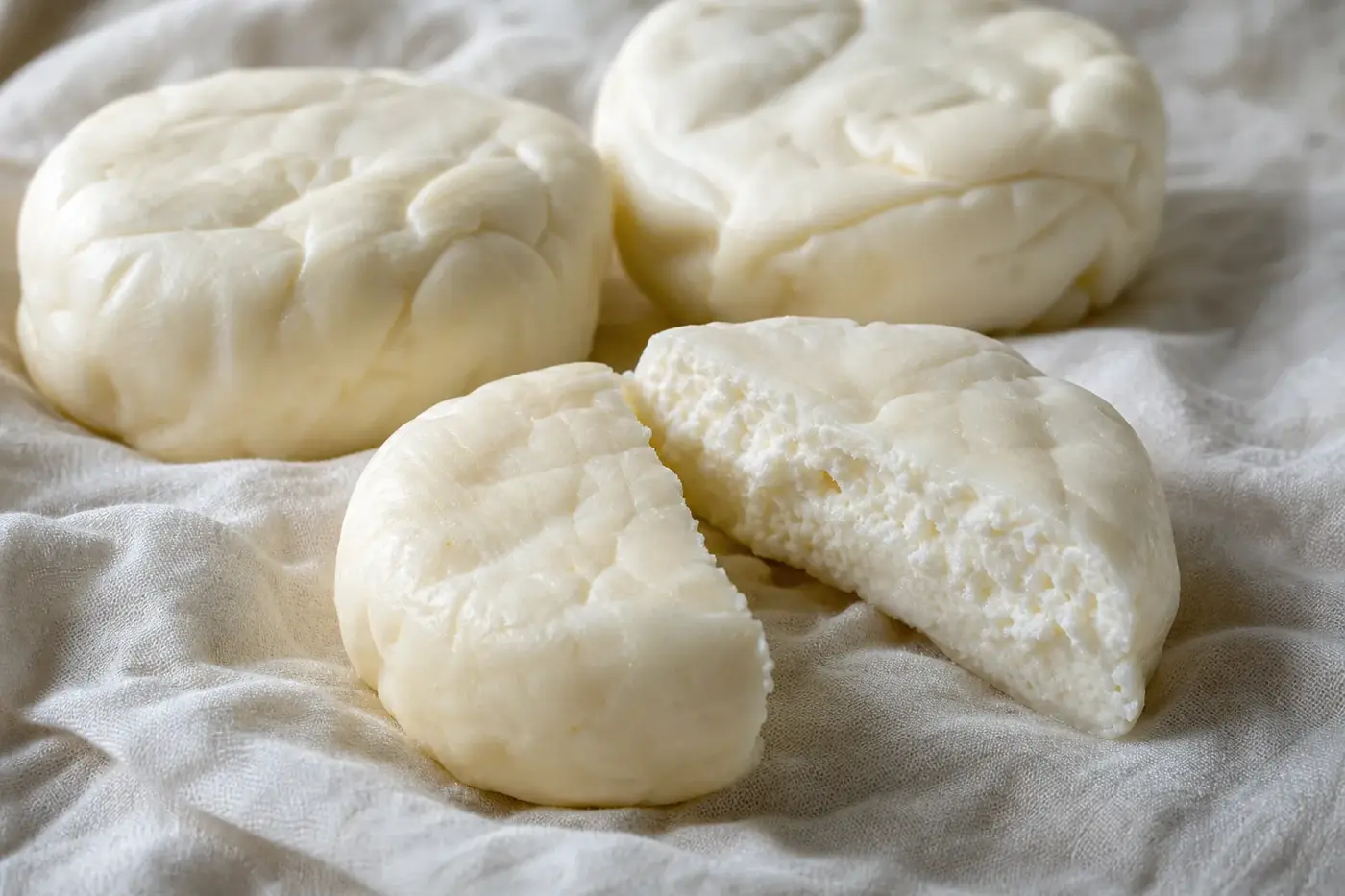
Picture soft, white curds gathered after the whey has drained away. Published Ethiopian dairy descriptions give ayib a moist, granular texture, made for gathering with food rather than cutting into neat slices. There is no developed rind or grand wheel to admire. This cheese is quite content with a bowl or pot.[4]
You taste the sour milk first: a lactic tang rather than the pungency of a ripened rind. Some batches are mild; others make their sourness more noticeable. Research also records a cooked flavour from heating. Both fermentation and curd treatment help decide what reaches your plate.[3]
Follow the milk: butter gets there first
The story begins with fermented whole milk, commonly called ergo. Churning gathers its butterfat into grains, which are removed, leaving a sour liquid with relatively little fat. That liquid is arera, also written arerra, the traditional starting material for ayib. FAO’s account of Ethiopian butter making follows this useful sequence: butter first, then cheese from the remaining buttermilk.[1,8]
Buttermilk and whey have different parts to play here. Buttermilk remains after butter making; whey separates later, as the cheese curds form. The cheesemaker recovers some of the sour buttermilk’s proteins as curds, then drains away the whey. Keep those two liquids straight and you can follow the milk all the way to the bowl.[2]
In northwestern Ethiopia, a survey of dairy households recorded these connections in everyday processing. Fermented milk, butter, buttermilk, cheese and whey all belonged to the same household system. Some buttermilk was drunk directly; some became cheese. Ayib belongs to that connected use of milk, rather than a method built around a standard mould or weight.[8]
Gentle heat, and the curds gather
In documented traditional production, gentle heating separates curd from whey. The sour buttermilk is warmed until a distinct curd appears, then left to settle. The cheesemaker lifts out the curds or drains them through cloth or a fine sieve. That gathering of milk proteins is coagulation; the liquid around them is whey.[2]
For ayib, acid and heat work together. Fermentation has already acidified the milk, and warming helps the curd separate, rather than the process relying on an added rennet stage. If you want to follow that distinction further, explore the guide to how cheese is made.[4]
There is no single nationally fixed kit of utensils. Field research describes clay and iron pots, cloths and sieves, with equipment and handling varying between producers. These accounts explain the traditional sequence. A reproducible home recipe also needs reliable controls for milk, fermentation, heating and later handling.[8]
Why every bowl has its own character
Sourness begins with fermentation. Lactic acid bacteria turn milk sugar into lactic acid, changing both acidity and the way milk proteins behave. A 2025 laboratory study compared nine mixed starter cultures, using pasteurised milk to make ayib and assess the resulting cheeses. Sensory acceptance differed between treatments: the fermenting culture helps shape the cheese you taste.[7]
Butter removal has a say, too. Traditional processing takes away much of the fat before cheesemaking, while some remains with the milk proteins. How effectively a household churns therefore matters to the curds that follow. A central highlands field study compared butter recovery methods at twelve smallholder producers, showing that butter making itself is a variable stage.[2]
Heating can bring that cooked note, while draining decides how much liquid stays behind. You might find a moist, spoonable batch or a firmer crumble in your bowl. Household processing research also records further draining before ayib becomes a seasoned cheese. Removing moisture can change its form as well as its texture.[3,8]
Pull up a chair at the Ethiopian table
Ayib accompanies kitfo and gomen, or cooked greens, with injera in documented Ethiopian meals.[9,10] If that is how you first meet it, you have a good starting point. There are other ways to enjoy it, too.
An Eastern Gojjam household survey recorded cheese eaten with injera, mixed with vegetables or stew, served with kita bread, or eaten alone. That takes you beyond the familiar restaurant pairing with kitfo. At home, this cheese finds several places in a meal.[5]
Serve your ayib in a small separate bowl or mound, with greens and other accompaniments alongside. Gather a little curd with the other food and enjoy its texture as part of the mouthful. Start with it plain if possible, then try the seasonings supplied by the cook.
Follow the seasonings to metata ayib
Rue, garlic, coriander and ginger were among the additions recorded in Eastern Gojjam research. These observations came from named districts, not a single seasoning formula for Ethiopia. Households and places differ. Ask whether your ayib is plain or seasoned before you decide what to expect from the bowl.[5]
Metata ayib takes fresh ayib in a different direction: it is spiced and further fermented. A Gondar study collected cheese from four producing households and interviewed the vendors about ingredients and processing. The recorded spices included mustard, coriander, ginger, garlic, basil and rue. Metata ayib has a distinct identity within the wider dairy tradition, rather than being another name for plain fresh curds.[6]
Find your ayib, or a curd that suits
Take four questions to the seller: what milk was used, was it pasteurised, is the cheese seasoned, and what refrigeration and use instructions apply? For packaged cheese, read the ingredients and storage directions. For loose curds, ask for that information. The guide to reading a cheese label helps you separate useful product information from the name on the front.[13]
Ethiopian food research often describes ayib as a cottage type cheese, giving you a useful starting comparison.[4] If you need a substitute, begin with the texture of a plain curd. Try cottage cheese or ricotta, then consider that particular product’s moisture, smoothness, saltiness and sourness. Choose for your meal: separate curds and a softer spoonful will behave differently beside the other food.
That comparison earns its keep at the table, where each can provide a fresh curd alongside a meal. It is a family resemblance, not an identity swap. Ayib’s own character remains rooted in its particular relationship with fermented milk and butter making.[1]
Keep your curds chilled and follow the dates
Keep your cheese refrigerated and follow its storage instructions. In England, Wales and Northern Ireland, the Food Standards Agency advises a fridge temperature of 5 °C or below, along with following the directions on the pack.[11,12] Put out only the portion you intend to serve and leave the rest chilled. For more practical guidance, see storing cheese at home.
Use-by dates are about safety; best-before dates are about quality. The FSA advises following a use-by date even if food looks and smells normal, because a sniff test cannot detect the organisms responsible for food poisoning. With a best-before date, smell, visible mould and changes in texture can help you spot spoilage.[12]
Ayib is sour already, so judge changes against the producer’s description and instructions. Reject curds with visible mould or unexpected deterioration, and follow any recall notice affecting the product. Keep the seller’s storage and after-opening instructions with the cheese. Those instructions are more useful than giving every ayib the same shelf life.[11,12]
Making ayib? Follow the milk all the way through
Traditional ayib begins with sour milk made through an intentional food production process. If you want to make it at home, choose a reliable, specialist-reviewed recipe using pasteurised milk. It should cover clean equipment, controlled fermentation, heating, cooling and refrigerated storage, because the historical sequence alone leaves practical questions unanswered. For the differences between milk treatments, see raw milk, thermised and pasteurised cheese.
Research on ayib has examined milk processing steps and contamination in finished curds, making both milk quality and handling after heating relevant.[3] Choose a recipe that takes you through straining and storage, not one that stops when curds appear. If you would rather buy ready-made ayib, choose a supplier who can explain those controls.
General information only, not medical advice: follow the official guidance where you live.
Questions people ask
How is ayib made?
Fermented milk is churned to remove the butter, leaving sour buttermilk. This is gently heated until curds separate from the whey, then the curds are lifted out or drained.
What does ayib taste and feel like?
Ayib has a lactic tang that can be mild or more noticeable, and heating can give it a cooked flavour. Its white curds are moist and granular, with no developed rind.
What is ayib eaten with?
Ayib accompanies kitfo and gomen, or cooked greens, with injera. An Eastern Gojjam survey also recorded cheese eaten with kita bread, mixed with vegetables or stew, or eaten alone.
What is the difference between ayib and metata ayib?
Ayib is a fresh, unripened cheese. Metata ayib is spiced and further fermented.
How should ayib be stored?
For people in England, Wales and Northern Ireland, the Food Standards Agency advises a fridge temperature of 5 °C or below and following the directions on the pack. See the Food Standards Agency's storage guidance.
Sources
- Food and Agriculture Organization of the United Nations. Improving the efficiency of butter-making in Ethiopia. Undated web edition. Traditional sour milk churning and use of the remaining buttermilk for ayib. Source.
- Ethiopian Institute of Agricultural Research and collaborating research institutions. Manufacturing efficiencies and microbial properties of butter and Ayib, Ethiopian cottage cheese. Livestock Research for Rural Development, volume 19, article 88, 2007. Source.
- National Research Council. Applications of Biotechnology in Traditional Fermented Foods, chapter 9, “The Microbiology of Ethiopian Ayib”, 1992. Source.
- Haramaya University, East African Journal of Sciences. Review of traditional fermented dairy products of Ethiopia, volume 11, issue 2, pages 73 to 80, 2017, section 2.2 and processing diagram. Source.
- Open Journal of Animal Sciences. Handling, Processing, Utilization and Marketing of Ayib (Ethiopian Traditional Cottage Cheese) Varieties Produced in Selected Areas of Eastern Gojjam, Northwestern Highlands of Ethiopia. Volume 8, 2018. DOI: 10.4236/ojas.2018.81005. Source.
- Journal of Food Science and Technology. The role of spices and lactic acid bacteria as antimicrobial agent to extend the shelf life of metata ayib (traditional Ethiopian spiced fermented cottage cheese). 2015. Source.
- One Health Outlook. Formulation and evaluation of probiotic starter culture: impact on Ethiopian cottage cheese “Ayib” safety, stability, sensory acceptability and antioxidant potential. Volume 7, article 17, published 8 April 2025. Source.
- Livestock Research for Rural Development. Handling, processing and marketing of milk in the North western Ethiopian highlands. Volume 21, article 97, 2009. Source.
- Los Angeles Times. Ayib. Recipe and accompanying Ethiopian culinary reporting, 2011. Used for the documented meal accompaniment, not as a verified cheesemaking method. Source.
- Al Jazeera. A kitfo revelation in Ethiopia: How Bekelech made me love kitfo. First-person Ethiopian culinary account, 27 February 2023. Source.
- Food Standards Agency. How to chill, freeze and defrost food safely. Live consumer guidance, checked November 2026. Applies to England, Northern Ireland and Wales. Source.
- Food Standards Agency. Home food fact checker. Live consumer guidance, checked November 2026, “Milk” section. Source.
- GOV.UK. Understanding food labelling: Overview. Live consumer guidance, checked November 2026. Source.
This piece was researched from Ethiopian dairy field studies, experimental research, documented culinary accounts and official food safety guidance; serving and substitute suggestions are editorial judgements, not recorded tastings.
Last checked: November 2026
Last checked November 2026.
The editors suggest you read next