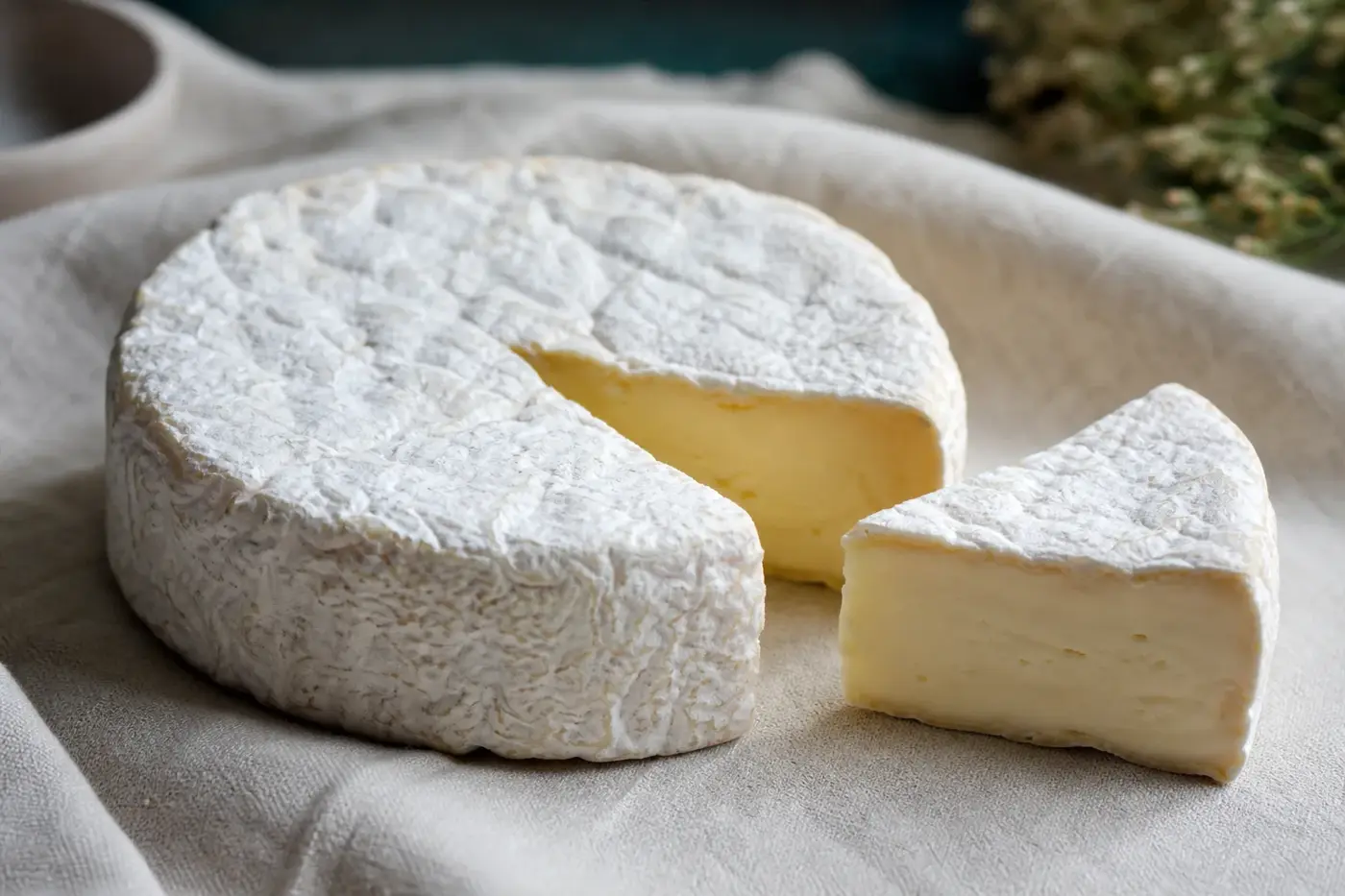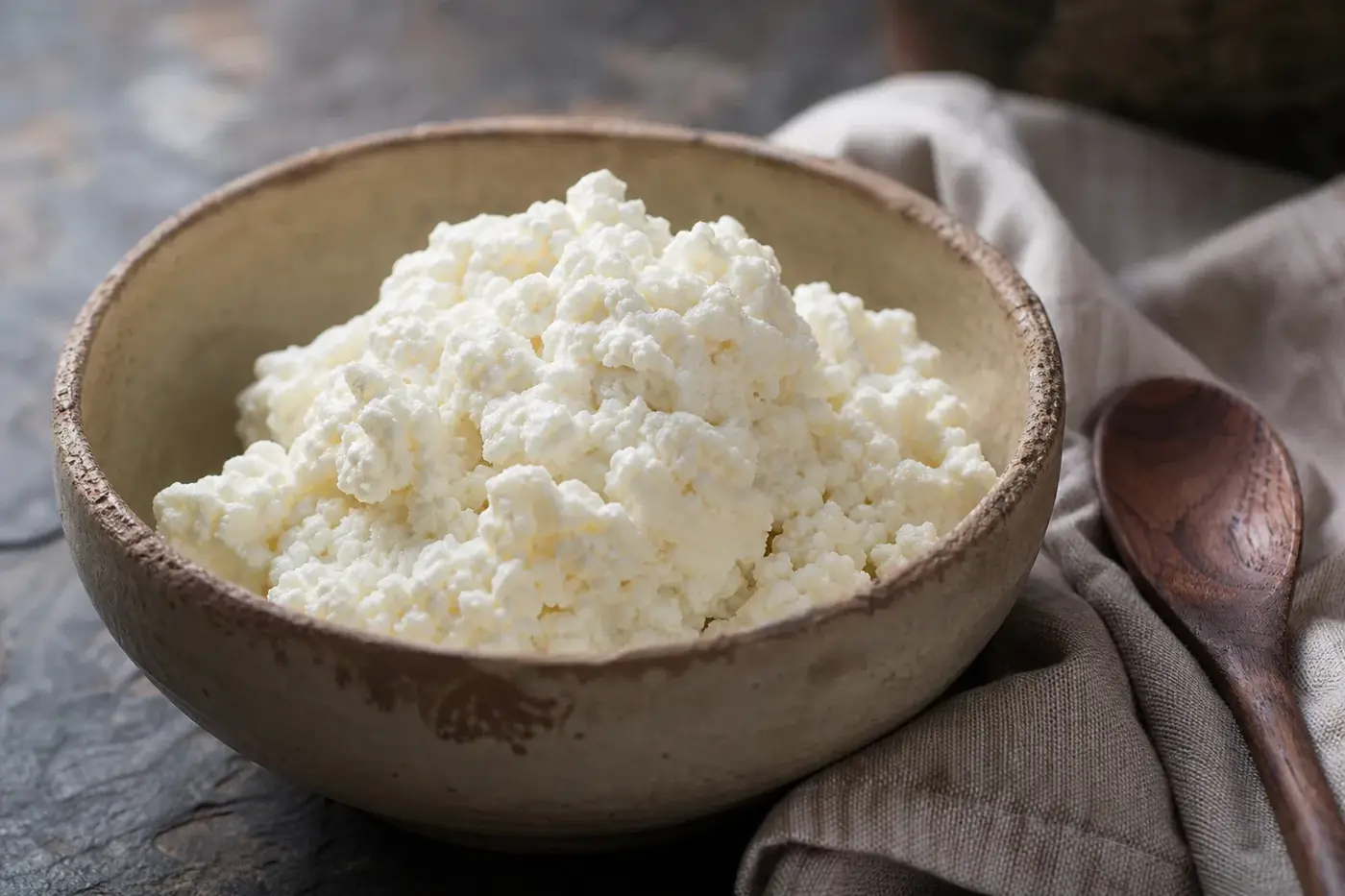
First comes the butter. Then heat and draining coax fresh, white curds from the fermented liquid left after churning: ayib. Beside kitfo, cooked greens and injera, this moist, crumbly cheese brings an Ethiopian household rhythm of soured milk and butter making straight to your plate. Butter gets the first entrance, but it needn’t take all the applause. [1,2,3]
Your first taste of Ethiopian cheese
| What would you like to know? | Start here |
|---|---|
| Where does it come from? | Ethiopia. [1] |
| Which cheese should you know? | Ayib. [1] |
| What traditionally goes into it? | Fermented milk or defatted sour milk. [3,5] |
| What is it like? | Fresh, white, moist and crumbly. [2,3] |
| Where does it belong? | In household dairy processing and as a fresh accompaniment. [1,3] |
Meet ayib, with its fresh curds and cultured tang
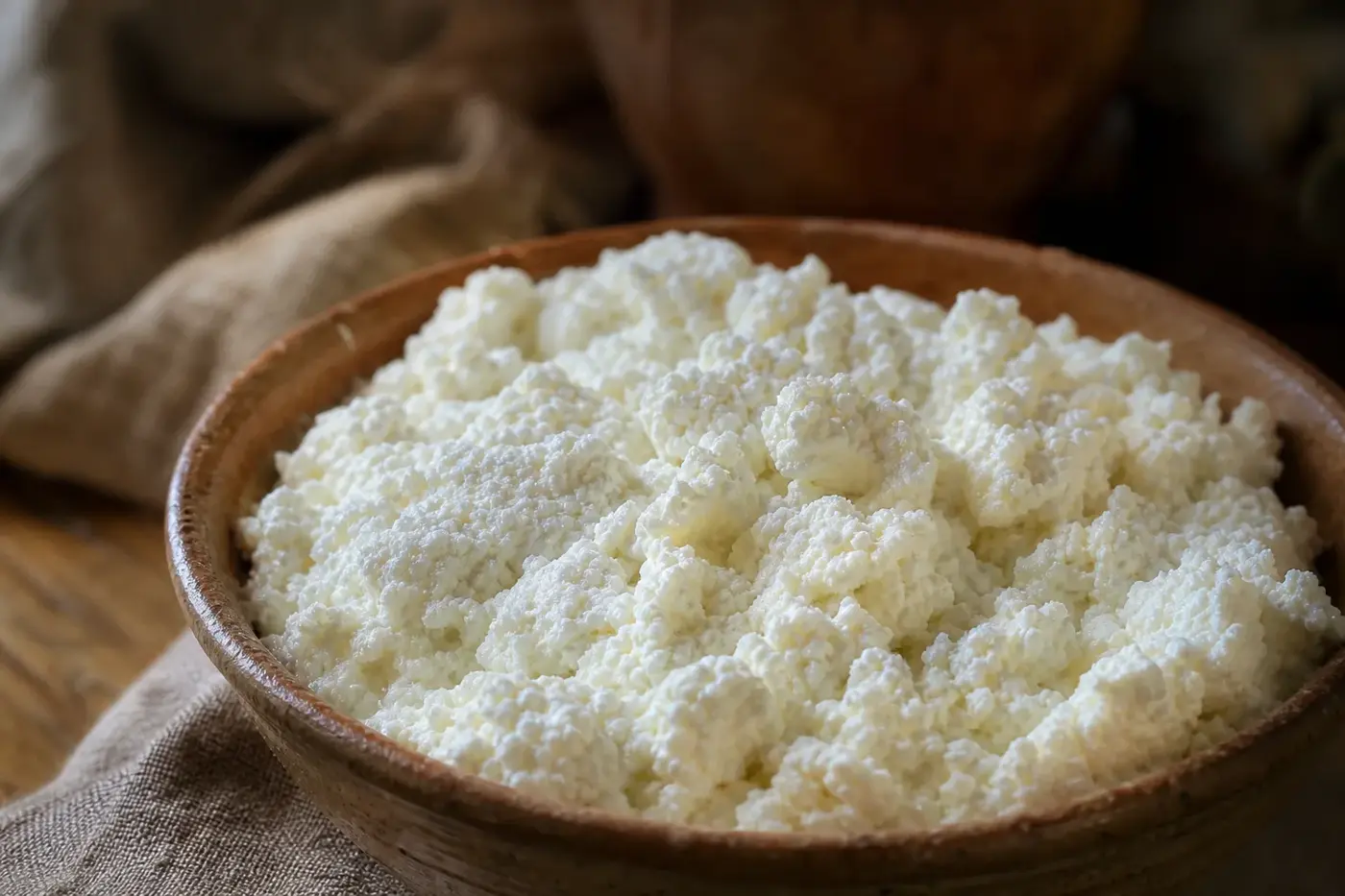
Taste plain ayib beside something strongly seasoned and you discover its gift: a mild counterpoint. Agricultural publications describe a fresh, white, crumbly curd cheese that retains considerable moisture. The ICARDA and ILRI account calls its taste acidic, so expect cultured milk tang rather than the developed flavour of a long-ripened cheese. [2,3]
Heating and draining shape how those curds feel. Wetter ayib makes a soft, spoonable mound; more thoroughly drained curds hold together more closely. Seasoning changes things again, so ask whether yours is plain or spiced. The name tells you the cheese; the maker’s preparation tells you what is coming. [2,4,5]
Follow the milk, from butter to fresh cheese
To understand ayib, start with the butter. In the traditional sequence documented by Ethiopian dairy researchers, milk ferments into ergo, a soured milk food. Churning separates out the butter, called kibe or qibe in different transcriptions. That leaves arera: defatted sour milk with proteins still available for cheese making. [1,5]
Gentle heating gathers those proteins into curds, separating them from whey, the watery liquid released during cheese making. Next comes draining. This is acid and heat coagulation: acidity and warmth form the curd, rather than added rennet, the milk-clotting enzyme used in many other cheeses. [5]
FAO also records ayib made directly from sour milk. But the butter-making route makes its household role especially clear: one milk supply yields both butter and a fresh, protein-rich curd. If you would like to understand that transformation, explore how cheese is made. [1,3]
Get acquainted with the dairy family
Arera and aguat arrive at different points in this story. Arera is the liquid from which ayib can be made; aguat is the whey left once the curds have been recovered. When you buy or discuss these foods, calling both simply “buttermilk” loses that useful distinction. [1]
Several Ethiopian dairy foods begin with the same starting material, then emerge at different processing stages. Follow the names below through the sequence and the family relationships become clearer. These spellings follow FAO’s dairy account; you will find variations between publications and languages. [1]
| Food | Its place in the story |
|---|---|
| Ergo | Fermented milk, eaten as a food and used for further processing. [1,5] |
| Arera or arrera | Defatted sour milk left after butter churning. [1,5] |
| Kibe or qibe | Butter recovered by churning. [1,5] |
| Nitir kibe or niter qibe | Clarified butter, often spiced. [1] |
| Ayib | Fresh curd separated from soured milk or arera. [1,5] |
| Aguat | Whey left after the curd has been recovered. [1] |
Listen to what each household brings
Cows’ milk has a firmly documented place in the highland cheese tradition. In four Eastern Gojjam districts, a field study interviewed 240 dairy-producing households in 2016. Every household reported making ayib from cows’ milk. Researchers linked the absence of small-ruminant milk in their cheese making to availability and cultural taboos, a finding specific to those communities. [4]
Alongside ayib, the study recorded Metata, Hazo and Zureshekefign. Metata goes through further processing, spicing and fermentation, taking it somewhere different from plain fresh ayib. Families differed in their seasonings and handling, too. Those regional names matter: a single supposed national recipe would flatten the distinctions. [4]
The ICARDA and ILRI report also records differences in draining and batch handling. Ask your maker about the milk source, whether butter was removed, how the curds were drained and which seasonings went in. Those answers tell you far more than an English comparison such as “cottage cheese”. [2]
Make room beside kitfo, greens and injera
A spoonful of plain ayib gives you a milder mouthful and a change of texture beside heavily seasoned food. FAO documents it with doro wot, a chicken sauce, and injera, the thin bread made from fermented cereal batter. It also records cheese combined with cooked greens, butter and chilli, served alongside kitfo. [3]
You can find that combination in documented restaurant practice in Britain, too. Yetenbi Kitfo’s menu describes its Special Kitfo with herbal butter, mitmita and cardamom, accompanied by chopped collard greens, gomen, and house-made ayib. Those are the restaurant’s own descriptions of its cooking. [7]
For your first encounter, try plain ayib beside cooked greens and injera, leaving the stronger seasonings to the accompanying dish. Taste a little curd alone, then with the food beside it. These documented combinations give you a starting point for discovering what the cheese brings to the plate. A second thoughtful mouthful is entirely in the spirit of the exercise. [3,7]
Before serving, ask about the fasting table
Ethiopia’s dairy traditions sit alongside a religious calendar that can leave dairy off the table. The Ethiopian Orthodox Tewahedo Church’s account of worship describes abstention from animal products during fasting, explicitly including milk and butter. Cheese therefore belongs outside those fasting meals. The Church also sets out exemptions and distinctions in who observes particular fasts. [6]
If you are a guest, ask whether the meal is being prepared for a fasting day. Offer ayib separately when hosts or diners want it, and check before adding butter or cheese to a shared vegetable dish. As the Church’s account explains, observance is personal and community-specific, with obligations differing between people. [6]
Looking for ayib in Britain? Have a conversation
Try Ethiopian food shops and restaurants, asking for ayib. If the name needs explaining, describe it as fresh Ethiopian curd cheese. The London menu cited above documents the name in use. Contact a business directly to ask what it currently makes or supplies. [7]
Keep four practical questions ready: which milk was used, was it pasteurised, is the cheese plain or spiced, and what refrigeration and opening instructions apply? Ask where it was made, too, because an Ethiopian name does not necessarily mean production in Ethiopia. Read ingredients and storage directions together; how to read a cheese label explains the wider checks.
For a first meal at home, the simplest approximation is a suitable fresh cheese served with Ethiopian dishes. Be clear about the substitution, for example “cottage cheese served in place of ayib”. Reproducing the household fermentation sequence is a different undertaking. It calls for a specialist-reviewed method with controls for acidity, temperature and hygiene.
Choose a fresh curd that earns its place
Start with plain cottage cheese that has distinct curds and little dressing. Have a look inside the tub: very wet cheese will spread through a dish, while drier curds will sit alongside it. Check the salt and any added cream, since both affect the balance with a seasoned meal.
A loose, grainy ricotta is another suggested option. Choose a plain one and taste it before seasoning. If it lacks the sourness described for ayib, let it be a milder accompaniment rather than automatically adding acid. You are matching the fresh curd’s role on the plate, not just chasing a flavour. [2,3]
Keep fresh curds cold and mind the clock
Fresh ayib is a perishable chilled food. For England, Wales and Northern Ireland, the Food Standards Agency advises keeping your home fridge at 5 °C (41 °F) or below, and refrigerating dairy products and foods carrying a use-by date. Cover the cheese, follow its storage instructions and return it to the fridge promptly after serving. [8]
Follow the maker’s after-opening limit or the use-by date, whichever means eating it sooner. Current UK government guidance distinguishes use-by dates, which concern safety, from best-before dates, which concern quality. Incorrect storage can make food unsafe even before its use-by date. [9]
Ethiopian agricultural accounts describe fresh ayib as keeping for only a few days under the conditions they record. Ask the maker which limit applies to your cheese, especially if it is unpackaged. Production conditions, handling and refrigeration determine the relevant instructions. For the wider household routine, see how to store cheese at home. [2,5,8]
This page summarises published guidance from the official sources it cites. It is not medical advice. Guidance differs between countries and changes over time, so check the current source for where you live, and ask your doctor, midwife, pharmacist or dietitian about your own circumstances.
Pregnant? Start with the milk questions
For pregnancy in the UK, NHS guidance lists cottage cheese and ricotta made from pasteurised milk among foods that can be eaten. It distinguishes cheese types and milk treatments, and says some soft cheeses should be cooked until steaming hot. Check the current NHS guidance for the particular cheese and its milk treatment. [10]
Ask whoever is preparing your food how the milk was treated; the curds’ appearance cannot tell you. If the treatment is unclear, ask your midwife or doctor how to apply the current advice. Raw milk, thermised and pasteurised cheese explains the distinctions between milk treatments. [10]
Carry on exploring, with safe handling in mind
- How to Tell Cheese Styles Apart: Milk, Rind, Texture and Method: discover how fresh curds compare with other cheese families.
- Cheese Food Safety: The Complete Guide: explore broader handling principles and official sources.
Questions people ask
What is ayib and how is it made?
Ayib is a fresh, white, moist and crumbly Ethiopian curd cheese. Traditionally, fermented milk is churned to remove butter, then the remaining sour milk is heated and drained to make curds. It can also be made directly from sour milk.
What does ayib taste like and how is it eaten?
Ayib has an acidic, cultured milk tang, although plain curds can be a mild counterpoint to strongly seasoned food. It is eaten alongside dishes such as kitfo, cooked greens and injera.
What can I use instead of ayib?
Plain cottage cheese with distinct curds and little dressing is a suggested substitute. Loose, grainy ricotta is another option, though it may be milder than ayib.
How should ayib be stored?
The Food Standards Agency advises keeping a home fridge at 5 °C or below and refrigerating dairy products. Follow the maker’s storage instructions and use the after opening limit or the use by date, whichever requires earlier consumption. See the Food Standards Agency for its guidance.
Can I eat ayib during pregnancy?
NHS guidance lists cottage cheese and ricotta made from pasteurised milk among foods that can be eaten during pregnancy. It distinguishes between cheese types and milk treatments, so check the current NHS guidance for the particular cheese. If the milk treatment is unclear, ask your midwife or doctor how to apply the advice.
Sources
- Food and Agriculture Organization of the United Nations, A Review of the Ethiopian Dairy Sector, September 2011. Definitions and the account of traditional milk utilisation and processing, particularly printed pages 29 to 31. Full report.
- International Center for Agricultural Research in the Dry Areas and International Livestock Research Institute, Goat milk intervention study: Improving the quality of traditional Ethiopian dairy products through simple practices, undated retrieved report. Section 7.3, “Ayib”, printed page 13. Research report.
- Food and Agriculture Organization of the United Nations, The technology of traditional milk products in developing countries, Animal Production and Health Paper 85, 1990. Section 7.2.1, “Ayib”. Ethiopian cheese section.
- Open Journal of Animal Sciences, Handling, Processing, Utilization and Marketing of Ayib (Ethiopian Traditional Cottage Cheese) Varieties Produced in Selected Areas of Eastern Gojjam, Northwestern Highlands of Ethiopia, volume 8, number 1, 2018; published online 29 December 2017. Original field study.
- East African Journal of Veterinary and Animal Sciences, Microbial Load and Occurrence of Bacterial Pathogens in Ayib (Ethiopian Cottage Cheese) Marketed in Hawassa City, Southern Ethiopia, volume 6, number 2, 2022, pages 17 to 27. Production account in the introduction. Original research paper.
- Ethiopian Orthodox Tewahedo Church website, Worship in the Ethiopian Orthodox Church, undated web edition. Section 6, “Fasting”. Church account.
- Yetenbi Kitfo, Menu, undated current web edition, checked November 2026. “Special Kitfo” under beef dishes. Commercial restaurant source, used only for its own documented serving practice. Restaurant menu.
- Food Standards Agency, How to chill, freeze and defrost food safely, published 18 December 2017, current web edition checked November 2026. Applies to England, Northern Ireland and Wales. Official refrigeration guidance.
- GOV.UK, Understanding food labelling: Best before and use-by dates, current web edition checked November 2026. Official date-marking guidance.
- NHS, Foods to avoid in pregnancy, current web edition checked November 2026. “Cheese, milk and other dairy”. Official pregnancy guidance.
Researched through Ethiopian dairy fieldwork, agricultural publications, a Church account, documented restaurant practice and current British official guidance, with serving and substitution suggestions identified as editorial synthesis.
Last checked: November 2026
Last checked November 2026.
The cheeses of Ethiopia
The editors suggest you read next
French Cheese: The Complete Guide
Picture Normandy’s pastures, then follow the milk towards the Loire’s goat dairies, the Jura’s shared cheesemaking traditions and the sheep country of the Pyrenees.