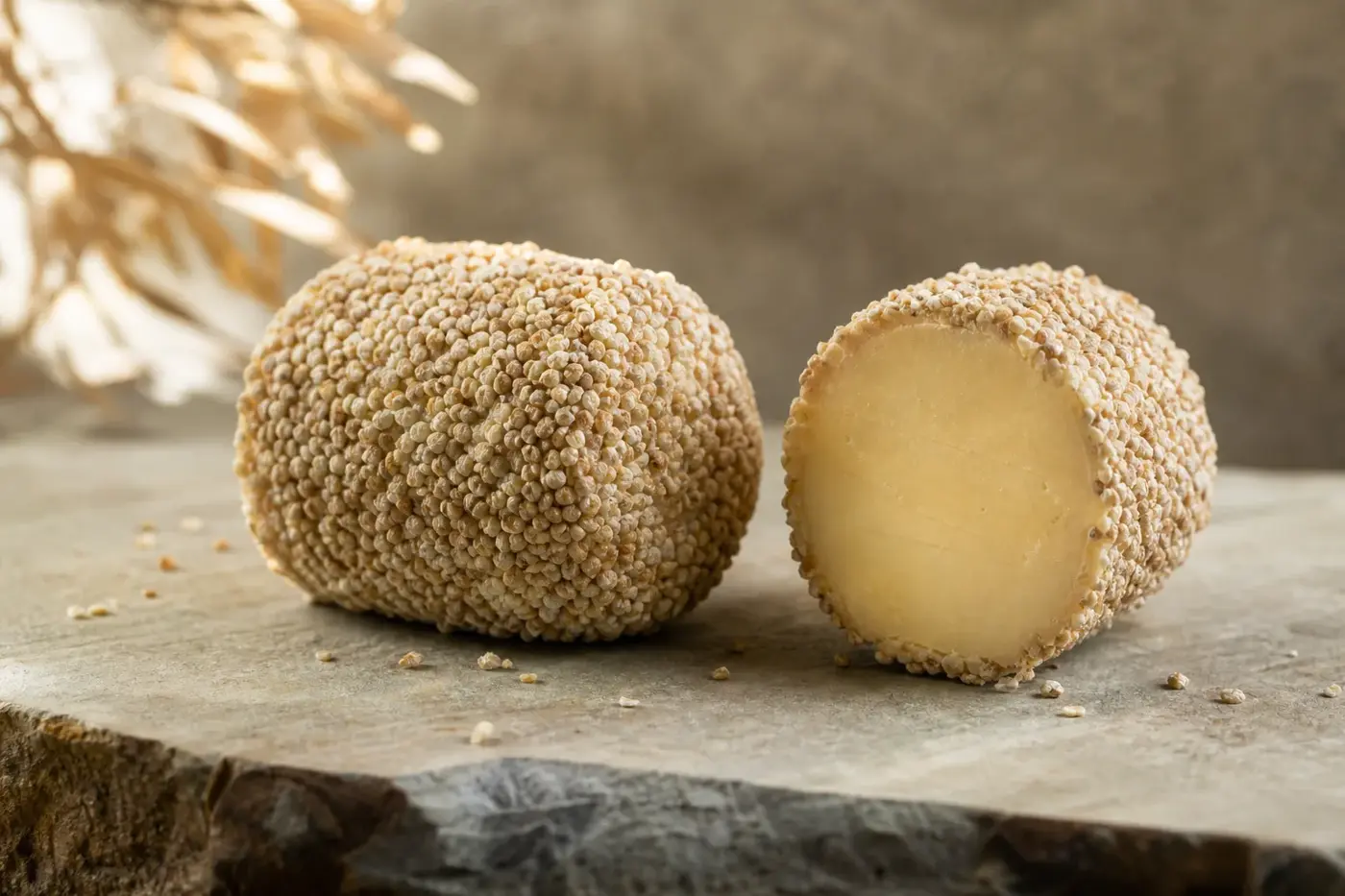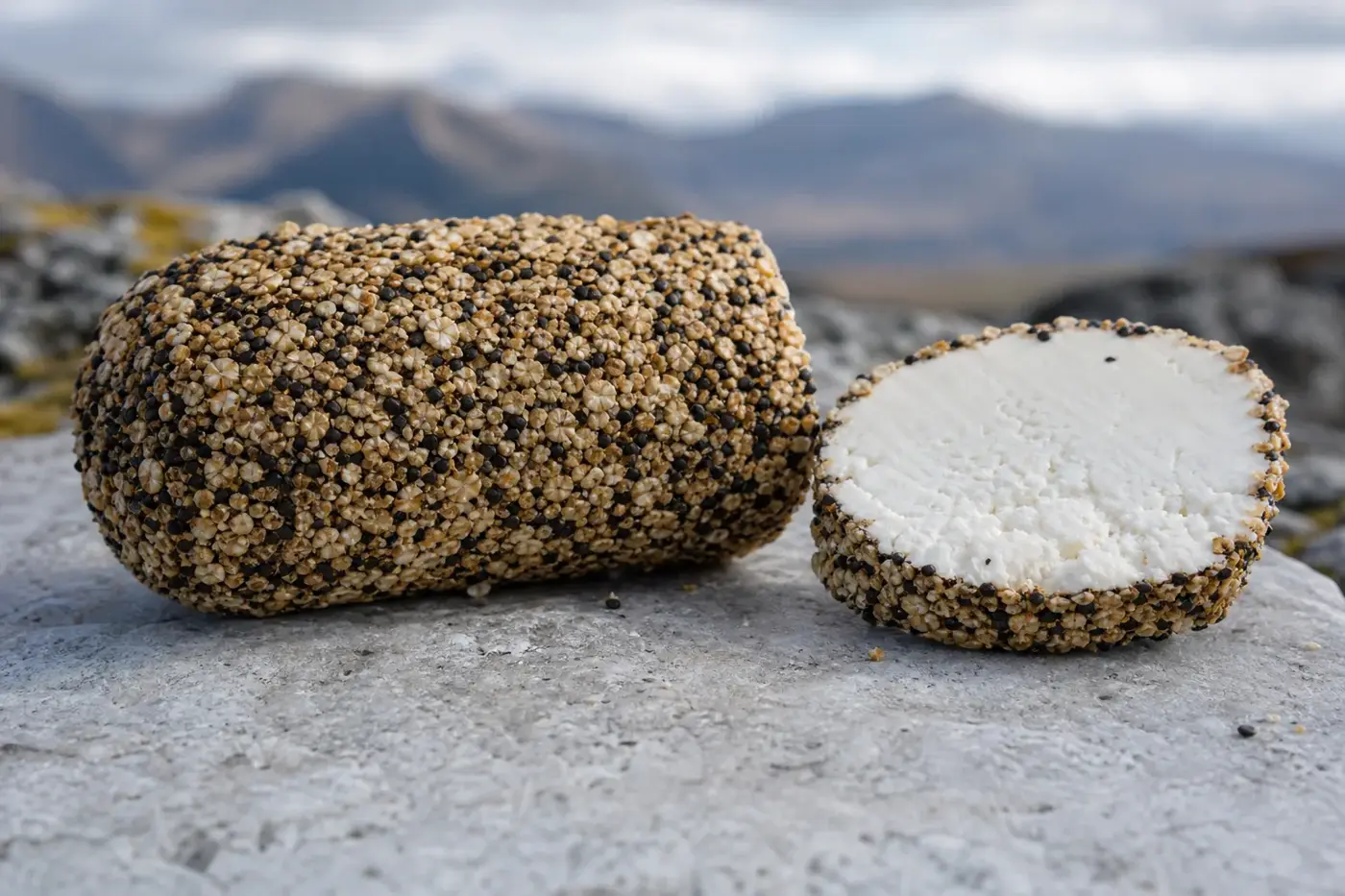
First, the coarse oatmeal. Then the bite of cracked black pepper, followed by fresh, tangy white curd beneath that dark-speckled coat. You have met Black Crowdie, also called Gruth Dhu, a small cheese made by Highland Fine Cheeses in Tain in the Scottish Highlands. It is not shy about introductions. [1, 2]
| What you might want to know | The details |
|---|---|
| Names to look for | Black Crowdie; Gruth Dhu. [1] |
| Who makes it, and where | Highland Fine Cheeses, Blarliath Farm, Tain, Scotland. [3] |
| The milk | Pasteurised cow’s milk. [4] |
| What to expect | Fresh, soft cheese coated in oatmeal and black pepper. [1, 2] |
| How the curd sets | Lactic acidification; the maker’s page gives conflicting information about rennet, leaving its use unclear. [1] |
| Shape and size | Hand-shaped logs; the product page describes a 110 g cheese. [1] |
| Time spent maturing | None, according to the maker. [1] |
| Allergen information | Cow’s milk; the maker warns of possible gluten traces in the pinhead oatmeal. [1] |
Meet the cheese with two names
Black Crowdie and Gruth Dhu are two names for the same coated cheese. You will find it in Highland Fine Cheeses’ Crowdie range, alongside plain Crowdie. To spot what makes this version different, look no further than its oatmeal and pepper coat. [1, 3]
There is a small spelling detail to savour, too. The Scottish Gaelic dictionary Am Faclair Beag records dubh as an adjective meaning black or dark, while Highland Fine Cheeses uses Dhu in its product name. That does not settle the meaning of the complete name, but it is worth keeping the distinction in mind. [1, 5]
That speckled outside gives you your first serving clue. The maker’s brochure picks out cracked pepper and oatmeal as the defining coating, then suggests oatcakes, toast with eggs or steak. Your little cheese has rather a full diary, from a simple snack to breakfast or a savoury finishing touch. [2]
Step inside Tain’s old dairy buildings
At Blarliath Farm in Tain, the original dairy buildings are still home to cheesemaking. Highland Fine Cheeses describes the site, in the Ross and Cromarty area of the Scottish Highlands, as a former smallholding now within an industrial estate. The surroundings have changed; inside, the dairy buildings still have work to do. [3]
Picture a working dairy rather than an isolated farmhouse. Its Highland connection runs through the place, its milk supply and the Scottish cheeses it continues to produce. Look beyond plain Crowdie and Black Crowdie in the published range and you will find soft, blue and washed-rind cheeses, too. [3]
Before you plan a cheese pilgrimage, look up the maker’s current stockists. Its FAQ says the dairy houses the factory and office, not a physical shop. That is a useful detail to have before you set off. [4]
Follow Crowdie into the Highland kitchen
Butter comes first in the maker’s account of Highland household Crowdie. Once the cream has been removed for butter-making, the milk left behind sours and forms a fragile curd. That curd is broken up and drained through cloth, a household tradition in which Highland Fine Cheeses places its Crowdie. [3]
The company’s own beginnings feature an unexpectedly substantial batch of Crowdie. In the family account, it was made after a complaint that the cheese had become difficult to find. The story gives you a sense of Crowdie’s place in the dairy’s identity, though it remains a family account rather than an independently established chronology of Scottish cheesemaking. [3]
For the Black Crowdie on your plate, keep two strands of the story separate. One is the drained-curd tradition; the other is today’s pepper-coated cheese, with fresh curd inside and oatmeal and pepper outside. The tradition gives you context, while the maker’s documented ingredients and method explain its present form. [1, 3]
It is an approachable starting point for exploring cheese styles. Begin with how the curd forms and drains, then consider what the coating contributes. With that method in mind, you can make more sense of the name and the finished shape.
Get acquainted with the milk
Today’s Black Crowdie is made with pasteurised cow’s milk. Highland Fine Cheeses says in its FAQ that it uses this milk for its cheeses. Whatever methods Highland households may once have followed, this is the answer for the modern cheese you are buying. [4]
The company describes collecting milk from local farms around Tain. On its about page, it names Rootfield Farm on the Black Isle as its principal milk source. Those details describe the dairy’s supply, rather than telling you which farm provided the milk in your particular pack. [1, 3]
When you compare cheeses, ask two separate questions: which animal, and which treatment? Cow’s milk answers the first, while pasteurisation describes a processing step. Keep that distinction handy when reading labels, and turn to milk treatments explained for a guide to the broader terminology.
Watch the curd take its peppered coat
There is no maturation stage to wait through here. Black Crowdie gets its character from setting, draining and shaping the curd, then adding its oatmeal and pepper coating. Deliberate ripening has no part in the process. [1, 2]
The maker describes Crowdie as a lactic curd, which means acidification sets the milk. Its product page gives conflicting information about rennet. You cannot draw a clear conclusion about rennet use from that page. [1]
Once the fragile curd has set, it is cut and broken up. Into mousseline cloth it goes, to drain further before being shaped into logs. Those logs are rolled in cracked black pepper and pinhead oatmeal, with no maturation afterwards, according to the maker. [1]
Fresh soft cheese is the style description to keep in mind. Each step has a job: setting creates the curd, draining shapes the texture, and coating gives it that distinctive outside. The finished cheese brings drained curd and applied coating together. [1, 2]
If you are exploring how cheese is made, think about Crowdie alongside a rennet-set example. Compare how the milk sets, how the curd is handled and what happens to its surface. You will get a clearer picture that way than by considering the finished shapes alone.
Taste the quiet centre, then the pepper
Dense, dry curd meets a coarse, aromatic coating with a spicy kick. That is how the maker’s brochure presents the cheese; its product notes add sourness and crumbliness. These are Highland Fine Cheeses’ tasting descriptions, with no separate established description of the curd’s own aroma. [1, 2]
You can see the contrast in the maker’s published photographs. The pale interior stands out against the pepper-flecked oatmeal coat. With its emphasis on texture and pepper heat, the brochure makes a useful point: the outside contributes to the eating, not just the appearance. [2]
Try a small piece from the centre first. Next, take a bite that includes the coating, letting you consider the curd’s acidity before oatmeal and pepper join in. Your preferred balance of centre and coating may not be the same as your neighbour’s.
Keep the next bite simple, too. A plain accompaniment leaves room for the cheese to introduce itself. Save chutney, strongly flavoured crackers and extra pepper until afterwards, when you can decide what they add without letting them dominate your first mouthful.
Make room for oatcakes, eggs or steak
Oatcakes are the maker’s most direct serving suggestion. Its brochure also proposes toast with eggs and a topping for steak. That gives you three straightforward ways to bring Black Crowdie to the table, with no need to devise an elaborate recipe. [2]
For your first plate, set an oatcake or some plain bread beside a small piece of cheese. Keep extra condiments to one side so that first mouthful stays clear and simple. Afterwards, add sweetness, acidity or more crunch if you fancy it.
For something more substantial, begin with the maker’s toast-and-eggs suggestion. Put a little cheese beside the toast and add it a mouthful at a time, rather than mixing it through everything. With steak, serve it separately so each diner can choose how much cheese to include in each bite. [2]
Either approach lets you follow the contrast between curd and coating. You can move from a small snack to a fuller plate without much fuss. The cheese has already dressed for dinner; your preparation can stay simple.
Pour something that gives the cheese room
Still or sparkling water is a simple alcohol-free starting point for your first few bites. For a more deliberate comparison, try an alcohol-free beer alongside the same plain accompaniment. These are suggested starting points, not pairings tested by fromage.co.uk.
For a broader guide, visit cheese and wine pairing. Keep the oatmeal and pepper in mind when choosing your drink. With Black Crowdie, the fresh curd tells only part of the flavour story.
Keep it chilled and serve a little at a time
Keep your cheese refrigerated and follow the instructions on its pack. The Food Standards Scotland guidance here, dated November 2026, recommends a domestic fridge temperature between 0 °C and 5 °C. Check it with a thermometer, and return chilled food to the fridge promptly. [7]
Use the date and storage instructions on the pack you actually have as your practical reference. In England, Northern Ireland and Wales, GOV.UK advises following storage instructions on chilled dairy products. Keep any opening instructions with the remaining cheese, rather than throwing away the packaging when you first serve it. [8]
Put out the portion you expect to eat, leaving the rest refrigerated. Food Standards Scotland says party food should not be left out for more than four hours, and advises returning food to the fridge as quickly as possible. Treat four hours as a maximum display limit, not a warming period to aim for. [7]
For the maker’s current serving temperature and use-after-opening instructions, follow the pack rather than a general rule here. Keep those details available for your next serving as well. For the wider routine, from refrigeration to handling cheese between servings, see storing cheese at home.
General information only, not medical advice: follow the official guidance where you live.
Questions people ask
What is Black Crowdie?
Black Crowdie, also called Gruth Dhu, is a fresh, soft cheese made with pasteurised cow’s milk. It has a white curd coated in oatmeal and cracked black pepper.
How is Black Crowdie made?
The milk is set by lactic acidification, and the curd is broken up and drained in mousseline cloth. It is shaped into logs and rolled in cracked black pepper and pinhead oatmeal, with no maturation afterwards.
Is Black Crowdie made with rennet?
Rennet use is unverified because the maker’s product page gives conflicting information. The maker describes Crowdie as a lactic curd, set by acidification.
What can I serve with Black Crowdie?
The maker suggests serving it with oatcakes or toast with eggs. Its brochure also suggests using it as a topping for steak.
How should I store Black Crowdie?
Food Standards Scotland advises keeping a domestic fridge between 0 °C and 5 °C and returning chilled food to the fridge promptly. Check the pack instructions and refer to Food Standards Scotland for its storage guidance.
Sources
- Highland Fine Cheeses, Black Crowdie, undated product page and production account, accessed November 2026. Product information.
- Highland Fine Cheeses, Highland Fine Cheeses brochure, undated edition hosted by Fine Cheesemakers of Scotland, accessed November 2026. Product description, serving suggestions and documentary product photographs. Brochure.
- Highland Fine Cheeses, About us, undated company account, accessed November 2026. Company history and location.
- Highland Fine Cheeses, FAQ’s, undated, accessed November 2026. Milk treatment and dairy-site information.
- Am Faclair Beag, dubh, online Scottish Gaelic dictionary entry, current online edition accessed November 2026. Dictionary results.
- Companies House, Highland Fine Cheeses Limited, SC044504: company overview, current register record accessed November 2026. Company record.
- Food Standards Scotland, Chilling food, current online guidance accessed November 2026. Scottish refrigeration and display guidance.
- GOV.UK, How to chill, freeze and defrost food safely, published 18 December 2017, accessed November 2026; applies to England, Northern Ireland and Wales. Chilled-food guidance.
Researched from the maker’s published accounts, company records, a Scottish Gaelic dictionary and official consumer food-safety guidance; serving suggestions identified as editorial were not independently tested.
Last checked: November 2026
Last checked November 2026.
The editors suggest you read next
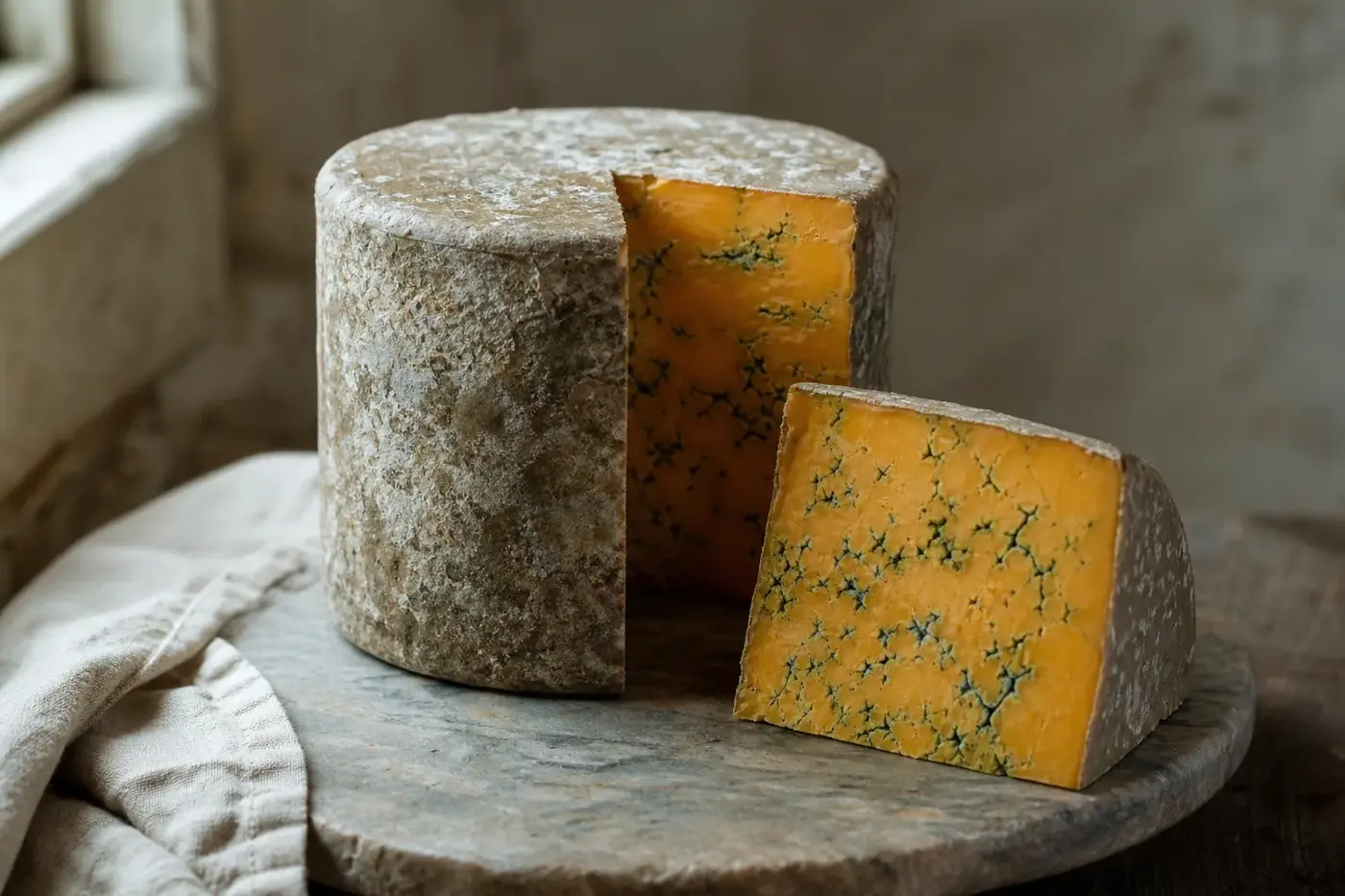
Shropshire Blue
Cut into Shropshire Blue and you get quite a colour scheme: orange crossed by blue-green veins.