Isle of Mull Cheddar
At the winter feeding trough at Sgriob-ruadh Farm, Tobermory Distillery has a part to play.
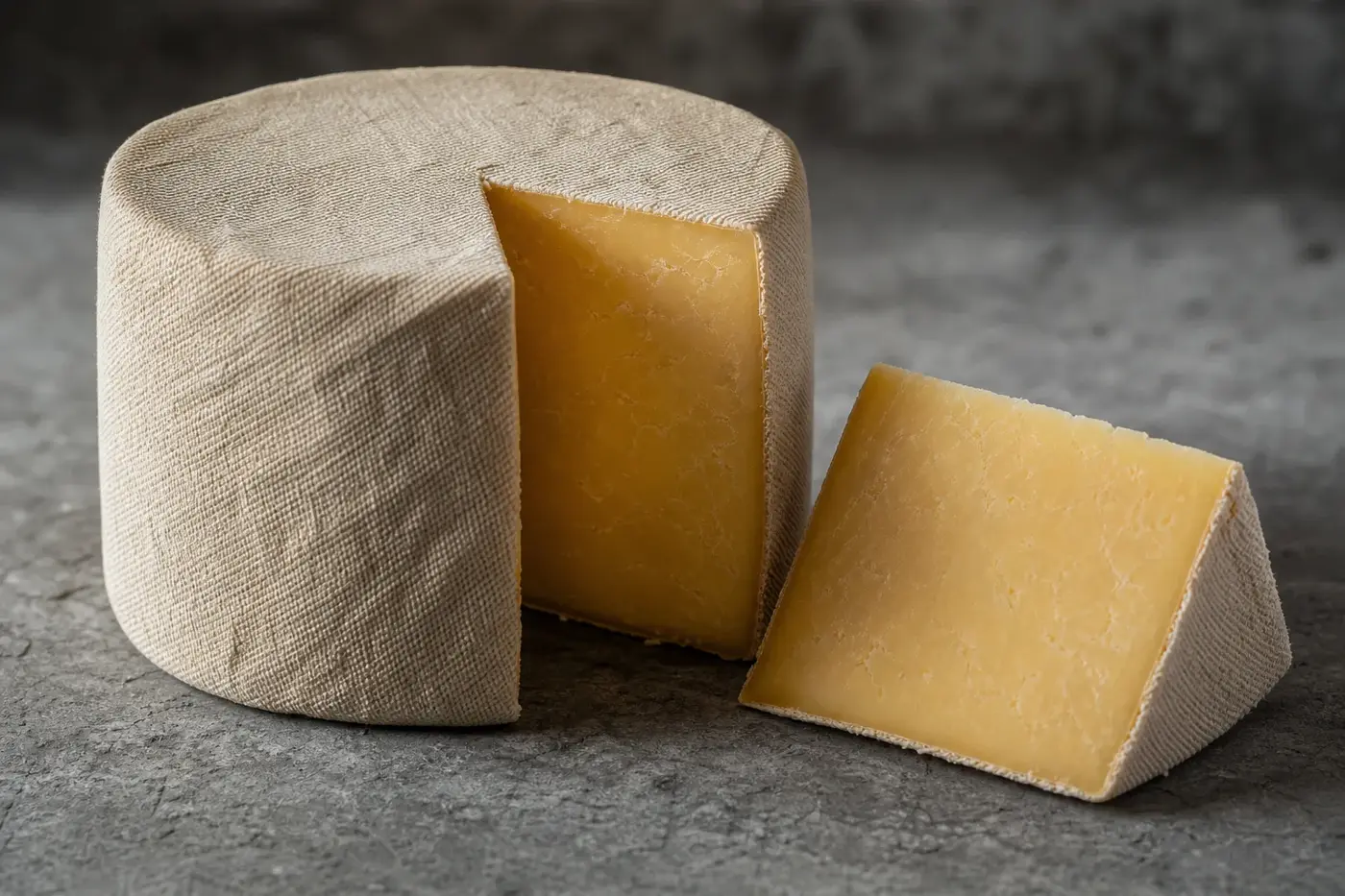
At the winter feeding trough at Sgriob-ruadh Farm, Tobermory Distillery has a part to play. The Reade family's cows eat its spent barley; near Tobermory, their raw milk becomes Isle of Mull Cheddar. Clothbound and matured for 10 to 16 months, the cheese is described by its maker as dry and assertively savoury. If you're picturing someone pouring whisky into the vat, put the bottle down: the distillery connection starts with the cows' dinner.[2][4]
Get acquainted with Mull Cheddar
| What to know | The details |
|---|---|
| The family and the farm | Reade family, Sgriob-ruadh Farm, near Tobermory, Isle of Mull, Scotland.[1][2] |
| Milk | Unpasteurised cow's milk from the farm's own herd.[3][4] |
| Rennet | Animal rennet.[4] |
| Shape and size | Cylindrical, muslin-bound wheels; the producer lists whole cheeses at 23 to 26 kg.[3][4] |
| Time to mature | Producer: 10 to 16 months.[4] |
| Cloth binding | Neal's Yard Dairy lists clothbound with lard for its selection.[5] |
| Protection status by jurisdiction | Great Britain: Unconfirmed. EU: Unconfirmed. |
Before the cheese, a milk round
The story begins with a local milk round. The Reade family's published history dates its move from Somerset to 1980, with the farming business travelling north over two years. At Sgriob-ruadh, just inland from Tobermory on Mull's northern coast, cheesemaking gave surplus milk a useful destination.[1][2]
The first cheeses took shape in a converted cow byre and matured in a local whisky bond store. Later came purpose-built cellars at the farm. By 2000, demand for cheese had overtaken demand for drinking milk, so the family stopped selling milk and built a cheesemaking dairy.[1]
The producer's current product page dates the family's traditional cheese to 1980. When you cut a piece, you're tasting an island history shaped by practical decisions about milk. This isn't a recently dreamed-up whisky flavouring.[1][4]
Island grass, hardy cows and Tobermory draff
Friesians predominate in the farm's closed herd, which breeds its own cattle. You'll also find Norwegian Red, Swiss Brown, Dairy Shorthorn, Meuse Rhine Issel and Jersey. The producer selects for milk protein and the hardiness that island life demands.[2]
When spring grass and ground conditions allow, the cows go outside. In winter, their diet centres on silage made during summer. Other feed supplements it, including draff: spent barley grains from nearby Tobermory Distillery.[2]
The draff feeds the cows; whisky does not appear on the cheese's ingredient list. Neal's Yard Dairy lists raw cow's milk, salt, cultures and animal rennet, with lard in the cloth binding. When the maker says “boozy”, you're reading a tasting description, not an added spirit.[4][5]
Come into the dairy
The milk arrives unpasteurised from the farm's own herd. The producer describes warming it, adding starter culture and separating curd from whey. If you're new to those terms, curd is the solid material formed during cheesemaking; whey is the liquid separated from it.[3]
Next comes pressing in cylindrical moulds, followed by wrapping the wheels in muslin. For a broader picture of the Cheddar method, you can turn to the official West Country specification as a comparison.[3][7]
In that process, rennet, an enzyme preparation, coagulates the milk. The curd is cut, heated and drained, then cheddared: slabs are turned and stacked to encourage further drainage. Milling, salting, moulding and pressing follow.[7]
That sequence belongs to the comparison cheese's documented process. You can explore the family and its variations in Cheddar, or visit milk treatments explained for the difference between raw and pasteurised milk.
Where the hillside does its work
Wrapped in muslin, the wheels mature in rooms built into a hillside at the farm. The maker calls this care and maturation affinage. Its product page gives a usual maturation of 10 to 16 months; Neal's Yard Dairy lists 10 to 18 months for its own selection.[3][4][5]
The cloth is more than an attractive outfit. It helps distinguish these wheels from rindless blocks: the West Country specification explains that bandaging supports rind formation while letting moisture escape. Its membrane-wrapped blocks, by comparison, retain moisture during ripening.[7]
That comparison helps explain the wrapping; the Mull producer's description remains your guide to this cheese. When you buy a wedge, ask the seller to show you any remaining cloth and explain how the rind has been prepared. Remove the cloth before serving.
A savoury bite with its own character
Dry, strongly savoury and tangy, with a tingling finish: that's how the maker describes it. Neal's Yard Dairy describes a firm, compact, fondant-like texture. Its tasting notes range from zesty to deeply savoury, sometimes with complex sweetness or a broth-like character.[3][4][5]
Don't expect every batch to taste precisely alike. The producer welcomes variation and attributes some of it to the milk's natural flora. Ask your cheesemonger about the wheel's age, whether the paste is dry or more yielding, and whether tanginess or deeper savouriness leads the flavour.[3]
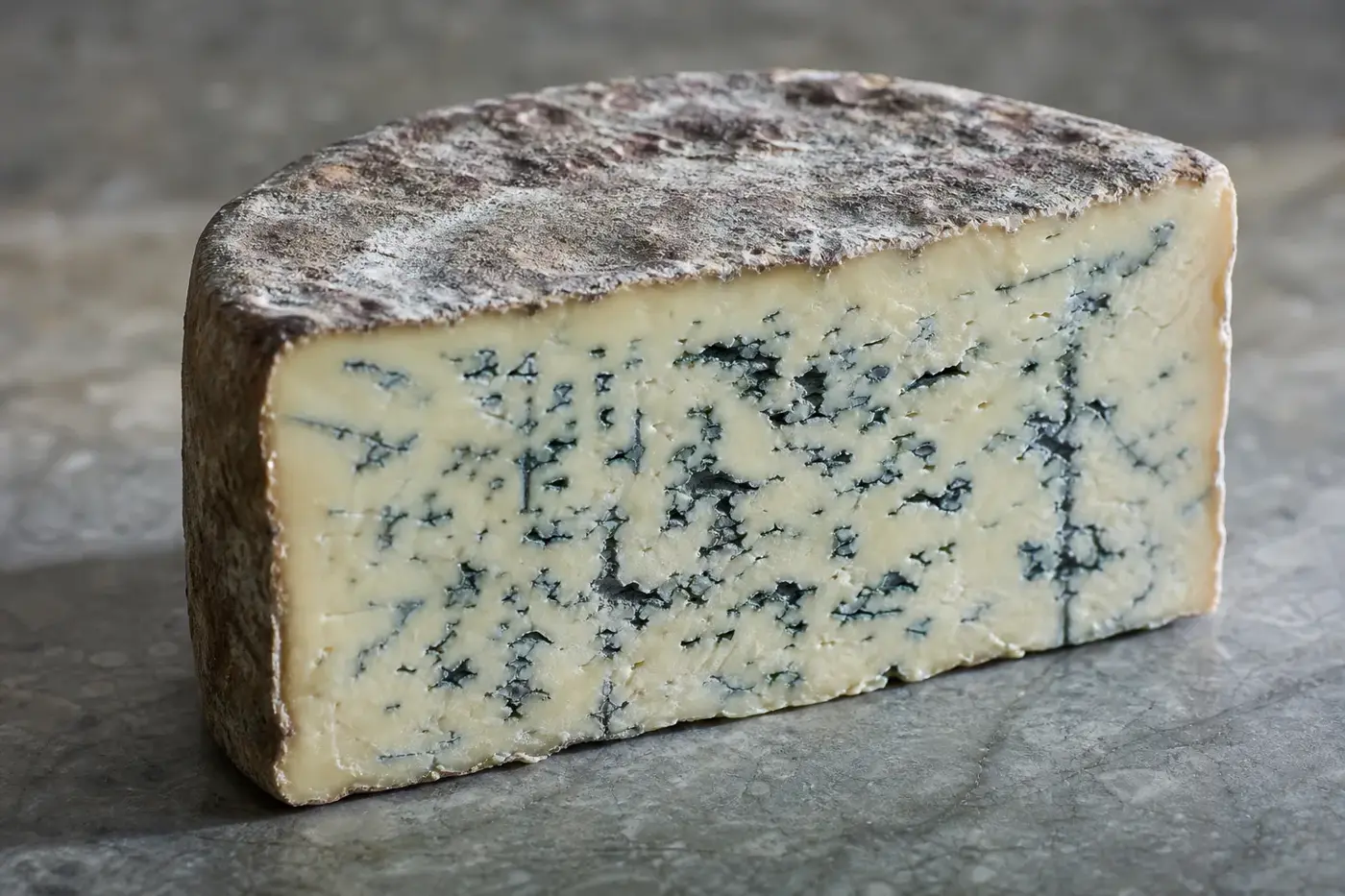
If a cut piece has blue markings, ask the supplier whether they were there when the wheel was cut. Mould that develops during storage at home is a separate matter. Follow mould on cheese and the product's storage instructions.
Mull's story, and a West Country distinction
Mull's island setting and the Reade family's farming give this cheese its particular identity. West Country Farmhouse Cheddar Cheese, by contrast, has registered Protected Designation of Origin status in Great Britain as of November 2026. Its specification restricts production to farms in Dorset, Somerset, Devon and Cornwall, with at least nine months of maturation.[6][7]
That specification permits pasteurised or unpasteurised cow's milk, and both cylindrical and block formats. Raw milk and a round shape therefore tell you only part of a Cheddar's story. Look at origin, milk treatment, wrapping, maturation and the individual cheese's character rather than treating every Cheddar as interchangeable.[7]
Want to untangle a registered name from a cheese style? Protected names explained takes you through the difference.
Let your wedge take the lead
An oatcake and chutney are the farm's own serving suggestion. Taste the cheese alone first, then add a little chutney to find the sweetness and acidity you enjoy alongside its savoury flavour. There is no need to make the whole cupboard audition.[3]
Other suggestions to try include crisp apple, plain bread or boiled potatoes, with water, black tea or an alcohol-free apple drink. Take them one at a time. A milder chutney lets you notice the cheese's tang rather than the condiment's spice.
Serve only what you plan to eat, keeping the rest refrigerated and following the label. Any serving time limit out of refrigeration needs to follow current FSA advice on chilled food.
Choose your piece and give it a good home
Start with the producer's name and ask which cheese you're being offered. The traditional farmhouse cheese is distinct from the smoked cheese. Check the milk treatment and animal rennet declaration against your requirements, and ask about lard in the binding if that matters to you.[4][5][12]
Ordering a cut piece for delivery? Ask when it will be cut and how it will travel chilled. Choose a portion that fits your plans: the age of the whole wheel won't tell you how much to buy.
Get storage instructions for your cut portion, including what to do after opening. In England, Wales and Northern Ireland, the FSA recommends a domestic fridge temperature between 0 and 5 °C and following packaging instructions. Food Standards Scotland advises keeping chilled ready-to-eat food at 5 °C or below.[9][11]
For wrapping and fridge organisation, turn to how to store cheese at home. Keep the seller's label with your cheese. That way, you'll have its storage instructions and batch details to hand.
When raw milk matters to your choice
If you need to avoid unpasteurised milk products, choose a different cheese with a label explicitly confirming pasteurised milk. The Isle of Mull producer confirms that this cheese uses raw milk.[4] For medical circumstances, follow your country's official advice and your own clinician's guidance.
UK pregnancy guidance from the NHS says you can eat hard cheeses such as Cheddar whether the milk is pasteurised or unpasteurised.[8]
In the United States, the FDA's listeria guidance lists any cheese made with unpasteurised milk among higher-risk foods for people at higher risk. Those groups include pregnant people, older adults and people with weakened immune systems. Its lower-risk alternatives include pasteurised cheeses other than queso fresco-type cheeses.[10]
November 2026 is the reference point for these national sources. Consult the relevant source directly, especially if your individual medical advice calls for avoiding raw milk products. If you're choosing cheese for somebody else, ask about their requirements first.
General information only, not medical advice: follow the official guidance where you live.
Questions people ask
What does Isle of Mull Cheddar taste like?
The maker describes it as dry, strongly savoury and tangy, with a tingling finish. Neal's Yard Dairy describes flavours ranging from zesty to deeply savoury, sometimes with complex sweetness or a broth-like character.
How long is Isle of Mull Cheddar matured?
The producer gives a usual maturation period of 10 to 16 months. Neal's Yard Dairy lists 10 to 18 months for its own selection.
Does Isle of Mull Cheddar contain animal rennet?
Yes, it contains animal rennet. Neal's Yard Dairy also lists lard in the cloth binding for its selection.
Can you eat Isle of Mull Cheddar during pregnancy?
The producer says the cheese is made with unpasteurised milk. NHS pregnancy guidance says hard cheeses such as Cheddar can be eaten whether made from pasteurised or unpasteurised milk. In the United States, the FDA lists any cheese made with unpasteurised milk as higher risk for pregnant people and other groups; consult the relevant NHS or FDA guidance directly.
How should I store Isle of Mull Cheddar?
The FSA recommends keeping a domestic fridge between 0 and 5 °C in England, Wales and Northern Ireland and following packaging instructions. Food Standards Scotland advises keeping chilled ready to eat food at 5 °C or below. Ask the seller for storage instructions for your cut portion, including after opening.
Sources
- Isle of Mull Cheese, Our Story, undated producer account, retrieved November 2026. Family history, local milk round, early production and the 2000 dairy development.
- Isle of Mull Cheese, The Farm, undated producer account, retrieved November 2026. Location, herd breeding, grazing, silage and Tobermory Distillery draff.
- Isle of Mull Cheese, Cheese Making, undated producer account, retrieved November 2026. Own-herd raw milk, outline process, hillside maturation rooms, batch variation and serving suggestions.
- Mull Cheese and Spirit, Isle of Mull Traditional Farmhouse Cheese, undated producer product information, retrieved November 2026. Animal rennet, maturation, format and the producer's tasting description.
- Neal's Yard Dairy, Isle of Mull, undated selector and retailer account, retrieved November 2026. Its selected cheeses, ingredient declaration, lard binding, maturation and tasting descriptions. This is a commercial source describing cheese it selects and sells.
- Department for Environment, Food & Rural Affairs, [West Country Farmhouse Cheddar Cheese](../west-country-farmhouse-cheddar-cheese/), GB protected food name register entry, published 2021, retrieved November 2026. Registered PDO status and exact registered name.
- Department for Environment, Food & Rural Affairs, West Country Farmhouse Cheddar: Product Specification, version linked from the GB register, retrieved November 2026. Sections 4.2, 4.3 and 4.5 cover milk treatment, formats, area, maturation and manufacture.
- NHS, Foods to avoid in pregnancy, current web guidance retrieved November 2026. Cheese, milk and other dairy section.
- Food Standards Agency, How to chill, freeze and defrost food safely, published 2017, current web guidance retrieved November 2026. Applies to England, Northern Ireland and Wales.
- US Food and Drug Administration, What You Need to Know About Preventing Listeria Infections, current web guidance retrieved November 2026. At-risk groups and higher-risk and lower-risk food table.
- Food Standards Scotland, Listeria monocytogenes Information, May 2019, retrieved November 2026. Page 2 prevention tips include refrigeration at 5 °C or below.
- Mull Cheese and Spirit, producer product catalogue, current catalogue retrieved November 2026. Separately lists the traditional farmhouse and smoked cheeses.
- Food Standards Agency, Isle of Mull Cheese recalls Hebridean Blue Cheese because of contamination with E.coli, notice FSA-PRIN-14-2025, 2025, retrieved November 2026. Consulted for the recall check only.
- Food Standards Agency, Alerts, live alerts index retrieved November 2026. Consulted for the recall check only.
Researched through the producer's published accounts, a selector's product information, the GB register and specification, and official national food safety guidance; serving suggestions are identified as editorial suggestions.
Last checked: November 2026
Last checked November 2026.
The editors suggest you read next
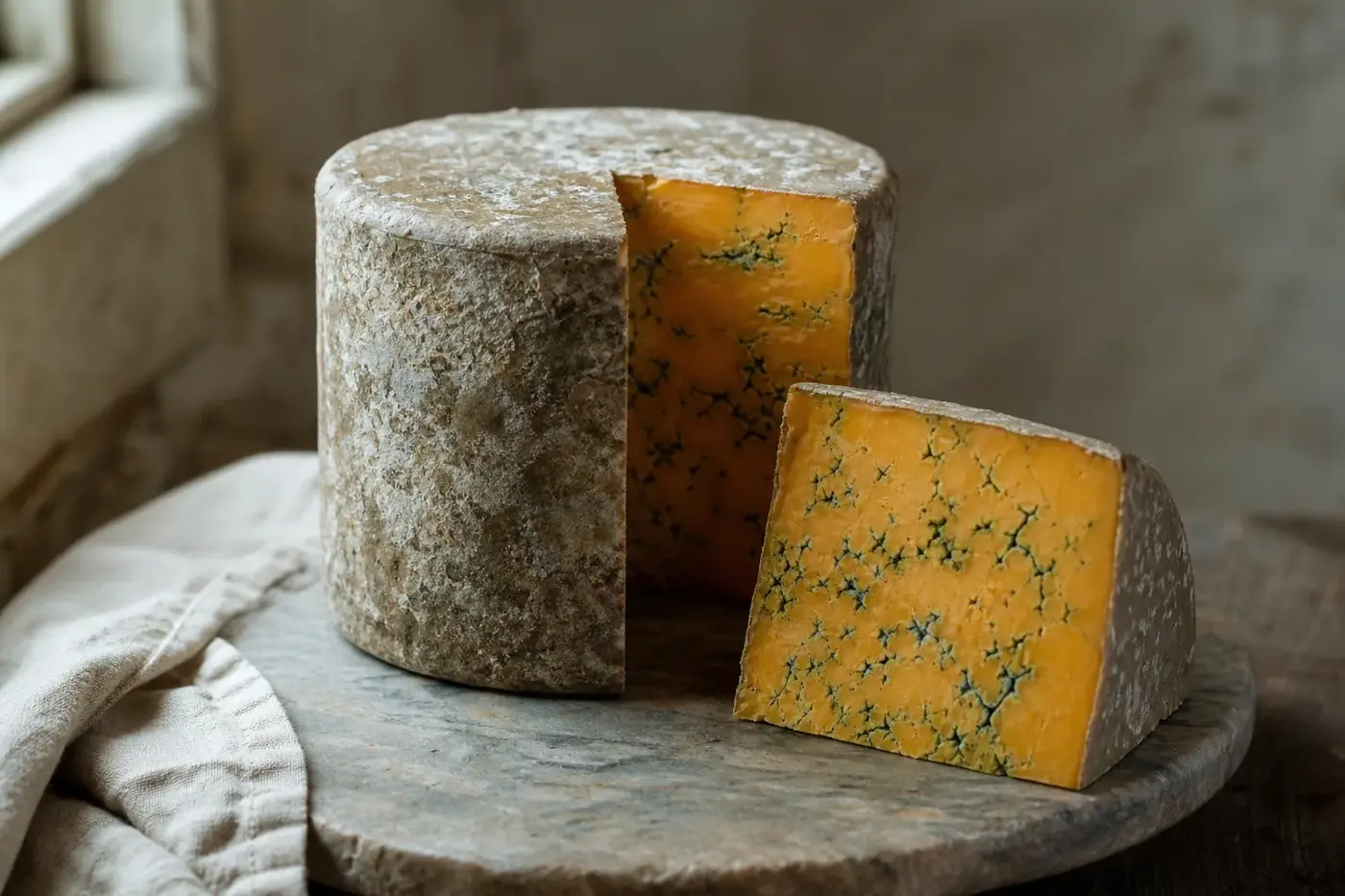
Shropshire Blue
Cut into Shropshire Blue and you get quite a colour scheme: orange crossed by blue-green veins.