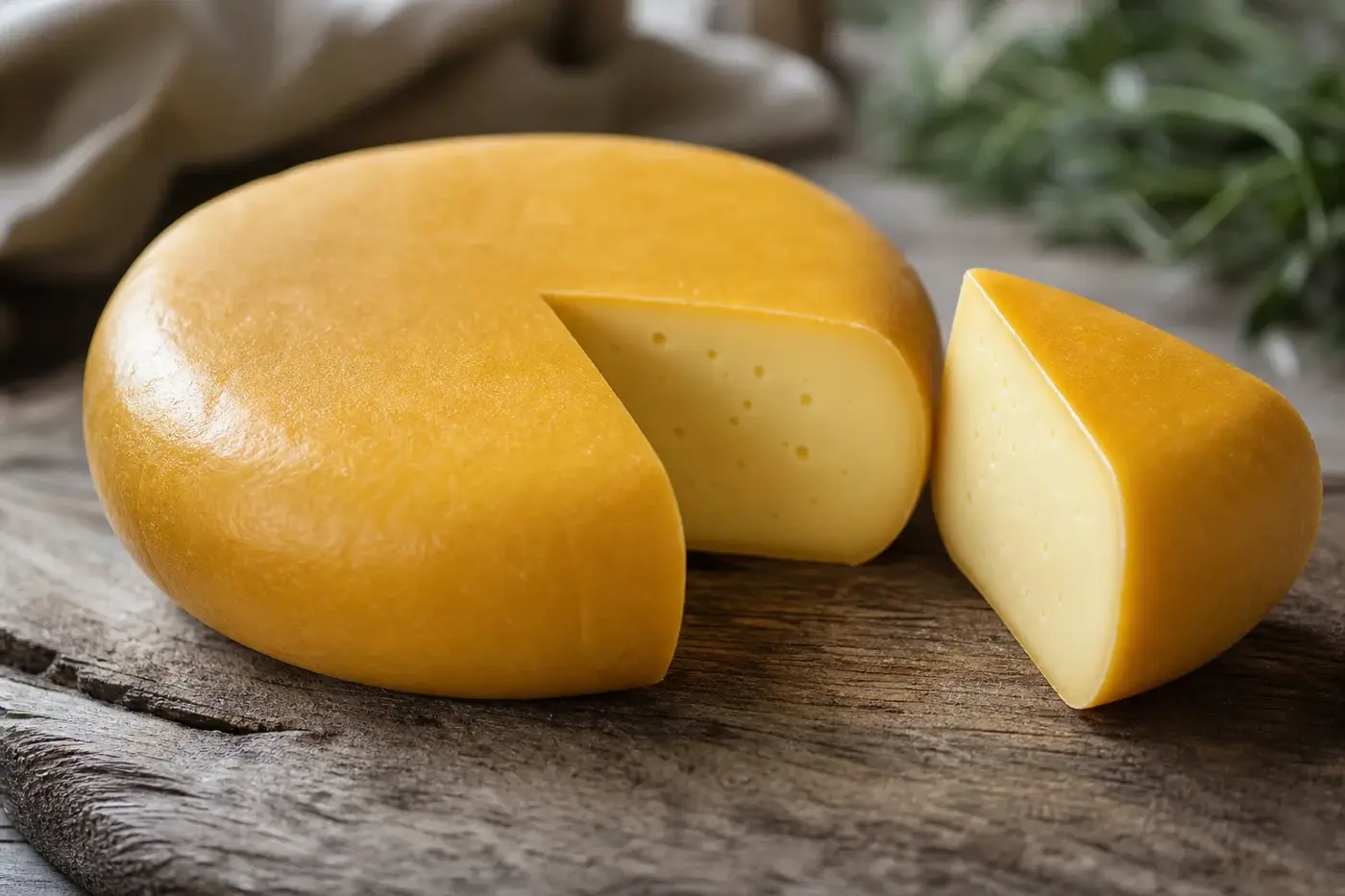
At milking, the clock starts ticking. Within 40 hours, the raw milk must enter cheesemaking on the farm, with at least half coming from that farm’s own herd. You are in Boerenkaas country: the Dutch name means farmers’ cheese, but it promises no single flavour. Instead, it opens the door to a farmhouse tradition with several milk types and Dutch cheese forms. [1,2]
| At a glance | What to know |
|---|---|
| The name to look for | Boerenkaas. [1,3] |
| Character | Raw milk farmhouse cheese, semi-hard to hard. [1] |
| Registration authority, Great Britain | Defra, foods: traditional speciality guaranteed register. [3] |
| Great Britain status | Registered TSG; registration dated 31 December 2020 at 23:00. November 2026 record. [3] |
| EU specification identifier | TSG-NL-0023-AM02-12.8.2021, printed on the published amendment specification. [1] |
| Current EU register status | Not established here. |
| Current Northern Ireland register status | Not established here. |
| Binding protection legislation | Not established here. |
| Milk species | Cattle, goats, sheep or buffalo. [1,2] |
| Typical maturation | A few weeks to more than a year, separate from the prescribed initial farm maturation. [2] |
| Coagulant and additions in your cheese | Look at the named cheese’s declaration. [2] |
| Pregnancy guidance | UK NHS advice, November 2026: see the official pregnancy guidance. [8] |
Meet the farm behind your wedge
The revealing word is boeren: farmers. The specification ties Boerenkaas to cheese made on a farm from raw milk obtained mainly from that farm’s herd. Here, “farmhouse” is part of the cheese’s documented identity, not merely a fetching barn on the label. [1,2]
At the counter, let that name start a conversation. Which farm made your cheese, and which animals supplied the milk? Is this a young cheese for slicing, or a longer-matured piece to savour in small bites? Those answers give you more to go on than a sweeping promise of “Dutch farmhouse flavour”.
Boerenkaas is a useful doorway into understanding cheese styles. A name can describe a production tradition while allowing different shapes, textures and ingredients. Here, that variety belongs in the specification: the tradition helps you ask better questions, while the individual cheese gives you something to choose. [1]
What the guarantee means for your cheese
Boerenkaas appears as a registered Traditional Speciality Guaranteed, or TSG, on Great Britain’s official register in November 2026. Defra records its original EU registration date as 16 February 2007. The European Commission subsequently published an amended TSG specification on 28 March 2022. [1,3]
The guarantee concerns a defined production tradition. Defra explains that producers using registered names must follow the relevant specification and undergo verification of compliance. Any complying producer can use the name, so no single cheese company owns it. The specification is what connects these otherwise different cheeses. [4]
TSG status is not geographical protection. The published Boerenkaas specification allows the letters “NL” on the identification mark when the cheese has been made in the Netherlands. If you want to establish Dutch origin, read your cheese’s information rather than relying on its Dutch name alone. [1]
Great Britain and Northern Ireland have different arrangements, too. Defra states that the UK schemes protect names sold in England, Scotland and Wales, while the EU schemes apply to names sold in Northern Ireland and the EU. [4] For a clearer path through the terminology, turn to protected cheese names explained.
Follow your milk back to the herd
At least half the milk must come from the cheesemaking farm’s own herd, and the cheese must be made on that farm. Additional milk may come from no more than two other dairy farms. The amount bought in must not exceed the farm’s own production. [2]
That gives “farmhouse” a precise meaning: a substantial connection between the animals, their milk and the maker. It does not mean every drop must come from one herd. Another farm may contribute milk, but the cheesemaking farm remains at the centre of the story.
All four permitted milk species are used raw. Heat treatment above 40 °C is prohibited, and processing must begin within 40 hours of milking. The specification also permits cream and wholly or partly skimmed milk obtained directly from the raw milk. [2]
When you choose, ask about milk species before strength, then move on to age and additions. You will tease apart what the cheese is made from, how far it has matured, and whether something such as cumin shapes its character. For the wider picture, read raw milk, thermised and pasteurised cheese.
From fresh curd to the brine bath
Before maturation comes cutting, washing, pressing and brining. The prescribed sequence begins with acidified milk and the formation of curd, the coagulated part that becomes cheese. Whey is the liquid that separates from it. [1,2]
| Stage | What happens to your cheese |
|---|---|
| Coagulation and acidification | Rennet and cultures form and acidify the curd. |
| Cutting and washing | The curd is cut and stirred; some whey is removed before washing with hot water. |
| Moulding and pressing | The curd goes into moulds, receives an identification mark and is pressed. |
| Brining | The acidified, pressed cheese goes into salt solution. |
| Maturation | The cheese first matures on the farm, before further ripening there or at a cheese merchant’s premises. |
That sequence follows the published specifications. [1,2] It takes you from milk to a formed cheese, ready for the slower work of maturation.
The cheese must first mature on the farm for at least 13 days after the day processing began, at a temperature of at least 12 °C. Further ripening develops its characteristic flavour. These temperatures and timings are production rules, not instructions for your fridge; household storage advice comes below. [2]
Making and maturing are distinct parts of the story. Ask at the counter for the farm’s name and, where relevant, the merchant responsible for later maturation. Keep both in your tasting notes. When a particular piece wins you over, you will know exactly what to request next time.
Find your shape, texture and tang
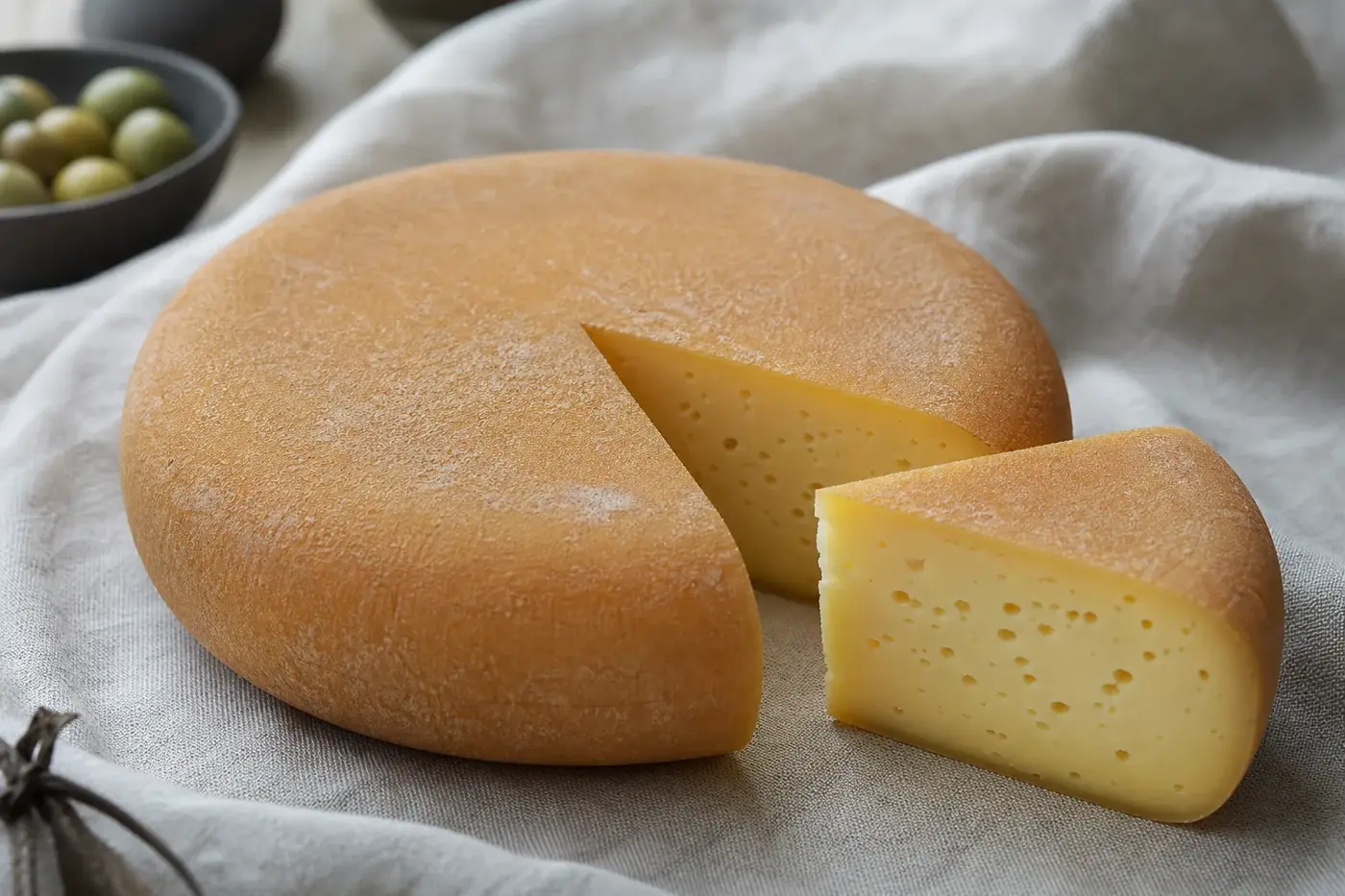
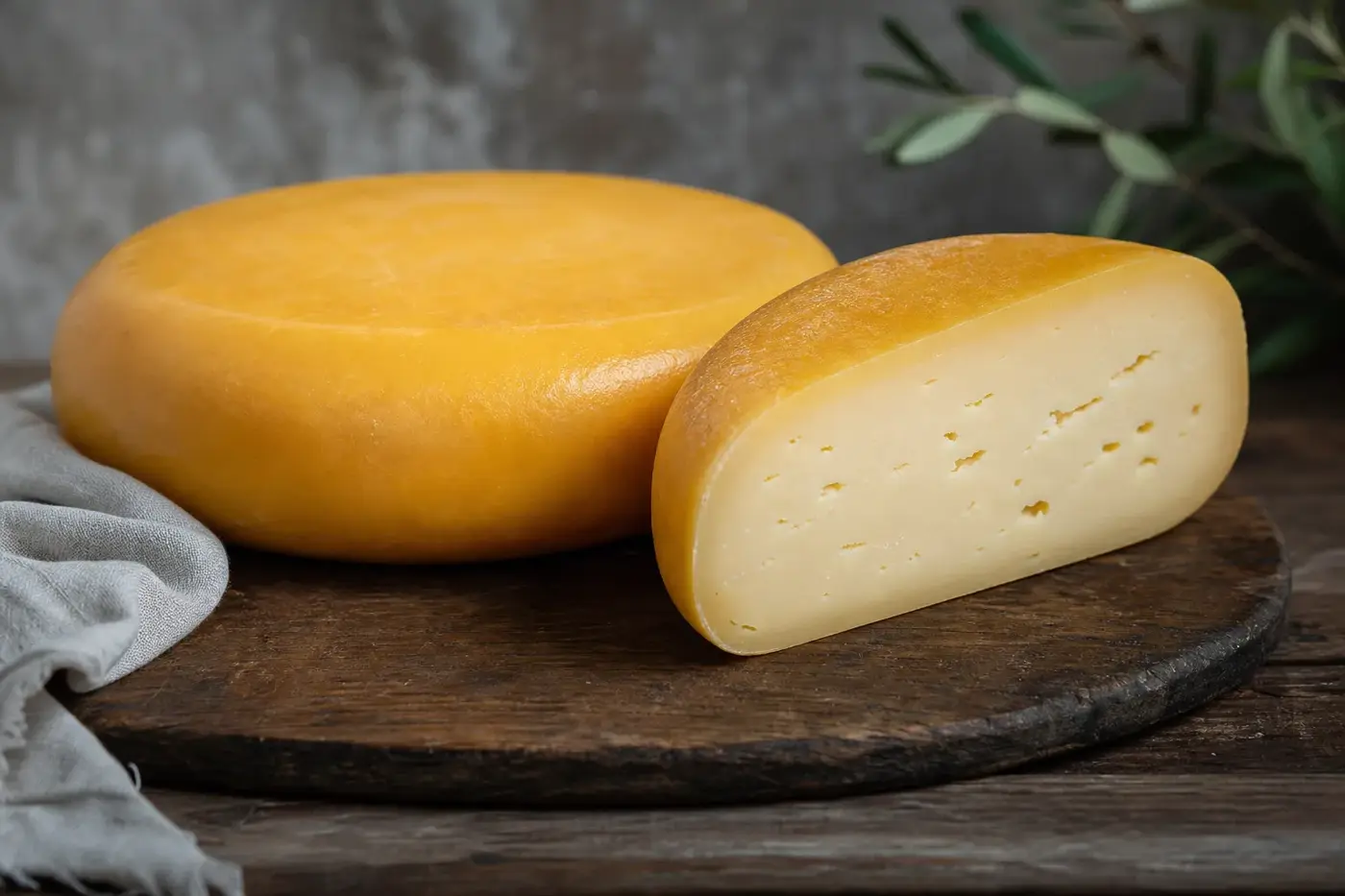
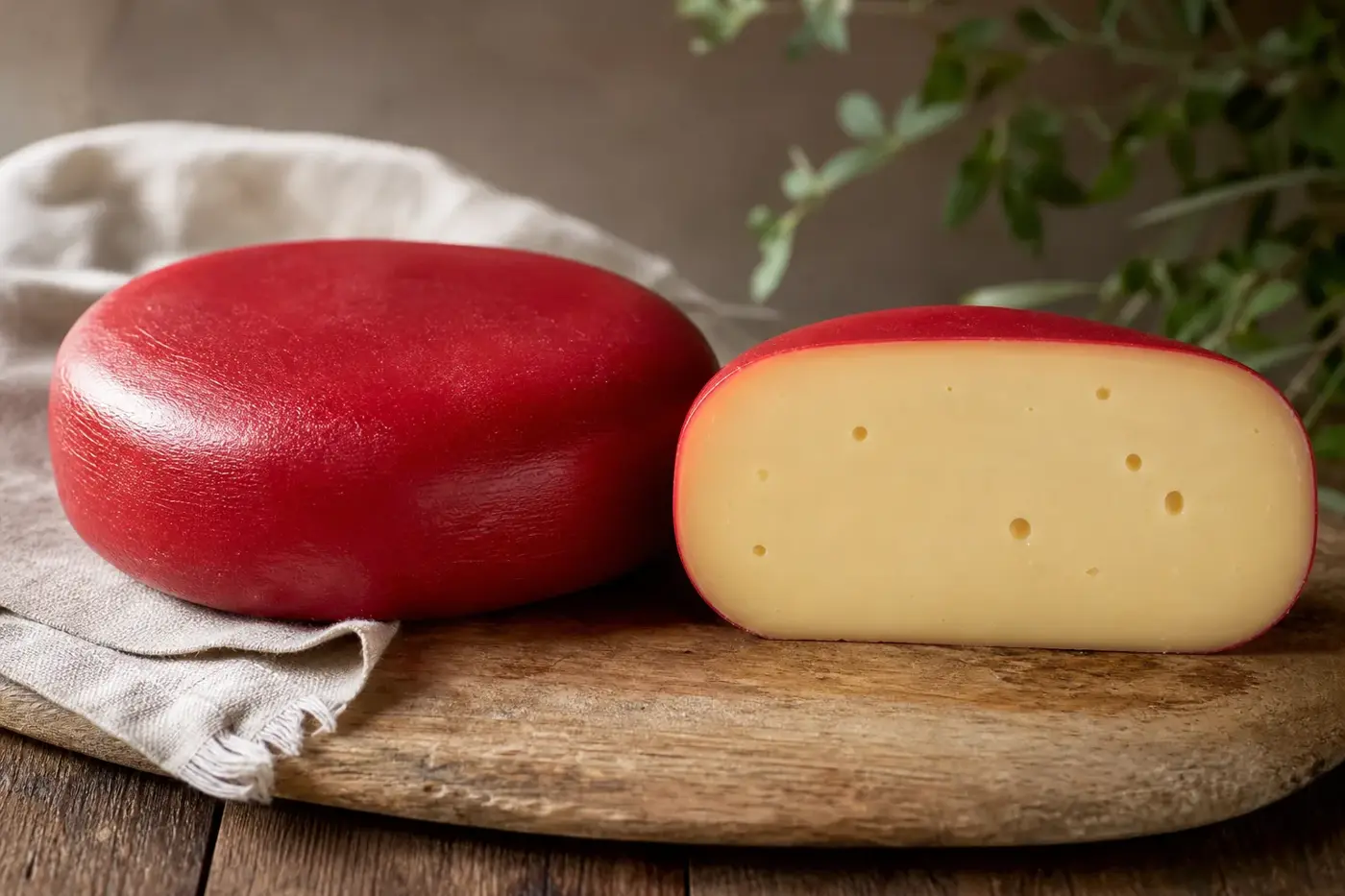
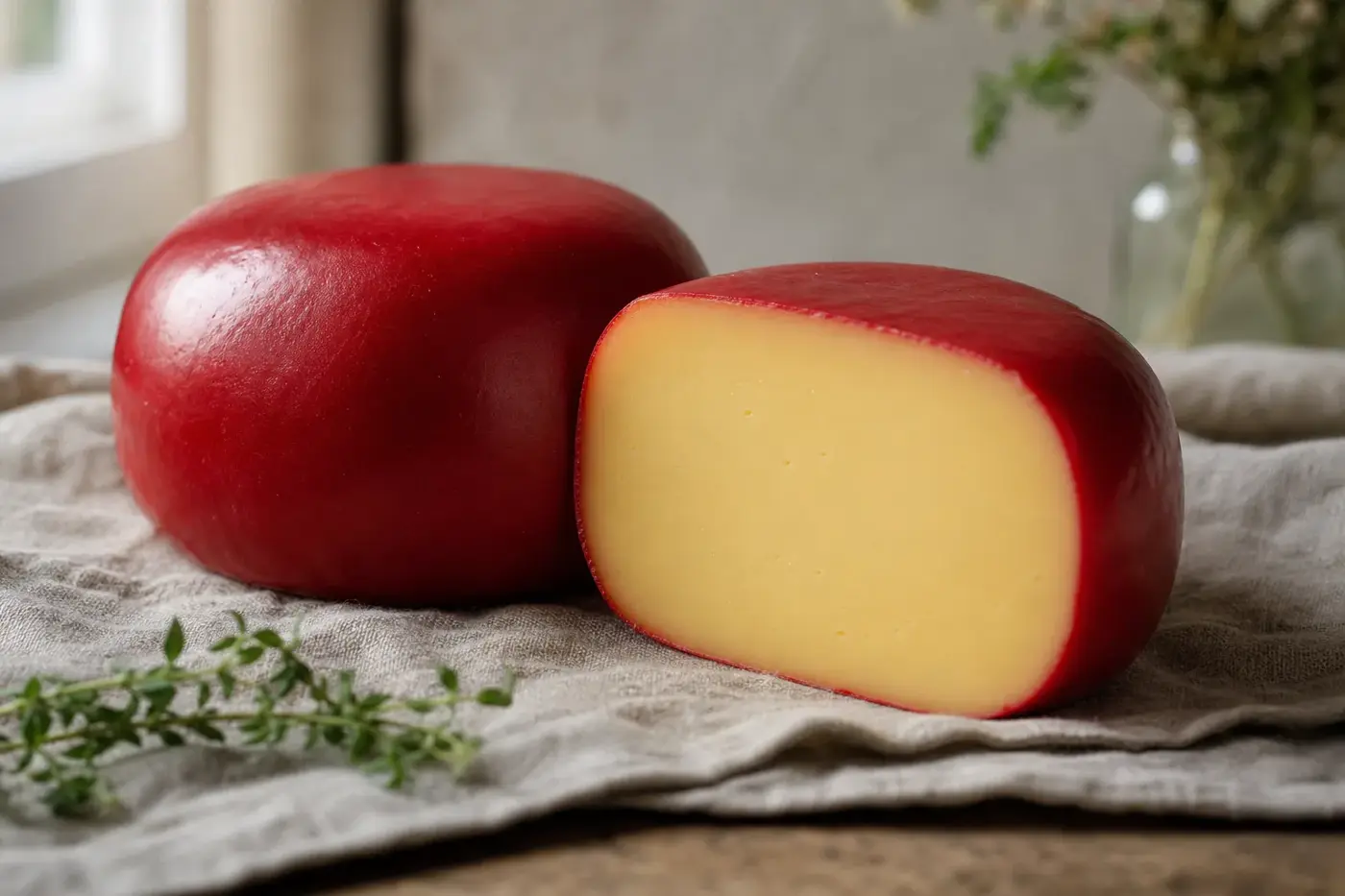
Boerenkaas does not always arrive in the same shape. Goudse Boerenkaas has Gouda’s flattened cylinder and rounded edges, while Leidse Boerenkaas has sharper edges. Edammer Boerenkaas may be a ball or a loaf, and rinds and optional coatings vary between forms too. [1]
The specification’s textures stretch from soft and malleable to firm, hard and sliceable. It describes the raw milk cheese’s flavour as fuller, stronger and tangier, attributing this to milk enzymes and the flora entering the milk during and after milking. That describes typical character across the tradition, not a promise that every piece will taste alike. [1]
Put those words to work when you taste. Does your cheese bend or break, and does the tang arrive straight away or linger after swallowing? If there are seeds or herbs, can you pick out their contribution from the cheese beneath? You will discover more than a strength score can tell you.
Try two plain cheeses of different ages from the same farm. Keeping the maker and milk type constant makes the comparison clearer. An old cumin cheese beside a young plain one can be enjoyable too, but several things change at once. Choose your pair according to what you want to discover.
Let age earn its place on your plate
Longer maturation makes Boerenkaas firmer and drier, with a stronger flavour. That is the direction described in the published specification. The range takes you from cheeses suited to slicing to harder examples that lend themselves to smaller pieces. [1,2]
Choose with your next meal in mind. For a sandwich, ask for a supple, relatively mild cheese and request a slice so you can judge its texture. For a plate after a meal, compare it with a more intense, longer-matured example. That contrast can tell you more than an age description alone.
The oldest piece does not automatically deserve a medal. If you enjoy pliable cheese and restrained flavour, ask for those qualities directly. If you prefer a firm bite and a longer finish, say so. A particular texture gives the cheesemonger a clearer brief than “the strongest”, and keeps your choice focused on pleasure.
Gouda and Boerenkaas: get to know the whole name
Your cheese can be both Boerenkaas and Gouda. The specification explicitly includes Goudse Boerenkaas, alongside Edammer and Leidse forms and cheeses identified by their animal milk. One name can tell you about the farmhouse tradition while another identifies the cheese form. [1]
Longer registered names deserve your attention in full. In November 2026, Great Britain’s register lists Gouda Holland as a Protected Geographical Indication, or PGI, and Noord-Hollandse Gouda as a Protected Designation of Origin, or PDO. Both are separate registered names from Boerenkaas. [9,10]
At the counter, ask three distinct questions: what style is it, which registered name appears on it, and who made it? Keep the answers together. “Gouda”, “farmhouse” and a regional name each tell you something different. Treating them as interchangeable loses useful information about the cheese you are taking home.
For the broader style, explore the guide to Gouda. When choosing Boerenkaas, concentrate on the particular farmhouse cheese and its declared name. You will leave with a clearer description to remember, compare and ask for again.
Bring it home and give it a good plate
Start with four details: farm name, milk species, age and added ingredients. Ask whether the outer surface has a coating and what you should remove before serving. If you buy a cut wedge, request the storage instructions and date information that would otherwise stay with the whole cheese.
Follow the label’s storage instructions. For England, Northern Ireland and Wales, the Food Standards Agency advises a fridge temperature between 0 and 5 °C. In Scotland, Food Standards Scotland advises using opened foods within two days unless the packaging gives different instructions. [5,6]
Keep those instructions with your wedge, particularly if it comes wrapped in plain paper. Choose a piece suited to your plans rather than assuming every Boerenkaas has the same shelf life. For wrapping and fridge organisation, see how to store cheese at home.
Put out a small portion and keep the rest refrigerated. The FSA advises keeping chilled food out of the fridge for the shortest possible time during preparation. Consult its current guidance for the full time limit and what to do afterwards; Food Standards Scotland provides separate guidance. [5,6]
Give the cheese room on the plate, too. Simple accompaniments let you explore its character without turning every mouthful into a guessing game.
- A younger, pliable cheese: try bread, apple slices and still water, leaving room to notice the cheese itself.
- A firmer, more intense cheese: serve pear and unsalted nuts. Taste each accompaniment separately before combining them.
- A cumin version: begin with plain bread or crackers, then add a small amount of pickle if you enjoy a sharper contrast.
Taste your cheese alone first, then introduce one accompaniment at a time. These suggestions are starting points for finding what you enjoy. Your elaborate board can wait: the cheese need not audition against the entire contents of the cupboard.
This page summarises published guidance from the official sources it cites. It is not medical advice. Guidance differs between countries and changes over time, so check the current source for where you live, and ask your doctor, midwife, pharmacist or dietitian about your own circumstances.
Choosing raw milk cheese for higher-risk groups
If you are choosing for someone at higher risk, the milk treatment matters. UK NHS guidance identifies pregnant people, newborn babies, older people and people with weakened immunity as groups at greater risk of serious illness from listeriosis. Unpasteurised dairy products are among the foods it lists as possible routes of infection. [7]
The NHS pregnancy food page, in its November 2026 guidance, specifically lists pasteurised and unpasteurised hard cheeses among foods that can be eaten. It also permits pasteurised semi-hard cheeses and lists cheese cooked until steaming hot. Those distinctions matter when you are considering a particular cheese. [8]
The NHS general listeriosis page gives broader pregnancy advice to avoid unpasteurised dairy products. The two pages differ in specificity, while Boerenkaas itself spans semi-hard and hard descriptions. Take your actual product information to your midwife, doctor or dietitian when seeking advice about your circumstances. [1,7,8]
If you are older or have weakened immunity, consult the current NHS listeriosis guidance and any advice from the team responsible for your care. Have the milk treatment, cheese type and storage instructions available when you ask. The official sources below are dated links to UK guidance; if you live elsewhere, consult your own national authority.
Questions people ask
What milk is used to make Boerenkaas?
Boerenkaas can be made from raw cattle, goat, sheep or buffalo milk. Additional milk may come from no more than two other dairy farms, and the amount bought in must not exceed the cheesemaking farm’s own production.
Does Boerenkaas have to be made in the Netherlands?
Its TSG status concerns a production tradition rather than geographical protection. The specification allows the letters NL on the identification mark when the cheese has been made in the Netherlands.
Is Boerenkaas the same as Gouda?
A cheese can be both Boerenkaas and Gouda: the specification includes Goudse Boerenkaas. Gouda Holland and Noord-Hollandse Gouda are separate registered names from Boerenkaas.
How does ageing change Boerenkaas?
Longer maturation makes it firmer and drier, with a stronger flavour. Typical maturation ranges from a few weeks to more than a year.
Can I eat Boerenkaas during pregnancy?
The NHS pregnancy food page lists unpasteurised hard cheeses among foods that can be eaten, while its general listeriosis page gives broader advice to avoid unpasteurised dairy products. Boerenkaas spans semi hard and hard descriptions, so consult the NHS pregnancy food and listeriosis guidance and discuss the actual product with your midwife, doctor or dietitian.
Sources
- European Commission. Publication of the amended product specification following the approval of a minor amendment, 2022/C 136/04, 28 March 2022. Includes the Boerenkaas specification and amendment identifier. Official specification.
- Defra. Updated product specification: Boerenkaas, undated document currently linked from the Great Britain register. Published specification.
- Defra. Boerenkaas, protected food name register entry, published 4 January 2021; live status checked November 2026. Register entry.
- Defra. Protected geographical food and drink names: UK GI schemes, updated 8 March 2024. Official scheme guidance.
- Food Standards Agency. How to chill, freeze and defrost food safely, published 18 December 2017; applies to England, Northern Ireland and Wales. Household guidance.
- Food Standards Scotland. What is listeria?, current consumer guidance retrieved November 2026. Official guidance.
- NHS. Listeriosis, reviewed 10 November 2023; retrieved November 2026. Official guidance.
- NHS. Foods to avoid in pregnancy, current online version retrieved November 2026. Official pregnancy guidance.
- Defra. Gouda Holland, protected food name register entry, published 4 January 2021; checked November 2026. Register entry.
- Defra. Noord-Hollandse Gouda, protected food name register entry, published 4 January 2021; checked November 2026. Register entry.
Researched through published official specifications, Great Britain’s protected food name register and UK public health guidance, with editorial tasting and serving suggestions identified separately.
Last checked: November 2026
Last checked November 2026.
The editors suggest you read next