Bonnington Linn
Blocks of curd are stacked, ready for a night under the press.
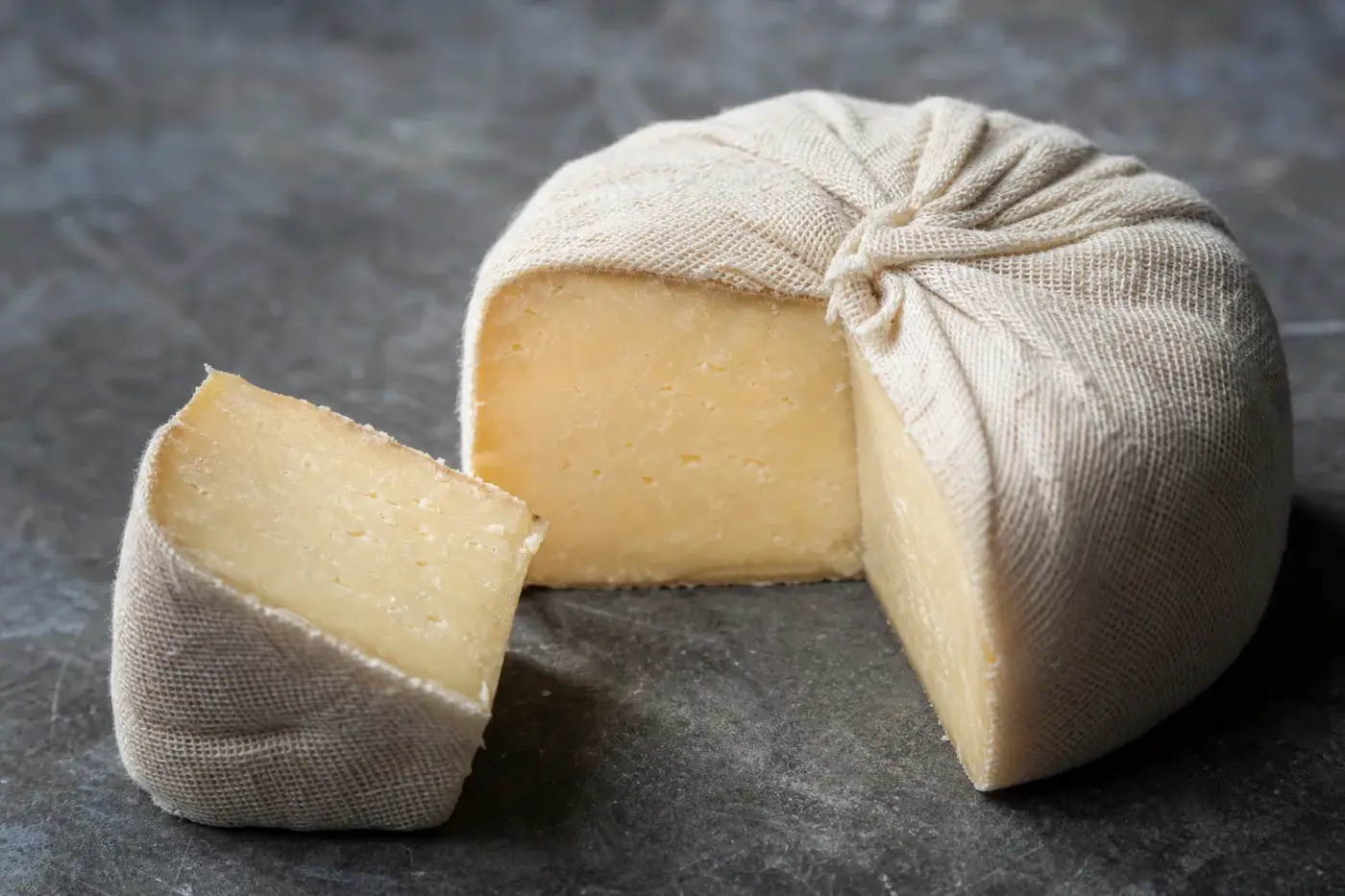
Blocks of curd are stacked, ready for a night under the press. Tomorrow comes the muslin. You might not expect goat’s milk to take this clothbound, Cheddar-style route, but that is Bonnington Linn: a hard cheese made by Errington Cheese in South Lanarkshire, Scotland. The maker describes a firm, slightly granular texture, nut-like flavours, gentle tanginess and herbal notes. [1][2][3]
| Get to know your cheese | Bonnington Linn |
|---|---|
| Made by | Errington Cheese. [1] |
| Made at | Walston Braehead Farm, South Lanarkshire, Scotland. [3][4] |
| Milk | Raw goat’s milk from the maker’s own farm. [1] |
| Style | Hard, Cheddar-style, clothbound. [1] |
| Wrapped in | Muslin cheesecloth, applied after overnight pressing. [2] |
| Time to mature | The maker specifies several months. [2] |
Follow the milk to the farm, and the name to the falls
If goat’s cheese makes you picture something soft and young, Bonnington Linn has other plans. Here, pressing and patient maturation do the shaping. Errington places it firmly in the hard, Cheddar-style camp, so look to the curd handling, the press and the months afterwards to understand its character. [1][2]
The story takes you to Walston Braehead Farm in South Lanarkshire, at the foot of the Pentland Hills. Errington describes grazing, arable land and woodland, with milk production, forage growing and cheesemaking all part of the same enterprise. This farm earns its place on the label: it supplies the milk and grows forage for the operation. [3][4]
According to the maker’s history, cheesemaking began here in the early 1980s with a small flock of dairy sheep. Corra Linn, the business’s pressed sheep’s cheese, came later, followed by dairy goats in 2019. Bonnington Linn belongs to that later chapter, bringing goat’s milk into the dairy’s pressed-cheese range. [3][4]
For the name, look beyond the farm. Errington identifies Bonnington Linn as one of the waterfalls at the Falls of Clyde near New Lanark. Corra Linn takes its name from a waterfall too, giving the cheeses a shared connection to local landmarks as well as a maker. [1][2]
At the counter, keep three details in mind: own-farm milk, Cheddar-style making and maturation in cloth. They tell you far more than “goat” alone. They also give you a useful opening for a conversation about the age and character of the piece you are about to buy. [1][2][3]
Meet the milk behind the muslin
Bonnington Linn begins with raw goat’s milk from Errington’s own farm. The maker explicitly identifies both the milk type and its source, so raw, rather than pasteurised, is the right description here. Your cheese’s farm connection starts with the milk, not simply with the address of the cheese rooms. [1]
Errington says goats joined the farm to support year-round cheesemaking. Its history describes fresh milk travelling directly from the milking parlour into the cheese rooms, with all the farm’s milk made into cheese by hand. That is the operation described in the maker’s account as at November 2026. [3][4]
The dairy links variation across its cheeses to its own milk and the changing seasons. For you, that is a good reason to ask about the batch in front of you: how old is it, and what is its character now? Errington’s explanation allows for natural variation, rather than one fixed description that must fit every piece. [3]
To untangle the terminology, explore raw, thermised and pasteurised milk. When you buy, keep the information supplied with your actual cut. Alongside the cheesemonger’s account of that batch, it is your most useful reference for the piece going home with you.
Spend a night at the press, then wait a little longer
Before the blocks and the press comes the vat. The milk is warmed and cultures are added; once acidification begins, rennet goes in to form the curd, the solid portion of the setting milk. Errington then cuts, stirs and scalds the curd before draining away the whey. [2]
Next, the curd is stacked in blocks, then milled and salted. Milling breaks it into smaller pieces before it enters moulds for overnight pressing. The following day, the cheeses are wrapped in muslin and set aside to mature: Errington’s published Bonnington Linn sequence, from milk vat to cloth. [2]
“Cheddar-style” is not just shorthand for a firm cheese that looks the part. The connection begins in the making itself. You can follow those stages more closely in how cheese is made and the separate account of Cheddar.
Then comes the wait. Errington specifies several months, while Neal’s Yard Dairy, which selects and sells Bonnington Linn, describes muslin-wrapped cheeses maturing on wooden shelves for six months to two years. Its product information in November 2026 displayed an average age of 24 months. Those longer ages belong to the seller’s account and selection. [2][5]
Your best question at the counter is a short one: how old is this piece? Follow it with another: how does that age show in the texture and flavour? The name tells you which cheese you are buying; the age helps you understand this particular cut and makes its tasting notes more useful.
Look beneath the grey exterior
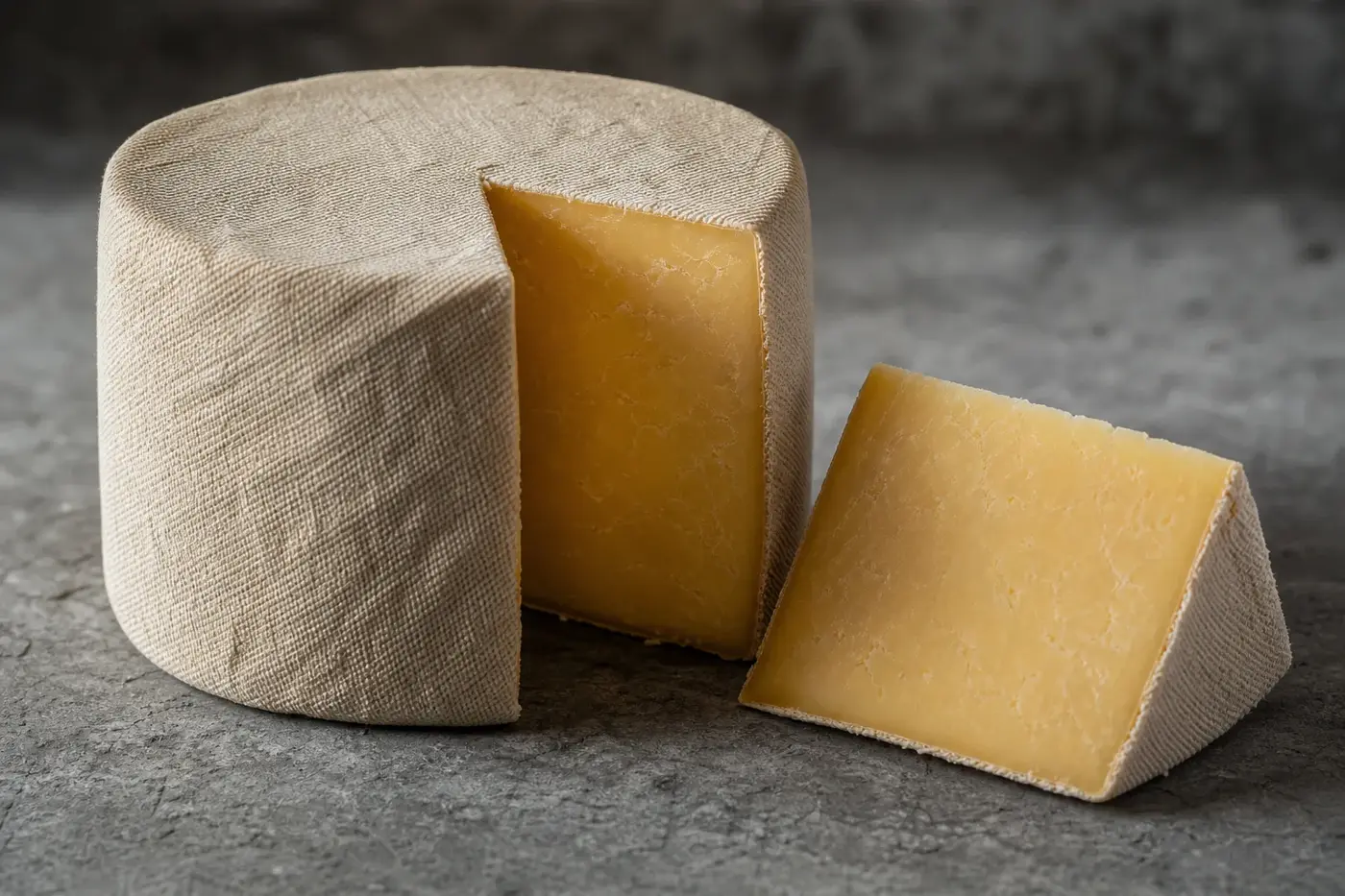
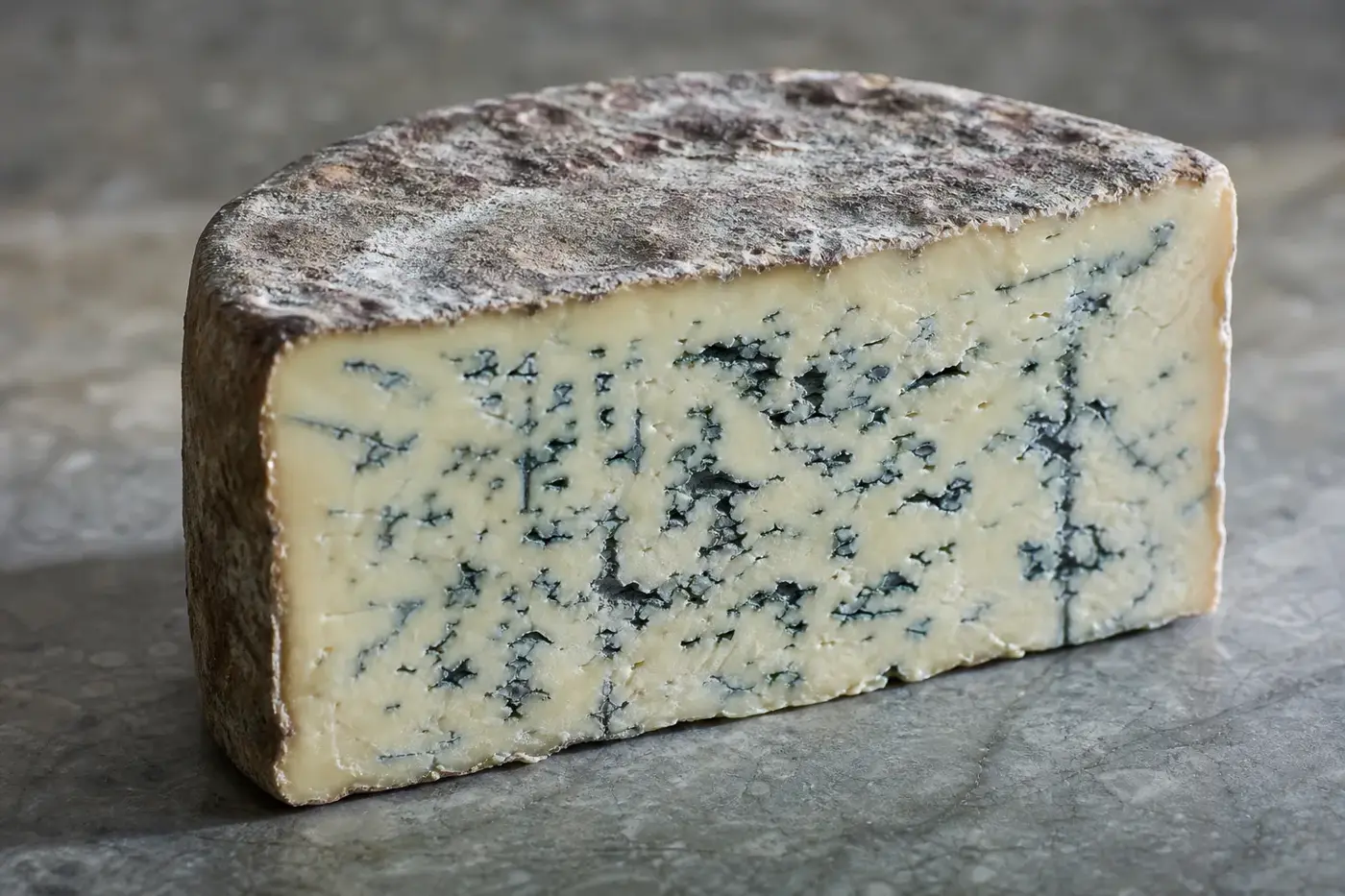
In the maker’s product photograph, a mottled grey exterior opens onto an ivory-white interior. A tall cylindrical cheese stands beside a cut portion, showing the contrast between the weathered-looking outside and the pale paste. “Paste” simply means the body beneath the rind; you are looking at the published image, not a promise for every wheel. [8]
For flavour, Errington points you towards nut-like notes, mild acidity, herbs, earthiness and gentle sweetness. It describes the texture as firm and slightly granular. With maturation, the cheese becomes firmer, somewhat crumbly and more pronounced in flavour, according to the maker. These are Errington’s published tasting notes, rather than a fromage.co.uk tasting. [1]
Neal’s Yard Dairy places a different emphasis on its selection: density, savouriness and caramel-like sweetness. It also describes choosing batches with a smoother texture and fruit-like or broth-like flavours. That selection helps explain why a piece you find at one counter may bring different qualities forward from one elsewhere. [5]
Take those descriptions as invitations, not an exam. Nobody is collecting your tasting paper. Does your piece break cleanly or crumble, and does tanginess arrive before savouriness or sweetness? Notice whether the herbal qualities appear straight away or emerge later; a few notes will help your next purchase more than simply deciding how strongly it tastes of goat.
Cut a little, taste slowly, keep the rest well
A wedge or smaller cut makes a straightforward introduction. Let the texture in front of you guide your serving, and keep its storage information handy. These practical suggestions sit alongside the cited advice on refrigeration, warming and cloth coverings.
- Keep the main piece refrigerated until you need it. Follow the storage instructions and date supplied with it. The Food Standards Agency advises households in England, Wales and Northern Ireland to keep their fridge at 5 °C (41 °F) or below. [6]
- Bring out only what you expect to serve. In England, Wales and Northern Ireland, follow the Food Standards Agency’s current guidance on keeping chilled food out of the fridge. [6]
- Remove the cloth before eating. Neal’s Yard Dairy identifies clothbound cheese coverings as inedible. For a simple first serving, trim away the cloth-covered outer edge and serve the paste underneath. [7]
- Cut manageable slices or small pieces. Use a stable board and work with the texture. If an older, crumbly piece breaks naturally, serve those irregular pieces.
- Taste the cheese on its own first. Then add bread, crackers or fruit one at a time. This keeps the cheese at the centre and helps you notice what each accompaniment brings.
To help limit drying and the absorption of other flavours, Neal’s Yard Dairy recommends wrapping a cut piece in cheese paper, then placing it in a box in the fridge. Follow the storage period supplied with your purchase. [7] For more practical detail, turn to how to store cheese at home.
Make room for figs and rye crackers
Errington suggests fresh figs or apricots, roasted nuts, cold meats and rye crackers alongside Bonnington Linn. [1] You need not invite the whole guest list. Cheese, rye crackers and one fresh fruit make a simple plate with contrasting textures, without several condiments competing before you have got to know the cheese.
Try a fig with one bite and an apricot with another. Keeping them separate gives you a clearer comparison than mixing everything together. For a savoury plate, follow the maker’s cold-meat suggestion and serve the fruit separately alongside. These arrangements take their lead from Errington’s accompaniments, rather than a fromage.co.uk tasting. [1]
For an alcohol-free comparison tasting, plain water is a useful editorial starting point. It lets you return to the cheese between accompaniments without introducing another flavour to assess. Keep your first tasting focused, then let the particular piece guide you towards whichever accompaniment deserves another bite.
Pull up a chair for Cheddar, too
The strongest Cheddar connection lies in the work: stacking, milling, salting and pressing. Those stages give Errington’s Cheddar-style description its substance. Own-farm goat’s milk and muslin-wrapped maturation make Bonnington Linn’s version distinctive, so use the comparison as your starting point for tasting, rather than the whole story. [1][2]
For a side-by-side plate, choose a Cheddar with an identified maker and age, and ask for Bonnington Linn’s age too. Cut equal-sized pieces and give them the same plain accompaniment. Start with texture, then compare acidity, savouriness and finish. You will find more to explore than which one has the loudest voice.
In the kitchen, you could scatter small pieces over warm roasted vegetables or add a little grated cheese at the table. Treat these as suggestions to explore, not promises about melting. Start with a modest amount, taste, and let the flavour and texture of your particular cut tell you how much more to add.
General information only, not medical advice: follow the official guidance where you live.
Questions people ask
Is Bonnington Linn made with raw milk?
Yes. Errington Cheese makes it with raw goat’s milk from its own farm in South Lanarkshire.
What does Bonnington Linn taste like?
Errington describes nutty flavours, mild acidity and herbal, earthy and gently sweet qualities. The maker says the cheese becomes firmer, somewhat crumbly and more pronounced in flavour as it matures.
How long is Bonnington Linn matured?
Errington specifies several months. Neal’s Yard Dairy describes its selected cheeses maturing on wooden shelves for six months to two years.
Is Bonnington Linn vegetarian?
The maker has not confirmed its vegetarian suitability. The type of rennet used has also not been verified.
Can you eat the cloth on Bonnington Linn?
Neal’s Yard Dairy identifies clothbound cheese coverings as inedible. Remove the cloth and trim away the cloth covered outer edge before serving the cheese beneath it.
Sources
[1] Errington Cheese, Bonnington Linn, undated product description, tasting notes and accompaniments, retrieved November 2026.
Read at erringtoncheese.co.uk
[2] Errington Cheese, Farmhouse cheese, made by hand, Bonnington Linn production account, undated current website, retrieved November 2026.
Read at erringtoncheese.co.uk
[3] Errington Cheese, Our cheesemaking story, undated current account, retrieved November 2026.
Read at erringtoncheese.co.uk
[4] Errington Cheese, Our Lanarkshire farm, undated current account, retrieved November 2026.
Read at erringtoncheese.co.uk
[5] Neal’s Yard Dairy, Bonnington Linn, undated product and selection account, retrieved November 2026. This source sells the cheese and describes its own selection.
Read at nealsyarddairy.co.uk
[6] Food Standards Agency, How to chill, freeze and defrost food safely, published 18 December 2017, current text retrieved November 2026, applicable to England, Northern Ireland and Wales.
Read at gov.uk
[7] Neal’s Yard Dairy, FAQs, sections on cheese storage, serving temperature and rind, undated current guidance, retrieved November 2026. Used for quality and presentation advice, with official temperature and time limits supplied separately by source [6].
Read at nealsyarddairy.co.uk
[8] Errington Cheese, Bonnington Linn product photograph, undated image linked from the maker’s product page, inspected November 2026. Publication permission not supplied.
This piece was researched from the maker’s published accounts and photograph, a cheesemonger’s documented selection, and official household food-storage guidance.
Last checked: November 2026
Last checked November 2026.
The editors suggest you read next
Shropshire Blue
Cut into Shropshire Blue and you get quite a colour scheme: orange crossed by blue-green veins.