Corra Linn
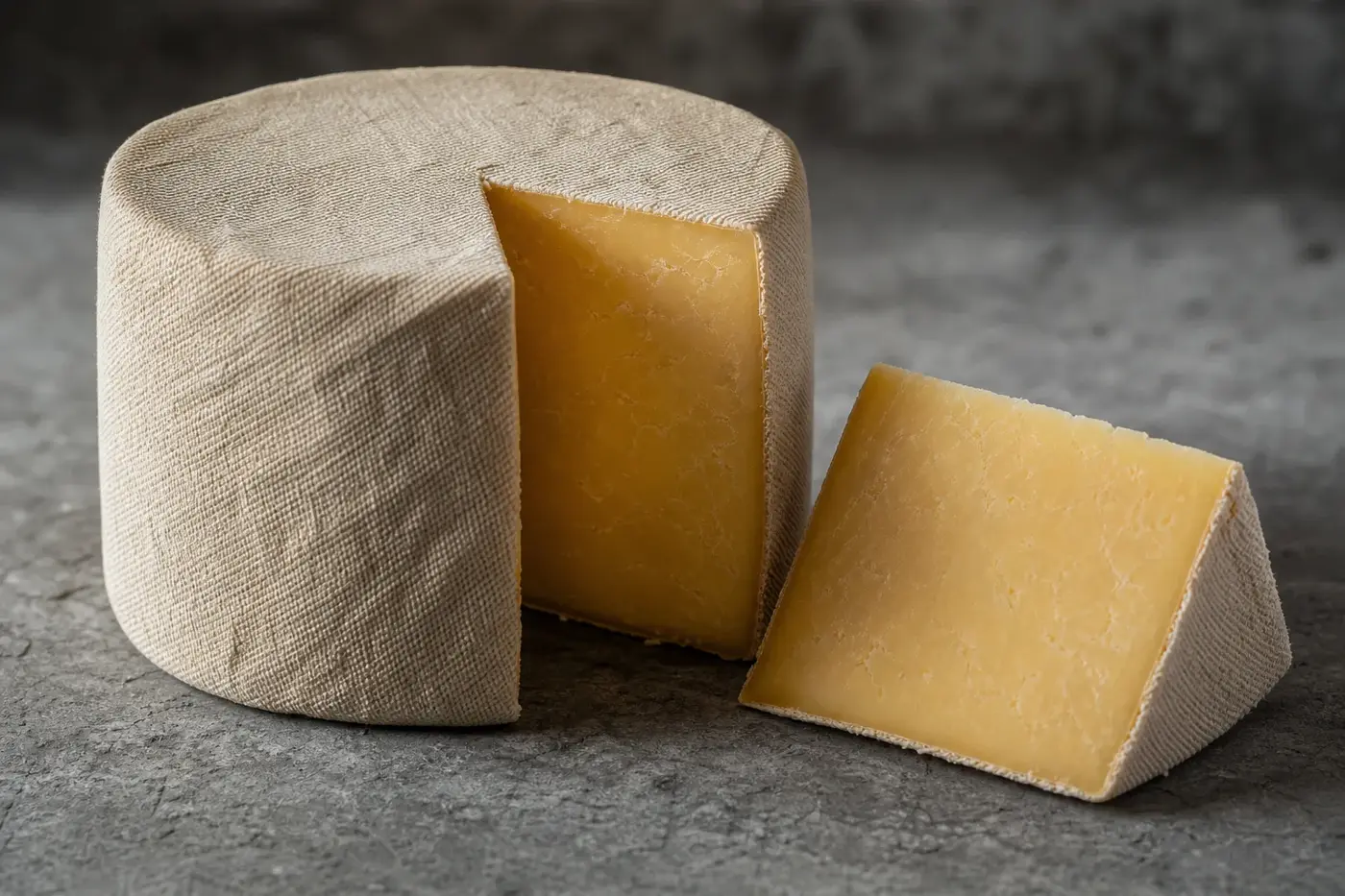
Cut through the clothbound exterior of Corra Linn and you meet a firm, pale cheese with crumble, sweetness and tang.
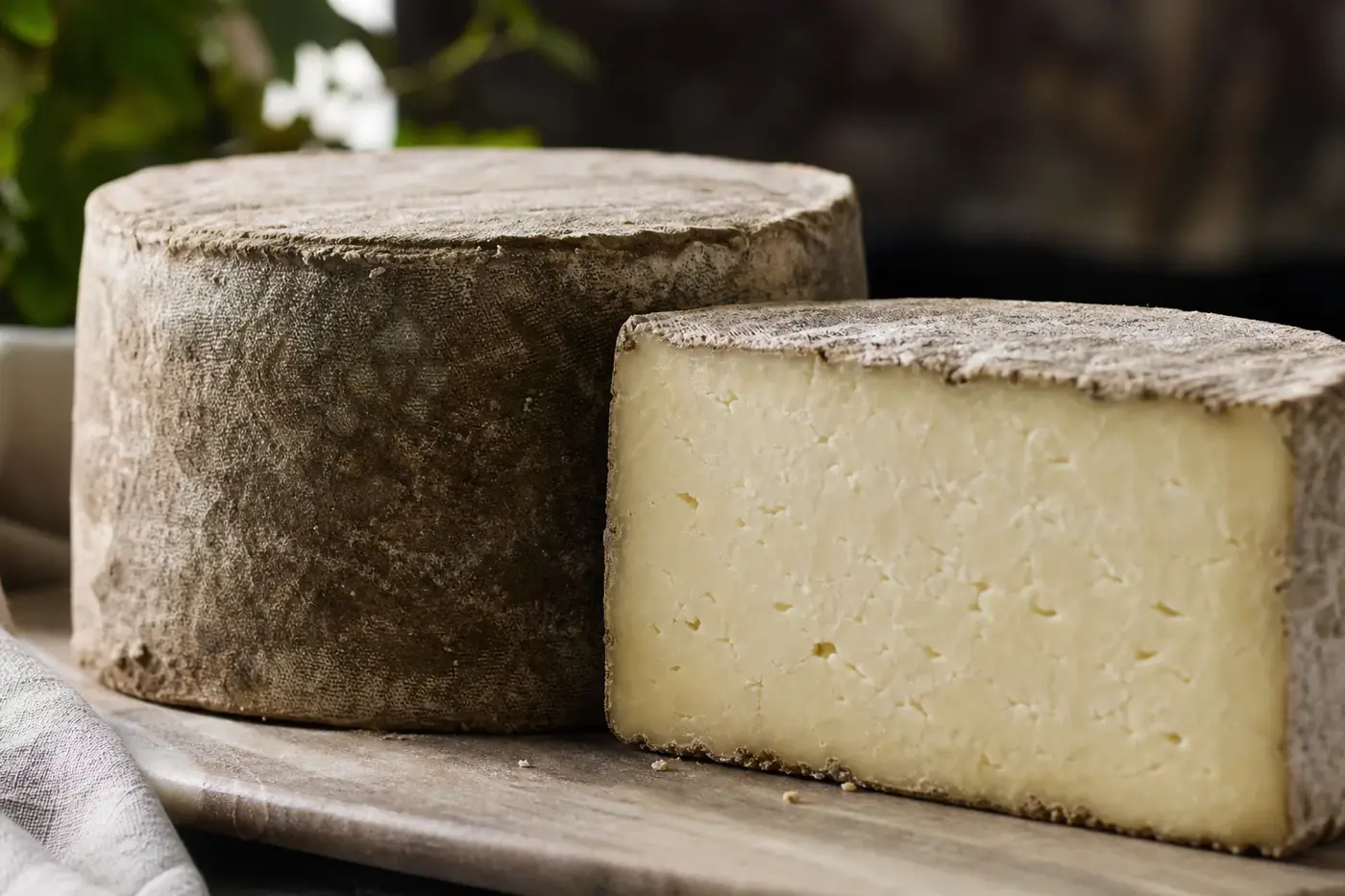
Cut through the clothbound exterior of Corra Linn and you meet a firm, pale cheese with crumble, sweetness and tang. Its name comes from a waterfall at New Lanark; its character comes from raw sheep’s milk worked in the Cheddar tradition. At Errington Cheese in South Lanarkshire, the curd is stacked, milled and pressed overnight before maturation begins. This is a cheese with a sense of place, right down to its name. [1,2]
| Get to know it | Corra Linn |
|---|---|
| Who makes it | Errington Cheese. [1] |
| Where it calls home | Walston Braehead Farm, South Lanarkshire, Scotland. [3] |
| The milk | Raw sheep’s milk from the farm’s own Lacaune ewes. [2,4] |
| The style | Hard, clothbound, Cheddar-style cheese. [1,2] |
| Its cloth wrapping | Muslin. [2] |
| Time to mature | Several months, according to the maker; Neal’s Yard Dairy lists an average of eight months for its stock. [2,5] |
Start at the waterfall
Corra Linn’s name takes you to the waterfall at New Lanark. Its roots are in the Clyde, rather than a borrowed European cheese name. When Errington calls it Cheddar-style, that tells you about the making; sheep’s milk supplies the essential difference. [1]
In the maker’s photographs, substantial cylinders show pale ivory interiors beneath mottled, grey-brown surfaces. The cut faces look closely textured, without large open holes. It is a striking contrast with the clothbound exterior, though these are individual cheeses, not a colour chart for every wheel. [6]
You can explore that distinction between milk and method on your own cheeseboard. Put Corra Linn beside a cow’s milk Cheddar. Watch how each piece breaks, then follow the acidity across your tongue and notice what stays with you.
A spring surplus with somewhere to go
Corra Linn began with a practical question: what to do with an abundance of spring milk? Errington introduced it in 2008, adding to a cheesemaking story that started at Walston Braehead Farm in the early 1980s with sheep’s milk blue cheese. The business describes a family-run operation, with a small team turning the farm’s milk into cheese. [3]
Each morning, fresh milk travels straight from the milking parlour to the cheese rooms, according to the maker. All the farm’s own milk becomes cheese. Here, farming and cheesemaking are parts of the same daily routine. [3]
The farm sits at the foot of the Pentland Hills, among grazing, arable ground and woodland. Its account describes a short growing season, with hay and silage produced to support the livestock. Behind your piece of Corra Linn is land that must feed a flock through changing seasons as well as supply the cheese room. [4]
Meet the flock behind your slice
Errington’s own Lacaune ewes provide the milk. Lambing comes in January and February, followed by milking from spring through to September. In the warmer months, the sheep graze; in winter, they come indoors, eating grass, hay and silage. [4]
That seasonal rhythm helps explain the arrival of a hard cheese in the range. Corra Linn gave the cheesemakers another home for their spring surplus. Errington also explicitly links differences across its cheeses to seasonal changes in the farm’s milk. [3]
The essentials stay the same: sheep’s milk, Cheddar-style making and maturation in cloth. Still, the piece on the counter deserves more than a glance at its name. Ask your cheesemonger about its production date, maturation and selection, then find out which batch you are buying and what makes it distinctive.
The milk is raw, as the maker confirms. If you would like to untangle the terminology, start with raw, thermised and pasteurised milk. [2]
Into the cheese room, then into cloth
The Cheddar connection becomes clear in the cheese room. Errington heats the milk and adds cultures, followed by rennet, the coagulant that sets the milk into curd. Cutting and scalding come next, before the whey, the liquid separated from the curd, drains away. [2]
Now the drained curd needs careful handling. Blocks are piled until they reach the required acidity, then milled, salted and pressed overnight in cloth-lined moulds. The following day, the cheeses are wrapped in muslin and moved onto wooden shelves in the cheese store. [2]
There is the reason for the maker’s Cheddar-style description. Sheep’s milk sets Corra Linn apart from cow’s milk Cheddar. The precise contributions of milk and ageing to its texture and flavour, though, remain an open question in these accounts. [1,2]
When you compare cheeses, look beyond the rind and follow the making. What happens to curd before pressing can tell you as much as the finished surface. For a closer look at those stages, explore how cheese is made.
Give the muslin time to work
Corra Linn enters a cool, humid cheese store in its muslin wrapping. Errington describes a natural rind developing while the interior becomes firm and slightly crumbly. The maker allows several months for maturation. [2]
Neal’s Yard Dairy selects its Corra Linn at the farm and gives a closer account of that supply. It describes overnight pressing, followed by locally produced rapeseed oil and muslin. Its recorded maturation range runs from four months to two years, with an average age of eight months in its product information. [5]
Those ages belong to that seller’s supply and selection, not every piece you might meet. Ask two questions at the counter: how old is this cheese, and has it matured further since leaving the farm? That turns a broad ageing range into something useful when you choose your piece.
Taste the sweetness, follow the tang
Firm and crumbly comes first in Errington’s tasting notes. Then come sweetness, tang, grass, earthiness and a developing nutty character. Think of a sharp edge with a sweeter flavour beneath it. [1]
Neal’s Yard Dairy finds something different in its selected batches: a smoother texture and fruity, brothy flavour. Selection matters here. Your cheesemonger may be looking for a particular expression of Corra Linn, not simply awarding a prize to the oldest wheel in the room. [5]
Try the paste on its own before adding anything else. Does your piece fall into little crumbs or yield more smoothly? Follow the sweetness, the arrival of acidity and the length of the savoury finish, then compare your impressions with the seller’s description.
Give your nose a turn, too, rather than leaving all the work to your tongue. Smell the freshly cut interior separately from the outer edge. Note any differences alongside what you find in the texture and flavour.
A good slice, and a well-kept remainder
Serve a modest portion and keep the remainder refrigerated according to its pack instructions. Before leaving cheese out, consult the maker’s current serving guidance and the relevant food safety authority’s advice. For storage and serving alike, follow the pack and current guidance from your national food safety authority.
Let the shape guide your knife. For a wedge, cut manageable slices through the paste towards the outer edge; for a rectangular piece, try shorter slices or small blocks. Naturally broken pieces have their place too, particularly when you are tasting something crumbly.
Remove the muslin before eating. If some cloth remains attached, ask the seller which parts of the outer surface they recommend serving. Appearance alone is not your guide.
Afterwards, follow the pack’s wrapping and storage directions. Keep the label so you can still identify the date and batch. For the wider practical choices, turn to storing cheese at home.
Choose a little company for your cheese
Errington suggests quince paste, beetroot jam, olives, crackers and crusty bread alongside Corra Linn. Its drinks recommendations include Chianti, Chardonnay and IPA. You have several directions to explore, without asking the cheeseboard to accommodate the entire cupboard. [1]
Start with plain bread or oatcakes and just one accompaniment. Taste the cheese alone, then add a little quince paste or beetroot jam and compare. Keep olives separate, so their salt and flavour provide a contrast when you want one rather than joining every mouthful.
Give alcohol-free drinks equal attention. Still water makes a useful starting point for tasting, while unsweetened tea offers another option with bread and cheese. If beer appeals, an alcohol-free version gives you another pairing to explore.
Adults of legal drinking age who choose alcohol can serve a small amount with the cheese. People who are pregnant, driving, taking medicines that interact with alcohol or recovering from alcohol dependence should not drink. Consult current NHS advice for further information.
From the board to a plate of hot potatoes
Corra Linn can take the firm-cheese place on your board. Choose one contrasting companion rather than several cheeses with similar textures, and leave room for clean cutting. Keep its name visible, especially beside cow’s milk cheeses, so your guests know what they are comparing.
The producer’s spring menu takes it into the kitchen in several ways. You will find Corra Linn in a sausage sandwich, shaved over rigatoni with garlic and tomato sauce, and on a potato pinsa finished with rosemary. It also appears on a cheese board with oatcakes and accompaniments. [8]
There are two useful ideas to take from those dishes. Try shavings as a finishing touch, or give the cheese a relatively plain base, such as potato. For a first attempt, shave it over hot potatoes, adding gradually and tasting before you reach for more seasoning.
Planning a sauce, toastie or baked dish? Ask your cheesemonger how that batch behaves with heat. Firmness on a board says little about smooth melting, so test a small amount before committing a whole piece to a dish that depends on it.
Keep cutting crumbs for immediate serving or a planned dish. They need the same care and label instructions as the larger piece. Small pieces still deserve attention.
Bring the label home, too
For a vegetarian meal, read the current ingredient declaration and ask the maker or supplier about both the rennet and any binding treatment. Neal’s Yard Dairy currently lists a vegetarian coagulant for its own product. Ask the maker directly for confirmation of Corra Linn’s vegetarian suitability. [5]
Keep the milk declaration, storage instructions and date marking with your cheese. Buying a loose piece? Ask the counter to include those details with the wrapped portion, so the useful information makes it home with you.
General information only, not medical advice: follow the official guidance where you live.
Questions people ask
Is Corra Linn made with raw milk?
Yes. It is made with raw sheep’s milk from Errington’s own Lacaune ewes.
How long is Corra Linn matured?
Errington says it matures for several months. Neal’s Yard Dairy gives a range of four months to two years and an average of eight months for its stock.
What does Corra Linn taste like?
Errington describes it as firm and crumbly, with sweetness, tang, grassy and earthy notes and a developing nutty character. Neal’s Yard Dairy describes its selected batches as smoother, with fruity, brothy flavour.
Is Corra Linn suitable for vegetarians?
Neal’s Yard Dairy declares a vegetarian coagulant in its own listing. Maker confirmation of the cheese’s vegetarian suitability remains unverified, so check the ingredient declaration and ask the maker or supplier about the rennet and binding treatment.
How should I serve Corra Linn?
Remove the muslin before eating and follow the pack’s storage and serving instructions. Errington suggests accompaniments including quince paste, beetroot jam, olives, crackers and crusty bread.
Sources
- Errington Cheese, Corra Linn description, tasting notes and pairings, undated, current homepage retrieved November 2026. Official website.
- Errington Cheese, Corra Linn, undated product account, retrieved November 2026. Product page.
- Errington Cheese, Our Story, undated, retrieved November 2026. Maker’s history.
- Errington Cheese, Our Farm, undated, retrieved November 2026. Farm account.
- Neal’s Yard Dairy, Corra Linn, undated product and selection account, retrieved November 2026. Commercial seller and selector of the cheese. Product account.
- Errington Cheese, Corra Linn product photographs, undated, retrieved through the maker’s product page, November 2026. Photographs viewed for appearance only; reproduction permission not supplied.
- GOV.UK, How to chill, freeze and defrost food safely, published 18 December 2017, retrieved November 2026. Applies to England, Northern Ireland and Wales. Official consumer guidance.
- Errington’s Barn, Spring food menu, undated PDF retrieved November 2026. Producer-operated hospitality business; cited for its documented uses of Corra Linn. Published menu.
Researched from the maker’s published production and farming accounts, its product photographs and menu, a selector’s account and official consumer refrigeration guidance; serving preferences are identified as editorial suggestions.
Last checked: November 2026
Last checked November 2026.
The editors suggest you read next
Shropshire Blue
Cut into Shropshire Blue and you get quite a colour scheme: orange crossed by blue-green veins.