Casatella Trevigiana
A glossy, pale cylinder sits beside your bread, its rind almost impossible to find.
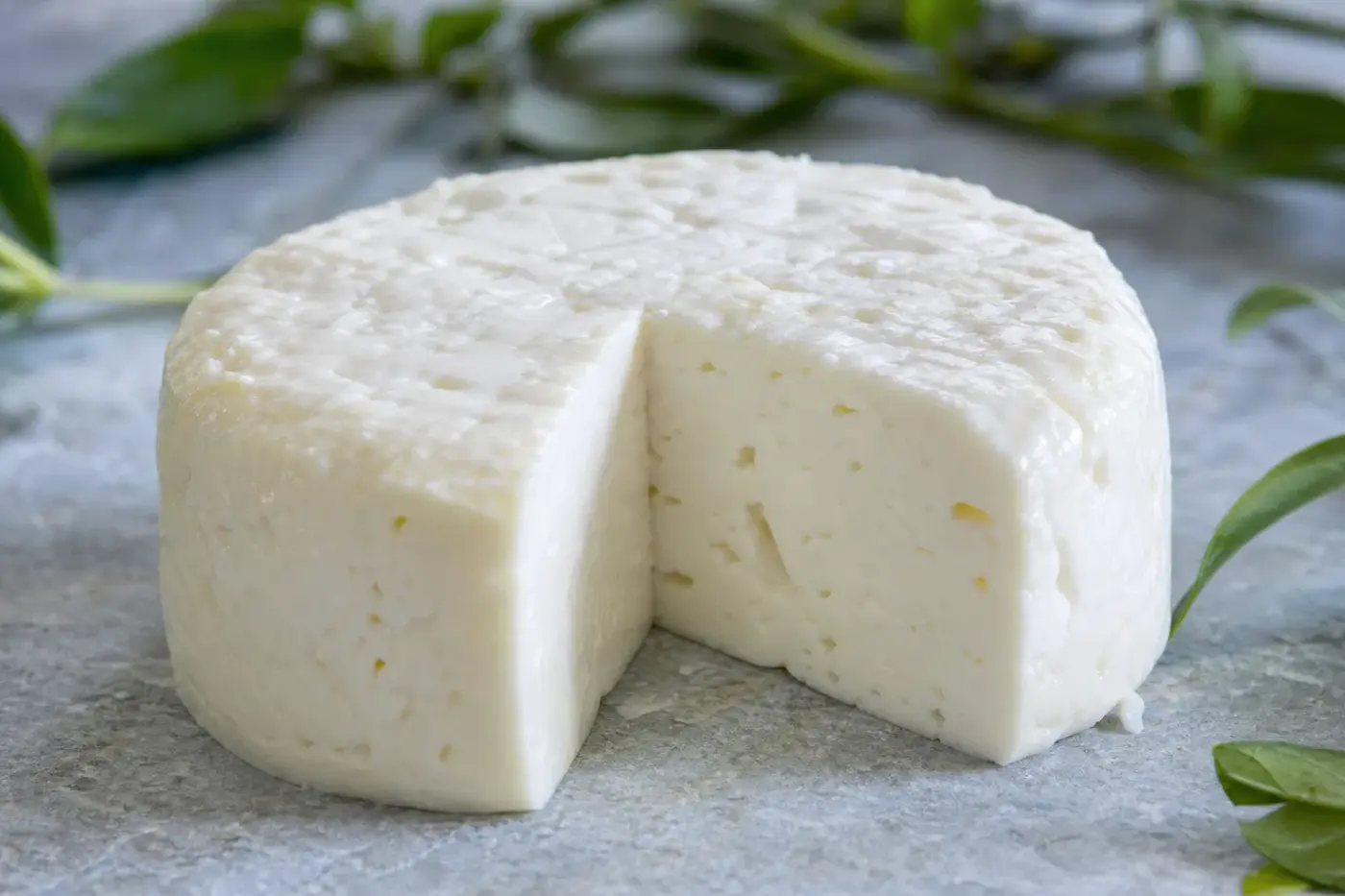
A glossy, pale cylinder sits beside your bread, its rind almost impossible to find. Take a plain mouthful before you reach for anything stronger. Casatella Trevigiana offers fresh milk’s pleasures rather than the drama of long ageing: a soft cow’s milk cheese from Treviso province in Veneto, with a gentle aroma, slightly creamy paste and delicate milky flavour touched with acidity.[1][2]
| What to know | The detail |
|---|---|
| Name to look for | Casatella Trevigiana.[2][4] |
| Registration authority and identifier | European Commission; base dossier PDO-IT-0348, shown in the 2020 amendment reference PDO-IT-0348-AM02.[2] |
| EU registration legislation | Commission Regulation (EC) No 487/2008; specification amendments approved by Implementing Regulation (EU) 2020/1337.[3] |
| Great Britain status | Registered PDO; UK scheme registration dated 31 December 2020 at 23:00. Record reference date: November 2026.[4] |
| Where it all happens | Province of Treviso, covering milk production, cheesemaking, maturation and packaging.[1] |
| Milk | Whole cow’s milk.[1] |
| Milk treatment | The consortium describes pasteurised milk; consult the complete specification for permitted treatments.[7] |
| Required maturation period | Consult the current specification. |
| Rind | Absent or barely perceptible.[2] |
| Sizes you may find | Small: 200 to 700 g, diameter 5 to 12 cm, height 4 to 6 cm. Large: 1.8 to 2.2 kg, diameter 18 to 22 cm, height 5 to 8 cm.[1] |
Meet the glossy cheese with a little backbone
Look closely at a traditional cylinder of Casatella Trevigiana. You will find little or no visible boundary between its surface and the cheese beneath. The official EU description calls for a glossy paste, milk white to cream white, sometimes dotted with tiny openings.[2]
Soft, certainly, but not a loose dairy cream. The description distinguishes Casatella Trevigiana from cheeses classed as spreadable or very creamy, so you should expect tenderness with some body. Bread need not be the sole judge of a cheese’s character.[2]
Its aroma is light, fresh and milky. The specification describes a sweet, milk-like flavour with slight sourness. Taste that delicate balance on its own before inviting strongly flavoured accompaniments to the table.[2]
Come into the farmhouse kitchen
Casatella’s story begins at home, with milk a family did not immediately need. The consortium’s historical account describes households turning that surplus into butter, cheese and ricotta, alongside the work of local cooperative dairies. In those households, cheesemaking was commonly women’s work.[5]
You can hear that domestic history in the name. The consortium connects Casata and Casatela with casada, meaning the household, and with something made at home. The Sile regional park authority records the same connection with casa, the Italian word for home, and the local expression de casada.[5][6]
Another name brings you closer to the equipment. According to the consortium, formajela refers to the mould in which curd was separated from whey. One set of names remembers the household; another remembers the form that shaped its cheese.[5]
Even the milk could be a neighbourly loan. The consortium describes families borrowing from neighbours when they had too little, then repaying them later, a practice called prestanza del latte. Its account also places Casatella beside polenta as an everyday accompaniment: a history of domestic routines, rather than a precise invention date.[5]
Why your cheese’s Treviso address matters
Casatella Trevigiana’s protected identity starts with the milk and ends with the package. The published specification requires milk from farms in Treviso province, with cheesemaking, maturation and packaging all taking place there too. A Veneto address alone tells you less than the complete protected name and the product’s identification.[1]
The EU registration rests on Regulation (EC) No 487/2008. A later Commission regulation, adopted on 21 September 2020 and published on 28 September, approved further amendments to the specification.[3]
Great Britain has a separate register entry. In the November 2026 record, Defra lists Casatella Trevigiana as a registered PDO, with UK scheme registration from 31 December 2020 at 23:00.[4]
When several soft white cheeses share the shop counter, that distinction helps you choose. The guide to protected names explained helps you separate a protected regional name from a broader cheese style.
Follow the milk through the dairy door
The published specification starts with whole cow’s milk from Friesian, Pezzata Rossa, Bruna and Burlina cattle, including crosses of those breeds. At processing, its milk fat must exceed 3.2%. That figure describes the milk entering the dairy, not the nutritional fat content of the finished cheese.[1]
The consortium describes Casatella Trevigiana as a fresh, soft cheese made with pasteurised cow’s milk. For the particular cheese you are buying, read the pack’s declaration to establish what its maker used.[7]
Two words help you follow the next stage. Coagulation means milk setting into curd; whey is the liquid separated from it. Handling and draining that curd helps determine the finished consistency, and how cheese is made takes you through the broader sequence.
Freshness and softness are central to the consortium’s description.[7] For the specific production and maturation requirements, including any required maturation period, turn to the current specification.
Give this fresh cheese a place at dinner
With moisture set at 53 to 60% of the whole cheese, Casatella Trevigiana belongs on your plate as a fresh dairy element. This is not your grating or shaving cheese. That water content fits the soft consistency described in its specification.[1]
Before you open the pack, give it a job. A small format for bread and vegetables may serve you better than a larger cheese with no second meal in sight. The specification’s two size categories let you fit the cheese to dinner, though cheese lovers have been known to arrange matters the other way round.[1]
Do not confuse shelf life with maturation. Follow the pack’s date, refrigeration instructions and any shorter consumption period after opening. The Food Standards Agency explains that storage conditions affect whether food remains suitable up to its use-by date.[10][11]
Get to know its stracchino neighbours
Stracchino is a useful neighbouring name when you are considering meals Casatella might suit. The textures, though, need not match. Producer Tomasoni describes its cow’s milk stracchino as delicate and creamy, and suggests it for pasta, risotto and vegetable soups.[8]
Casatella Trevigiana has a more tightly drawn identity. Its production area and formats are prescribed, and its official description distinguishes it from very creamy or spreadable cheeses. Similar looks do not make these cheeses the same.[1][2]
Look beyond the white paste to the milk. Tomasoni’s range separates cow’s, goat’s and buffalo milk stracchini, and includes both cow’s and goat’s milk robiole. That counter of similar-looking fresh Italian cheeses can hold quite different starting materials.[8]
When you substitute, ask what the dish needs. Another fresh cheese might work on bread while changing both flavour and consistency. For cooking, start with the recipe’s named cheese and quantities; if you need an alternative, compare milk, ingredients and texture rather than treating Casatella Trevigiana as an interchangeable name.
Perhaps mozzarella is the other fresh Italian cheese catching your eye. The separate mozzarella guide gives you another useful comparison before you decide what belongs on your plate.
Bring out the bread, polenta and vegetables
For your first serving, keep things simple: plain bread, Casatella Trevigiana and one vegetable accompaniment. Give that milk-like flavour a chance to register before dressings, preserves or condiments take over. The delicacy described in the specification deserves a little space.[2]
Polenta already has a place in the consortium’s account of the cheese’s domestic history. For a contemporary serving, try a small portion of cheese beside polenta and cooked seasonal vegetables. Keep the elements separate at first, then let each mouthful find its own balance.[5]
You might choose spring asparagus, summer courgettes or autumn roasted squash. These are suggestions, not fixed regional pairings: pick a vegetable you enjoy, season it separately and adjust as you eat. Bread is just as straightforward, especially when you want to get to know the cheese before putting it into a dish.
The consortium also publishes preparations with toasted bread, vegetable creams and gnocchi. These take Casatella beyond the cheeseboard and show how producers and associated cooks use it. Bear in mind that the recipes come from the organisation that promotes the cheese.[9]
For adults of legal drinking age who want wine, a small glass of local Prosecco is a suggested pairing, not a tested one. The consortium publishes a preparation combining Casatella and Prosecco.[9] Sparkling water gives you an alcohol free alternative.
People who are pregnant, driving, taking medicines that interact with alcohol or recovering from alcohol dependence should not drink alcohol. Consult current NHS guidance for your circumstances.
At the counter, look for the whole name
Look for the full name, Casatella Trevigiana, rather than casatella alone. Compare it with the official records, then read the maker’s information, milk declaration, date and storage instructions. The name is your starting point, not the whole shopping decision.[2][4][11]
Look explicitly for pasteurisation information on the product. The consortium describes the cheese as pasteurised, but follow the declaration on your particular pack. If it is unclear, ask the seller for the manufacturer’s details; colour and softness cannot tell you how the milk was treated.[7]
Read the date carefully, including on an importer’s translated label. UK official guidance distinguishes use-by dates, which concern safety, from best-before dates, which concern quality. It also tells you to follow storage instructions after opening.[11]
Choose the size for the meals you actually have planned. A smaller cheese suits one intended serving; a larger format needs several uses within its labelled limits. For help separating identity, ingredients and handling information, turn to reading a cheese label.
Keep it chilled and serve just what you need
For England, Wales and Northern Ireland, the FSA advises a domestic fridge temperature between 0 and 5 °C and recommends a fridge thermometer. Keep dairy products refrigerated and follow the packaging instructions. If the cheese specifies a tighter temperature range, follow that too.[10]
Serving Casatella chilled is the simplest approach. Put out the portion you intend to eat and leave the rest in the fridge. You do not need to build a prolonged warming period into your meal.
The same FSA guidance says to keep chilled food outside the fridge for the shortest possible time during preparation, with a maximum of four hours. That is the agency’s general preparation limit for the jurisdictions named above. Continue to follow the cheese’s own storage instructions.[10]
Once opened, use the cheese promptly within the pack’s stated period and before its use-by date. If there is no opening period, ask the manufacturer or seller for guidance specific to that product. UK official guidance warns that incorrect storage can make food unsuitable before its use-by date.[11]
Keep the label until you finish the cheese. Its instructions help you decide whether the remainder belongs with tomorrow’s lunch or needs to be discarded.
General information only, not medical advice: follow the official guidance where you live.
Questions people ask
Where is Casatella Trevigiana made?
It comes from the province of Treviso in Veneto. Its milk production, cheesemaking, maturation and packaging must all take place within the province.
What does Casatella Trevigiana taste like?
It has a sweet, milky flavour with slight sourness and a light, fresh aroma. Its soft paste has some body rather than being very creamy or spreadable.
Is Casatella Trevigiana made with pasteurised milk?
The consortium describes it as made with pasteurised cow’s milk. Check the declaration on the particular pack, and ask the seller for the manufacturer’s details if the wording is unclear.
What can I serve with Casatella Trevigiana?
Bread and vegetables are simple companions. Polenta also features in the consortium’s account of the cheese’s domestic history, and the consortium publishes recipes with toasted bread, vegetable creams and gnocchi.
How should I store Casatella Trevigiana?
For England, Wales and Northern Ireland, the Food Standards Agency advises keeping a domestic fridge between 0 and 5 °C and recommends a fridge thermometer. Follow the cheese’s packaging instructions, including any tighter temperature range and the stated period after opening.
Sources
[1] Italian agriculture ministry, Disciplinare di produzione «Casatella Trevigiana», published in Gazzetta Ufficiale, Serie generale No 248, 7 October 2020, Articles 2, 3 and the opening of Article 5. Copy supplied by the consortium. Specification PDF.
[2] European Commission, Application for approval of an amendment to the product specification: Casatella Trevigiana, Official Journal C 171, 19 May 2020, dossier PDO-IT-0348-AM02, particularly the single document’s product description. Official publication.
[3] European Commission, Commission Implementing Regulation (EU) 2020/1337, adopted 21 September 2020, published 28 September 2020, Articles 1 and 2 and recitals. Official text hosted by legislation.gov.uk.
[4] Department for Environment, Food & Rural Affairs, Casatella Trevigiana, GB protected food names register, published 4 January 2021, live entry checked November 2026. Register entry.
[5] Consorzio per la Tutela del Formaggio Casatella Trevigiana DOP, Il formaggio, undated historical and production-area account, checked November 2026. Consortium account.
[6] Parco Naturale Regionale del Fiume Sile, Casatella Trevigiana PDO, undated, section “The origins of the name”, checked November 2026. Park authority account.
[7] Consorzio per la Tutela del Formaggio Casatella Trevigiana DOP, homepage product description, undated, checked November 2026. Consortium description.
[8] Caseificio Tomasoni, Stracchino vaccino, undated product-category descriptions and range navigation, checked November 2026. Commercial producer source. Producer descriptions.
[9] Consorzio per la Tutela del Formaggio Casatella Trevigiana DOP, In cucina, recipes dated 25 May 2023, checked November 2026. Promotional source used for documented culinary applications. Published preparations.
[10] Food Standards Agency, How to chill, freeze and defrost food safely, published 18 December 2017, live text checked November 2026; applies to England, Northern Ireland and Wales. Official guidance.
[11] Food Standards Agency, Understanding food labelling: Best before and use-by dates, live guidance checked November 2026. Official guidance.
Researched through published specification material, official legislation and register entries, attributed local histories, producer descriptions and official food-handling guidance.
Last checked: November 2026
Last checked November 2026.
The editors suggest you read next
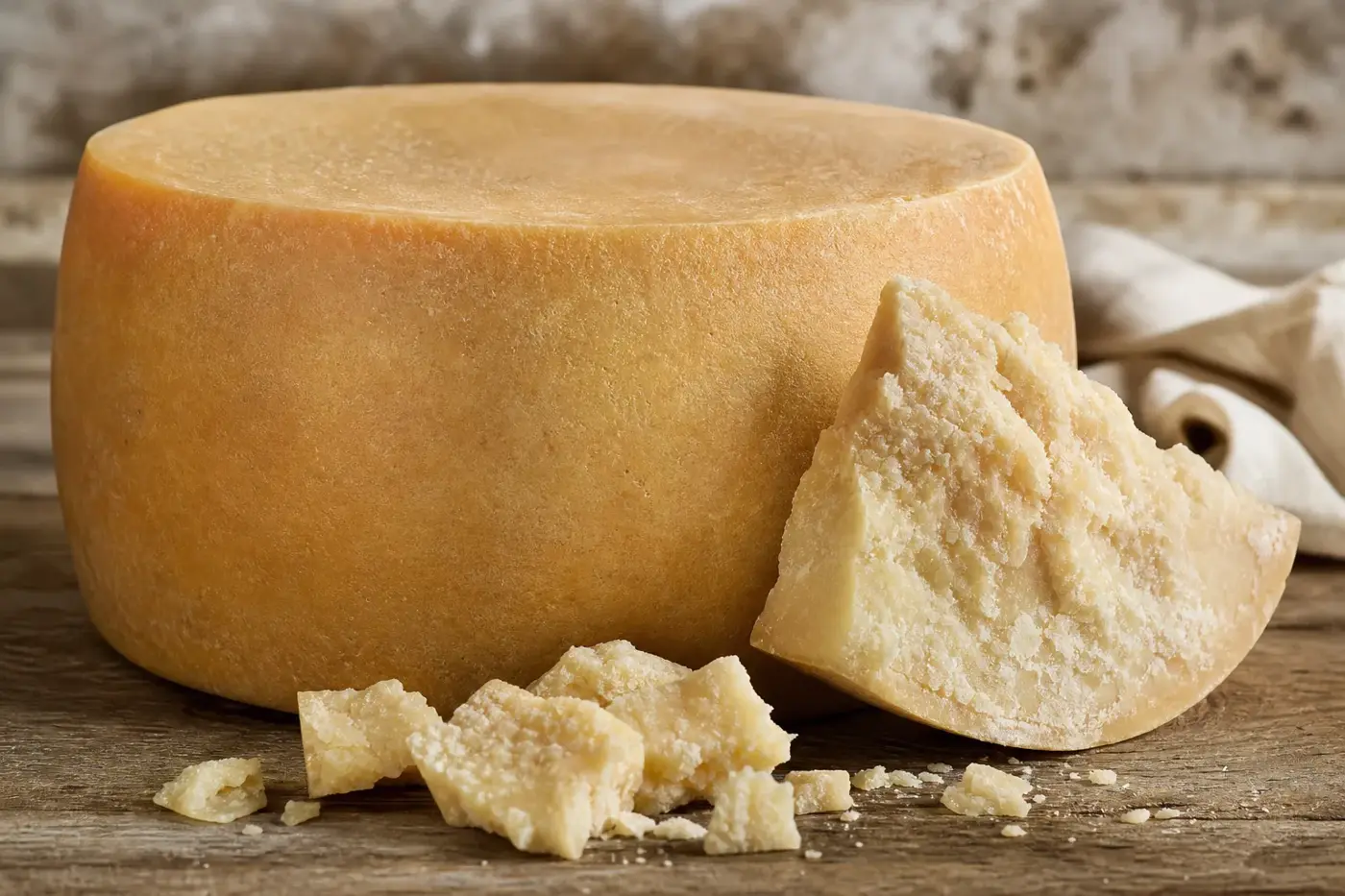
Parmigiano Reggiano
Break into a wheel of Parmigiano Reggiano and flakes fall away, revealing a finely granular cheese, pale straw to straw in colour.