Casciotta d'Urbino
Your knife slips through a thin, straw-coloured rind into something pale and tender.
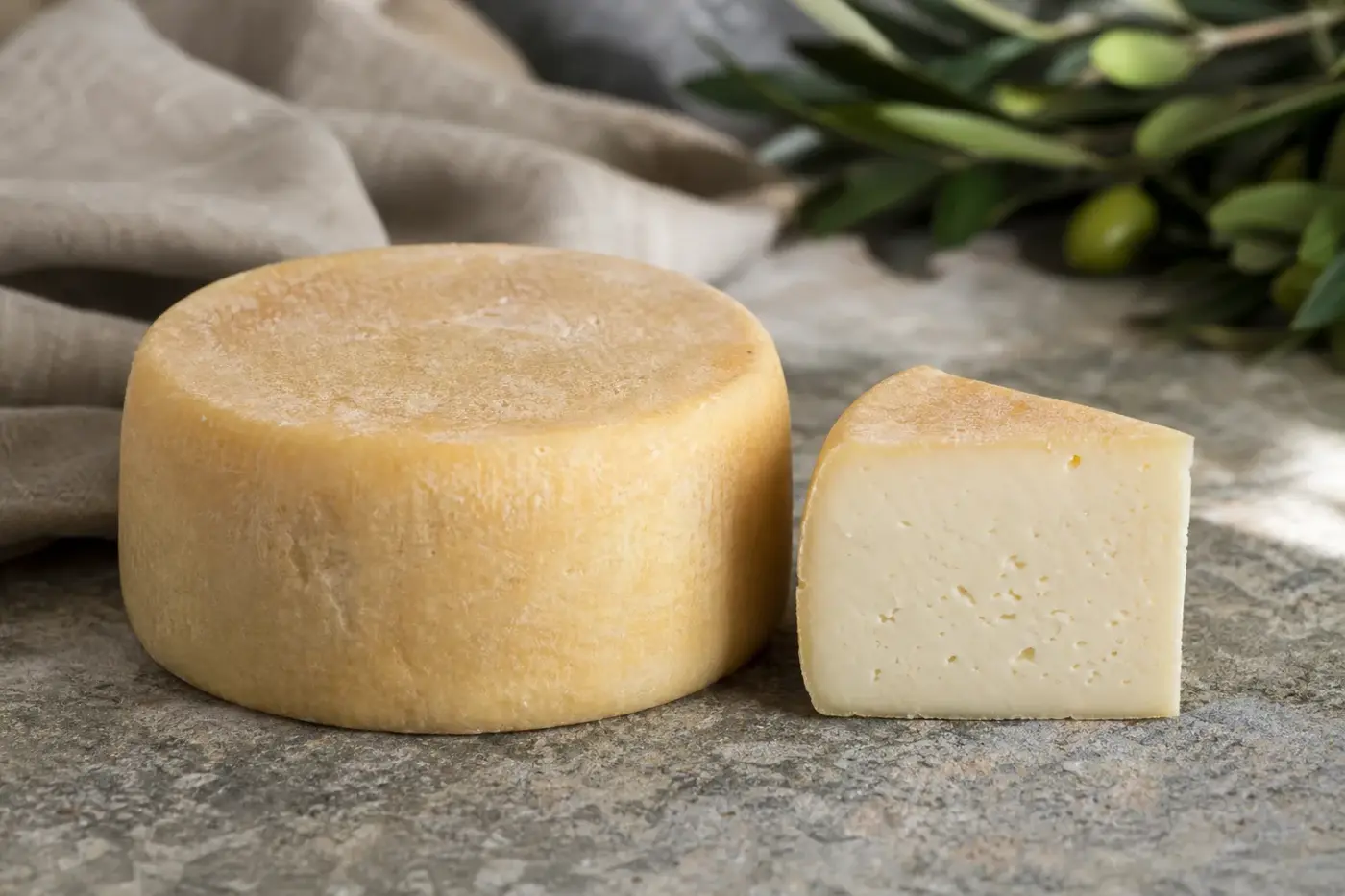
Your knife slips through a thin, straw-coloured rind into something pale and tender. The milk is still very much the main event. Matured for just 15 to 30 days, Casciotta d'Urbino blends mostly sheep’s milk with a smaller share of cow’s milk, bringing the sheep farming traditions of the Marche to your table with a gentle touch. This Italian protected designation of origin cheese has no need to shout.[1][2][7]
| What to look for | The useful details |
|---|---|
| Name on the label | Casciotta d'Urbino.[1][9] |
| EU authority and identifier | European Commission; PDO-IT-0005, the base identifier in amendment record PDO-IT-0005-AM01.[6] |
| EU registration | Commission Regulation (EC) No 1107/96; original registration dated 21 June 1996 in Defra’s record.[6][9] |
| Great Britain | Registered PDO; UK scheme registration dated 31 December 2020 at 23:00. Record information: November 2026.[9] |
| Production rules | Italian consolidated specification, published with the measure of 18 November 2020, Gazzetta Ufficiale No 296, 28 November 2020.[13] |
| Where it must be made | Province of Pesaro e Urbino and seven specified municipalities in the province of Rimini.[3] |
| The milk blend | Whole sheep’s milk, 70 to 80%; whole cow’s milk, the remaining 20 to 30%. Raw or pasteurised milk permitted.[1] |
| Permitted coagulant | Liquid or powdered rennet; animal species or alternative source unspecified in the production clause.[1] |
| Time to mature | 15 to 30 days, at 8 to 14 °C and 80 to 90% relative humidity.[1] |
| Shape and size | Cylindrical; 800 g to 1.2 kg; diameter 12 to 16 cm; height 5 to 9 cm.[2] |
| The rind | Thin, straw-coloured and specified as inedible.[2] |
| Understanding the fat standard | At least 45% fat in dry matter, not fat per 100 g of cheese.[2] |
Meet the little “s” that makes a difference
At the cheese counter, a single letter deserves your attention. Casciotta, followed by d'Urbino, meaning “of Urbino”, is the registered spelling. The producers’ consortium distinguishes it from the broader Italian caciotta category: small, generally young cheeses made with different milks and methods.[7]
Urbino gives the cheese its geographical reference, but its production territory reaches well beyond the city. Read the whole name: caciotta tells you the category; Casciotta d'Urbino identifies the registered product and its production rules.[3][5][7] The guide to protected cheese names takes you further into that distinction, including how a designation differs from a brand.
Follow its home ground, from the Marche into Rimini
This cheese stays close to home throughout its making. Milk production, cheesemaking and maturation must all happen within the defined territory. That means the whole province of Pesaro e Urbino, plus Novafeltria, Talamello, Sant’Agata Feltria, Casteldelci, Maiolo, San Leo and Pennabilli in the province of Rimini.[1][3]
Rimini’s place in the story comes down to changing boundaries. The European amendment documentation explains that these municipalities formerly belonged to Pesaro e Urbino before becoming part of Rimini province. If you describe Casciotta d'Urbino only through today’s Marche boundary, you leave out part of its legal home.[6]
Behind the map are sheep husbandry, pasture and established rural cheesemaking, all connections drawn in the specification. That does not mean every animal spends its whole life outdoors. The rules permit both housed livestock and grazing.[4]
Feed brings another connection with the surrounding countryside. For sheep and cattle, at least half the basic feed must come from the production area; separately, at least 75% of the dry matter of the forage component of the daily ration must be locally produced. These are two distinct requirements, not a promise that every ingredient in the animals’ diet is local.[4]
Let the two milks introduce themselves
Sheep’s milk takes the lead, accounting for 70 to 80% of the blend. Cow’s milk makes up the remaining 20 to 30%. Both must be whole milk from farms within the defined area.[1]
There is your first distinction from a pecorino made exclusively with sheep’s milk. The consortium describes Casciotta d'Urbino as sweet but full, with a pleasant, light acidity. Because the cheese is young, the aromatic character of its milk remains particularly apparent.[7]
You are tasting the finished blend, rather than separate qualities you can confidently assign to each milk without a controlled comparison. Ask your cheesemonger which dairy made it, how old it is and how the producer describes that batch. The permitted proportions give makers some room to work while keeping the cheese’s identity clearly defined.[1][7]
Watch milk become cheese, without the long wait
The cheesemaker can start with raw or pasteurised milk. Liquid or powdered rennet, the coagulant that sets milk into curd, is permitted, while added lactic cultures are optional. Coagulation takes place at approximately 35 °C.[1]
The curd, the set portion of the milk, then goes into suitable moulds, allowing the whey to drain away. Salting follows, either dry or in brine, a salt solution. The cheeses then mature for 15 to 30 days, at the temperature and humidity shown in the table above.[1]
The consortium’s fuller account brings you closer to the work: the curd is broken into pieces approximately the size of hazelnuts. It is an easy detail to picture. It belongs to the consortium’s published description of practice, rather than the shorter requirements in the consolidated production clause.[7]
That brief maturation shapes what reaches your plate. Casciotta d'Urbino is tender and led by milk flavour, rather than built with the firm structure of a cheese aged for grating.[2][7] To follow the wider journey from milk onwards, turn to how cheese is made.
Get to know what lies beneath the rind
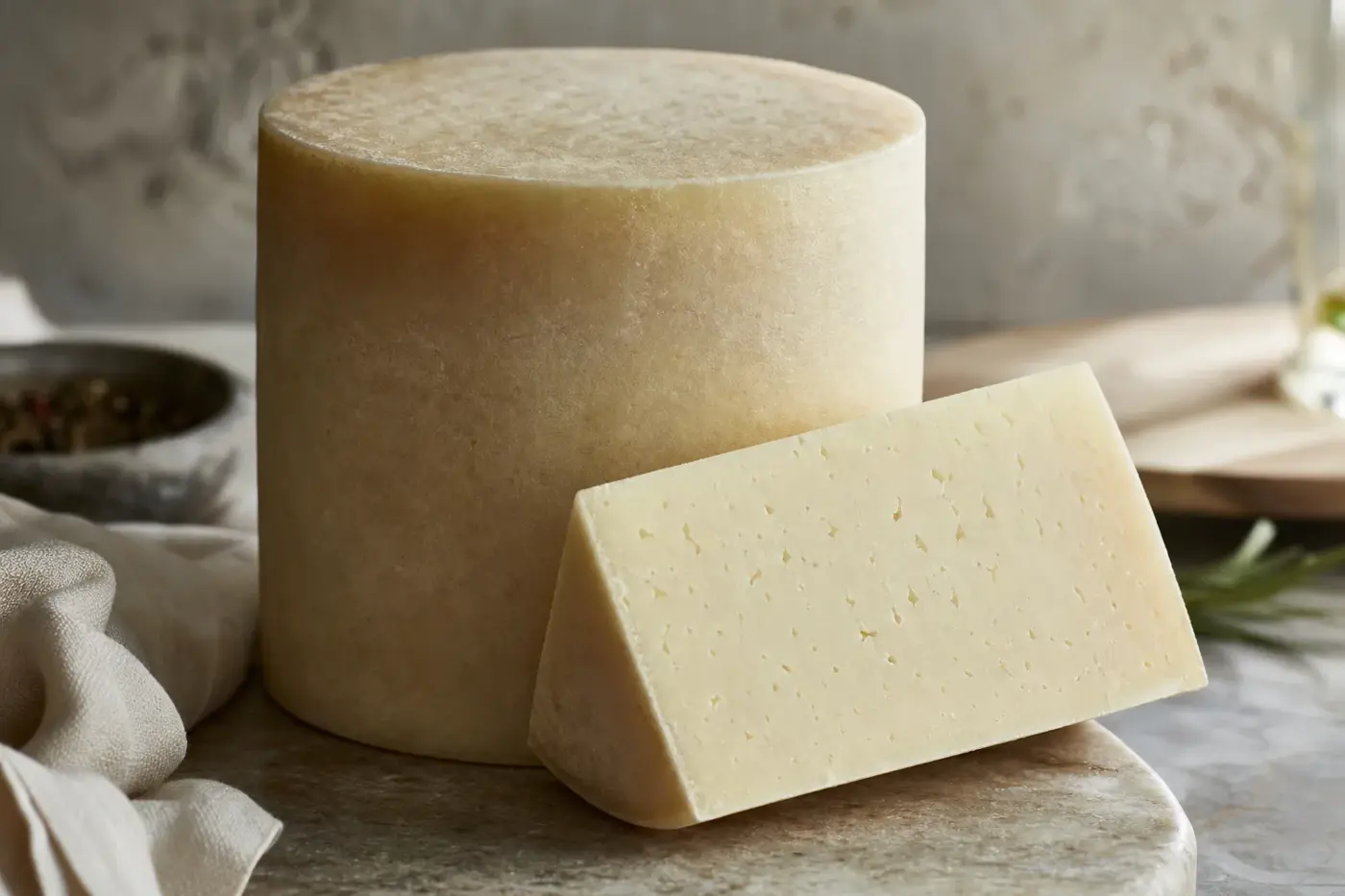
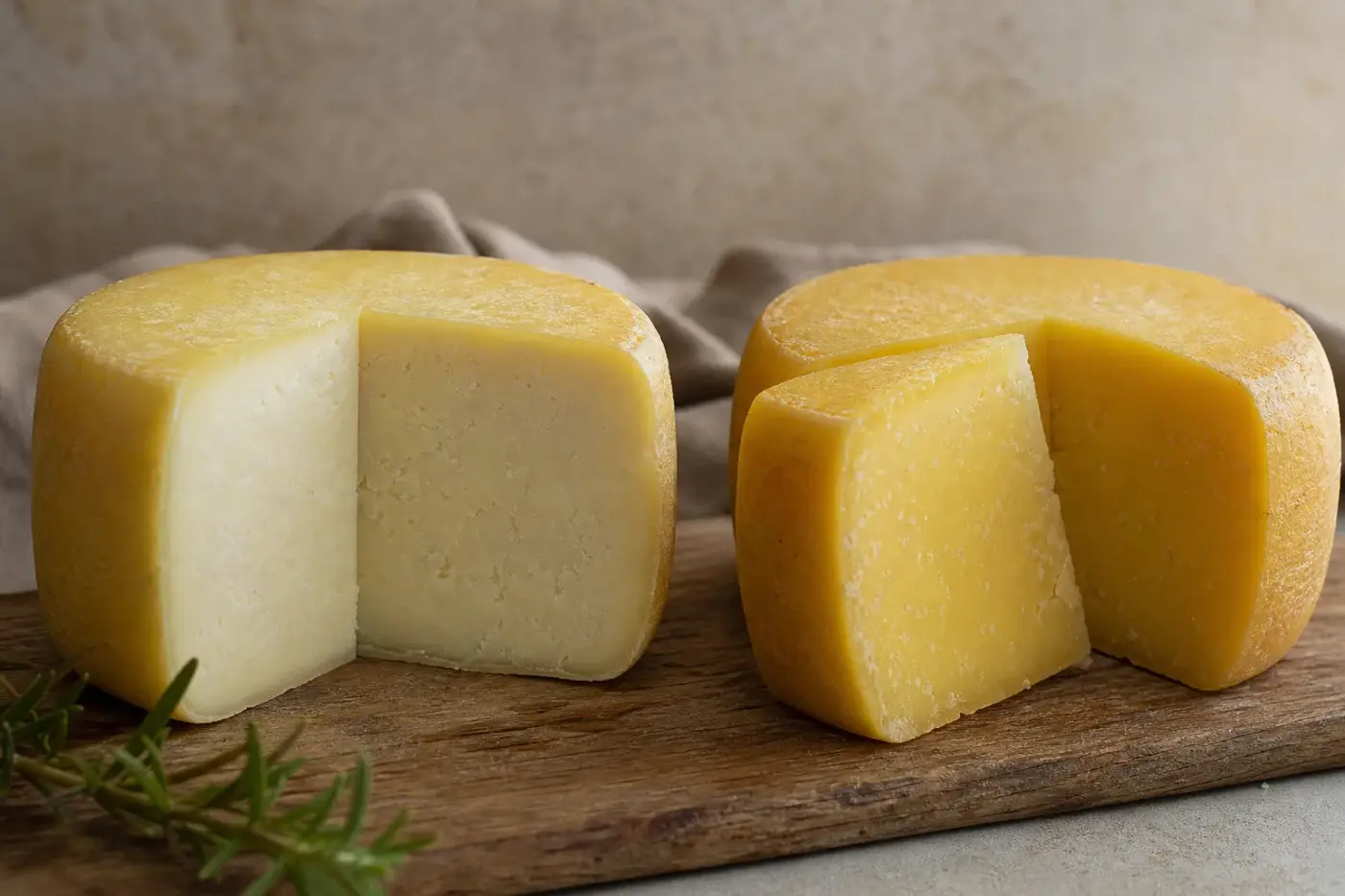
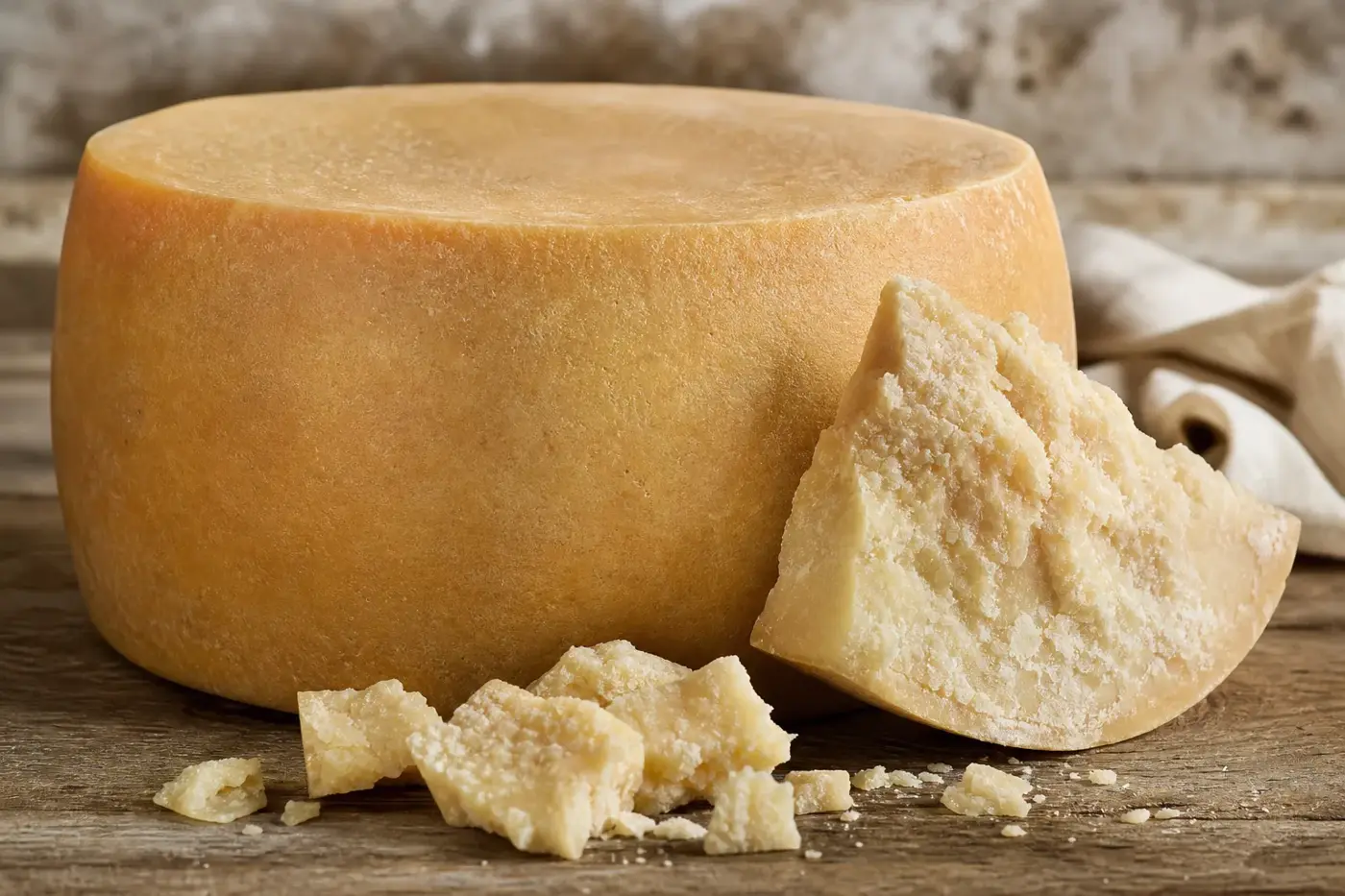
A whole Casciotta d'Urbino is a small, low cylinder with rounded faces. Its rind is approximately 1 mm thick and becomes straw-coloured. Cut inside and the paste, the cheesemaking word for the interior, ranges from white to pale straw.[2]
Expect tenderness and a little crumble. The specification describes the paste as tender and friable, with light eye formation: the small holes characteristic of this cheese. Here, “soft” means yielding and sometimes crumbly, not a flowing centre or an elastic, stretched texture.[2]
The official flavour description is sweet. Put that alongside the consortium’s fullness of milk flavour and pleasant acidic note, and you have a clearer idea of what awaits. Gentle does not mean there is nothing to notice.[2][7]
Try your first piece on its own. Give the tenderness, slight crumbliness and milk aroma a moment before you introduce anything sweet or strongly seasoned. Accompaniments have a habit of taking over the conversation if you let them.
Open the Renaissance letters to Michelangelo
Cheese appears among the gifts in the consortium’s account of correspondence between Michelangelo and Cornelia of Casteldurante. The specification places Casciotta d'Urbino within an established local tradition, referring to evidence dating from the Renaissance. That is the historical basis asserted for the designation.[13]
The consortium reproduces passages attributed to that correspondence. They include a letter dated 1 January 1557 describing a gift of cheese. A reply dated 28 March 1557 acknowledges cheeses sent to Michelangelo.[8]
Those published excerpts support the association with him, but an important distinction remains. They describe cheese gifts, not a cheese demonstrably made to today’s specification. The consortium presents his particular fondness for young cheese as an inference.[8]
Legal recognition belongs to a much later chapter. EU registration dates from 1996, while the consolidated Italian specification was published in November 2020. Those dates mark legal recognition and amended rules, not the beginning of cheesemaking here.[9][13]
Read the label, then have a proper conversation
Look first for the full name, Casciotta d'Urbino, and DOP, the Italian abbreviation for protected designation of origin. The required information label carries the product logo, the EU symbol and the relevant business details. You can buy the cheese whole or in portions, including vacuum-packed examples.[5]
If you are buying a wedge cut at the counter, ask to see the original label. Its information should connect the cheese with the producer, maturer and packager. The EU and Great Britain have separate GI schemes; EU scheme protection also applies in Northern Ireland.[5][10]
Then ask two questions: Is the milk raw or pasteurised? What is the source of the rennet? Both milk treatments are allowed, and the specification describes rennet by form rather than source. The consortium identifies calf rennet as traditional, so ask the maker or supplier about the particular cheese you are buying.[1][7]
You do not need to arrive at the counter knowing all the terminology. The guides to milk treatments and rennet explain these subjects further. Use them alongside a conversation with the person selling your cheese.
Keep it cool and serve just what you need
Follow the packaging instructions for storage, the date and any directions after opening. The Food Standards Agency’s consumer guidance for England, Wales and Northern Ireland, as of November 2026, advises keeping dairy products refrigerated. Set your fridge between 0 and 5 °C.[11]
Put out only what you intend to eat, returning the rest promptly. Let your serving portion lose some refrigerator chill while you prepare the table, rather than aiming for a fixed warm temperature. The same FSA guidance says chilled food should spend the shortest possible time outside refrigeration, with a maximum of four hours during preparation.[11]
Remove the rind before eating: the production specification explicitly identifies it as inedible.[2] Keep the original storage instructions with a cut portion, or ask the seller for them when buying loose cheese. You can find broader practical advice in storing cheese at home.
Make a little room for a gentle cheese
Begin with plain bread, cheese and water. You will give the milk character some space before stronger accompaniments arrive. Then try pear slices or a small spoonful of fruit preserve alongside a plain piece, so you can taste the contrast for yourself.[7]
Still or sparkling water makes an alcohol-free accompaniment without introducing another flavour. On a cheeseboard, give Casciotta d'Urbino the young, tender role. Serving it before more forceful cheeses helps its mild profile register, though your cheeseboard does not need a seating plan.[2][7]
There are possibilities beyond the board, too. The consortium’s published recipes include slices melted with almonds, cheese incorporated into a savoury risen bread, and a cheese sauce served with spinach. These producers’ suggestions give you different ways to cook with Casciotta d'Urbino while retaining its name as the cheese ingredient.[14]
Put Pecorino Toscano beside it and taste the difference
If you are exploring sheep milk cheeses, Pecorino Toscano offers an illuminating comparison. Its specification covers tender and semi-hard forms, both made exclusively with whole sheep’s milk. Minimum maturation is 20 days for the tender type and four months for the semi-hard type.[12]
Casciotta d'Urbino, by contrast, must include cow’s milk and has a short, defined maturation period. You are choosing both a milk blend and a stage of texture development. These geographical names identify distinct cheeses, not interchangeable versions of the same thing.[1][12]
Carry that curiosity into your next encounter with an Italian sheep milk cheese. Ask what milk goes in, how old the cheese is, what texture to expect and how you might serve it. With Casciotta d'Urbino, the answers bring you back to a distinctive combination: a sheep-led blend, a young, tender paste and the production territory associated with Urbino.[1][2][3]
General information only, not medical advice: follow the official guidance where you live.
Questions people ask
What milk is Casciotta d'Urbino made from?
It is made from 70 to 80% whole sheep’s milk and 20 to 30% whole cow’s milk. Both raw and pasteurised milk are permitted.
Is Casciotta d'Urbino the same as caciotta?
Casciotta d'Urbino is the registered name of a cheese with protected production rules. Caciotta is a broader Italian category of small, generally young cheeses made with different milks and methods.
What does Casciotta d'Urbino taste like, and can you eat the rind?
It is tender and slightly crumbly, with a sweet, full milk flavour and a pleasant light acidity. The production specification says the thin rind is inedible.
Is Casciotta d'Urbino vegetarian?
The production rules permit liquid or powdered rennet but do not specify its source. The consortium identifies calf rennet as traditional, so ask the maker or supplier about the cheese you are buying.
How should Casciotta d'Urbino be stored?
Follow the packaging instructions for storage, the date and any directions after opening. The Food Standards Agency advises keeping dairy products refrigerated and setting the fridge between 0 and 5 °C; check its current consumer guidance for England, Wales and Northern Ireland.
Sources
- MASAF, Disciplinare di produzione della denominazione di origine protetta “Casciotta d'Urbino”, consolidated specification published in 2020, Article 5. Official ministry-hosted text.
- Gazzetta Ufficiale, Provvedimento 18 novembre 2020, annex, Article 2, “Caratteristiche del prodotto”, published 28 November 2020.
- Gazzetta Ufficiale, same measure, annex, Article 3, “Zona di produzione”, 2020.
- Gazzetta Ufficiale, same measure, annex, Article 5, “Metodo di ottenimento”, 2020, livestock and feed provisions.
- Gazzetta Ufficiale, same measure, annex, Article 8, “Confezionamento ed etichettatura”, 2020.
- European Commission, Publication of an application for approval of an amendment to a product specification, 2020/C 223/06, 7 July 2020, reference PDO-IT-0005-AM01. Used for the identifier and the explanation of administrative boundary changes, not as the act approving the amendment.
- Consorzio Tutela Casciotta di Urbino DOP, Di Casciotta ce n’è una sola, undated webpage, retrieved November 2026. Producer-industry account of the category, sensory character and cheesemaking practice.
- Consorzio Tutela Casciotta di Urbino DOP, Tra le pieghe della storia, undated webpage, retrieved November 2026. Published historical account containing attributed correspondence excerpts.
- Defra, Casciotta d'Urbino, UK protected food names register entry, published 4 January 2021, retrieved November 2026.
- Defra, Protected geographical food and drink names: UK GI schemes, updated 8 March 2024, retrieved November 2026.
- Food Standards Agency, How to chill, freeze and defrost food safely, GOV.UK publication, 18 December 2017, retrieved November 2026. Applies to England, Northern Ireland and Wales.
- MASAF, Disciplinare della produzione della denominazione di origine protetta “Pecorino Toscano”, ministry-hosted consolidated text, December 2025 version, Article 2.
- Gazzetta Ufficiale, Provvedimento 18 novembre 2020, published in Serie Generale No 296, 28 November 2020; annex, Article 6, “Legame con l’ambiente”.
- Consorzio Tutela Casciotta di Urbino DOP, Le ricette della Casciotta, undated webpage, retrieved November 2026. Commercially interested producer-industry source, used only for its published culinary suggestions.
Researched through official production texts, the Great Britain register, published consumer guidance and attributed consortium accounts, with culinary suggestions identified as editorial judgement.
Last checked: November 2026
Last checked November 2026.
The editors suggest you read next
Parmigiano Reggiano
Break into a wheel of Parmigiano Reggiano and flakes fall away, revealing a finely granular cheese, pale straw to straw in colour.