Cathedral City
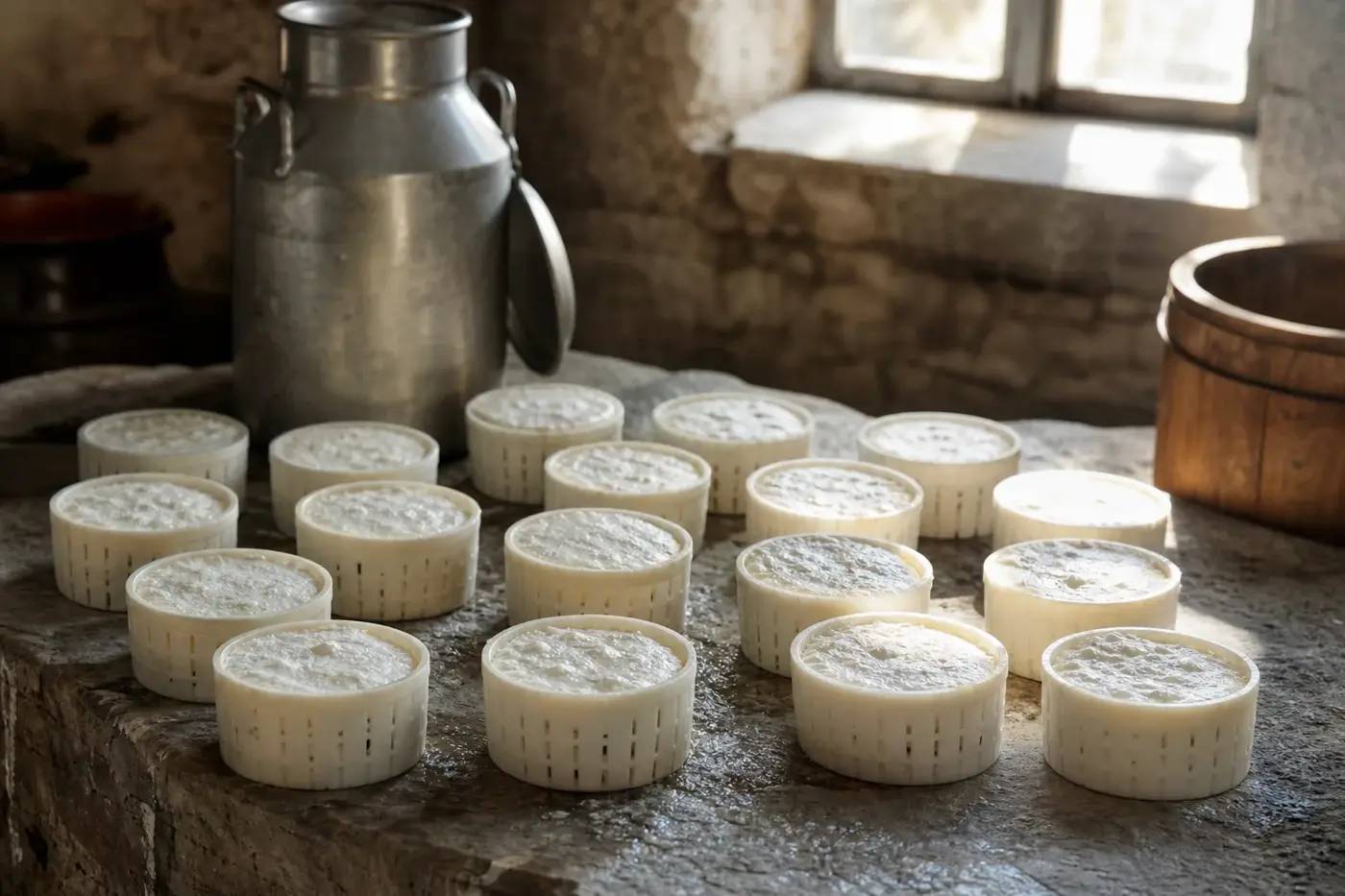
At Davidstow in North Cornwall, curds are pressed into blocks.

At Davidstow in North Cornwall, curds are pressed into blocks. Then comes the waiting, while West Country milk becomes the Cathedral City you might know from sandwiches and cheese on toast. Behind that familiar spot in your fridge sits a large creamery and a regional milk supply. Your toast has quite a backstory. [1,9]
| Meet the brand | What to know |
|---|---|
| Name | Cathedral City [1] |
| What it makes | British Cheddar, plus additional food ranges [13] |
| UK operating company | Dairy Crest Limited, trading as Saputo Dairy UK [3] |
| Ultimate parent | Saputo Inc.; proposed sale to Lactalis announced in August 2026 [5,6] |
| Where the Cheddar is made | Davidstow, North Cornwall [1,7] |
| Dairy cheese milk treatment | Pasteurised, according to the manufacturer [9] |
| Main cheese formats | Blocks, grated, sliced and snacking products [13] |
| Ownership information date | November 2026 [3,5,6] |
Get to know the cheese inside the familiar packet
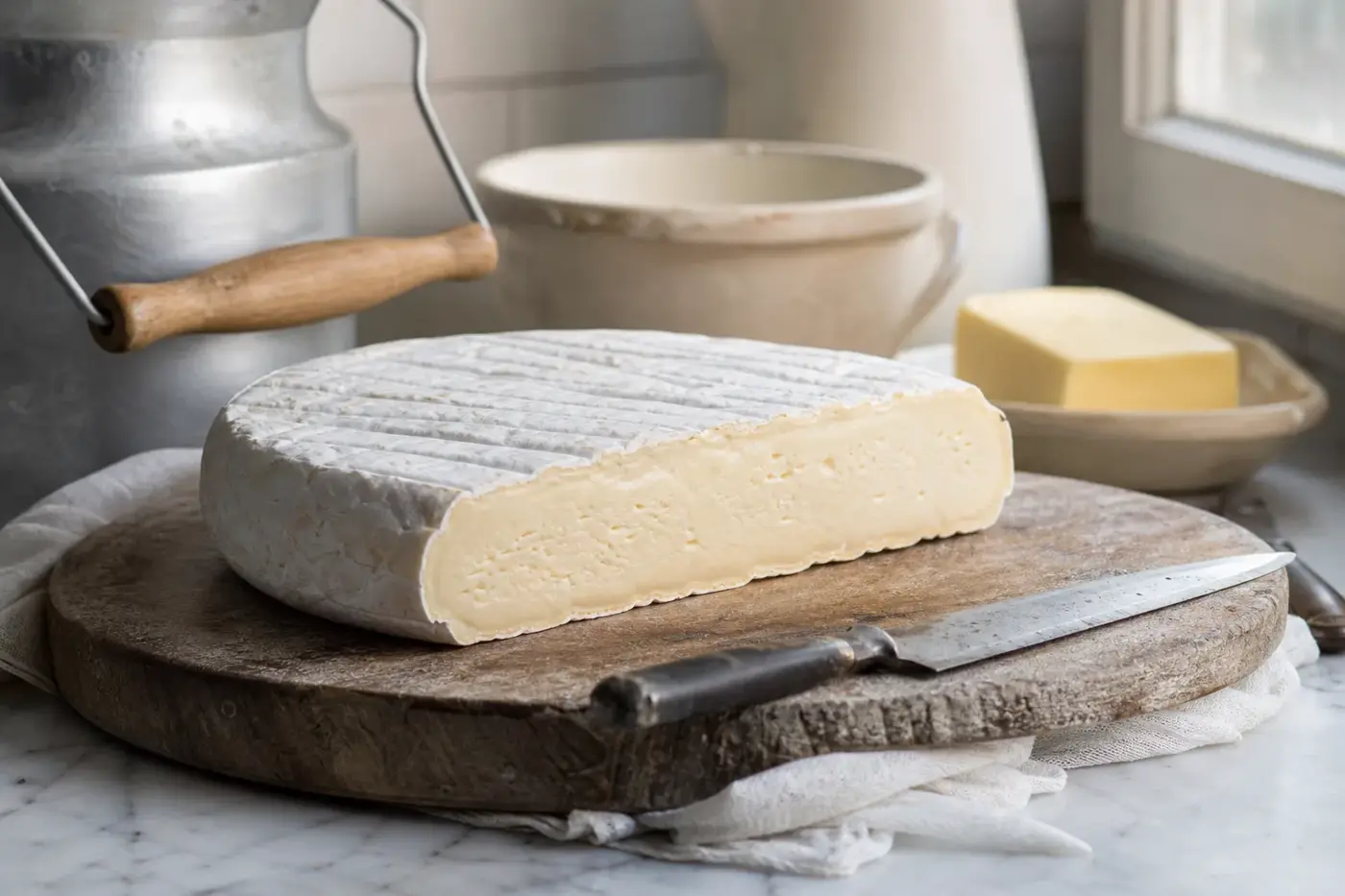
Reach for Cathedral City and you are choosing from a range, rather than buying a single cheese at one particular age. It belongs to the branded part of Britain's Cheddar market, with recognisable strengths and formats. Alongside blocks, grated and sliced cheese, you will find separate snacking products and a wider collection of foods carrying the name. [10,13]
The company calls it the nation's favourite cheese brand, citing Circana total market value sales for the 52 weeks ending 27 December 2025. That measures sales, rather than the result of a tasting. Its separate household reach claim draws on older Kantar data, covering the 52 weeks ending 15 May 2022. Those are the measures sitting behind the marketing language. [14]
In your kitchen, the decision can be simpler: start with the strength you enjoy, then pick the format that suits the meal. Cathedral City is one brand in a much wider Cheddar family. The guide to Cheddar explores that broader style and helps put your choice in context. [10,13]
Follow your Cheddar home to Cornwall
To trace today's Cathedral City to its manufacturing home, head for Davidstow. The brand's website places production in Cornwall, while Saputo pinpoints the creamery in North Cornwall. The place behind your cheese is clearer than the story behind the name on its packet. [1,7]
Cathedral City's current history describes more than 60 years of cheesemaking with milk from the South West of England. In the manufacturer's account, relationships with family-run farms help it produce cheese with a consistent character. Those farms, and that consistency, are central to the story the brand tells about itself. [2]
There is a distinction worth remembering at the cheese shelf: Cathedral City and Davidstow-branded cheese are separate ranges. Saputo lists both in its portfolio, although they share a manufacturer and production location. Read the name, strength and product description rather than assuming everything from the creamery is the same cheese. [8]
Who owns the name on your packet?
The ownership story takes a decisive turn on 15 April 2019. That day, Saputo announced its acquisition of Dairy Crest Group plc, completing the transaction first announced on 22 February 2019. Cathedral City was among Dairy Crest's brands. The acquisition covered the company's entire issued ordinary share capital through a court-sanctioned scheme of arrangement. [4]
Dairy Crest was subsequently rebranded as Saputo Dairy UK, as Saputo's UK history records. The operating business still identifies Saputo Dairy UK as the trading name of Dairy Crest Limited. This is why you may encounter a brand name, an operating name and a legal company name in records about the same business. [3,6]
Another sale was announced on 14 August 2026. Saputo entered into an agreement with B.S.A. SAS, Lactalis, to sell its UK dairy division, including Cathedral City. Completion was expected by the end of the first quarter of calendar 2027, subject to customary conditions, including regulatory approvals. In November 2026, the company history still described an agreement to sell, not a completed sale. [5,6]
Meet the farmers behind Davidstow
Davidstow anchors Cathedral City's Cheddar production, but the creamery is only part of Saputo's wider operation. Its role differs from the Nuneaton site in Warwickshire and the butter, spreads and oils operation at Kirkby, near Liverpool. Each location has a particular job to do. [7]
Cathedral City describes a dedicated West Country milk supply. Saputo says it works directly with the farmers supplying Davidstow, supported by a farm business team offering practical help. Its stated approach rewards milk suited to cheese and whey manufacture. Here, composition and purpose count: every litre is not treated as interchangeable. [2,9,15]
Those farmers also have an independent representative body, Davidstow Creamery Direct. According to Saputo, its elected representatives work with the company on farm standards and other milk supply initiatives. Look beyond the pastoral imagery and you find an organised relationship built around milk purchasing, practical support and farmer representation. [15]
From milk to curds to Cheddar
The transformation begins with starter cultures. In the manufacturer's published process, these bacteria produce lactic acid, increasing the acidity of pasteurised cows' milk. A vegetarian coagulating enzyme then forms curds, the solids destined to become cheese, and whey, the liquid separated from them. [9]
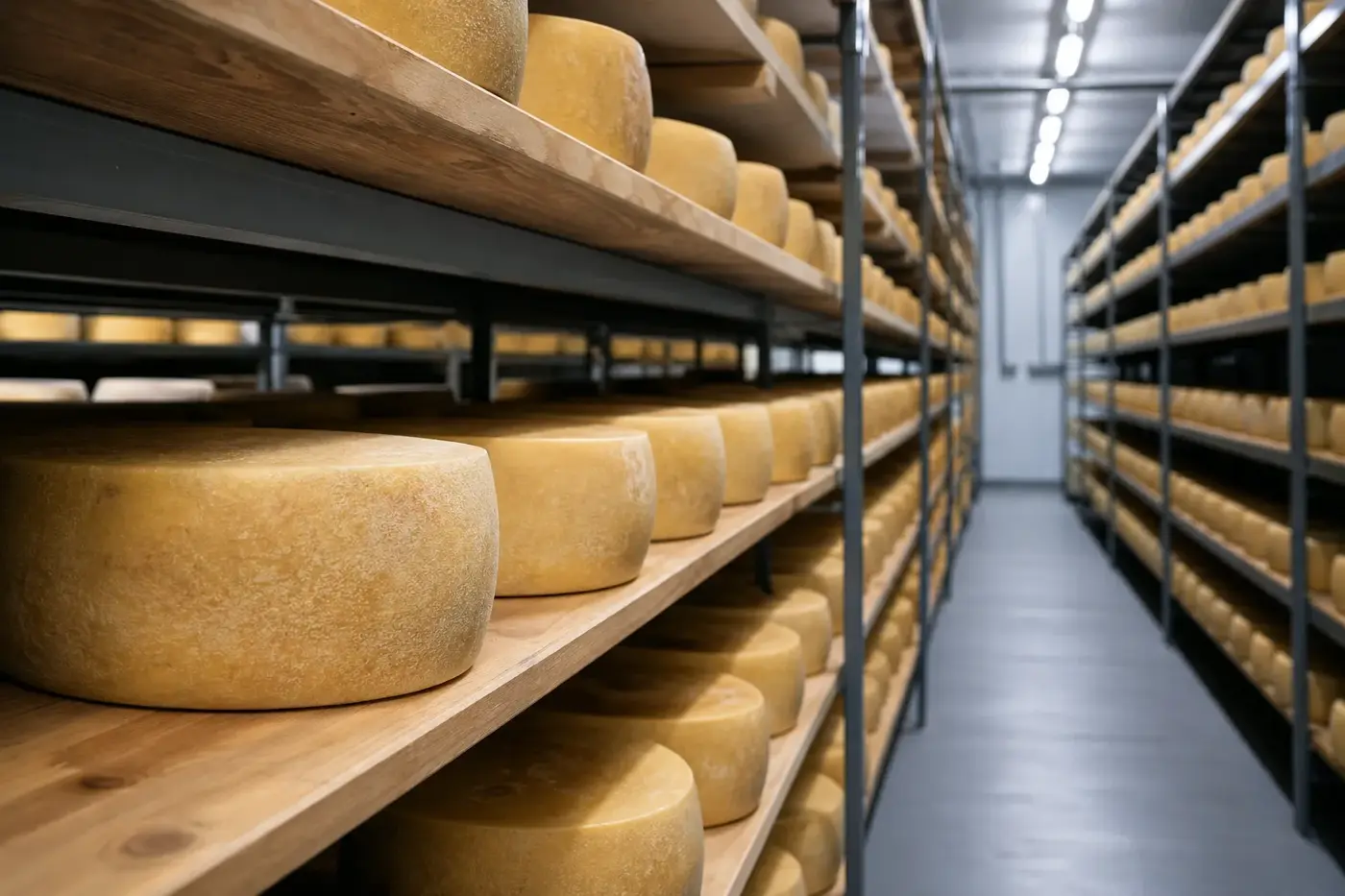
Next, the curds are cut and the whey is separated. Salt goes in before the curds are pressed into blocks, then the packed blocks mature until the required flavour and texture develop. The company's account takes you through this sequence without production temperatures or detailed factory operating instructions. [9]
Maturation gives the range its different characters. Cathedral City describes Mature as smoother, Extra Mature as firmer and Strongest Cheddar as crunchy. Its current block catalogue does not assign a maturation period to each listing. For a sense of what you can expect, turn to the individual product description. [10]
Want to follow the wider journey from milk to cheese? You can explore it in how cheese is made.
Find the strength and format for your plate
Smooth, firm or crunchy? Texture can help you choose just as much as strength. This November 2026 snapshot follows the UK manufacturer's catalogue and its sensory descriptions, rather than a fromage.co.uk tasting. Product ranges and names can change. [10,11,12,13]
| Your choice | How the manufacturer describes it | A little help choosing |
|---|---|---|
| Our Mildest block | Mellow and buttery | The gentlest end of the listed block range [10] |
| Mature Cheddar block | Smooth and full-flavoured | You can also buy it grated and sliced [10,11,12] |
| Extra Mature Cheddar block | Bold, firm and intensely rich | Also listed as grated Cheddar [10,11] |
| Strongest Cheddar block | Strong and crunchy | Crunch sets its stated texture apart [10] |
| Lighter variants | Mature and Extra Mature blocks; Mature grated and sliced | Compare each product's nutrition declaration [10,11,12] |
Moving from Mature to Extra Mature means choosing a firmer cheese, according to those descriptions. Strongest adds crunch to the picture. Think of different characters, rather than the same cheese turning up the volume. [10]
Format answers a more practical question: what are you making? A block lets you cut, grate or divide your cheese into portions, while the grated range is presented for sprinkling over meals. Large sandwich slices are designed around bread, and snacking products have a category of their own. [10,11,12,13]
Look further through the catalogue and you will also find pizza and frozen foods. The Cathedral City name alone does not tell you that the packet in your hand contains Cheddar. For that, you need the product description. [13]
Read the ingredients for the product you choose
Cathedral City says its dairy cheese contains cows' milk, starter culture, vegetarian rennet and salt. Rennet is the coagulating ingredient that helps the curds form. The manufacturer also declares the ingredients used in its dairy cheese suitable for vegetarians. [9]
Before carrying that description across to anything else with the same branding, read the exact product's information. The catalogue separates dairy cheese, plant-based alternatives and prepared foods. A Cheddar block, a plant-based product and a finished meal each need their own ingredient and allergen checks. [13]
For dairy cheese, start with the milk declaration, then read any additional ingredients and precautionary wording on the packet. For prepared food, you need information for the whole product, including its other components. The guide to reading a cheese label helps you work through those details.
Let the nutrition panel do the comparing
To put products on equal terms, use the same serving weight. A 30 g reference serving is three tenths of 100 g, so multiply any per-100 g label figure by 0.3. Keep the units unchanged: grams for fat and salt, or milligrams for calcium.
| UK Cathedral City Mature Cheddar block | Per 100 g | Per 30 g reference serving |
|---|---|---|
Take your figures from the product in your hand. Cathedral City lists standard and Lighter products separately and sells several formats, so use the relevant nutrition declaration and a consistent serving weight. Strength names describe flavour; the nutrition panel supplies the quantities for comparing fat, salt or calcium. The familiar name on the front cannot tell you those amounts. [10,11,12]
Take a closer look at welfare and environmental promises
Saputo says Davidstow milk suppliers must meet its Davidstow Farm Standards as well as the Red Tractor farm assurance scheme. It describes animal health and welfare requirements involving vets, nutritionists and environmental bodies. These are company statements about supplier requirements, distinct from independent evidence of compliance or welfare outcomes. [15]
| Red Tractor detail | Status |
|---|---|
Animal cruelty is also among the zero-tolerance issues in Saputo's responsible sourcing policy. The company describes risk assessments, third-party audits and protocols for suspected breaches, alongside criteria for reinstating suppliers. To understand what this approach means in practice, you need to consider the scope and implementation of those procedures. [3]
Saputo's environmental pledges for 2030 use several different measures. Absolute emissions reductions concern total emissions within a stated boundary, while emissions intensity relates emissions to a unit of output. Supplier engagement targets address another part of the programme. These pledges cover different scopes and activities, rather than a single product footprint for Cathedral City Cheddar. [16]
Packaging deserves a format-by-format look, too. Cathedral City's commitments page describes block packaging as a continuing technical recycling challenge. It identifies collection routes for certain grated bags, snacking bags and nets, and reports recycled content in sliced and snacking base trays. Read the instructions on your actual pack and the requirements of the collection scheme receiving it. [17]
Give your Cheddar a good home, then make lunch
Keep your cheese refrigerated and follow its packaging instructions. For home storage in England, Northern Ireland and Wales, the Food Standards Agency advises a fridge temperature between 0 and 5 °C and refrigeration of dairy products. Cathedral City recommends resealing its packs and storing them below 5 °C. A fridge thermometer gives you a better check than the control setting alone. [17,18]
Making sandwiches? The manufacturer's large slices offer a ready-cut option, while a block leaves the thickness up to you. The grated range is intended for sprinkling over meals. For a jacket potato, toastie or pasta topping, choose the strength for the flavour you want, rather than treating the strongest as a personal challenge. [10,11,12]
For a simple cheeseboard, cut a small amount from a block and add bread or plain crackers, plus an accompaniment you enjoy. Leave the remaining cheese refrigerated. The Food Standards Agency provides advice for England, Northern Ireland and Wales on keeping chilled food out of the fridge. [18]
Once your pack is open, wrapping and fridge organisation matter too. For those practical details, continue to storing cheese at home.
General information only, not medical advice: follow the official guidance where you live.
Questions people ask
Where is Cathedral City Cheddar made?
Cathedral City Cheddar is made at the Davidstow creamery in North Cornwall. The creamery uses a dedicated West Country milk supply.
Is Cathedral City cheese vegetarian and made with pasteurised milk?
The manufacturer says its dairy cheese is made with pasteurised cows’ milk and vegetarian rennet. It says the ingredients in its dairy cheese are suitable for vegetarians.
Who owns Cathedral City?
Saputo acquired Dairy Crest, including Cathedral City, in 2019. A sale of Saputo’s UK dairy division to Lactalis was announced in August 2026, but in November 2026 it was still recorded as an agreement rather than a completed sale.
What is the difference between Cathedral City Mature and Extra Mature?
The manufacturer describes Mature as smooth and full flavoured. Extra Mature is described as bold, firm and intensely rich.
How should I store Cathedral City cheese?
Cathedral City recommends resealing its packs and storing them below 5 °C. For England, Northern Ireland and Wales, the Food Standards Agency advises refrigerating dairy products at a fridge temperature between 0 and 5 °C; see its food storage guidance.
Sources
- Cathedral City, Welcome to Cathedral City, undated current webpage, checked November 2026. Manufacturer website.
- Cathedral City, Our story, undated current webpage, checked November 2026. Brand account.
- Saputo Dairy UK, Responsible Sourcing, undated current webpage, including legal entity footer, checked November 2026. Company policy.
- Saputo Inc., Saputo Completes the Acquisition of Dairy Crest Group Plc, a United Kingdom-Based Dairy Company, 15 April 2019. Completion announcement.
- Saputo Inc., Saputo Enters Agreement to Sell its United Kingdom Operations, 14 August 2026. Transaction announcement.
- Saputo Dairy UK, History, current company chronology, checked November 2026. Company chronology.
- Saputo Dairy UK, Take A Tour, undated current webpage, checked November 2026. Operating locations.
- Saputo Dairy UK, Our Brands, undated current webpage, checked November 2026. Brand portfolio.
- Cathedral City, FAQs, undated current webpage, checked November 2026. Ingredients, milk sourcing and manufacturing account.
- Cathedral City, Our Block Cheese, current UK catalogue, checked November 2026. Block products.
- Cathedral City, Our Grated Cheddar, current UK catalogue, checked November 2026. Grated products.
- Cathedral City, Our Sliced Cheddar, current UK catalogue, checked November 2026. Sliced products.
- Cathedral City, Our Products, current UK catalogue index, checked November 2026. Product categories.
- Cathedral City, The Nation's Favourite, citing Circana, 52 weeks ending 27 December 2025, and Kantar, 52 weeks ending 15 May 2022; checked November 2026. Company's claim substantiation statement.
- Saputo Dairy UK, Farmers, undated current webpage, checked November 2026. Milk supply relationships and stated standards.
- Saputo Dairy UK, Environment, current webpage with FY2030 pledges, checked November 2026. Environmental targets.
- Cathedral City, Our Commitments, current webpage including packaging chronology and storage guidance, checked November 2026. Packaging and storage statements.
- Food Standards Agency, How to chill, freeze and defrost food safely, published 18 December 2017, current online text checked November 2026; applies to England, Northern Ireland and Wales. Official guidance.
This desk-researched draft brings together manufacturer product information, company transaction announcements and official food storage guidance, keeping company claims attributed.
Last checked: November 2026
Last checked November 2026.
The editors suggest you read next
Who Makes the World's Cheese? The Big Dairy Groups
You pick up Galbani at the cheese counter, then pause over Kerrygold.