Saputo
Picture a bicycle carrying cheese through Montréal.
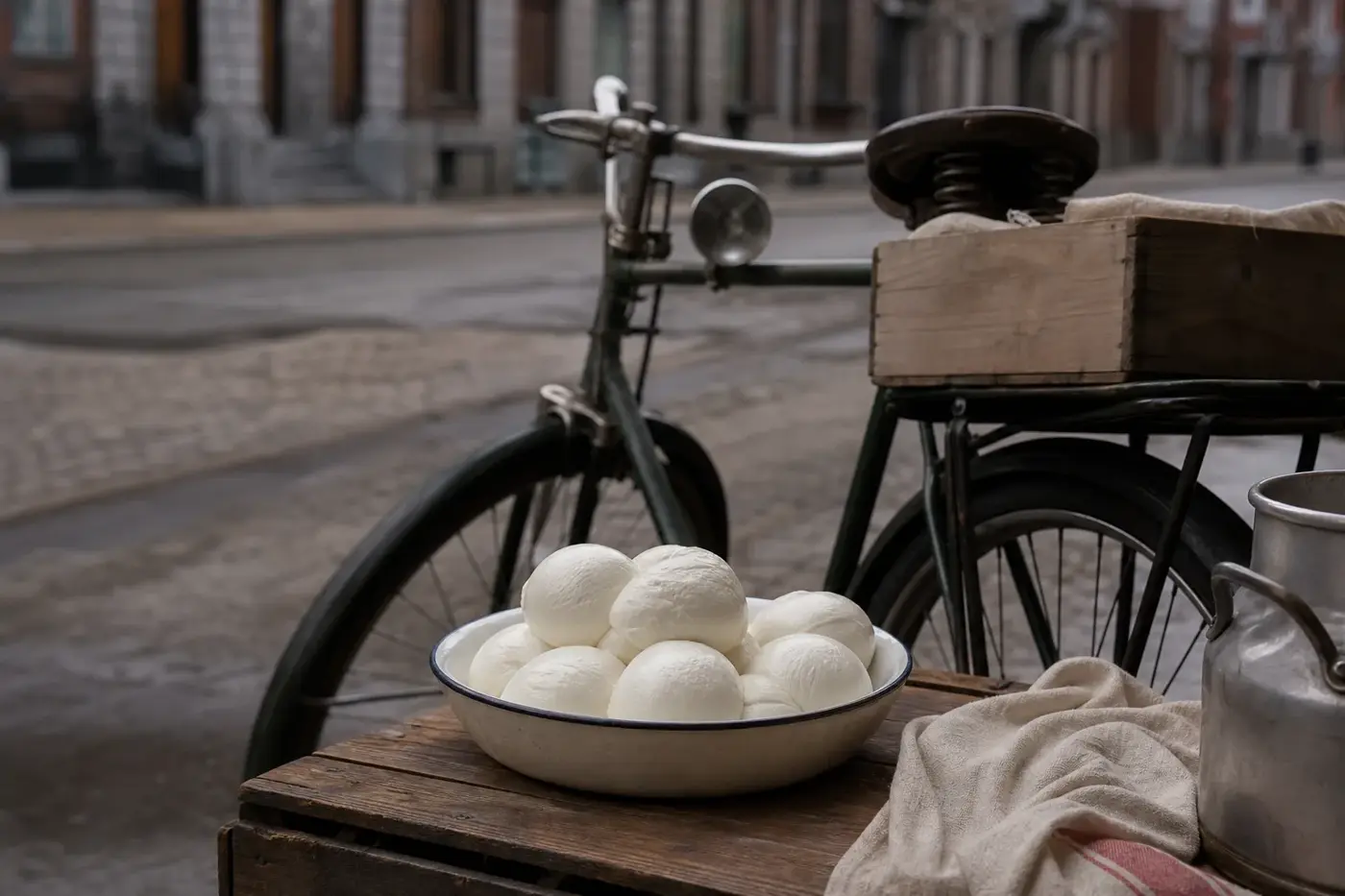
Picture a bicycle carrying cheese through Montréal. Those early deliveries belonged to a cheesemaking family whose business began in 1954.[2] It is a modest opening for a company that now spans North America, Australia and Britain, though quite an incentive to avoid potholes.[1]
You may know Saputo’s British cheeses better than its corporate name. The publicly traded Canadian dairy group connects West Country milk producers with Cathedral City and Davidstow through its UK business.[1] An agreed sale to Lactalis, announced in August 2026, points towards the next proposed change of ownership.[7]
| Field | The picture in November 2026 |
|---|---|
| Legal entity | Saputo Inc.[4] |
| Headquarters | Montréal, Québec, Canada.[4] |
| Ownership model | Publicly traded and owned by investors.[4] |
| Listing | Toronto Stock Exchange, SAP.[7] |
| Ultimate parent | Saputo Inc., the group parent.[6] |
| Family voting interest | No figure given |
| UK transaction | Sale agreed with B.S.A. SAS (Lactalis); completion expected by the end of March 2027, subject to approvals and other conditions.[7] |
| Principal UK cheese brands | Cathedral City, Davidstow and Wensleydale.[9] |
First, a family and Montréal mozzarella
Before the British Cheddar came mozzarella. According to Saputo’s history, the family left Sicily for Canada in the early 1950s. A cheesemaking father and his sons established the business in Montréal in September 1954, supplying the city’s Italian community and making deliveries by bicycle.[2]
Then pizza helped change the scale of things. Saputo links its growth to pizza’s increasing popularity, with a larger production facility opening in Saint-Michel in 1957. Its history records substantial expansion through the 1960s and 1970s as demand for mozzarella grew.[1][2]
How a Montréal business crossed borders
Public listing in 1997 opened another chapter. Buying Stella Foods later that decade enlarged Saputo’s US cheese business. The acquisition of Molfino Hermanos in 2003 took it into Argentina.[1]
| Year | Business acquired | What it brought to the group |
|---|---|---|
| 2013 | Morningstar Foods | US extended shelf-life dairy activities.[3] |
| 2014 | Interest in Warrnambool Cheese and Butter | A foothold in Australian dairy.[3] |
| 2018 | Murray Goulburn activities | Wider Australian operations.[3] |
| 2019 | Dairy Crest Group plc | British cheese, spreads and ingredients.[3] |
| 2021 | Bute Island Foods and Wensleydale activities | UK plant-based alternatives and regional cheeses.[3] |
Each purchase brought more than another name for a packet. Milk supply relationships, factories, product expertise and access to customers came with it. Follow the chronology and you find distinct regional businesses joining the group, each with its own products and capabilities. This was not one cheesemaking method being copied around the world.[1][3]
The family name, the board and the shareholders
Shareholders own Saputo Inc., the listed parent company. Its shares trade on the Toronto Stock Exchange under SAP. That makes it an investor-owned business, not a cooperative owned by the farmers supplying its milk.[4][7]
The founding family still has a board role, separate from daily operational management. Saputo records a 2024 transition when its family executive leader became executive chair and a long-serving operations executive became president and chief executive. The current management page dates the chief executive’s appointment to August 2024.[3][5]
To understand ownership, you need to keep three things apart: board influence, voting power and daily management. The dated shareholder circular is the place for voting holdings; the management directory tells you who runs the business. Read together, they explain how a publicly owned company is governed while its founding family remains present.[4][5]
Finding your way around the dairy map
Open Saputo’s fiscal 2026 results and you find four sectors: Canada, USA, International and Europe. Here, International means Australia, while Europe means the UK. Argentina sits separately as discontinued operations. Keep that accounting distinction in mind when you compare older accounts of the group’s reach with newer reports.[6]
Cheese is only part of the picture. The dairy business also encompasses milk, cream, cultured products and dairy ingredients, supplying retail, foodservice and industrial customers. You might meet its products as branded supermarket cheese or as ingredients used by another manufacturer. That helps explain why the corporate name can be less familiar than the names on the shelf.[1][6]
Britain prepares for another ownership chapter
Saputo’s present UK operations took shape with the purchase of Dairy Crest Group plc in April 2019. Acquisitions of Bute Island Foods and Wensleydale activities followed in 2021.[3]
On 14 August 2026, Saputo announced an agreement to sell its Dairy Division (UK) to B.S.A. SAS, part of Lactalis. The deal covers five manufacturing facilities and local brands including Cathedral City, Wensleydale, Davidstow, Clover and Country Life. Saputo said the division represented approximately 7% of consolidated revenue over the preceding four quarters.[7]
Both parties expected completion by the end of March 2027, subject to regulatory approvals and other closing conditions. For the November 2026 picture, keep that distinction clear. An agreed sale and an expected completion date are not the same as a completed transaction.[7][8]
Follow familiar names from Cornwall to Scotland
Cathedral City and Davidstow are the principal Cheddar names in Saputo’s UK portfolio. Wensleydale brings its regional cheese range, while the wider brand list takes in butter, spreads and cooking oils. Sheese belongs to the plant-based alternatives business acquired with Bute Island Foods.[3][9]
The production map takes you from Cornwall to Scotland. Lactalis’s acquisition announcement names five locations: Davidstow in Cornwall, Hawes in Yorkshire, Nuneaton in Warwickshire, Kirkby in Merseyside and the Isle of Bute in Scotland. These sites serve different product categories. They are not five dairies making interchangeable cheeses.[8][9]
Cathedral City’s manufacturer describes its Cheddar as made in Cornwall, using milk from dedicated West Country farms. For the product range, turn to the separate Cathedral City brand page. If you want the cheese style and its wider story, read cheddar.[17]
From incoming milk to mature cheese
At Davidstow, the story starts with the composition of the milk. Saputo says its supply arrangements reward milk suited to cheese and whey production, and require its own farm standards alongside Red Tractor assurance. What arrives from the farm matters just as much as the equipment waiting to process it.[10]
Making, maturing and packing are separate stages, so give each its own question. Where was your cheese made, how was it matured, and where was it cut or packed? Different facilities can handle those jobs, while products sharing a brand can have different recipes and maturation periods. A familiar name is a useful introduction, not the whole conversation.[17]
For Cathedral City’s dairy cheese, the manufacturer lists cow’s milk, starter culture, vegetarian rennet and salt. Rennet is the coagulant that helps form the curd. Start with that declared ingredient list rather than assuming industrial cheesemaking follows a single recipe. For the different sources of coagulants, see rennet explained.[17]
Meet the farmers supplying Davidstow
Nearly 300 farms across Cornwall, Devon, Somerset and Dorset supply more than 500 million litres to Davidstow, according to Davidstow Creamery Direct’s published account. The organisation describes itself as independently financed by farmer members. It has an elected board and forum.[11]
Saputo says those representatives help develop farm standards and supply initiatives, and that each farmer has a dedicated farm business manager. The farmers’ organisation adds another perspective to the processor’s account. These suppliers have their own representative structure and voice, alongside their commercial relationship with the buyer.[10][11]
Give milk contracts the same close attention you give product labels. Look at milk composition requirements, collection arrangements, notice periods, deductions and how changes are negotiated. Dependable collection and achievable standards matter alongside the daily work of maintaining herds, staffing farms and responding to environmental expectations. These are practical details with a place in the story of your finished cheese.[10][11]
Climate commitments and Davidstow’s environmental record
Saputo’s climate commitments include cutting absolute scope 1 and 2 greenhouse gas emissions by 42.6% by fiscal 2030, against fiscal 2020. Those categories cover direct operational emissions and purchased energy. Its separate agricultural emissions intensity target measures emissions against milk output. That is not the same thing as an absolute reduction.[12]
On animal welfare, Saputo says suppliers should eliminate tail docking and use pain control for procedures including dehorning and disbudding. Its stated supplier requirements also include animal care training. A code of conduct is reviewed annually.[13]
Davidstow’s environmental performance is the clearest independently documented UK controversy. The Environment Agency records a 2022 conviction following guilty pleas to 21 charges, including river pollution and odour offences. The incidents span years before and after Saputo’s 2019 acquisition. That chronology matters when you trace responsibility and the factory’s record.[15]
In June 2026, the agency reported significant progress while recalling persistent poor performance. A revised permit brought additional wastewater monitoring, plus noise and odour measures. Before increasing cheese production, the operator must demonstrate that effluent treatment will remain effective and meet the agency’s pre-operational conditions.[16]
Food safety brings a different set of measures. Saputo describes internal and third-party audits, traceability systems and global quality oversight, and reports that all facilities held certification against GFSI-recognised standards in fiscal 2026. That describes the system as a whole, rather than an individual inspection finding or batch-specific recall notice. Each has its place when you assess performance.[14]
Let the cheese in your hand lead the way
Begin with the exact product, its market and its current pack. Saputo’s corporate portfolio identifies the brands; manufacturer information supplies the recipe and declared suitability of individual products. Cathedral City’s UK FAQ mentions vegetarian rennet, but keep your attention on the particular product. Do not extend that declaration across the range or to other brands.[9][17]
- Ownership: consult the brand owner’s current corporate announcement, especially while the UK transaction remains pending.[7]
- Ingredients: read the exact product description and ingredient information, including additions to flavoured or prepared products.[17]
- Vegetarian suitability: look for an explicit declaration. If the coagulant is unclear, ask the manufacturer about the named product.[17]
- Origin: distinguish cheese described as made in Cornwall from a company contact address or packing location.[17]
For a fuller method, see how to read a cheese label. Keep the pack’s batch details if you contact the manufacturer. They make your enquiry specific to the cheese you are holding, a good reason for a cheese lover to keep the wrapper, not just the cheese.
Look beyond the corporate name
The proposed Lactalis transaction belongs to the continuing reshaping of international dairy ownership. Lactalis describes itself as a French family-owned company. Saputo combines public share ownership with the founding family’s continuing board presence. Both own familiar British brands, but their ownership structures differ.[3][4][8]
Ownership helps you understand investment decisions, milk supply relationships and responsibility for a factory’s performance. Choosing cheese brings you closer: which milk, which recipe, which production site and which maturation? Saputo’s Cheddar, regional cheese and plant-based businesses show how much variety can sit beneath one corporate name. The most revealing details still belong to the individual product.[3][9][17]
Questions people ask
Who owns Saputo?
Saputo Inc. is owned by shareholders and listed on the Toronto Stock Exchange under SAP. The founding family retains a board role, but its voting interest was not verified.
Is Saputo selling its UK business to Lactalis?
Saputo announced an agreement to sell its UK dairy division to B.S.A. SAS, part of Lactalis, on 14 August 2026. Completion was expected by the end of March 2027, subject to approvals and other conditions; completion was not verified in November 2026.
Which British cheese brands does Saputo own?
Its principal UK cheese brands are Cathedral City, Davidstow and Wensleydale. The agreed sale to Lactalis includes these brands.
Where is Cathedral City cheese made?
The manufacturer describes Cathedral City Cheddar as made in Cornwall with milk from dedicated West Country farms. Making, maturing and packing can take place at different facilities, so check the exact product.
Is Cathedral City cheese vegetarian?
Cathedral City’s UK FAQ mentions vegetarian rennet, and the manufacturer lists it among the ingredients for its dairy cheese. Check the particular product for an explicit declaration rather than assuming it applies to the whole range.
Sources
- Saputo Inc., History, undated corporate history, retrieved November 2026. Founding, mozzarella expansion, public listing, Stella Foods and Molfino Hermanos. Source.
- Saputo Inc., 1950 History, undated corporate history, retrieved November 2026. Immigration chronology, September 1954 founding, deliveries and Saint-Michel facility. Source.
- Saputo Inc., 2010 to present, corporate history updated through 2026. Acquisition chronology and 2024 leadership transition. Source.
- Saputo Inc., Shareholder Information, current corporate webpage, retrieved November 2026. Public company status, continuous disclosure and Montréal corporate contact. Source.
- Saputo Inc., Management team, current webpage including August 2026 developments, retrieved November 2026. Executive responsibilities and August 2024 chief executive appointment. Source.
- Saputo Inc., Saputo Reports Financial Results for the Fourth Quarter and Fiscal 2026, 2026. Sector definitions, Argentina’s discontinued-operation classification and customer markets. Source.
- Saputo Inc., Saputo Enters Agreement to Sell its United Kingdom Operations, 14 August 2026. Buyer, transaction scope, expected completion, conditions and division revenue share. Source.
- Lactalis UK & Ireland, Lactalis announces an agreement with Saputo Inc. to acquire its dairy division in the U.K., 14 August 2026. Buyer’s account, five production locations and expected completion. Source.
- Saputo Dairy UK, Our Brands, undated current portfolio, retrieved November 2026. Source.
- Saputo Dairy UK, Farmers, undated supplier information, retrieved November 2026. Farm standards, representation and farm business managers. Source.
- Davidstow Creamery Direct, Home, undated farmer organisation account, retrieved November 2026. Member financing, elected representation, geographical coverage and milk supply figures. Source.
- Saputo Inc., Climate, current environmental commitments, retrieved November 2026. Fiscal 2030 targets and fiscal 2020 baseline. Source.
- Saputo Inc., Animal Welfare, undated current policy summary, retrieved November 2026. Source.
- Saputo Inc., Food quality and safety, current webpage containing fiscal 2026 reporting, retrieved November 2026. Auditing, traceability, oversight and reported certification coverage. Source.
- Environment Agency, Dairy Crest given record fine for Davidstow environmental offences, 2022. Guilty pleas, sentencing on 23 June 2022 and offence chronology. Source.
- Environment Agency, Environment Agency issues new permit for Davidstow creamery, 9 June 2026. Regulatory assessment, permit safeguards and conditions preceding increased production. Source.
- Cathedral City, Home and FAQs, current manufacturer information, retrieved November 2026. Cornish manufacture, West Country milk and declared dairy-cheese ingredients. Home, FAQs.
This desk-researched draft brings together corporate histories, investor disclosures, manufacturer information, farmer representation and Environment Agency reporting.
Last checked: November 2026
Last checked November 2026.
The editors suggest you read next
Who Makes the World's Cheese? The Big Dairy Groups
You pick up Galbani at the cheese counter, then pause over Kerrygold.