Cloth Bound Cheese Explained
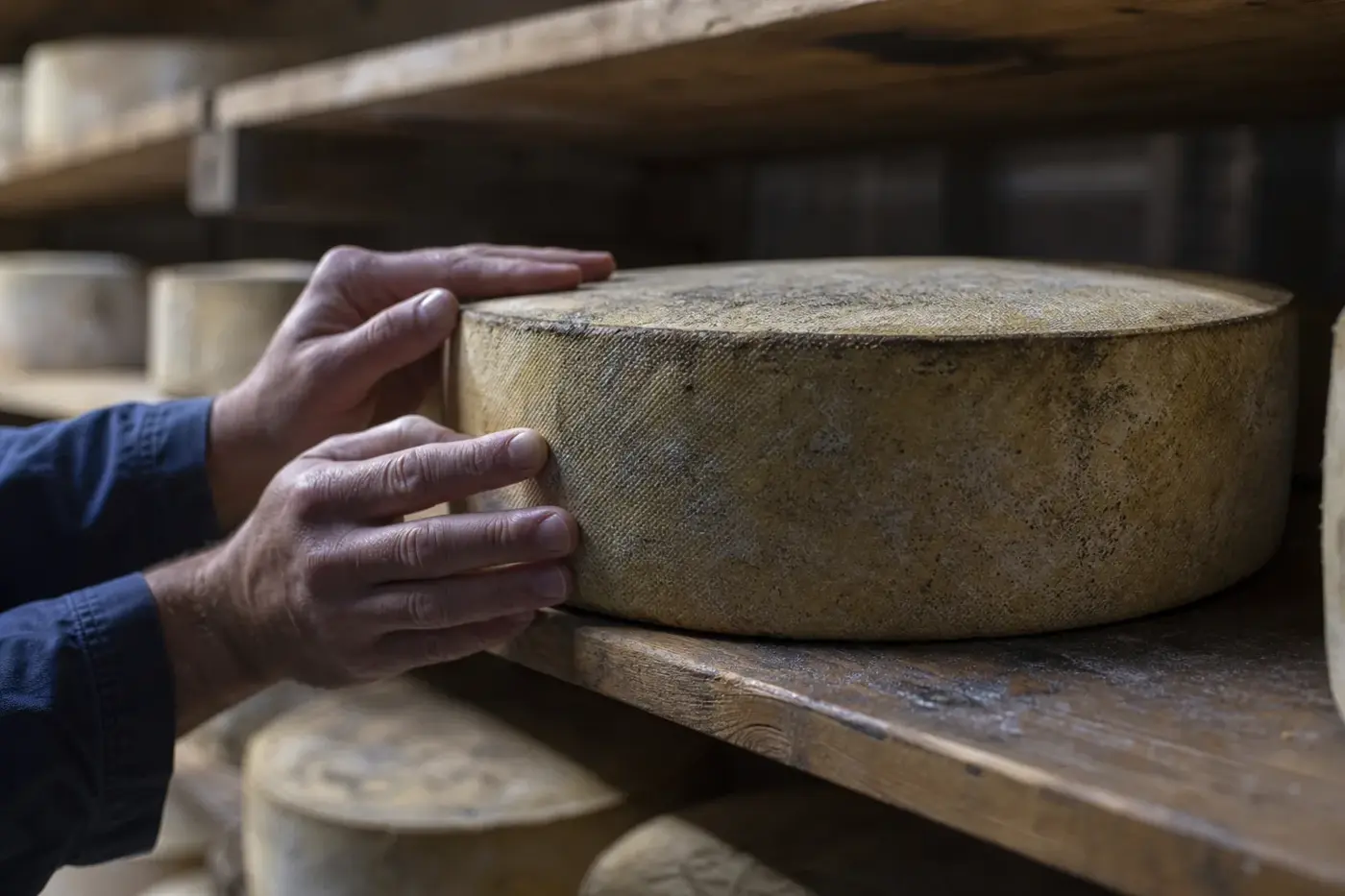
At Quicke’s in Devon, muslin is wrapped by hand around a newly pressed cheese, held snugly against the wheel with fat.
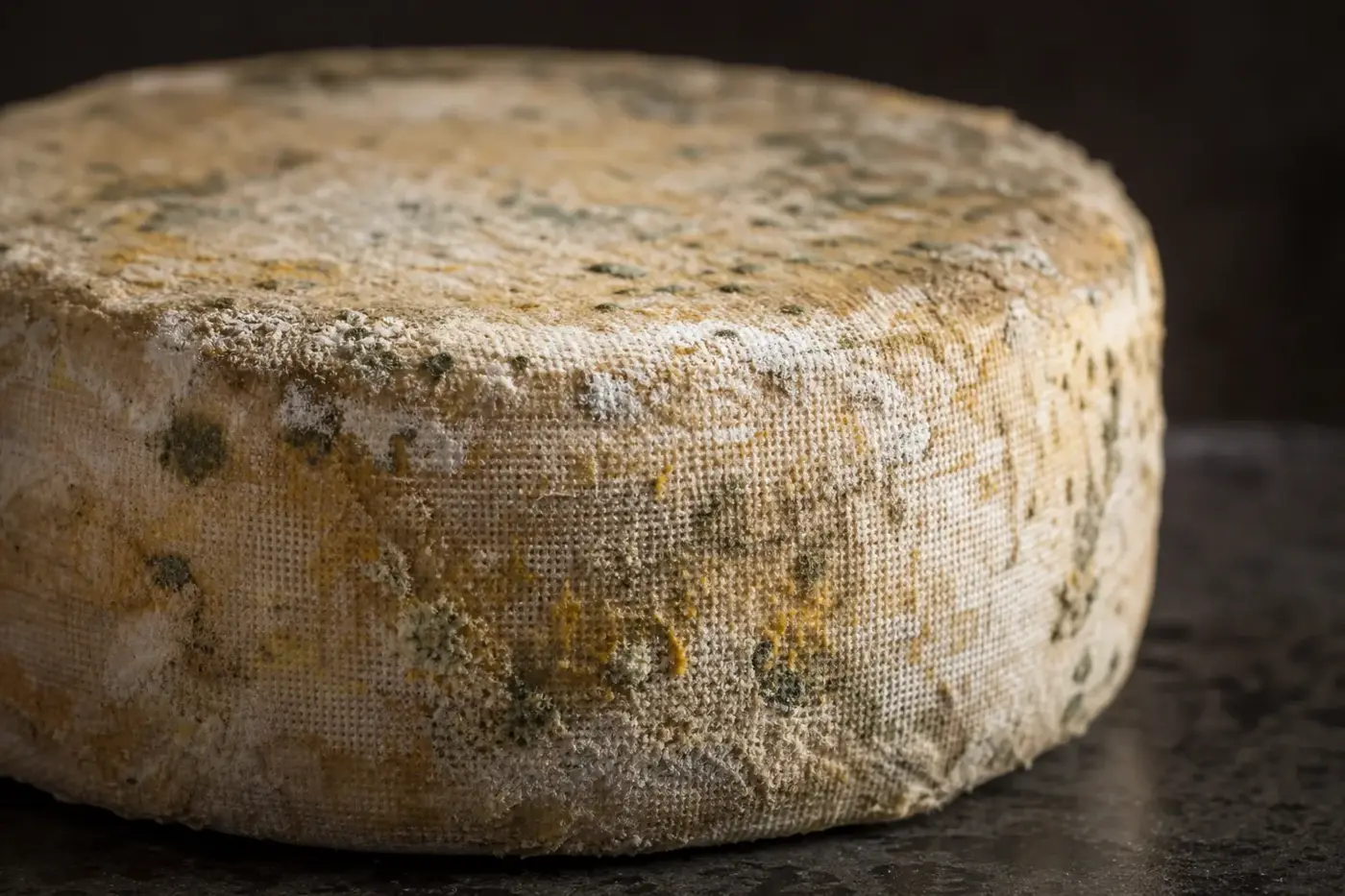
At Quicke’s in Devon, muslin is wrapped by hand around a newly pressed cheese, held snugly against the wheel with fat. In time, that jacket becomes a “mould garden”. Moisture passes between cheese and surroundings as the rind develops beneath it. What reaches your plate owes something to all three: the cheese, its wrapping and the conditions of the store. [2][3][6]
A cheese jacket that earns its keep
You might hear a maker call a cheese clothbound or bandaged. Both mean that a formed cheese is wrapped in fabric, which stays around it during maturation. In British farmhouse Cheddar production, muslin becomes part of the working surface where the rind develops. This is not a cheese dressing for dinner. [2][3][6]
That wrapping is different from the cheesecloth used to drain curds. Draining separates curd, the milk solids that become cheese, from whey, the liquid released during cheesemaking. Binding comes later, once the cheese has its shape. One cloth helps make the young cheese; the other goes into the maturing store with it and influences ripening. [2][3]
For the earlier chapters, turn to how cheese is made. By the time the muslin goes on, the maker has already established much of the wheel’s moisture, acidity and structure. The wrapping works with what is there. It cannot invent the cheese’s character from scratch. [2][3]
Follow the cloth from Devon to Vermont
At Quicke’s, hand wrapping in muslin comes before maturation in wooden racks. This Devon dairy gives you a documented example of cloth binding in British farmhouse Cheddar production. Its account tells you about that dairy’s practice, rather than the complete history of cloth binding or its wider regional use. [3]
The West Country Farmhouse Cheddar specification records cloth binding too. Under this designation, production takes place on farms within the defined boundaries of Dorset, Devon, Somerset and Cornwall. The specification allows cylinders and blocks, with different wrapping arrangements, and requires at least nine months’ maturation. As of November 2026, the name is registered as a PDO in Great Britain. [1][2]
You can therefore find two different stories on a label. Cloth binding tells you about a maturation method; a protected designation of origin identifies a product made under a particular specification. To untangle the system behind those names, start with protected names explained. [1][2]
Now look across to Vermont. At its cellars there, Jasper Hill adds lard and another layer of cloth to young Cabot cheeses arriving for maturation. British farmhouse cheesemaking is an important reference point for cloth binding. It is not the technique’s geographical boundary. [6]
First the press, then the muslin
Before a wheel can be wrapped, it needs to hold together as a coherent cheese. In the West Country specification, wrapping follows pressing, although makers’ pressing arrangements vary. For cylinders, the specification offers two routes: dip the cloth in melted lard or another suitable natural fat or oil, or apply fat to the cheese before bandaging. [2]
The aim is a close fit, not a loose sack. Fat sits between cheese and cloth, helping the fabric lie against the surface. Jasper Hill coats young cheese in lard before adding another cloth layer. Binding can therefore carry on at the maturation site rather than finish at the dairy. [2][6]
You have the broad sequence, but the finer details belong to the maker. “Cloth bound” does not tell you how many layers were used or how the fabric was cut. It does not mean two dairies followed identical pressing routines, either. Different methods can sit beneath that familiar covering. [2][6]
Ask what holds the cloth close
Lard is one documented choice, but it is not the only one. The West Country specification also permits a suitable natural fat or oil. When you see “cloth bound”, you know something about the covering. What dressed it and held it against the cheese is another question. [2]
That question is worth asking plainly: what was used to dress and secure this cheese’s cloth? For Cabot Clothbound, Jasper Hill’s answer is lard. For another cheese, look to that maker’s product information. A similar appearance does not mean the same treatment. [6]
Think of fabric and dressing as partners in maturation. The cloth provides the covering, while the fat treatment forms part of the surface environment where ripening happens. “Muslin” gives you only part of the picture. So does the sight of a natural rind. [2][6]
This page summarises published guidance from the official sources it cites. It is not medical advice. Guidance differs between countries and changes over time, so check the current source for where you live, and ask your doctor, midwife, pharmacist or dietitian about your own circumstances.
Step inside the maturing store
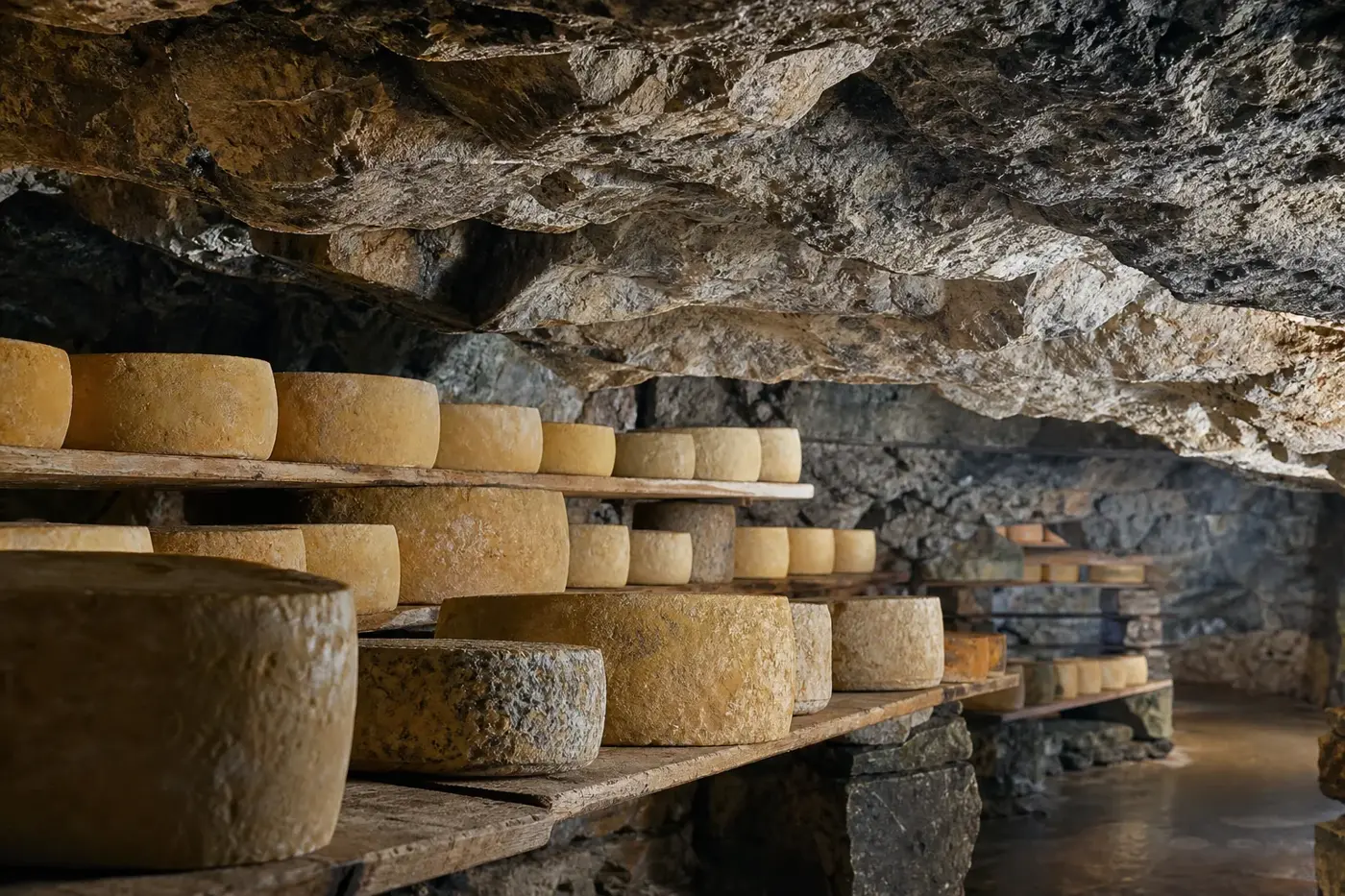
Cloth covers a cheese without sealing it airtight. Quicke’s describes its muslin as allowing cheeses to “breathe”. That is shorthand for exchange through the covering, not respiration by the cheese. The West Country specification also connects bandaging with rind development and moisture loss. [2][3]
At Jasper Hill, the Cheddar vault shows you why the surroundings deserve attention. It has active air exchange and lower humidity than some of the affineur’s other maturation spaces. Jasper Hill says moisture loss starts slowly, then accelerates later. This helps produce a friable texture: cheese that breaks apart readily. [7]
The cloth cannot take all the credit. Dressing, rind, humidity and moving air play their parts too. Wrapping alone cannot give you a drying rate that applies to every wheel. Nor can it predict the texture waiting beneath the rind. [2][3][7]
Give the store as much attention as the muslin. Makers can use the same broad wrapping technique in different maturation programmes and arrive at different results. To understand your clothbound cheese, look beyond the covering. Ask where and how it matured. [3][7]
Get to know the “mould garden”
Quicke’s calls the growth on its clothbound cheeses a “mould garden”. It attributes a horseradish character beneath the rind to this maturation, a vivid description of its own cheeses. Across bound cheeses more broadly, the exterior can become a community of moulds, yeasts and bacteria. That quiet surface has plenty going on. [3]
A 2014 study explored these communities using DNA sequencing and laboratory reconstruction experiments. Researchers examined 137 cheese rind communities from ten countries, including clothbound Cheddars among natural-rind cheeses. Rind type and surface moisture were strongly associated with the composition of those microbial communities. Even at this scale, the surroundings matter. [8]
What you see is only part of the community. The study examined bacteria as well as fungi, and its experiments demonstrated both positive and negative interactions between community members. Those relationships help shape the rind. The conditions maintained around the cheese help shape it too. [8]
At home, distinguish the maker’s controlled maturation from a new change after purchase. Unexpected growth is a question for your supplier and the relevant official guidance. Mould on cheese takes you through that separate household decision. A maturing rind and a change in your fridge are not the same question. [8][9]
Taste what happens beneath the cloth
A ripening wheel does more than lose water. Jasper Hill identifies proteolysis, the breakdown of proteins, as part of cheese maturation. Its account of the Cheddar vault also connects moisture loss and the ageing environment with a savoury, friable cheese. The changes go deeper than the rind. [7]
Drying and internal ripening are distinct processes. One changes how much water remains; the other changes structure and flavour. Together, the production accounts describe cloth as helping shape surface conditions, with the starting cheese and maturation programme contributing to the result. They do not isolate a measured effect of cloth alone. [3][6][7]
You should not expect one universal clothbound taste or texture. Jasper Hill describes Cabot Clothbound as crumbly, savoury and slightly tangy, with caramel sweetness. A separate affineur describes selected English clothbound farmhouse Cheddar as open and moist, with an earthy aroma and a lingering tang. These are the products’ published descriptions, rather than tasting notes from this site. [6][11]
Turn the wheel, then taste the centre
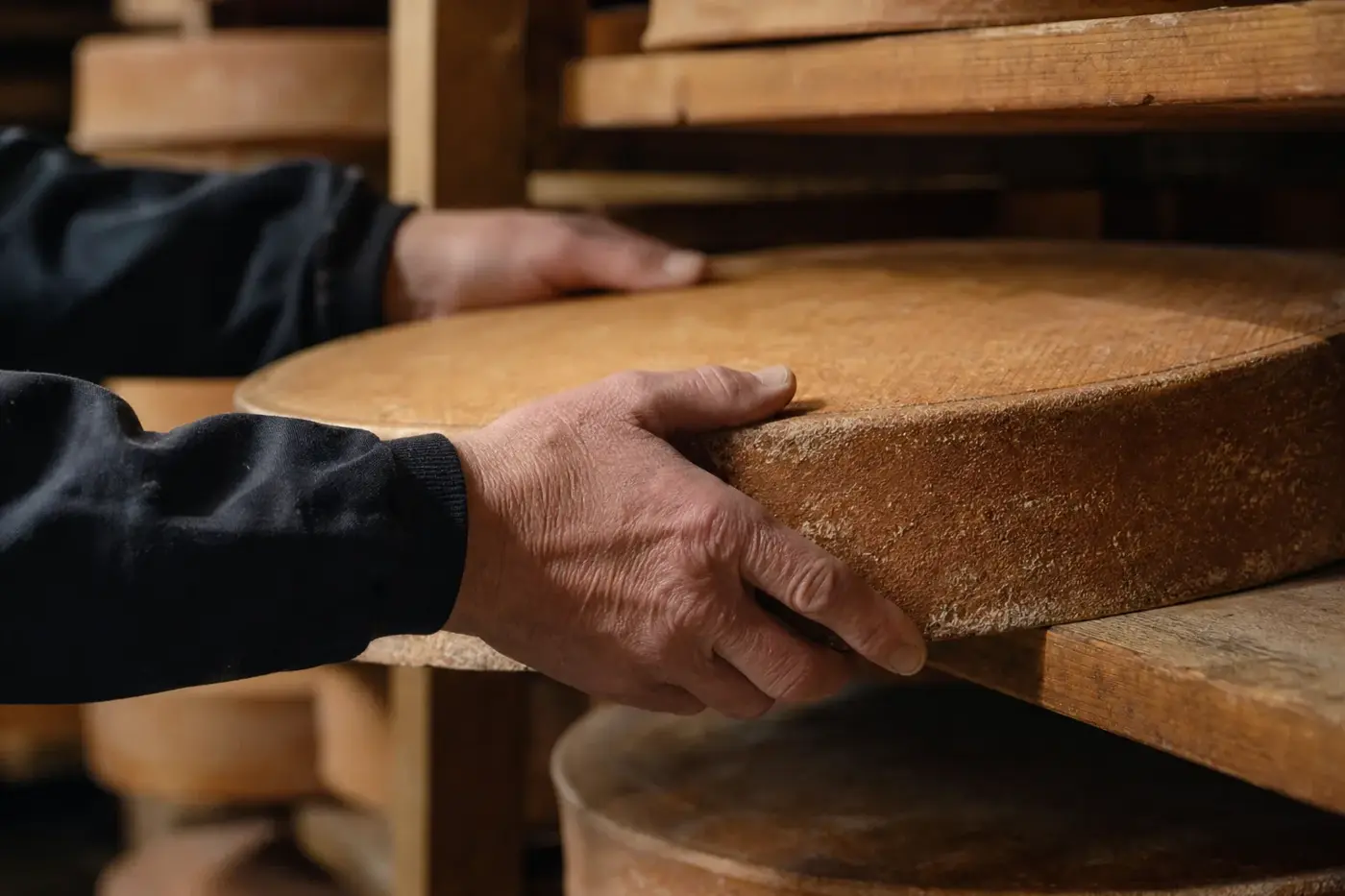
At Quicke’s, clothbound truckles first spend around three months in a higher-humidity nursery store. In the main maturation store, they are turned every ten days to maintain an even texture. Wrapping is only the start of that care. The maker has not tucked them in and gone home. [3]
Jasper Hill describes brushing, turning and monitoring its bound Cheddars. A natural rind is actively tended, rather than left to develop without attention. As the surface changes, the cheese is watched and handled. The covering stays in place throughout. [6]
To find out what is happening inside, Quicke’s graders use a cheese iron. This sampling tool resembles an apple corer and draws a plug from the cheese. The graders assess flavour and aroma, body and texture, finish and colour. A small sample tells them what the rind cannot. [4]
However impressive the outside, it cannot tell you whether the centre has the desired body or flavour. Quicke’s also records seasonal variation in its cheeses. Grading helps the maker understand individual batches. Age alone cannot tell you their whole story. [4]
At the counter, look beyond the jacket
The covering you see when buying cheese may not be the one used during maturation. Ask whether it stayed on throughout ageing, was added afterwards or was removed before sale. Jasper Hill, for example, removes the cloth from Cabot Clothbound before it reaches customers. By then, its job is done. [10]
For clothbound cheese, ask about the dressing and rind care. With wax or sealed packaging, establish whether the covering was used during maturation or added later. Keep those practical questions separate from comparing their effects on moisture loss and gas exchange. Appearance alone cannot give you that comparison. [2][6][10]
The West Country specification provides one documented contrast. Bandaged cylinders lose moisture, while rindless blocks wrapped in a food-grade membrane take a different approach to managing it. The maker adjusts the curd accordingly. Wrapping is part of the production method, not simply the cheese’s final appearance. [2]
If the label leaves you wondering, how to read a cheese label can help. Choose by the maker’s description of the cheese and its maturation. A covering gives you useful information, but it is not a quality ranking. Even cheese cannot be judged entirely by its outfit. [4][6]
Bring it home and unwrap with care
A whole clothbound cheese may arrive with its muslin still attached. Your cut portion may already have had it removed. Quicke’s publishes instructions for unwrapping a truckle, while Jasper Hill clearly distinguishes the cloth it removes from the rind beneath. Before you pick up a knife, establish which you are handling. [5][10]
For a whole Quicke’s truckle, follow the maker’s method: [5]
- Find the edge of the cloth on a flat face.
- Pull the muslin away from the cheese.
- Remove it completely before cutting.
Do not eat the cloth: it is wrapping material. The rind is separate, and Jasper Hill describes the rind on its cloth-removed cheese as edible, with an earthy, more austere flavour. For another bound cheese, follow that product’s information. One maker’s advice is not a rule for every rind. [5][10]
For cut Quicke’s cheese, the maker recommends greaseproof paper inside a closed container in the fridge. As of November 2026, the Food Standards Agency’s household refrigeration guidance for England, Northern Ireland and Wales specifies 0 to 5 °C. It also says to follow packaging instructions and date information. Elsewhere, follow the relevant national authority’s guidance. [5][9]
Your fridge has a different job from the maker’s maturation store. Once a wheel is cut, protect the exposed cheese according to its instructions rather than trying to recreate cellar conditions. For the practical details, turn to how to store cheese at home. [5][9]
Questions people ask
What is clothbound cheese?
It is cheese wrapped in fabric that remains around it during maturation. The cloth sits close to the cheese, with fat helping it adhere, and supports rind development while allowing moisture to pass through.
Is lard always used to bind the cloth?
No. The West Country Farmhouse Cheddar specification permits lard or another suitable natural fat or oil. Jasper Hill uses lard for Cabot Clothbound, but the term clothbound alone does not identify the dressing.
Can you eat the cloth or rind on clothbound cheese?
The cloth is wrapping material and should not be eaten. Jasper Hill describes the rind left on its cheese after the cloth is removed as edible, but for another cheese, follow that product’s information.
How should I store cut clothbound cheese?
Quicke’s recommends storing its cut cheese in greaseproof paper inside a closed container in the fridge. The Food Standards Agency advises a fridge temperature of 0 to 5 °C and following packaging instructions and date information in England, Northern Ireland and Wales. See its household refrigeration guidance.
Is all clothbound Cheddar West Country Farmhouse Cheddar?
Cloth binding describes a maturation method, while West Country Farmhouse Cheddar is made under a particular specification. The specification covers farms within defined boundaries in Dorset, Devon, Somerset and Cornwall and requires at least nine months’ maturation.
Sources
[1] Department for Environment, Food & Rural Affairs. West Country Farmhouse Cheddar Cheese. Great Britain register entry, published 2021; current entry checked November 2026.
[2] Department for Environment, Food & Rural Affairs. Product specification: West Country Farmhouse Cheddar. Undated specification linked from the official register; sections 4.2, 4.3, 4.5 and 4.6 checked November 2026.
[3] Quicke’s. Make. Undated maker’s production account, checked November 2026.
[4] Quicke’s. Grading. Undated maker’s account, checked November 2026.
[5] Quicke’s. Cheese care. Undated product handling instructions, checked November 2026.
[6] Jasper Hill Farm. Cabot Clothbound. Undated producer and affineur account, checked November 2026.
[7] Jasper Hill Farm. The cellars. Undated affineur account, particularly vaults 3 and 4, checked November 2026.
[8] Current Biology. Cheese rind communities provide tractable systems for in situ and in vitro studies of microbial diversity. Original research, 2014, volume 24, pages 1605 to 1616.
[9] Food Standards Agency. How to chill, freeze and defrost food safely. Published 2017; live guidance checked November 2026. Applies to England, Northern Ireland and Wales.
[10] Jasper Hill Farm. How should my cheese arrive?. Undated product guidance, section on rinds, checked November 2026.
[11] Will Studd. Selected vintage clothbound farmhouse Cheddar. Affineur’s product notes, file hosted 2022; publication date not specified.
This piece combines desk research from an official specification, published cheesemaker and affineur accounts, original rind microbiology research and official household refrigeration guidance.
Last checked: November 2026
Last checked November 2026.
The editors suggest you read next
What Happens as Cheese Ripens?
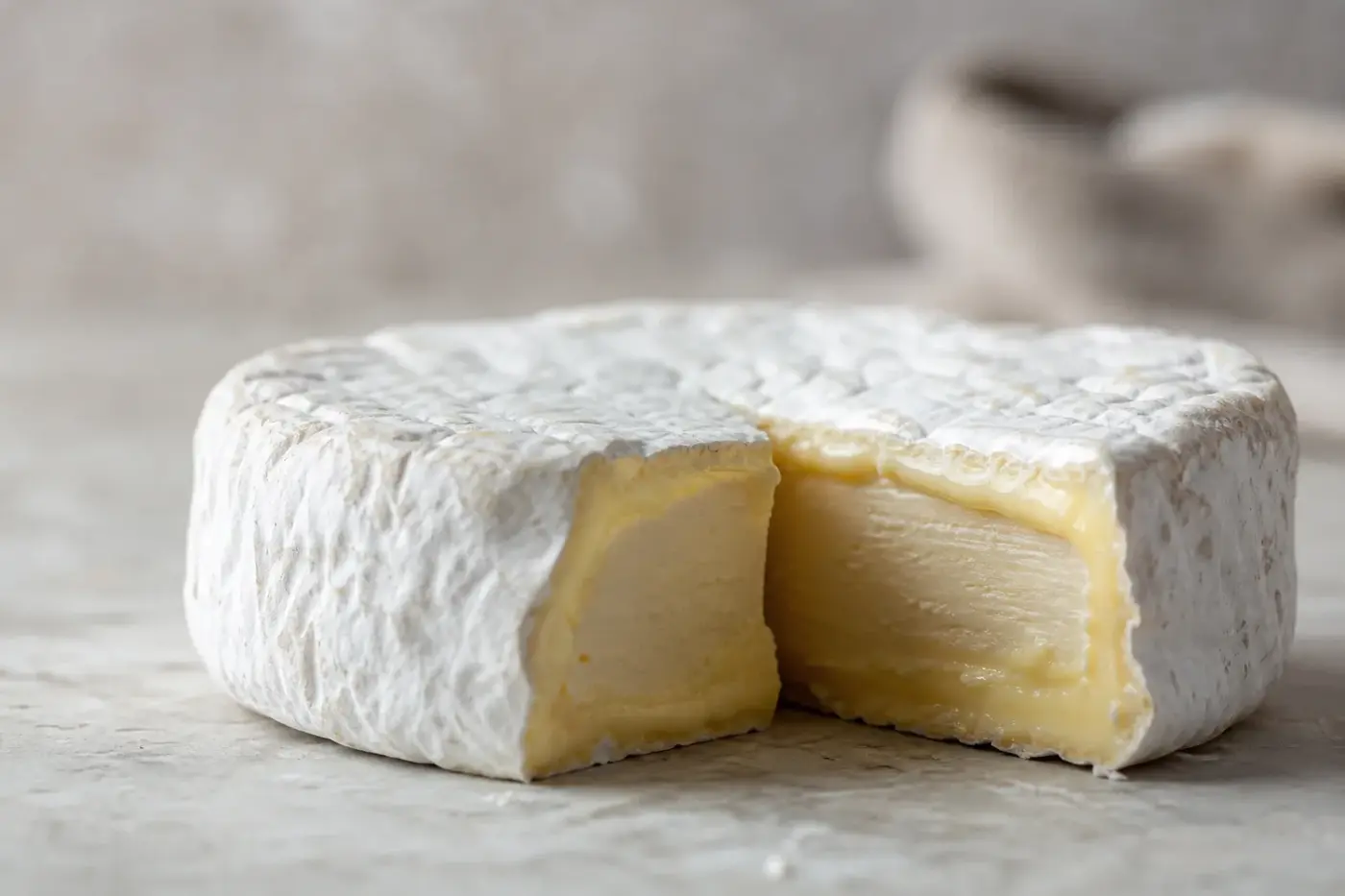
Your knife slips through the rind and finds a supple band, beginning to flow around a still firm centre.