What Does an Affineur Do? The Work of Ageing Cheese
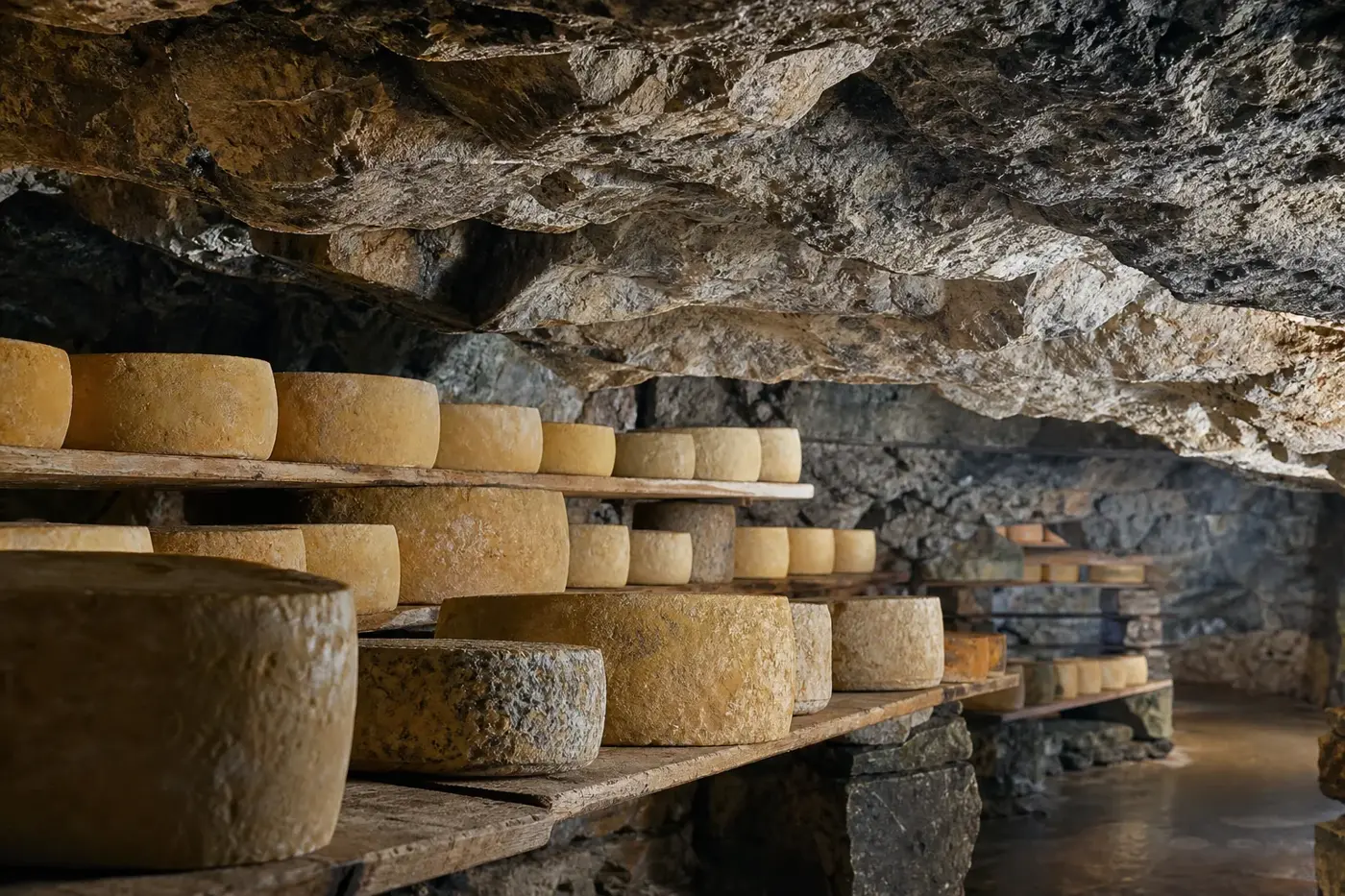
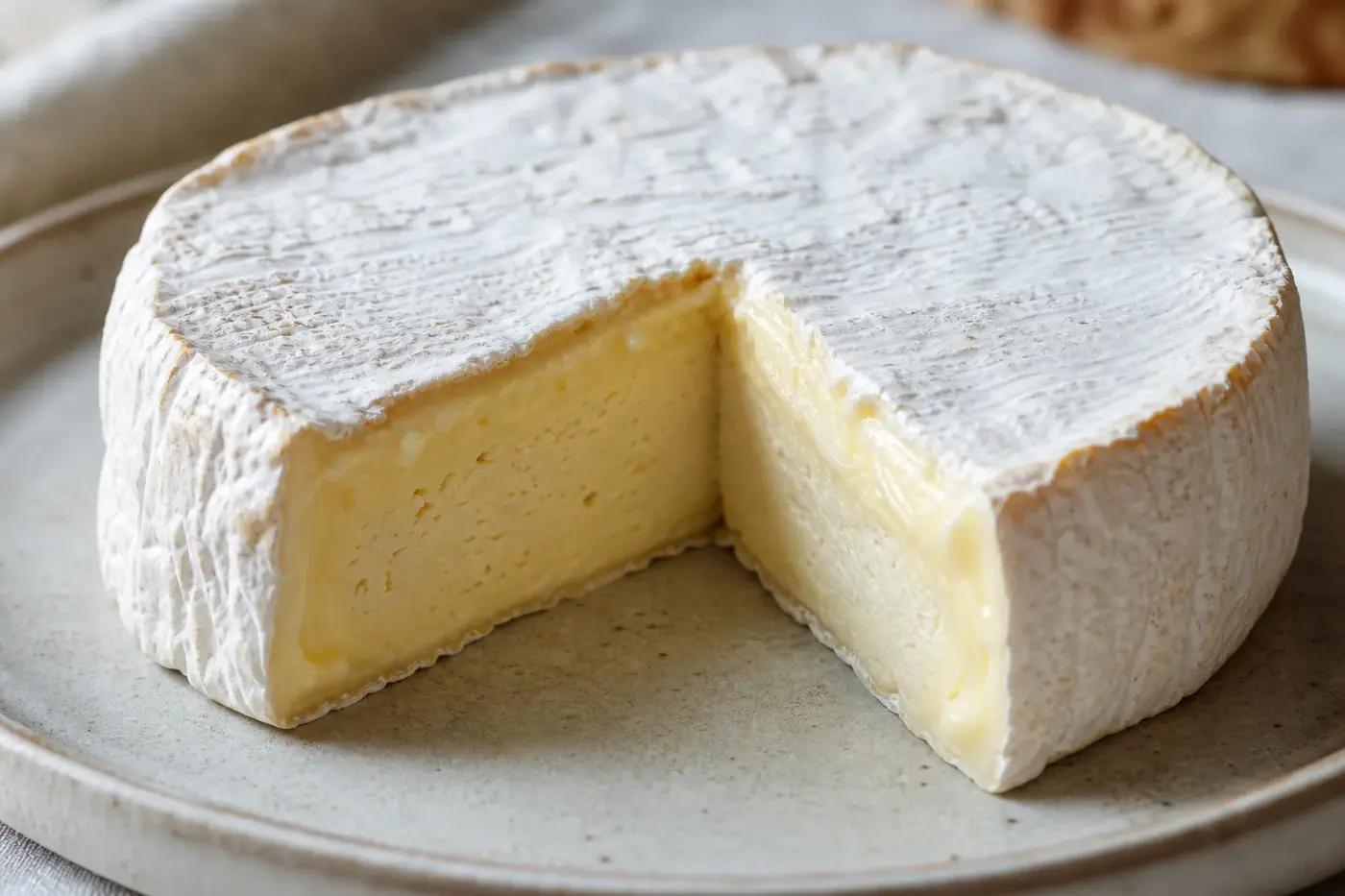
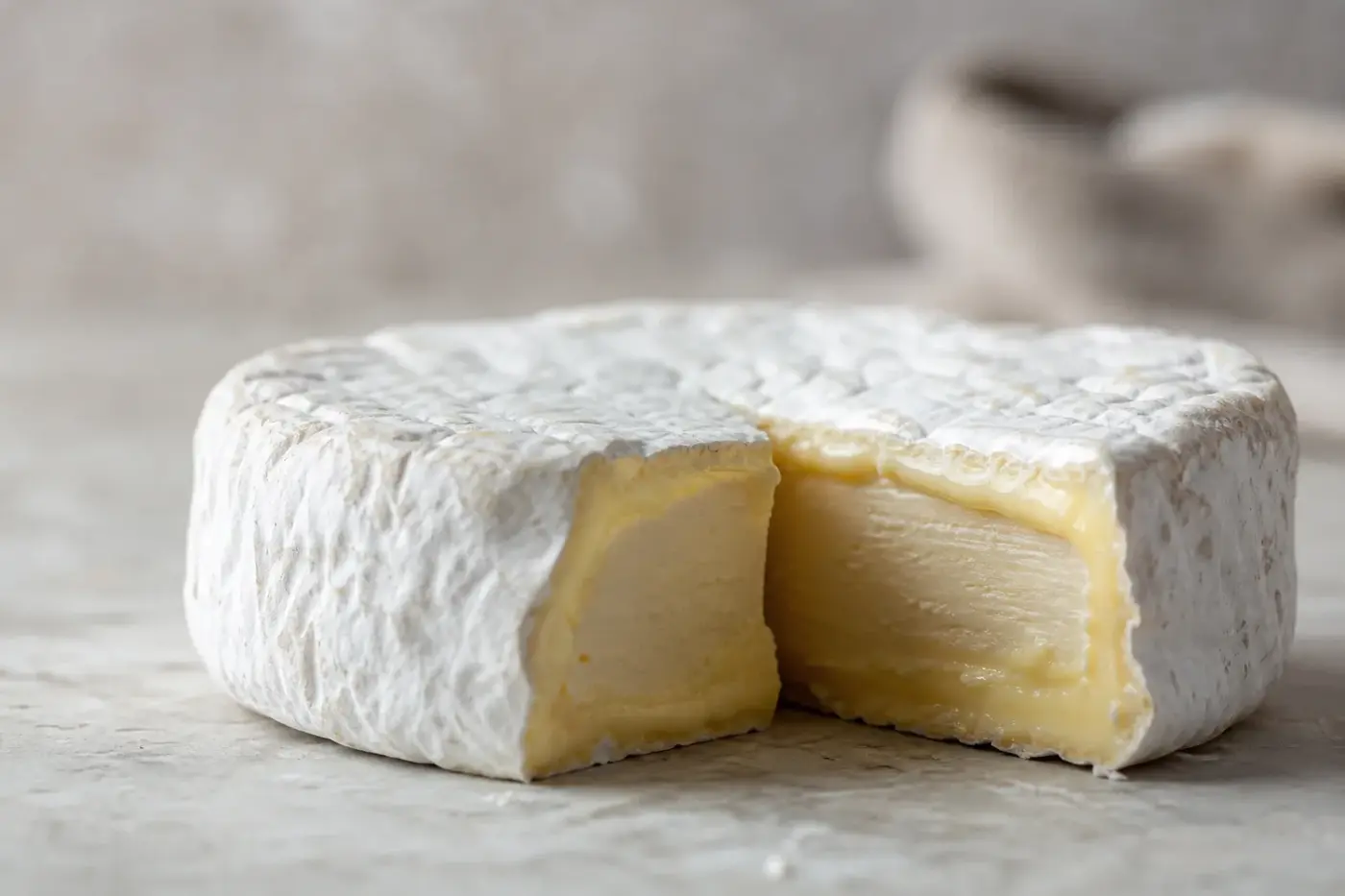
At Jasper Hill in Vermont, a spruce bark band holds a soft cheese as its centre becomes spoonable.
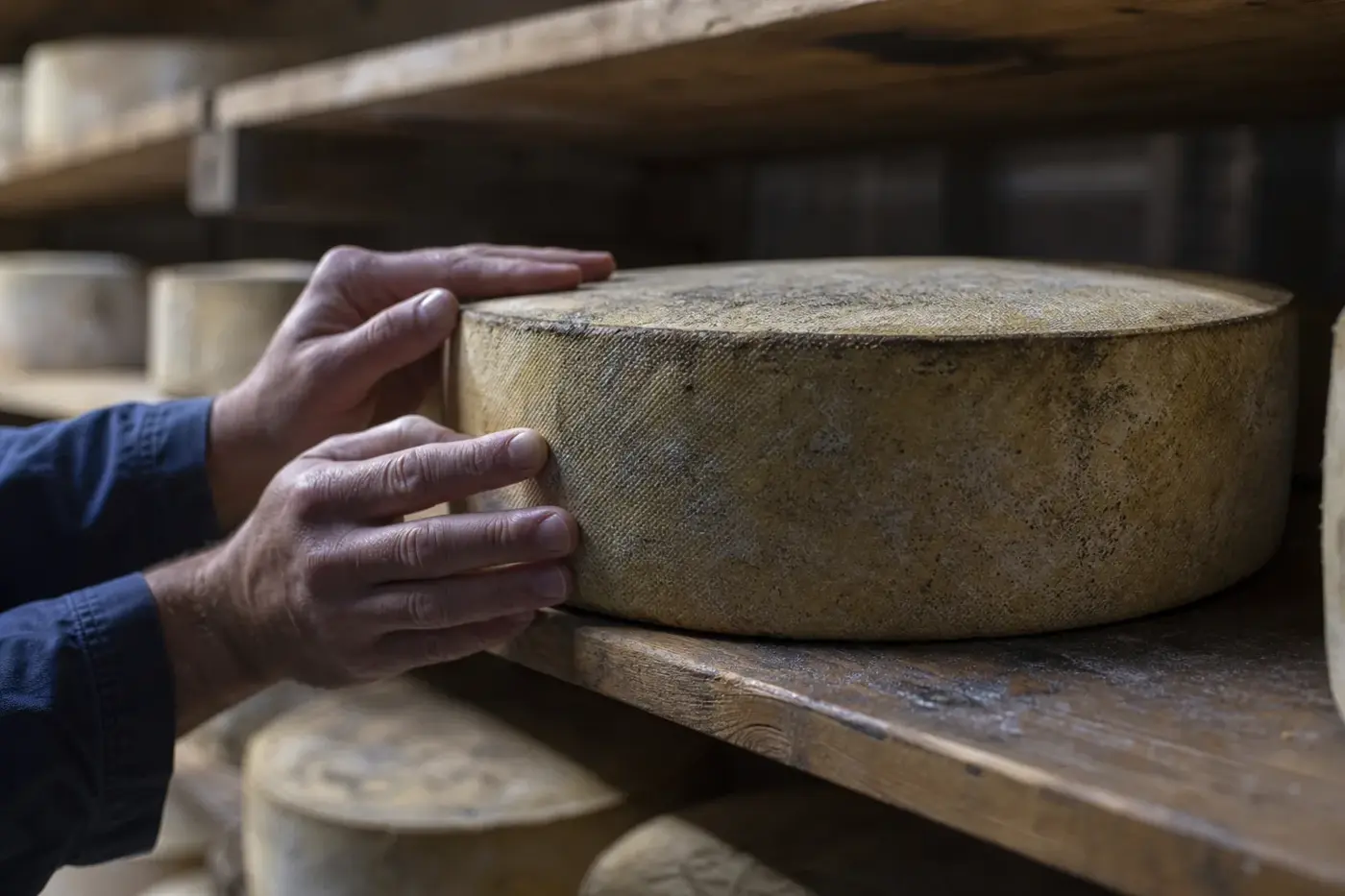
At Jasper Hill in Vermont, a spruce bark band holds a soft cheese as its centre becomes spoonable. Nearby, a clothbound cheddar gets another brushing, another turn.[1,2,3] If you have ever struggled to wait for cheese, imagine making patience your profession.
These are two very different expressions of affinage: the managed ageing of cheese. Behind both is an affineur, deciding when to turn, brush, wash or move each cheese, and when it is ready for sale.
Meet the person who brings cheese along
Think of the distinction at the dairy door. The cheesemaker turns milk into curd, the solid material separated from liquid whey, then shapes the cheese through draining, salting and pressing. Affinage develops its rind and eating qualities through controlled maturation. The jobs are closely connected, and one person or business may do both.[1,4]
An affineur can also be a cheesemaker's partner. Jasper Hill matures cheeses from its own creameries alongside those from other producers, so its work reaches beyond making cheese itself. You can follow those earlier stages in the milk-to-cheese process. Here, the first task is to understand what the maker has already done.[1]
Every cheese arrives with a history
Some cheeses arrive without a visible rind. Others already have months of maturation behind them. Neal's Yard Dairy receives some soft cheeses at that early stage, while Shelburne Farms holds its clothbound cheddar for two months and completes food safety testing before sending it to Jasper Hill. Other cheeses reach the merchant substantially matured, needing selection and further care rather than a rind built from scratch.[5,6,7]
Age tells you only part of the story. How is the surface developing, and how much moisture is the cheese retaining? Neal's Yard Dairy moves soft cheeses between rooms according to rind growth; its glossary notes that inadequate surface drying can encourage excessive mould and faster curd breakdown. What happens next depends on the cheese in front of the affineur, not simply its age.[4,5]
Find the room that suits the cheese
A maturation room does more than provide shelf space. Temperature influences microbial growth and biochemical reactions, while relative humidity, the measure of how close air is to saturation, helps govern moisture loss. Air exchange matters too: Jasper Hill gives its bloomy-rind vault the highest air exchange because rind moulds need oxygen. Different cheeses need different environments, and may move between them as their needs change.[1,5,8]
The room's readings tell you little without the cheese's response. Neal's Yard Dairy closely controls temperature and humidity, regularly recording appearance and pH, a measure of acidity. The team watches what those settings do to the rind and paste, the cheese's interior. Sometimes a batch needs a move rather than more time on one fixed programme.[5,7]
An experiment with Camembert-type cheeses shows why temperature and relative humidity both deserve attention. Researchers used pasteurised milk and specified cultures, varied the room conditions, and measured microbial and biochemical changes. Different combinations changed rind appearance and the development of the softened layer beneath it. Faster ripening can give you a different cheese, not simply the same cheese sooner.[8]
The quiet purpose of turning, brushing and washing
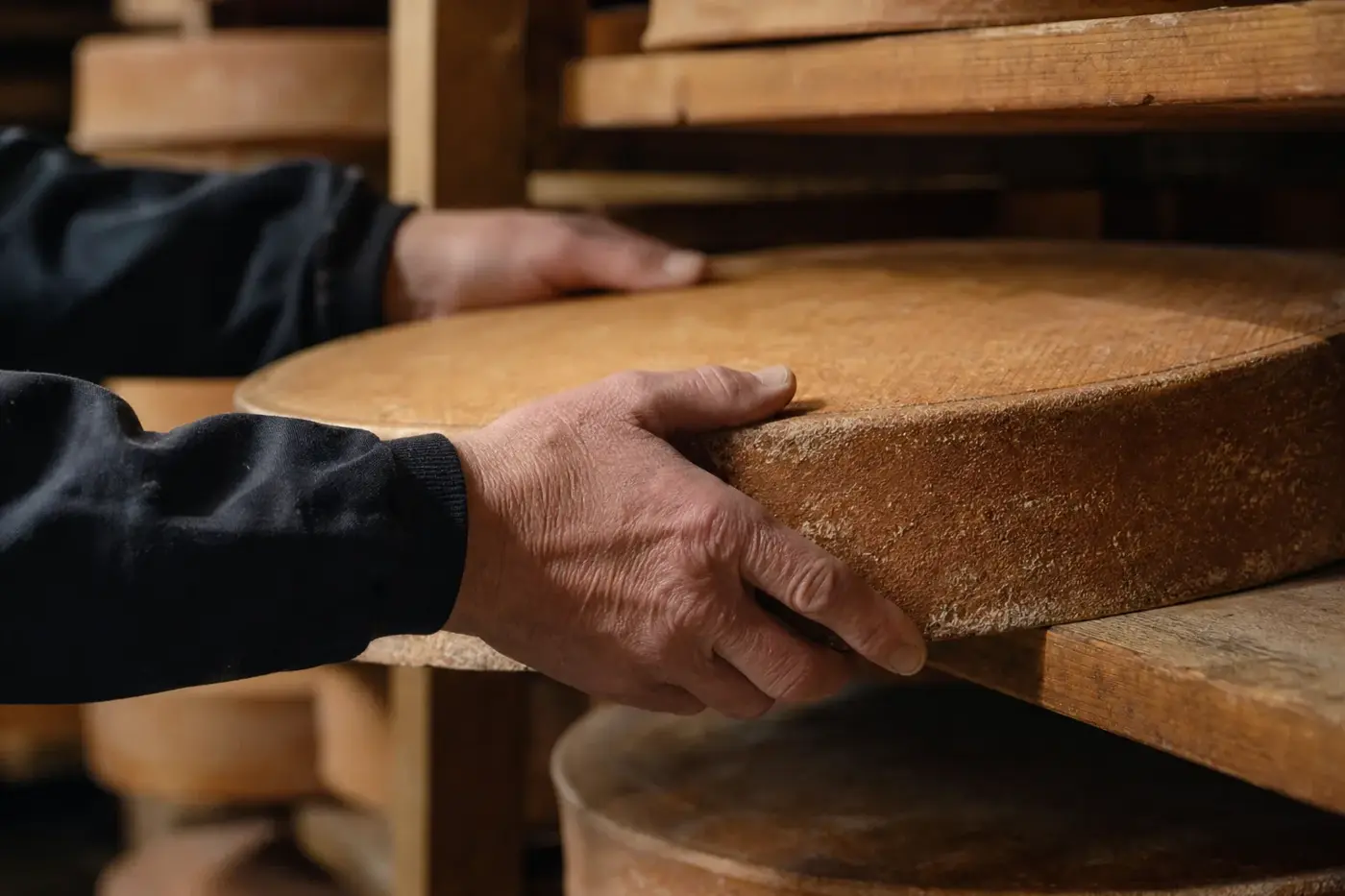
Turning cheese might look like cellar housekeeping. At Neal's Yard Dairy, though, turning washed cheeses helps their rinds develop evenly. Jasper Hill brushes and turns its clothbound cheddar throughout maturation. Each routine guides a particular surface towards its intended appearance and behaviour, rather than treating every cheese alike.[3,9]
Washing treats the surface, commonly with brine, not the interior. Neal's Yard Dairy wipes its washed cheeses with a clean cloth dipped in salt water, then returns each one to the rack on its opposite face. The team adjusts washing, temperature and moisture to support the desired rind community. Too much liquid can oversaturate the surface; too little moisture can contribute to cracking.[9]
For Shelburne Farms' clothbound cheddar, brushing has another purpose. The producer describes hand brushing and turning to develop an even rind and control the accumulation of cheese mites on the wheel. That surface needs different attention from one intended to grow a bloom. Knowing which rind to encourage is central to the job.[6]
Beneath the rind, things are getting interesting
While the surface gets attention, ripening changes the cheese's protein structure. Enzymes, proteins that catalyse chemical reactions, break casein, the principal milk protein network, into smaller fragments. Camembert research tracked this through protein separation and peptide analysis, finding an early contribution from chymosin, a rennet enzyme, followed by increasing mould enzyme activity. Later changes advanced from the surface towards the centre.[10]
Another study followed microorganisms, chemistry and mechanical texture in Camembert made from pasteurised cow's milk. Protein and fat breakdown were greater at the surface than at the centre, alongside softening, while surface microbes changed acidity. The affineur shapes the conditions for these transformations. The organisms and enzymes do the chemical work.[11]
These changes help build the flavour you taste. Protein breakdown releases peptides and amino acids; fat breakdown releases fatty acids. Together, they contribute to the material from which cheese aroma and taste develop, making ageing much more than drying: care for the rind also shapes the interior's future eating quality. The rennet guide explains the enzyme's earlier role in forming curd.[10,11]
Look, touch, smell, taste, then compare notes
Each sense gives you a different clue to a cheese's progress. The eye follows rind coverage, handling reveals changes in firmness, and smelling and tasting help judge development. Neal's Yard Dairy records appearance and acidity while tasting repeatedly as a team. Its published account brings out the human element: measurements gain meaning when people evaluate the cheese and discuss what they find.[5,7]
Sometimes the team needs to look beyond an intact rind. Shelburne Farms uses a cheese trier, a tool that withdraws a small cylindrical plug, to taste maturing cheddar without cutting the whole wheel open. Repeated assessments reveal each batch's progress. They also help the team decide when the wheels should leave the cellar.[6]
Harbison and Cabot Clothbound: different cheeses, different care
Put Harbison beside Cabot Clothbound and you can see the range of an affineur's work. Jasper Hill's Harbison is a soft bloomy-rind cheese wrapped in spruce bark; Cabot Clothbound is a firm cheddar matured beneath cloth. Their care serves distinctly different surfaces and textures.[1,2,3]
| What needs attention? | Soft bloomy rind: Harbison | Firm clothbound: Cabot Clothbound |
|---|---|---|
| The first steps | Young cheeses receive a spruce bark band.[2] | Young cheeses receive lard and an additional cloth layer on arrival.[3] |
| Care along the way | A dedicated bloomy-rind vault provides high air exchange.[1] | Brushing, turning and quality checks continue throughout maturation.[3] |
| The texture to expect | Jasper Hill describes a spoonable paste that keeps softening towards market.[2] | Jasper Hill describes a crumbly texture after maturation.[3] |
Harbison's maker describes woodsy and mushroom qualities, with a texture that keeps changing during distribution. The clothbound cheddar's repeated surface care accompanies a much firmer finished cheese. One environment supports a delicate bloom and softening paste; the other programme manages a substantial bandaged wheel. The spoonable cheese and the crumbly cheddar have taken rather different routes to your plate.[1,2,3]
Ready to leave, but where is it going?
A cheese's next journey matters to its readiness. Send it to a distant retailer and it may keep developing before you eat it. Harbison's maker explicitly describes its paste softening on the way to market. Alongside today's flavour and texture, the affineur must consider the destination and the condition expected at sale.[2]
Once the desired condition is reached, the job changes. Neal's Yard Dairy wraps its fully ripened washed cheeses and moves them into cold storage to slow further maturation. Wrapping protects against drying while allowing appropriate gas exchange. Releasing a batch means knowing when to stop encouraging development and start preserving what has been achieved.[9]
This page summarises published guidance from the official sources it cites. It is not medical advice. Guidance differs between countries and changes over time, so check the current source for where you live, and ask your doctor, midwife, pharmacist or dietitian about your own circumstances.
Good ageing starts with food safety
Ageing cannot replace assessing and controlling food safety hazards. In Great Britain, Article 5 of assimilated Regulation (EC) No 852/2004 requires food businesses beyond primary production to maintain procedures based on hazard analysis and critical control point principles, commonly called HACCP. The FSA's guidance explains the accompanying need for current records and regular review. This responsibility remains distinct throughout maturation.[12,13]
An affineur's working hygiene plan must address the handling and equipment used during maturation as part of its hazard assessment. Traceability has a different job: finding affected cheese if something goes wrong. Great Britain's Article 18 of assimilated Regulation (EC) No 178/2002 requires systems identifying suppliers and business customers.
In England, Wales and Northern Ireland, the FSA explains how records support withdrawals and recalls.[15] Additional batch records can connect incoming cheese to outgoing supplies. That connection can help make a withdrawal more targeted.
From the maker to your cheese counter
Tasting can carry useful information back to the cheesemaker. Neal's Yard Dairy describes connecting a recognised defect with a possible decision earlier in production. That feedback lets maker and affineur consider a batch's behaviour together before changing their work. The relationship runs both ways, with the maturing cheese giving them something concrete to discuss.[7]
Retailers and customers also help define the desired result. Alongside internal tasting, the same dairy regularly discusses flavour with customers, giving meaning to descriptions such as firm, yielding or fully developed. At the counter, talking about the condition you want and when you will eat the cheese is as useful as choosing the cheese itself.[7]
Ask what care has brought a cheese to this point, not simply how old it is. Is it intended for eating soon, and what texture should you expect? How should you keep it after purchase? The affineur's observations become most useful to you when a retailer turns them into a clear description at the shop counter.
Bring that care home
- How to Store Cheese at Home: practical handling after the affineur's work.
- Mould on Cheese: When to Cut and When to Bin: guidance for cheese in your kitchen.
- Cheese Food Safety: The Complete Guide: the wider responsibilities behind storage and handling.
Questions people ask
What is the difference between a cheesemaker and an affineur?
A cheesemaker turns milk into curd and shapes the cheese through operations such as draining, salting and pressing. An affineur guides its maturation, deciding when to turn, brush, wash or move it and when it is ready for sale.
Why do cheese maturation rooms need different conditions?
Temperature influences microbial growth and biochemical reactions, while humidity helps govern moisture loss. Jasper Hill gives its bloomy rind vault its highest air exchange because the rind moulds need oxygen.
Why are some cheeses washed during ageing?
Washing helps support the desired rind community. Neal's Yard Dairy wipes washed cheeses with a clean cloth dipped in salt water, then returns each cheese to the rack on its opposite face.
How long is clothbound cheddar aged before it reaches an affineur?
Shelburne Farms holds its clothbound cheddar for two months and completes food safety testing before sending it to Jasper Hill. Other cheeses may arrive before they have a visible rind or after they have spent months maturing.
How does an affineur know when a cheese is ready?
Appearance, touch, aroma and taste reveal different parts of its progress, and repeated assessments help determine when wheels should leave the cellar. The affineur also considers the journey ahead, since a cheese may continue developing before it is eaten.
Sources
- Jasper Hill Farm, The Cellars, undated online edition, retrieved November 2026. Primary practitioner account of affinage, work across producers and differentiated maturation environments.
- Jasper Hill Farm, Harbison, undated product and sensory information, retrieved November 2026. The maker's account of bark wrapping, softening and typical sensory qualities.
- Jasper Hill Farm, Cabot Clothbound, undated product information, retrieved November 2026. The affineur's account of cloth, lard, brushing, turning and finished texture.
- Neal's Yard Dairy, Cheese Glossary, undated online edition, retrieved November 2026. Practitioner definitions of production, drying and maturation.
- Neal's Yard Dairy, Rinds: a window into the interaction between the cheese and its environment, 6 September 2021. Practitioner observations about arrival condition and moving cheeses between rooms.
- Shelburne Farms, The Surprising Journey of Clothbound Cheddar, undated online account, retrieved November 2026. Producer documentation of transfer, brushing, turning and sampling.
- Neal's Yard Dairy, Cheese maturation: art or science?, online edition retrieved November 2026. Practitioner account of records, tasting and feedback.
- Journal of Dairy Science, Temperature and relative humidity influence the microbial and physicochemical characteristics of Camembert-type cheese ripening, volume 95, issue 8, 2012, pages 4666 to 4682. Original experimental research; abstract retrieved.
- Neal's Yard Dairy, How do you wash cheese?, online edition retrieved November 2026. Practitioner account of washing, turning and subsequent cold storage.
- Nippon Shokuhin Kagaku Kogaku Kaishi, Proteolysis in Camembert Cheese during Ripening, volume 43, issue 6, 1996, pages 703 to 711. Original research; abstract retrieved.
- Taylor & Francis, Microbiological, Physicochemical, and Biochemical Changes During Ripening of Camembert Cheese Made of Pasteurized Cow's Milk, research article, 2002. Full research paper retrieved.
- UK legislation publisher, Regulation (EC) No 852/2004, Article 5, assimilated Great Britain text, checked November 2026. Binding HACCP requirements.
- Food Standards Agency, Managing food safety, online guidance retrieved November 2026. Food safety management, records and traceability guidance.
- UK legislation publisher, Regulation (EC) No 178/2002, Article 18, assimilated Great Britain text, checked November 2026. Binding traceability requirements.
- Food Standards Agency, Food incidents, product withdrawals and recalls, updated 20 August 2026. Guidance applying to England, Wales and Northern Ireland.
This piece combines desk research from practising affineurs and producers with original ripening studies, FSA guidance and the relevant Great Britain legislation.
Last checked: November 2026
Last checked November 2026.
The editors suggest you read next
What Happens as Cheese Ripens?
Your knife slips through the rind and finds a supple band, beginning to flow around a still firm centre.