Colombian Cheese
Your spoon slips into Bogotá’s hot chocolate and comes back carrying cheese.
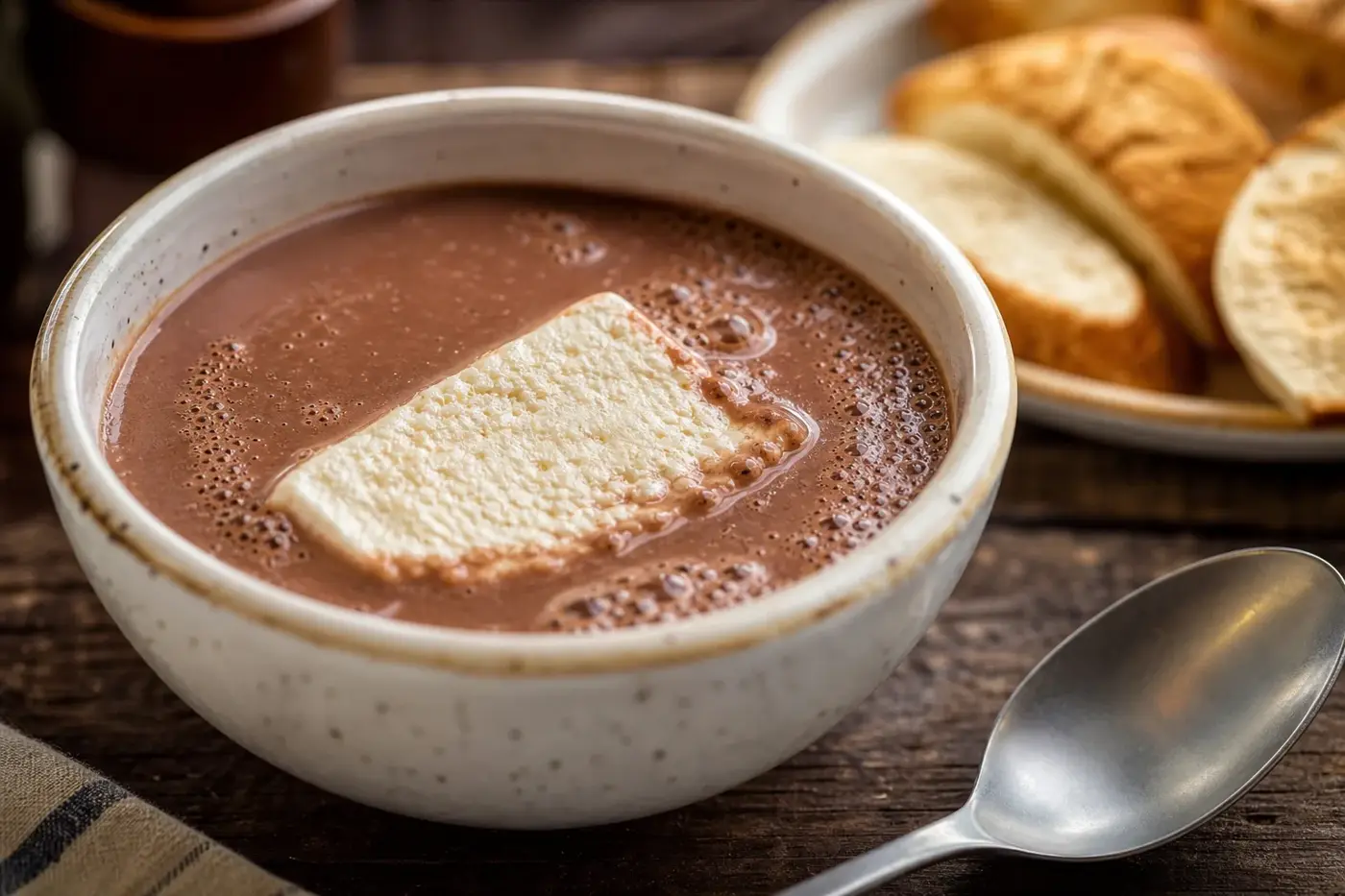
Your spoon slips into Bogotá’s hot chocolate and comes back carrying cheese. In chocolate santafereño, fresh cheese softens in the hot drink before you lift it out. It is an inviting first spoonful of Colombia’s dairy traditions: cool Andean highlands, salty Caribbean cheeses and the stretched curds of the Amazonian foothills.[1][2]
| Your quick guide | Colombian cheese |
|---|---|
| The milk behind these traditions | Cow’s milk.[3][4] |
| Cheese families to explore | Fresh curd, salted and pressed, stretched-curd and matured cheeses.[2][3] |
| Names to get to know | Queso del Caquetá; Queso Paipa. Current Colombian registration status: Not verified.[4][5] |
| Who handles Colombian registration | Superintendencia de Industria y Comercio, usually abbreviated to SIC.[4][5] |
| Queso del Caquetá’s record | SIC file 07028611; protection instrument: Resolution 68463 of 30 November 2011.[4] |
| Queso Paipa’s record | Protection instrument reported as Resolution 70802 of 2011; register file identifier: Not verified.[5] |
| Protection outside Colombia | Not verified for this article. |
Follow the curd to your next favourite
Colombian cheese belongs beside your breakfast and in your cooking pot as comfortably as on a cheese plate. Follow the curd and the main styles come into focus: moist and softly set; salted and pressed; or heated and stretched into layers. Paipa leads you down another path, towards maturation.[2][3]
Those differences explain why one cheese accompanies a drink while another goes into bread. They make a better tasting map than treating every white cheese as interchangeable. A shared colour is not a job description.
Begin with the method: is your cheese fresh, stretched or matured? Notice the salt, then ask how local cooks use it. Texture, seasoning and kitchen habits each tell you something about its place at the table.
For a little more background, explore how to tell cheese styles apart.
From cool valleys to Caribbean pastures
Cow’s milk connects these traditions, but the scenery changes considerably. Colombia’s dairy geography takes you through highland production areas, warm Caribbean departments and the Andean-Amazonian transition of Caquetá. There is no single landscape behind your cheese.[3]
The national health institute’s survey places doble crema particularly in Cundinamarca and Boyacá, including the Ubaté and Chiquinquirá valleys. Costeño belongs across the Caribbean departments and other warm regions. With those names in mind, your tasting begins to acquire a sense of place.[3]
Seasons shape the story, too. DANE’s 2020 account of cheese distribution describes reduced milk availability in the dry early months, followed by better pasture growth when rain returns. Cheese also travels: costeño reaches markets from outside the Caribbean, while campesino comes from several inland departments.[6]
In Caquetá, mountain forests, humid forests and river systems shape the Andean-Amazonian transition described in the department’s agricultural extension plan. The plan also identifies soil compaction, damaged pasture and pressure on tree cover as challenges for extensive cattle farming. Behind your cheese is a distinctive landscape, and the practical work of caring for the land that supports production.[7]
Meet the cheeses, one texture at a time
Campesino and cuajada: start fresh
White, soft and slightly salty: that is the Instituto Nacional de Salud’s description of queso campesino. This everyday fresh cheese is made across Colombia. The institute’s production account includes draining, salting and moulding the curd, with washing and heating among the processing stages.[3]
Cuajada offers you a different balance. The institute describes a particularly moist fresh cheese, low in salt and soft yet firm in texture. It records production throughout Colombia, especially in Boyacá, Cundinamarca, Valle and Risaralda.[3]
Try a small portion of each side by side. Pay attention to moisture, firmness and salt, and ask how each is customarily used. Keep the names beside your samples so you can remember which felt softer and how the two differed.
Queso costeño: let salt lead you to the bakery
Salt sits at the heart of queso costeño’s character. Compared with those moist fresh curds, the national health institute describes a firmer, drier cheese. Look for a cream-coloured exterior and some openings inside.[3]
Its kitchen life extends well beyond its Caribbean association. DANE records production outside the coast and use in buñuelos and baking. The Ministry of Culture’s culinary glossary also lists white costeño cheese among the ingredients of pandebono and pan de yuca.[6][8]
Give yourself two encounters: costeño on its own, then in something baked. First, you meet the cheese directly. Then you discover what it contributes as an ingredient, and why a cook might reach for it.
Quesillo and doble crema: taste the stretched layers
Heat and working transform pasta hilada, or stretched curd, into a cohesive, layered mass. Colombia’s institutional dairy manual places quesillo, queso doble crema and queso pera in this family. The cheesemaker’s handling of the curd becomes something you can feel as you eat.[2]
The national health institute describes doble crema as rindless and semi-soft, with a closed texture and visible layers. Its account of quesillo huilense or tolimense records a bright surface. Packaging can include plantain leaves.[3]
Place matters alongside the name. SIC’s published entry lists quesillo and queso doble crema under Queso del Caquetá, while other institutional descriptions discuss regional versions elsewhere. Ask “Where was this made?” and “Is it a stretched-curd cheese?” at the counter. Those answers give you more to work with than the name alone.[3][4]
Two protected names with stories to tell
Queso Paipa: linger over maturation
Queso Paipa brings maturation to a cheese culture strongly associated with fresh products. The Bogotá Chamber of Commerce’s dairy manual classifies it as a semi-hard matured cheese made from kneaded and pressed curd. A Colombian production study identifies it with Boyacá and records denomination-of-origin recognition under SIC Resolution 70802 of 2011.[2][5]
Put Paipa beside fresh campesino or cuajada and give yourself time to notice the differences. You are tasting both another method and another stage of development. Ask the producer about the milk, maturation and particular batch, rather than expecting every example to behave identically.
| Queso Paipa: what to know | Recorded detail or status |
|---|---|
| Name in the production study | Queso Paipa.[5] |
| Region established by the study | Boyacá, Colombia.[5] |
Queso del Caquetá: meet the family
Queso del Caquetá is not just one cheese. SIC’s published entry names quesillo, queso doble crema and queso picado salado industrial. Their geographical area is the department of Caquetá, in Colombia’s Amazonian region.[4]
Each description gives you something different to look for. The salted chopped-curd cheese is highly saline, with small cubes of curd visible inside. Quesillo doblecrema has a soft, consistent texture, stretched layers and a fresh-milk flavour, according to the entry.[4]
SIC connects these products to the region’s cattle, adapted crossbreeding and pasture resources. Alongside Caquetá’s agricultural plan, the registration presents cheese as part of local farming life. Better land management remains an important part of its future.[4][7]
These Colombian denominations have their own records and terms. For the separate European terminology, turn to protected names explained.
Pull up a chair for chocolate, arepas and amasijos
Come back to that cup of chocolate santafereño. The Ministry of Culture’s introductory culinary volume places Bogotá’s foamy chocolate within a tradition of conversation and hospitality. Fresh cheese adds another texture, somewhere between your spoonfuls and sips.[1][8]
Cheese also runs through Colombia’s amasijos, a broad culinary vocabulary for dough-based preparations. The ministry’s glossary associates pandebono with Valle. Its recorded ingredients include maize dough, sour cassava starch and white costeño cheese.[8]
Then you have Antioquian pandequeso. The glossary describes maize and cheese baked together to accompany chocolate. Apparently, the cheese in your cup need not have the last word.[8]
Arepas give you another route into these traditions. The same glossary records regional maize preparations containing cheese or cuajada. Cheese finds its way into soups, too, which the Ministry of Culture’s national recipe collection organises within their regional cuisines.[1][8]
Build your tasting around these different settings: fresh cheese at breakfast, cheese in an arepa, a bakery’s pandebono and a regional cheese preparation at lunch. Ask the cook which cheese goes into each dish. A small question connects the finished food to its dairy tradition and helps those names stick.
How cattle changed the kitchen
Cattle and dairying arrived in the territory through Spanish colonisation. The Ministry of Culture’s national cookbook identifies cattle, milk, cheese and butter among the introductions associated with the conquest and colonial period. It distinguishes these from pre-Columbian ingredients.[1]
Colombian kitchens shaped what followed. In the ministry’s records of pandebono, pandequeso and other dough preparations, maize and cassava appear alongside cheese. You can trace a cheese tradition through cooking as well as cheesemaking: what happens in the kitchen matters as much as the treatment of the curd.[8]
Regional identities remain distinct, but cheese does not stay put. DANE’s account documents coastal associations, inland supply areas and the traffic in cheese between them. You find recognisable regional centres, connected by considerable exchange.[6]
Plan your tasting around a good question
In Bogotá, start at a market dairy counter, bakery or café serving a traditional breakfast. Ask which fresh cheese accompanies the chocolate, and whether the kitchen cooks with the same one. Compare cheeses at the counter, then try a prepared dish to put those names into context.
In Boyacá, make Queso Paipa the focus of your producer enquiry. Before travelling, confirm current production, visitor arrangements, booking requirements and accessibility directly with the dairy. Ask whether your tasting can include an explanation of milk treatment and maturation.
For Caquetá, Florencia is a useful place to begin your enquiries. Caquetá Sustentable’s project page describes a cheese sales point there and processing activity in several municipalities within the department. Contact the project or producer about present arrangements before setting out.[9]
Take your questions beyond the finished cheese. Ask about milk collection, pasture, seasonal changes and the work of getting cheese to the counter. Your tasting becomes more revealing when you can connect it to the landscape and daily production behind it.
Bring your cheese home with care
Start with “¿Está hecho con leche pasteurizada?”, meaning “Is it made with pasteurised milk?” Then ask about the maker, production date, refrigeration and labelled instructions for use after opening. For a clear guide to the treatments, see raw, thermised and pasteurised milk.
Colombia’s Instituto Nacional de Salud identifies contamination during milk production and cheese processing as relevant to fresh-cheese risks. Milk treatment is an important question, but it is not the only one. Handling and storage matter alongside it.[3]
At home, follow the product’s instructions and official guidance where you live. The UK government’s chilling guidance explains that appropriate chilling helps prevent harmful bacteria from growing. Its food-labelling guidance directs you to date and allergen information.[10][11]
Keep the label with your cheese so those details remain close at hand. For fuller country-attributed guidance, consult how to store cheese at home.
General information only, not medical advice: follow the official guidance where you live.
Questions people ask
What kinds of cheese are made in Colombia?
Colombian cheese traditions include fresh curd, salted and pressed, stretched curd and matured cheeses. Cow’s milk is the principal milk in these traditions.
What is the difference between queso campesino and cuajada?
Queso campesino is a white, soft and slightly salty fresh cheese. Cuajada is also fresh but is particularly moist, with little salt and a consistency that is soft yet firm.
What is queso costeño used for?
Queso costeño is a salty, firm and relatively dry cheese. It is used in buñuelos and baking, and the Ministry of Culture lists white costeño cheese as an ingredient in pandebono and pan de yuca.
What is Queso del Caquetá?
Queso del Caquetá covers several products, including quesillo, queso doble crema and queso picado salado industrial. SIC identifies their geographical area as the department of Caquetá, in Colombia’s Amazonian region. The page says its current Colombian registration status has not been verified.
Where can I taste Colombian cheese?
In Bogotá, the page suggests starting at a market dairy counter, bakery or café serving a traditional breakfast. In Boyacá, it suggests asking a Queso Paipa producer about a tasting; in Caquetá, Florencia is a starting point for enquiries. Confirm present arrangements with the producer before visiting.
Sources
- Ministerio de Cultura, Gran libro de la cocina colombiana, Biblioteca Básica de Cocinas Tradicionales de Colombia, volume 9, 2012 edition. Historical introduction and regional organisation.
- Cámara de Comercio de Bogotá, Manual: Lácteos, 2015, “Quesos de tradición colombiana” and classification table.
- Instituto Nacional de Salud, Perfil de riesgo de Escherichia coli enterotoxigénica y verotoxigénica en queso fresco, 2015, table 9 and contamination discussion.
- Superintendencia de Industria y Comercio, Queso del Caquetá, undated official denomination entry, retrieved November 2026 through indexed official text.
- Universidad de Santander journal platform, Evaluación del cumplimiento de requisitos BPM en empresas productoras de queso Paipa, published research, indexed abstract retrieved November 2026. Full bibliographic edition and operative registration documents require editorial verification.
- DANE, Boletín semanal SIPSA, 3 to 9 October 2020, contextual article “Queso costeño y campesino en los mercados mayoristas del país”. Only production, distribution, seasonality and culinary-use information was used.
- Agencia de Desarrollo Rural and departmental authorities, Plan departamental de extensión agropecuaria, Caquetá, 2024 edition, landscape and dairy-sector diagnosis.
- Ministerio de Cultura, Manual introductorio, Biblioteca Básica de Cocinas Tradicionales de Colombia, volume 18, 2012 edition, Bogotá culinary introduction and glossary entries.
- Caquetá Sustentable, Queso del Caquetá, undated project page, retrieved November 2026. Its descriptions of processing and sales are attributed project statements.
- UK government, How to chill, freeze and defrost food safely, current landing page retrieved November 2026.
- UK government, Understanding food labelling, current guidance retrieved November 2026.
This desk-researched draft brings together Colombian institutional cheese descriptions, culinary heritage publications, regional agricultural records and official consumer guidance; outstanding registration checks are recorded below.
Last checked: November 2026
Last checked November 2026.
The cheeses of Colombia
The editors suggest you read next

French Cheese: The Complete Guide
Picture Normandy’s pastures, then follow the milk towards the Loire’s goat dairies, the Jura’s shared cheesemaking traditions and the sheep country of the Pyrenees.


